Sago & tapioca pearls
သကူ
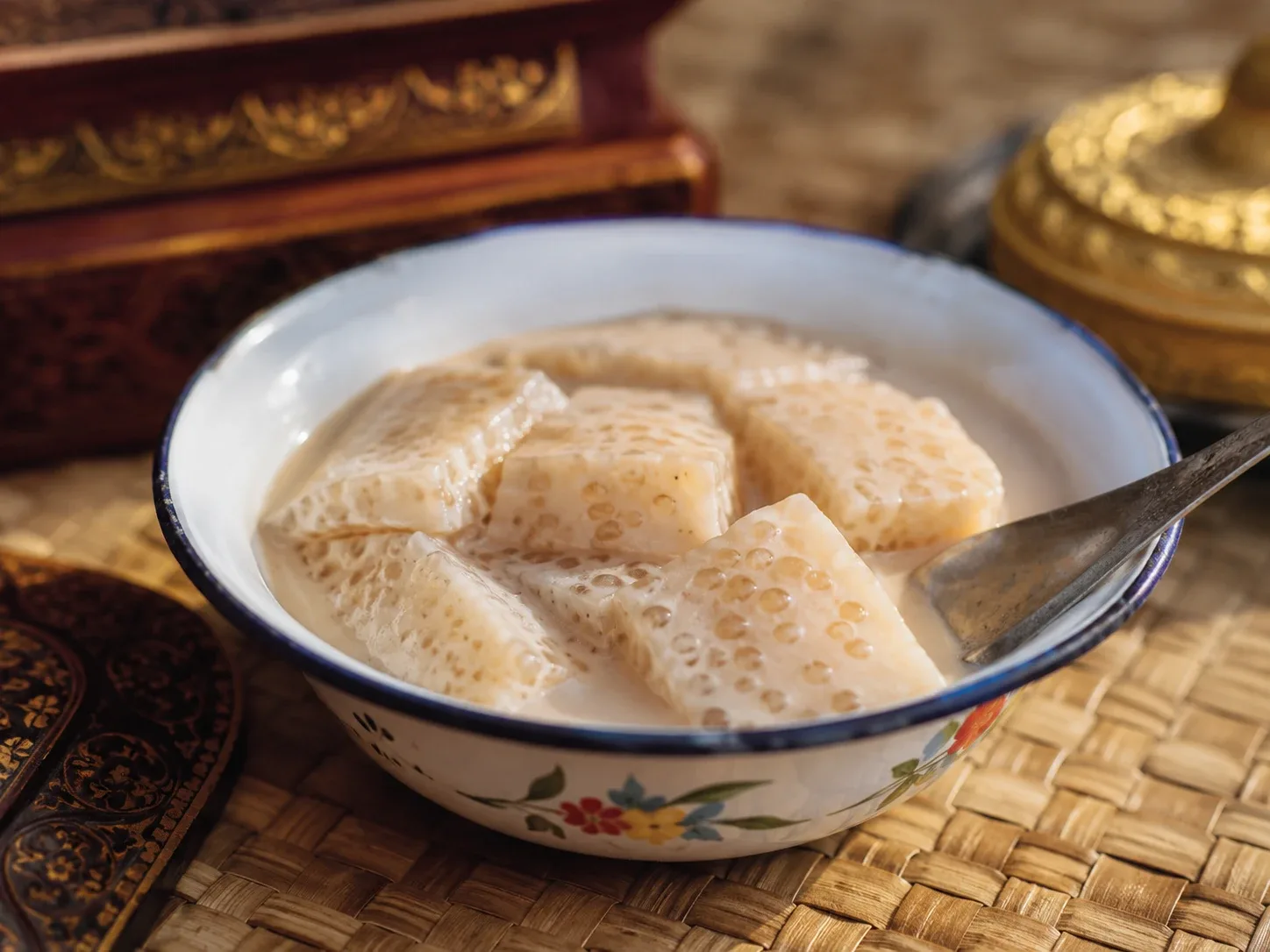
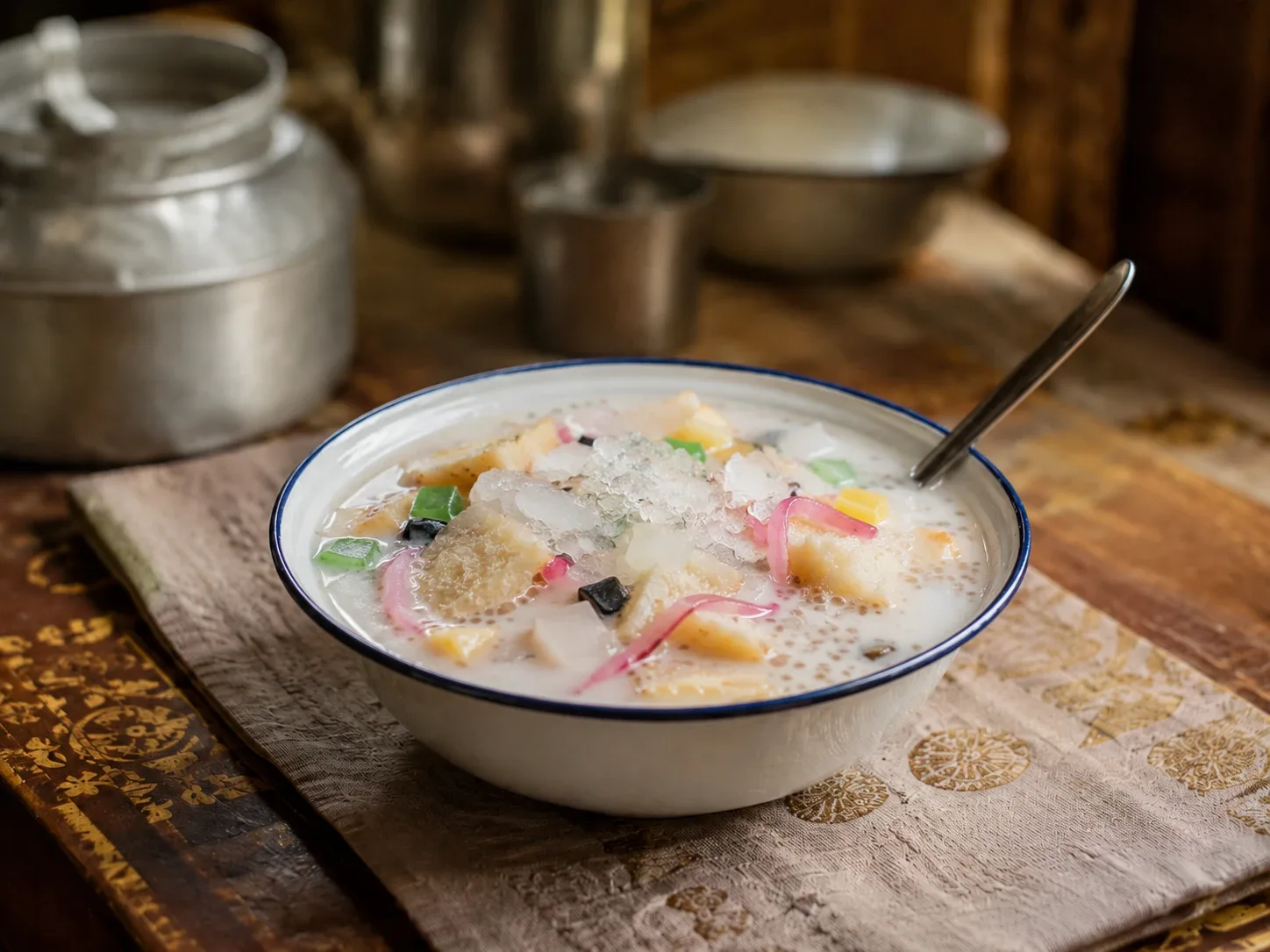
Chalky white pearls that turn glassy in the pot — the wobble in thagu mont and the beads in shwe yin aye.
Also answers to: thagu · tapioca pearls · sagu
Sago pearls are small beads of starch — true sago is washed from the pith of the sago palm, while most of what is sold under the name today is actually tapioca, the same starch pressed from cassava root. In the pot the two behave nearly identically: chalky white pearls that swell, turn translucent, and release enough starch to thicken and set their cooking liquid. For Burmese sweets, the distinction is academic; the small, quick-cooking pearl is what matters.
Sago is not native to the Burmese pantry the way rice or coconut is. The starch moved through regional maritime trade — the sago palm belt runs through island Southeast Asia — and it likely entered common Burmese use during the colonial-era expansion of shipping and commerce, though no household or era can honestly claim the credit and the record is oral rather than written. The Burmese name, thagu, tracks the same word (sagu) across the trade routes that carried it.
What Burmese cooks made of the import is their own: thagu mont, the coconut-and-palm-sugar pudding sliced into cool wobbling squares, and the drifts of pearls in shwe yin aye, the layered coconut ice of the hot season. Sago earns its keep in exactly one register here — cold, sweet, and coconut-adjacent.
Choosing itရွေးချယ်ခြင်း
Buy small pearls, roughly two or three millimeters — the large marble-sized pearls sold for bubble tea are a different proposition, chewier and far slower to cook, and they will not give thagu mont its soft, faintly grainy set. Whether the packet says "sago" or "tapioca pearls" matters much less than the size. White is standard; skip the pre-colored rainbow packs, which are dyed for other desserts. Any Asian grocer stocks them for very little money.
Keeping itသိမ်းဆည်းခြင်း
Dry pearls keep more or less indefinitely in an airtight container in the cupboard — starch has no fat to go rancid. Cooked, they are at their best the day they are made; refrigerated sweets containing sago firm up considerably and keep three or four days, after which the pearls start to toughen and the texture coarsens.
In the potမီးဖိုချောင်တွင်
Cook pearls in plenty of water at a steady simmer, stirring often — sago scorches and clumps on the pot bottom in seconds flat, and a burnt patch flavors the whole batch. They look done before they are: readiness is when the last stubborn white fleck at the center of each pearl turns clear, and stopping short leaves a chalky bite hiding under the coconut. A few small white centers are acceptable only if the pearls will cook further in a second stage, as they do in thagu mont.
ဝယ်ယူရန် · Getting it
Buy the real thing
Sago / tapioca pearls — shelf-stable and shippable, unlike most of the fresh aisle.
Find it on Amazonဟင်းလျာများ · Cooked with it