Shwe Yin Aye, the Golden Heart Cooler
ရွှေရင်အေး
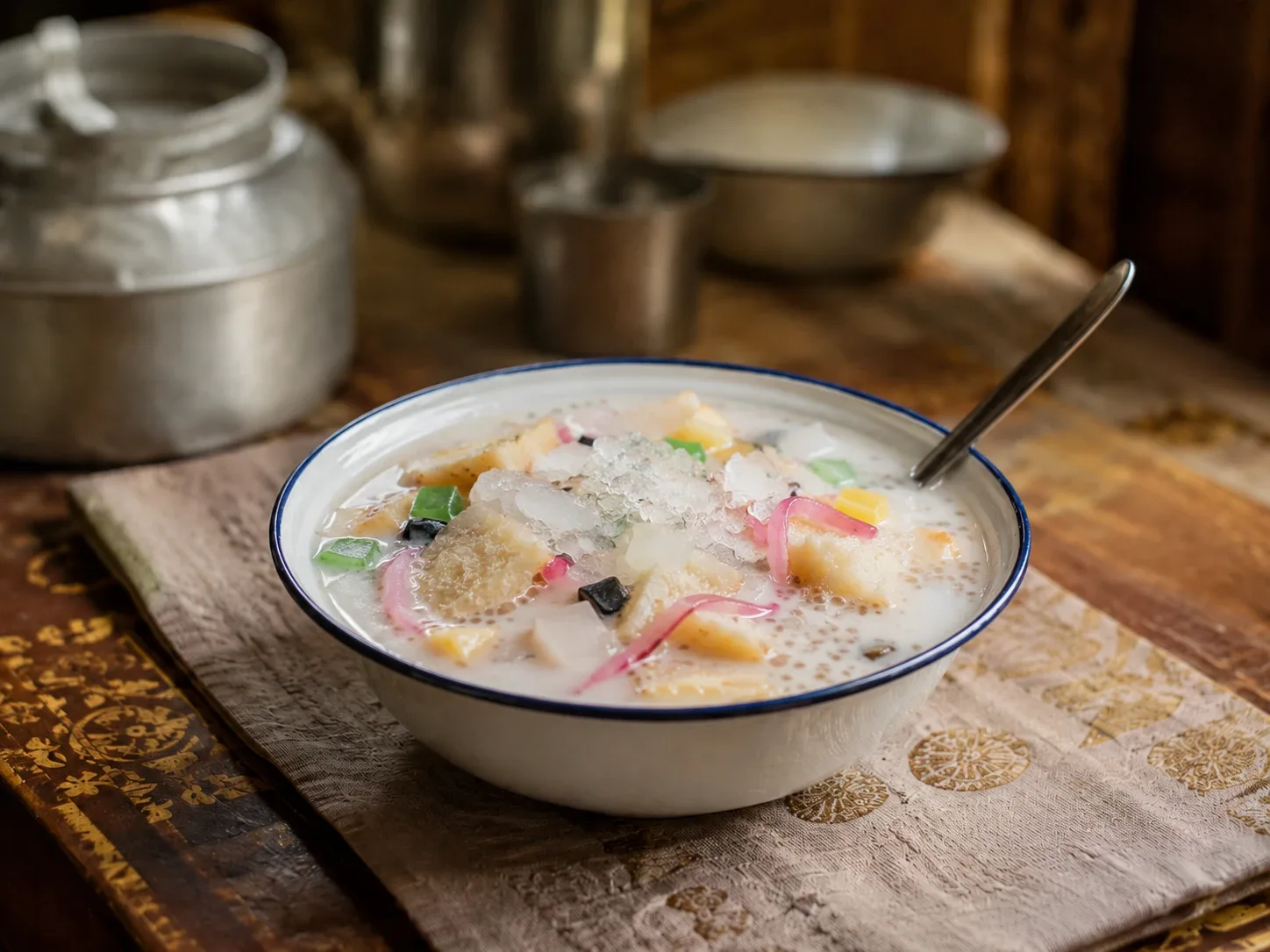
The golden heart cools — coconut milk poured over agar jelly, sago pearls, and soft bread with ice. Myanmar's beloved Thingyan cooler, assembled not cooked.
By Burmese Cookbook Kitchen · July 5, 2026
 ၈
၈- Prep
- 30 min
- Cook
- 20 min
- Serves
- 4
- Level
- Beginner
The name is a small poem: shwe yin aye — gold, heart, cool — the golden heart cools. It is the most Burmese possible way to describe an iced drink: not what it is, but what it does to you, spoonful by spoonful, in the furnace of the hot season. Coconut milk poured over agar jelly, translucent sago pearls, and — gloriously — cubes of soft white bread, all over crushed ice: half beverage, half dessert, eaten with a straw in one hand and a long spoon in the other.
Shwe yin aye belongs to the whole country rather than any region, and to the street rather than the home kitchen. Its great stage is Thingyan, the April new year, when it is ladled out free at satuditha charity stalls — the Buddhist tradition of giving food to anyone who passes — to crowds soaked from the water fights. The drink as we know it settled into its familiar layered-glass form in the parliamentary years after independence, when ice, tinned milk, and city street-stall culture all became ordinary at once.
There is barely any cooking, which means the small decisions carry everything. The agar must be agar — gelatin dissolves in a glass of ice water, agar snaps cleanly against the soft sago. The bread should be a day old, so it drinks the coconut milk without collapsing. And the coconut milk must be salted, properly, the way every Burmese sweet application of coconut is: that pinch is what makes it taste golden instead of merely white.
Salt the coconut milk. A real pinch, not a gesture — it is the difference between a drink that tastes of coconut and one that tastes of sweet white nothing.
မီးဖိုချောင်စကား · A word from the kitchen
Ingredientsပါဝင်ပစ္စည်း
Serves 4
Tap to check off as you gather
For the agar jelly
- agar-agar — powder; if using strands, soak 10 g first
- water
- sugar
For the sago
- sago — the small pearls
- water — for boiling
To assemble
- coconut milk — chilled
- condensed milk — or palm-sugar syrup, for a darker, older-fashioned glass
- salt — generous — it wakes the coconut up
- white bread — soft, crusts on or off as you like, cut into cubes
- crushed ice
Methodချက်နည်း
Tap a numeral as you finish each step
Step 1: Set the jelly
Whisk the agar powder into the water in a small pan, bring it to a boil, and simmer for two minutes, stirring, until fully dissolved. Stir in the sugar, pour into a shallow dish, and let it set — agar firms at room temperature in about half an hour, no refrigerator required. Cut into small cubes or push through a coarse grater for the traditional noodle-like shreds.
Step 2: Cook the sago
Rain the sago into plenty of boiling water and simmer, stirring occasionally so it does not clump, until the pearls turn fully translucent — 10 to 12 minutes. Drain and rinse under cold water to stop the cooking and wash off the surface starch, which would otherwise glue your drink together.
Step 3: Season the coconut milk
Stir the condensed milk and the salt into the chilled coconut milk. Taste it — it should be gently sweet and distinctly coconutty, with the salt invisible but doing its work. This is the only seasoning the whole glass gets, so get it right here.
Step 4: Build the glasses
In tall glasses, layer in order: agar jelly at the bottom, sago pearls over it, bread cubes on the sago, then crushed ice to near the rim. Pour the seasoned coconut milk generously over everything so it seeps down through the strata.
Step 5: Serve with both implements
A straw for the coconut milk, a long spoon for the excavation — shwe yin aye is eaten as much as drunk. Serve immediately, while the bread is soaked but not yet dissolved; that fleeting five-minute window is the whole texture of the thing.
ဟင်းစုံ · Set the table
A Burmese meal is a spread
A cooler or a tea earns a bite alongside:
How a Burmese meal is built →Questions from the kitchen
Bread in a drink — really?
Really, and it is not filler. The bread soaks up coconut milk and turns into soft, cool, custard-like pillows — the most beloved spoonful in the glass, and the first thing children fish for. Slightly stale bread actually works better than fresh; it drinks deeper without disintegrating.
Can I use gelatin instead of agar-agar?
No — gelatin melts at tropical (and glass-of-ice-water) temperatures and gives a wobble this drink never had. Agar sets firm at room temperature, survives the ice bath, and delivers the clean snap that contrasts the soft sago and bread. It is cheap and keeps forever; just buy it.
Can I make the components ahead?
Yes — this is a stall drink, built for advance work. Jelly keeps two days covered at room temperature or chilled; cooked sago keeps a day in cold water in the fridge. Assemble only at the last minute, and never pre-soak the bread.
What does the name mean?
Shwe yin aye translates roughly as golden heart cools — shwe is gold, yin the chest or heart, aye cool. It is less a description of the ingredients than of the effect: the first spoonful landing in your chest on a 40-degree April afternoon.
နောက်တစ်ခု · Cook next
Keep the wok hot
 ၈
၈Drinks & Teahouse · 15 min · Beginner
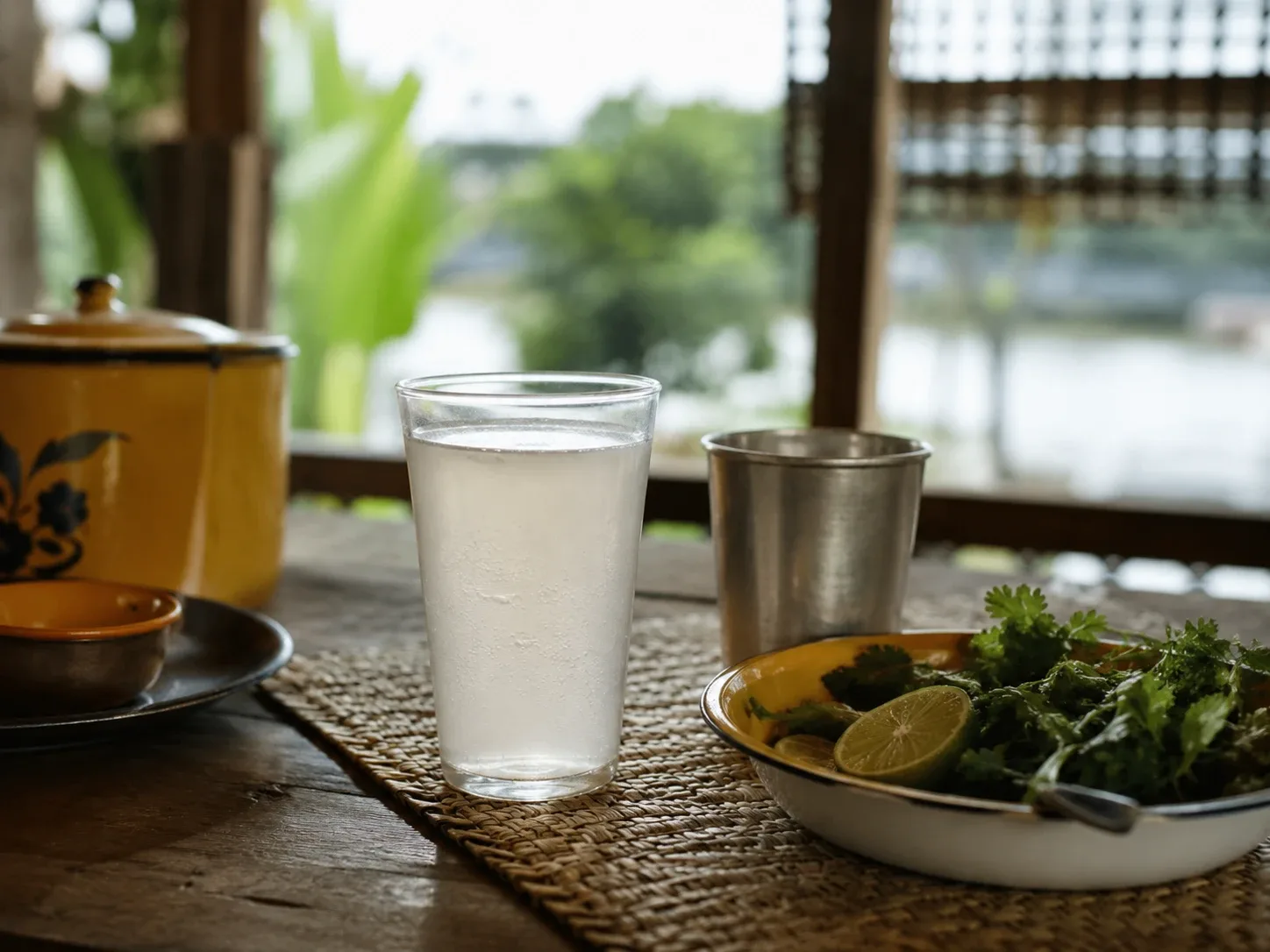
Htan Yay, Toddy of the Lowlandsထန်းရည်
Palm toddy the delta way — fresh-tapped sap drunk sweet at dawn or left to ferment itself milky and gently fizzy by afternoon, plus an honest home method.
 ၈
၈Drinks & Teahouse · 70 min · Beginner
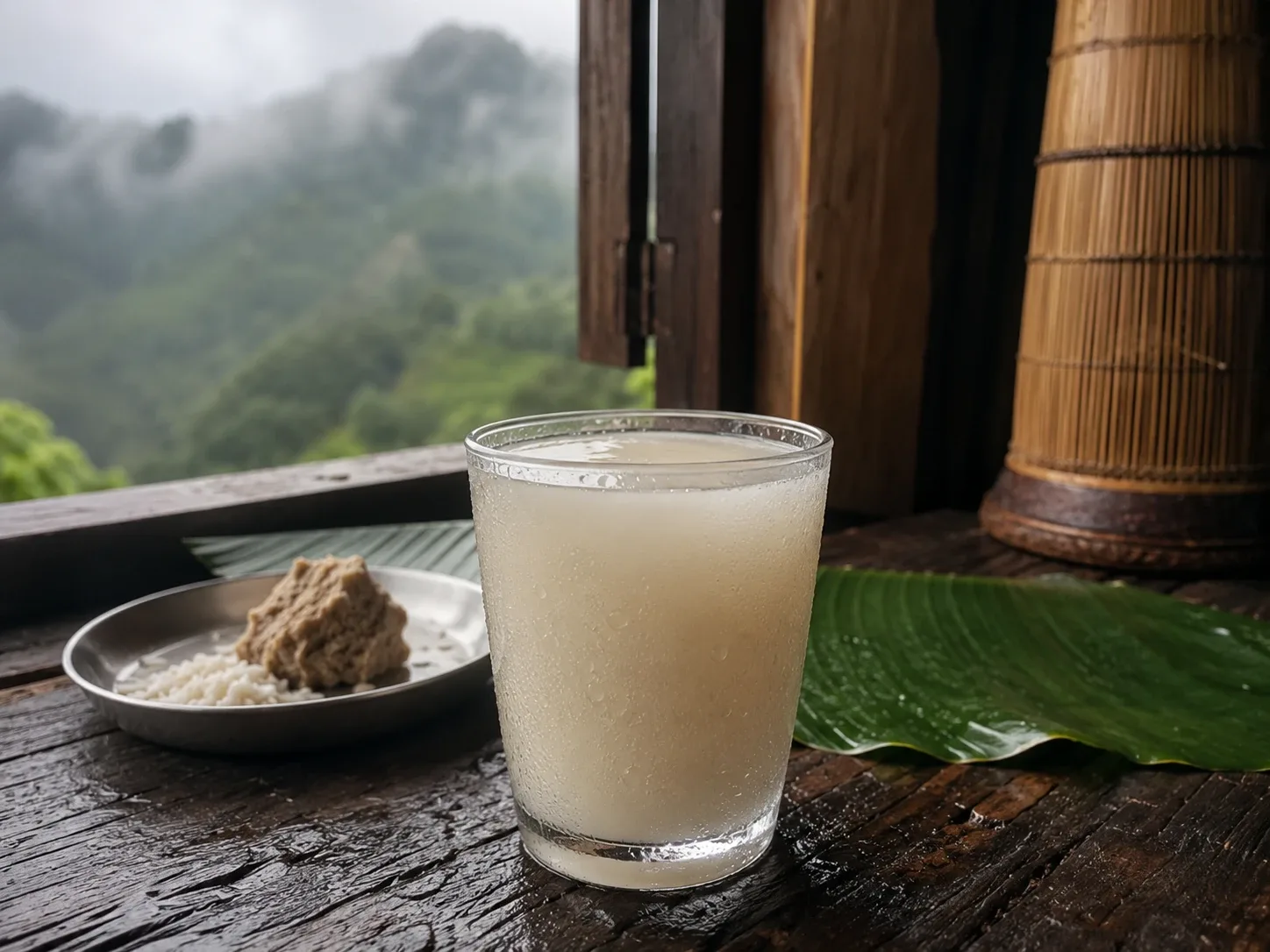
Khaung Yay, the Kachin Rice Beerခေါင်ရည်
The cloudy, gently sweet rice beer of the Kachin hills, brewed at home from steamed sticky rice and a yeast cake — a week of patience, no equipment.
 ၃
၃Curries · 100 min · Intermediate
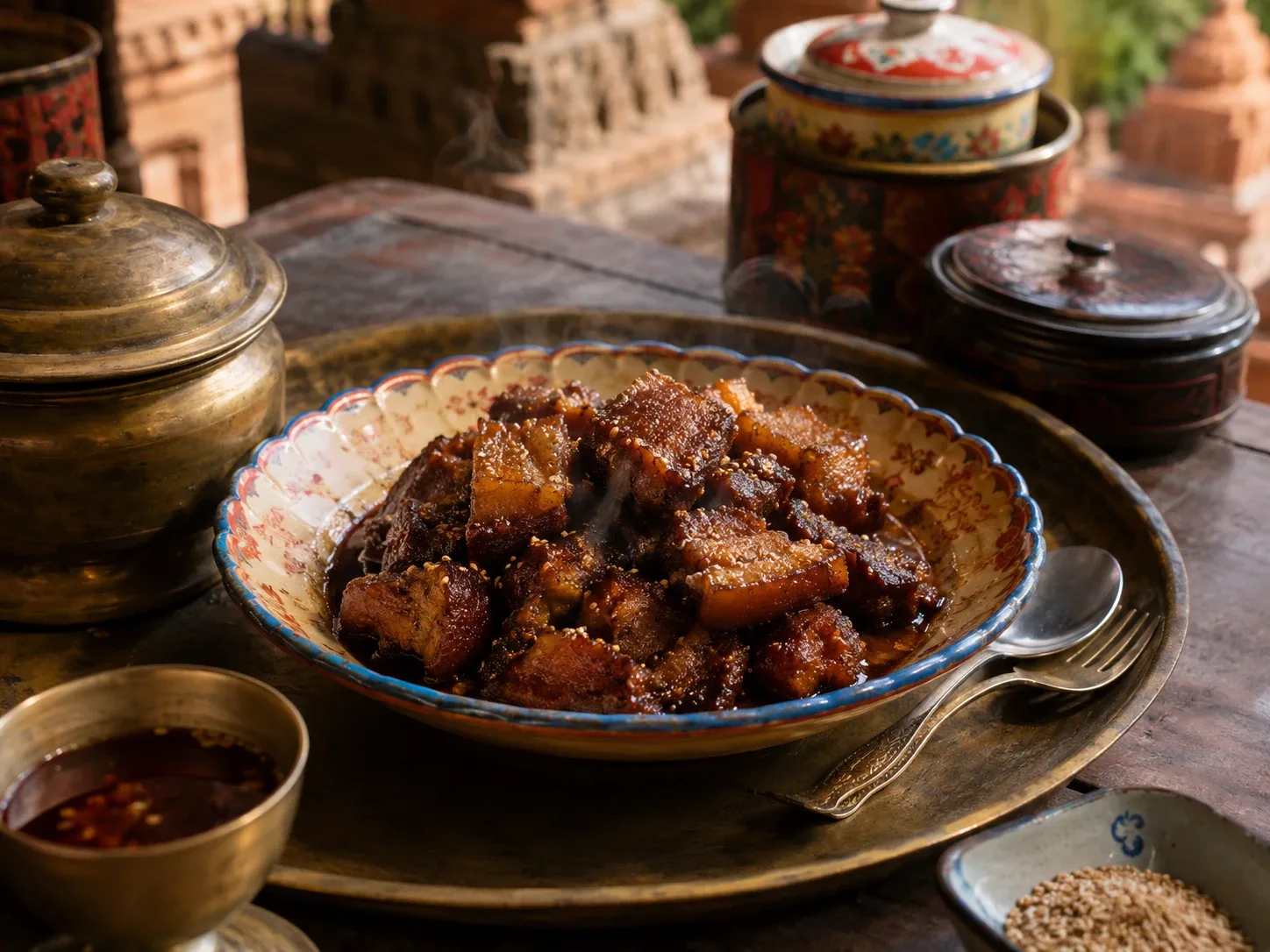
Wet Thar Pone Yay Gyi, Bagan Pork Curryပုန်းရည်ကြီးဝက်သား
Bagan's signature pork curry — pone yay gyi braised si pyan style until the oil returns, the sauce dark and sour with fermented horse-gram bean paste.