Yangon Falooda
ဖါလူဒါ
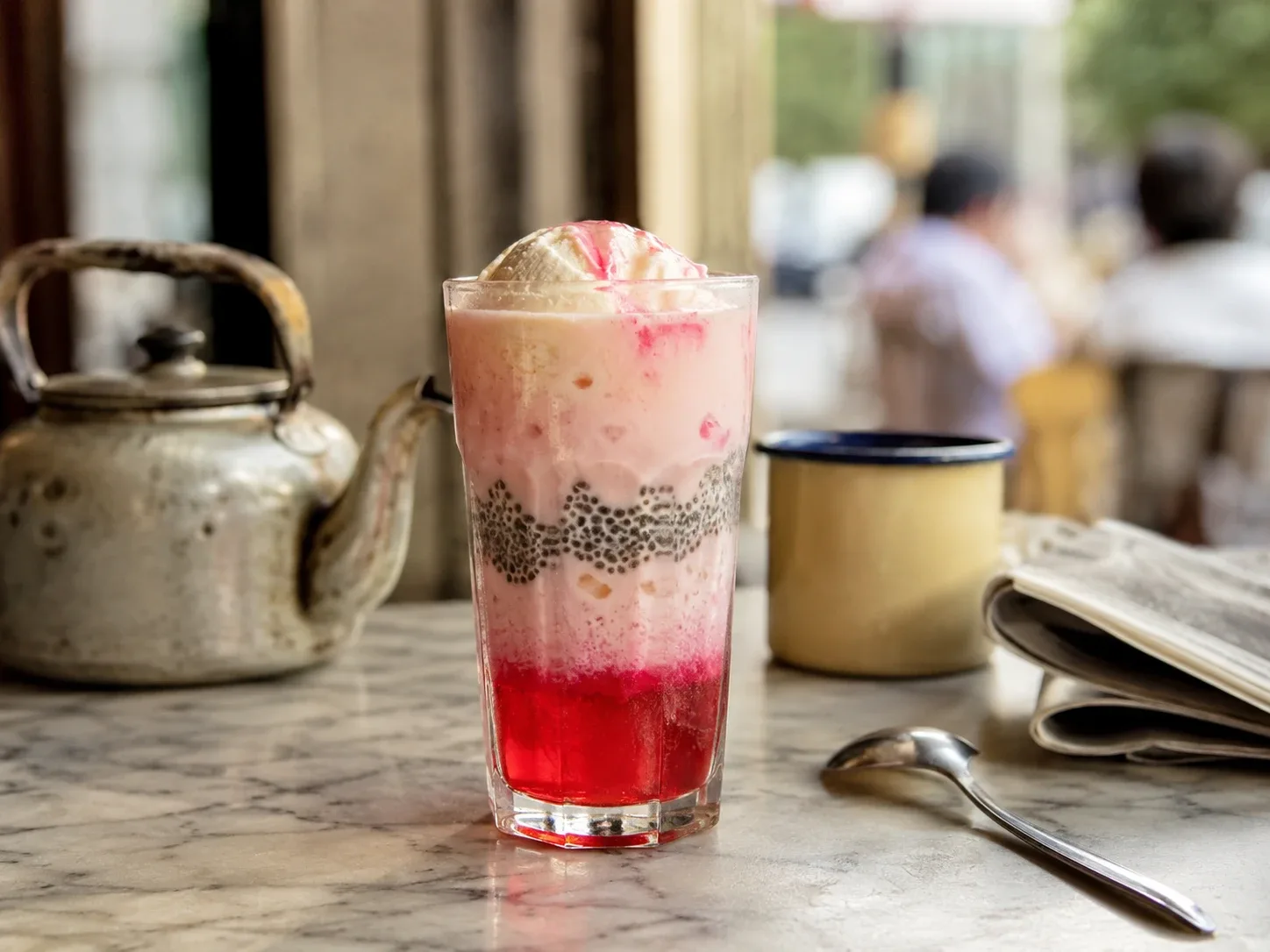
Yangon's rose milk float — rose syrup, cold milk, soaked basil seeds, wobbly jelly, and a scoop of ice cream. A Persian idea, via India, perfected in Rangoon.
Also spelled: Faluda · Phaluda · Burmese Falooda
By Burmese Cookbook Kitchen · July 6, 2026
ရန်ကုန် Yangon & Lower BurmaBritish Burma, 1826–1948
 ၈
၈- Prep
- 25 min
- Cook
- 10 min
- Serves
- 2
- Level
- Beginner
Faluda is proof that Yangon has always been a port city with a sweet tooth. The idea began life in Persia as faloodeh — iced vermicelli in syrup — marched east with the Mughals, took on milk, rose syrup, and basil seeds in India, and stepped off the boat in colonial Rangoon along with the Indian sweet-shop keepers and soda-fountain men who would define the city's treats for a century. Yangon did not invent it. Yangon simply refused to let it leave, and then quietly perfected it.
The glass is the whole show: a stratum of crimson rose syrup at the bottom, blush-pink jelly and swollen basil seeds suspended above it, cold milk blushing rose as it rises, and a scoop of vanilla ice cream melting slowly into the top like a polar cap in the wrong climate. Every layer is a different texture — syrup, snap, pop, cream — and the long spoon is the drinker's excavation tool. On a hot-season evening downtown, a faluda is not a drink so much as a small air-conditioned holiday.
Nothing here is difficult; everything here is assembly and discipline. Use agar for the jelly so it stays firm on ice. Soak the basil seeds until each wears its gelatinous halo. Pour the milk gently over a spoon so the rose layer survives to be admired before it is destroyed. And buy a proper deep-red rose syrup — the Rooh Afza school — because that bottom layer is carrying the color, the perfume, and most of the sugar in a single flourish.
Build it in strict order and do not stir — the drink is an argument between layers, and the drinker settles it with the spoon. A pre-mixed faluda is just pink milk.
မီးဖိုချောင်စကား · A word from the kitchen
Ingredientsပါဝင်ပစ္စည်း
Serves 2
Tap to check off as you gather
For the jelly and seeds
- agar-agar — powder
- water
- sugar
- rose syrup — to tint the jelly its traditional blush
- basil seeds — sold as sabja or tukmaria; chia is a different texture, see the FAQ
For the glass
- rose syrup
- milk — whole, well chilled
- condensed milk — optional, for the full sweet-shop richness
- vanilla ice cream
- crushed ice
Methodချက်နည်း
Tap a numeral as you finish each step
Step 1: Soak the basil seeds
Stir the basil seeds into a cup of cold water and walk away for twenty minutes. Each seed swells into a gray pearl wearing a translucent halo — that frog-spawn look alarms newcomers and delights everyone else. Drain before using.
Step 2: Set the rose jelly
Whisk the agar into the water, boil for two minutes until dissolved, then stir in the sugar and the teaspoon of rose syrup. Pour into a shallow dish and let it set at room temperature, about half an hour, then cut into small cubes. Agar, not gelatin — it has to stay firm in an iced drink.
Step 3: Chill everything
The glass, the milk, the jelly, the spoon if you are feeling ceremonial. Faluda is an engineering project against the hot season; every warm component shortens its life. Stir the condensed milk into the cold milk now if using.
Step 4: Layer the glass
Into each tall glass, in order: two tablespoons of rose syrup, then the jelly cubes, then the drained basil seeds, then crushed ice, then the cold milk poured slowly over the back of a spoon so the rose layer stays put at the bottom, blushing upward instead of dissolving.
Step 5: Crown and serve at once
Float a scoop of vanilla ice cream on top and serve immediately with a long spoon and a wide straw. The drinker's first duty is aesthetic appreciation; the second is to plunge the spoon to the bottom and ruin it beautifully.
ဟင်းစုံ · Set the table
A Burmese meal is a spread
A cooler or a tea earns a bite alongside:
How a Burmese meal is built →Questions from the kitchen
Basil seeds or chia — does it matter?
It matters. Basil seeds hydrate fast and stay distinct — a slick pearl with a pop at the center. Chia hydrates into a more cohesive, slightly mucilaginous cloud. Chia will do in a pinch, but the texture is noticeably different, and texture is most of what faluda is.
Where are the falooda noodles?
Indian and Persian versions thread in fine vermicelli — falooda sev — and some Yangon shops do too. The common Yangon glass leans on jelly and basil seeds instead, sometimes with sago or a spoon of egg custard in the deluxe version. Add cooked, cooled rice vermicelli if you want the fuller Indian experience; the recipe forgives additions.
Can I make it dairy-free?
Yes, and well — chilled coconut milk thinned with a little water is the natural substitute in a country that salts and sweetens coconut milk daily, and coconut ice cream on top completes it. You lose the clean neutrality of dairy but gain something arguably more Burmese.
What rose syrup should I buy?
A proper deep-red rose syrup of the Rooh Afza school — fragrant, unapologetically pink, sweet enough to carry the whole glass. Rose water is not a substitute; it brings perfume but no sugar and no color, and the bottom layer is doing all three jobs.
နောက်တစ်ခု · Cook next
Keep the wok hot
 ၈
၈Drinks & Teahouse · 15 min · Beginner
Htan Yay, Toddy of the Lowlandsထန်းရည်
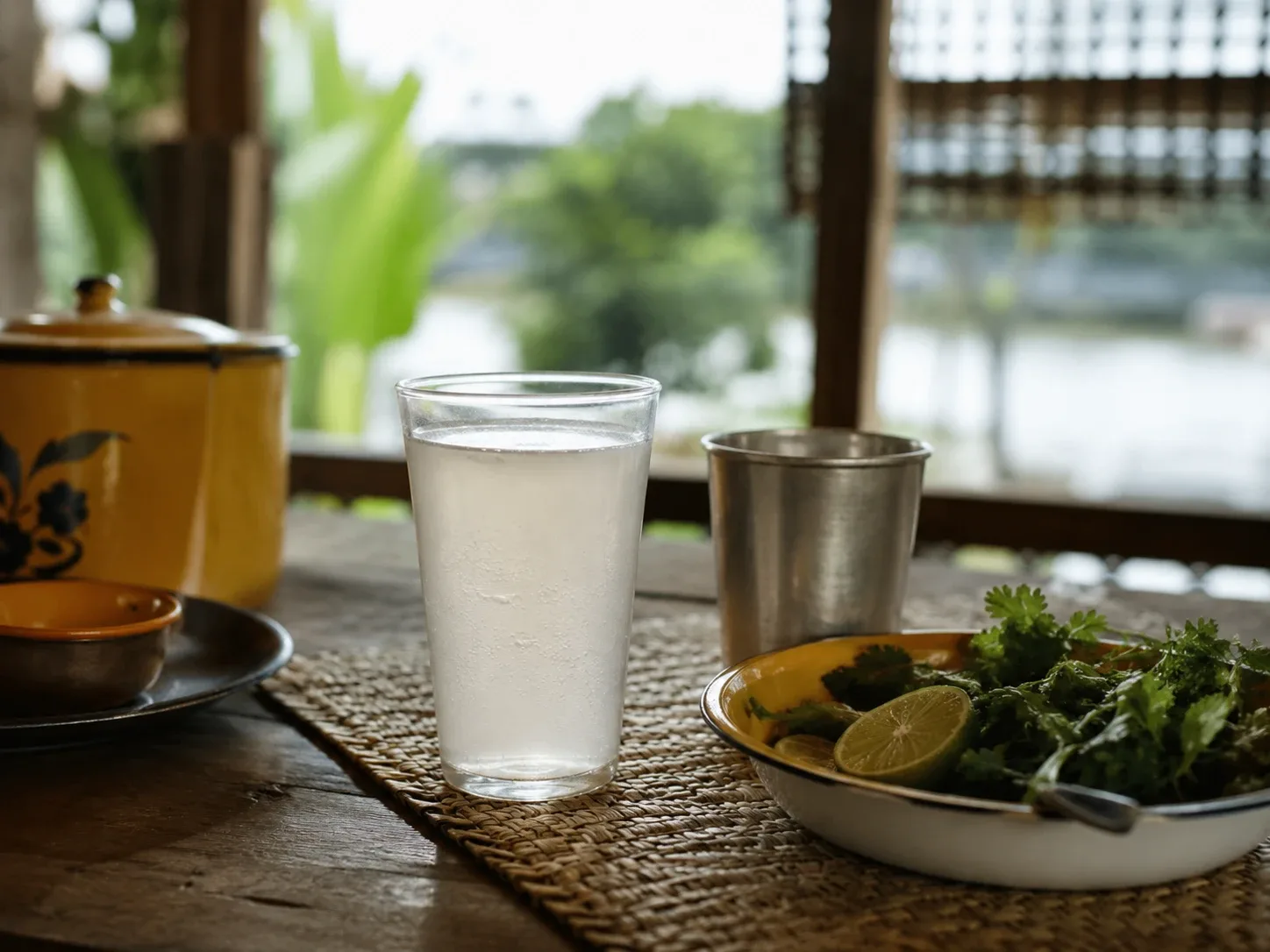
Palm toddy the delta way — fresh-tapped sap drunk sweet at dawn or left to ferment itself milky and gently fizzy by afternoon, plus an honest home method.
 ၈
၈Drinks & Teahouse · 70 min · Beginner
Khaung Yay, the Kachin Rice Beerခေါင်ရည်
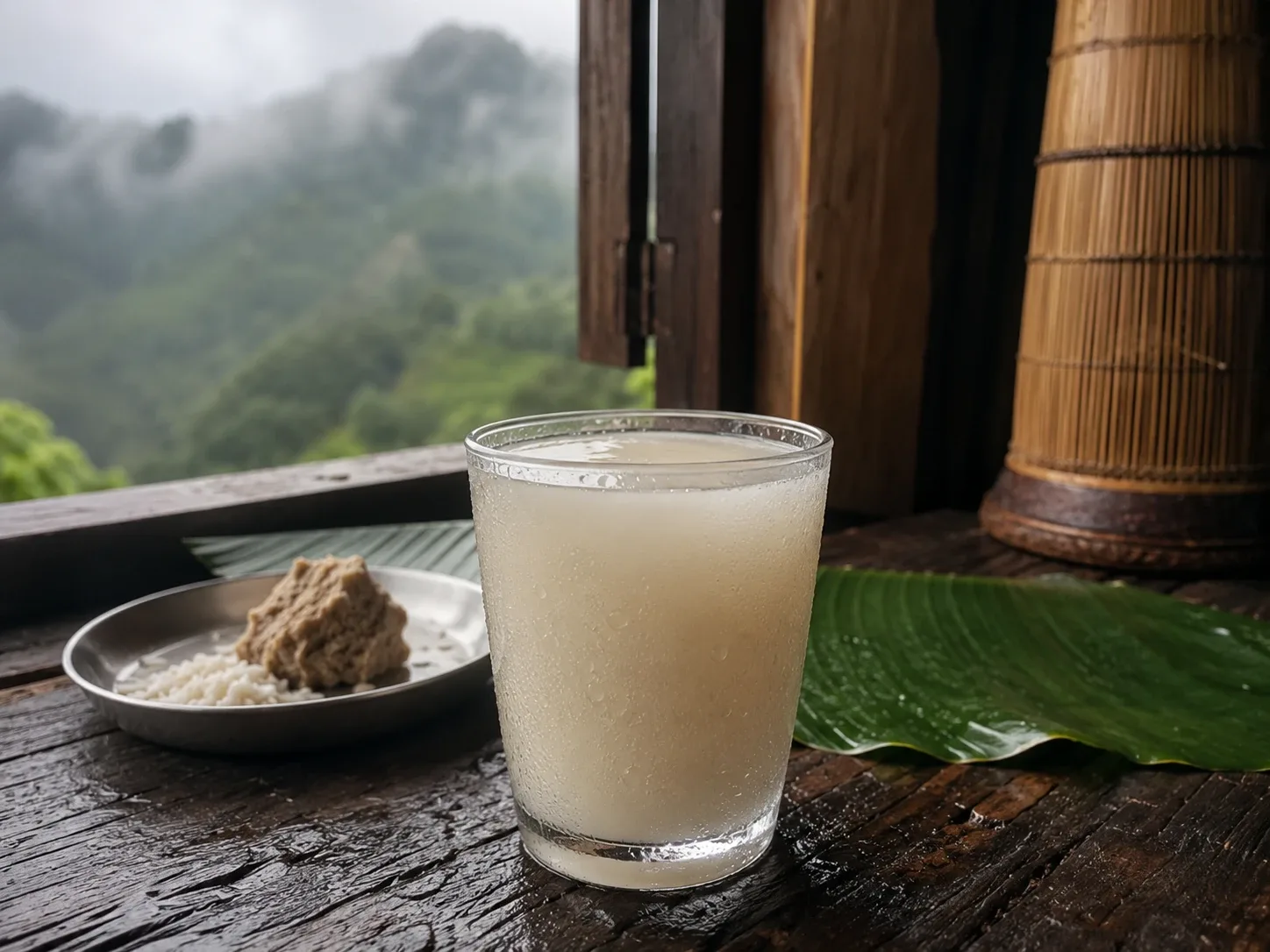
The cloudy, gently sweet rice beer of the Kachin hills, brewed at home from steamed sticky rice and a yeast cake — a week of patience, no equipment.
 ၇
၇Sweets & Mont · 105 min · Intermediate
Pathein Halawa, the Delta's Gilded Sweetပုသိမ်ဟလဝါ
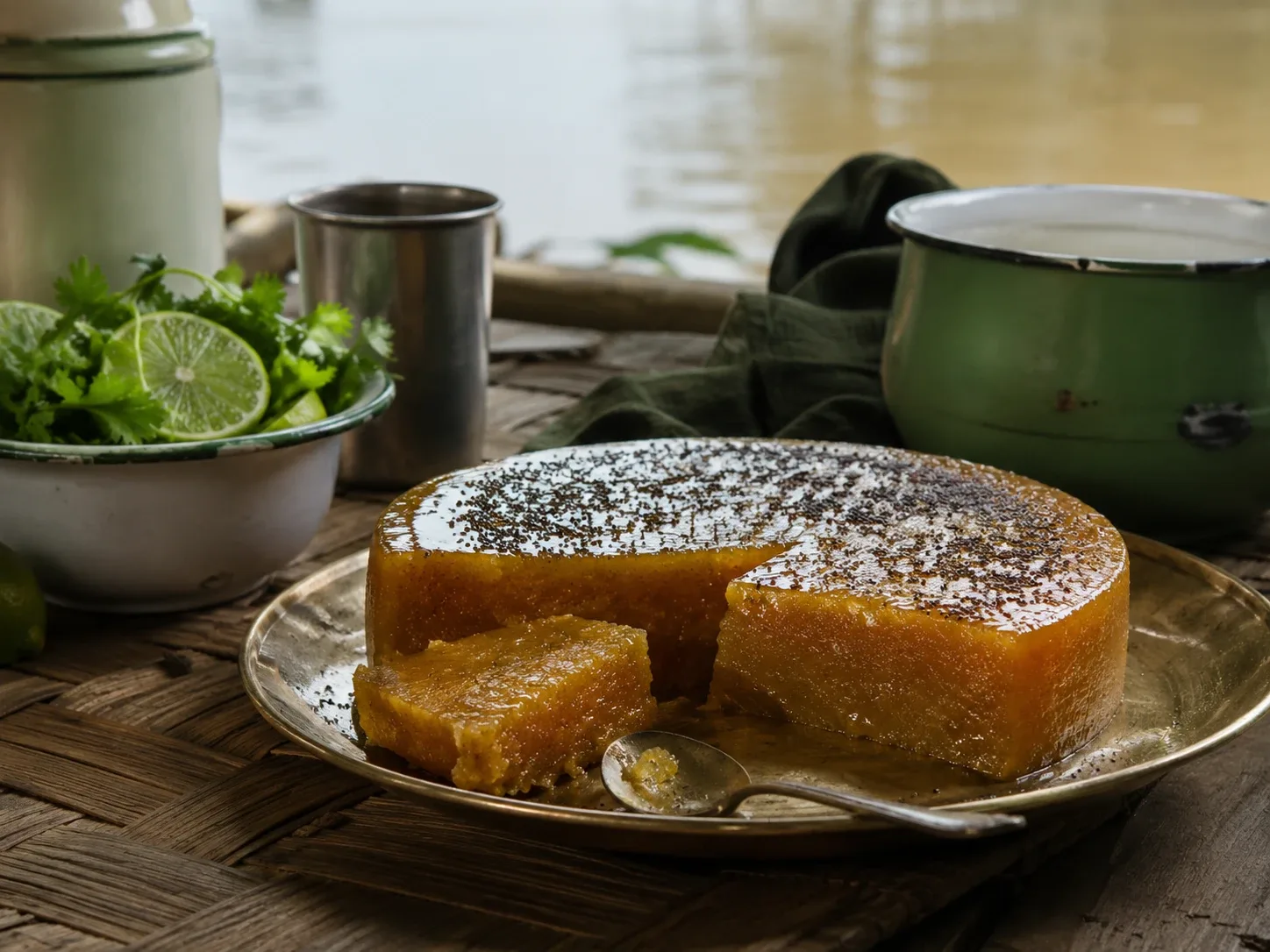
Pathein's famous glutinous-rice halawa — coconut milk, sugar, and ghee stirred patiently down to a dense, gleaming amber slab crowned with toasted poppy seeds.