Burmese Teahouse Milk Tea
လက်ဖက်ရည်
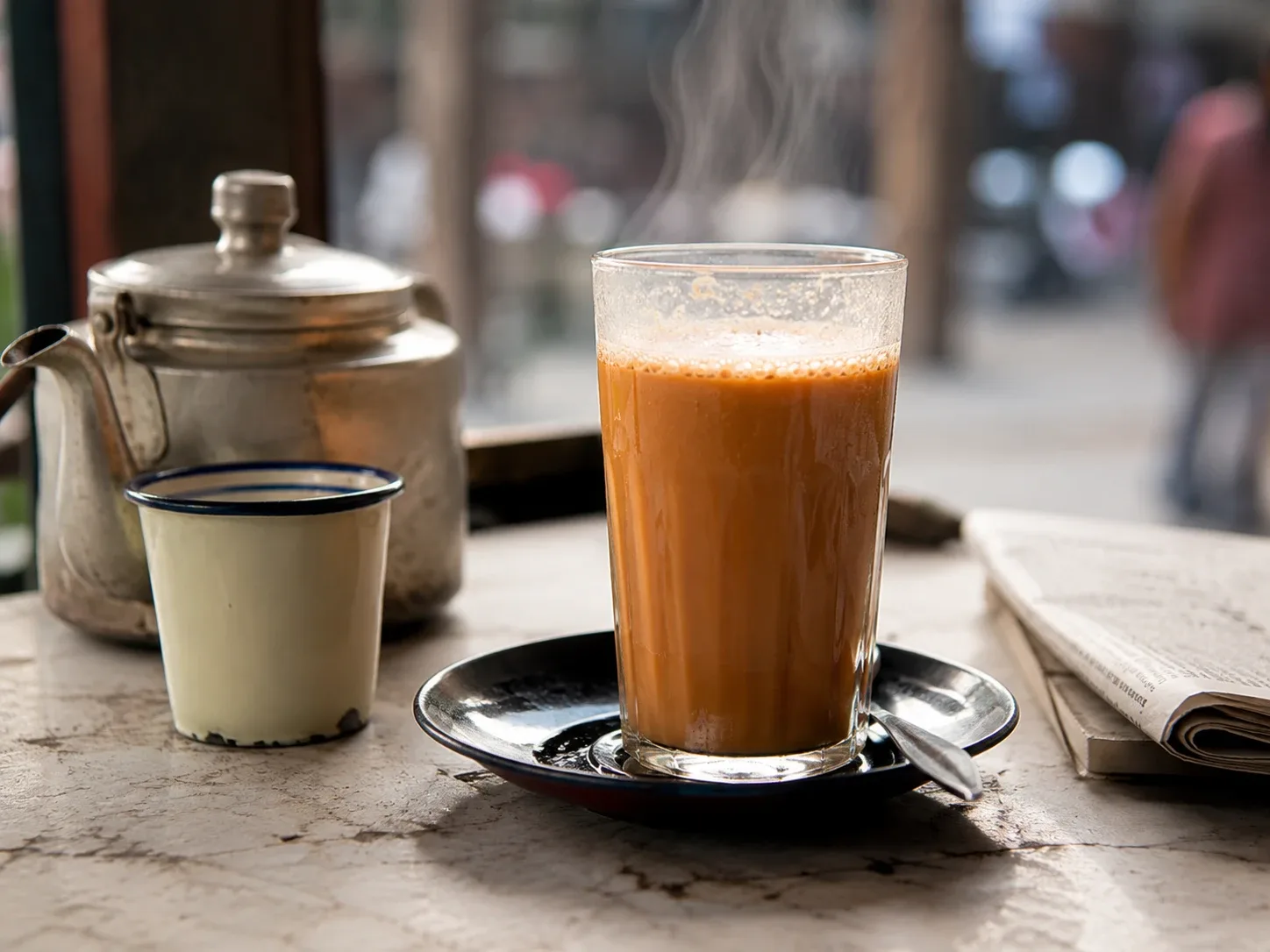
Myanmar's national drink — black tea dust brewed strong, sweetened with condensed milk, mellowed with evaporated milk, and poured between jugs until it froths.
By Burmese Cookbook Kitchen · July 4, 2026
ရန်ကုန် Yangon & Lower BurmaBritish Burma, 1826–1948
 ၈
၈- Prep
- 5 min
- Cook
- 15 min
- Serves
- 2
- Level
- Beginner
If Myanmar has a national beverage, it is not beer, and — heresy — it is not even plain green tea. It is laphet yay, the teahouse milk tea: black tea dust boiled into something almost violent, then civilized with condensed and evaporated milk and thrown between jugs until it froths. The teahouse that serves it is the country's living room — the place where deals are made, football is argued, and every table gets a thermos of free green tea as a chaser to the strong stuff you actually paid for.
The drink is a colonial-era compound. Tea is anciently Burmese — the country eats it, famously, as laphet thoke — but sweet milky tea arrived with Indian tea culture and British tins, and Rangoon's teahouses fused them into something particular. Two milks, always: condensed for its cooked caramel sweetness, evaporated for its density and pale crown. Fresh milk and sugar give you a different, lesser drink.
Two techniques matter. First, the brew is a deliberate over-extraction — the dust boils hard for ten minutes, producing a bitterness that would be a fault anywhere else but is structural here. Second, the pour: cascading the tea between two jugs from a height aerates it, mellows the tannin, and raises the signature froth. And then there is the vocabulary — kya seint for strong, cho seint for sweet, pon mahn for the balanced default — a whole grammar of ratios that lets two words order you exactly the cup you meant. Learn it, and any teahouse in the country will treat you like you have been coming for years.
Teahouse tea is stewed, not steeped — the leaves boil hard until the liquor is nearly opaque. If your brew would be pleasant to drink plain, it is not strong enough to stand up to two kinds of milk.
မီးဖိုချောင်စကား · A word from the kitchen
Ingredientsပါဝင်ပစ္စည်း
Serves 2
Tap to check off as you gather
For the tea
- black tea — tea dust or CTC granules — strong Assam-style; delicate leaf tea will drown
- water
For the milk
- condensed milk — the sweetness — adjust here, never with sugar
- evaporated milk — the body and the pale crown
Methodချက်နည်း
Tap a numeral as you finish each step
Step 1: Stew the tea
Bring the water to a boil in a small pot, add the tea, and keep it at a rolling boil for 8 to 10 minutes, until the liquor is deep mahogany-black and reduced by about a quarter. This is deliberate over-extraction — the bitterness you are creating is a load-bearing wall, there to hold up the milk.
Step 2: Strain it hot
Strain the tea through a fine sieve or cloth into a jug, pressing the dust to get every dark drop. Work quickly; the tea must still be scalding for the pour to froth properly.
Step 3: Build the cup
Spoon the condensed milk into the bottom of each cup or a second jug, add the evaporated milk, and pour the hot tea over. Now the teahouse move — pour the mixture back and forth between two jugs from a height, four or five long throws, until it is fully blended, slightly cooled, and wearing a fine tan froth. This aerates the milk and rounds the tannin; a stirred cup and a thrown cup are different drinks.
Step 4: Taste and adjust
The default cup — pon mahn, "the regular way" — balances bitter tea and sweet milk evenly. More condensed milk makes it cho seint, sweet and rich; more tea and less milk makes it kya seint, strong and bracing. Learn the vocabulary and you can order like a regular anywhere in Myanmar. Serve hot, with something fried nearby.
ခွက်ယောက် · The tools
Equipment
Small saucepan
အိုးငယ်For toasting besan, blooming chili oil, palm-sugar syrups, and the teahouse’s twice-pulled tea.
Shop on Amazon →Fine sieve / muslin
စစ်ခွက်For straining tamarind, pressing broth clear, and sifting flours — line it with muslin for the cleanest pour.
Shop on Amazon →Cloth tea sock / strainer
လက်ဖက်ရည်စစ်The teahouse’s cotton sock — brews tea dust strong and clear, and doubles for pulling tea between jugs.
Shop on Amazon →Heavy kettle
ရေနွေးအိုးTeahouse tea starts with water at a hard rolling boil — and lots of it, all morning.
Shop on Amazon →
Equipment links are Amazon affiliate links. As an Amazon Associate we earn from qualifying purchases, at no cost to you. Disclosure.
ဟင်းစုံ · Set the table
A Burmese meal is a spread
A cooler or a tea earns a bite alongside:
How a Burmese meal is built →Questions from the kitchen
What tea should I actually buy?
CTC Assam — the hard granular kind sold for Indian chai — or any tea labeled dust or fannings. The broken grades brew fast, dark, and bitter, which is exactly the job. Whole-leaf teas and delicate teabags produce a thin liquor that vanishes into the milk like a shy guest.
Can I just use sugar and regular milk?
You will get sweet milky tea, but not laphet yay. Condensed milk brings a cooked, caramelized sweetness and evaporated milk a dense, slightly toasty body — the pairing is the drink's signature, inherited from an era when fresh milk in the tropics was a gamble and tins were trusted.
What do kya seint, cho seint, and pon mahn mean?
They are the teahouse ordering code, each a different ratio of tea to condensed and evaporated milk. Kya seint is strong and less sweet; cho seint is sweeter and richer; pon mahn is the balanced house standard. There are finer gradations — real regulars order in half-steps — but those three will carry you across the country.
Does it work iced?
Beautifully — laphet yay eiq, poured over a full glass of ice, is the hot-season standard. Brew it even stronger than usual so the melting ice does not bankrupt it, and blend the milks in fully before the ice goes in.
နောက်တစ်ခု · Cook next
Keep the wok hot
 ၈
၈Drinks & Teahouse · 15 min · Beginner
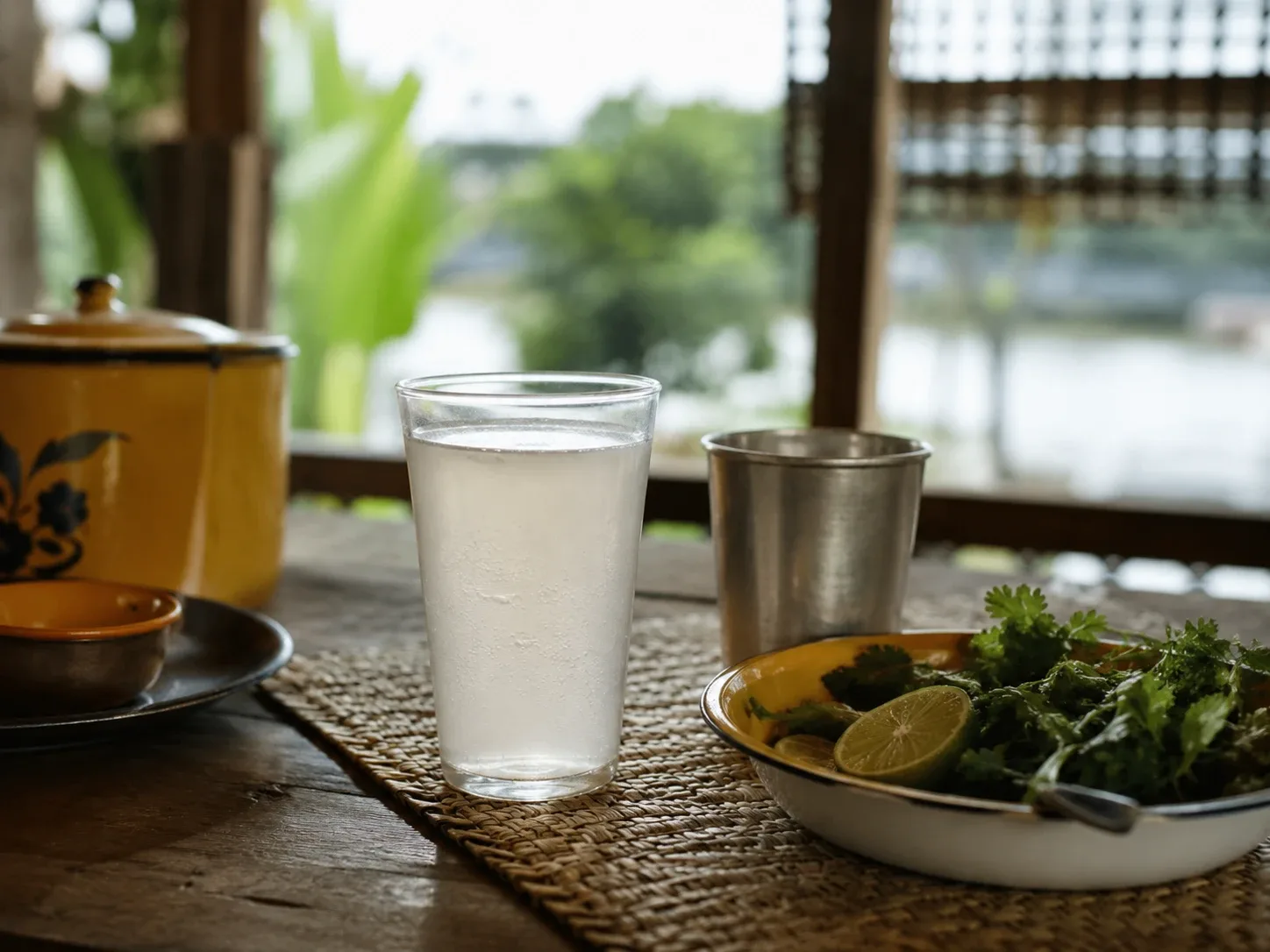
Htan Yay, Toddy of the Lowlandsထန်းရည်
Palm toddy the delta way — fresh-tapped sap drunk sweet at dawn or left to ferment itself milky and gently fizzy by afternoon, plus an honest home method.
 ၈
၈Drinks & Teahouse · 70 min · Beginner
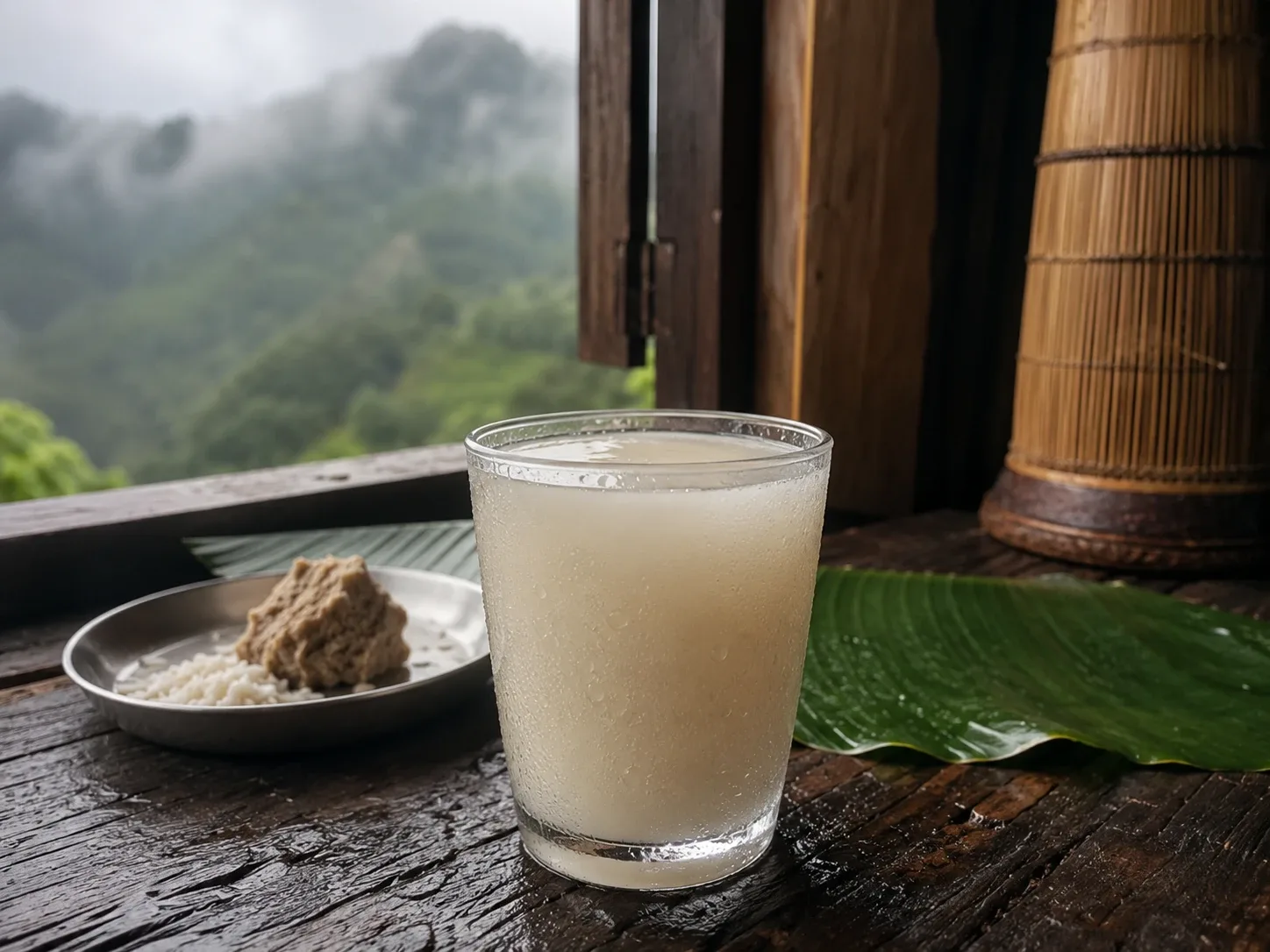
Khaung Yay, the Kachin Rice Beerခေါင်ရည်
The cloudy, gently sweet rice beer of the Kachin hills, brewed at home from steamed sticky rice and a yeast cake — a week of patience, no equipment.
 ၁
၁Rice & Foundations · 210 min · Intermediate
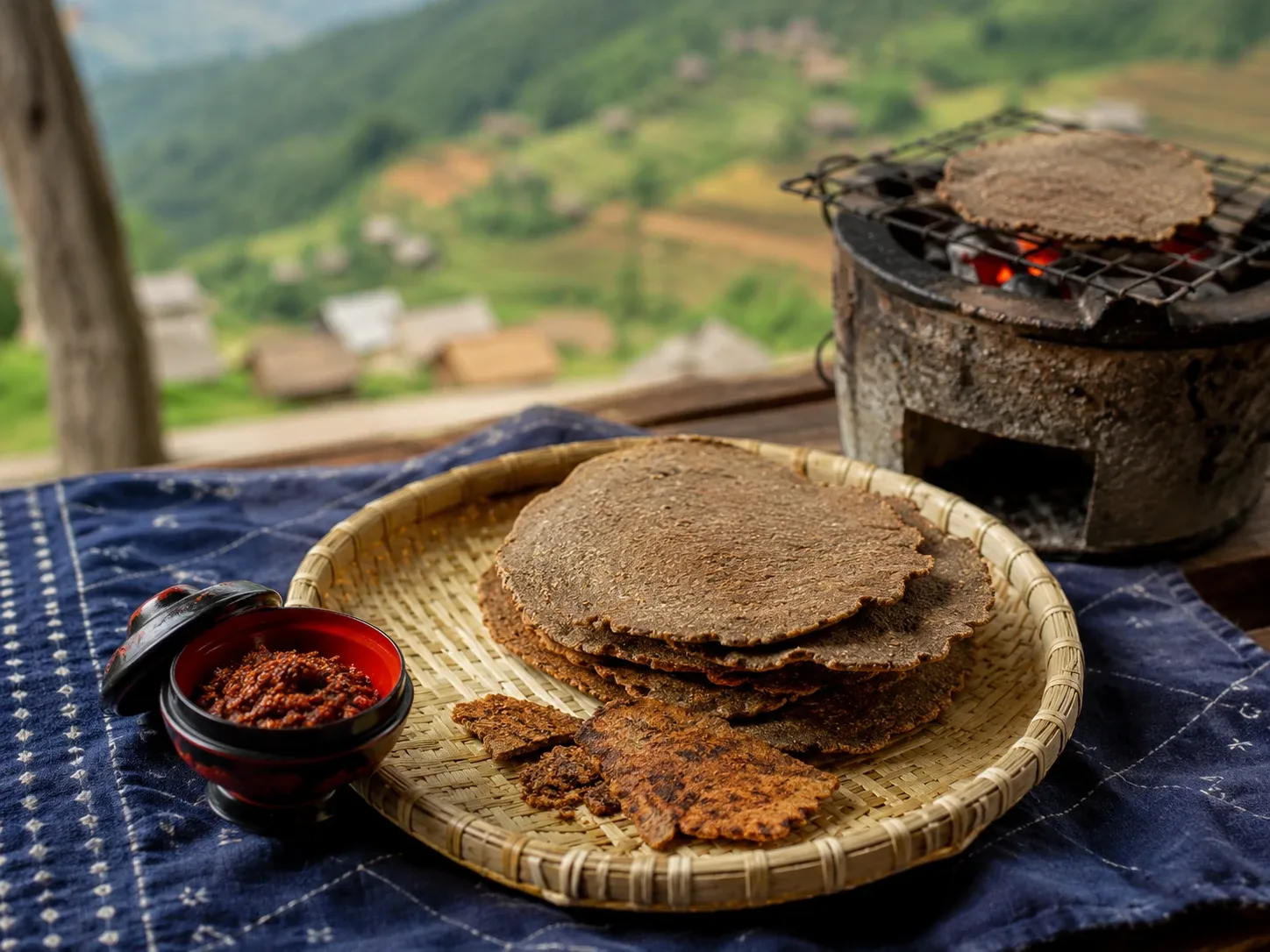
Tua Nao, Shan Fermented Soybean Discsပဲပုပ်
Shan State's seasoning backbone — soybeans boiled, fermented, pounded, and sun-dried into discs you toast over flame and crumble into everything.