Mohinga, the National Breakfast
မုန့်ဟင်းခါး
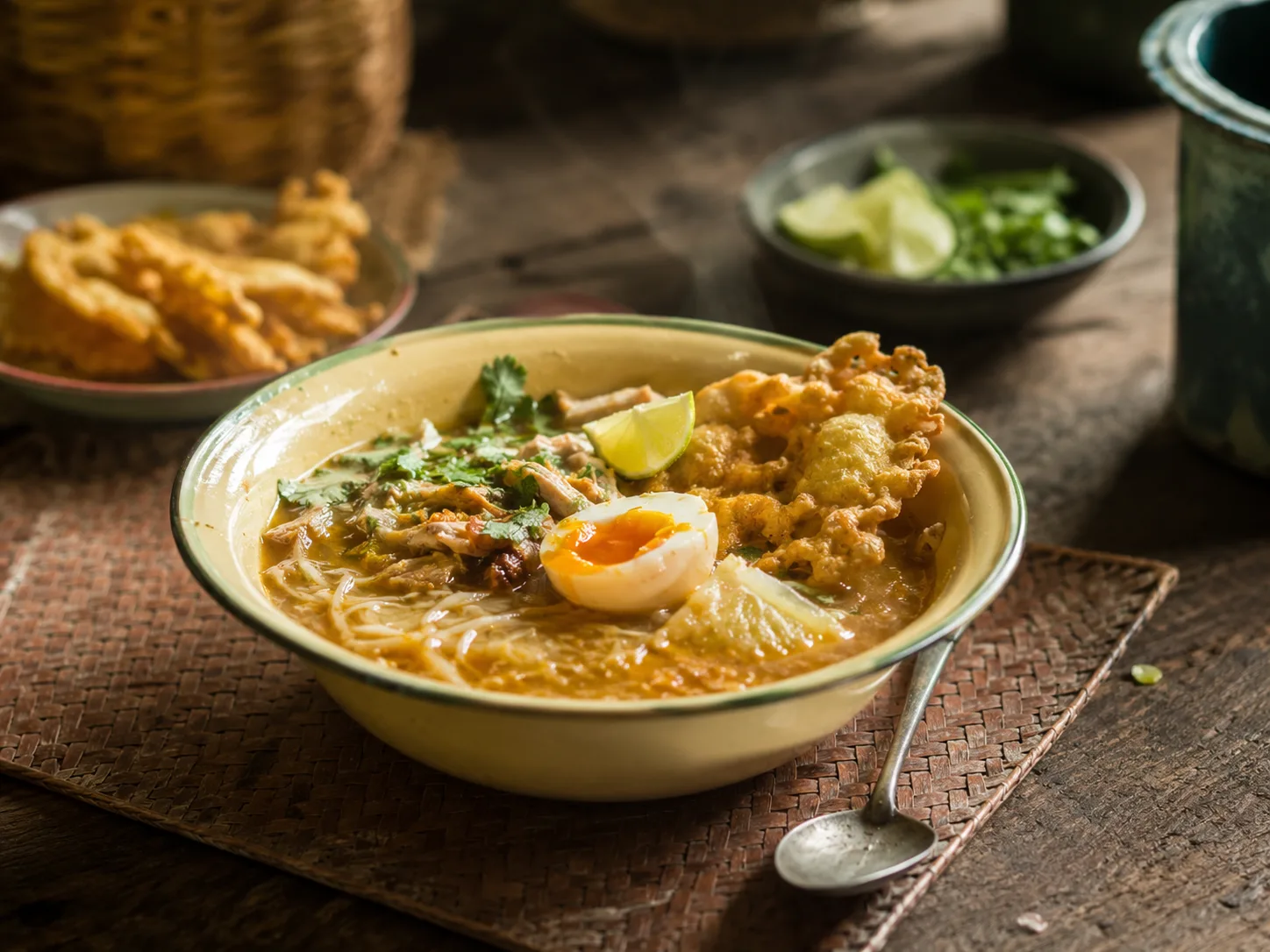
Myanmar's beloved catfish-and-lemongrass noodle soup, built properly — a broth thickened with toasted chickpea flour, rice noodles, and the full crackle of toppings.
Also spelled: Mont Hin Gar · Mohingar · Mote Hin Gar
By Burmese Cookbook Kitchen · July 8, 2026
ဧရာဝတီ Ayeyarwady DeltaKonbaung, 1752–1885
 ၂
၂- Prep
- 40 min
- Cook
- 80 min
- Serves
- 6
- Level
- Intermediate
Ask ten Burmese cooks what mohinga should taste like and you will get ten answers and one non-negotiable: the broth must have body. This is not a clear noodle soup — it is a rounded, faintly earthy, lemongrass-scented gravy that happens to be ladled like one, and the body comes from an ingredient most soup traditions never thought of: toasted chickpea flour.
The dish belongs to the Ayeyarwady delta, where catfish crowd the creeks and rice noodles are a cottage industry. By the Konbaung court's era it was already the food of boats and markets; the British-era railways carried it to every town, and independence made it something like a national symbol — politicians are photographed eating mohinga the way American ones are photographed with hot dogs. It remains breakfast above all. Teahouses cook it before first light, and the good ones sell out by nine.
Two moments decide everything. The besan must be toasted until nutty — raw flour gives you library paste. And the shallot-ngapi base must be fried until the oil separates and glows amber, the small-scale version of the si pyan that governs every Burmese curry. Get those right and the rest is assembly — eggs, herbs, lime, fried crunch — a bowl that eats like a full argument: soft and crisp, rich and sour, morning after morning.
Mohinga is judged by its broth's body — it should coat the spoon like light cream. If yours is thin, you rushed the besan; if it's gluey, you stopped stirring.
မီးဖိုချောင်စကား · A word from the kitchen
Ingredientsပါဝင်ပစ္စည်း
Serves 6
Tap to check off as you gather
For the fish & broth
- catfish fillets — or basa/swai; a whole small catfish with bones makes a deeper broth
- lemongrass — bruised — two for the poach, one minced for the paste
- fresh ginger — half sliced for the poach, half for the paste
- fish sauce
- turmeric — it tames the river taste — do not skip
- water
For the paste & body
- shallots — plus 2 more, sliced into rings, for the topping fry
- garlic
- ngapi (shrimp paste) — or 1 tbsp extra fish sauce in a pinch
- paprika
- peanut oil
- chickpea flour (besan) — toasted — see step one; this is the soul of the body
- banana stem — optional and traditional; the tender heart, sliced into thin rounds — celery hearts are the honest stand-in
To serve
- rice vermicelli — the thin, round kind
- eggs — hard-boiled, halved
- cilantro — plus Vietnamese coriander if you can get it
- limes — in wedges — sourness is added at the table, never in the pot
- crispy split-pea fritters (pè kyaw) — or fried chickpea crackers; the crunch is not optional
- dried chili flakes — fried briefly in a spoon of the shallot oil
Methodချက်နည်း
Tap a numeral as you finish each step
Step 1: Toast the chickpea flour
In a dry pan over medium-low heat, toast the besan, stirring constantly, until it darkens a shade and smells like warm peanuts — 4 to 5 minutes. Raw besan makes a chalky broth; toasted besan makes a silky one. Set it aside to cool completely so it won't lump.
Step 2: Poach the fish
Bring the water to a bare simmer with two bruised lemongrass stalks, the sliced ginger, turmeric, and fish sauce. Slide in the fish and poach gently until just cooked, 8 to 10 minutes. Lift the fish out and keep every drop of that liquid — it is the backbone of the soup. Flake the fish, checking for bones.
Step 3: Build the paste
Pound the shallots, garlic, minced lemongrass, remaining ginger, and ngapi to a rough paste in a mortar. Heat the peanut oil in a heavy pot and fry the paste with the paprika over medium heat, stirring, until it smells sweet and the oil turns amber and begins to separate at the edges — 6 to 8 minutes. This little si pyan moment is where the broth's depth comes from; pale paste, pale mohinga.
Step 4: Marry fish and paste
Add the flaked fish to the paste and turn it gently for two minutes so every flake takes on the amber oil. Burmese cooks call this letting the fish "eat the paste" — it keeps the fish tasting of itself inside the finished soup.
Step 5: Thicken the broth
Whisk the cooled toasted besan into a cup of the cool poaching liquid until utterly smooth, then whisk it back into the pot with all the remaining liquid. Add the banana stem if using. Simmer gently, stirring often along the bottom, for 30 to 40 minutes, until the broth coats a spoon like light cream.
Step 6: Season and hold
Taste. It should be savory-deep with fish sauce, warm but not hot — remember the chili and lime arrive at the table. Mohinga improves as it sits; teahouses make it before dawn for good reason. Hold it at the lowest simmer while you set the table.
Step 7: Assemble the bowls
Blanch the rice vermicelli briefly, drain well, and divide among deep bowls. Ladle the broth generously over. Top with egg halves, cilantro, fried shallot rings, chili flakes in their oil, a shattering of pè kyaw, and a lime wedge on the rim. Everyone finishes their own bowl — that is the point of mohinga.
ခွက်ယောက် · The tools
Equipment
Heavy pot / Dutch oven
အိုးကြီးDeep and heat-retentive — for mohinga broth, long-simmered hin, and deep-frying without temperature crashes.
Shop on Amazon →Noodle basket / colander
ဆန်ခါBlanch and lift rice noodles in seconds — mohinga service moves fast, and soggy noodles wait for no one.
Shop on Amazon →Stone mortar & pestle
ဆုံFor garlic-ginger paste, pounded dried shrimp fluff, and crushed peanuts — the blender lies about texture; the stone doesn’t.
Shop on Amazon →
Equipment links are Amazon affiliate links. As an Amazon Associate we earn from qualifying purchases, at no cost to you. Disclosure.
ဟင်းစုံ · Set the table
A Burmese meal is a spread
A bowl is complete, but the table is not without its condiments:
- Si chet, chili oilဆီချက်The fragrant red oil every household keeps by the stove.
- Crispy fried shallotsကြက်သွန်ကြော်A spoonful of crunch and sweet shallot oil over anything.
- Balachaungဘလချောင်းThe crispy shrimp relish that lives on every Burmese table.
- Teahouse milk teaလက်ဖက်ရည်How a Burmese meal ends — sweet, strong, and slow.
Questions from the kitchen
I can't find catfish. What actually works?
Any mild freshwater fish — basa and swai are the diaspora standards and genuinely close. Tilapia works. Salmon and mackerel do not; their oils argue with the lemongrass. Canned sardines in a true emergency make a different but honorable soup some households love.
Do I really need banana stem?
Tradition says yes, geography usually says no. Its role is a gentle crunch and a faint astringency against the rich broth — thinly sliced celery hearts or canned hearts of palm are the honest stand-ins, or skip it and let the pè kyaw carry the texture.
Can I make it ahead?
Mohinga is better made ahead — the broth deepens overnight in the fridge. Reheat gently, loosen with a splash of water, and keep noodles and toppings separate until the moment of serving. Freeze the broth up to a month.
Why did my broth turn gluey?
Too much besan or too little stirring. The flour settles and over-thickens along the bottom — stir along the base as it simmers, and remember it will thicken a little more off the heat. Thin with hot water and a dash of fish sauce; the flavor survives dilution better than the spoon-coat survives neglect.
နောက်တစ်ခု · Cook next
Keep the wok hot
 ၂
၂Noodles & Mohinga · 50 min · Beginner
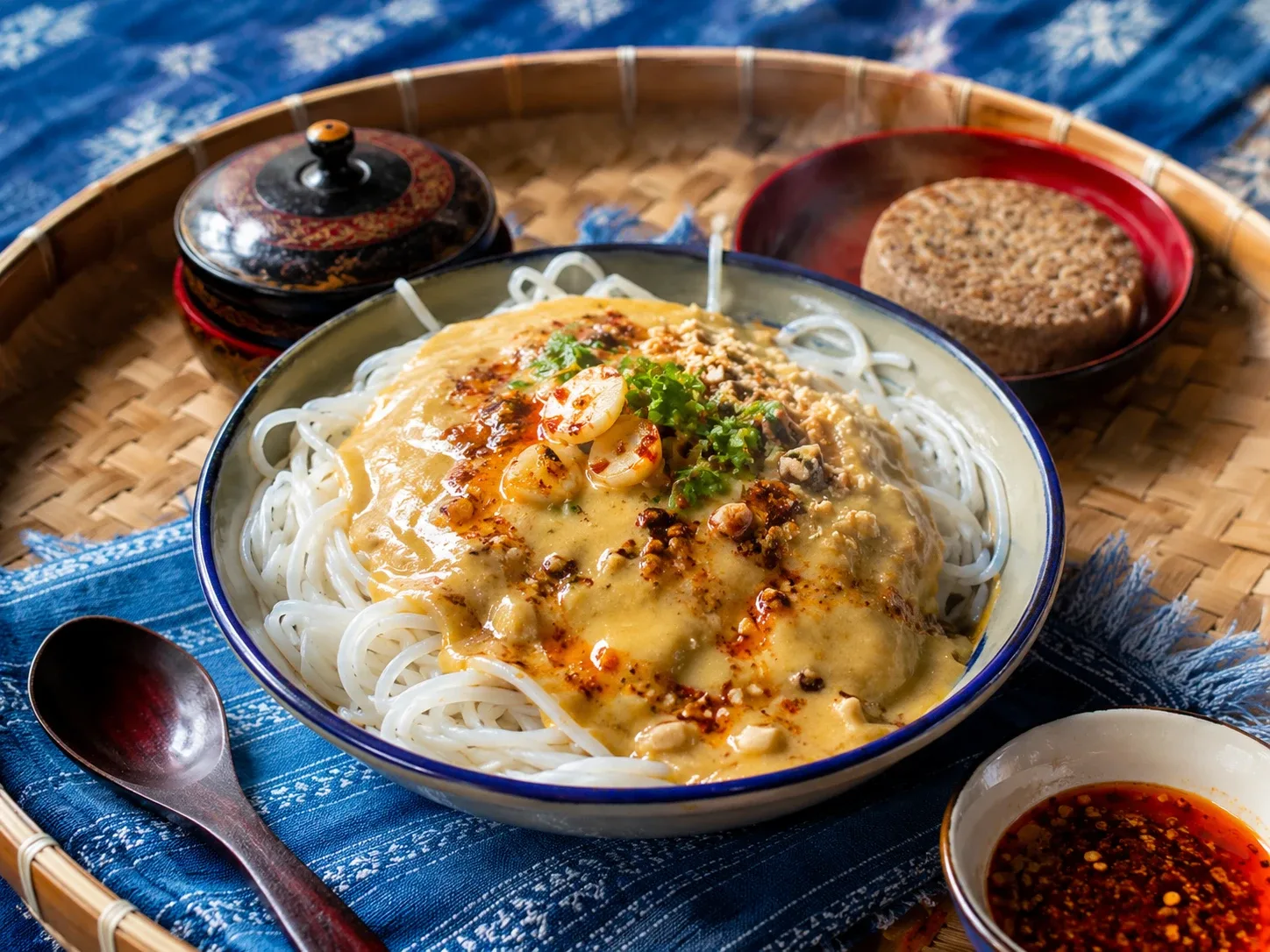
Tofu Nway, Warm Shan Tofu Noodlesတိုဟူးနွေး
Warm chickpea tofu that never sets, ladled like golden custard over rice noodles with garlic oil, chili, and peanuts — Shan State's great breakfast.
 ၂
၂Noodles & Mohinga · 40 min · Intermediate
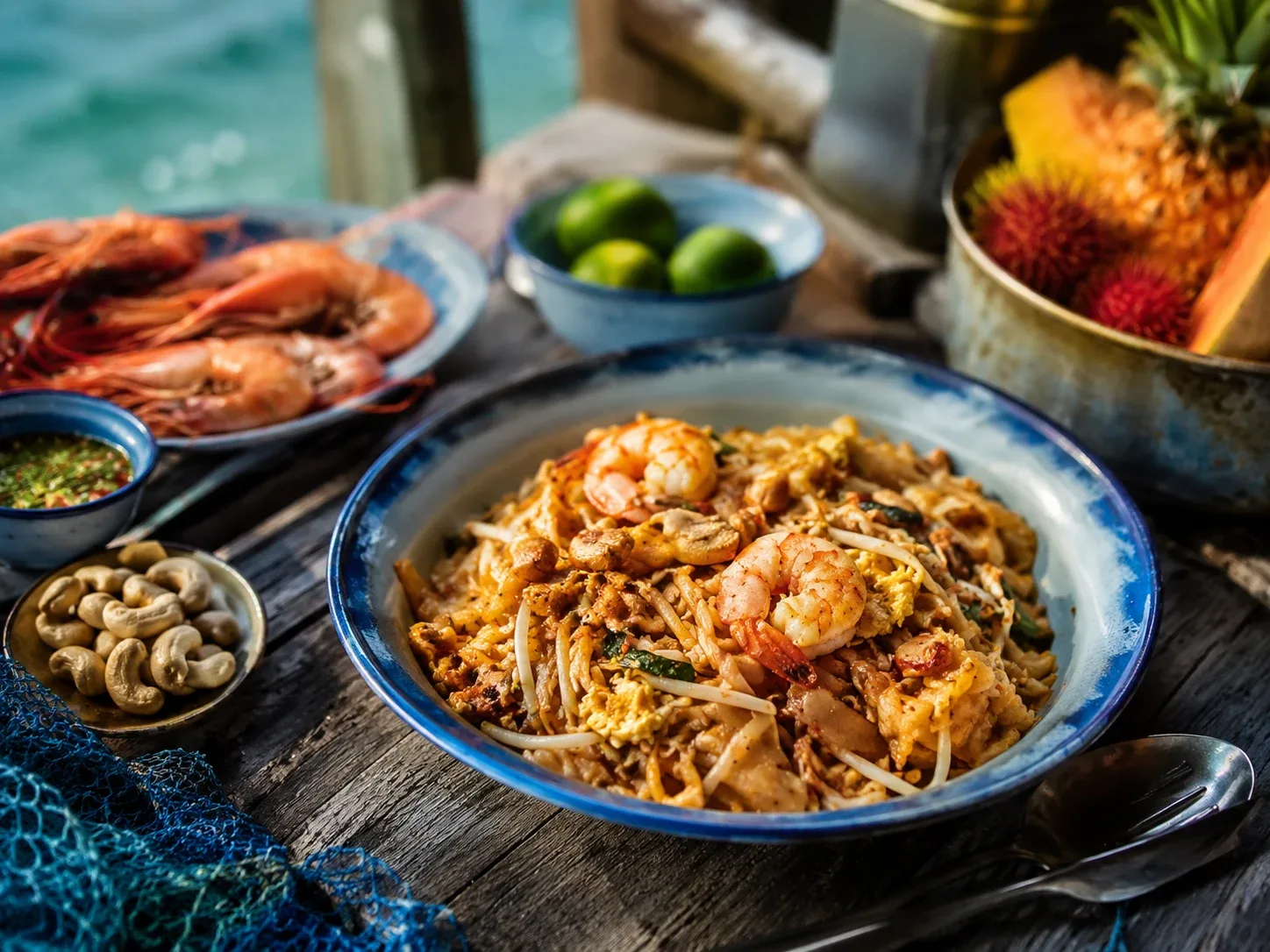
Kat Kyi Kaik, Dawei's Scissor-Cut Noodlesကတ်ကြေးကိုက်
Dawei's famous stir-fried rice noodles, snipped with scissors at the table — sweet-savory, smoky from the wok, piled with prawns, egg, and peanuts.
 ၄
၄Salads & Thoke · 25 min · Beginner
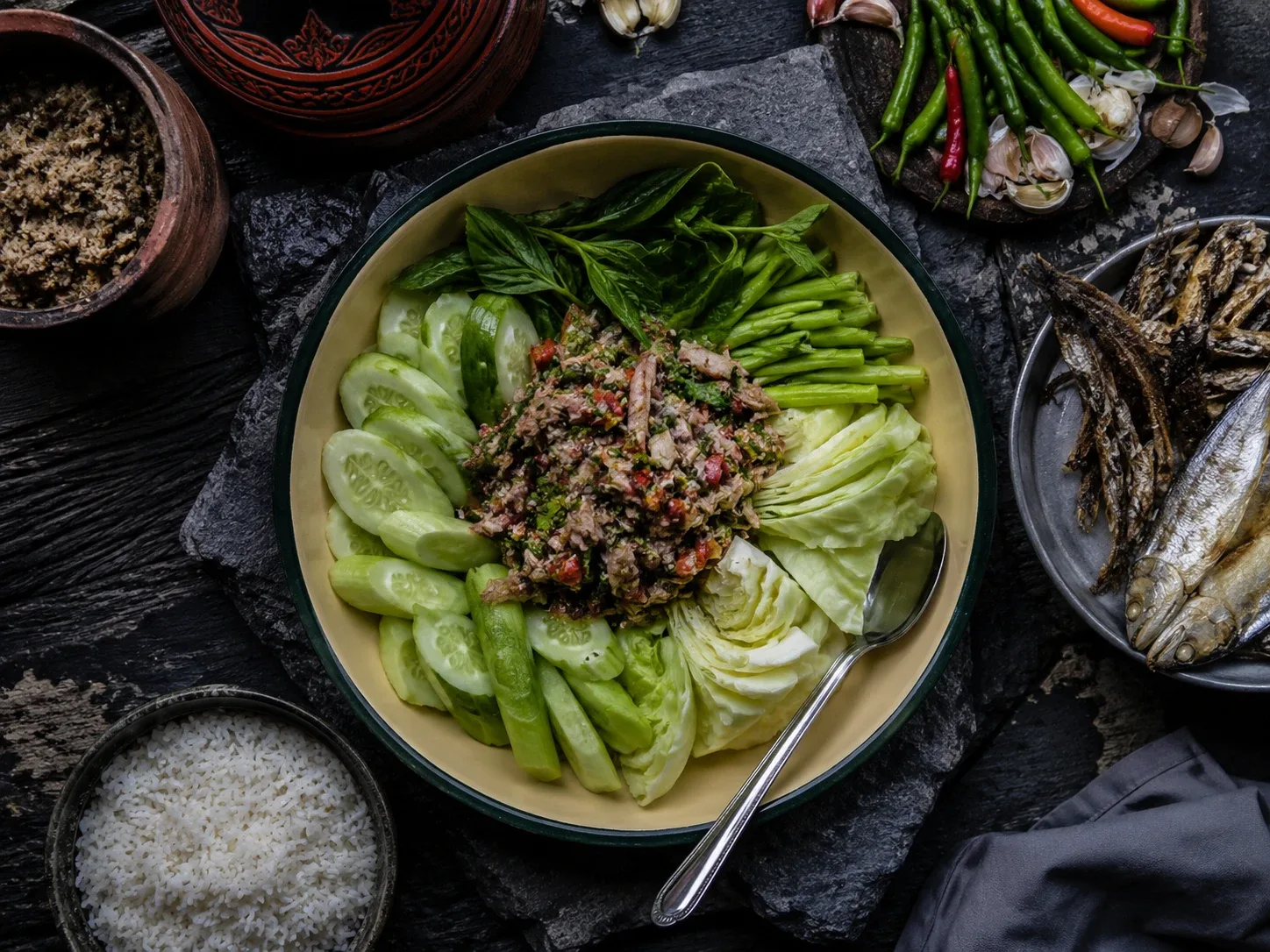
Rakhine Ngapi Thoke, the Pounded Fireငါးပိသုပ်
Rakhine's roasted fish-paste salad — marine ngapi pounded with green chili, garlic, and lime, served the western-coast way with crisp vegetables and rice.