Shan Khao Swè, Noodles from the Hills
ရှမ်းခေါက်ဆွဲ
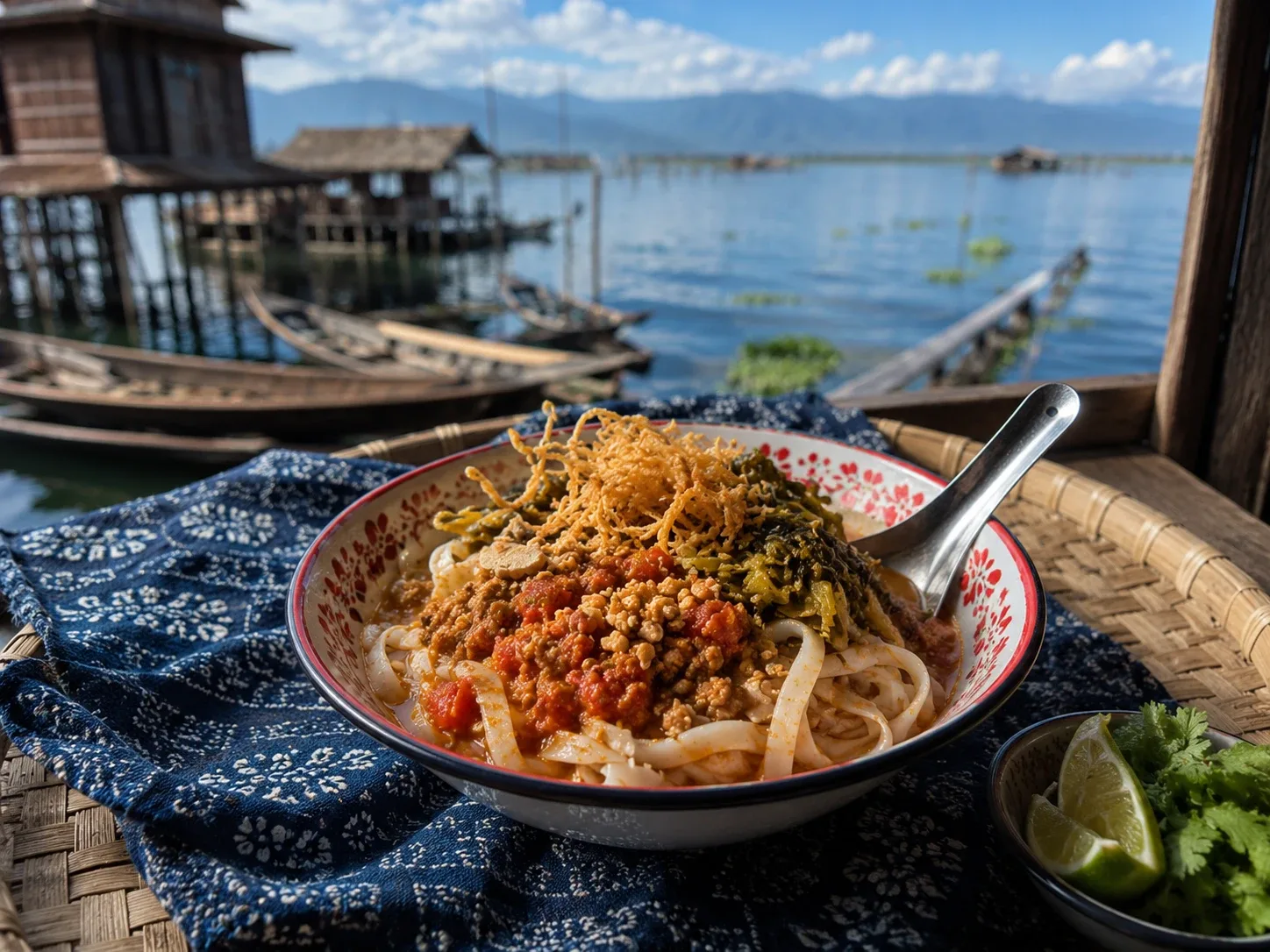
Shan noodles the honest way — flat rice noodles under a jammy tomato-and-pork sauce, finished with roasted peanuts, pickled mustard greens, and garlic oil.
Also spelled: Shan Khauk Swè · Shan Noodles · Shan Khaut Swe
By Burmese Cookbook Kitchen · June 9, 2026
ရှမ်း Shan StateOpening & Diaspora, 1988–present
 ၂
၂- Prep
- 20 min
- Cook
- 30 min
- Serves
- 4
- Level
- Beginner
Every visitor to Myanmar comes home talking about Shan noodles, and every Shan cook smiles at what the city did to them. In the hills around Taunggyi and Inle Lake, the dish's soul is tua nao — soybeans fermented into flat, pungent discs that are toasted and crumbled into the sauce, the hill country's answer to the coast's ngapi. In Yangon and Mandalay, where Shan noodle shops multiplied through the boom years of the past few decades and became the default lunch of the modern city, tomatoes took the lead: sweet, bright, and easier to love at first bite. Both are real. This recipe teaches the tomato-forward version most kitchens can shop for, and tells you plainly where the tua nao belongs if you can find it.
The technique is a single, patient act: cooking the tomatoes past sauce and into jam. When they collapse and the oil rises brick-red at the edges, the sauce will cling to the noodles instead of flooding them — that is the whole exam, and it is why this bowl suits a beginner. Everything else is assembly with strong opinions: flat rice noodles slicked in garlic oil so they stay loose, crushed peanuts for sweetness and crunch, and pickled mustard greens whose sour bite keeps the richness honest. Serve it dry with broth on the side, as the teahouses do, and you will understand why the country adopted a mountain dish as its everyday comfort.
Cook the tomatoes past sauce and into jam — when the oil turns brick-red and rises to the edges, the sauce is ready. Stop sooner and the noodles drown.
မီးဖိုချောင်စကား · A word from the kitchen
Ingredientsပါဝင်ပစ္စည်း
Serves 4
Tap to check off as you gather
For the sauce
- ground pork — or chicken thigh, chopped small — both are canon in Shan State
- ripe tomatoes — the riper the better; chopped small, skins and all
- shallots — finely chopped
- garlic — minced
- fermented soybean (tua nao) — the traditional umami of the hills — 2 tsp light soy sauce is the common stand-in
- light soy sauce
- paprika
- palm sugar (jaggery) — or brown sugar, to round the tomatoes
- peanut oil
For the garlic oil & noodles
- flat rice noodles — dried, pad-thai width — or 600 g fresh
- garlic — sliced thin
- peanut oil
To serve
- roasted peanuts — roughly crushed
- pickled mustard greens — chopped — sold in vacuum packs at any Asian grocer; the sour bite is structural
- scallions — sliced
- dried chili flakes — fried briefly in a spoon of the garlic oil
Methodချက်နည်း
Tap a numeral as you finish each step
Step 1: Make the garlic oil
Warm the oil with the sliced garlic over medium-low heat and fry gently until the chips are pale gold — no darker, or they turn bitter. Lift the chips out to drain and keep both oil and chips. This oil is what keeps the noodles loose and carries the garlic through the whole bowl.
Step 2: Start the sauce
Heat the peanut oil in a wide pan and soften the shallots and garlic for 3 minutes. Add the paprika and tua nao, mash it into the oil for a few seconds until fragrant, then add the pork and break it up, cooking until it loses its pink.
Step 3: Jam the tomatoes
Add the tomatoes, soy sauce, and palm sugar. Cook at a lively simmer, stirring now and then, for 15 to 20 minutes, until the tomatoes have collapsed into a thick, glossy jam and the oil has turned brick-red and risen to the edges. This reduction is the entire technique of the dish — a watery sauce makes sad noodles. Taste for salt.
Step 4: Cook the noodles
Boil the flat rice noodles until just tender — they should still have a spring, since they finish softening under the hot sauce. Drain well and toss immediately with the garlic oil so they stay silky and separate.
Step 5: Assemble
Divide the noodles among plates and spoon the sauce generously over. Top with crushed peanuts, pickled mustard greens, scallions, garlic chips, and chili flakes in their oil. Serve dry like this, teahouse style, with a cup of light broth alongside if you like — or thin the sauced noodles with hot stock for the soup version.
ခွက်ယောက် · The tools
Equipment
Noodle basket / colander
ဆန်ခါBlanch and lift rice noodles in seconds — mohinga service moves fast, and soggy noodles wait for no one.
Shop on Amazon →
Equipment links are Amazon affiliate links. As an Amazon Associate we earn from qualifying purchases, at no cost to you. Disclosure.
ဟင်းစုံ · Set the table
A Burmese meal is a spread
A bowl is complete, but the table is not without its condiments:
- Si chet, chili oilဆီချက်The fragrant red oil every household keeps by the stove.
- Crispy fried shallotsကြက်သွန်ကြော်A spoonful of crunch and sweet shallot oil over anything.
- Balachaungဘလချောင်းThe crispy shrimp relish that lives on every Burmese table.
- Teahouse milk teaလက်ဖက်ရည်How a Burmese meal ends — sweet, strong, and slow.
Questions from the kitchen
What is tua nao, and what if I can't find it?
Tua nao is the Shan pantry's backbone — soybeans fermented and dried into flat discs, toasted and crumbled for a deep, savory funk. Look for it as pè bok or Shan soybean disc; Japanese miso or a little extra light soy sauce are honest substitutes. The tomato version of this dish, common in city shops, leans on soy alone — real, just gentler.
Soup or dry — which is authentic?
Both, and Shan cooks will defend each. The dry version — noodles tossed in garlic oil under the thick sauce, broth in a side cup — is what most teahouses serve. The soup version simply marries the two in one bowl. This recipe teaches the dry style because it shows the sauce no mercy and no hiding place.
Can I make it vegetarian?
Very naturally — crumbled firm tofu or chopped mushrooms in place of the pork, with the tua nao or miso doing the savory work. Shan State makes a famous chickpea tofu (to hpu) whose fried cubes are a lovely addition either way.
My sauce tastes flat. What's missing?
Almost always time or acid. If the oil never rose and turned red, the tomatoes have not fully collapsed — keep cooking. If it is rich but dull, the pickled greens were doing more work than you realized; add them, then taste again before reaching for salt.
နောက်တစ်ခု · Cook next
Keep the wok hot
 ၂
၂Noodles & Mohinga · 40 min · Intermediate
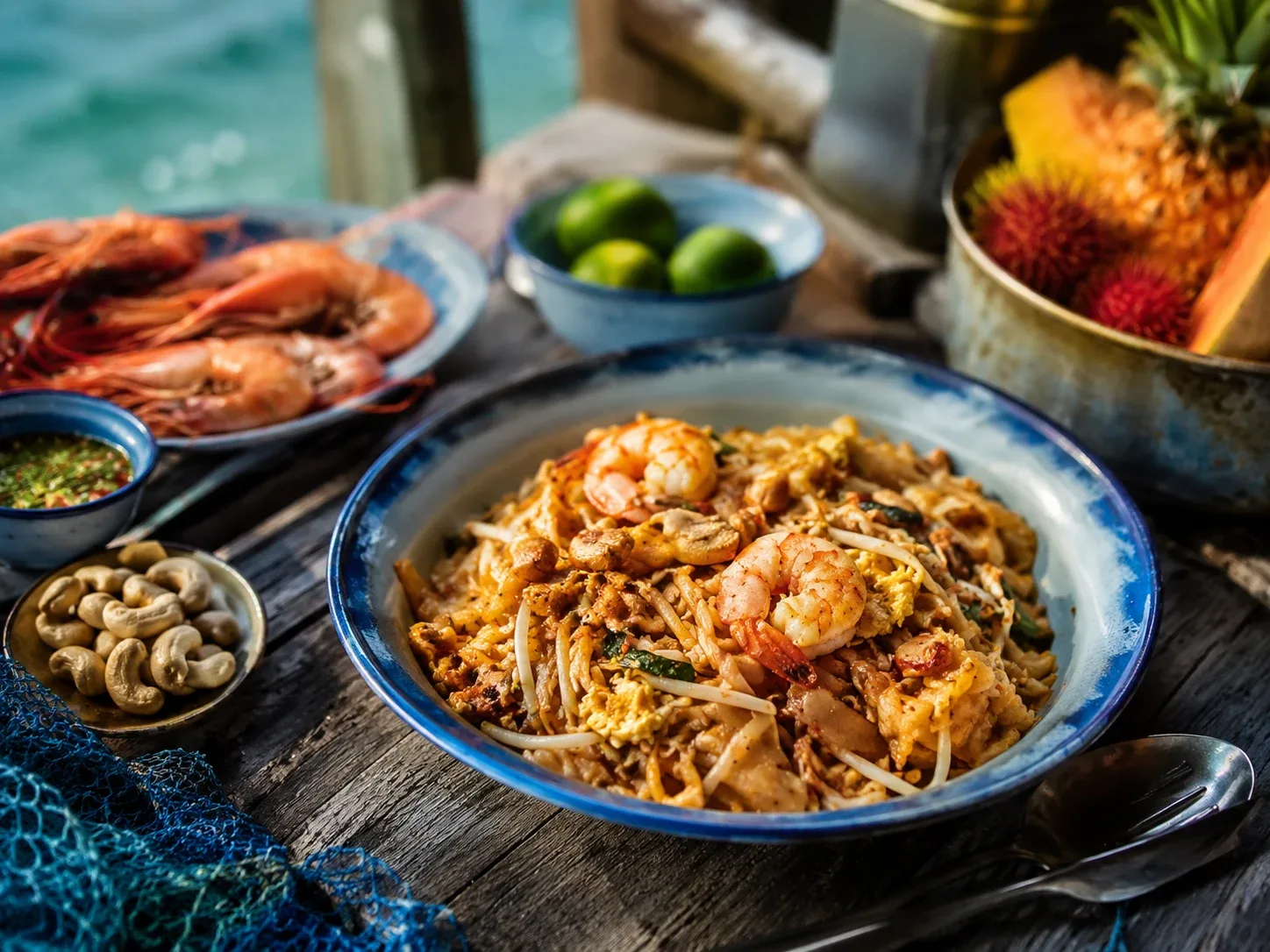
Kat Kyi Kaik, Dawei's Scissor-Cut Noodlesကတ်ကြေးကိုက်
Dawei's famous stir-fried rice noodles, snipped with scissors at the table — sweet-savory, smoky from the wok, piled with prawns, egg, and peanuts.
 ၂
၂Noodles & Mohinga · 50 min · Intermediate
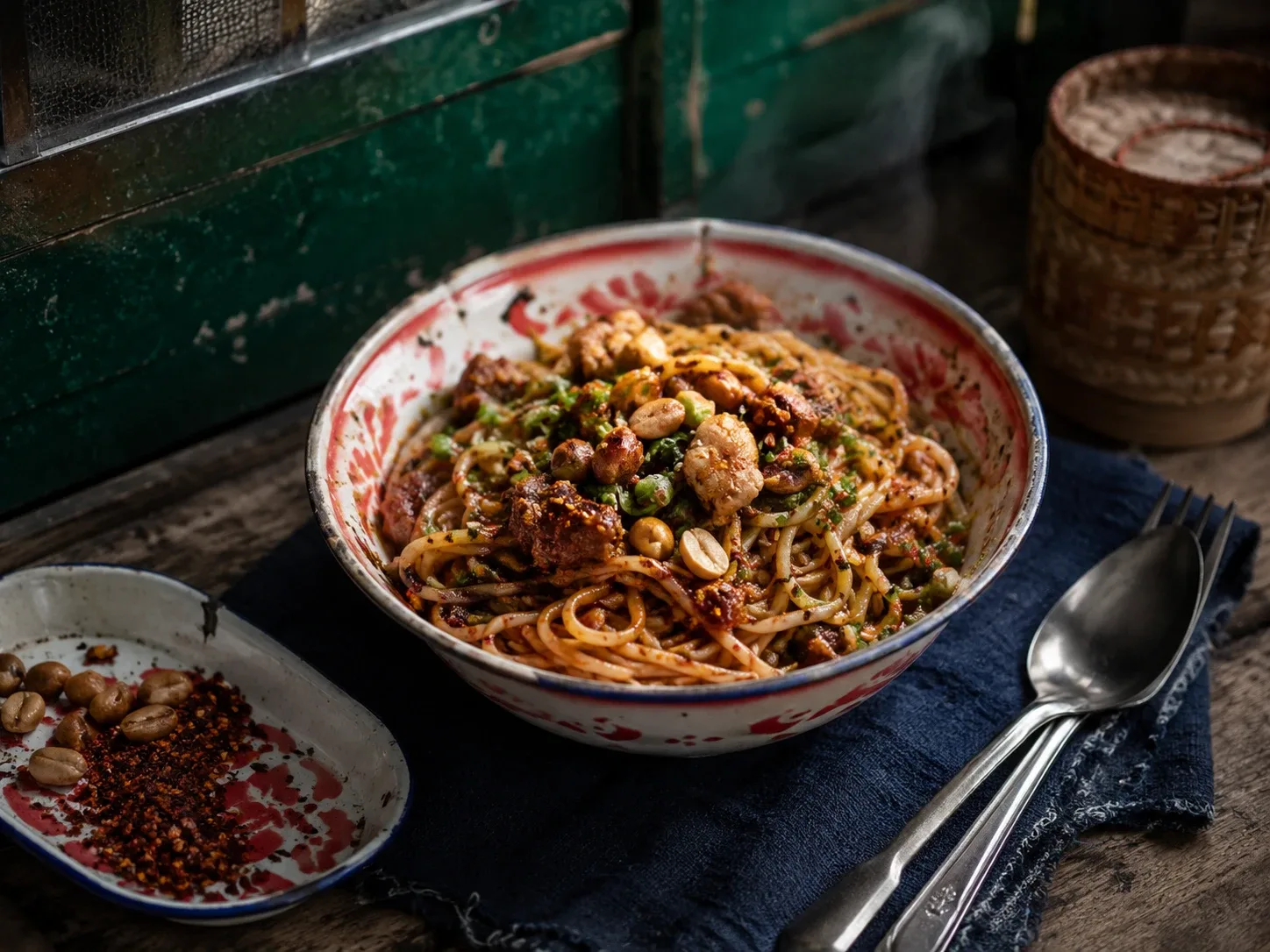
Myitkyina Mala Noodlesမာလာခေါက်ဆွဲ
Wheat noodles tossed in numbing-hot Sichuan pepper chili oil with crisp pork and peanuts — the Yunnanese border bowl that became everyday Myitkyina food.
 ၂
၂Noodles & Mohinga · 50 min · Beginner
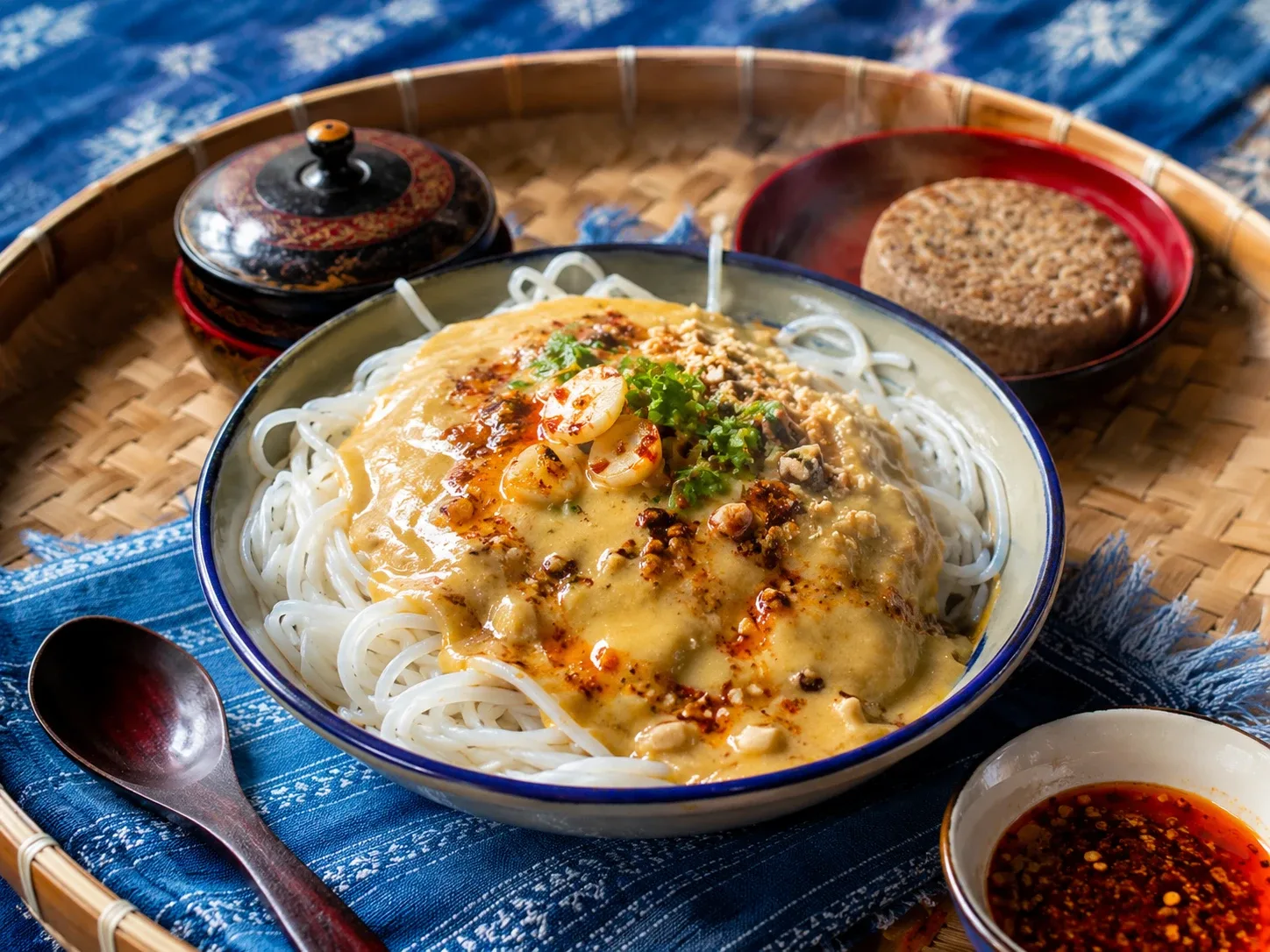
Tofu Nway, Warm Shan Tofu Noodlesတိုဟူးနွေး
Warm chickpea tofu that never sets, ladled like golden custard over rice noodles with garlic oil, chili, and peanuts — Shan State's great breakfast.