Rakhine Mont Di, the Fiery Bowl
မုန့်တီ
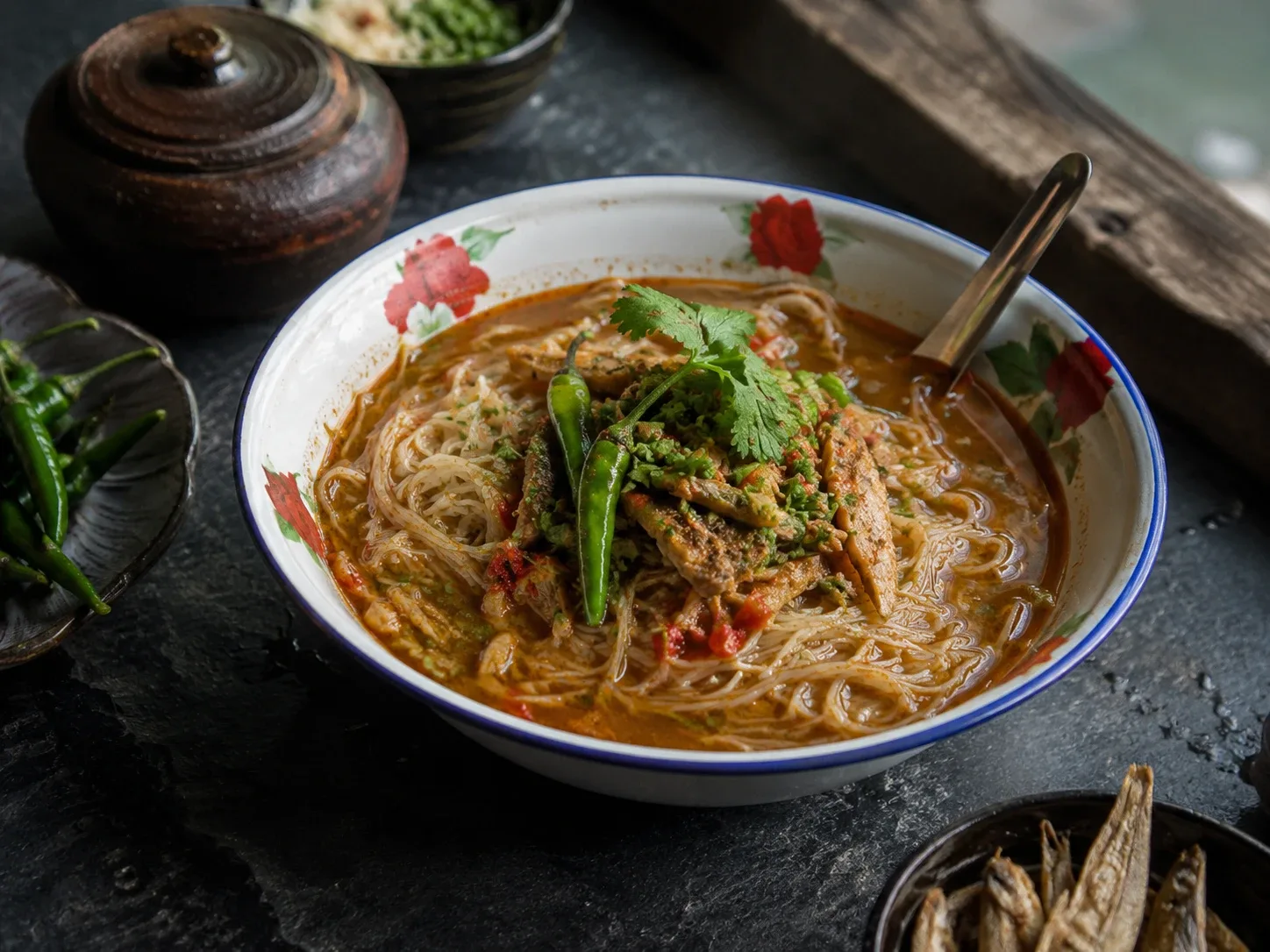
Rakhine's fiery fish noodle soup from the Mrauk-U coast — a clean pepper-and-chili broth over thin rice vermicelli, served soup-style or tossed as a thoke.
By Burmese Cookbook Kitchen · June 11, 2026
ရခိုင် Rakhine CoastMrauk-U, 1429–1785
 ၂
၂- Prep
- 30 min
- Cook
- 40 min
- Serves
- 4
- Level
- Intermediate
Mont di is the west coast talking back. Rakhine State faces the Bay of Bengal with the Arakan mountains at its back, and its kitchen grew up separately from the Bamar heartland — leaner, hotter, and unapologetically fishy, seasoned in the proud memory of Mrauk-U, the island-trading kingdom whose stone temples still stand above the paddy. Where a delta mohinga builds a rich, besan-thickened gravy, mont di keeps its fish broth clear and spends everything on heat: black pepper cracked into the pot, chili bloomed in garlic oil, raw green chilies waiting at the table. Rakhine cooks like to say their food uses fire where Bamar food uses oil, and this bowl is the proof they reach for.
It leads a double life. Ladled hot over thin rice vermicelli it is a soup; tossed — fish, chili oil, tamarind water, and noodles turned together by hand — it becomes mont di thoke, the salad twin sold from the same stall, often by the same aunty, to customers who consider the choice a matter of personal identity. This recipe teaches the soup and names the thoke, because once the pot exists, the variation is a two-minute detour.
The technique to respect is restraint. The broth is not thickened, so it cannot hide a timid hand with the ngapi or a stale jar of pepper. Season it until it stands up straight, keep the tamarind just ahead of the salt, and let the chili arrive in layers — that is the whole Rakhine argument, and it wins.
Rakhine heat is built in layers — black pepper in the broth, chili in the oil, raw green chili at the table. Skip a layer and the bowl tastes loud instead of hot.
မီးဖိုချောင်စကား · A word from the kitchen
Ingredientsပါဝင်ပစ္စည်း
Serves 4
Tap to check off as you gather
For the fish & broth
- snakehead or catfish fillets — any firm freshwater fish — basa and tilapia are honest stand-ins
- lemongrass — bruised
- fresh ginger — sliced
- turmeric
- ngapi (shrimp paste) — Rakhine cooks use more — start here and grow into it
- fish sauce
- black peppercorns — coarsely cracked, not ground to dust — the signature Rakhine heat
- water
For the chili-garlic oil
- garlic — sliced thin
- dried chili flakes
- peanut oil
To serve
- rice vermicelli — the thin, round kind
- tamarind — soaked in 100 ml hot water and squeezed to a sour liquor
- green chilies — sliced, on a plate at the table
- cilantro
- limes — in wedges
Methodချက်နည်း
Tap a numeral as you finish each step
Step 1: Poach the fish
Bring the water to a bare simmer with the lemongrass, ginger, and turmeric. Slide in the fish and poach gently until just cooked, 8 to 10 minutes. Lift the fish out, keep every drop of the liquid, and flake the flesh, hunting down bones. The broth stays clear and light — Rakhine cooking spends heat, not oil.
Step 2: Season the broth
Mash the ngapi with a ladleful of the hot broth until dissolved and stir it back into the pot with the fish sauce and cracked black pepper. Simmer for 10 minutes. Taste — it should be savory, marine, and warm at the back of the throat before any chili has arrived.
Step 3: Make the chili-garlic oil
Warm the oil with the sliced garlic over medium-low heat until the chips are pale gold, then pull the pan off the heat and stir in the chili flakes — the residual heat blooms them without scorching. Burnt chili is bitter; bloomed chili is the color of the Rakhine flag and tastes like it means it.
Step 4: Return the fish
Stir the flaked fish back into the broth with half the tamarind water and let it warm through at the gentlest simmer for 5 minutes. Taste again and balance — more tamarind for sour, fish sauce for depth. The broth should sit just on the sour side of savory.
Step 5: Ready the noodles
Blanch the rice vermicelli briefly until tender, drain well, and divide among deep bowls. Thin vermicelli overcooks in the time it takes to argue about it, so stand there and taste.
Step 6: Assemble — and know the thoke
Ladle the peppery broth and fish over the noodles and finish each bowl with a generous spoon of chili-garlic oil, cilantro, and lime, with the green chilies passed at the table. For the thoke version, the salad twin — toss the drained noodles with the flaked fish, chili oil, remaining tamarind water, and a splash of fish sauce, and serve the hot broth in a cup alongside.
ခွက်ယောက် · The tools
Equipment
Noodle basket / colander
ဆန်ခါBlanch and lift rice noodles in seconds — mohinga service moves fast, and soggy noodles wait for no one.
Shop on Amazon →
Equipment links are Amazon affiliate links. As an Amazon Associate we earn from qualifying purchases, at no cost to you. Disclosure.
ဟင်းစုံ · Set the table
A Burmese meal is a spread
A bowl is complete, but the table is not without its condiments:
- Si chet, chili oilဆီချက်The fragrant red oil every household keeps by the stove.
- Crispy fried shallotsကြက်သွန်ကြော်A spoonful of crunch and sweet shallot oil over anything.
- Balachaungဘလချောင်းThe crispy shrimp relish that lives on every Burmese table.
- Teahouse milk teaလက်ဖက်ရည်How a Burmese meal ends — sweet, strong, and slow.
Questions from the kitchen
How hot is authentic mont di?
Hotter than this recipe, in honesty — Rakhine tables treat chili the way others treat salt. But the structure matters more than the dose; the pepper-in-broth, chili-in-oil, raw-chili-at-table layering is what makes the heat taste dimensional. Scale each layer up together and it stays balanced at any ferocity.
Soup or thoke — which came first?
Both are old and both are everywhere in Rakhine State, and stalls that sell one usually sell the other from the same pots. The soup is the gentler introduction, which is why this recipe teaches it and names the thoke as a variation. Try the thoke on day two with the leftovers — many converts never go back.
What can replace ngapi?
Nothing perfectly — its fermented depth is the floor the broth stands on. Good Thai shrimp paste (kapi) is the nearest neighbor, and a tablespoon of anchovy paste with extra fish sauce will get you somewhere respectable. Skipping it entirely leaves a clean fish soup that a Rakhine cook would call unfinished.
Can I make it ahead?
The broth with fish keeps a day and reheats gently without loss — some say the pepper settles in nicely overnight. Keep the chili oil, noodles, and tamarind separate until serving, and never freeze the assembled soup; vermicelli does not survive the journey.
နောက်တစ်ခု · Cook next
Keep the wok hot
 ၂
၂Noodles & Mohinga · 50 min · Beginner
Tofu Nway, Warm Shan Tofu Noodlesတိုဟူးနွေး
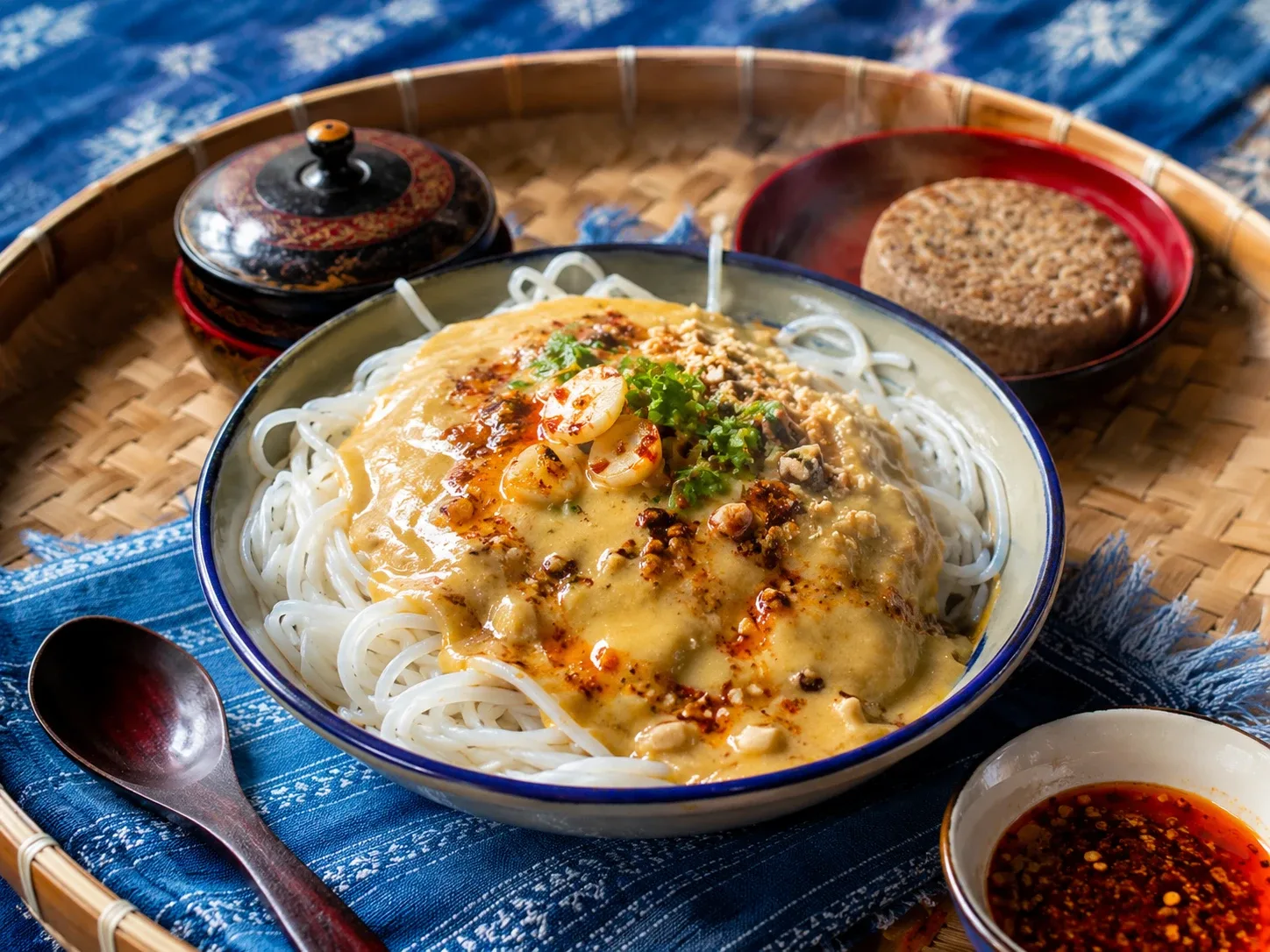
Warm chickpea tofu that never sets, ladled like golden custard over rice noodles with garlic oil, chili, and peanuts — Shan State's great breakfast.
 ၂
၂Noodles & Mohinga · 40 min · Intermediate
Kat Kyi Kaik, Dawei's Scissor-Cut Noodlesကတ်ကြေးကိုက်
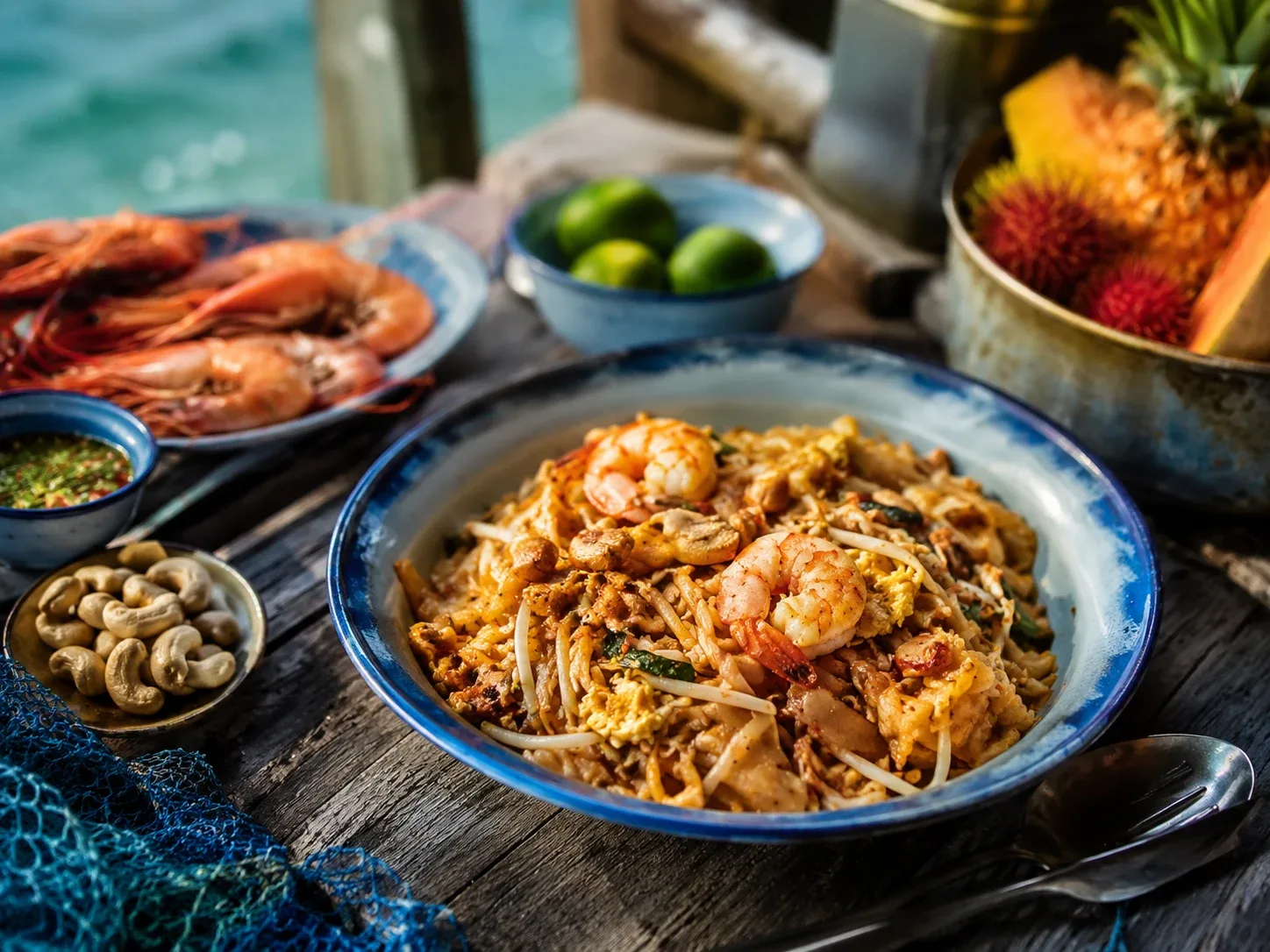
Dawei's famous stir-fried rice noodles, snipped with scissors at the table — sweet-savory, smoky from the wok, piled with prawns, egg, and peanuts.
 ၇
၇Sweets & Mont · 25 min · Beginner
Kyauk Kyaw, Two-Layer Coconut Jellyကျောက်ကျော
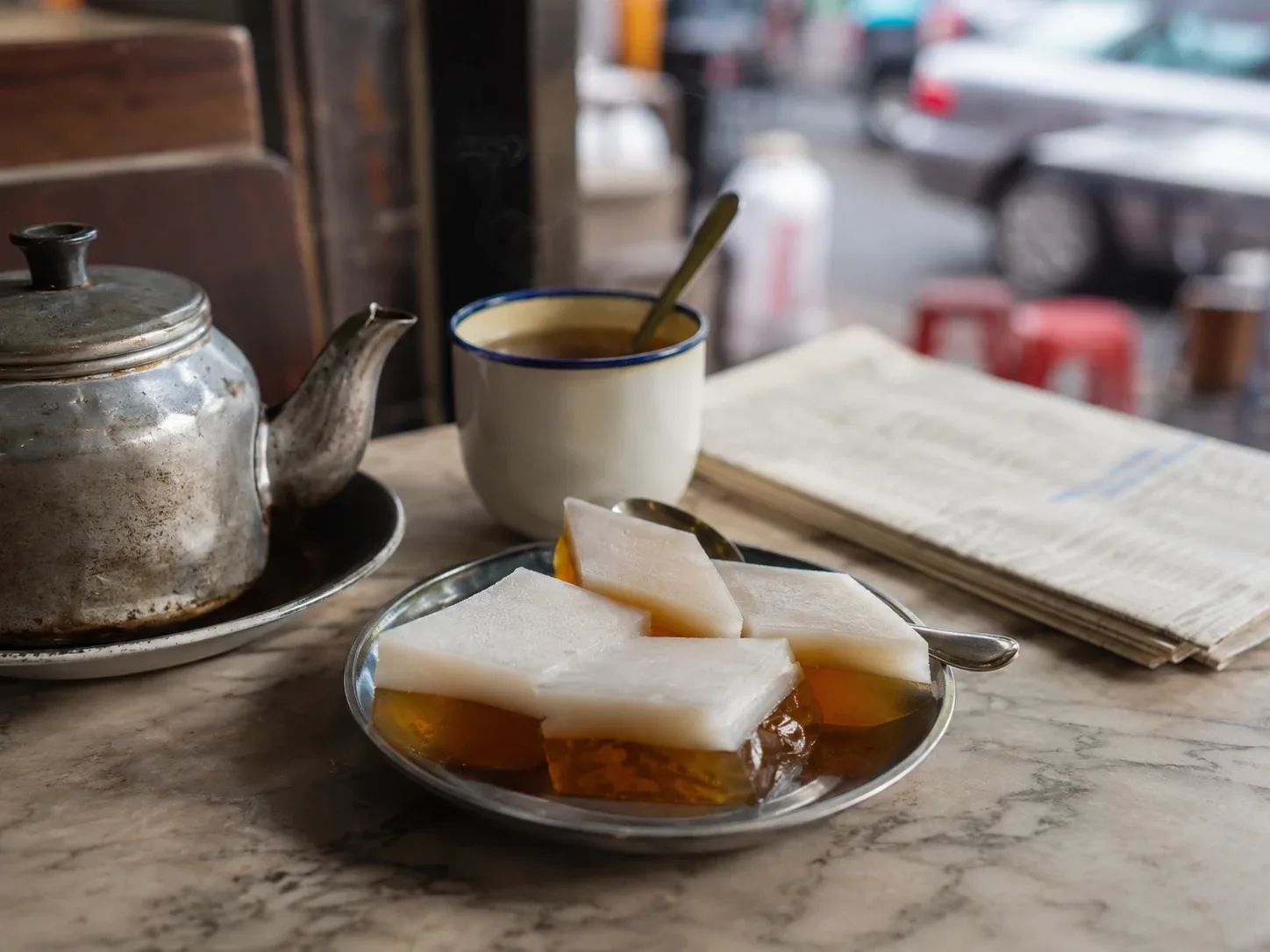
Myanmar's two-layer agar jelly, done the Yangon way — coconut cream rises as it sets over a clear amber base, then the slab is cut into cool diamonds.