Chhangban, Steamed Sticky-Rice Cakes
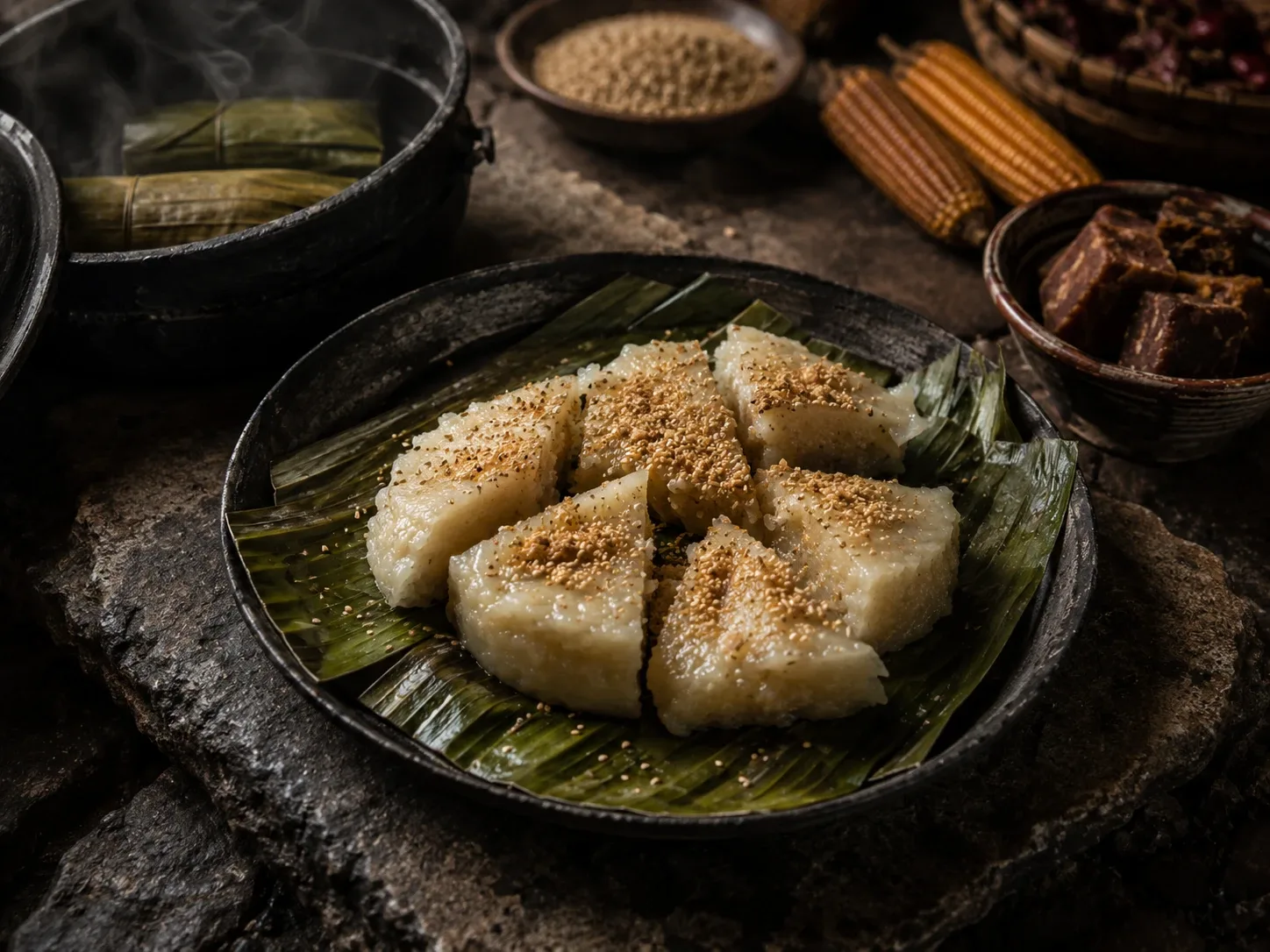
Soaked glutinous rice ground to a paste, wrapped in banana leaf, and steamed into soft cakes — the Chin-Mizo celebration sweet, eaten with sesame and jaggery.
By Burmese Cookbook Kitchen · July 9, 2026
ချင်း Chin HillsBritish Burma, 1826–1948
 ၇
၇- Prep
- 30 min
- Cook
- 40 min
- Serves
- 6
- Level
- Intermediate
Every rice culture eventually discovers that glutinous rice, pounded and steamed, becomes something better than the sum of those words — Japan got mochi, the Shan hills got htou moun, and the Chin-Mizo highlands got chhangban. The name comes from Mizo, the lingua franca of the Zo peoples who straddle the Myanmar-India border, and it appears in the missionary dictionaries of the Lushai hills compiled in the early twentieth century — which makes this one of the rare Chin foods with a genuine paper trail. The practice is certainly older than its first spelling.
Chhangban is celebration food. Sticky rice is a luxury crop on mountain terraces where even ordinary paddy struggles, so these leaf-wrapped cakes belong to weddings, church feasts, harvest festivals, and Chin National Day tables rather than the everyday pot — passed around in their banana-leaf parcels, eaten warm with toasted sesame and something sweet, most often jaggery or hill honey. The banana-leaf wrap is not packaging; it steams a faint tea-like perfume into the rice and leaves its ribbed fingerprint on every cake.
Two judgments make the dish. The paste must be soft clay — wet enough to fuse into a tender cake, dry enough to hold a shape — and the parcels must rest before unwrapping, because sticky rice finishes setting in its own steam. Get those right and you have the rare sweet that is also, somehow, bread: mild, chewy, leaf-scented, and gone faster than it steamed.
The paste should hold a finger-dent like soft clay — pourable means too wet and the cakes steam gummy; crumbly means too dry and they steam dense.
မီးဖိုချောင်စကား · A word from the kitchen
Ingredientsပါဝင်ပစ္စည်း
Serves 6
Tap to check off as you gather
For the cakes
- glutinous rice — soaked overnight — there is no shortcut around the soak
- salt
- ripe bananas — optional but common — mashed in, they perfume and sweeten the crumb
- water — approximately; you may not need it all
- banana leaf — roughly 20 × 25 cm each, wiped and softened over a flame; foil plus parchment is the fallback
To serve
- sesame seeds — toasted golden in a dry pan
- palm sugar (jaggery) — shaved or grated; hill households would use cane jaggery or honey
Methodချက်နည်း
Tap a numeral as you finish each step
Step 1: Soak the rice overnight
Cover the glutinous rice with plenty of cold water and leave it 8 to 12 hours. The soak does the first half of the cooking — fully saturated grains grind to a smooth paste and steam through evenly, while under-soaked rice leaves gritty hearts in the finished cake.
Step 2: Grind to a thick paste
Drain the rice well and grind it in a food processor (or, in the spirit of the original, pound it in batches in a large mortar) with the salt and mashed bananas if using, adding water a spoonful at a time, until you have a thick, faintly grainy paste that holds its shape — soft clay, not batter. Stop adding water early; banana brings its own moisture.
Step 3: Soften the leaves and wrap
Pass each banana-leaf piece quickly over a flame or dip it in boiling water until it turns glossy and pliable — unsoftened leaf cracks and leaks. Set a generous half-cup of paste on the matte side of each leaf, shape it into a stubby log, fold the leaf around it like a parcel, and tie or tuck the ends closed.
Step 4: Steam the parcels
Arrange the parcels seam-down in a steamer over rolling water, cover, and steam 35 to 40 minutes, topping up the water as needed. They are done when a parcel feels uniformly firm-springy through the leaf. Rest them 10 minutes before opening — sticky rice sets as it cools, and an impatient unwrapping tears the skin the leaf has given it.
Step 5: Serve with sesame and jaggery
Unwrap the cakes onto plates — they will carry the leaf's faint tea scent and its ribbed print. Slice thick, scatter with toasted sesame, and pass the shaved jaggery alongside so each person sweetens their own. Warm is best; the cakes firm as they cool and re-steam beautifully the next day.
ခွက်ယောက် · The tools
Equipment
Tiered steamer
ပေါင်းအိုးFor sticky rice, steamed mont, and reheating without drying out. Bamboo or stainless both work.
Shop on Amazon →Stone mortar & pestle
ဆုံFor garlic-ginger paste, pounded dried shrimp fluff, and crushed peanuts — the blender lies about texture; the stone doesn’t.
Shop on Amazon →Box grater / microplane
ခြစ်စက်Fine ginger, green papaya shreds, and toddy-palm jaggery shavings.
Shop on Amazon →
Equipment links are Amazon affiliate links. As an Amazon Associate we earn from qualifying purchases, at no cost to you. Disclosure.
ဟင်းစုံ · Set the table
A Burmese meal is a spread
A mont wants a cup of something beside it:
How a Burmese meal is built →Questions from the kitchen
Can I use glutinous rice flour instead of grinding soaked rice?
In a pinch — knead about 350 g of flour with warm water to the same soft-clay texture. You lose the faint graininess and hearth character that hand-ground rice gives, which is much of what makes chhangban itself rather than generic mochi. The overnight soak is the better hour of effort.
No banana leaf where I live. What now?
Frozen banana leaf from a Southeast Asian or Latin grocer thaws perfectly and is worth hunting down for the scent alone. Failing that, wrap in parchment then foil — the cakes will steam well but taste plainer, so lean on the sesame and jaggery at the table.
Are these sweet on their own?
Barely — with banana, gently; without, hardly at all. Chhangban sits where bread meets sweet, and the sweetness arrives at the table with the jaggery. That restraint is authentic; resist sugaring the paste itself.
နောက်တစ်ခု · Cook next
Keep the wok hot
 ၇
၇Sweets & Mont · 50 min · Beginner
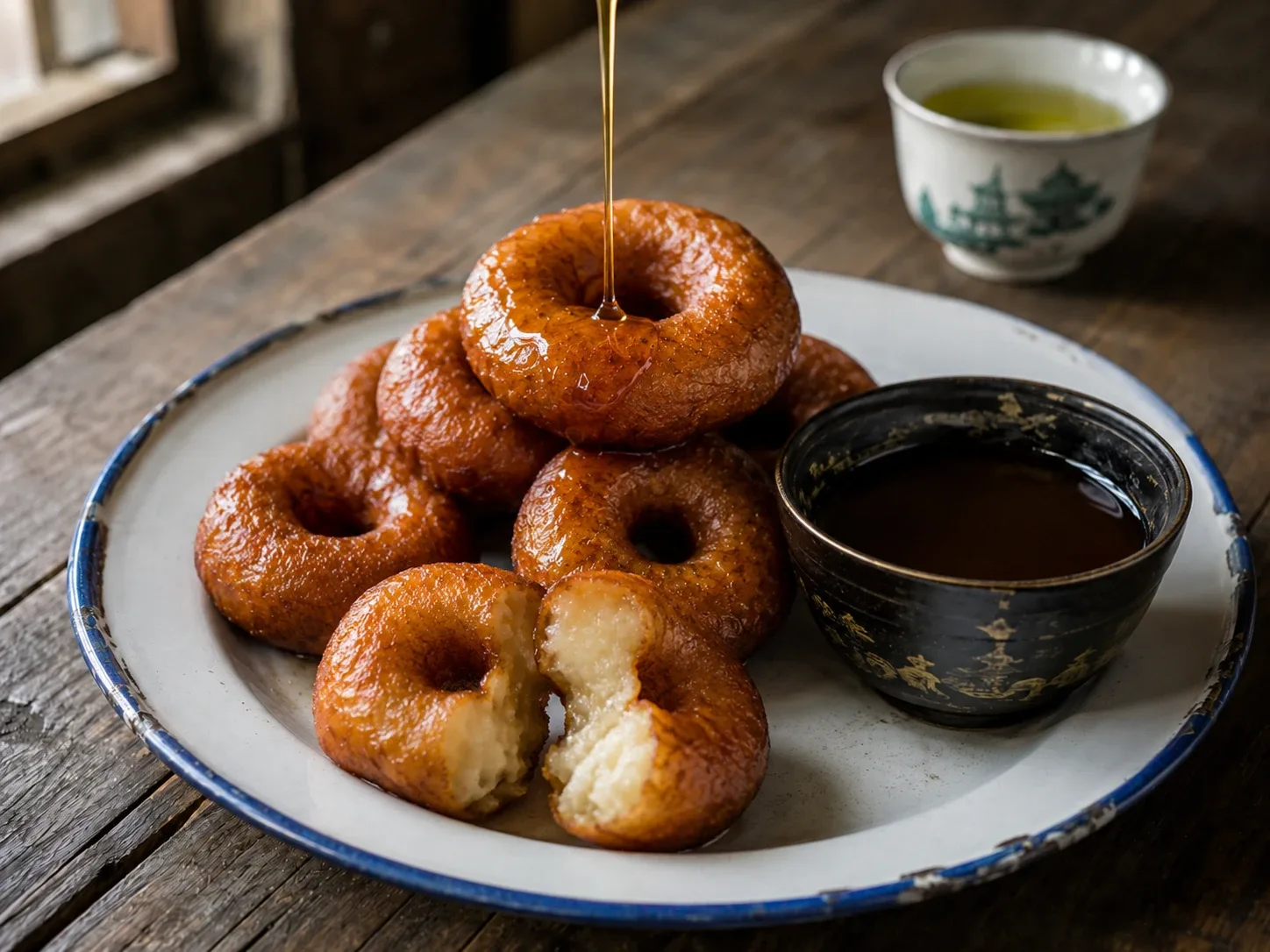
Mont Let Kauk, the Burmese Bracelet Doughnutမုန့်လက်ကောက်
Chewy glutinous rice rings fried until blistered and gold, then drowned in warm toddy-palm jaggery syrup — the teahouse doughnut Burma names after a bracelet.
 ၇
၇Sweets & Mont · 40 min · Beginner
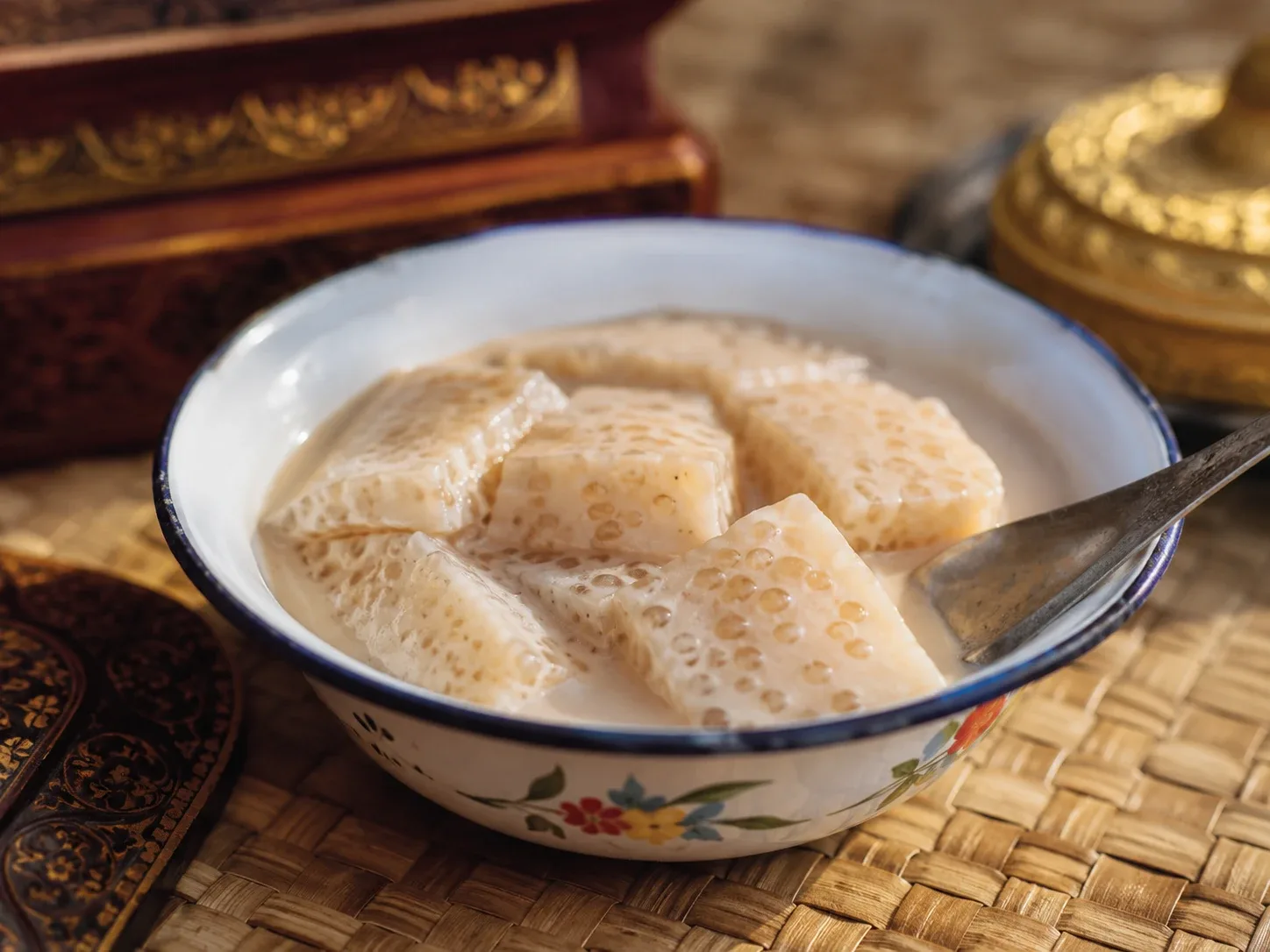
Thagu Byin, Sago & Coconut Milk Puddingသကူမုန့်
A cooling hot-season pudding of translucent sago pearls set in coconut milk and palm sugar, sliced into wobbling squares — sold from glass cabinets on the hottest afternoons.
 ၄
၄Salads & Thoke · 25 min · Beginner
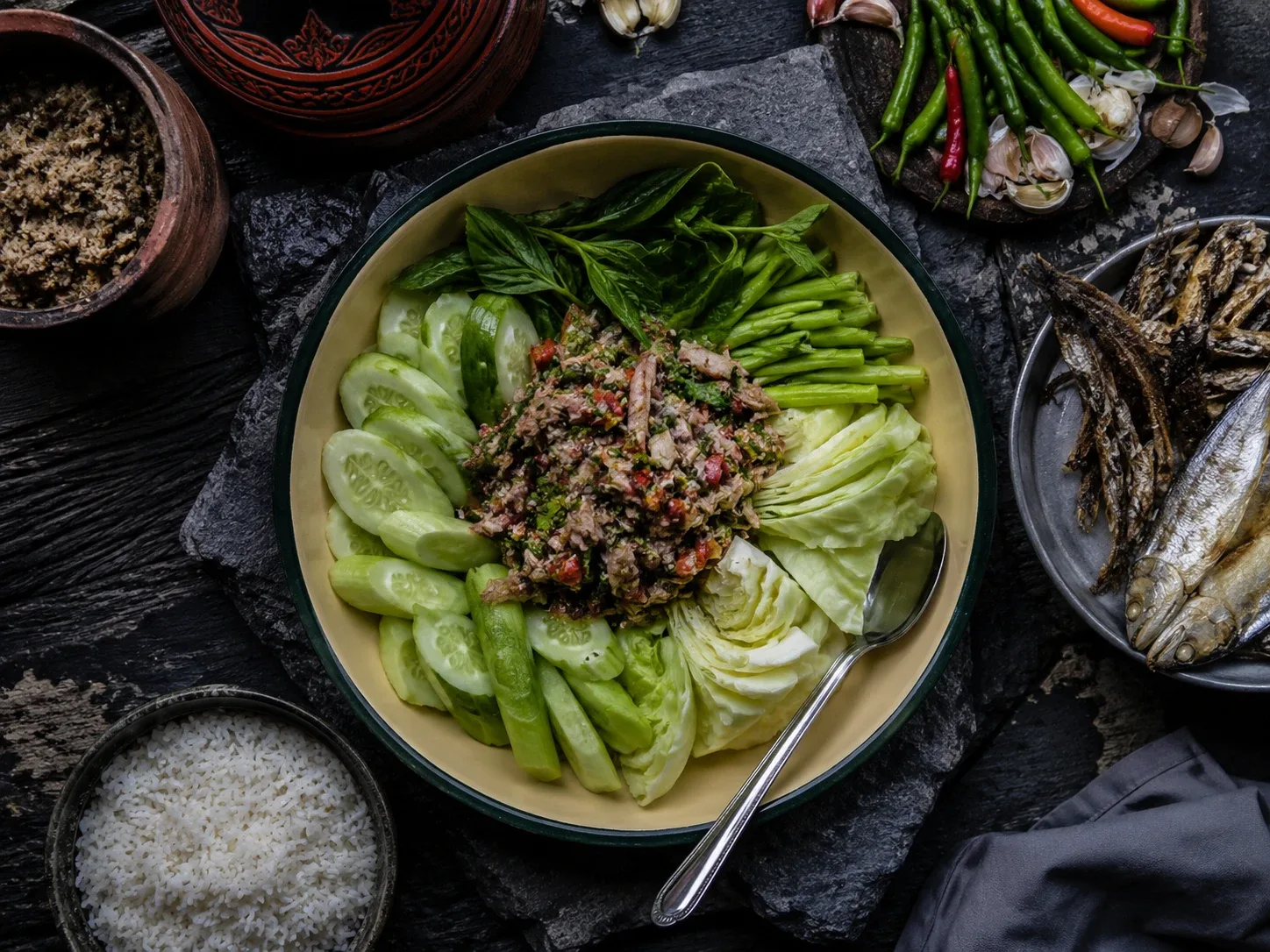
Rakhine Ngapi Thoke, the Pounded Fireငါးပိသုပ်
Rakhine's roasted fish-paste salad — marine ngapi pounded with green chili, garlic, and lime, served the western-coast way with crisp vegetables and rice.