Htamane, the Sticky Rice Harvest Feast
ထမနဲ
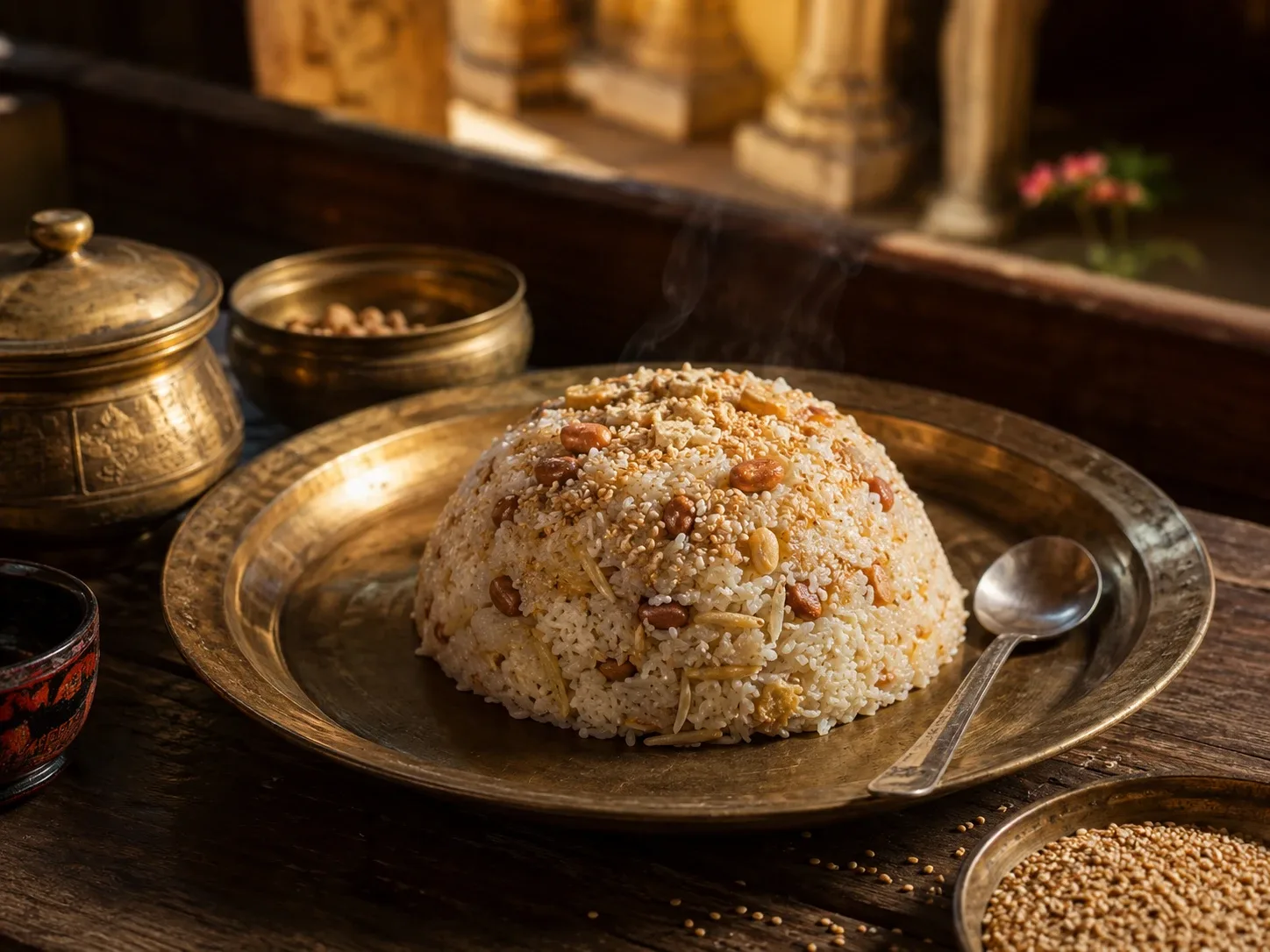
Myanmar's Tabodwe festival sticky rice, kneaded with peanut oil, toasted sesame, peanuts, coconut, and ginger — the dry zone's harvest folded into one dish.
By Burmese Cookbook Kitchen · July 9, 2026
အညာ Upper Burma & MandalayKonbaung, 1752–1885
 ၇
၇- Prep
- 30 min
- Cook
- 50 min
- Serves
- 8
- Level
- Intermediate
Once a year, on the full moon of Tabodwe, Myanmar turns sticky rice into a team sport. Enormous woks go over open fires in monastery courtyards, and crews of three men with boat-oar paddles fold glutinous rice, peanut oil, sesame, peanuts, coconut, and ginger into a glistening mass — turning in rhythm, shouting counts, while a fourth person feeds the pot. The competitions are judged, the winners are announced, and everyone eats htamane for days. Royal htamane offerings appear in Konbaung-era court custom, which is the honest anchor for the dish's age; the festival as Burma now knows it carried on straight through every government since.
The recipe belongs to the whole country, but its pantry is pure Upper Burma — sesame, peanuts, and peanut oil are the dry zone's great crops, and the region around Mandalay and the oil-pressing towns treats the dish as home ground. Htamane is, in effect, the dry-zone harvest folded into one pan.
Two things decide it. The rice must be soaked overnight and cooked in oiled water, or the mass turns gluey instead of glossy. And the folding cannot be shortened — pressing and turning drags starch into the oil until rice becomes something between grain and dough, soft enough to cut, rich enough to eat cold. The ginger matchsticks are the quiet genius: their heat cuts the richness so you can, and will, eat a second wedge.
Htamane is done when the paddle stands a beat in the mass before falling — if the rice still slides off clean, keep folding; the oil has not married yet.
မီးဖိုချောင်စကား · A word from the kitchen
Ingredientsပါဝင်ပစ္စည်း
Serves 8
Tap to check off as you gather
For the rice
- glutinous rice — soaked overnight — do not attempt this with a same-day soak
- water
- peanut oil — this looks like too much; it is the recipe
- salt
For the folding
- roasted peanuts — skinned, halved
- sesame seeds — toasted until they pop, plus 1 tbsp more for the top
- shredded coconut — unsweetened; fresh coconut sliced into thin slivers is the festival standard
- fresh ginger — cut into fine matchsticks — its heat carries the whole dish
Methodချက်နည်း
Tap a numeral as you finish each step
Step 1: Soak the rice overnight
Rinse the glutinous rice until the water runs nearly clear, then soak it in plenty of cold water for at least 8 hours. Unsoaked grains stay chalky at the center no matter how long you cook them, and htamane's texture — dense, tender, pulling apart in soft strands — starts here.
Step 2: Toast the sesame and ready the folding tray
Toast the sesame seeds in a dry pan until they pop and smell nutty, about a minute, and set aside. Lay out the peanuts, coconut, and ginger matchsticks within reach of the stove. Once the folding starts you will not have a free hand — festival crews post one person on ingredients alone.
Step 3: Cook the rice in oiled water
Bring the water, half the peanut oil, and the salt to a boil in a wide, heavy pot or wok. Drain the rice, stir it in, and simmer uncovered over low heat, stirring now and then, until the water is absorbed and the grains are tender — 20 to 25 minutes. Cooking the rice in oil from the start is what keeps the finished mass glossy instead of gluey.
Step 4: Begin the folding
With the pot over the lowest flame, add the remaining oil and start folding the rice with a sturdy wooden paddle or spoon — press, fold, turn the pot, again. At the festival this takes three men and paddles the size of oars; at home it takes one determined cook and about ten minutes. The kneading breaks some grains and drags their starch into the oil, binding the mass into something between rice and dough.
Step 5: Fold in the harvest
When the rice pulls away from the pot in one soft mass, fold in the peanuts, sesame, coconut, and ginger in two or three additions, working each one through evenly. Add the ginger last and taste — it should announce itself in every bite without shouting.
Step 6: Press, top, and serve warm
Turn the htamane onto a tray, press it flat to about three fingers thick with the oiled paddle, and scatter the reserved sesame over the top. Cut into wedges and serve warm, traditionally on a square of banana leaf. It keeps two days covered; a covered pan and a splash of water bring it back to life.
ခွက်ယောက် · The tools
Equipment
Carbon-steel wok
ဒယ်အိုးThe dai-oh — for si pyan curries, fritters, and every fried-noodle dish here. Carbon steel, seasoned dark, nothing fancy.
Shop on Amazon →Heavy pot / Dutch oven
အိုးကြီးDeep and heat-retentive — for mohinga broth, long-simmered hin, and deep-frying without temperature crashes.
Shop on Amazon →Box grater / microplane
ခြစ်စက်Fine ginger, green papaya shreds, and toddy-palm jaggery shavings.
Shop on Amazon →
Equipment links are Amazon affiliate links. As an Amazon Associate we earn from qualifying purchases, at no cost to you. Disclosure.
ဟင်းစုံ · Set the table
A Burmese meal is a spread
A mont wants a cup of something beside it:
How a Burmese meal is built →Questions from the kitchen
What exactly is Tabodwe and why this dish?
Tabodwe is the eleventh month of the Burmese calendar, falling around February, when the harvest is in and the cool season peaks. Its full-moon festival is celebrated with communal htamane-making — neighborhoods and monasteries compete over giant woks, and the first portions go to the Buddha and the monks before anyone else eats.
Can I halve the oil? It seems enormous.
You can, and you will get a stiff, dull sticky rice that dries by evening. The oil is not a cooking medium here, it is an ingredient — it carries the sesame and ginger, keeps the mass supple, and is why htamane still tastes rich at room temperature. Trust the festival cooks on this one.
Is htamane sweet or savory?
Savory, gently — salt, ginger heat, and the natural sweetness of coconut and peanuts, with no sugar anywhere. First-timers expecting a dessert are always surprised; think of it as closer to a rich rice dressing than a pudding. Some households serve jaggery alongside for those who want a sweet bite.
နောက်တစ်ခု · Cook next
Keep the wok hot
 ၇
၇Sweets & Mont · 50 min · Beginner
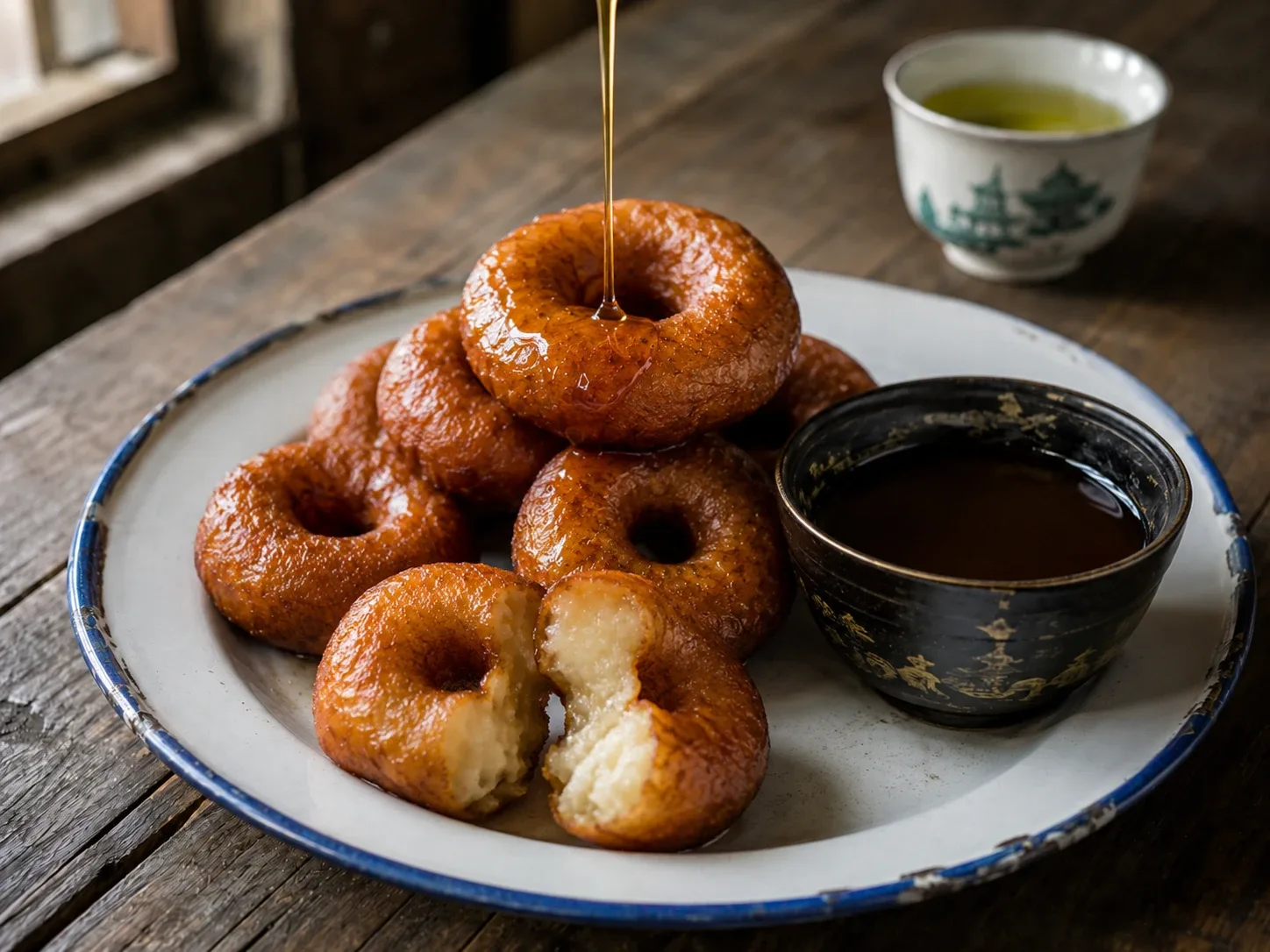
Mont Let Kauk, the Burmese Bracelet Doughnutမုန့်လက်ကောက်
Chewy glutinous rice rings fried until blistered and gold, then drowned in warm toddy-palm jaggery syrup — the teahouse doughnut Burma names after a bracelet.
 ၇
၇Sweets & Mont · 40 min · Beginner
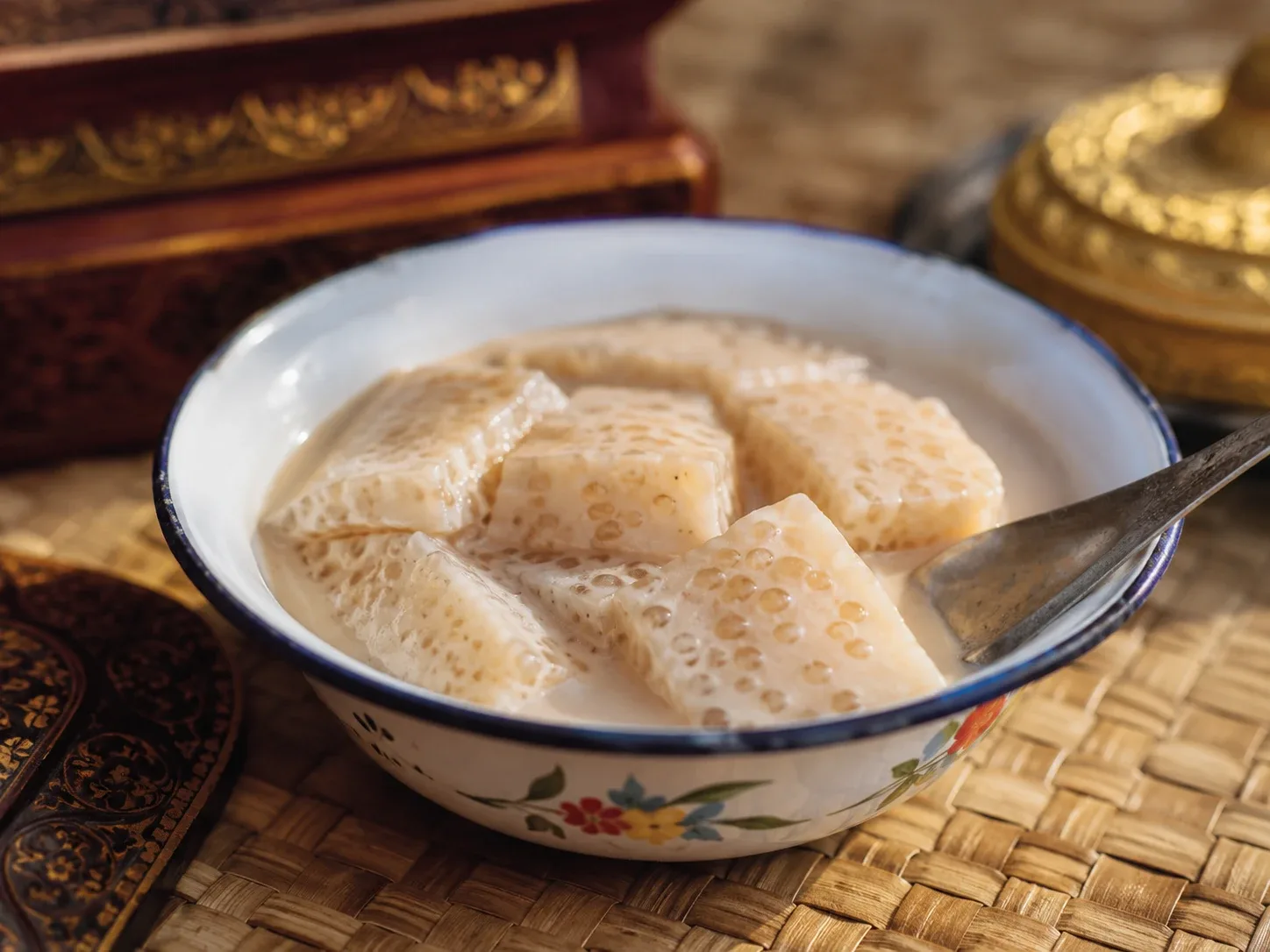
Thagu Byin, Sago & Coconut Milk Puddingသကူမုန့်
A cooling hot-season pudding of translucent sago pearls set in coconut milk and palm sugar, sliced into wobbling squares — sold from glass cabinets on the hottest afternoons.
 ၅
၅Soups & Broths · 165 min · Beginner
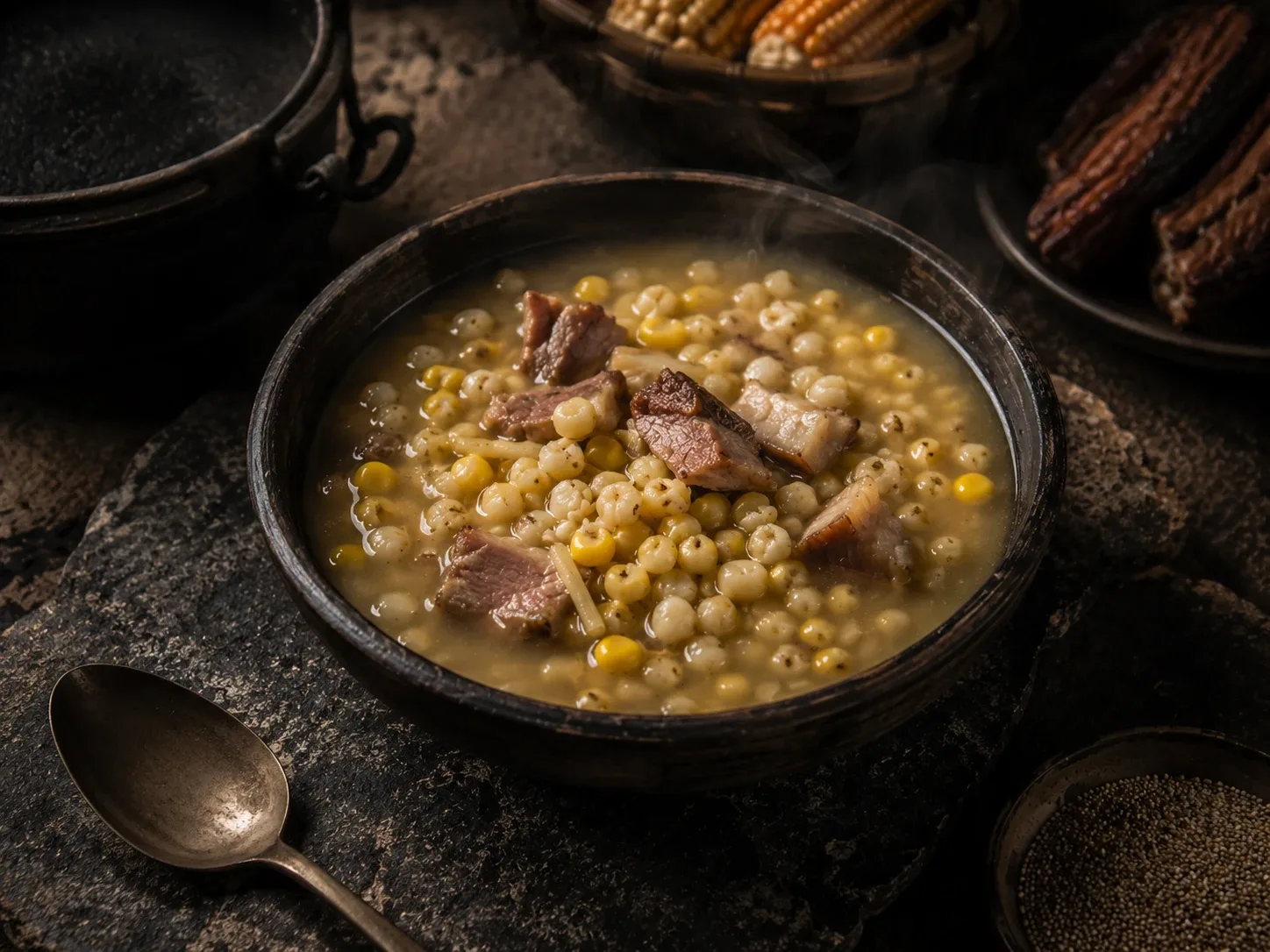
Sabuti, the Chin Corn Soup
The Chin hills' great corn soup — hominy maize simmered slowly with smoked pork and ginger, frugal mountain cooking that somehow eats like plenty.