Myeik Prawn Curry
ပုစွန်ဟင်း
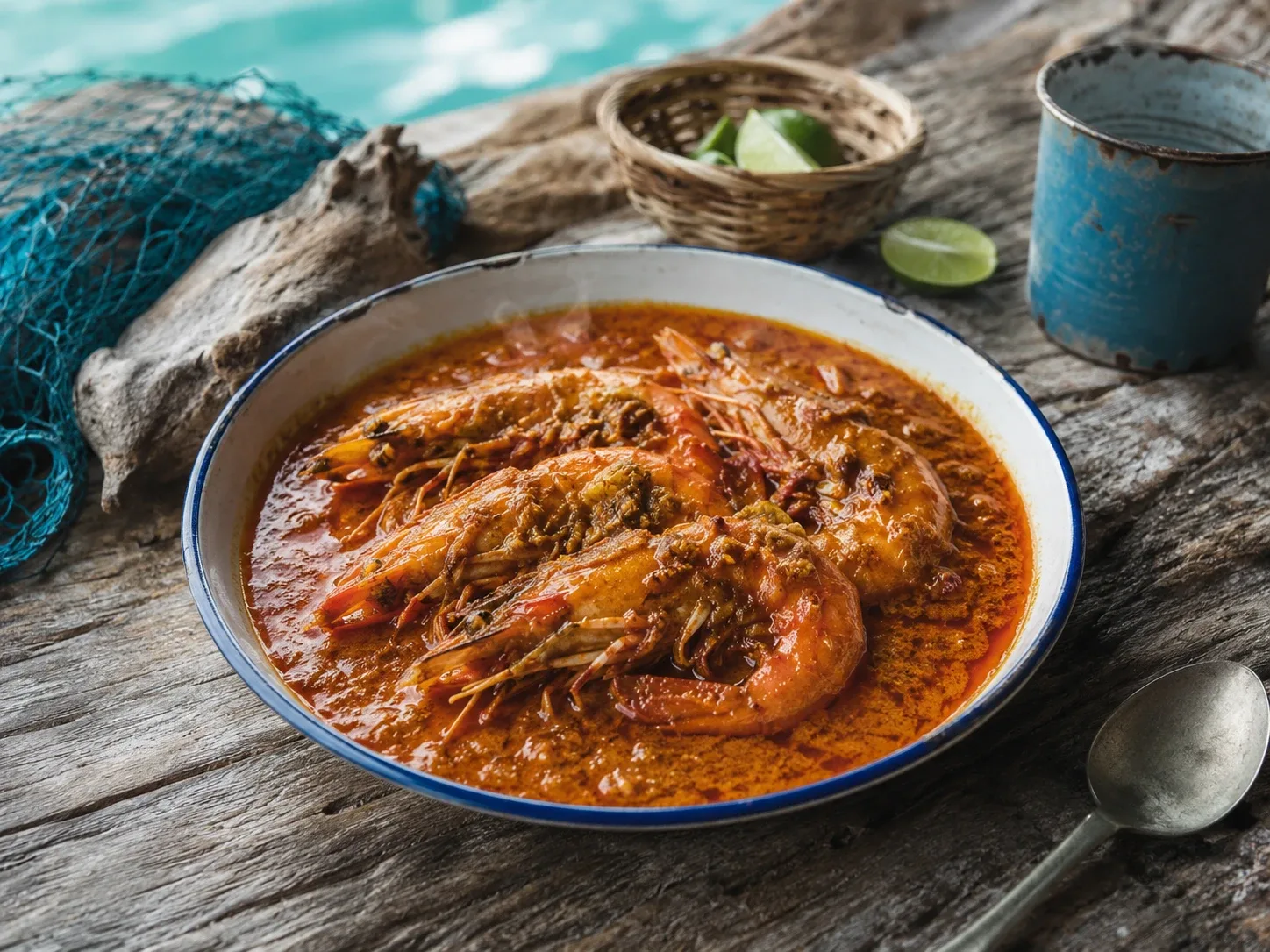
Head-on prawns from the Myeik archipelago simmered in a garlic-tomato curry, their head fat melting out to stain the returning oil a deep coral gold.
By Burmese Cookbook Kitchen · June 17, 2026
တနင်္သာရီ TanintharyiTaungoo, 1510–1752
 ၃
၃- Prep
- 20 min
- Cook
- 30 min
- Serves
- 4
- Level
- Intermediate
Pazun hin comes from the far south, where Myanmar frays into the eight hundred islands of the Myeik archipelago and the boats bring in prawns the size of a child's forearm. Down in Tanintharyi they cook them the only way that makes sense when the catch is this fresh — heads on, shells on, turned briefly through a fried onion-tomato base — because the head is not packaging. It is the pantry. Inside each one is a spoonful of coral fat that melts into the pan and stains the returning oil a deep sunset gold no amount of paprika could fake.
Myeik — Mergui, in its port-city days — was already a famous harbor when the Taungoo kings took the coast in the sixteenth century, its waterfront crowded with traders who came for exactly what this curry celebrates. No one wrote the recipe down then; port cooks rarely do. But the dish carries that era's coastline in its bones, and we file it there without much guilt.
Everything that matters happens in about four minutes. The base must be fully cooked before a single prawn lands, because there is no long simmer coming to fix it. The heads must be pressed into the hot paste so their fat runs — watch the oil at the pan's edge turn coral and you will understand si pyan better than any lowland pot can teach you. And then you stop, sooner than feels safe. Prawns forgive nothing; this curry asks them to forgive nothing in return.
The heads are the recipe. Press them into the hot paste until they stain the oil coral, and you will never pay for headless prawns again.
မီးဖိုချောင်စကား · A word from the kitchen
Ingredientsပါဝင်ပစ္စည်း
Serves 4
Tap to check off as you gather
For the prawns
- large prawns — heads on and shells on, without exception — the head fat is the dish
- turmeric
- salt
For the curry base
- onions — medium, roughly chopped
- garlic
- fresh ginger
- ripe tomatoes — roughly chopped
- turmeric
- paprika
- dried chili flakes
- ngapi (shrimp paste) — optional — coastal cooks add it, arguing more shrimp never hurt a shrimp
- peanut oil
To finish
- fish sauce
- water — hot
- cilantro
- lime — in wedges, for the table
Methodချက်နည်း
Tap a numeral as you finish each step
Step 1: Prepare the prawns
Leave the heads and shells on. Snip the sharp rostrum and legs with scissors, then cut a shallow slit down the back of each shell and pull out the dark vein. Rub the prawns with the turmeric and salt and set aside. Cleaned this way they eat easily at the table without surrendering the head fat that makes the curry.
Step 2: Pound the base
Work the onions, garlic, and ginger to a coarse wet paste, mashing in the ngapi if using. Prawns cook in minutes, so unlike the meat curries there is no long simmer coming to rescue an underworked base — the paste has to carry everything.
Step 3: Fry the paste until the oil separates
Heat the peanut oil in a wide, heavy pan over medium heat and fry the paste with the turmeric, paprika, and chili flakes for 12 to 15 minutes, until it slumps to amber and oil seeps back at the edges. Then add the tomatoes and mash them down until they collapse into a thick jam and the oil separates once more — about 8 minutes.
Step 4: Press the heads into the paste
Turn the heat up slightly and add the prawns. As they hit the pan, press down on the heads with the back of the spoon so the coral fat inside melts out into the base. Watch the oil at the edges of the pan change color — from amber to a deep coral-gold. That is the flavor of the Myeik coast leaving the shell and entering the sauce.
Step 5: Simmer briefly — very briefly
Add the fish sauce and hot water, turn the prawns through the gravy, and simmer for just 3 to 4 minutes, until the shells are fully pink and the flesh has only just turned opaque. The oil returns almost at once here — the pot was nearly dry and the head fat hurries it along. Prawns keep no appointments; a minute late and they are rubber.
Step 6: Rest and serve
Pull the pan off the heat, scatter with cilantro, and rest it five minutes — the prawns finish cooking in the gravy's warmth. Serve with jasmine rice and lime wedges, and teach your table to suck the heads. That is where the curry keeps its best argument.
ခွက်ယောက် · The tools
Equipment
Carbon-steel wok
ဒယ်အိုးThe dai-oh — for si pyan curries, fritters, and every fried-noodle dish here. Carbon steel, seasoned dark, nothing fancy.
Shop on Amazon →Stone mortar & pestle
ဆုံFor garlic-ginger paste, pounded dried shrimp fluff, and crushed peanuts — the blender lies about texture; the stone doesn’t.
Shop on Amazon →
Equipment links are Amazon affiliate links. As an Amazon Associate we earn from qualifying purchases, at no cost to you. Disclosure.
ဟင်းစုံ · Set the table
A Burmese meal is a spread
A curry is the anchor, not the whole meal. Round out the table:
- Steamed riceထမင်းThe centre of the table — everything else is built around it.
- A light soupဟင်းချိုThe clear, sour broth sipped between mouthfuls of rice.
- Toh sa yar & ngapi dipတို့စရာRaw and blanched vegetables with a pungent fish-paste dip — the fresh, bitter counterpoint.
- Balachaungဘလချောင်းThe crispy shrimp relish that lives on every Burmese table.
- Crispy fried shallotsကြက်သွန်ကြော်A spoonful of crunch and sweet shallot oil over anything.
- A hand-tossed thokeအသုပ်A bright, sour salad to lift the whole spread.
Questions from the kitchen
I can only get headless prawns. Is it still worth making?
Yes, with honest adjustments — the heads carry the fat that turns the oil coral, and without them the curry loses its deepest note. Keep the shells on at least, use the full teaspoon of ngapi, and add a spoon more oil. Good, but a photograph of the original.
Shells on or off at the table?
On, in Myeik and in this recipe. The shells protect the flesh through the frying and give up their own flavor to the gravy; diners peel at the table with rice-sticky fingers, which is half the pleasure. If you must serve them peeled, slip the shells off after cooking, never before.
My prawns turned rubbery. What happened?
Time, almost certainly — prawns are done in three to four minutes of simmering and keep cooking in the hot gravy afterward. Have the table set before the prawns go in. If your prawns are small, cut the simmer to two minutes and trust the resting heat.
Can I use this recipe for crab or squid?
Crab, gloriously — use raw halved swimming crabs, extend the simmer to 8 minutes, and you have the same coast's crab curry. Squid needs a different clock entirely, either 2 minutes or 40, and nothing in between; this gravy suits the 2-minute version well.
နောက်တစ်ခု · Cook next
Keep the wok hot
 ၃
၃Curries · 125 min · Intermediate
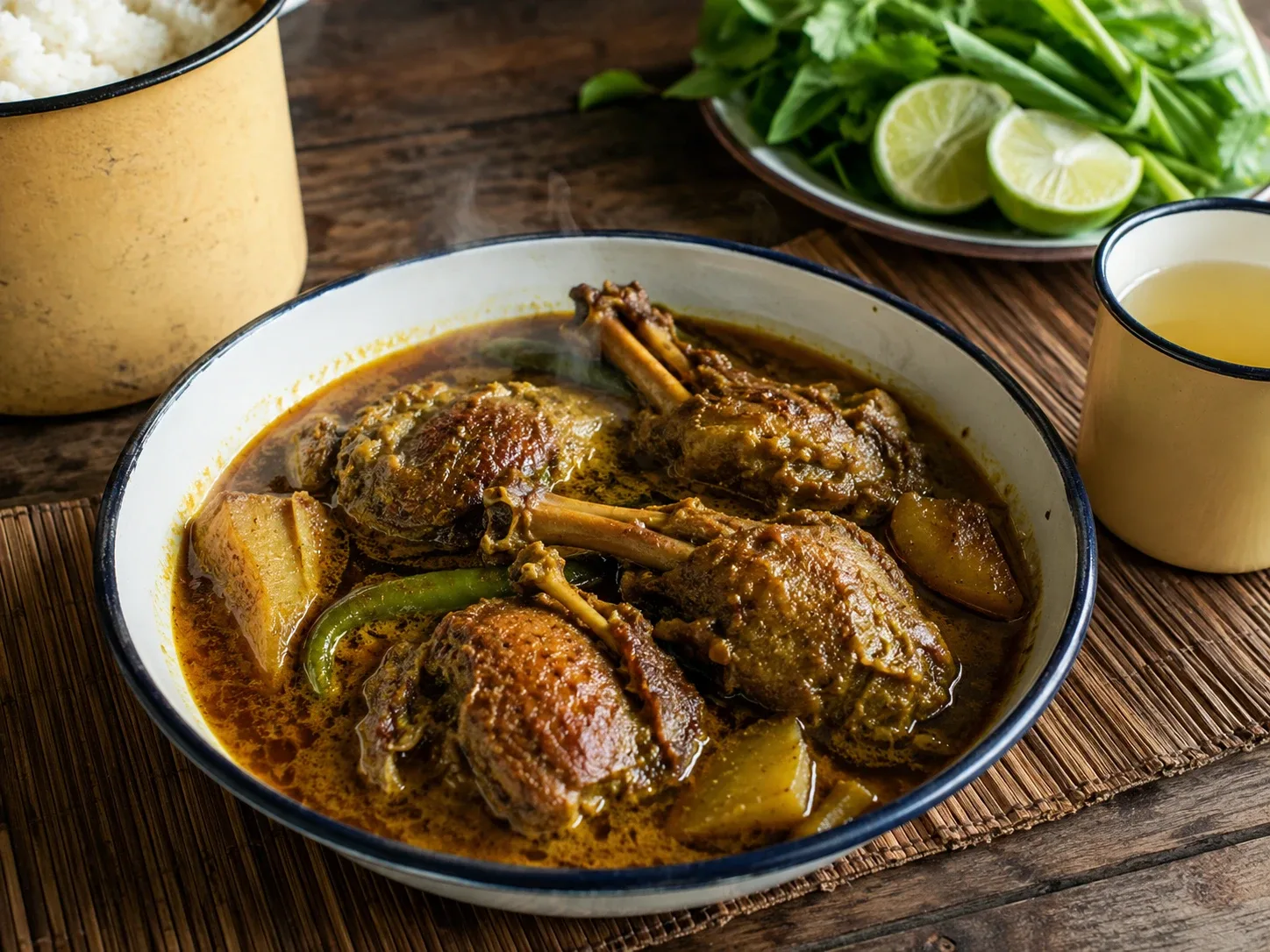
Be Thar Hin, Delta Duck Curryဘဲသားဟင်း
Duck curry from the Ayeyarwady, where ducks glean the rice paddies — browned in its own fat, then braised si pyan style until the amber oil returns.
 ၃
၃Curries · 45 min · Beginner
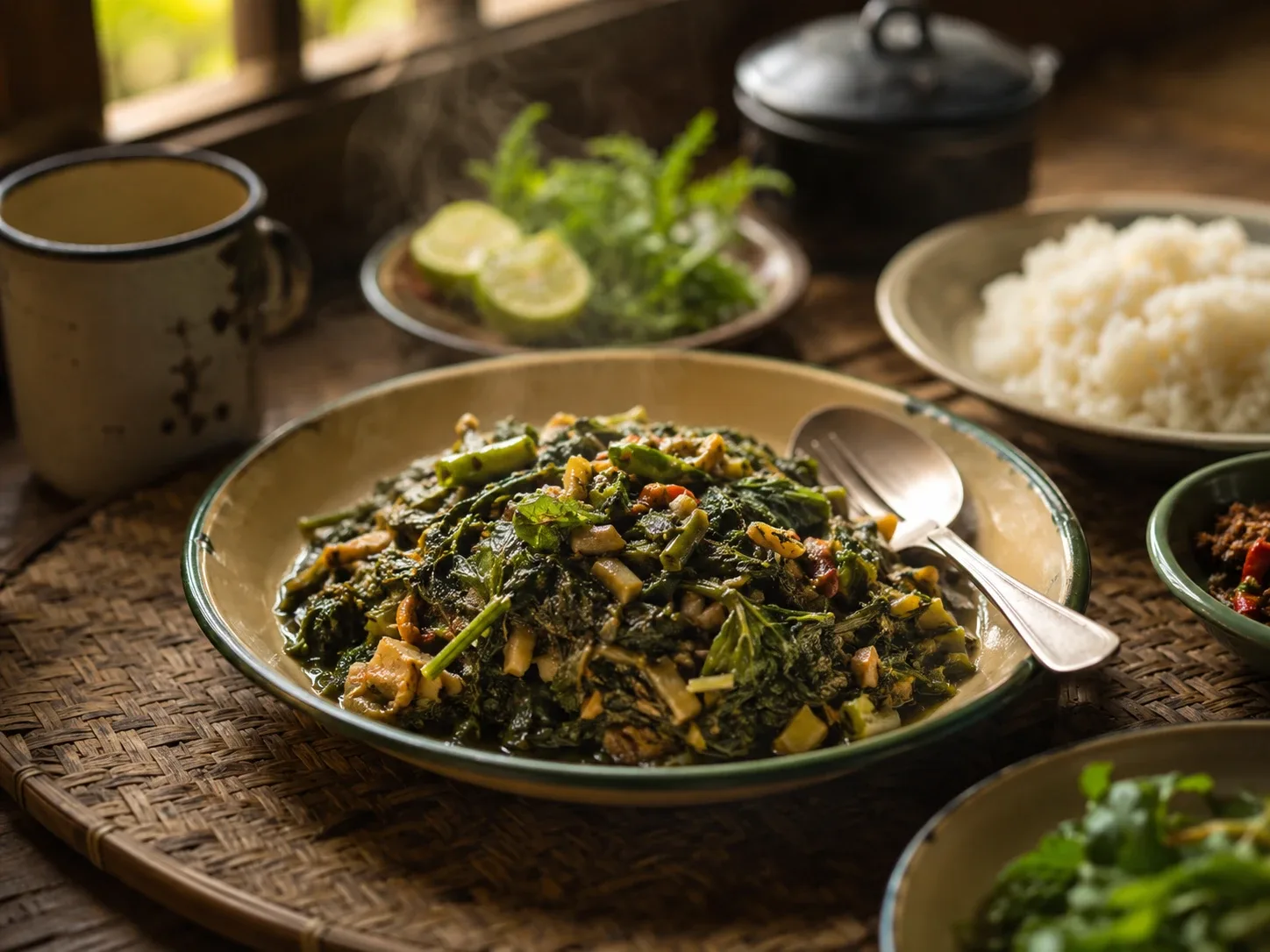
Chin Baung Kyaw, Sour Roselle Leavesချဉ်ပေါင်ကြော်
Lower Burma's beloved sour greens — roselle leaves fried down with bamboo shoots, dried shrimp, and green chili until they collapse into a dark tangy relish.
 ၄
၄Salads & Thoke · 25 min · Beginner
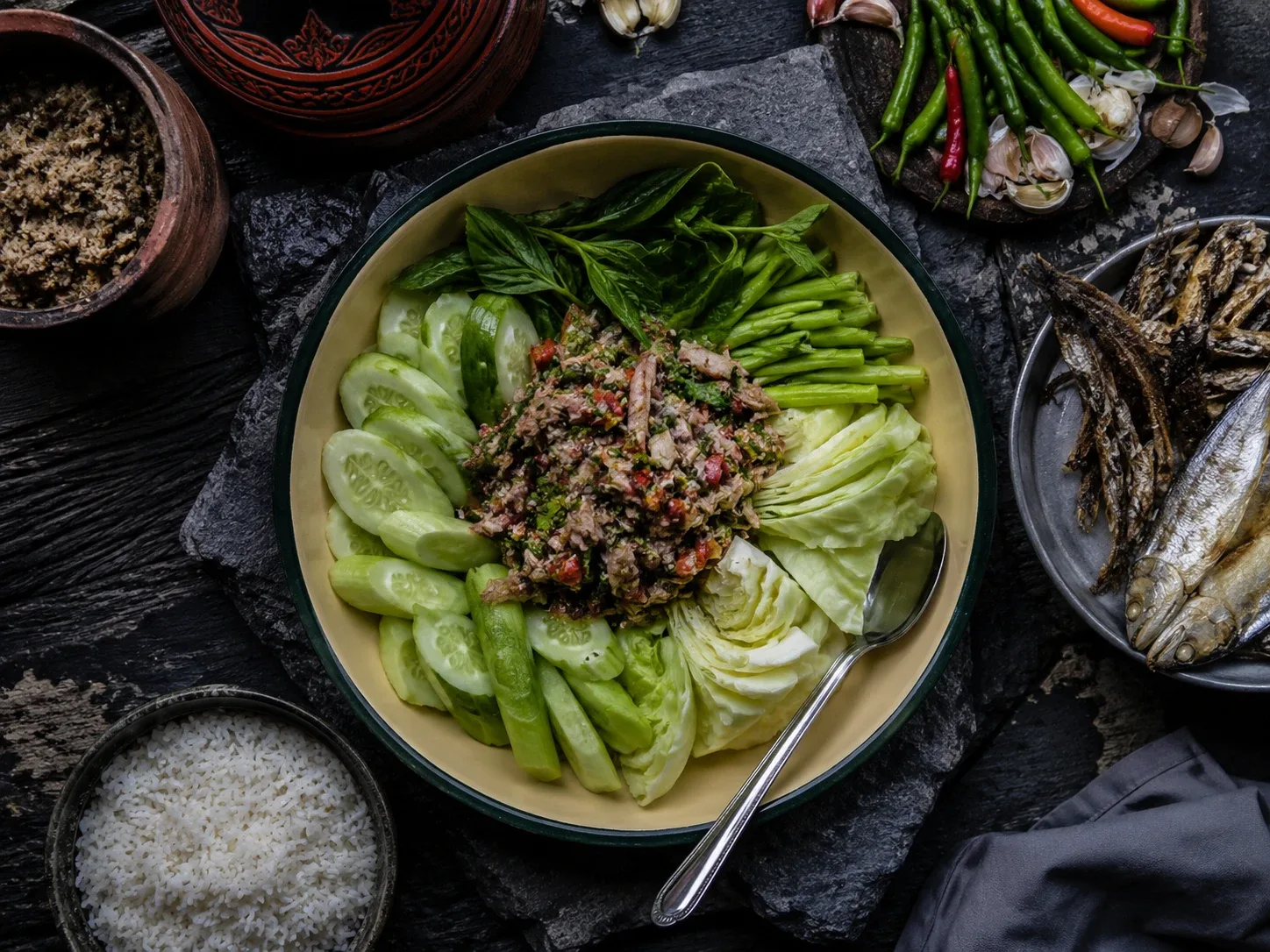
Rakhine Ngapi Thoke, the Pounded Fireငါးပိသုပ်
Rakhine's roasted fish-paste salad — marine ngapi pounded with green chili, garlic, and lime, served the western-coast way with crisp vegetables and rice.