Golden Duck Egg Curry
ဘဲဥဟင်း
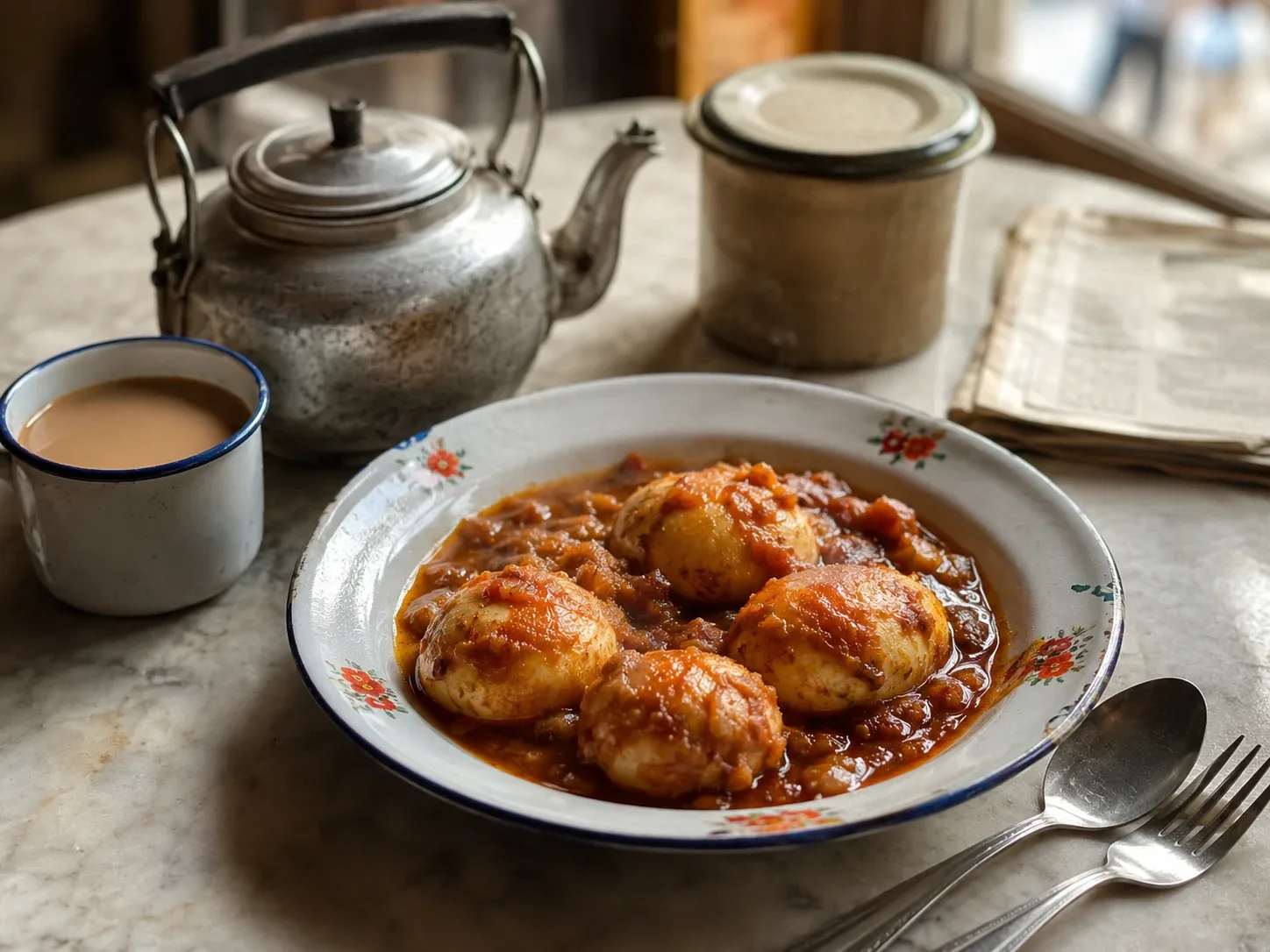
Hard-boiled duck eggs fried until blistered gold, then simmered in a tomato-onion gravy until the oil returns — Yangon's beloved, thrifty answer to curry.
Also spelled: Be U Hin · Bae Oo Chin Hin · Be U Chin Hin
By Burmese Cookbook Kitchen · June 15, 2026
ရန်ကုန် Yangon & Lower BurmaThe Socialist Years, 1962–1988
 ၃
၃- Prep
- 15 min
- Cook
- 45 min
- Serves
- 4
- Level
- Beginner
Bei u hin is proof that Burmese cooking honors technique over expense. Take the cheapest protein in the market — duck eggs, laid in their thousands along the delta and railed into Yangon by the crate — boil them, dry them, and fry them in hot oil until the whites blister and crackle into a gold, pebbled skin. Then simmer them in an onion-tomato gravy until the oil returns. Every doctrine of the chapter is present and correct; the only thing missing is the butcher's bill.
The dish is older than any one era, but it became an institution in the socialist decades after 1962, when meat was scarce, queues were long, and a Yangon household still had to put a curry on the table. Duck eggs were what the ration economy could reliably supply, and cooks made them not a compromise but a specialty — the blistering step is pure flourish, done because a plain boiled egg in gravy would have felt like defeat. People who grew up in those years speak of bei u hin with real tenderness, and it never left the table when times improved.
Two small disciplines make it. Dry the eggs completely before frying, or the oil will fight you and the blisters will not come. And let the fried eggs simmer in the finished gravy long enough for the crackled skin to drink it in — that is when a thrifty dish turns, quietly, into a beloved one.
Dry the boiled eggs well before they meet the oil — water is the enemy of the blister, and the blister is the whole point.
မီးဖိုချောင်စကား · A word from the kitchen
Ingredientsပါဝင်ပစ္စည်း
Serves 4
Tap to check off as you gather
For the eggs
- duck eggs — or large chicken eggs, a size down in glory
- turmeric — for rubbing the peeled eggs
- peanut oil — it fries the eggs first, then builds the curry — nothing is wasted
For the curry
- onions — medium, roughly chopped
- garlic
- ripe tomatoes — roughly chopped
- turmeric
- paprika
- dried chili flakes
- fish sauce
- water — hot
To finish
- cilantro
- green chili — slit lengthwise, optional
Methodချက်နည်း
Tap a numeral as you finish each step
Step 1: Boil, peel, and dry the eggs
Boil the duck eggs for 10 minutes, cool them in cold water, and peel. Then — the step everyone skips and regrets — pat them completely dry and let them air another ten minutes. A wet egg meeting hot oil spits furiously and refuses to blister. Rub the dried eggs with the turmeric.
Step 2: Fry the eggs until blistered gold
Heat the peanut oil in a heavy pot over medium-high heat and slide the eggs in — lower them in with a spoon rather than dropping them. Fry, rolling them occasionally, for 4 to 6 minutes, until the whites blister and bubble into a gold, crackled skin all over. Lift them out and set aside. That skin is not decoration; it grips the gravy the way a smooth egg never can.
Step 3: Build the base in the same oil
Pound or blitz the onions and garlic to a coarse paste and fry it in the egg-scented oil with the turmeric, paprika, and chili flakes over medium heat for 12 to 15 minutes, until it slumps to amber and the oil seeps back at the edges. The pot pauses here for flavor you cannot add later.
Step 4: Melt in the tomatoes
Add the tomatoes and cook them down, mashing with the spoon, until they collapse into a thick, glossy jam and the oil separates again — 8 to 10 minutes. Season with the fish sauce.
Step 5: Return the eggs and wait for the oil
Add the hot water, then the eggs, rolling them to coat. Simmer gently, uncovered, for 12 to 15 minutes, turning the eggs once or twice, until the gravy thickens around them and clear red-gold oil rises back to the surface — si pyan, on a curry that costs almost nothing. Scatter with cilantro and the green chili, rest five minutes, and serve with plenty of jasmine rice.
ခွက်ယောက် · The tools
Equipment
Carbon-steel wok
ဒယ်အိုးThe dai-oh — for si pyan curries, fritters, and every fried-noodle dish here. Carbon steel, seasoned dark, nothing fancy.
Shop on Amazon →Heavy pot / Dutch oven
အိုးကြီးDeep and heat-retentive — for mohinga broth, long-simmered hin, and deep-frying without temperature crashes.
Shop on Amazon →Stone mortar & pestle
ဆုံFor garlic-ginger paste, pounded dried shrimp fluff, and crushed peanuts — the blender lies about texture; the stone doesn’t.
Shop on Amazon →
Equipment links are Amazon affiliate links. As an Amazon Associate we earn from qualifying purchases, at no cost to you. Disclosure.
ဟင်းစုံ · Set the table
A Burmese meal is a spread
A curry is the anchor, not the whole meal. Round out the table:
- Steamed riceထမင်းThe centre of the table — everything else is built around it.
- A light soupဟင်းချိုThe clear, sour broth sipped between mouthfuls of rice.
- Toh sa yar & ngapi dipတို့စရာRaw and blanched vegetables with a pungent fish-paste dip — the fresh, bitter counterpoint.
- Balachaungဘလချောင်းThe crispy shrimp relish that lives on every Burmese table.
- Crispy fried shallotsကြက်သွန်ကြော်A spoonful of crunch and sweet shallot oil over anything.
- A hand-tossed thokeအသုပ်A bright, sour salad to lift the whole spread.
Questions from the kitchen
Can I use chicken eggs?
Yes — this curry is made with chicken eggs in half the kitchens of Myanmar. Duck eggs are the classic because they are richer, their whites sturdier under frying, and historically they were the cheaper egg in delta-fed Yangon. Boil chicken eggs 9 minutes and watch the frying closely; their whites blister faster.
Why fry the eggs at all?
Three reasons. The blistered skin holds the gravy — a smooth boiled egg sheds sauce like a raincoat. The frying adds a faint toasty depth the curry otherwise lacks. And the gold, crackled surface is the dish's whole visual signature; without it this is just eggs in sauce.
The eggs spat at me from the pot. How do I stop that?
Water on the surface of the eggs is the culprit — dry them until they are matte, and lower them into the oil with a spoon rather than dropping them in. A lid held as a shield for the first minute is not cowardice; it is experience.
Can I make it ahead?
It is better the next day, once the eggs have sat in the gravy overnight and taken on its color and salt. Reheat gently with a splash of water. The blistered skin softens somewhat as it sits — a fair trade, most cooks think, for what the eggs absorb.
နောက်တစ်ခု · Cook next
Keep the wok hot
 ၃
၃Curries · 125 min · Intermediate
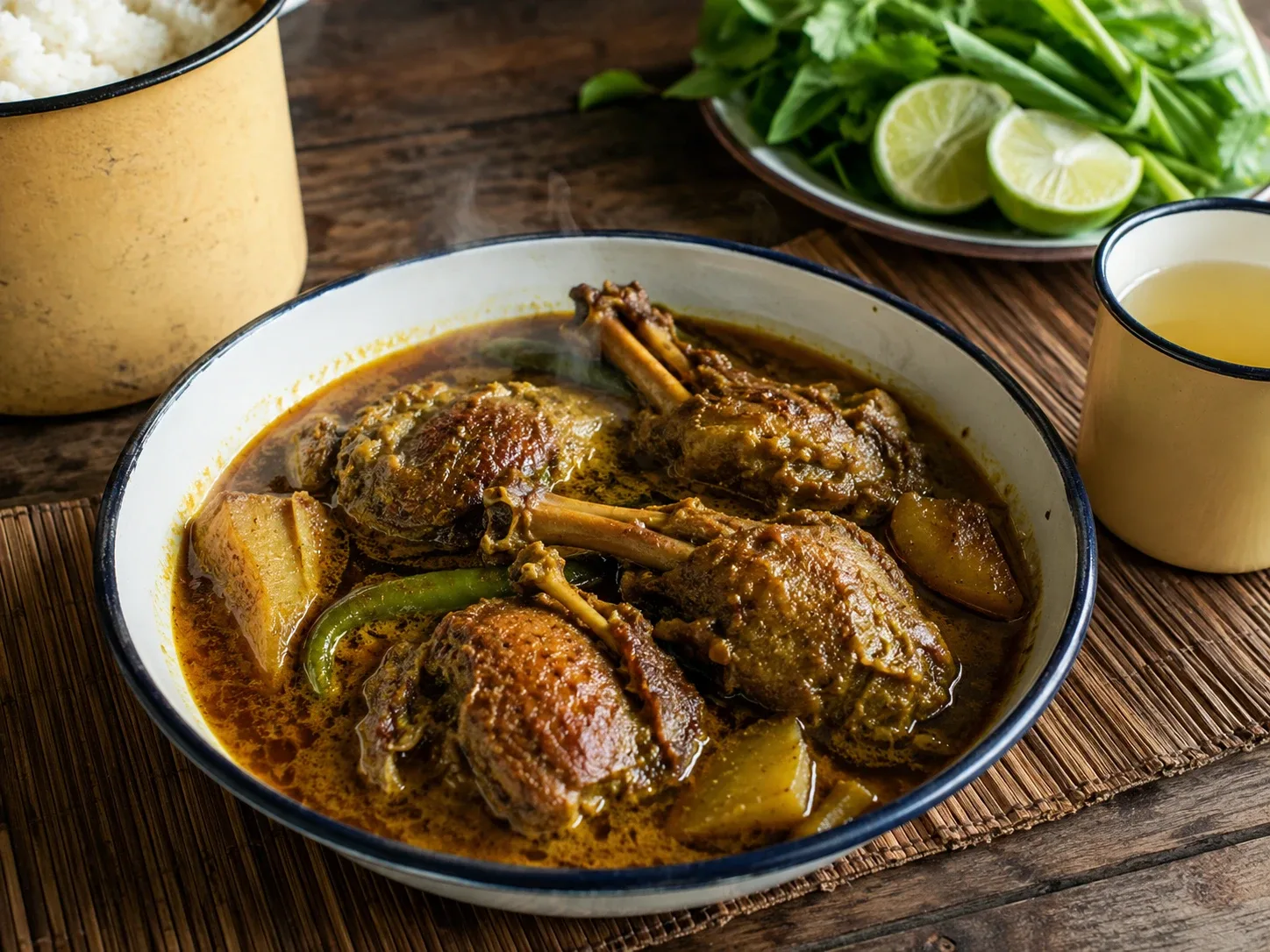
Be Thar Hin, Delta Duck Curryဘဲသားဟင်း
Duck curry from the Ayeyarwady, where ducks glean the rice paddies — browned in its own fat, then braised si pyan style until the amber oil returns.
 ၃
၃Curries · 45 min · Beginner
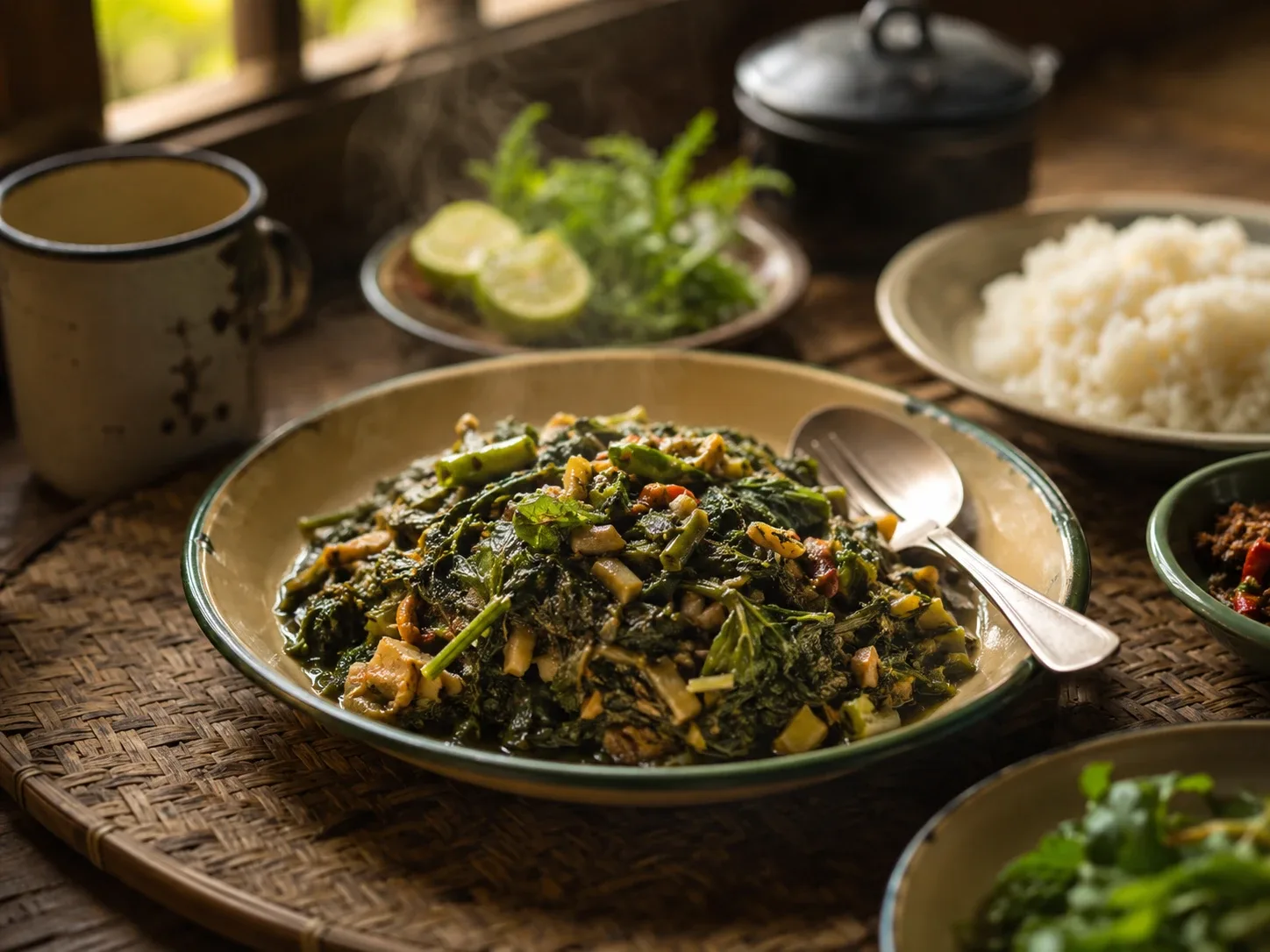
Chin Baung Kyaw, Sour Roselle Leavesချဉ်ပေါင်ကြော်
Lower Burma's beloved sour greens — roselle leaves fried down with bamboo shoots, dried shrimp, and green chili until they collapse into a dark tangy relish.
 ၇
၇Sweets & Mont · 105 min · Intermediate
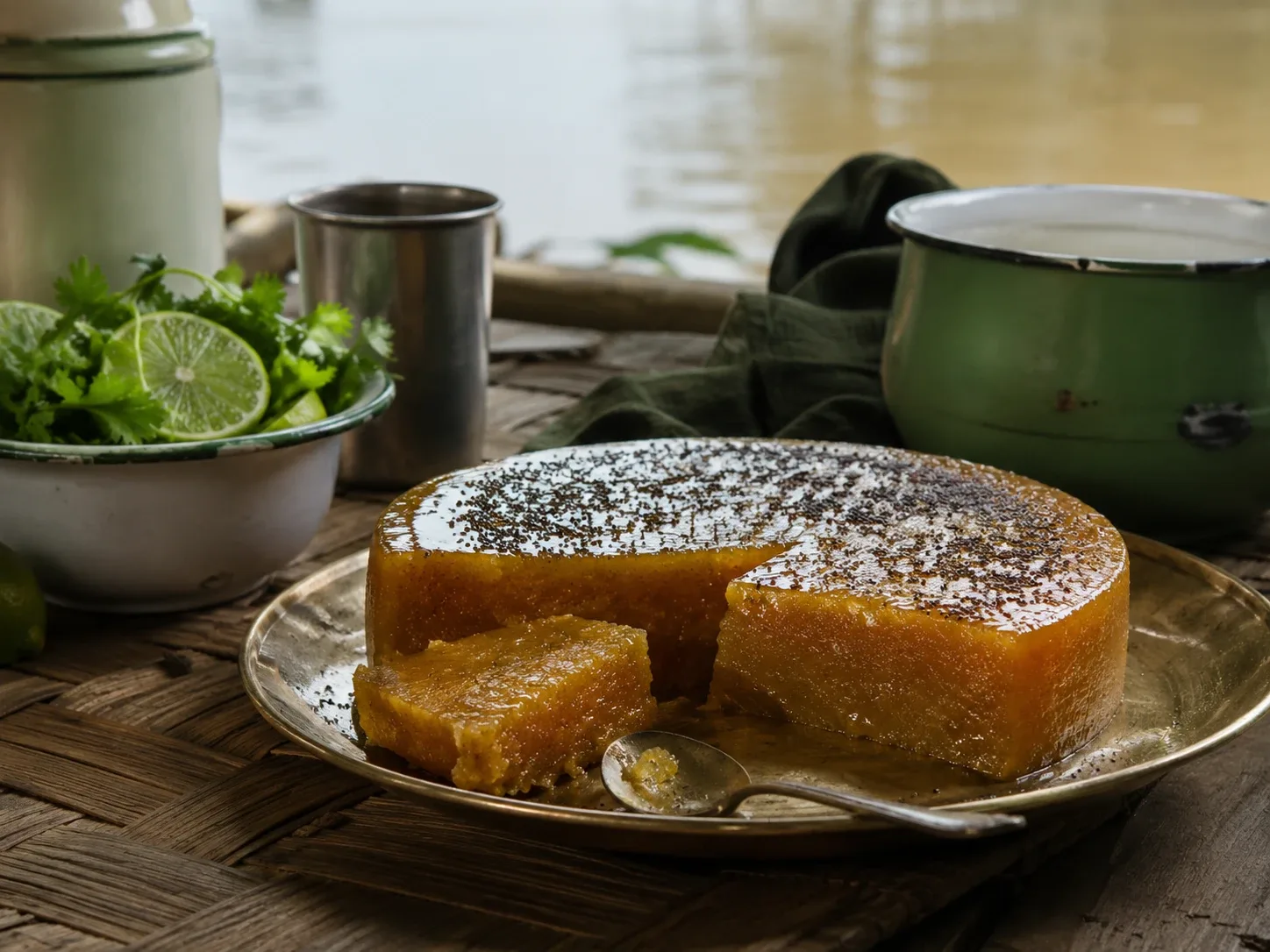
Pathein Halawa, the Delta's Gilded Sweetပုသိမ်ဟလဝါ
Pathein's famous glutinous-rice halawa — coconut milk, sugar, and ghee stirred patiently down to a dense, gleaming amber slab crowned with toasted poppy seeds.