Pè Kyaw, Crispy Split-Pea Crackers
ပဲကြော်
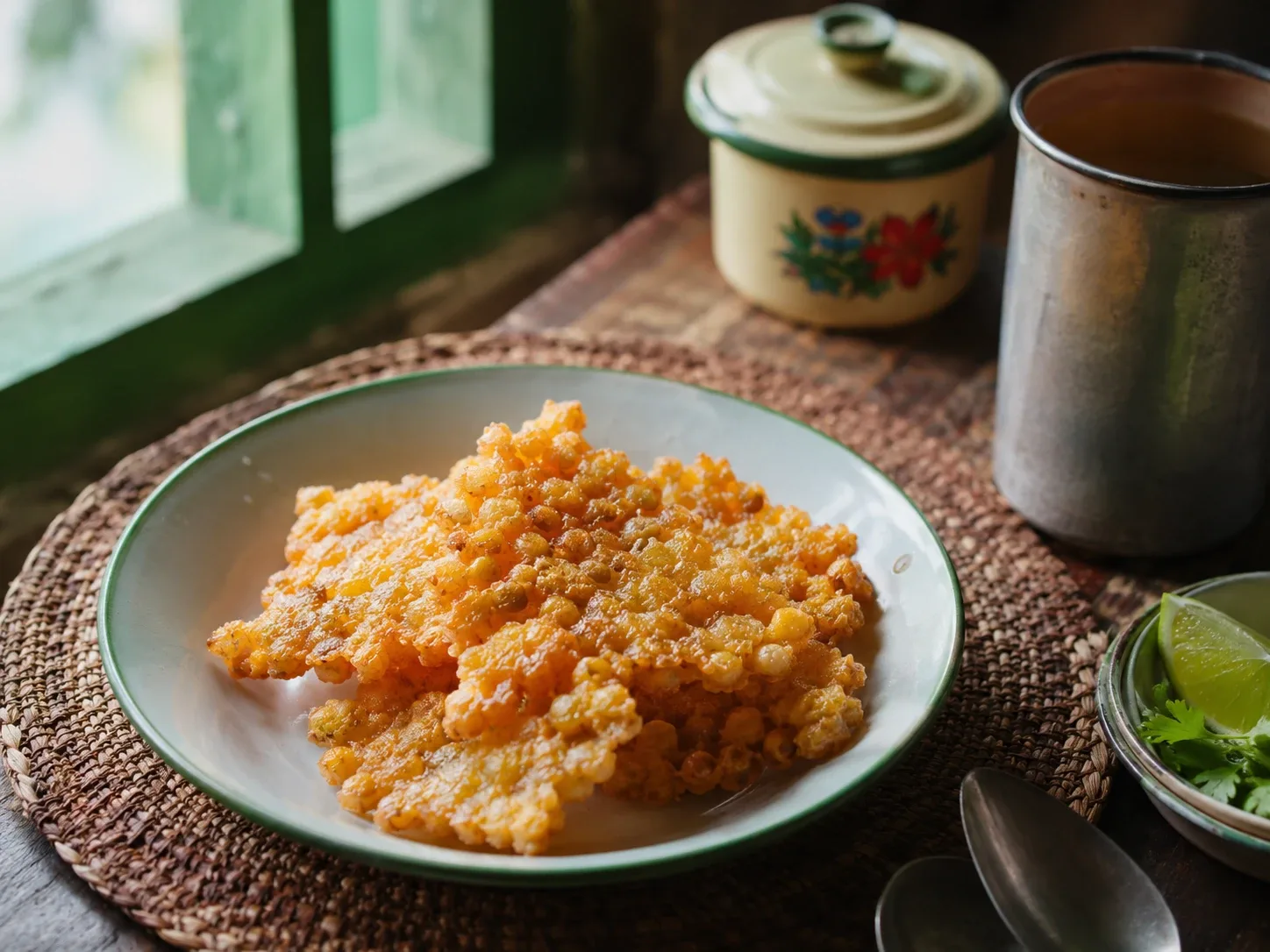
The crackly split-pea fritter no bowl of mohinga is complete without — soaked chana dal in a thin rice-flour batter, ladled flat and fried deep gold.
By Burmese Cookbook Kitchen · June 26, 2026
ဧရာဝတီ Ayeyarwady DeltaIndependence, 1948–1962
 ၆
၆- Prep
- 10 min
- Cook
- 25 min
- Serves
- 6
- Level
- Beginner
Pè kyaw is a topping that got famous. On its own it is a modest thing — a thin, ragged disc of split peas barely held together by rice-flour batter, fried until it snaps — but no bowl of mohinga in the country is considered complete without one shattered over the top. Order mohinga anywhere from a delta ferry stop to a Yangon teahouse and the vendor's hand moves to the tin of pè kyaw without being asked. The soup is the argument; the cracker is the punctuation.
Fritter stands sold pè kyaw through the parliamentary years after independence, when tea shops multiplied and mohinga stalls became fixtures of every delta town, and the two foods have been inseparable since. It is also thrift cooking of a high order: a handful of dal and a cup of batter becomes a stack of crackers that keeps for a week in a tin — which is why grandmothers make them by the dozen and why the stall's stack never runs low.
The whole craft is in the ratio and the pour. The batter must be thin — closer to paint than to pancake — and the peas must crowd it, so each cracker fries into open lace rather than a solid cake. Pour it down the sloped side of the wok so it spreads flat, leave it alone until the first side sets, and drain it standing up. Then break it over soup, over noodle salad, or straight over your own resolve to save some for later.
A proper pè kyaw shatters — if it bends, the batter was too thick or the oil too timid. You should see more pea than batter in every cracker.
မီးဖိုချောင်စကား · A word from the kitchen
Ingredientsပါဝင်ပစ္စည်း
Serves 6
Tap to check off as you gather
For the crackers
- chana dal — soaked at least 4 hours, or overnight — do not cook them
- rice flour
- chickpea flour (besan)
- turmeric
- salt
- water — the batter should run off the ladle in a thin sheet
- small onion — optional, sliced paper-thin
- peanut oil — for deep-frying
Methodချက်နည်း
Tap a numeral as you finish each step
Step 1: Soak the dal
Cover the chana dal generously with cold water and leave it at least four hours — overnight is better. A soaked pea fries through to a nutty crunch in the time the batter takes to crisp; an unsoaked one comes out of the oil like gravel. Drain them well before mixing.
Step 2: Mix a thin batter
Whisk the rice flour, besan, turmeric, and salt with the water into something closer to paint than pancake batter, then fold in the drained dal and the onion if using. It will look like far too many peas and far too little batter. That is the correct look — the batter is glue, not cake.
Step 3: Heat the oil
Bring the oil to about 175°C in a wok or wide pan. Test with a single pea-and-drip of batter: it should sink halfway, rise, and sizzle steadily. Too-cool oil lets the cracker drink; too-fierce oil browns the batter before the dal cooks through.
Step 4: Ladle them flat
Stir the batter, scoop a small ladleful, and pour it slowly down the sloped side of the wok just above the oil line so it slides in and spreads into a thin, ragged disc. Do not touch it for a full minute — the first side must set before it can survive a flip. Then turn once and fry until deep gold, about three minutes total.
Step 5: Drain and keep them crisp
Drain each cracker upright against the rim of a rack so air reaches both faces. Cooled completely, they keep a week in an airtight tin — which is exactly how mohinga stalls hold them, snapped over the bowl at the last second so the crunch survives the broth by minutes, not seconds.
ခွက်ယောက် · The tools
Equipment
Carbon-steel wok
ဒယ်အိုးThe dai-oh — for si pyan curries, fritters, and every fried-noodle dish here. Carbon steel, seasoned dark, nothing fancy.
Shop on Amazon →Frying thermometer
အပူချိန်တိုင်းThe difference between shattering buthi kyaw and greasy buthi kyaw is oil held at temperature — stop guessing.
Shop on Amazon →Frying spider
ဇကာLift fritters clean out of the oil and drain them fast, before the crust turns soft. The street cook’s third hand.
Shop on Amazon →Mandoline slicer
အလွှာစက်Paper-thin shallots for even frying and cabbage fine enough for thoke — seconds, not knife-years.
Shop on Amazon →
Equipment links are Amazon affiliate links. As an Amazon Associate we earn from qualifying purchases, at no cost to you. Disclosure.
ဟင်းစုံ · Set the table
A Burmese meal is a spread
Snack-shop fare, eaten with the usual scatter of condiments:
- Si chet, chili oilဆီချက်The fragrant red oil every household keeps by the stove.
- Crispy fried shallotsကြက်သွန်ကြော်A spoonful of crunch and sweet shallot oil over anything.
- Teahouse milk teaလက်ဖက်ရည်How a Burmese meal ends — sweet, strong, and slow.
Questions from the kitchen
Can I use yellow split peas instead of chana dal?
Yes — they are close cousins and most shops shelve them side by side. Chana dal holds a slightly nuttier, firmer bite after frying, which is why it is the street standard, but a pè kyaw of yellow split peas will not embarrass you. Soak either the same way.
How long do they keep?
A week in an airtight tin, easily — this is a make-ahead food by design. If they soften, five minutes in a low oven brings the snap back. Do not refrigerate them; the humidity in a fridge is exactly what you are protecting them from.
Why do mine fall apart in the oil?
Either the batter is so thin it cannot hold the dal together — add a spoon more rice flour — or you moved the cracker before the first side set. Give it a full undisturbed minute, and pour the batter down the wok's side rather than dropping it from a height.
နောက်တစ်ခု · Cook next
Keep the wok hot
 ၆
၆Street & Fritters · 40 min · Intermediate
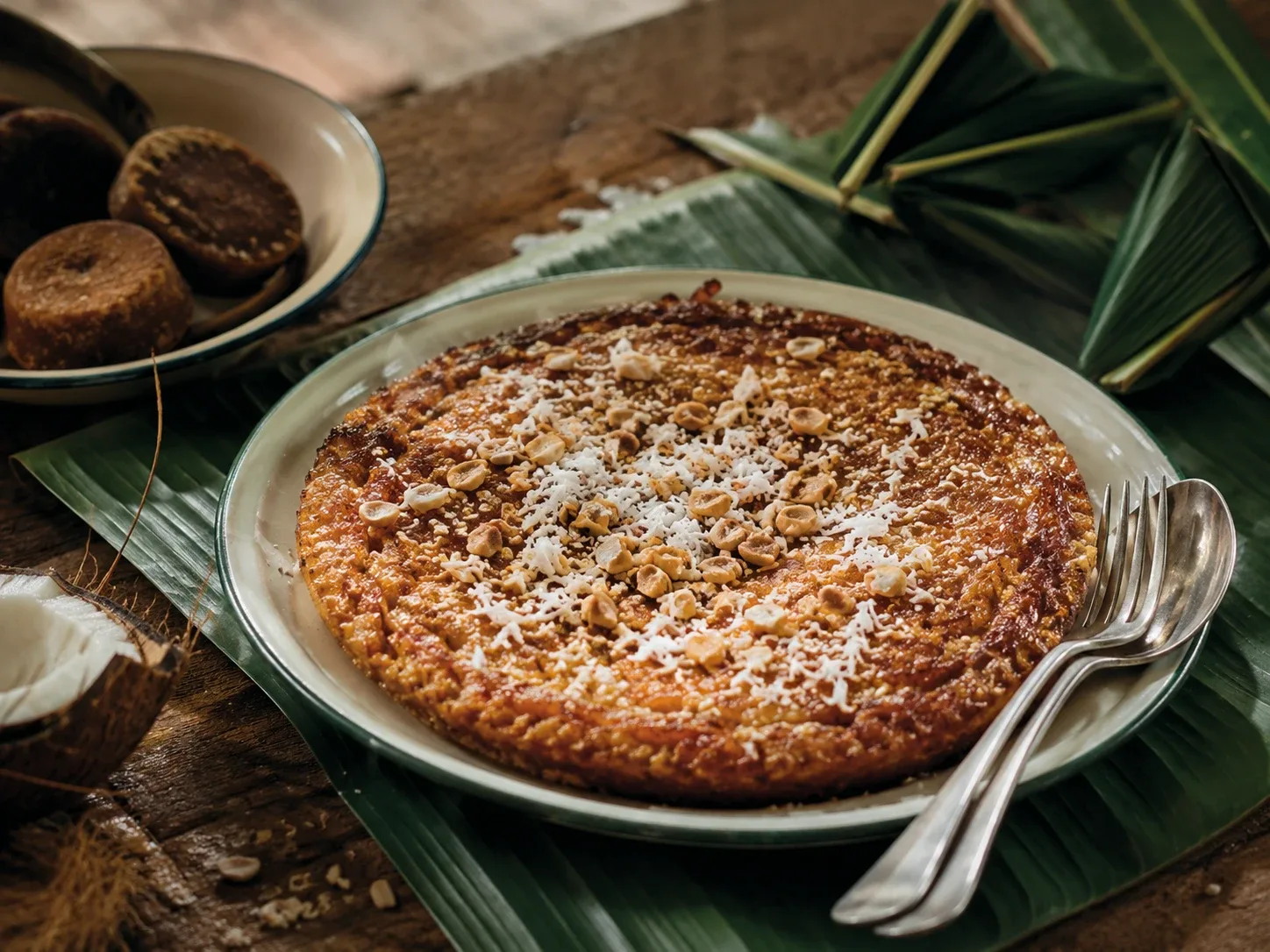
Bein Mont, the Jaggery Griddle Pancakeဘိန်းမုန့်
A thick rice-flour pancake raised on jaggery and crisped in a covered pan, showered with peanuts, coconut, and sesame — Lower Burma's teashop griddle mont.
 ၆
၆Street & Fritters · 25 min · Beginner
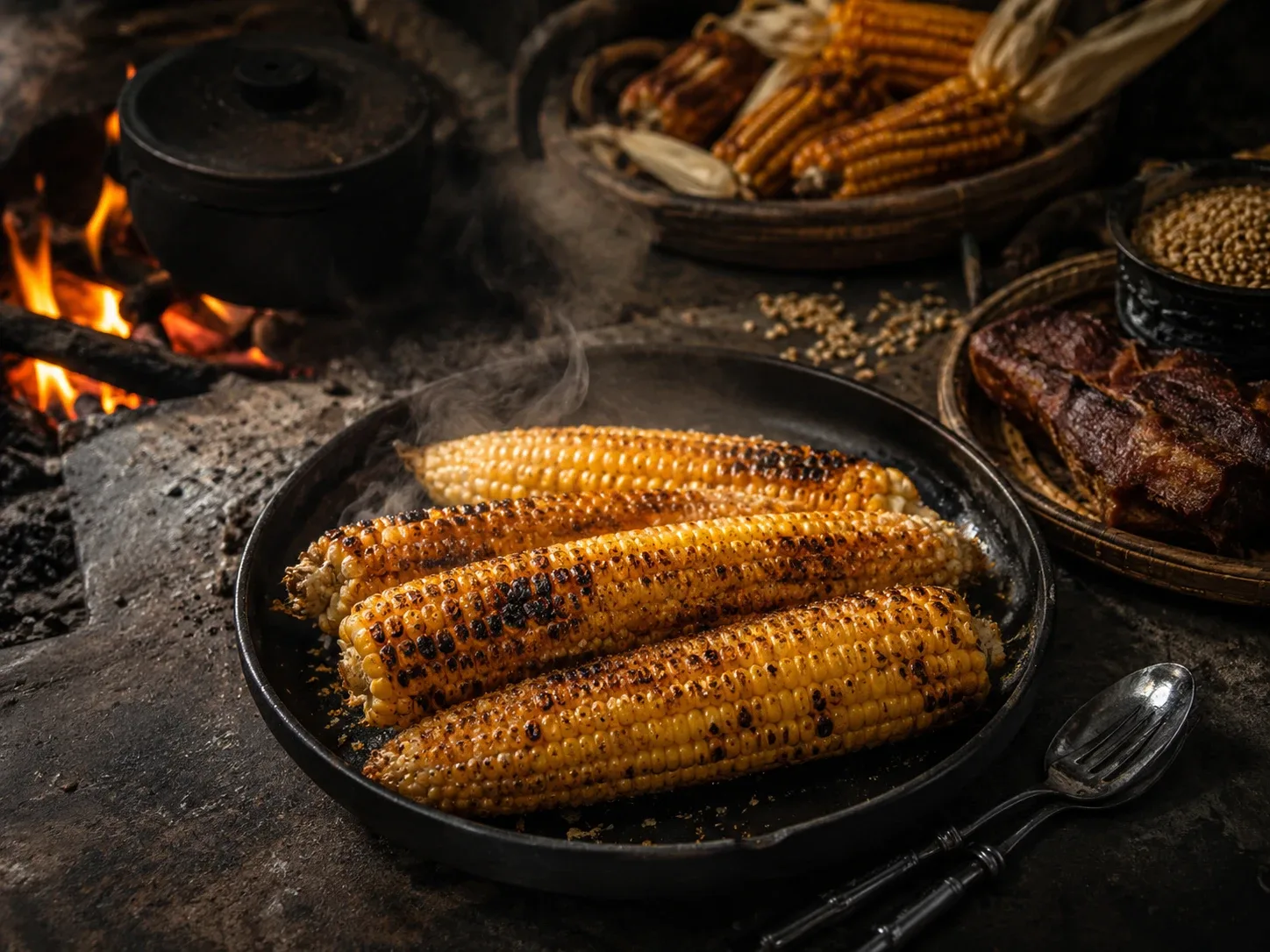
Fire-Roasted Corn with Chili Salt
Ears of corn roasted dark over open coals and rubbed with pounded chili salt — the taste of a Chin market morning, where maize is the mountain staple.
 ၄
၄Salads & Thoke · 25 min · Beginner
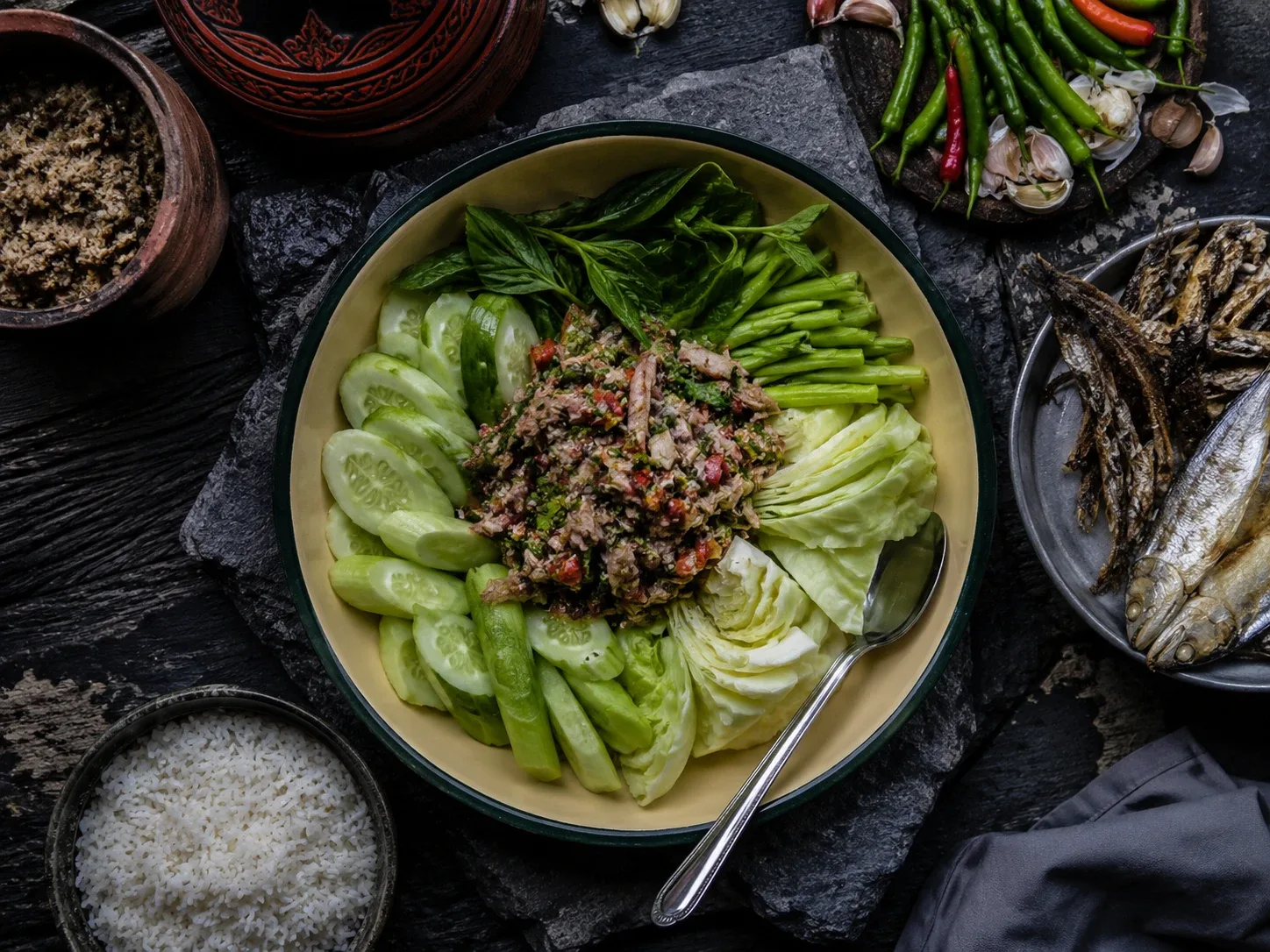
Rakhine Ngapi Thoke, the Pounded Fireငါးပိသုပ်
Rakhine's roasted fish-paste salad — marine ngapi pounded with green chili, garlic, and lime, served the western-coast way with crisp vegetables and rice.