Roselle (chin baung), the sour leaf
ချဉ်ပေါင်
The sharp, rhubarb-bright leaf behind chin baung kyaw — Burma’s favorite sour green.
Also answers to: chin baung ywet · roselle leaves · sour leaf · hibiscus leaf
Chin baung is the leaf of the roselle plant, a hibiscus relative better known in the West for the red calyces that make hibiscus tea. The Burmese eat the greens, and the greens are sour — sharply, naturally sour, closer to sorrel or rhubarb than to any ordinary leaf vegetable. The name says it plainly: chin means sour. It is not a ferment at all, but it earns its place in this group because it supplies the same thing the ferments’ sourness does — the acid half of the Burmese balance — straight off the plant.
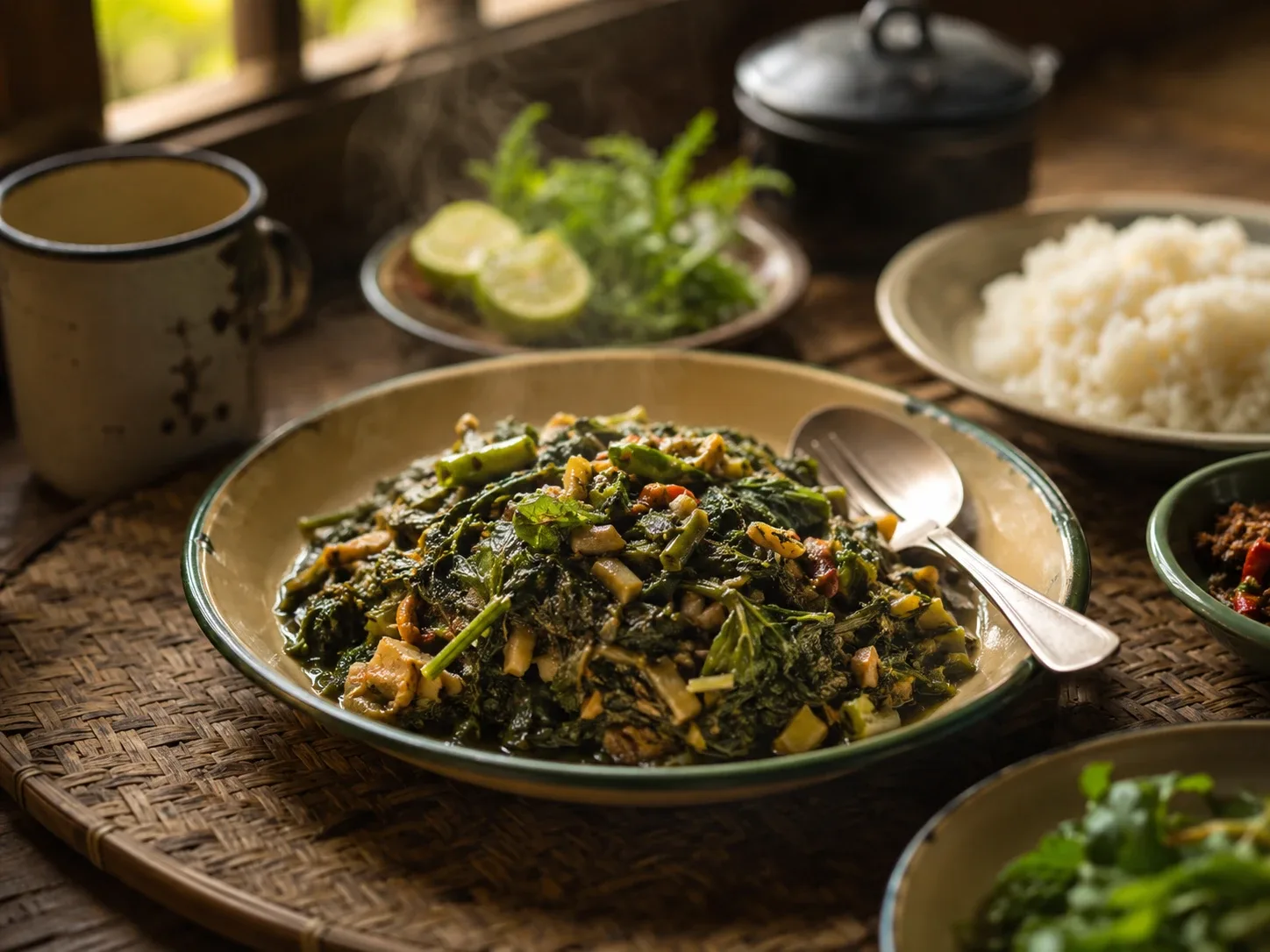
Its signature dish is chin baung kyaw, the leaves fried down with garlic, chilies, and often bamboo shoots and dried shrimp into a dark, tangy, almost jammy tangle that may be the most beloved vegetable dish in the country — cheap, fast, and served beside curry and rice everywhere from street shops to family tables. The plant grows like the weed it nearly is through the monsoon, which made it the sour green of people who did not need to buy their sourness.
Roselle is African in origin and has been in Southeast Asia long enough that no one can honestly date its arrival; its path into the Burmese kitchen belongs to oral memory rather than recorded history. What is certain is how thoroughly it was adopted — among Burmese communities abroad, finding real chin baung is one of the small persistent homesicknesses.
Choosing itရွေးချယ်ခြင်း
Fresh is best and hardest: look in Southeast Asian or African groceries (roselle also cooks into West African dishes) for perky, deep-green leaves on reddish stems, with no black slime at the edges. Frozen chin baung from Burmese and Thai shops is a genuinely good product and the practical answer for most diaspora kitchens. Dried roselle leaves rehydrate into a softer, duller version — workable in a pinch. If none of these lands, sorrel is the nearest living relative in flavor and behaves the same way in the wok.
Keeping itသိမ်းဆည်းခြင်း
Fresh leaves are fragile: unwashed, in a paper-towel-lined bag in the crisper, they hold two or three days before the sourness starts fading with the freshness. Frozen packets keep for months and go straight into the hot pan without thawing. Dried leaves live in an airtight jar in the dark. Cooked chin baung kyaw, usefully, keeps and even improves for a couple of days in the fridge — the flavors settle into each other.
In the potမီးဖိုချောင်တွင်
Fry it. The leaves collapse fast and hard, like spinach with a grievance, shedding water and concentrating into a tart, silky mass — so use more than looks reasonable. Classic chin baung kyaw builds garlic, chilies, and a little ngapi or dried shrimp in oil first, then wilts in the leaves and cooks them down well past bright green into something dark and jammy. The leaves also sour soups the way tamarind does, added in the last minutes. Salt carefully: their acid makes dishes taste less salted than they are.
ဝယ်ယူရန် · Getting it
Buy the real thing
Dried roselle (chin baung) — shelf-stable and shippable, unlike most of the fresh aisle.
Find it on Amazonဟင်းလျာများ · Cooked with it