Chin Baung Kyaw, Sour Roselle Leaves
ချဉ်ပေါင်ကြော်
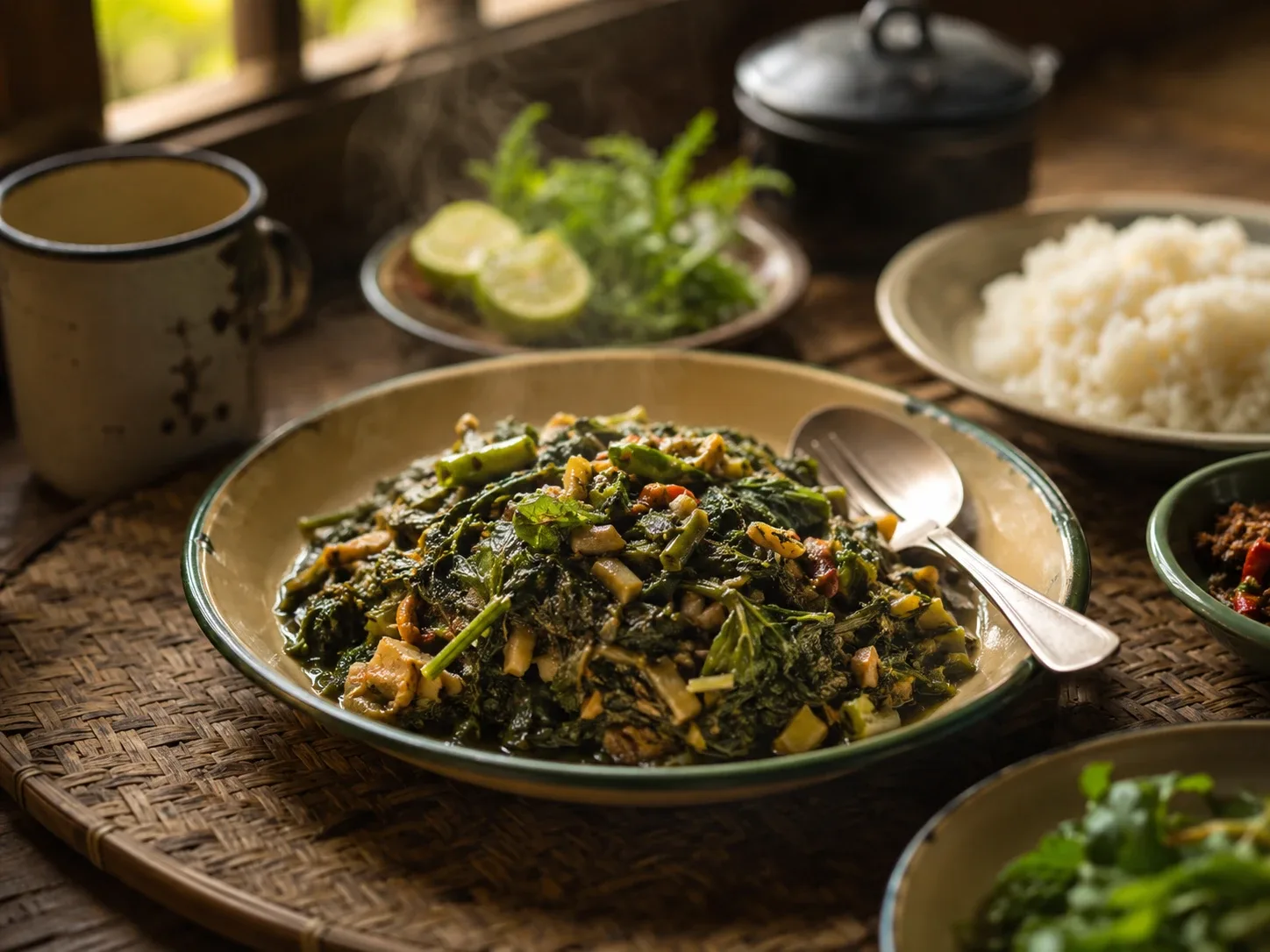
Lower Burma's beloved sour greens — roselle leaves fried down with bamboo shoots, dried shrimp, and green chili until they collapse into a dark tangy relish.
By Burmese Cookbook Kitchen · July 9, 2026
ဧရာဝတီ Ayeyarwady DeltaKonbaung, 1752–1885
 ၃
၃- Prep
- 20 min
- Cook
- 25 min
- Serves
- 4
- Level
- Beginner
Roselle grows on the bunds of delta paddies the way weeds grow anywhere else — a scraggly hibiscus cousin whose deep-red calyces the rest of the world boils into tea, and whose sour green leaves lower Burma fries into one of its most quietly essential dishes. Chin baung kyaw means simply "sour leaf, fried," and the name is the recipe: leaves collapsed in shallot-garlic oil with dried shrimp and bamboo shoots until they turn dark, jammy, and bracing. No chronicle bothered to record when delta households started cooking it — everyday food rarely gets a scribe — but it belongs to the Konbaung-era village table by any honest reckoning, and it has never left.
Its job is architectural. A Burmese meal balances rich against sharp, and chin baung kyaw is the sharp — the sour, salty counterweight set beside a si pyan curry or an oily fish, doing for the table what lime does for a bowl of mohinga. The leaves carry their own acid, so the dish needs no tamarind and no lime; the cook's whole task is to fry the base properly and then let the roselle collapse and cook its own juice back out. Stop too early and it is wet and shrill; give it its ten patient minutes and it turns mellow, deep, and jammy, the bamboo shoots keeping a little crunch in the wreckage. Alongside a mound of rice and something rich beside it, it is the delta's monsoon in a spoonful — green, sour, and completely unbothered by fashion.
Roselle needs no souring agent — it is the souring agent. If you catch yourself reaching for tamarind, put it down and taste the pan first.
မီးဖိုချောင်စကား · A word from the kitchen
Ingredientsပါဝင်ပစ္စည်း
Serves 4
Tap to check off as you gather
For the greens
- roselle leaves — sold as chin baung or sour leaf in Burmese and Thai markets; young sorrel is the honest stand-in
- bamboo shoots — fresh-boiled or a well-rinsed vacuum pack, sliced into thin batons
For the fry
- peanut oil
- shallots — roughly chopped
- garlic
- turmeric
- paprika
- dried shrimp — pounded to a rough floss; or 150 g small fresh prawns for the richer delta version
- ngapi (shrimp paste) — optional but very delta — halve the fish sauce if you use it
- green chilies — split lengthwise; they perfume more than they burn
- fish sauce
Methodချက်နည်း
Tap a numeral as you finish each step
Step 1: Strip and wash the roselle
Pull the leaves from their stalks — the stalks are woody and never soften — and wash them in two changes of water. Do not dry them obsessively; the water that clings to the leaves is the only liquid this dish needs.
Step 2: Pound the base
Pound the shallots and garlic to a rough paste in a mortar. Coarse is correct — the pieces should half-melt into the oil, leaving small sweet studs through the finished relish.
Step 3: Fry the paste and shrimp
Heat the oil in a wide pan or wok over medium heat and fry the paste with the turmeric and paprika until it smells sweet and the oil stains amber at the edges, 5 to 6 minutes. Add the dried shrimp floss and the ngapi if using, mashing it into the oil, and fry 2 minutes more. This small si pyan is the backbone under the sourness.
Step 4: Add bamboo and chilies
Add the bamboo shoot batons and split chilies and stir-fry for 3 minutes so the bamboo takes on the seasoned oil. Bamboo goes in before the leaves because it needs heat the leaves cannot survive.
Step 5: Collapse the roselle
Pile in the roselle leaves — the pan will look absurdly overfull — and turn them through the oil. Within 2 minutes they wilt to a fraction of their volume and start releasing their sour juice. Lower the heat and cook, stirring now and then, for 8 to 10 minutes, until the leaves have broken down into a soft, dark, jammy tangle and the liquid has cooked back out.
Step 6: Season and serve
Season with the fish sauce and taste — it should land bracingly sour, salty just behind, with the bamboo still holding a gentle crunch against the collapsed leaves. Serve warm or at room temperature with plenty of plain rice; a spoonful does the work of a whole curry.
ခွက်ယောက် · The tools
Equipment
Carbon-steel wok
ဒယ်အိုးThe dai-oh — for si pyan curries, fritters, and every fried-noodle dish here. Carbon steel, seasoned dark, nothing fancy.
Shop on Amazon →Stone mortar & pestle
ဆုံFor garlic-ginger paste, pounded dried shrimp fluff, and crushed peanuts — the blender lies about texture; the stone doesn’t.
Shop on Amazon →
Equipment links are Amazon affiliate links. As an Amazon Associate we earn from qualifying purchases, at no cost to you. Disclosure.
ဟင်းစုံ · Set the table
A Burmese meal is a spread
A curry is the anchor, not the whole meal. Round out the table:
- Steamed riceထမင်းThe centre of the table — everything else is built around it.
- A light soupဟင်းချိုThe clear, sour broth sipped between mouthfuls of rice.
- Toh sa yar & ngapi dipတို့စရာRaw and blanched vegetables with a pungent fish-paste dip — the fresh, bitter counterpoint.
- Balachaungဘလချောင်းThe crispy shrimp relish that lives on every Burmese table.
- Crispy fried shallotsကြက်သွန်ကြော်A spoonful of crunch and sweet shallot oil over anything.
- A hand-tossed thokeအသုပ်A bright, sour salad to lift the whole spread.
Questions from the kitchen
Where do I find roselle leaves?
Burmese, Thai, and Vietnamese markets carry them fresh in the warm months — look for chin baung, sour leaf, or rau chua. Some stock frozen packs year-round, which collapse even faster and work well here. Young garden sorrel is the closest substitute; spinach with lime juice is a polite impostor, softer in every sense.
Fresh prawns or dried shrimp?
Both are authentic and they make different dishes. Dried shrimp gives the everyday village version — deeper, saltier, keeps a day longer. Small fresh prawns, stirred in for the last three minutes, make the delta market version that eats almost like a curry. On a good day in Pathein you would get both in one pan.
Why did mine turn out watery?
The leaves were not given time to cook back down. Roselle releases a surprising amount of juice as it collapses; keep the pan uncovered and let that liquid fry off until the mass darkens and thickens. Covering the pan or rushing to the table leaves you with sour soup.
How sour is this, honestly?
Genuinely sour — closer to rhubarb than to lemon-dressed greens, which is exactly why lower Burma loves it against rich food and plain rice. If you want it gentler, stir a pinch of sugar in at the end or cut the roselle with a handful of spinach; both are common household mercies.
နောက်တစ်ခု · Cook next
Keep the wok hot
 ၃
၃Curries · 125 min · Intermediate
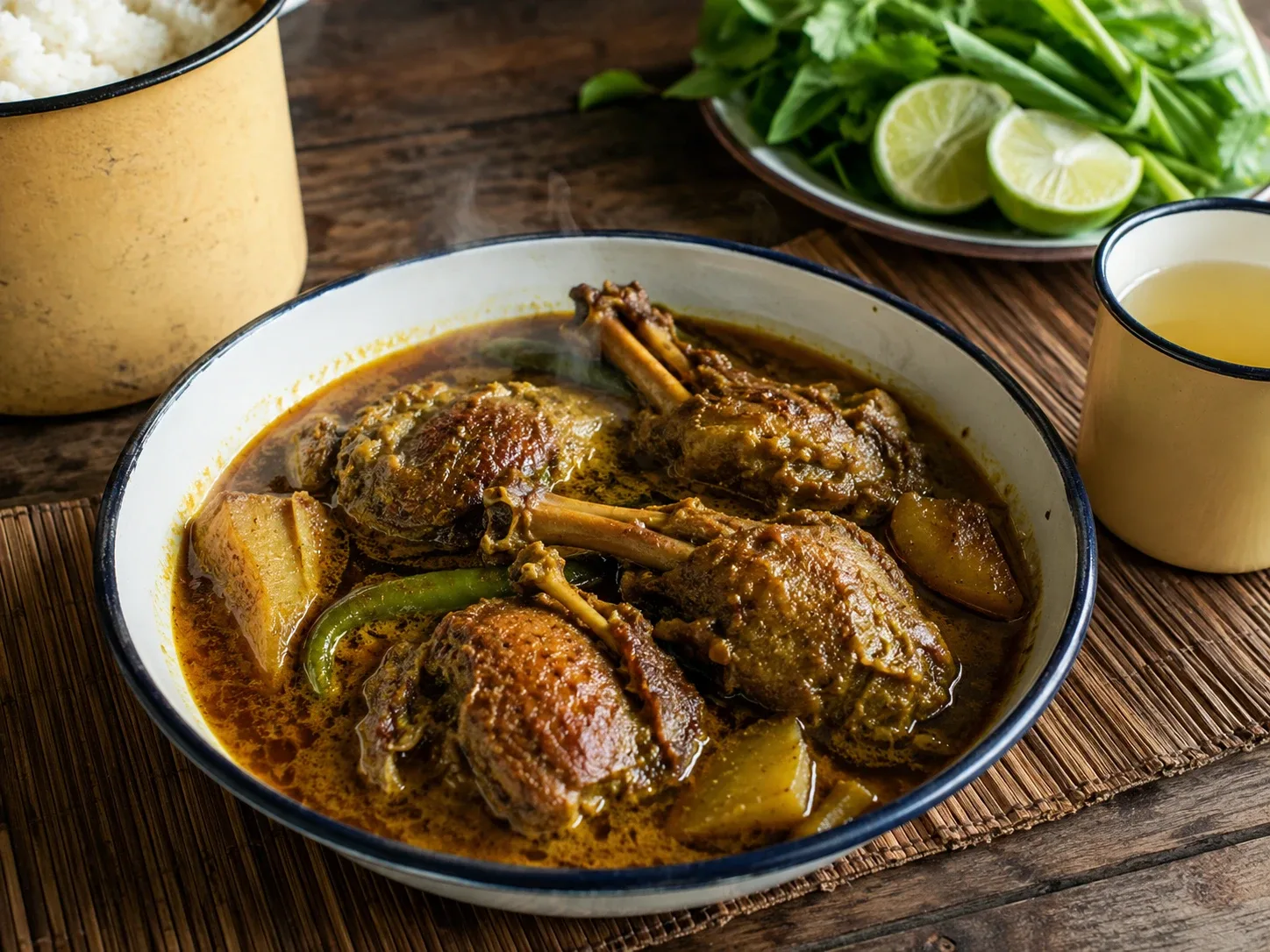
Be Thar Hin, Delta Duck Curryဘဲသားဟင်း
Duck curry from the Ayeyarwady, where ducks glean the rice paddies — browned in its own fat, then braised si pyan style until the amber oil returns.
 ၃
၃Curries · 100 min · Beginner
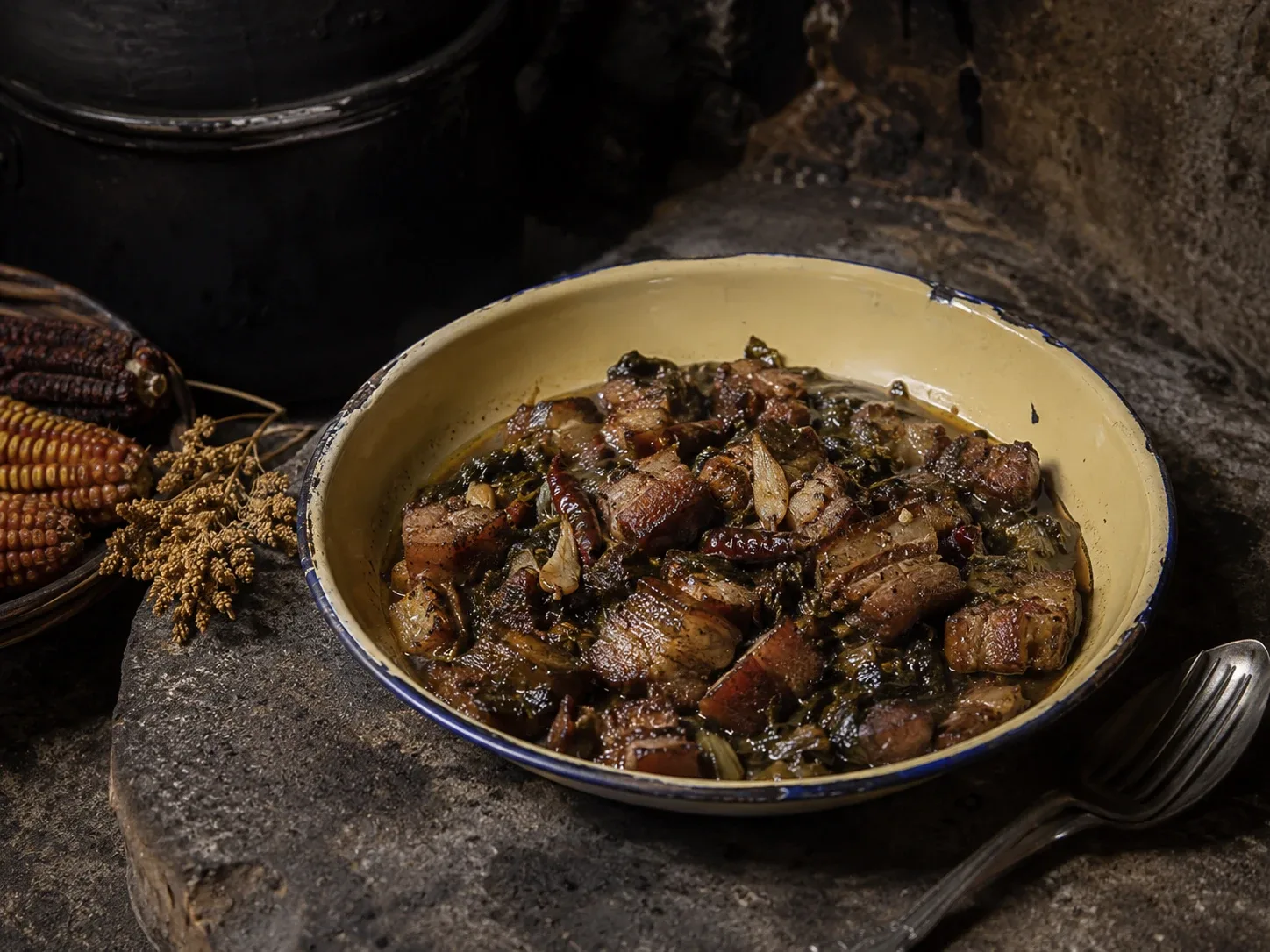
Chin Smoked Pork with Mustard Greens
Hearth-smoked pork simmered down with mustard greens, ginger, and dried chilies — the Chin hills' frugal, smoke-seasoned answer to a curry, salt its only spice.
 ၇
၇Sweets & Mont · 105 min · Intermediate
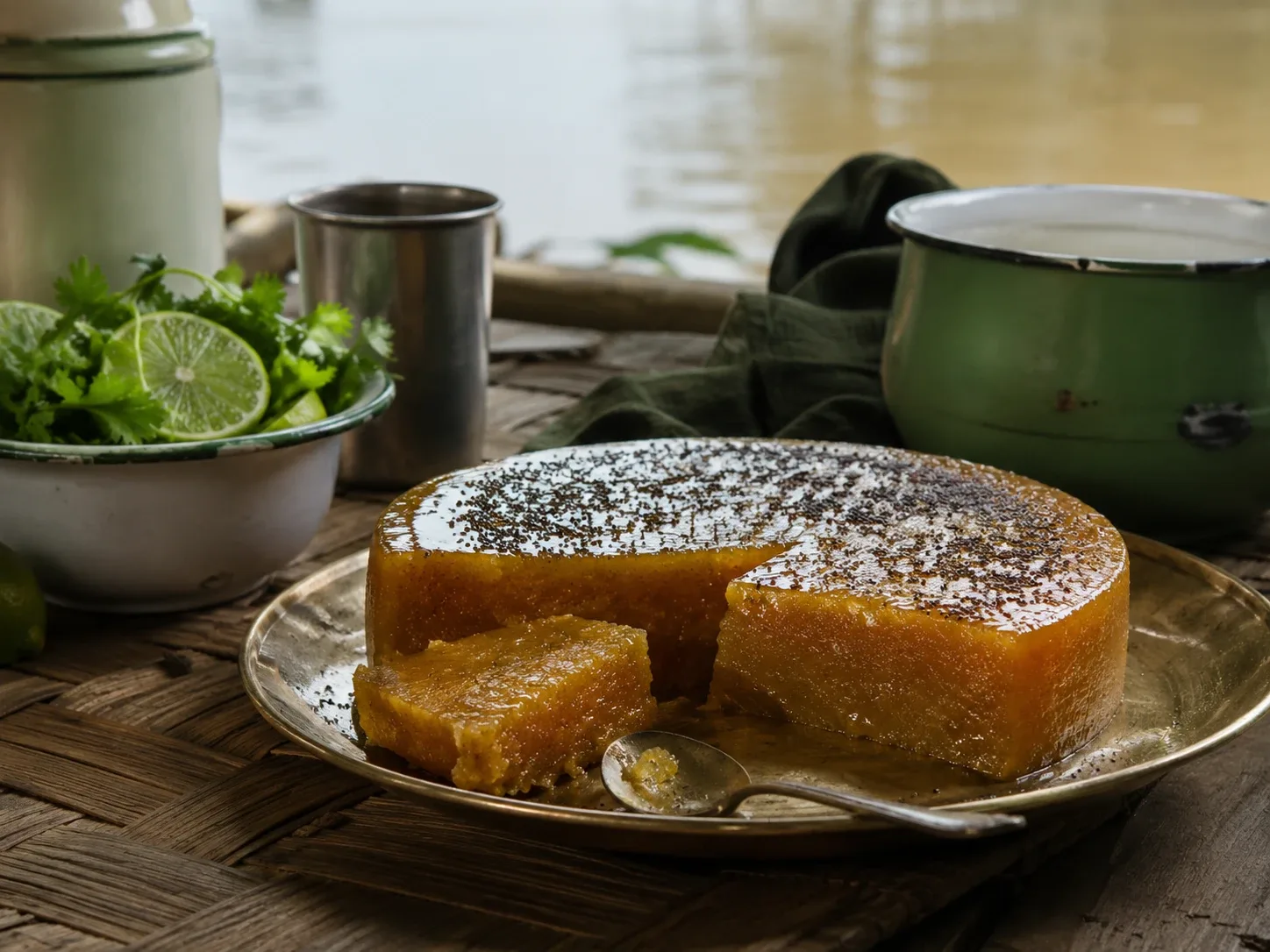
Pathein Halawa, the Delta's Gilded Sweetပုသိမ်ဟလဝါ
Pathein's famous glutinous-rice halawa — coconut milk, sugar, and ghee stirred patiently down to a dense, gleaming amber slab crowned with toasted poppy seeds.