Perfect Pot Rice
ထမင်း
How to cook Burmese daily rice properly — rinsed clear, measured by knuckle, steamed dry and separate, the quiet center every curry and salad depends on.
By Burmese Cookbook Kitchen · June 1, 2026
ဧရာဝတီ Ayeyarwady DeltaPyu City-States, c. 200 BCE–1050 CE
 ၁
၁- Prep
- 5 min
- Cook
- 25 min
- Serves
- 4
- Level
- Beginner
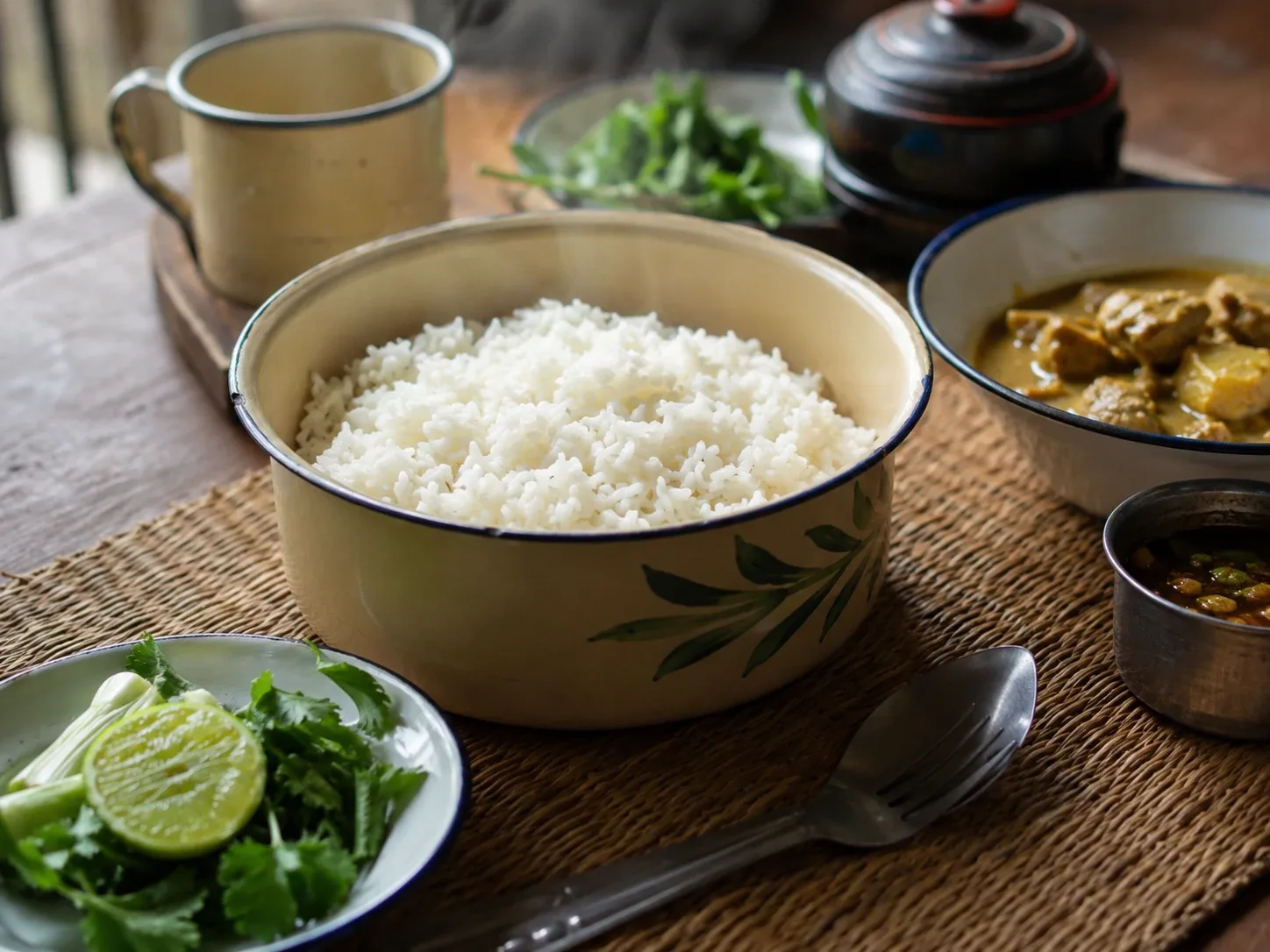
In Burmese, the polite way to ask if someone has eaten is htamin sa pyi bi la — literally, have you eaten rice yet. Rice is not a side dish; it is the meal, and everything else on the table — the curry, the soup, the relish, the pile of raw and blanched vegetables — exists to help the rice go down. A Burmese table is judged first by its rice, and a curry cook who cannot steam a decent pot has built a house on sand.
The grain has been at the center of life on the Ayeyarwady plain since before Burma was Burma — the Pyu city-states were irrigating and storing rice a thousand years before the first Bamar kingdoms, and the delta later fed half of British Asia. That long history breeds strong opinions. Good htamin is dry, fragrant, and separate — each grain distinct, soft but never wet, the kind of rice that holds a ladleful of oily curry gravy without collapsing into porridge.
Only two moments matter. Rinse until the water runs nearly clear, because surface starch is the enemy of separate grains. And once the lid goes on, leave it alone — the boil cooks the bottom of the pot, but it is the trapped steam and the final rest that cook the top. Master this and every recipe in this book gets better, because nearly all of them end the same way: ladled over, folded into, or eaten alongside a mound of perfect rice.
The ten-minute rest off the heat is not optional. Lift the lid early and the bottom layer is wet, the top is chalky, and no amount of fluffing will fix either.
မီးဖိုချောင်စကား · A word from the kitchen
Ingredientsပါဝင်ပစ္စည်း
Serves 4
Tap to check off as you gather
- jasmine rice — about two teacups — long-grain jasmine is the everyday standard
- water — or measure by hand — water to the first knuckle above the leveled rice
- salt — optional; many Burmese households cook rice unsalted and let the curry season it
Methodချက်နည်း
Tap a numeral as you finish each step
Step 1: Rinse until the water runs nearly clear
Put the rice in the cooking pot, cover with cold water, and swish with your fingers until the water clouds. Pour off and repeat two or three times. You are washing away loose surface starch — skip this and the grains glue themselves together as they cook.
Step 2: Measure the water
Level the drained rice in the pot and add the water. If you would rather measure the way most Burmese kitchens do, rest your fingertip on the surface of the rice and add water until it reaches the first knuckle — about 1.5 centimeters. It works in any pot because the rice depth and water depth scale together.
Step 3: Boil hard, uncovered
Bring the pot to a rolling boil over high heat, uncovered, and let it go until the water level drops to the surface of the rice and small craters appear across the top — 5 to 7 minutes. Give it one gentle stir along the bottom early on so nothing sticks.
Step 4: Cover and steam low
Clap on a tight lid, turn the heat to its lowest setting, and leave it for 12 minutes. Do not peek — the trapped steam is doing the cooking now, and every lift of the lid lets it escape.
Step 5: Rest, then fluff
Turn off the heat and let the pot stand, still covered, for 10 minutes. The moisture evens itself out from bottom to top. Then fluff gently with a paddle or fork, turning the rice over rather than stirring it, so the grains stay whole and separate.
ခွက်ယောက် · The tools
Equipment
Rice cooker
ထမင်းအိုးConsistent long-grain rice with zero attention — and in a Burmese kitchen the rice is never optional.
Shop on Amazon →Heavy kettle
ရေနွေးအိုးTeahouse tea starts with water at a hard rolling boil — and lots of it, all morning.
Shop on Amazon →
Equipment links are Amazon affiliate links. As an Amazon Associate we earn from qualifying purchases, at no cost to you. Disclosure.
ဟင်းစုံ · Set the table
A Burmese meal is a spread
The quiet base of the meal — build the rest of the spread around it:
- A curryဟင်းSlow-cooked until the oil returns — the richness the sides cut against.
- A light soupဟင်းချိုThe clear, sour broth sipped between mouthfuls of rice.
- Toh sa yar & ngapi dipတို့စရာRaw and blanched vegetables with a pungent fish-paste dip — the fresh, bitter counterpoint.
- A hand-tossed thokeအသုပ်A bright, sour salad to lift the whole spread.
- Si chet, chili oilဆီချက်The fragrant red oil every household keeps by the stove.
Questions from the kitchen
Can I use a rice cooker instead?
Of course — most Burmese kitchens do. Rinse the same way, use the same knuckle measure, and still give it the 10-minute rest after the cooker clicks over. The rest is where most rice-cooker rice goes wrong, not the machine.
Why is my rice mushy?
Almost always too much water, occasionally too little rinsing. Drop the water by 50 ml next time and rinse one round longer. Old rice also drinks less than fresh-crop rice — if a new bag behaves differently, adjust and note it.
What do I do with leftovers?
Spread the rice to cool, then refrigerate uncovered for the first hour so it dries slightly. Day-old rice is not a compromise — it is the correct starting point for htamin gyaw, the fried rice in this same chapter.
နောက်တစ်ခု · Cook next
Keep the wok hot
 ၁
၁Rice & Foundations · 30 min · Beginner
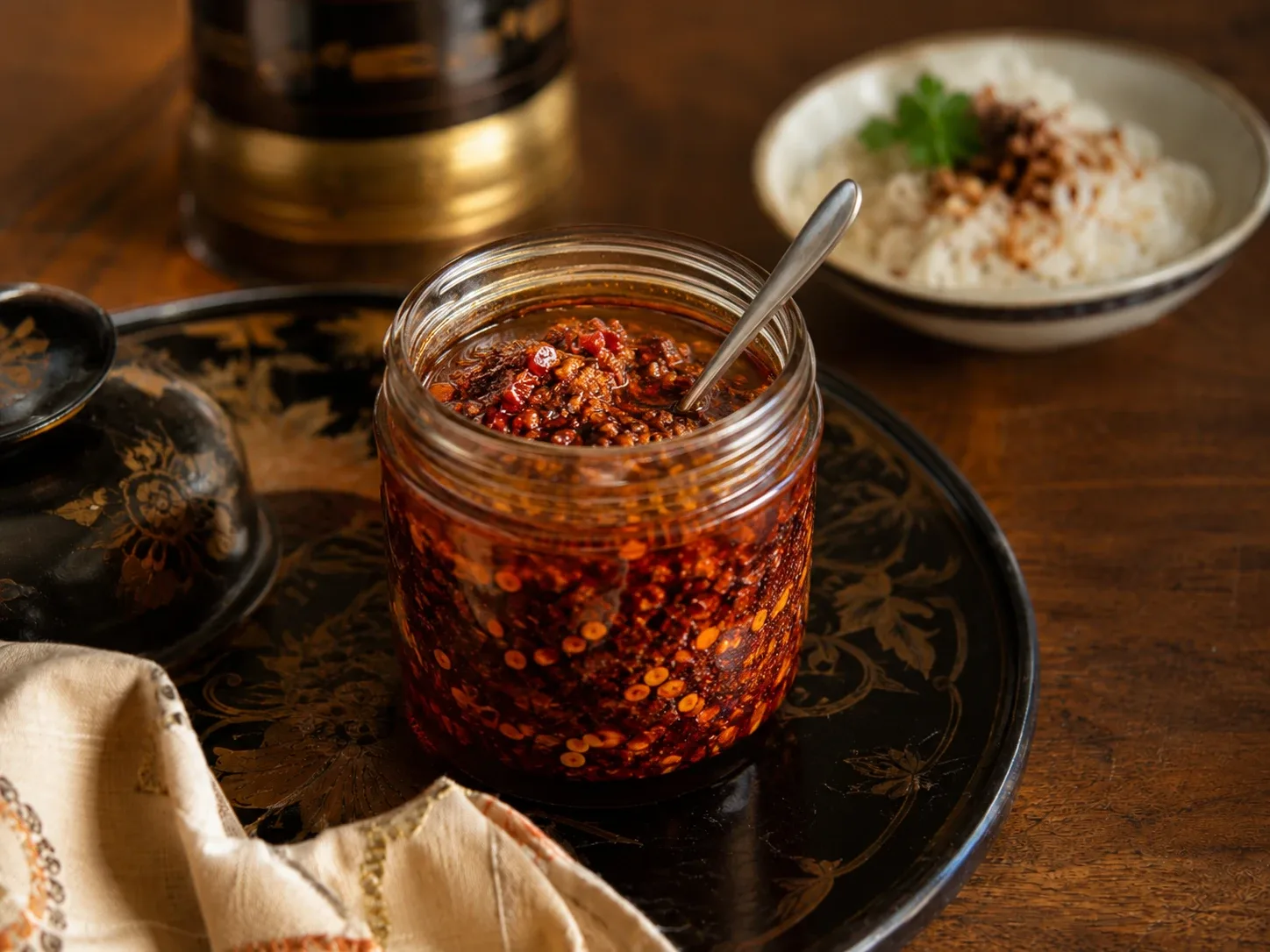
Si Chet, Burmese Chili Oilဆီချက်
The essential Burmese table oil — peanut oil gently fried with chili flakes, garlic, shallot, and a little ngapi, then spooned red over rice, noodles, and salads.
 ၁
၁Rice & Foundations · 40 min · Beginner
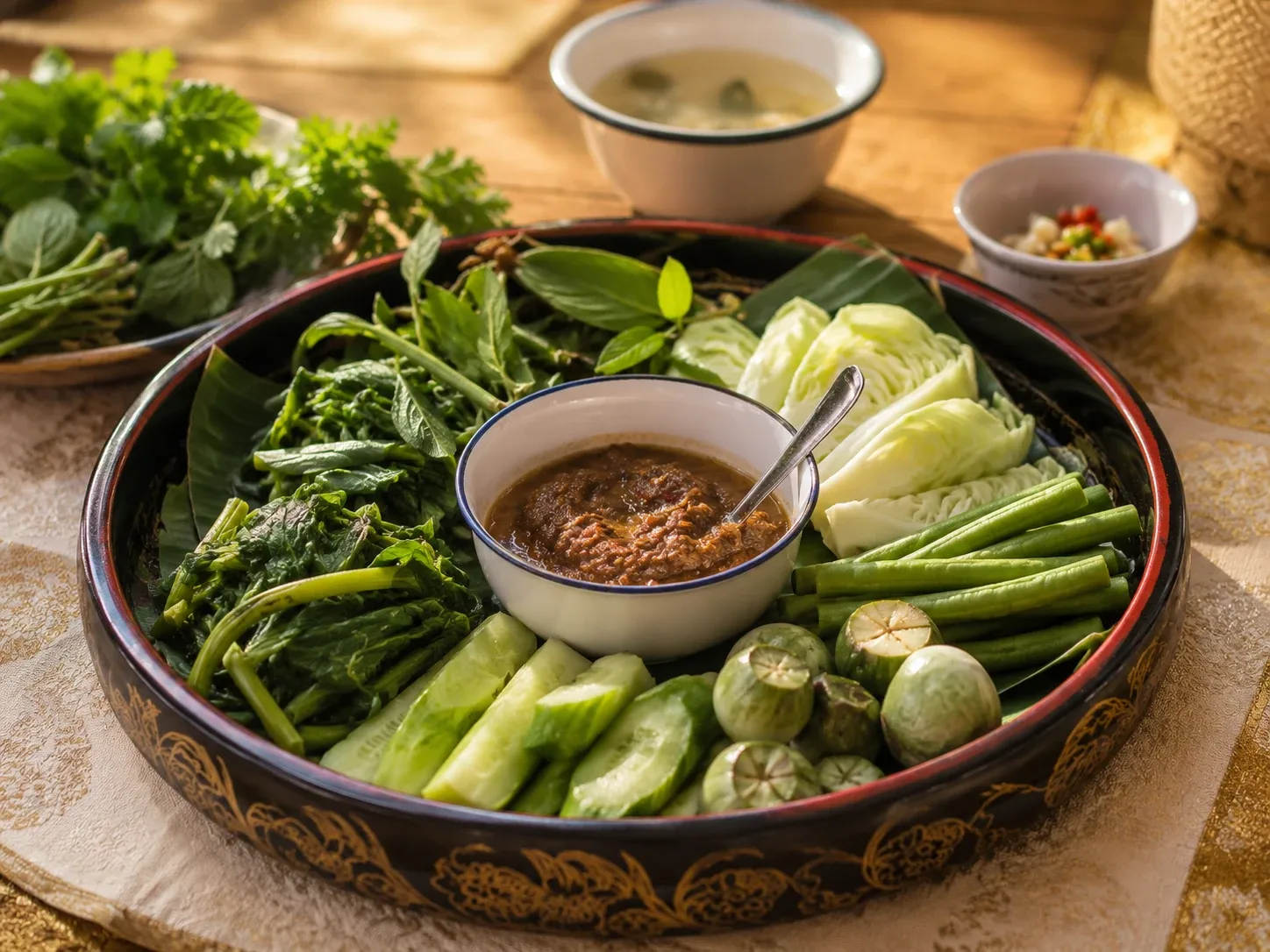
Toh Sa Yar, the Vegetable & Ngapi Platterတို့စရာ
The platter of raw and blanched vegetables around a pungent ngapi dip that no Burmese meal is complete without — the fresh, bitter counterpoint to curry.
 ၄
၄Salads & Thoke · 25 min · Beginner
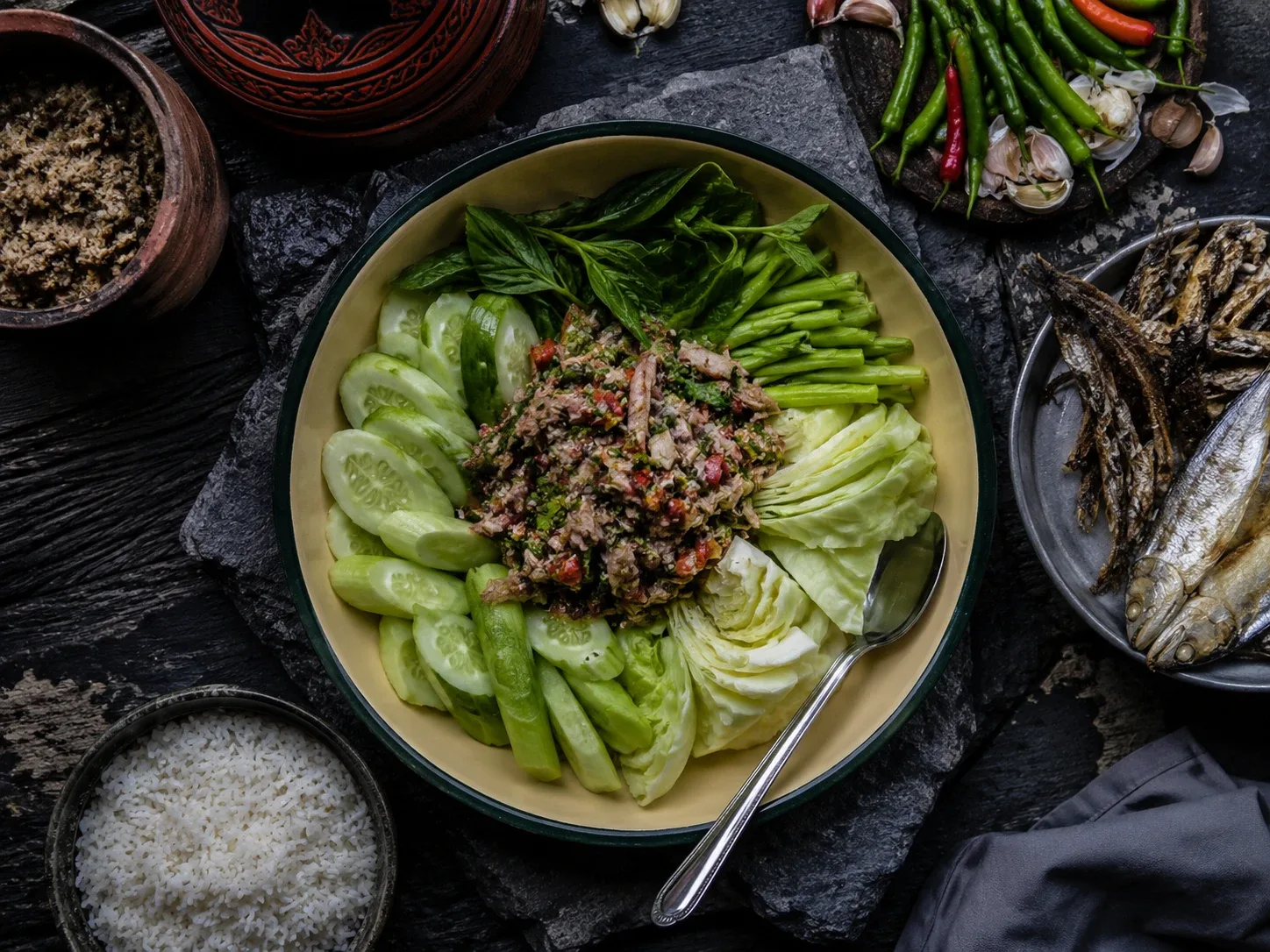
Rakhine Ngapi Thoke, the Pounded Fireငါးပိသုပ်
Rakhine's roasted fish-paste salad — marine ngapi pounded with green chili, garlic, and lime, served the western-coast way with crisp vegetables and rice.