Htamin Gyaw with Boiled Yellow Beans
ထမင်းကြော်
Burmese fried rice the honest way — day-old jasmine rice tossed in turmeric-stained shallot oil with buttery boiled yellow beans and fish sauce.
Also spelled: Htamin Kyaw
By Burmese Cookbook Kitchen · June 6, 2026
ရန်ကုန် Yangon & Lower BurmaThe Socialist Years, 1962–1988
 ၁
၁- Prep
- 10 min
- Cook
- 15 min
- Serves
- 4
- Level
- Beginner
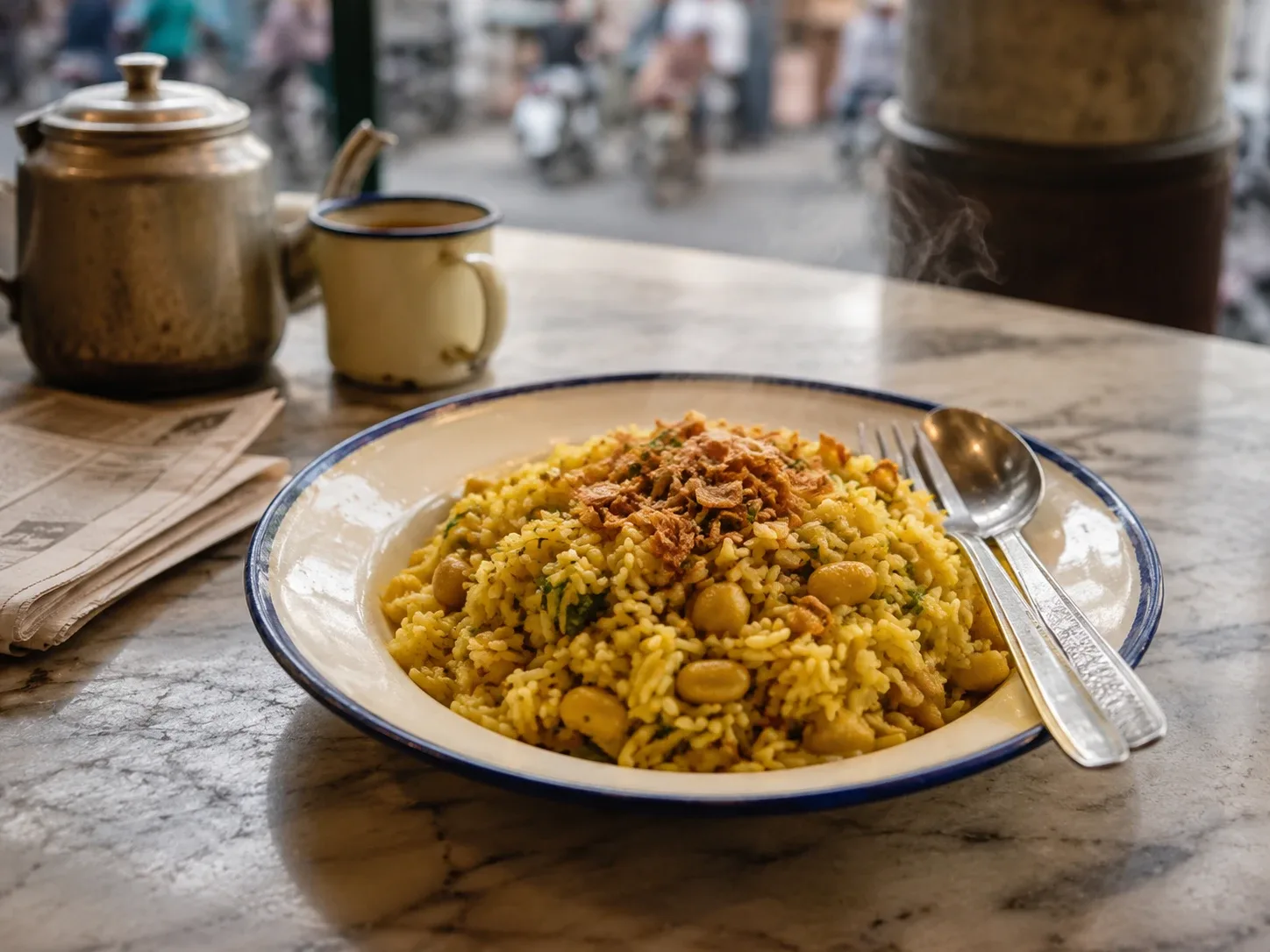
Htamin gyaw is what a Burmese kitchen does with yesterday — yesterday's rice from the bottom of the pot, a couple of shallots, a ladle of boiled yellow beans bought from the corner pot at dawn. Fried rice exists everywhere rice does, but the Burmese version is defined by restraint: no soy sauce, no frozen peas and carrots, just grains stained gold with turmeric-shallot oil, seasoned with fish sauce, and studded with pè byouk — plain boiled beans, buttery and mild, the great Burmese breakfast starch-on-starch move.
It is honest food from a hard chapter. In the socialist decades after 1962, when imports vanished and queues were long, Yangon households became expert at making the second day taste deliberate, and htamin gyaw with beans — filling, cheap, needing nothing from a shop but the beans themselves — became the workday breakfast of a whole city. It still is. Street vendors sell it from flat griddles with a fried egg on top and sweet milky tea alongside, and nobody calls it leftovers.
Two habits make it. Start with cold day-old rice, broken up by hand, because dry grains fry and fresh ones steam. And once the rice hits the oil, stop fussing — let it sit against the hot metal long enough to toast before each toss. This recipe is also where the chapter's foundations convene: the pot rice, the shallot oil, the fried shallots, all on one plate. Cook the chapter in order and this dish is nearly free.
Let the rice sit untouched in the hot oil for a full minute before you toss. Constant stirring keeps it pale and steamy; patience gives you the toasted bottom layer that makes fried rice taste fried.
မီးဖိုချောင်စကား · A word from the kitchen
Ingredientsပါဝင်ပစ္စည်း
Serves 4
Tap to check off as you gather
For the beans (pè byouk)
- chana dal — or yellow split peas — the diaspora stand-ins for Burmese boiled lablab beans; soaked overnight
- turmeric
- salt
For the rice
- cooked jasmine rice — day-old and refrigerated — about 250 g raw; see the pot rice recipe in this chapter
- shallots — sliced into thin rings
- peanut oil — or, better, the shallot oil from this chapter
- turmeric
- fish sauce
To serve
- eggs — optional but usual — fried crisp-edged, one per two servings or one per person
- scallions — sliced
- crispy fried shallots — from the jar you made two recipes ago
- lime — in wedges
Methodချက်နည်း
Tap a numeral as you finish each step
Step 1: Boil the beans
Drain the soaked dal and simmer it in fresh water with the turmeric and salt until tender but intact — 30 to 40 minutes, and this can happen a day ahead. You want beans that hold their shape and mash only when pressed; mushy beans disappear into the rice instead of standing against it. Drain well.
Step 2: Break up the rice
With wet hands, break the cold rice apart into loose grains, crushing any stubborn clumps. Cold day-old rice fries into separate, chewy grains; fresh warm rice steams into mush no matter what the pan does. This thirty seconds of hand work is the difference between fried rice and hot wet rice.
Step 3: Fry the shallots in turmeric oil
Heat the oil in a wok or wide skillet over medium-high heat with the turmeric. Add the shallot rings and fry until golden at the edges and sweet, 2 to 3 minutes. The turmeric stains the oil, and the oil stains the rice — that gold is htamin gyaw's uniform.
Step 4: Fry the rice with patience
Add the rice, toss to coat every grain in the golden oil, then spread it out and leave it alone for a full minute so the bottom layer toasts. Toss and repeat twice more, 5 to 6 minutes in all, until the rice is hot through with scattered toasted patches.
Step 5: Season and fold in the beans
Splash the fish sauce around the rim of the wok — not onto the rice — so it sizzles and toasts on the hot metal before you toss it through. Fold in the drained beans gently, just to warm them, keeping them whole.
Step 6: Serve with the usual honors
Pile onto plates and top with a crisp-edged fried egg, scallions, and a scatter of crispy fried shallots, with a lime wedge on the side. Eaten with strong sweet tea, this is a workday Yangon breakfast in its entirety.
ခွက်ယောက် · The tools
Equipment
Carbon-steel wok
ဒယ်အိုးThe dai-oh — for si pyan curries, fritters, and every fried-noodle dish here. Carbon steel, seasoned dark, nothing fancy.
Shop on Amazon →Rice cooker
ထမင်းအိုးConsistent long-grain rice with zero attention — and in a Burmese kitchen the rice is never optional.
Shop on Amazon →
Equipment links are Amazon affiliate links. As an Amazon Associate we earn from qualifying purchases, at no cost to you. Disclosure.
ဟင်းစုံ · Set the table
A Burmese meal is a spread
The quiet base of the meal — build the rest of the spread around it:
- A curryဟင်းSlow-cooked until the oil returns — the richness the sides cut against.
- A light soupဟင်းချိုThe clear, sour broth sipped between mouthfuls of rice.
- Toh sa yar & ngapi dipတို့စရာRaw and blanched vegetables with a pungent fish-paste dip — the fresh, bitter counterpoint.
- A hand-tossed thokeအသုပ်A bright, sour salad to lift the whole spread.
- Si chet, chili oilဆီချက်The fragrant red oil every household keeps by the stove.
Questions from the kitchen
Can I use freshly cooked rice?
If you must, spread hot rice on a tray and let it dry under a fan for an hour, or give it thirty uncovered minutes in the fridge. Straight from the pot it carries too much surface moisture and will steam instead of fry. Day-old is not a workaround — it is the recipe.
What exactly is pè byouk?
Literally boiled beans — in Burma usually lablab beans or yellow peas, simmered plain with turmeric and salt, sold by the scoop from street pots at dawn. They land on fried rice, on naan and paratha, and in salads. Chana dal or yellow split peas cook up closest in flavor and hold their shape well.
This seems very plain. Is that right?
Yes, and resist the urge to fix it. Htamin gyaw is not Chinese fried rice with a Burmese accent — no soy sauce, no mixed vegetables. Its pleasures are specific: toasted rice, sweet shallots, buttery beans, the salt hit of fish sauce, and whatever balachaung or chili you add at the table. The plainness is the dish.
နောက်တစ်ခု · Cook next
Keep the wok hot
 ၁
၁Rice & Foundations · 30 min · Beginner
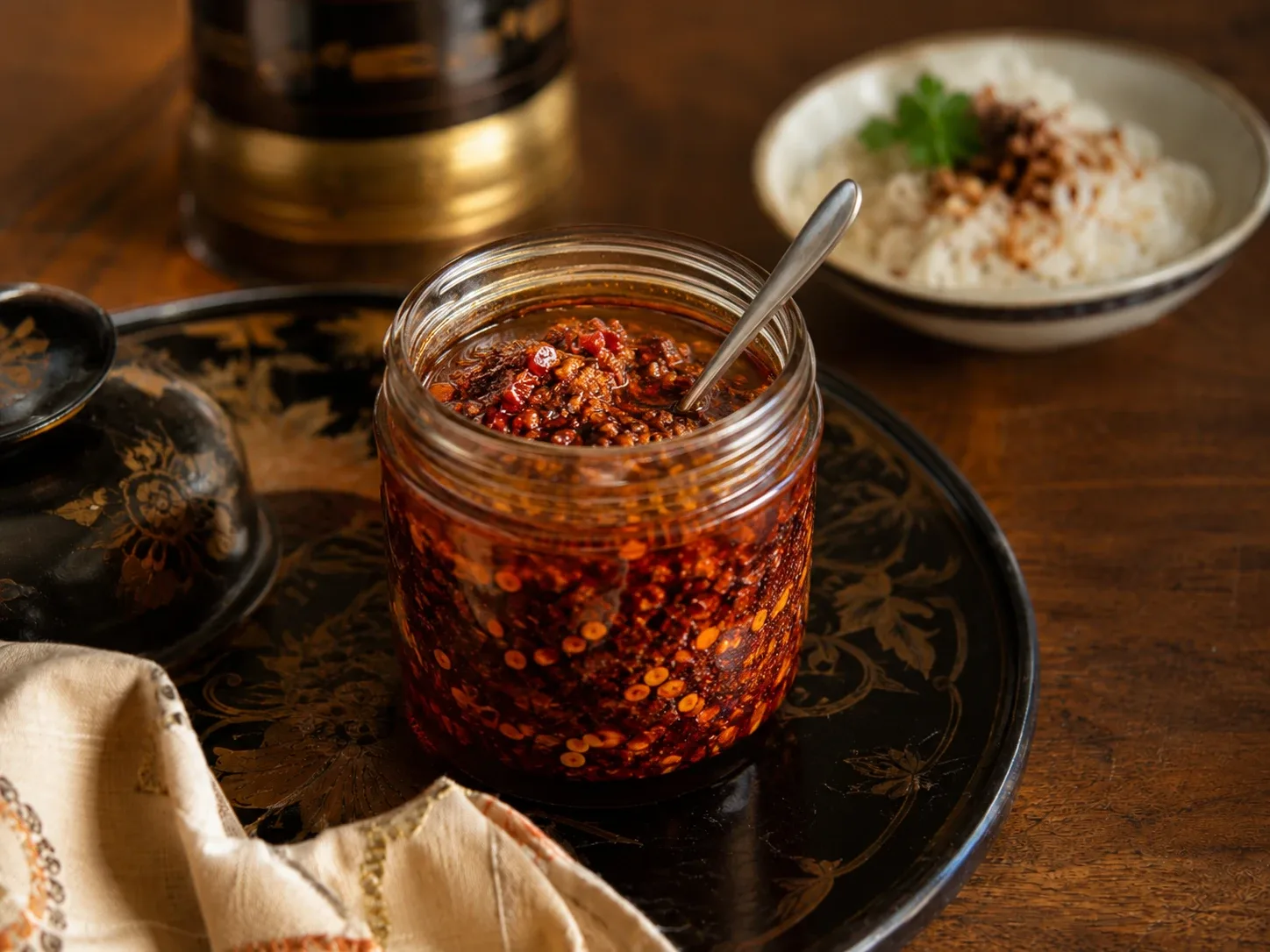
Si Chet, Burmese Chili Oilဆီချက်
The essential Burmese table oil — peanut oil gently fried with chili flakes, garlic, shallot, and a little ngapi, then spooned red over rice, noodles, and salads.
 ၁
၁Rice & Foundations · 40 min · Beginner
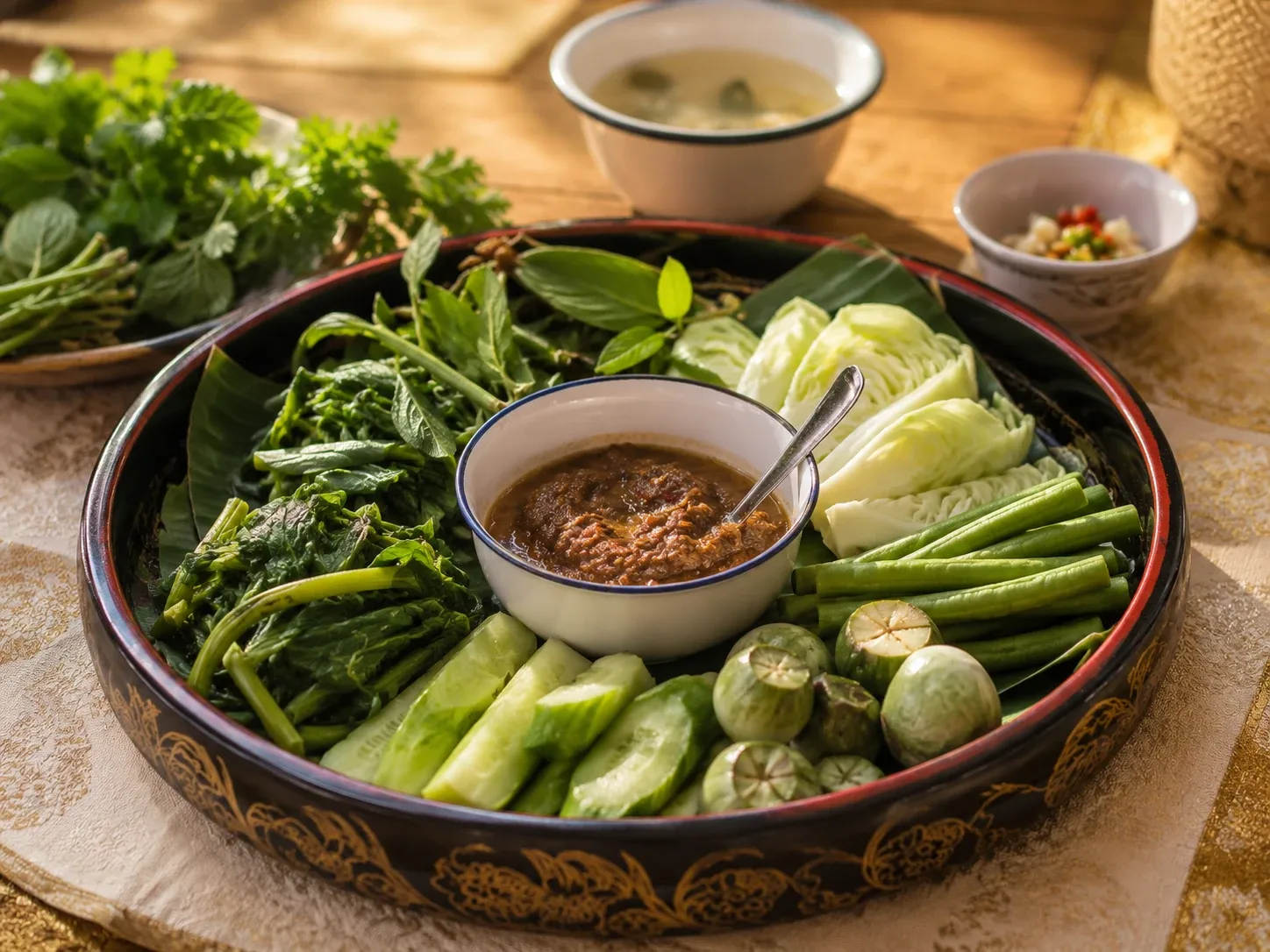
Toh Sa Yar, the Vegetable & Ngapi Platterတို့စရာ
The platter of raw and blanched vegetables around a pungent ngapi dip that no Burmese meal is complete without — the fresh, bitter counterpoint to curry.
 ၂
၂Noodles & Mohinga · 50 min · Beginner
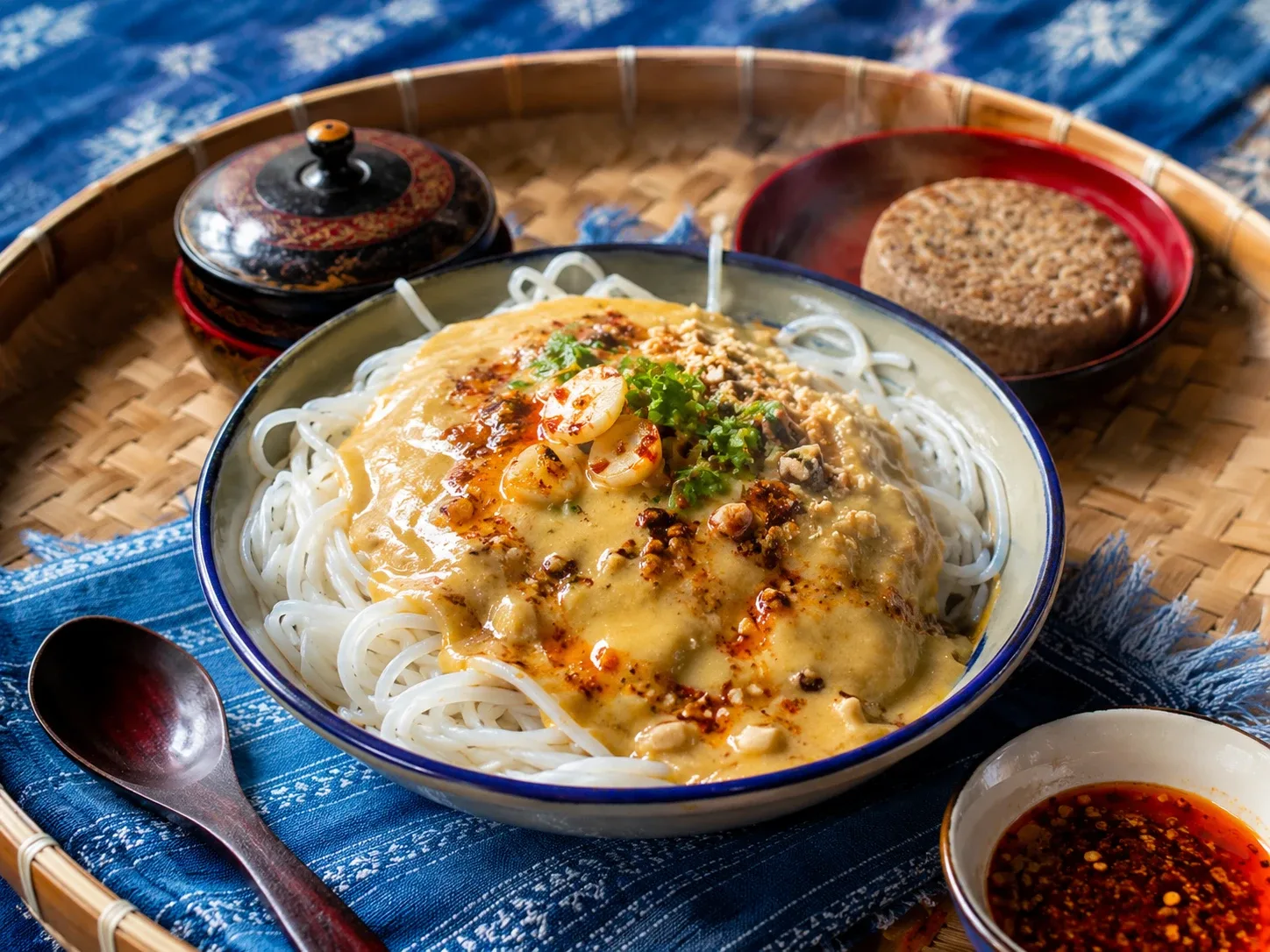
Tofu Nway, Warm Shan Tofu Noodlesတိုဟူးနွေး
Warm chickpea tofu that never sets, ladled like golden custard over rice noodles with garlic oil, chili, and peanuts — Shan State's great breakfast.