Htamin Jin, Inle Sour Rice
ထမင်းချဉ်
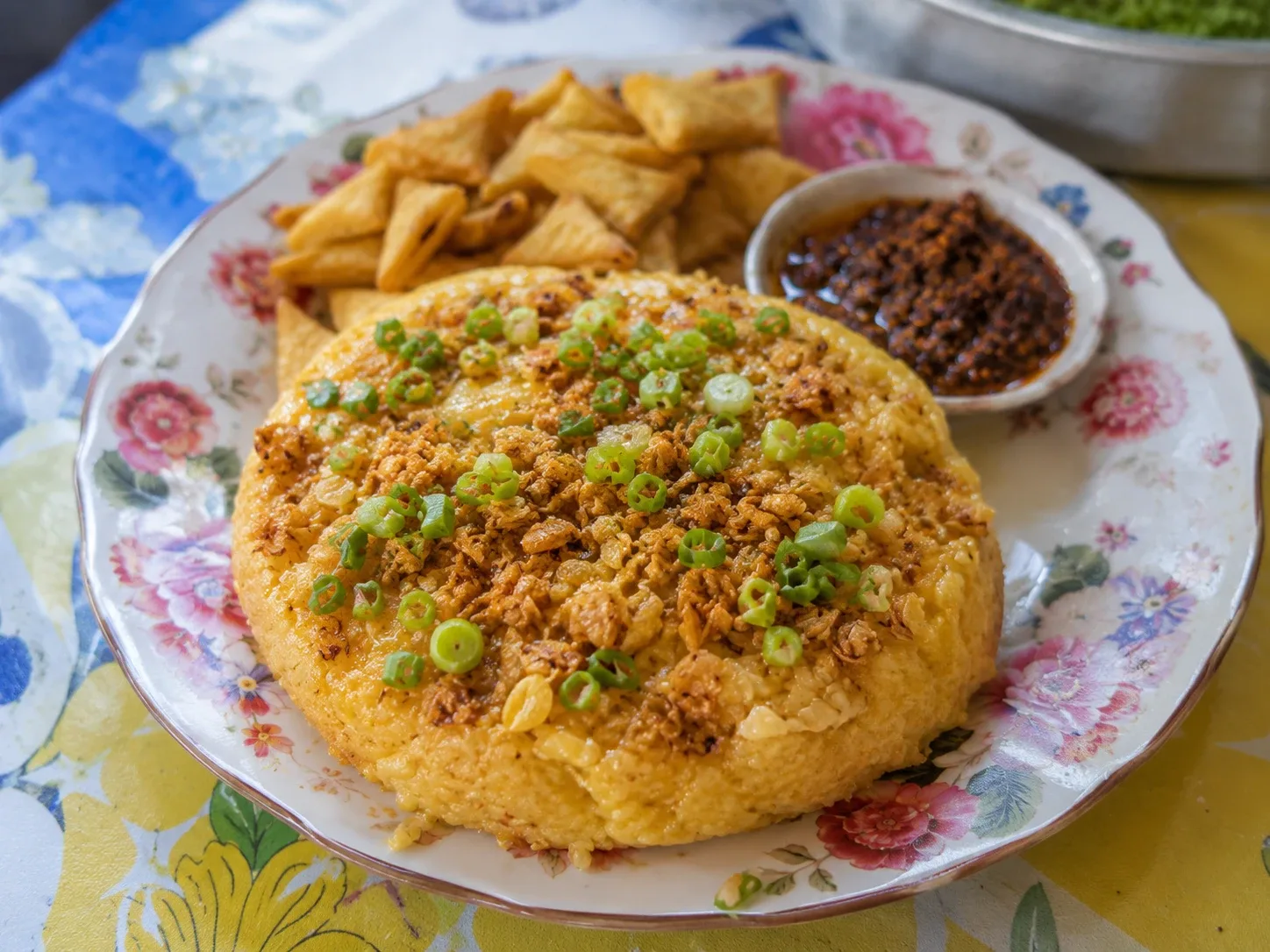
Shan State's beloved sour rice — warm turmeric rice kneaded with tomato-simmered fish and potato, pressed into patties and crowned with sizzling golden garlic oil.
Also spelled: Htamin Chin · Htamin Gyin · Nga Htamin Jin
By Burmese Cookbook Kitchen · July 9, 2026
ရှမ်း Shan StateBritish Burma, 1826–1948
 ၁
၁- Prep
- 30 min
- Cook
- 45 min
- Serves
- 4
- Level
- Intermediate
Htamin chin means, without ceremony, sour rice — and it is the dish that tells you the Intha people of Inle Lake are farmers as much as fishermen. Turmeric-gold rice is kneaded, by hand and while hot, with a thick paste of lake fish and tomatoes and a little mashed potato, then rested, shaped, and buried under fried garlic and its oil. It is eaten at room temperature, often with fingers, usually in daylight: this is market food, carried to the rotating five-day markets around the lake and sold beside towers of pè kyaw.
The sourness has two histories. The old one is fermentation — rice and fish rested together overnight until the grain turns faintly, pleasantly sharp, a cousin of the fish-and-rice preservation logic that runs through much of Southeast Asia. The newer one is the tomato, which the lake's floating gardens grow in extravagant quantity; most htamin chin eaten today leans on tomato and a nudge of tamarind, and this recipe follows honestly. The dish enters the written record in the colonial era, when travelers began describing the lake markets, though the Intha were surely kneading it long before anyone wrote it down.
Two things make or break it. The rice must be cooked soft and kneaded hot — this is hand work, the same muscle memory as a thoke. And the garlic oil is not a garnish but a structural ingredient: it carries the whole dish, so start it cold, take it slow, and keep every golden drop.
Knead the rice while it is still hot enough to sting a little — cool rice accepts the fish paste politely and never truly marries it.
မီးဖိုချောင်စကား · A word from the kitchen
Ingredientsပါဝင်ပစ္စည်း
Serves 4
Tap to check off as you gather
For the rice
- jasmine rice — cooked a shade softer and wetter than usual — it must knead
- water
- turmeric
- salt
- potatoes — boiled soft and mashed — the quiet binder
For the fish & tomato paste
- freshwater fish fillets — tilapia or trout; Inle cooks use lake carp
- ripe tomatoes — chopped small, skins and all
- shallots — finely chopped
- garlic — minced
- turmeric
- fish sauce
- peanut oil
- tamarind — pulp, soaked in a splash of warm water — see the FAQ on sourness
For the garlic oil & the table
- garlic — sliced into thin, even coins
- peanut oil
- spring onions — sliced
- dried red chilies — fried whole in a spoon of the garlic oil until glossy
- crispy split-pea fritters (pè kyaw) — or fried chickpea crackers, for the mandatory crunch
- cilantro
Methodချက်နည်း
Tap a numeral as you finish each step
Step 1: Cook the rice soft
Rinse the rice once, then cook it with the water, turmeric, and salt until tender and just slightly wet — softer than you would serve plain. Firm, separate grains are a virtue everywhere else in this book; here they refuse to knead. Keep it covered and hot.
Step 2: Make the garlic oil
Put the garlic coins and oil together in a cold pan, then bring them up over low heat, stirring, until the chips turn pale gold — 8 to 10 minutes. Starting cold cooks them evenly; garlic that browns fast turns bitter fast. Lift the chips onto paper and keep every drop of the oil.
Step 3: Simmer the tomato-fish paste
Heat the 2 tbsp of peanut oil and soften the shallots and garlic with the turmeric. Add the tomatoes and cook them down hard, 10 to 12 minutes, until jammy. Lay in the fish, cover for 4 minutes, then flake it into the tomato with your spoon and keep cooking until the mixture is thick enough to mound — a wet paste, not a sauce. Season with the fish sauce and the tamarind water. It should taste a little too sour and a little too salty on its own; the rice will drink both.
Step 4: Knead everything together
In your widest bowl, combine the hot rice, the mashed potato, the tomato-fish paste, and 3 tbsp of the garlic oil. Oil your hands and knead — press, fold, turn — for a good five minutes, until the rice is an even, pale orange-gold and no white grain survives. This is hand work, like laphet thoke; a spoon merely stirs, and stirred htamin chin tastes assembled rather than married.
Step 5: Rest, shape, and dress
Let the rice rest, covered, for 20 minutes so the flavors settle into the grain. Shape it into thick palm-sized patties or simply mound it onto plates. Spoon over more garlic oil, scatter the garlic chips generously, and serve just warm or at room temperature — the Intha way — with spring onions, fried chilies, cilantro, and pè kyaw alongside.
ခွက်ယောက် · The tools
Equipment
Rice cooker
ထမင်းအိုးConsistent long-grain rice with zero attention — and in a Burmese kitchen the rice is never optional.
Shop on Amazon →
Equipment links are Amazon affiliate links. As an Amazon Associate we earn from qualifying purchases, at no cost to you. Disclosure.
ဟင်းစုံ · Set the table
A Burmese meal is a spread
The quiet base of the meal — build the rest of the spread around it:
- A curryဟင်းSlow-cooked until the oil returns — the richness the sides cut against.
- A light soupဟင်းချိုThe clear, sour broth sipped between mouthfuls of rice.
- Toh sa yar & ngapi dipတို့စရာRaw and blanched vegetables with a pungent fish-paste dip — the fresh, bitter counterpoint.
- A hand-tossed thokeအသုပ်A bright, sour salad to lift the whole spread.
- Si chet, chili oilဆီချက်The fragrant red oil every household keeps by the stove.
Questions from the kitchen
Where does the sour actually come from?
Originally from the rice itself. The old Intha method rests cooked rice with the fish overnight so it ferments faintly sour — the name means simply sour rice. Most home cooks today, on the lake and off it, get there faster with ripe tomatoes and a little tamarind, which is the version given here. If you want to try the old way, skip the tamarind and let the finished rice sit, covered, at cool room temperature for several hours before eating.
What fish should I use outside Myanmar?
Any mild freshwater fillet — tilapia and trout are closest to the lake carp Inle cooks use. In the diaspora, tinned sardines in tomato are a common and honorable shortcut; the dish gets saltier and more assertive, so pull back on the fish sauce.
Can I make it ahead?
It improves over its first few hours — the rest is part of the recipe — and it is meant to be eaten at room temperature, so it travels well. Keep it no longer than a day; the garlic oil and crunchy things always go on at the last minute.
နောက်တစ်ခု · Cook next
Keep the wok hot
 ၁
၁Rice & Foundations · 30 min · Beginner
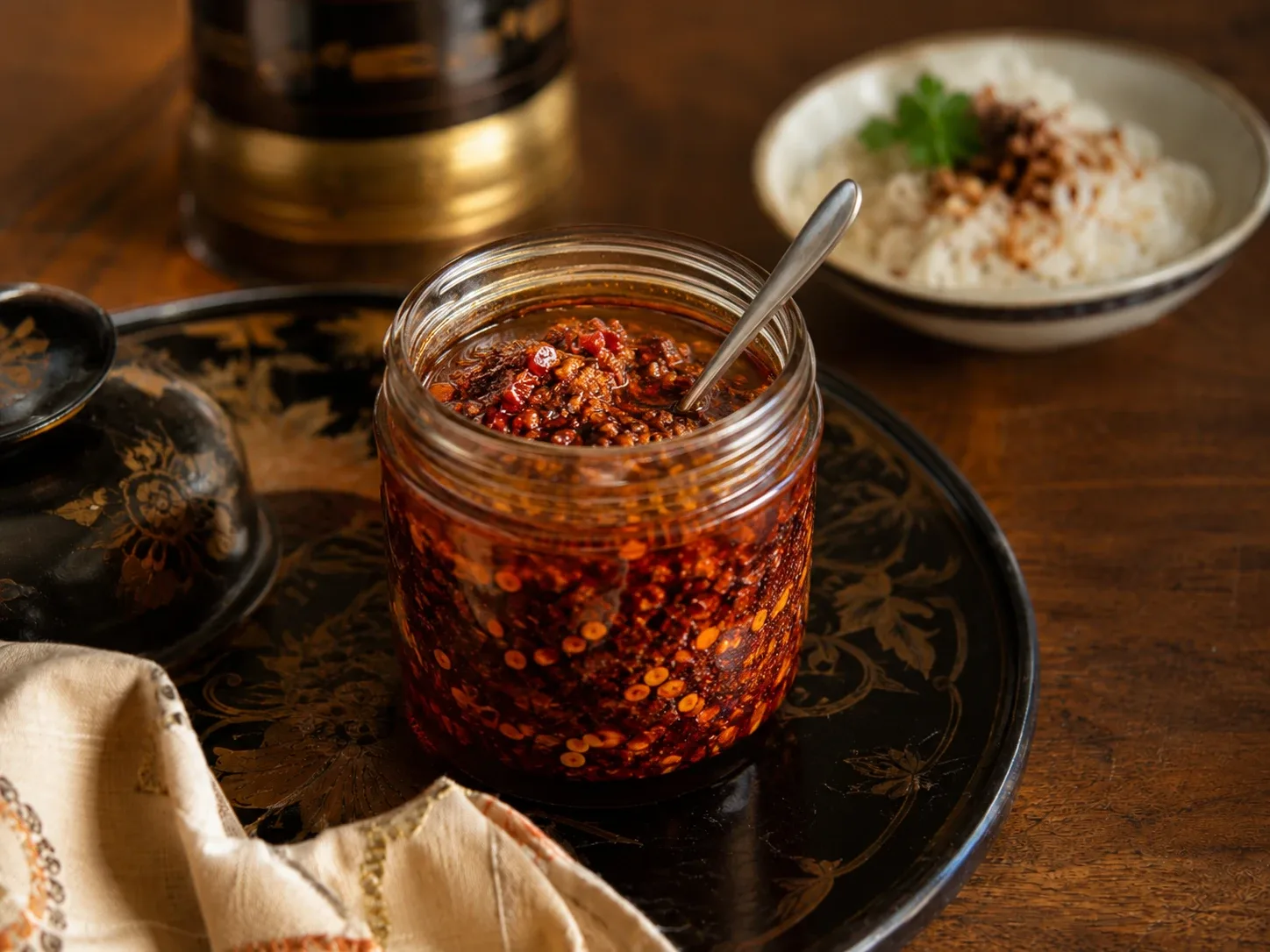
Si Chet, Burmese Chili Oilဆီချက်
The essential Burmese table oil — peanut oil gently fried with chili flakes, garlic, shallot, and a little ngapi, then spooned red over rice, noodles, and salads.
 ၁
၁Rice & Foundations · 40 min · Beginner
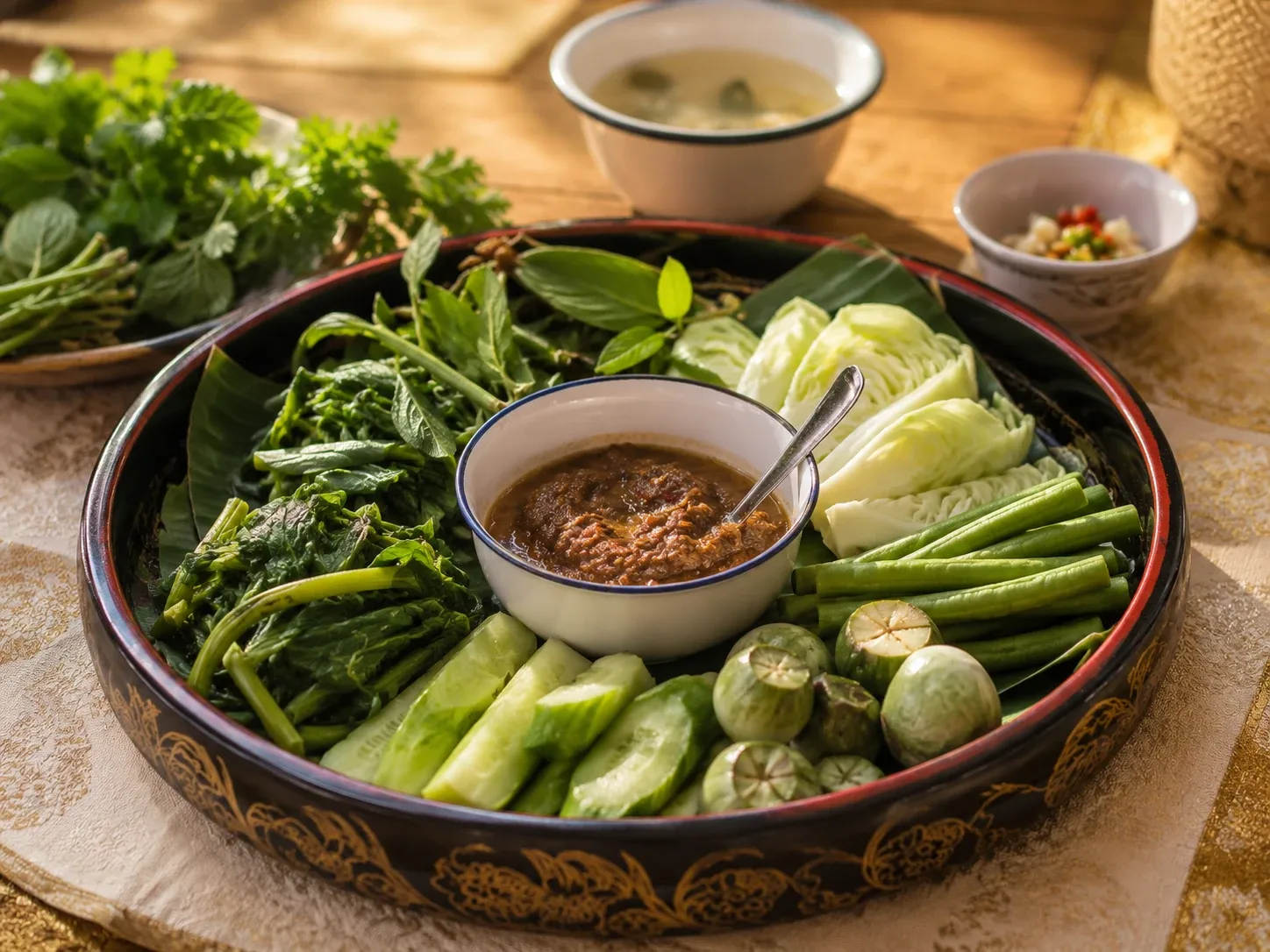
Toh Sa Yar, the Vegetable & Ngapi Platterတို့စရာ
The platter of raw and blanched vegetables around a pungent ngapi dip that no Burmese meal is complete without — the fresh, bitter counterpoint to curry.
 ၇
၇Sweets & Mont · 25 min · Beginner
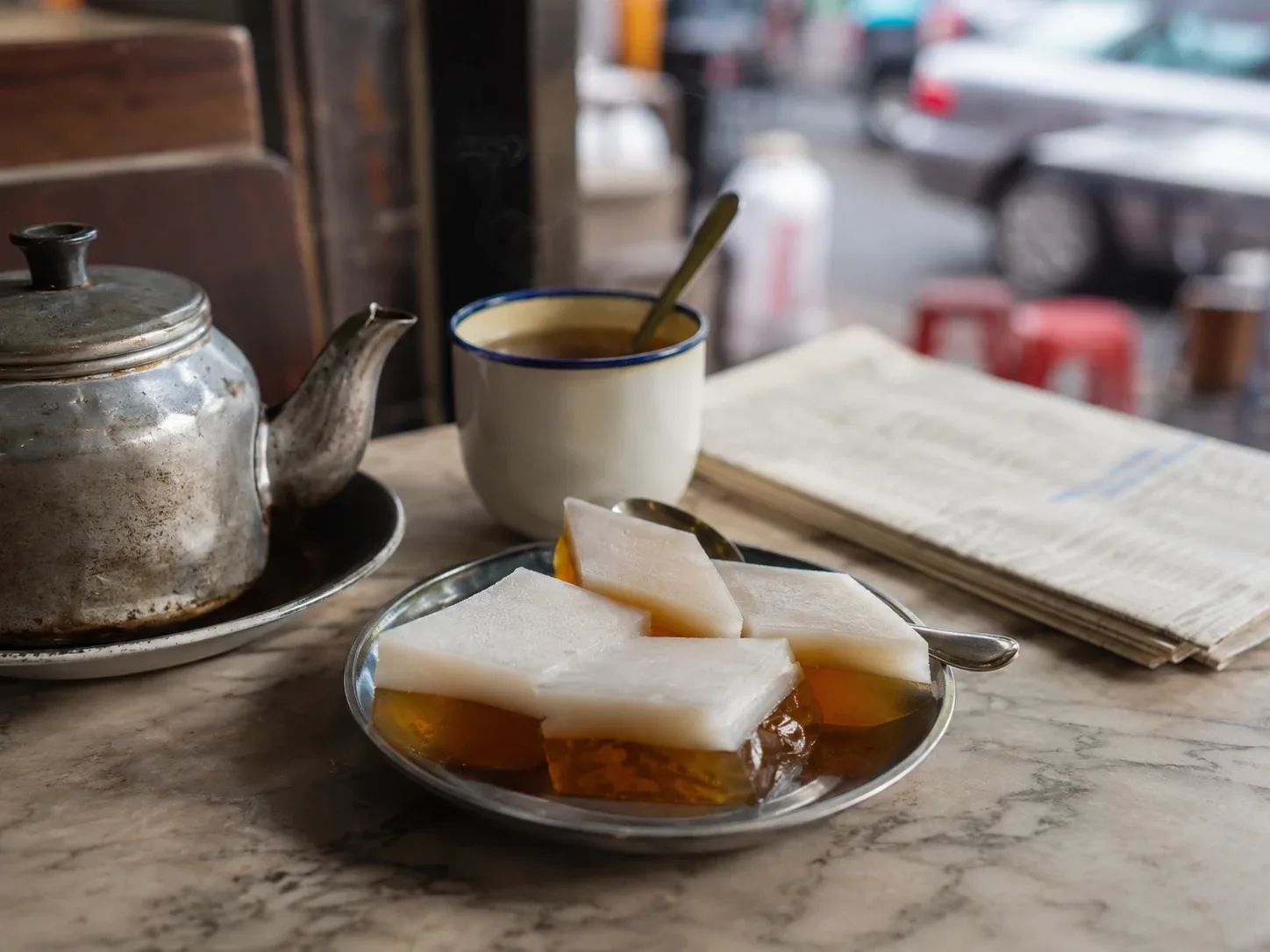
Kyauk Kyaw, Two-Layer Coconut Jellyကျောက်ကျော
Myanmar's two-layer agar jelly, done the Yangon way — coconut cream rises as it sets over a clear amber base, then the slab is cut into cool diamonds.