Bai, the Everyday Vegetable Pot
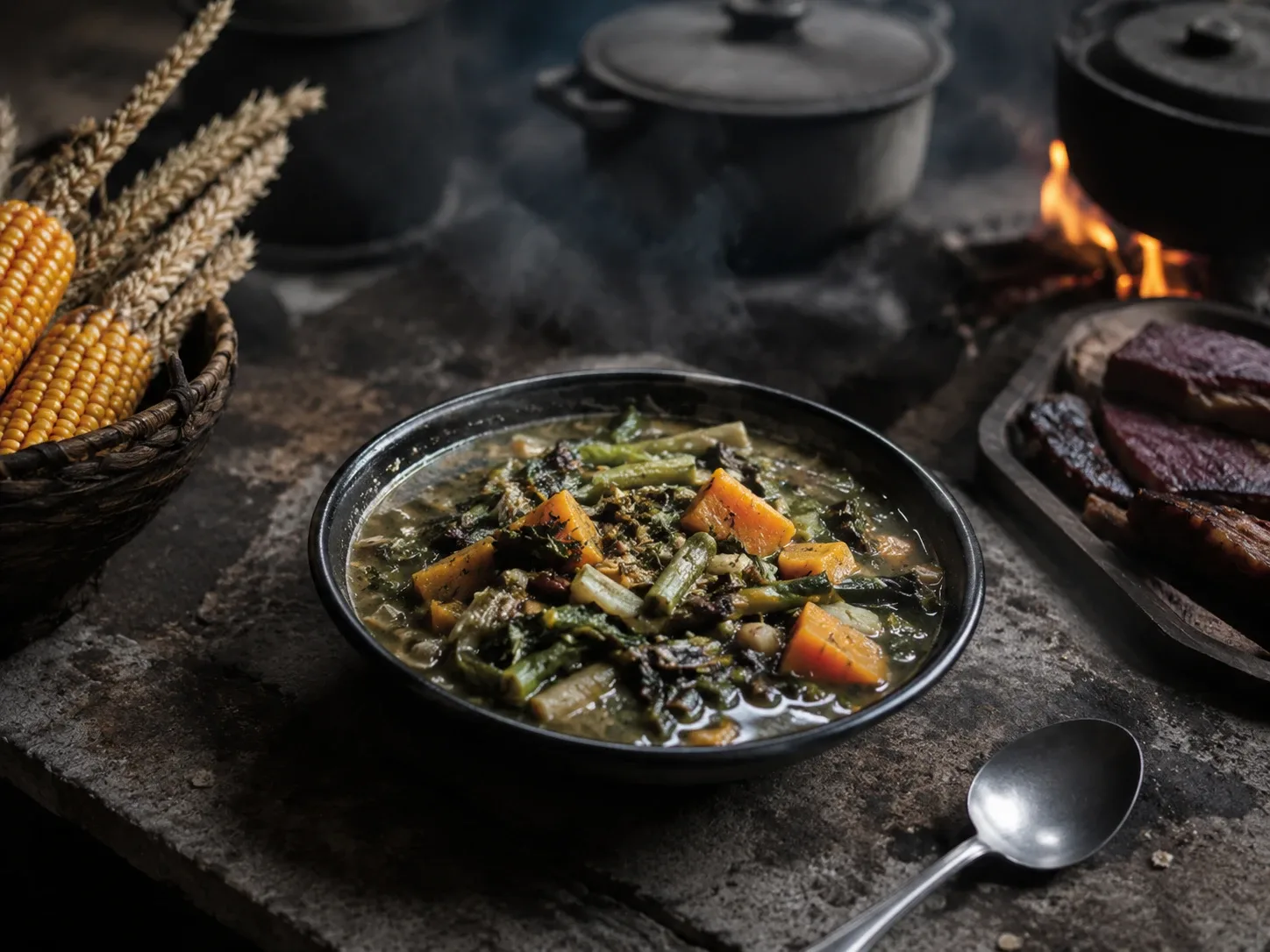
The Chin-Mizo daily vegetable stew — greens, pumpkin, and beans simmered with a whisper of alkali and a spoonful of fermented soybean, eaten at every meal.
By Burmese Cookbook Kitchen · July 9, 2026
ချင်း Chin HillsBritish Burma, 1826–1948
 ၁
၁- Prep
- 15 min
- Cook
- 45 min
- Serves
- 4
- Level
- Beginner
Ask what Chin families actually eat on an ordinary Tuesday and the answer is not a curry — it is bai. Rice, and beside it a pot of whatever the garden and season gave, simmered in water with a whisper of alkali until soft and silky, seasoned with salt and perhaps a spoonful of something fermented. The word is Mizo, and the dish rules on both sides of the India-Myanmar border; the Zo hills are one kitchen with two passports, and bai is its daily bread.
The paper trail is unusually good for this corner of the map: bai appears in the missionary dictionaries of the Lushai hills compiled in the early twentieth century, defined then much as it is cooked now — vegetables boiled with ash lye. That alkaline splash, chingal, is the technique that makes bai bai rather than boiled vegetables: it collapses greens to silk, keeps them deep-jade instead of drab, and adds the faint mineral savor that runs through so much Chin cooking, from pyar hin to the smoked-pork pots. Our pinch of baking soda is the honest city substitute, and we say so.
There is no fixed recipe because bai is a grammar, not a sentence — pumpkin and its leaves in the rains, beans at harvest, bamboo shoot, whatever stands in the plot. This version picks a sturdy, findable trio and seasons it with fermented soybean standing in for bekang. Cook it longer than instinct suggests, salt it at the end, and put it where it belongs: next to rice, at every meal, without ceremony.
Bai is a technique wearing whatever the garden gave — judge it by the greens, which should be silky and deep, never squeaky and bright.
မီးဖိုချောင်စကား · A word from the kitchen
Ingredientsပါဝင်ပစ္စည်း
Serves 4
Tap to check off as you gather
For the pot
- water
- baking soda — a scant 1/4 tsp — the honest stand-in for chingal, the filtered plant-ash lye of the hills
- pumpkin — or kabocha squash, peeled and cut into large chunks
- green beans — trimmed and halved; hyacinth or yardlong beans if your market runs Asian
- mustard greens — roughly torn, thick stems sliced; pumpkin leaves or chard work the same way
- fermented soybean (natto) — standing in for bekang, the Chin-Mizo fermented soybean; or 1 tbsp miso, or skip it for the plainest pot
- dried red chilies — left whole
- salt
To serve
- jasmine rice — steamed; bai is the escort, rice is the meal
Methodချက်နည်း
Tap a numeral as you finish each step
Step 1: Start water, soda, and pumpkin
Bring the water to a simmer with the pinch of baking soda and slide in the pumpkin. No oil is heated and nothing is fried — bai begins with water on purpose, and the faint alkalinity is the dish's signature move, softening vegetables to silk and keeping greens deep in color. Simmer 10 minutes.
Step 2: Add the beans
Add the green beans and whole chilies and simmer 10 minutes more, until the beans have lost their squeak but not their shape. The chilies stay whole so they perfume the pot rather than burn it — heat in bai is a background warmth, not the point.
Step 3: Collapse the greens
Pile in the mustard greens, pushing them under as they wilt, and simmer uncovered for 12 to 15 minutes. This is longer than a stir-fry cook's instincts allow, and that is correct — bai wants greens fully surrendered, dark and silky, their bitterness mellowed into the broth.
Step 4: Season with bekang and salt
Stir in the fermented soybean, crushing it lightly against the side of the pot so it disperses, and season with the salt. The bekang does the job meat stock does elsewhere — a deep, savory funk under the vegetables. Simmer a final 5 minutes; the pot should be a thick tangle of vegetables in a little cloudy broth, more stew than soup.
Step 5: Serve beside rice
Bring the pot to the table and serve each person a mound of bai next to plenty of rice, spooning a little broth over. In a Chin or Mizo home bai is not a course — it is the standing accompaniment to every meal, and the pot returns at breakfast without apology.
ခွက်ယောက် · The tools
Equipment
Rice cooker
ထမင်းအိုးConsistent long-grain rice with zero attention — and in a Burmese kitchen the rice is never optional.
Shop on Amazon →
Equipment links are Amazon affiliate links. As an Amazon Associate we earn from qualifying purchases, at no cost to you. Disclosure.
ဟင်းစုံ · Set the table
A Burmese meal is a spread
The quiet base of the meal — build the rest of the spread around it:
- A curryဟင်းSlow-cooked until the oil returns — the richness the sides cut against.
- A light soupဟင်းချိုThe clear, sour broth sipped between mouthfuls of rice.
- Toh sa yar & ngapi dipတို့စရာRaw and blanched vegetables with a pungent fish-paste dip — the fresh, bitter counterpoint.
- A hand-tossed thokeအသုပ်A bright, sour salad to lift the whole spread.
- Si chet, chili oilဆီချက်The fragrant red oil every household keeps by the stove.
Questions from the kitchen
What exactly is bekang, and what substitutes?
Fermented soybeans — the Chin-Mizo cousin of Japanese natto and Shan pè ngapi, sticky and deeply savory. Natto from a Japanese grocer is the closest match; a spoonful of miso gives the savor without the texture. Skipping it entirely is also authentic — the plainest bai is just vegetables, water, and alkali.
Is the baking soda essential?
It is the modern stand-in for the essential thing. Hill kitchens use chingal — water filtered through wood or corn-cob ash — to soften and season the pot, the same alkali that powers pyar hin. A pinch of soda replicates the chemistry; use a light hand, because too much turns the vegetables slippery and the broth soapy.
Can I add meat?
Bai flexes — a little smoked pork or pork fat turns it toward the richer stews of the cool season, and across the border sa-um, fermented pork fat, is the classic enrichment. But the everyday bai is vegetable-first by design; if you add meat, add a little, as seasoning rather than substance.
နောက်တစ်ခု · Cook next
Keep the wok hot
 ၁
၁Rice & Foundations · 30 min · Beginner
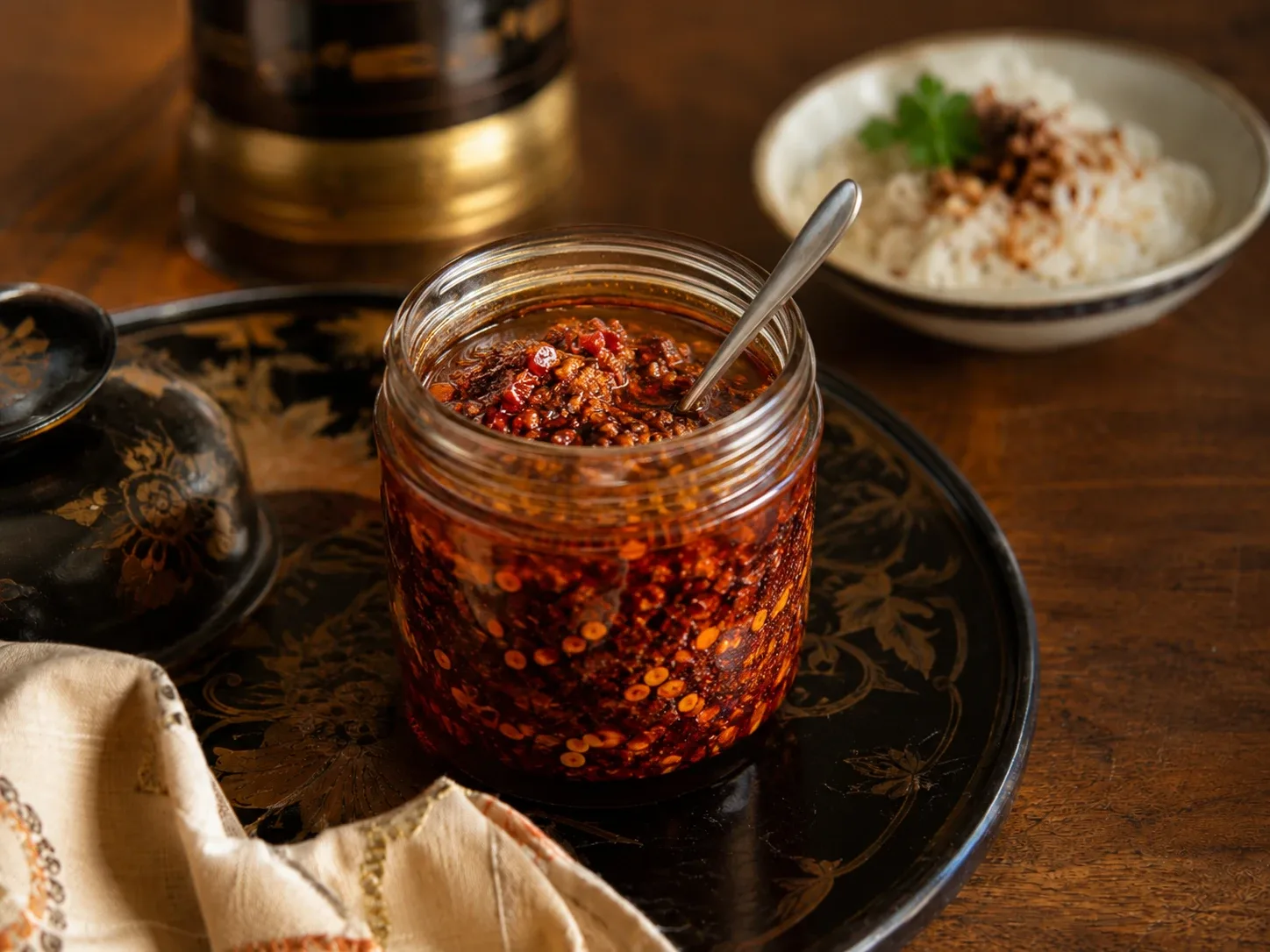
Si Chet, Burmese Chili Oilဆီချက်
The essential Burmese table oil — peanut oil gently fried with chili flakes, garlic, shallot, and a little ngapi, then spooned red over rice, noodles, and salads.
 ၁
၁Rice & Foundations · 40 min · Beginner
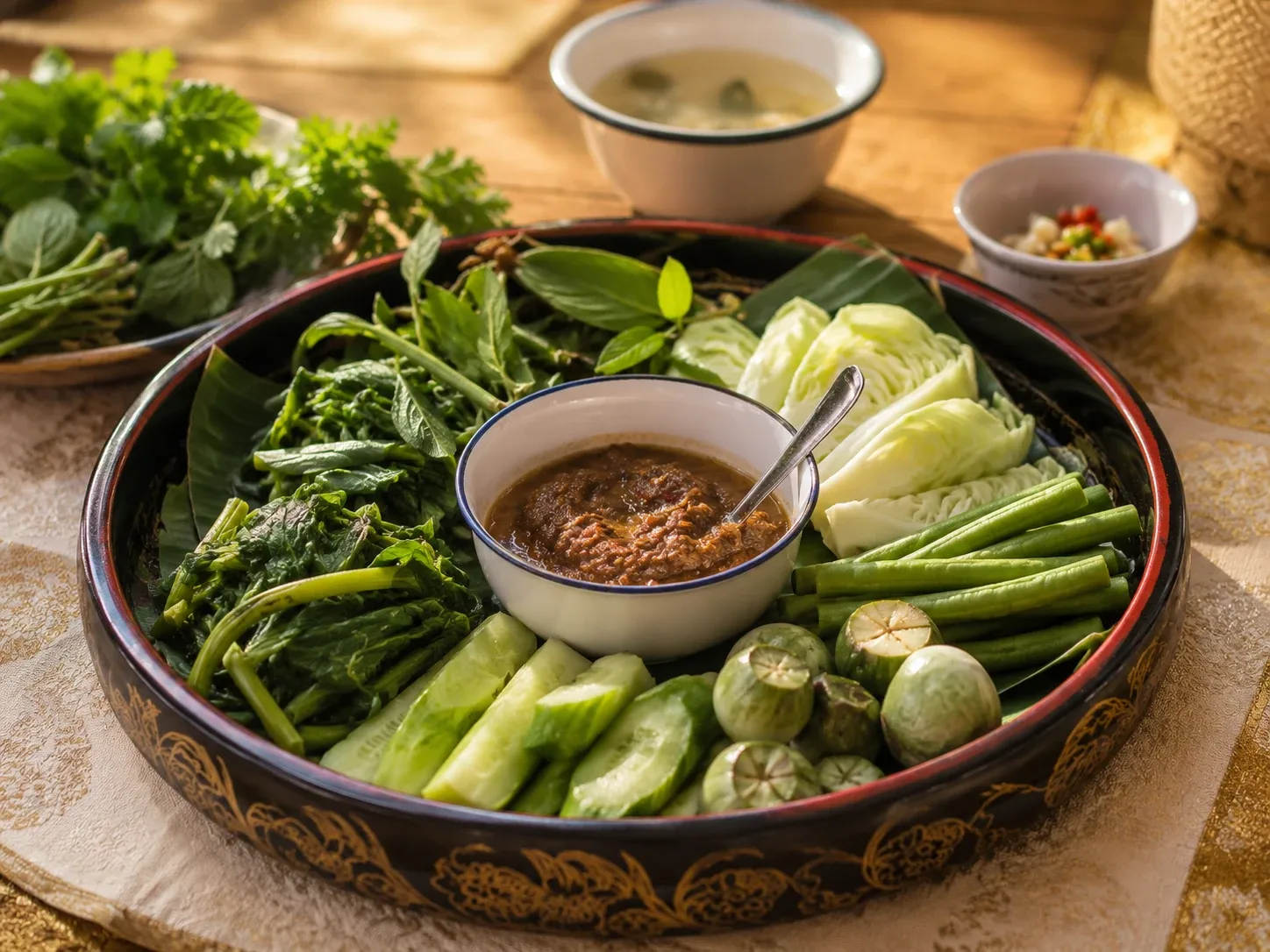
Toh Sa Yar, the Vegetable & Ngapi Platterတို့စရာ
The platter of raw and blanched vegetables around a pungent ngapi dip that no Burmese meal is complete without — the fresh, bitter counterpoint to curry.
 ၃
၃Curries · 100 min · Intermediate
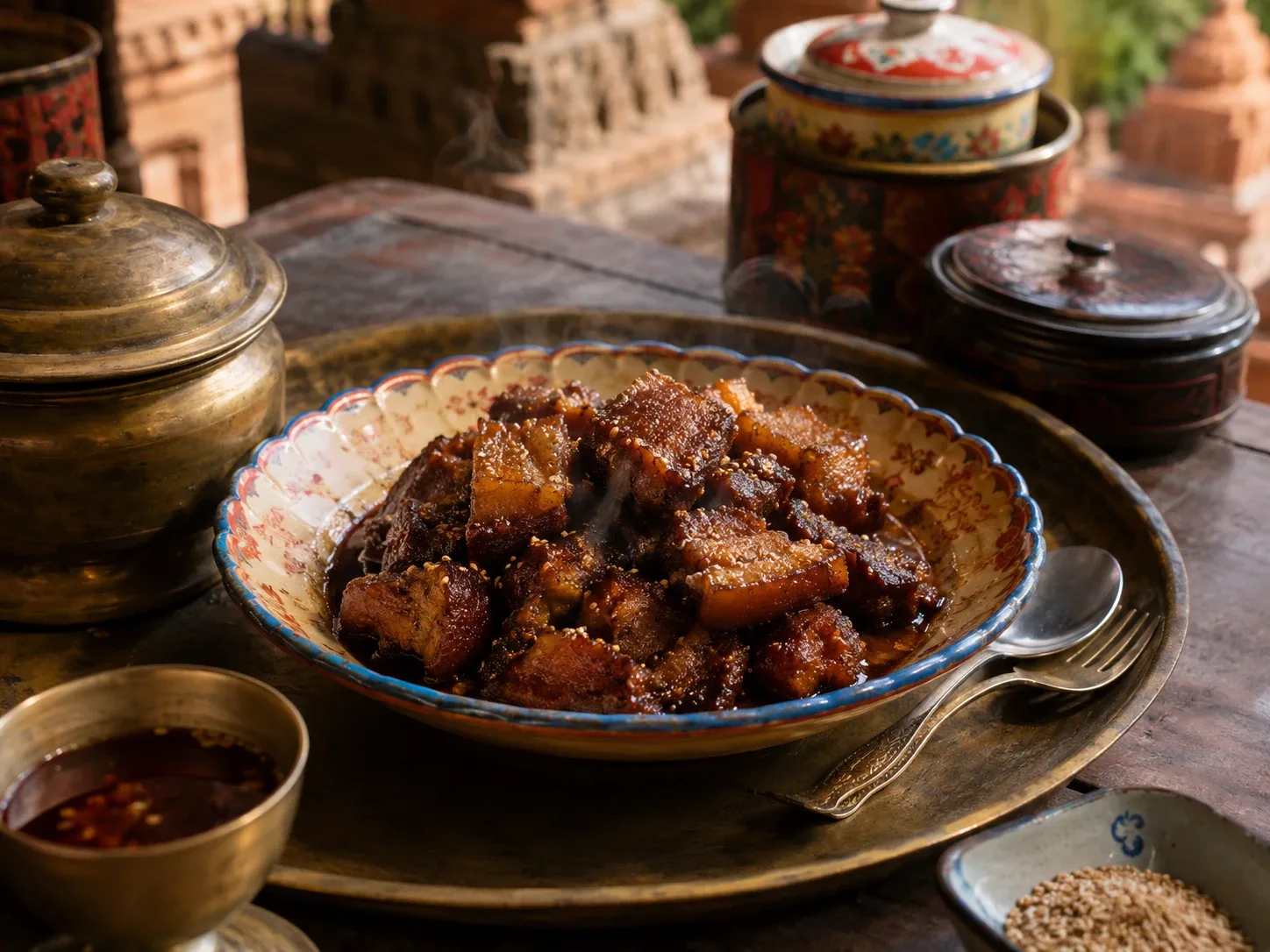
Wet Thar Pone Yay Gyi, Bagan Pork Curryပုန်းရည်ကြီးဝက်သား
Bagan's signature pork curry — pone yay gyi braised si pyan style until the oil returns, the sauce dark and sour with fermented horse-gram bean paste.