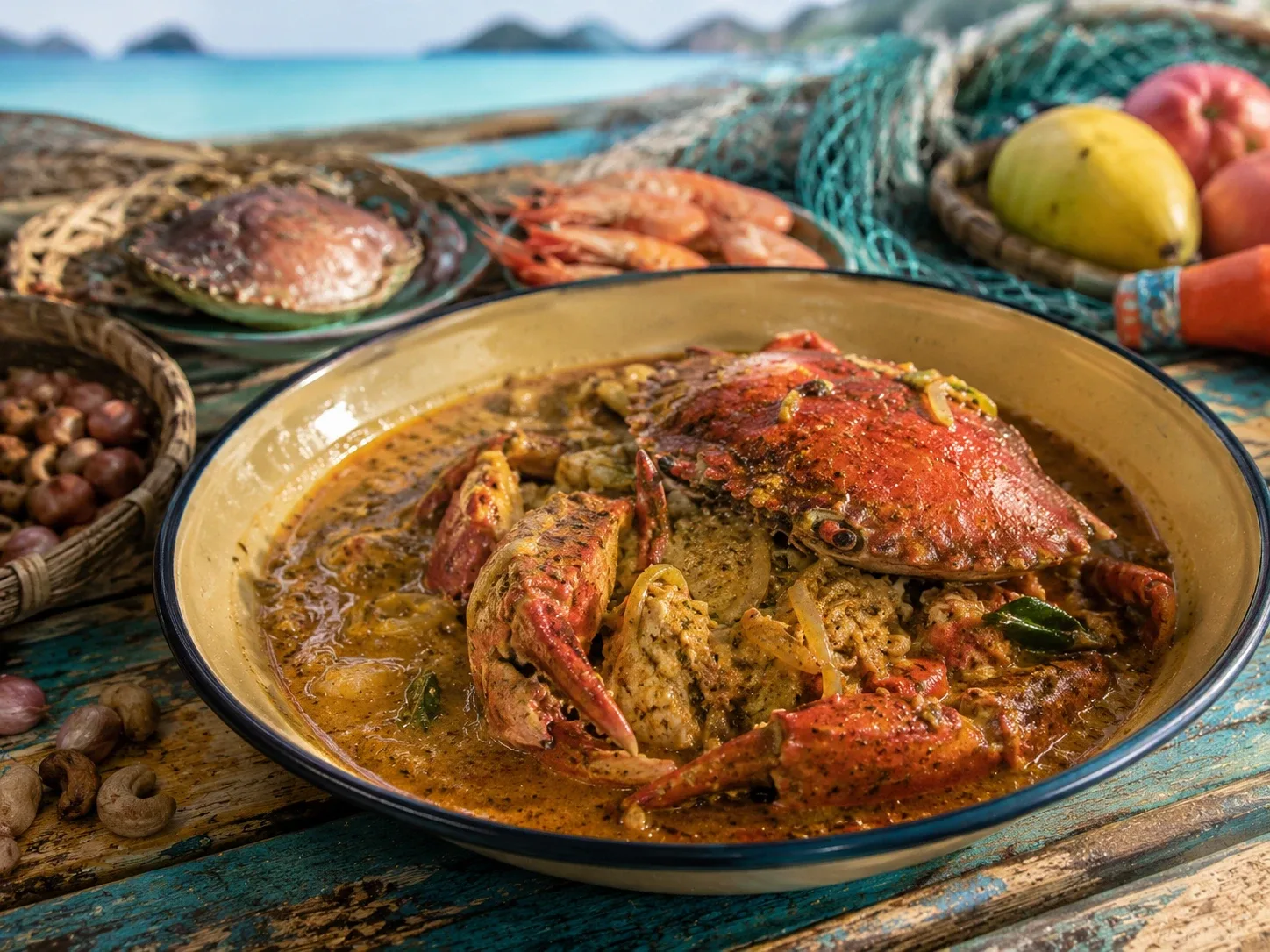
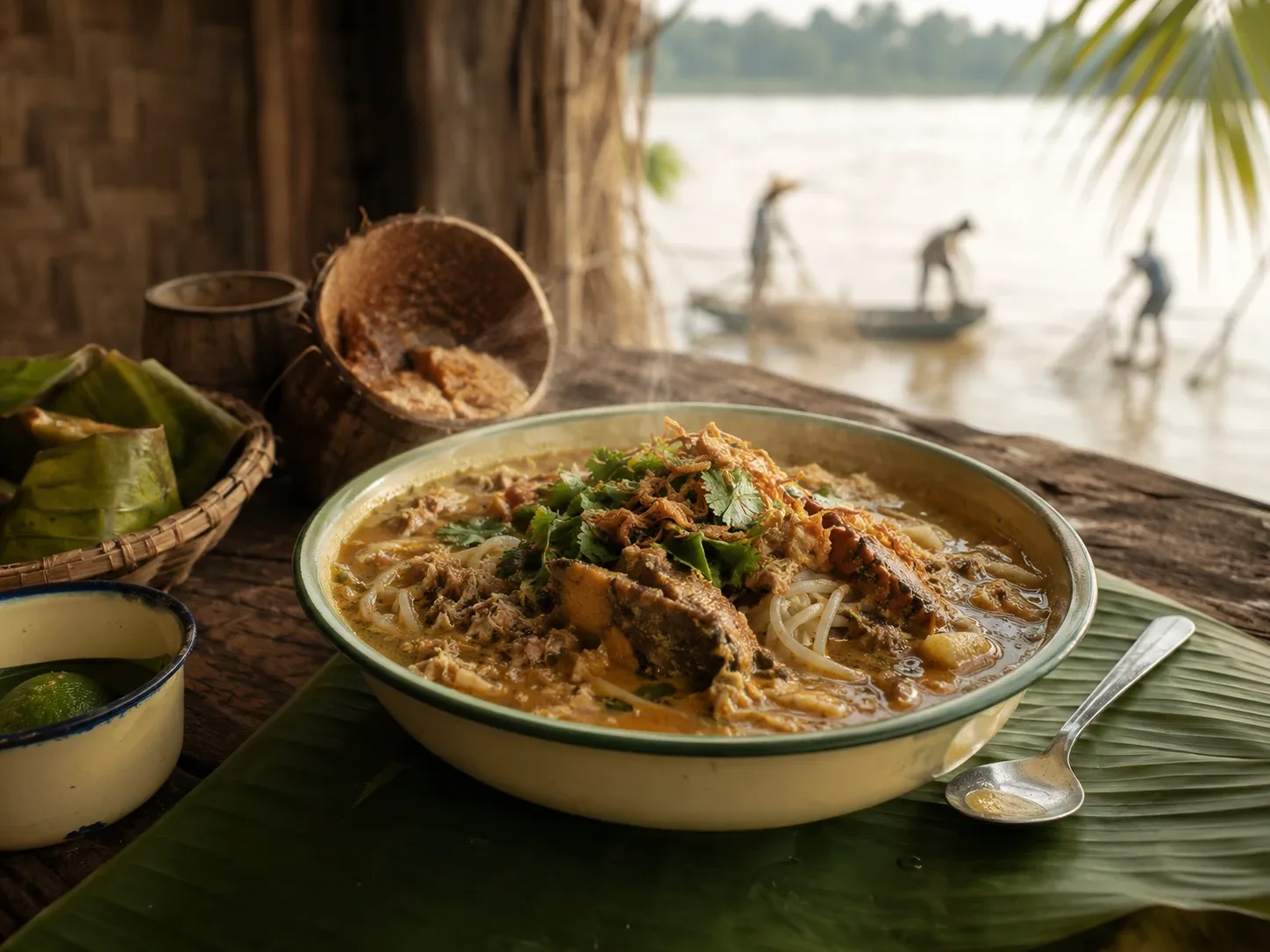
Ngapi, the fermented backbone
ငါးပိ
Salted, fermented seafood paste — the deep savor under nearly everything Burmese.
Also answers to: nga pi · shrimp paste · fish paste
Ngapi is salted, fermented fish or shrimp, pounded into a paste and aged until it turns from seafood into seasoning. The word covers a family, not a single product: coastal Rakhine leans on pungent fish ngapi, the delta around the Ayeyarwady produces the shrimp version most exported jars descend from, and every region argues its own is correct. What they share is the transformation — salt and time turn something perishable into something that keeps for years and makes everything around it taste more like itself.
How old the practice is, no one can honestly date. Fermented fish pastes run the whole length of the Southeast Asian coast — Thai kapi, Malaysian belacan, Indonesian terasi are all close cousins — and the technique almost certainly predates any border on the modern map. What the record does support is ngapi’s grip on the Burmese table: colonial-era observers wrote about its smell with the horror of people who had not yet tasted what it does to a curry, and Burmese writers have been defending it ever since.
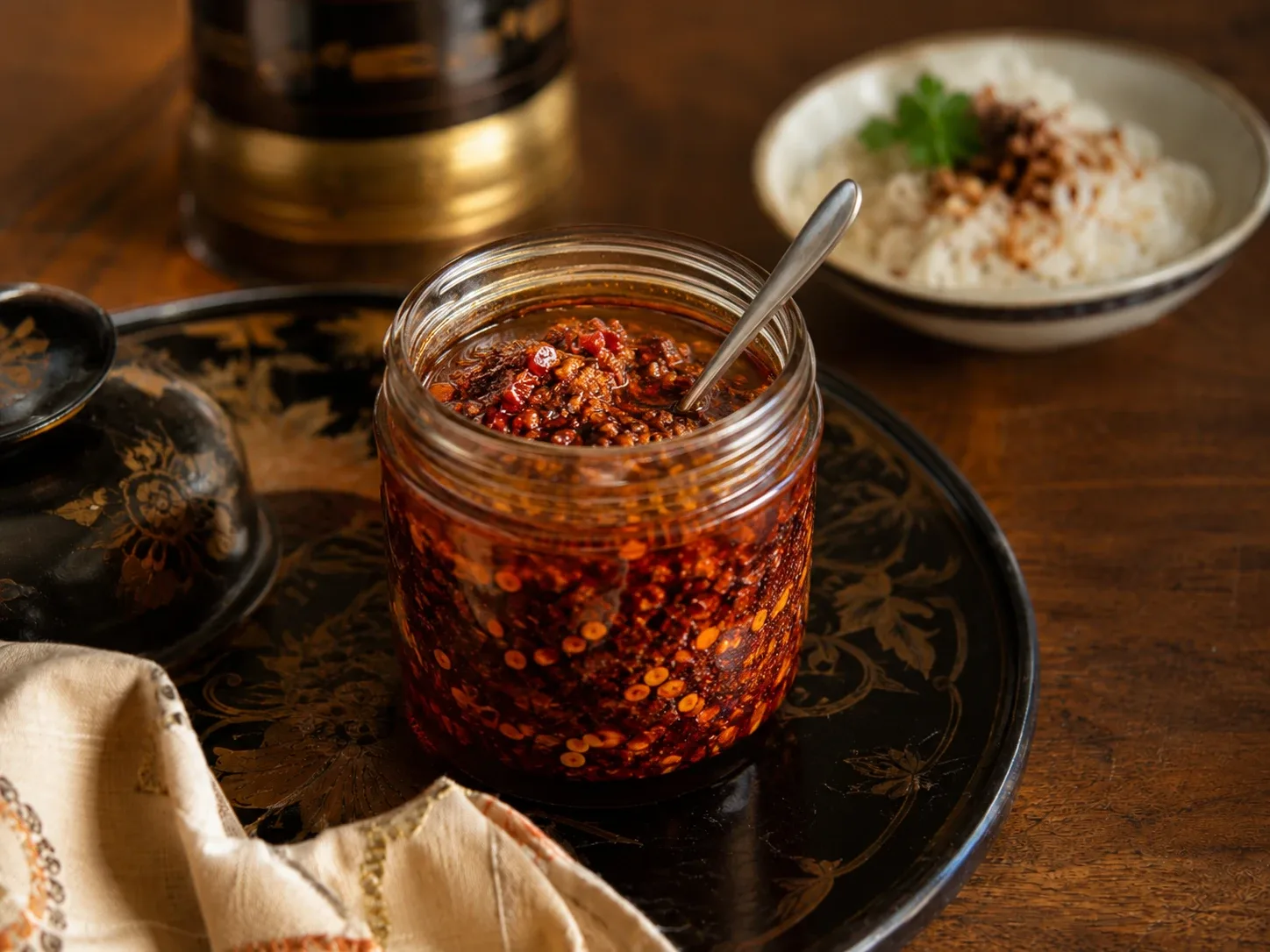
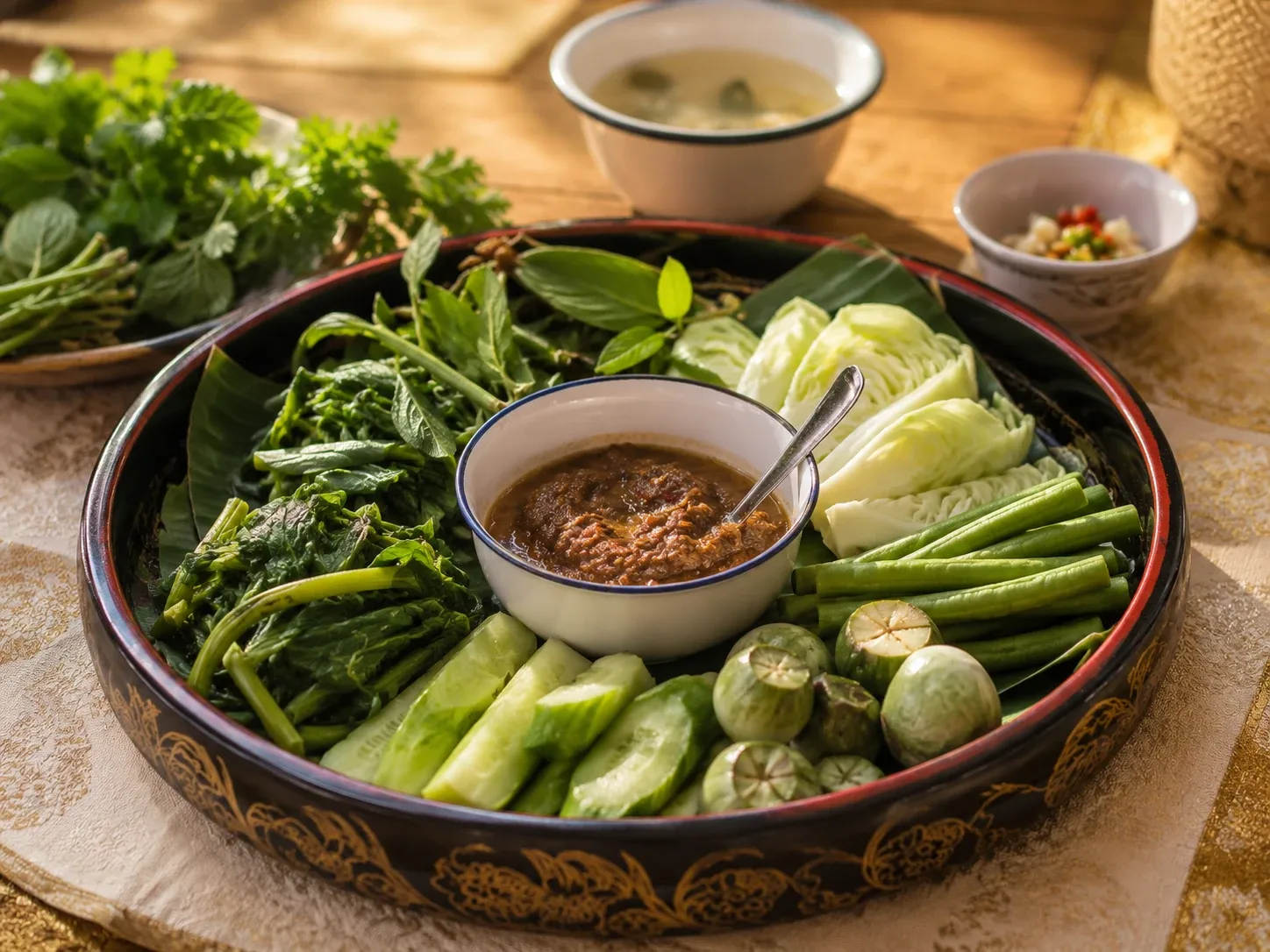
The defense is easy to make. Ngapi is not eaten so much as deployed — a teaspoon melted into curry oil, a knob roasted and pounded into ngapi yay dipping sauce, a spoonful fried with dried shrimp and chilies into balachaung. It works the way anchovy works in southern Italy: the fish disappears and leaves depth behind.
Choosing itရွေးချယ်ခြင်း
Any Southeast Asian shrimp paste gets you started — Thai kapi is slightly sweeter, Malaysian belacan drier and blockier, and both are utterly at home in Burmese dishes. If a Burmese grocery is in reach, jars labeled ngapi or nga pi are stronger and less sweet than the Thai style, which is the house preference. Color should be purple-brown to chocolate, the texture a stiff paste; a thin, gray, or weeping jar has been badly stored. Buy small — a little lasts months.
Keeping itသိမ်းဆည်းခြင်း
Sealed twice over — the jar’s own lid, then a zip bag or second container — in a cool cupboard or the fridge. Ngapi does not spoil in any practical sense; the salt saw to that before it reached you. The concern runs the other way: unguarded, it will perfume everything in the refrigerator. A dry spoon every time, and it keeps a year or more without complaint.
In the potမီးဖိုချောင်တွင်
Almost never raw. Ngapi wants heat: melted into the oil at the start of a curry, roasted in foil until it darkens for ngapi yay, or fried hard for balachaung. Cooking blooms the roasted, savory low note and tames the raw funk. Start with less than the recipe suggests if you are new to it, taste, and add — it seasons like salt, and like salt there is no coming back from too much.
ဝယ်ယူရန် · Getting it
Buy the real thing
Ngapi (shrimp paste) — shelf-stable and shippable, unlike most of the fresh aisle.
Find it on AmazonCan’t get it? Honest swaps
- Thai kapi or Malaysian belacanExcellent
- Anchovy pasteGood
- Miso + fish sauceLast resort
ဟင်းလျာများ · Cooked with it