Ganan Hin, Mud Crab Curry
ဂဏန်းဟင်း
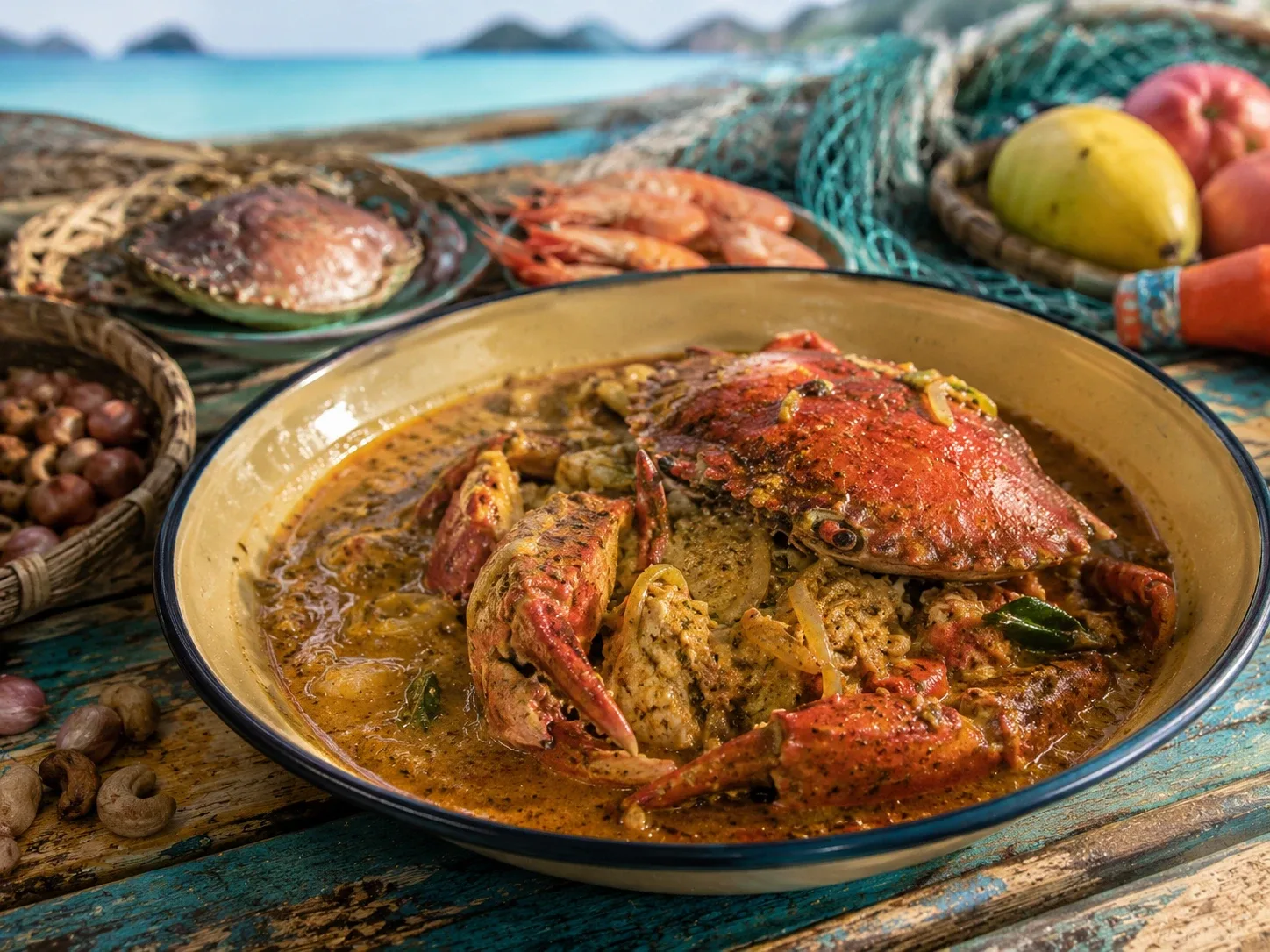
Mud crab curry from the Myeik archipelago — whole crab in the shell, folded through a slow shallot si pyan with fresh turmeric, tomato, and pepper.
By Burmese Cookbook Kitchen · July 9, 2026
တနင်္သာရီ TanintharyiKonbaung, 1752–1885
 ၃
၃- Prep
- 30 min
- Cook
- 40 min
- Serves
- 4
- Level
- Intermediate
Along the Myeik archipelago the mud crab is not a luxury; it is what the mangroves are for. Crabs fattened in the brackish creeks come to market with claws bound in palm string, and the default thing to do with one is this — ganan hin, crab curry, the whole animal sectioned and turned through a shallot si pyan stained gold with fresh turmeric, then finished with the coarse black pepper that has grown on this coast for centuries.
Coastal families were certainly cooking crab this way in Konbaung times and almost certainly long before — but we should be honest that the written record is thin. Fishing villages do not keep archives; colonial gazetteers noting Mergui's crab and dried-seafood trade are where paper catches up with practice. What the record does support is the seasoning: Tenasserim pepper was a trade good when Europeans still called the coast by that name, and it, not chili, is this curry's real heat.
Two techniques carry the dish. The si pyan cannot be rushed — ten patient minutes until the oil returns amber, because raw shallot has nowhere to hide against sweet crab. And the crab must cook in its shell, briefly, after a dry turn through the paste. The shell gives its sweetness to the gravy and the gravy gets into the cracks, which is why the table ends up quiet, littered with shells, everyone's fingers golden. That mess is not the price of the dish. It is the dish.
Cook the crab in its shell or don't bother. The shell is where the sweetness lives, and picking it at the table is the meal, not an obstacle to it.
မီးဖိုချောင်စကား · A word from the kitchen
Ingredientsပါဝင်ပစ္စည်း
Serves 4
Tap to check off as you gather
For the crab
- mud crabs — about 1.2 kg total, live or very fresh — see step one for cleaning
- turmeric — for rubbing the cleaned pieces
- salt
For the si pyan base
- shallots — roughly chopped
- garlic
- fresh ginger
- fresh turmeric — peeled and chopped, or 1 tsp ground turmeric
- paprika — for color more than heat
- dried chili flakes — more if your table likes it loud
- ngapi (shrimp paste) — optional but very Tanintharyi
- peanut oil
- tomatoes — ripe, roughly chopped
- fish sauce
- black peppercorns — coarsely cracked, added at the end
- water
- cilantro — roughly torn, to finish
Methodချက်နည်း
Tap a numeral as you finish each step
Step 1: Clean and section the crabs
Chill live crabs in the freezer for 20 minutes to sedate them, then dispatch quickly with a knife point through the underside. Lift off the top shell, discard the feathery gills, and quarter each body, cracking the big claws with the back of a cleaver so the curry can get in. Rub the pieces with turmeric and salt. Keep any golden roe from the shell — it goes back into the pot later and is the cook's reward.
Step 2: Pound the paste
Pound the shallots, garlic, ginger, fresh turmeric, and ngapi to a rough paste. A blender works with a splash of the water, but keep it coarse — a paste with texture fries into a gravy with body.
Step 3: Fry until the oil returns
Heat the oil in a wide, heavy pot and fry the paste with the paprika and chili flakes over medium heat, stirring often, for 10 to 12 minutes. It is done when it smells sweet rather than raw and the oil seeps back out, stained amber, around the edges — the si pyan. Stop early and the whole curry tastes of raw shallot; there is no fixing it downstream.
Step 4: Melt in the tomatoes
Add the tomatoes and cook until they collapse completely into the paste, 5 to 6 minutes, crushing them against the pot. Tomato is the only sourness in this curry, so it must dissolve into the gravy, not sit in it as chunks.
Step 5: Turn the crab through the gravy
Add the crab pieces and any roe and turn them for a full two minutes so every surface is painted before any liquid arrives. Burmese cooks give shellfish this dry moment in the paste for the same reason mohinga's fish eats the paste — coated first, the crab tastes of itself inside the curry.
Step 6: Simmer briefly
Pour in the water and fish sauce, cover, and simmer for 12 to 15 minutes, turning the pieces once, until every shell is a full, unambiguous red-orange. Crab overcooks fast — the moment the claw meat pulls cleanly from a cracked shell, it is done.
Step 7: Finish with pepper and rest
Stir in the cracked black pepper off the heat — late, so it stays bright and floral instead of stewed-in and muddy. This is the Tanintharyi signature. Rest the pot for five minutes, scatter with cilantro, and serve with rice, bowls for shells, and no shame about fingers.
ခွက်ယောက် · The tools
Equipment
Carbon-steel wok
ဒယ်အိုးThe dai-oh — for si pyan curries, fritters, and every fried-noodle dish here. Carbon steel, seasoned dark, nothing fancy.
Shop on Amazon →Heavy pot / Dutch oven
အိုးကြီးDeep and heat-retentive — for mohinga broth, long-simmered hin, and deep-frying without temperature crashes.
Shop on Amazon →Stone mortar & pestle
ဆုံFor garlic-ginger paste, pounded dried shrimp fluff, and crushed peanuts — the blender lies about texture; the stone doesn’t.
Shop on Amazon →
Equipment links are Amazon affiliate links. As an Amazon Associate we earn from qualifying purchases, at no cost to you. Disclosure.
ဟင်းစုံ · Set the table
A Burmese meal is a spread
A curry is the anchor, not the whole meal. Round out the table:
- Steamed riceထမင်းThe centre of the table — everything else is built around it.
- A light soupဟင်းချိုThe clear, sour broth sipped between mouthfuls of rice.
- Toh sa yar & ngapi dipတို့စရာRaw and blanched vegetables with a pungent fish-paste dip — the fresh, bitter counterpoint.
- Balachaungဘလချောင်းThe crispy shrimp relish that lives on every Burmese table.
- Crispy fried shallotsကြက်သွန်ကြော်A spoonful of crunch and sweet shallot oil over anything.
- A hand-tossed thokeအသုပ်A bright, sour salad to lift the whole spread.
Questions from the kitchen
Can I use pre-cooked or frozen crab?
Frozen raw crab, thawed, works honorably. Pre-cooked crab is a compromise — the gravy never gets the raw sweetness that leaches from the shell. If it is what you have, add it for the last five minutes only, just to heat through and coat.
What about blue swimmer crabs instead of mud crabs?
They are excellent — sweeter, thinner-shelled, quicker. Use three or four, cut the simmer to 8 to 10 minutes, and accept slightly less meat per unit of effort. Mud crab is the Myeik standard because that is what the mangroves grow.
The gravy looks thin. Should I thicken it?
No. This is a rice curry, not a bisque — the gravy should be loose enough to spoon over rice and stain it gold. If it is watery rather than loose, uncover and boil hard for two minutes at the end; the tomato and shallot body will tighten it.
နောက်တစ်ခု · Cook next
Keep the wok hot
 ၃
၃Curries · 125 min · Intermediate
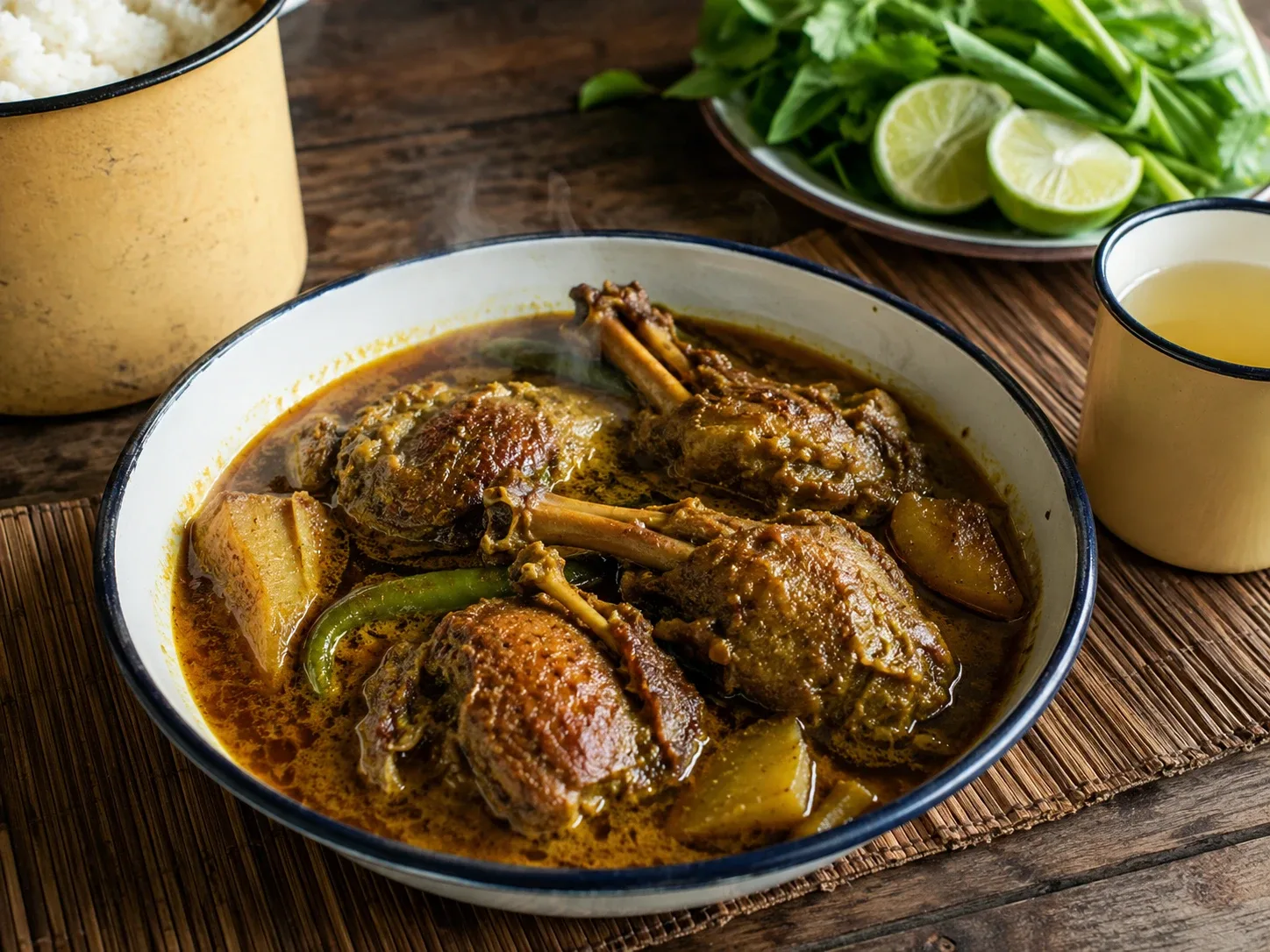
Be Thar Hin, Delta Duck Curryဘဲသားဟင်း
Duck curry from the Ayeyarwady, where ducks glean the rice paddies — browned in its own fat, then braised si pyan style until the amber oil returns.
 ၃
၃Curries · 45 min · Beginner
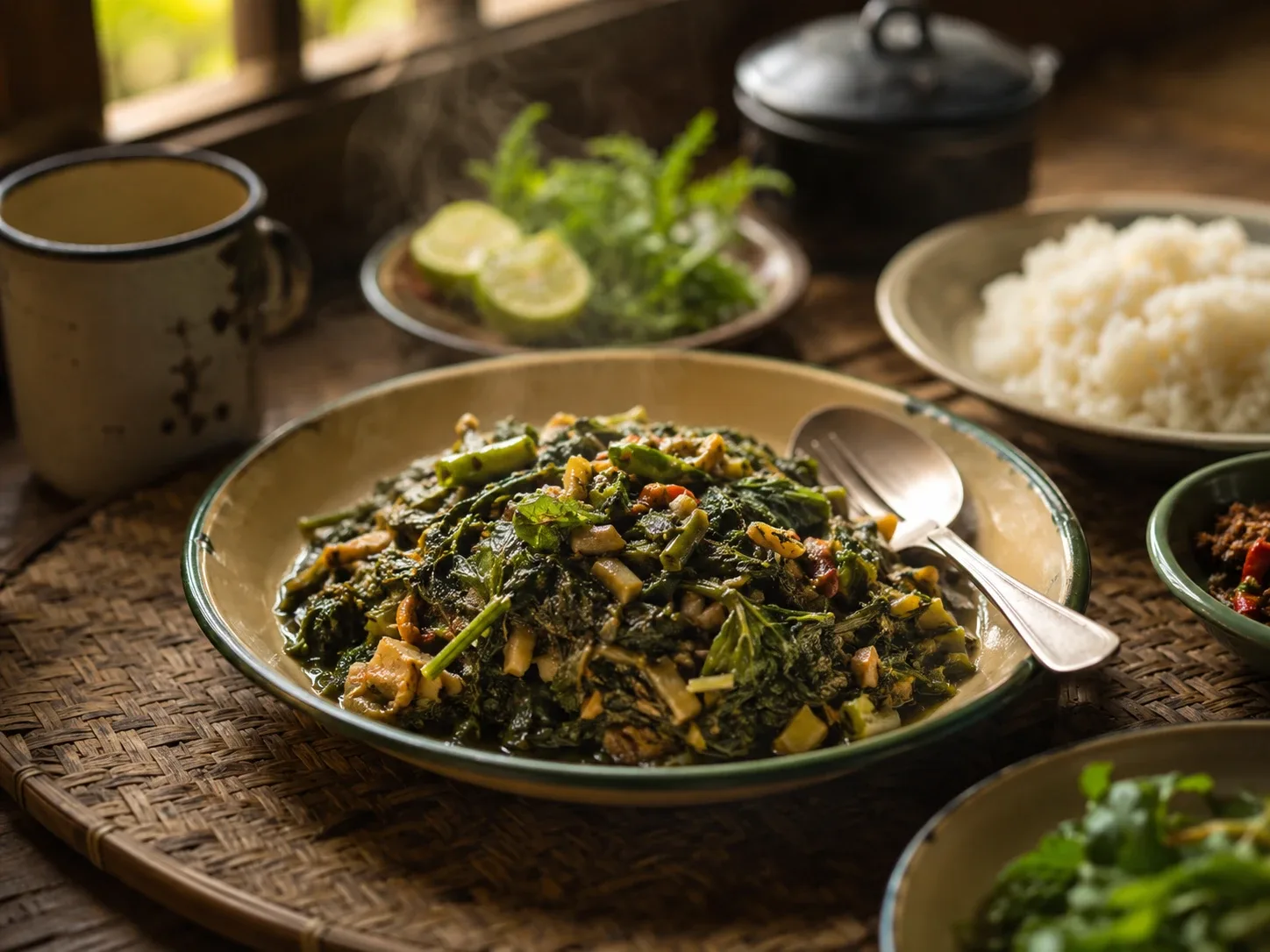
Chin Baung Kyaw, Sour Roselle Leavesချဉ်ပေါင်ကြော်
Lower Burma's beloved sour greens — roselle leaves fried down with bamboo shoots, dried shrimp, and green chili until they collapse into a dark tangy relish.
 ၂
၂Noodles & Mohinga · 50 min · Beginner
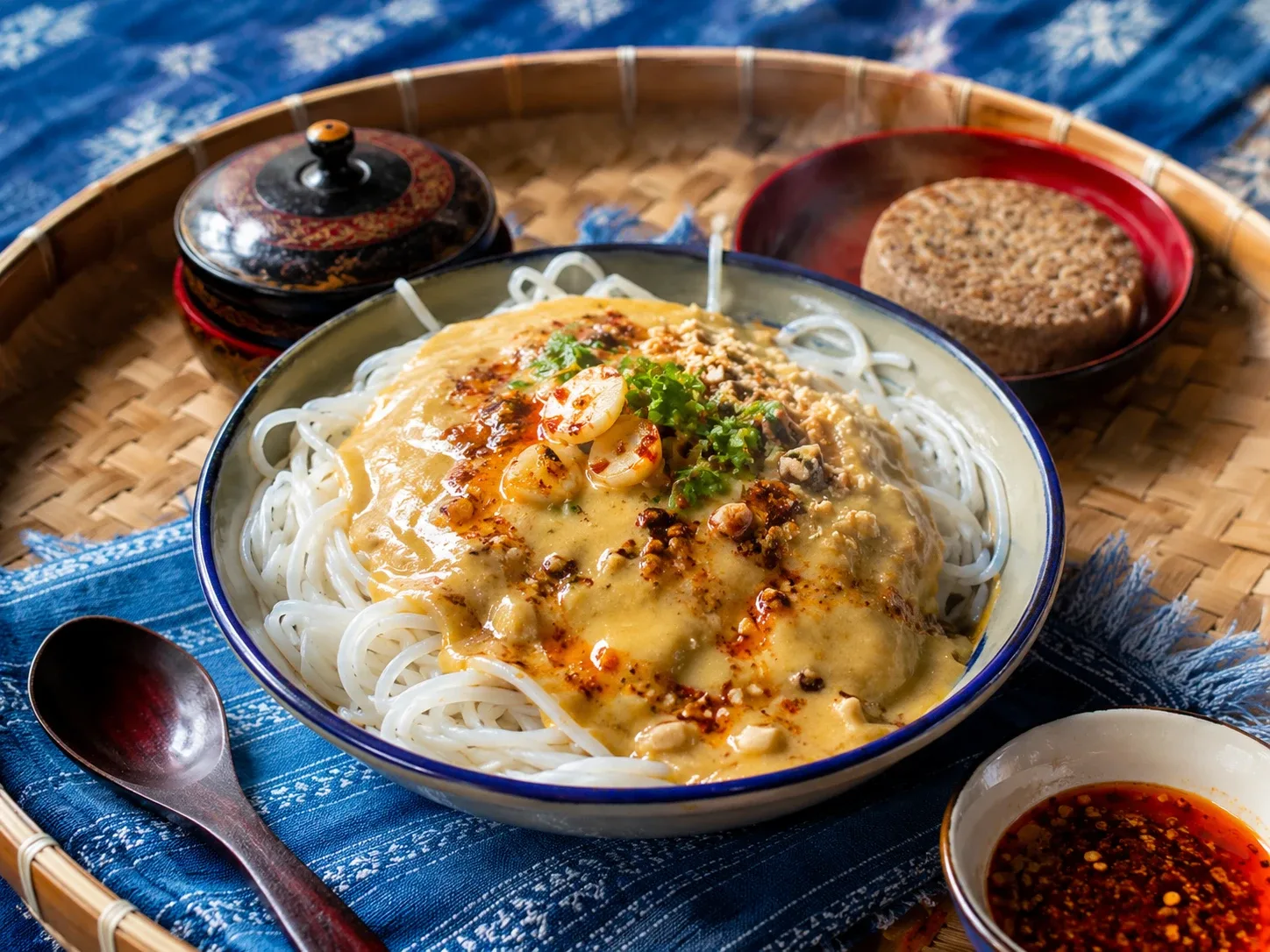
Tofu Nway, Warm Shan Tofu Noodlesတိုဟူးနွေး
Warm chickpea tofu that never sets, ladled like golden custard over rice noodles with garlic oil, chili, and peanuts — Shan State's great breakfast.