Crispy Fried Shallots & Shallot Oil
ကြက်သွန်ကြော်
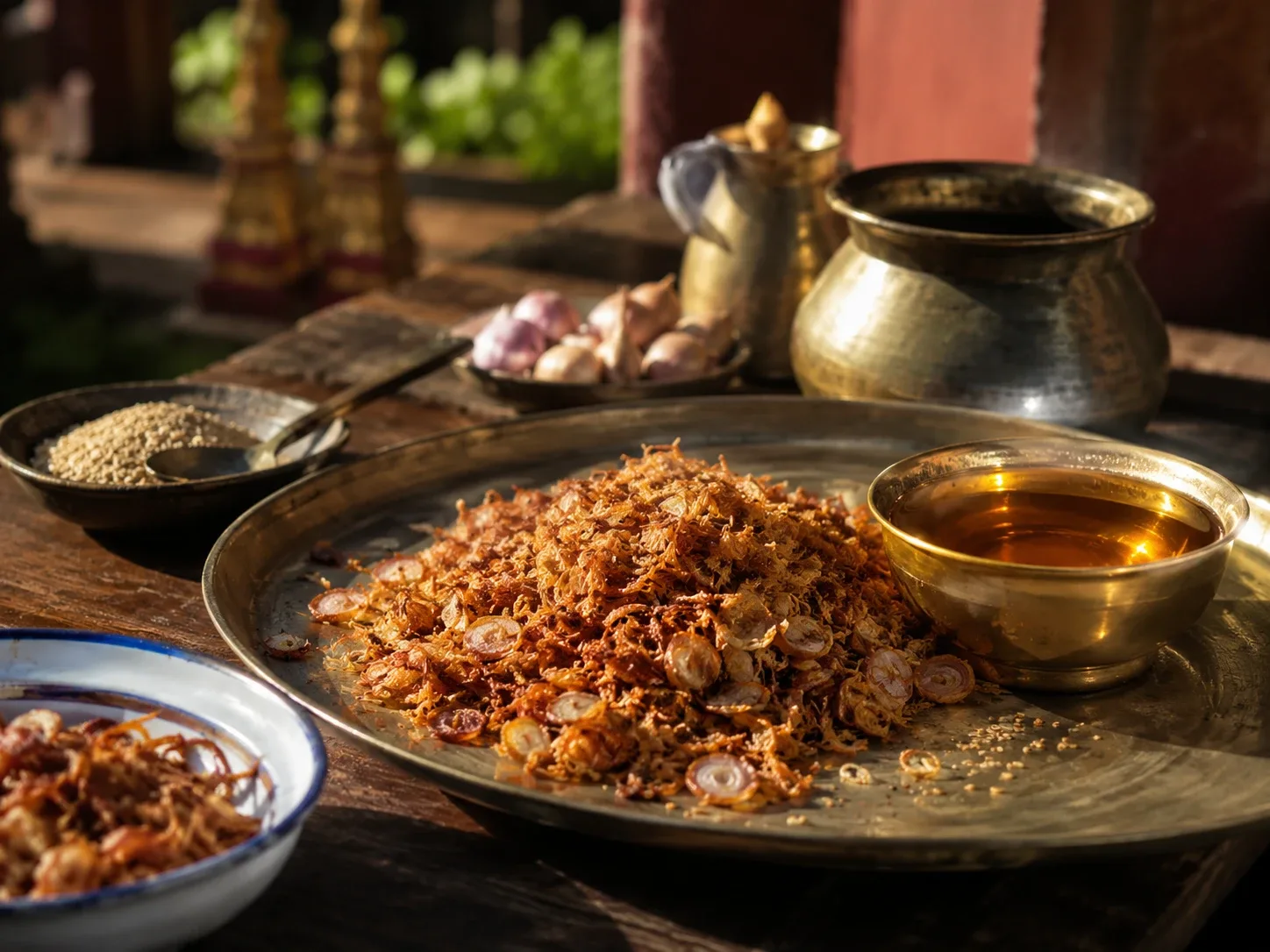
Slow-fried shallots and their amber oil, the twin seasoning that dresses half of Burma's salads — sliced evenly, started patiently, never rushed.
By Burmese Cookbook Kitchen · June 2, 2026
အညာ Upper Burma & MandalayKonbaung, 1752–1885
 ၁
၁- Prep
- 15 min
- Cook
- 25 min
- Serves
- 12
- Level
- Beginner
Open any Burmese cook's pantry and you will find the same pair standing guard: a jar of golden fried shallots and a bottle of the amber oil they were fried in. Together they are the most-used seasoning in the cuisine after salt. The crisps land on noodles, soups, rice, and snacks; the oil dresses nearly every thoke — the great family of Burmese hand-tossed salads — from laphet thoke to a simple tomato salad. A kitchen without shallot oil is a kitchen that cannot make half the recipes in this book.
The technique is old, upcountry, everyday cooking — the dry-zone villages around Mandalay and Sagaing grow the small red shallots this is made for, and by the Konbaung era the shallot fry was already the automatic first move of curry-making. What elevates it from chore to foundation is the double yield. You are not frying a garnish; you are infusing a fat. Every allium the oil touches leaves its sweetness behind.
Two things decide success. Even slicing, because a mixed batch cannot brown evenly no matter how well you stir. And restraint at the end — shallots carry on cooking after they leave the pot, so the cook who waits for perfect color in the oil always jars a bitter batch. Pull them pale, let carryover finish the job, and strain the oil like it is worth something. It is.
Pull the shallots when they are one shade lighter than you want them. The oil keeps cooking them for a full minute after they leave the pot, and burnt shallots turn the whole batch — and the oil — bitter.
မီးဖိုချောင်စကား · A word from the kitchen
Ingredientsပါဝင်ပစ္စည်း
Serves 12
Tap to check off as you gather
- shallots — small Asian shallots if you can get them; sliced into thin, even rings
- peanut oil — enough to float the shallots freely — the oil is half the product
- salt — optional, tossed through the drained crisps for the jar
Methodချက်နည်း
Tap a numeral as you finish each step
Step 1: Slice the shallots evenly
Peel the shallots and slice them crosswise into rings about 2 mm thick — even thickness matters far more than thinness, because a batch of mixed sizes means the thin ones burn while the thick ones are still soft. A sharp knife and patience beat a mandoline's ragged edges, but a mandoline is honest help.
Step 2: Start in warm, not hot, oil
Put the shallots and oil into a wok or wide pot together and set it over medium heat. Starting them cold lets the shallots release their moisture gradually as the oil climbs, drying them from the inside out. Dropped into already-hot oil, they brown outside while staying limp within.
Step 3: Fry low and stir often
Once the oil begins to bubble steadily around the shallots, hold it there — a lively simmer, not a roar — and stir every minute or so, bringing the edges to the middle. The bubbling will slow noticeably as the moisture cooks off, after 15 to 20 minutes. That quieting is your signal to pay close attention.
Step 4: Pull at pale gold
When the rings are a pale honey-gold and the bubbling has nearly stopped, lift them out with a spider onto a paper-lined tray, working quickly — the color deepens a full shade after they leave the oil. Spread them in a single layer; a heap steams itself soft.
Step 5: Save every drop of the oil
Let the oil cool, then strain it into a clean jar. This amber shallot oil is the more valuable half of what you just made — it is the default dressing fat of the Burmese kitchen. Store the crisps in an airtight jar at room temperature for two weeks, the oil for a month.
ခွက်ယောက် · The tools
Equipment
Carbon-steel wok
ဒယ်အိုးThe dai-oh — for si pyan curries, fritters, and every fried-noodle dish here. Carbon steel, seasoned dark, nothing fancy.
Shop on Amazon →Frying spider
ဇကာLift fritters clean out of the oil and drain them fast, before the crust turns soft. The street cook’s third hand.
Shop on Amazon →Rice cooker
ထမင်းအိုးConsistent long-grain rice with zero attention — and in a Burmese kitchen the rice is never optional.
Shop on Amazon →Mandoline slicer
အလွှာစက်Paper-thin shallots for even frying and cabbage fine enough for thoke — seconds, not knife-years.
Shop on Amazon →Fine sieve / muslin
စစ်ခွက်For straining tamarind, pressing broth clear, and sifting flours — line it with muslin for the cleanest pour.
Shop on Amazon →
Equipment links are Amazon affiliate links. As an Amazon Associate we earn from qualifying purchases, at no cost to you. Disclosure.
ဟင်းစုံ · Set the table
A Burmese meal is a spread
The quiet base of the meal — build the rest of the spread around it:
- A curryဟင်းSlow-cooked until the oil returns — the richness the sides cut against.
- A light soupဟင်းချိုThe clear, sour broth sipped between mouthfuls of rice.
- Toh sa yar & ngapi dipတို့စရာRaw and blanched vegetables with a pungent fish-paste dip — the fresh, bitter counterpoint.
- A hand-tossed thokeအသုပ်A bright, sour salad to lift the whole spread.
- Si chet, chili oilဆီချက်The fragrant red oil every household keeps by the stove.
Questions from the kitchen
Why did my shallots go soft in the jar?
They went in before they were fully cool, or they were pulled from the oil while still bubbling hard — both mean moisture was left inside. Re-crisp them in a low oven for a few minutes and cool completely before jarring. Humid kitchens shorten their life; a rice grain in the jar helps a little, an airtight lid helps more.
Can I use regular large shallots or red onions?
Large shallots work well — slice them into half-rings so the pieces stay even. Red onion is the budget stand-in across the diaspora and makes a decent crisp, but it carries more water and sugar, so fry it a touch longer and expect a darker, sweeter result.
Is the oil really worth keeping?
It is the point. Burmese salads — laphet thoke, ginger thoke, tomato thoke — are dressed with shallot oil the way Italian salads are dressed with olive oil. Buying fried shallots but discarding the oil is doing the work and throwing away the wages.
နောက်တစ်ခု · Cook next
Keep the wok hot
 ၁
၁Rice & Foundations · 30 min · Beginner
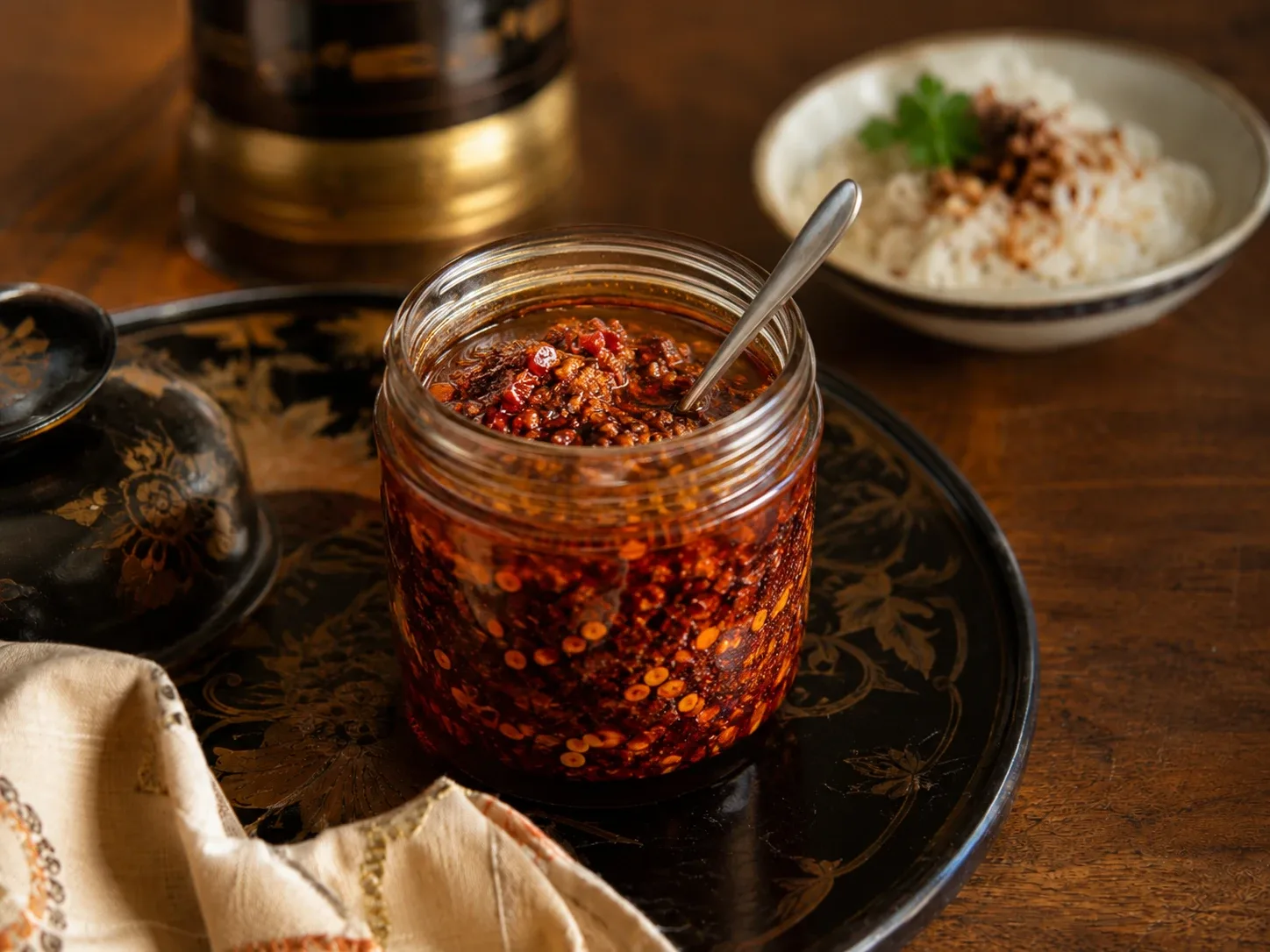
Si Chet, Burmese Chili Oilဆီချက်
The essential Burmese table oil — peanut oil gently fried with chili flakes, garlic, shallot, and a little ngapi, then spooned red over rice, noodles, and salads.
 ၁
၁Rice & Foundations · 40 min · Beginner
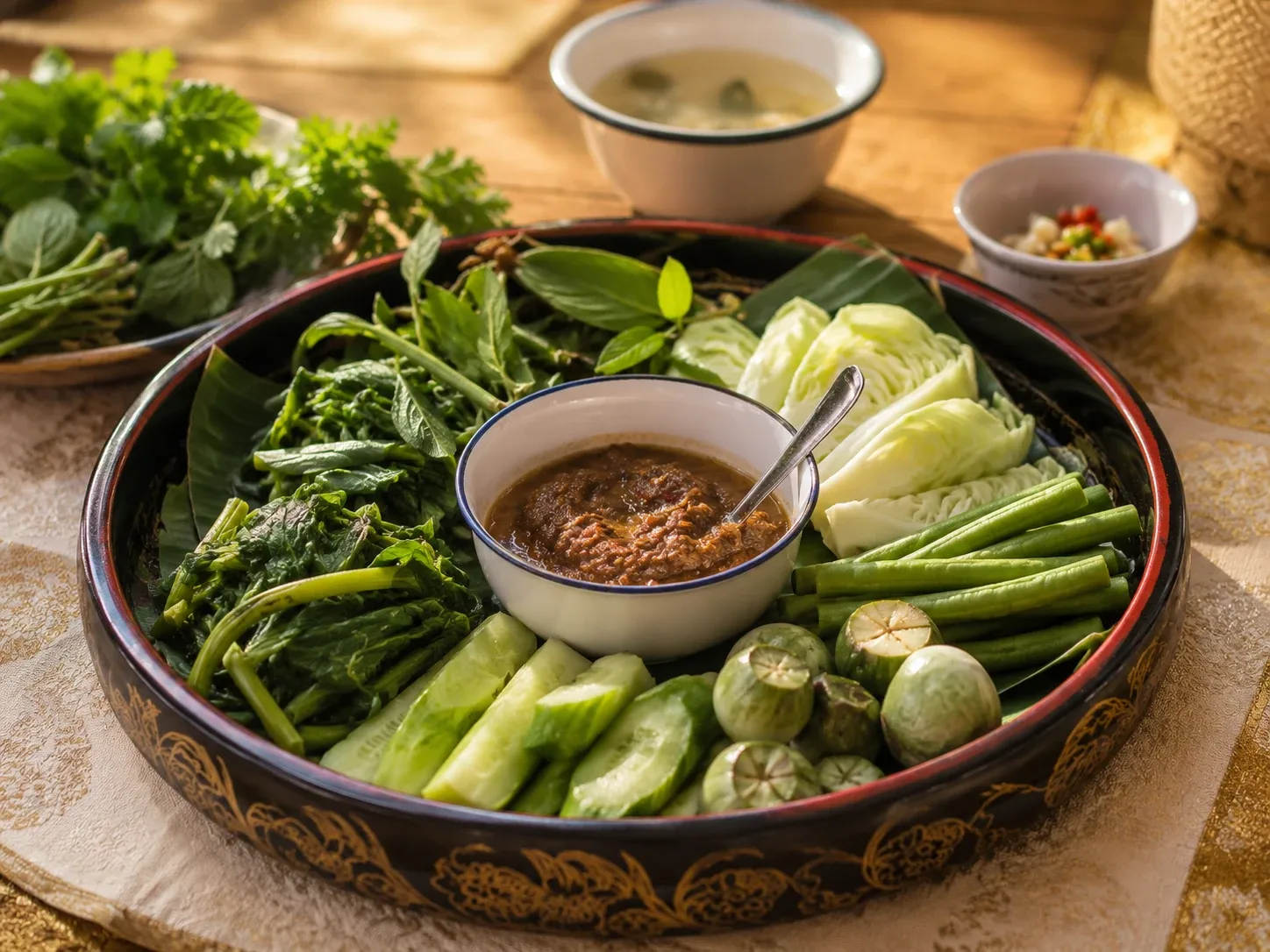
Toh Sa Yar, the Vegetable & Ngapi Platterတို့စရာ
The platter of raw and blanched vegetables around a pungent ngapi dip that no Burmese meal is complete without — the fresh, bitter counterpoint to curry.
 ၇
၇Sweets & Mont · 25 min · Beginner
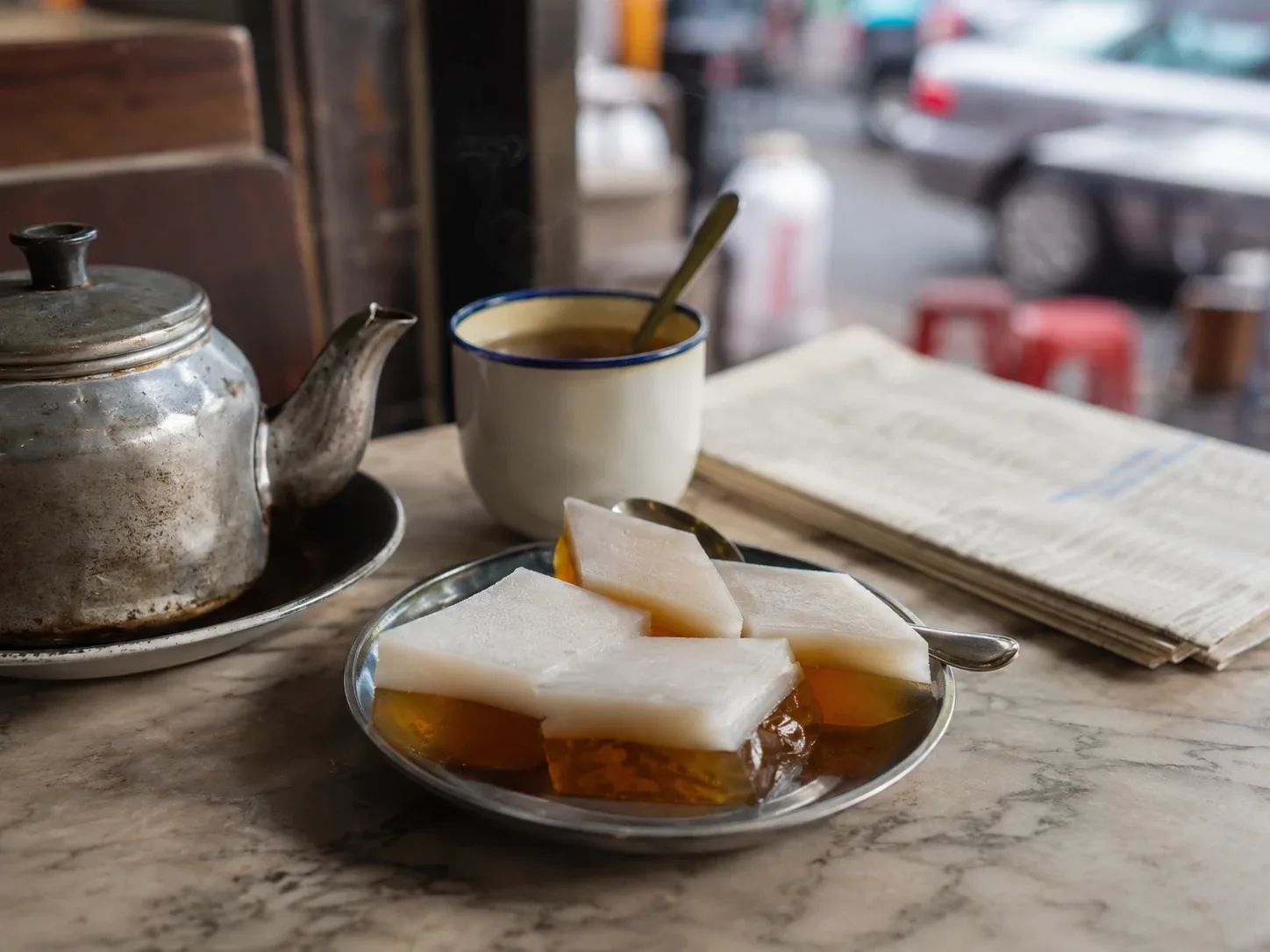
Kyauk Kyaw, Two-Layer Coconut Jellyကျောက်ကျော
Myanmar's two-layer agar jelly, done the Yangon way — coconut cream rises as it sets over a clear amber base, then the slab is cut into cool diamonds.