Dried red chilies & chili flakes
ငရုတ်သီးခြောက်
Burmese heat is warm, not punishing — chilies for color and depth first, fire second.
Also answers to: nga yoke thee chauk · chili flakes · crushed chilies
The first thing to understand about Burmese chilies is that the register is moderate. Burma sits between two chili superpowers — the punishing heat of some Thai and northeastern Indian cooking on either side — and mostly declines to compete. The dried red chilies of the Burmese kitchen are medium-heat, color-forward varieties, closer in spirit to Kashmiri chilies or guajillos than to bird’s eyes. Heat is present, sometimes seriously so in Shan and other regional cooking, but the default job of a dried chili here is warmth, fragrance, and that lacquered red color, with individual diners adding fire at the table.
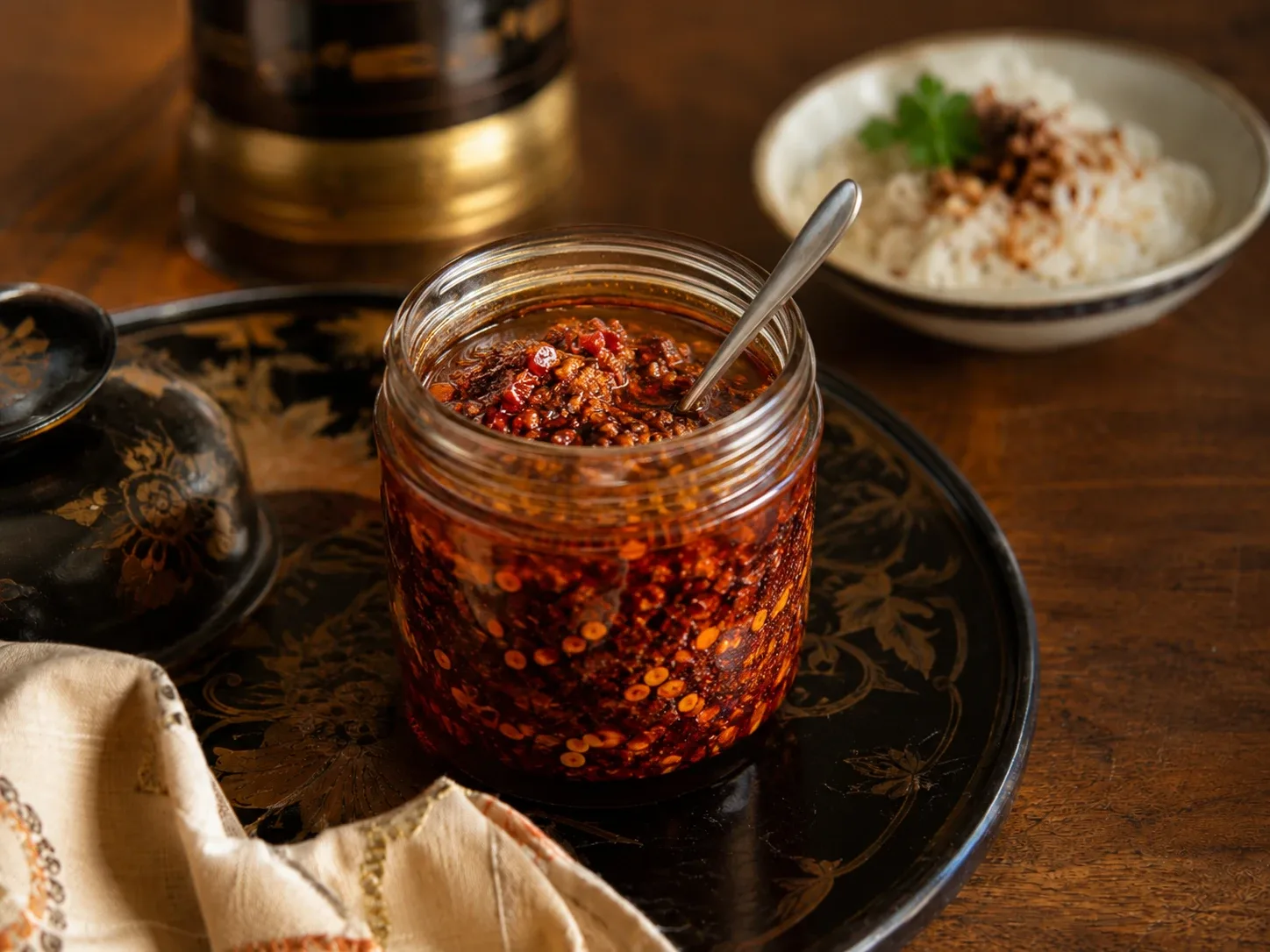
They come in two working forms. Whole dried chilies are fried in oil until darkened and fragrant — for balachaung, for some curries, sometimes served whole and blistered alongside a meal for the brave. Chili flakes (crushed dried chilies, seeds and all) are the workhorse: bloomed in hot oil for si chet, stirred into salad dressings, set on every table in a jar so each person can adjust their own bowl. Many households also keep plain toasted chili flakes dry, ground coarse, as a table condiment in their own right.
Chilies are, of course, an American plant — they arrived in Southeast Asia with Portuguese trade in the sixteenth century, which means every "ancient" chili dish in the region is younger than that. What Burmese cooks did before is a matter of pepper and ginger and educated guesswork. What they did after is not in doubt: the chili was absorbed so completely that the cuisine is now unimaginable without it.
Choosing itရွေးချယ်ခြင်း
For whole dried chilies, look for pods that are pliable and deeply red, not brittle and brown — brittleness means age, and age means dust. Kashmiri chilies from an Indian grocer or guajillos from a Mexican aisle are excellent stand-ins for the Burmese register: generous color, warm rather than vicious heat. For flakes, buy from shops with turnover — Korean gochugaru is a fine substitute at the mild, fruity end, and generic crushed red pepper works if you use a lighter hand. Avoid cayenne as a default; it brings flat heat without the color or fruit, and it overshoots.
Keeping itသိမ်းဆည်းခြင်း
Airtight, dark, and cool — light and air bleach both color and flavor. Whole pods keep the better part of a year in a sealed jar; flakes, with all that cut surface exposed, fade faster and are best bought in amounts you’ll use within six months. In humid kitchens dried chilies can soften and eventually mold, so make sure they’re fully dry going into the jar; a few weeks in the freezer also kills off any pantry-moth ambitions. If a batch has faded, toast it briefly in a dry pan to wake it up before blooming it in oil.
In the potမီးဖိုချောင်တွင်
Chili meets oil, almost always. Flakes are bloomed in hot — not screaming — oil, where they release color and fragrance; chili hitting oil that’s too hot turns acrid in seconds, which is why si chet adds it off the heat. Whole chilies fry in the oil at the start of balachaung and certain curries, darkening to a near-black red. Alongside the chili, Burmese cooks lean on paprika for color without additional heat — a trick worth stealing, since it lets you build that deep red without cooking for heat tolerance you may not have. Season for warmth in the pot; put the jar on the table for everything past that.
ဝယ်ယူရန် · Getting it
Buy the real thing
Whole dried red chilies — shelf-stable and shippable, unlike most of the fresh aisle.
Find it on AmazonCan’t get it? Honest swaps
- Kashmiri or guajillo chiliesExcellent
- CayenneLast resort
ဟင်းလျာများ · Cooked with it