Bekang Rawt, Fermented Soybean Salad
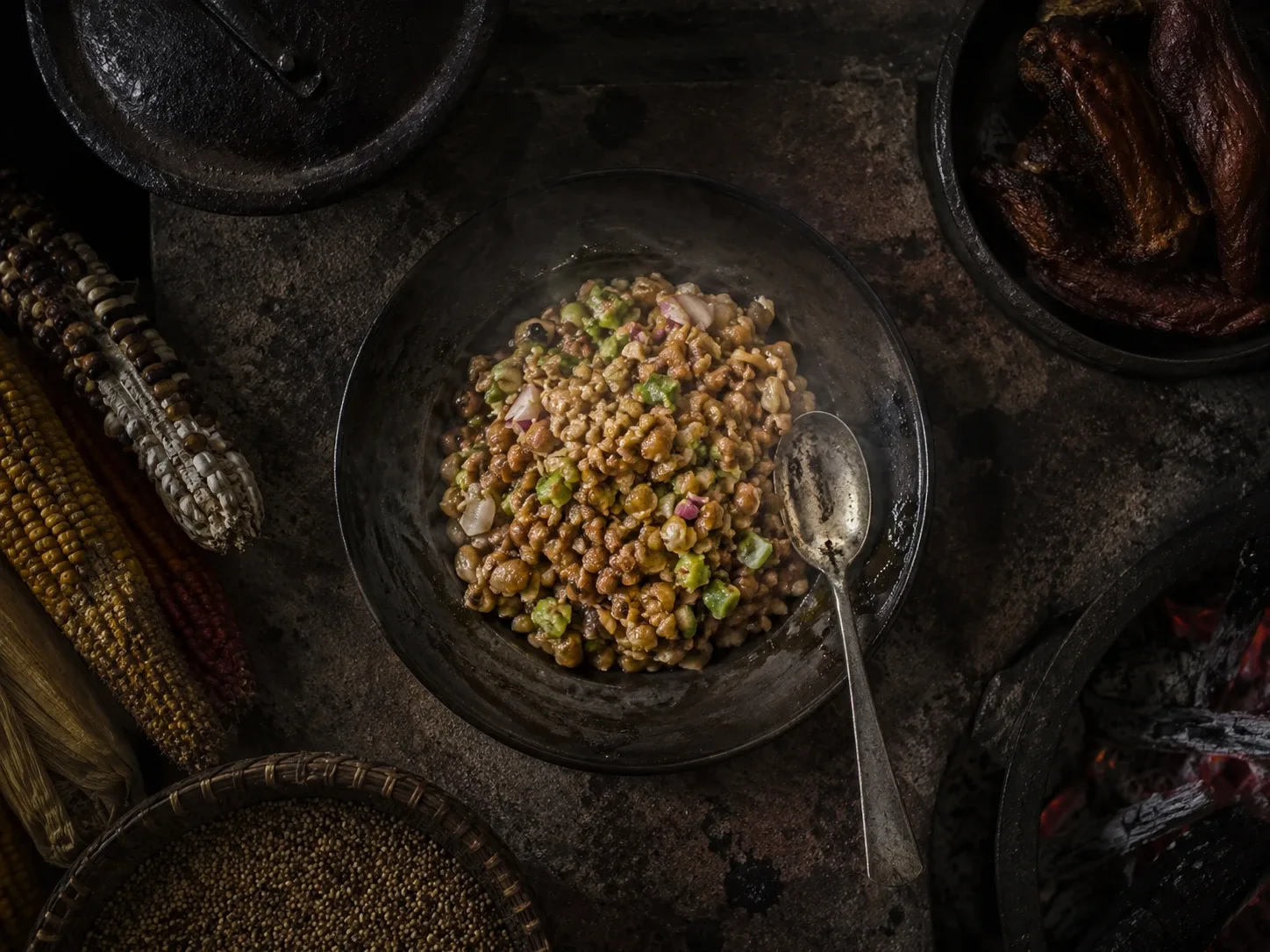
Fermented soybeans pounded with shallots, green chili, and salt — the Chin hills' pungent everyday salad, a mountain cousin of natto, eaten with hot rice.
By Burmese Cookbook Kitchen · July 9, 2026
ချင်း Chin HillsOpening & Diaspora, 1988–present
 ၄
၄- Prep
- 10 min
- Cook
- 10 min
- Serves
- 4
- Level
- Beginner
Before the refrigerator, every mountain cuisine solved winter its own way, and the peoples of the Chin hills solved part of it with the soybean: cooked, wrapped, and left to ferment until it grows sticky, pungent, and nearly immortal. Bekang um — the Mizo name that made it into print, for a food shared across the Chin-Mizo highlands — belongs to the great trans-Himalayan belt of fermented beans that runs from Japanese natto through Naga axone to the tua nao of the Shan hills. Same microbe, same logic: protein that keeps, flavor that announces itself.
Bekang rawt is its simplest and most common table form — the beans lightly pounded with charred dried chili, raw shallot, green chili, and salt into a sticky, ferocious little salad that seasons a mountain of rice. It should be said plainly: this is oral-tradition food. You will not find it in colonial gazetteers, which recorded what Chin households smoked and drank but rarely what fermented quietly in the corner; the written record is modern, the practice unquestionably far older.
The craft is all in restraint. Warm the beans so the ferment opens up, char the chilies properly, and pound just enough to bruise — the beans' own stickiness is the dressing, and over-pounding turns a lively salad into paste. Serve it in a small bowl and let everyone take a spoonful at a time. Like all great ferments it is a condiment that thinks it is a dish, and after a week of eating it with rice you will take its side.
Bruise the beans, don't purée them — bekang rawt should still look like beans that had an argument, not like a paste that lost one.
မီးဖိုချောင်စကား · A word from the kitchen
Ingredientsပါဝင်ပစ္စည်း
Serves 4
Tap to check off as you gather
- fermented soybeans — bekang; Japanese natto is the closest easy buy, and Shan tua nao or Naga-style axone also work — each shifts the accent, none ruins it
- dried red chilies — roasted dark in a dry pan
- salt
- shallots — sliced into fine rings
- green chilies — sliced thin
- cilantro — roughly chopped
- fresh ginger — optional, cut to fine slivers — some households add it, some call it heresy
Methodချက်နည်း
Tap a numeral as you finish each step
Step 1: Warm the beans
Set the fermented soybeans in a small dry pan over low heat for 3 to 4 minutes, stirring, until warm and aromatic — or steam them briefly in the basket over your rice pot, which is what a Chin kitchen would do. Warming wakes the ferment; cold beans taste muted and stay stubbornly separate from the seasoning.
Step 2: Roast and pound the chilies
Toast the dried chilies in the same pan until darkened and brittle, about a minute a side, watching closely. Pound them with the salt in a mortar to coarse flakes — the char is doing real work here, meeting the ferment's funk with smoke.
Step 3: Pound the salad together
Add the warm beans to the mortar with the shallots and green chili and pound gently, turning with a spoon between strokes, until the beans are bruised and sticky but still whole — a dozen easy strokes, not a workout. The light pounding releases the beans' binding stickiness so the seasoning clings instead of falling to the bottom of the bowl.
Step 4: Finish and serve
Fold in the cilantro and the ginger slivers if using. Taste for salt — ferments vary wildly in their own saltiness, which is why the recipe starts conservative. Serve in a small bowl beside hot rice and plain boiled vegetables; a little travels a long way, which is the point.
ခွက်ယောက် · The tools
Equipment
Stone mortar & pestle
ဆုံFor garlic-ginger paste, pounded dried shrimp fluff, and crushed peanuts — the blender lies about texture; the stone doesn’t.
Shop on Amazon →
Equipment links are Amazon affiliate links. As an Amazon Associate we earn from qualifying purchases, at no cost to you. Disclosure.
ဟင်းစုံ · Set the table
A Burmese meal is a spread
A thoke is part of a spread as often as it is a light meal on its own:
- Steamed riceထမင်းThe centre of the table — everything else is built around it.
- A curryဟင်းSlow-cooked until the oil returns — the richness the sides cut against.
- Balachaungဘလချောင်းThe crispy shrimp relish that lives on every Burmese table.
- Crispy fried shallotsကြက်သွန်ကြော်A spoonful of crunch and sweet shallot oil over anything.
- Toh sa yar & ngapi dipတို့စရာRaw and blanched vegetables with a pungent fish-paste dip — the fresh, bitter counterpoint.
Questions from the kitchen
Is this the same thing as natto?
Same family, different upbringing. Bekang, natto, Shan tua nao, and Naga axone are all bacillus-fermented soybeans; bekang tends to be fermented in leaves and eaten savory-hot rather than at breakfast with soy sauce. Natto's stronger pull and milder flavor make it a very serviceable stand-in.
I find the smell challenging. Any advice?
Warm it, season it boldly, and eat it with rice rather than alone — the funk that fills a room mellows dramatically on the palate against charred chili and raw shallot. Start with half the beans and more shallot; most converts are made on the second try, not the first.
How long does it keep?
Made-up bekang rawt is best the day it is pounded — the shallots weep and the cilantro wilts by day two. The fermented beans themselves keep for weeks refrigerated, so pound small batches as you want them.
နောက်တစ်ခု · Cook next
Keep the wok hot
 ၄
၄Salads & Thoke · 30 min · Beginner
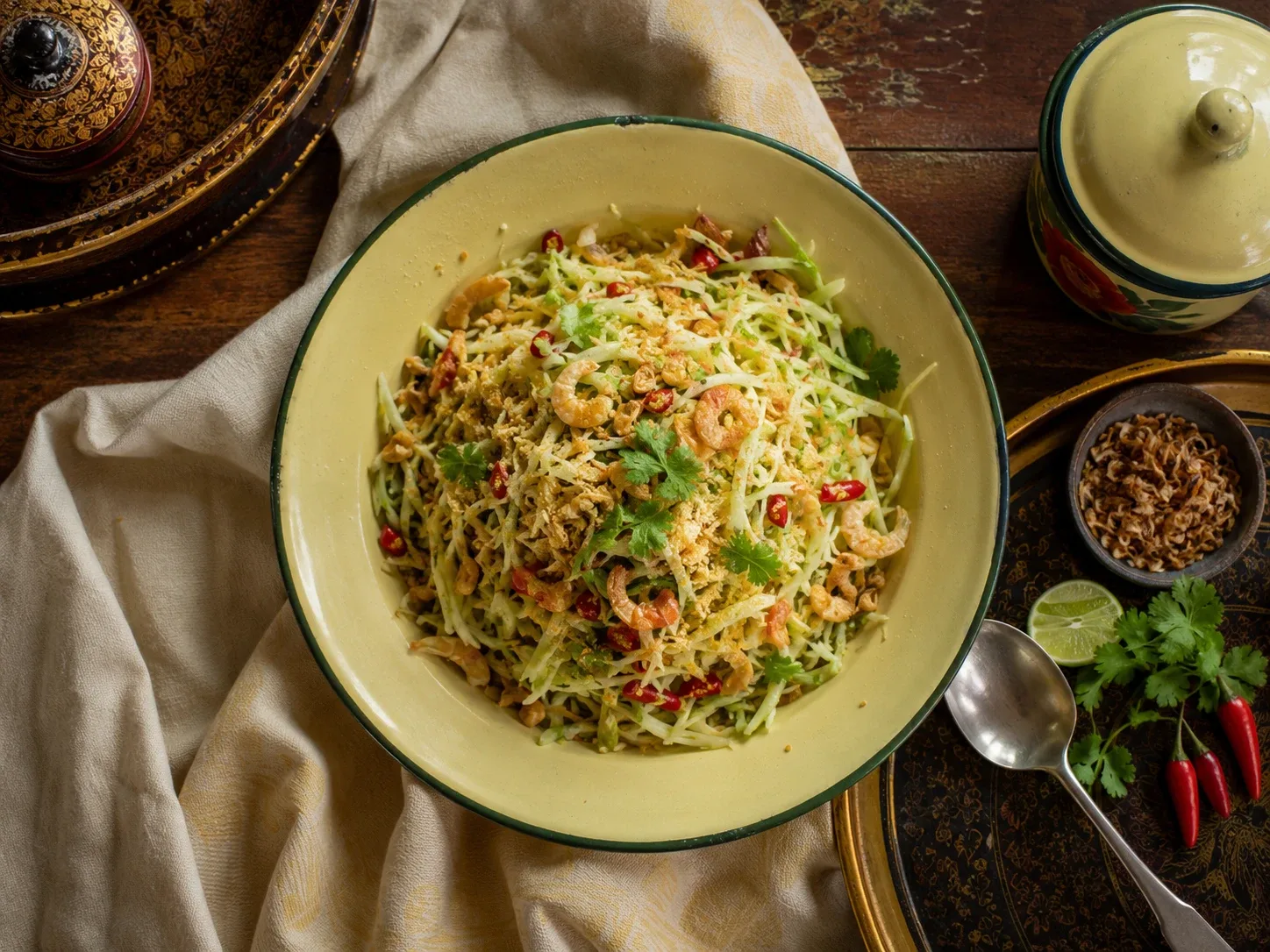
Thayet Thi Thanat, Green Mango Pickle-Saladသရက်သီးသနပ်
Tart, crunchy green-mango shreds dressed with fried garlic oil, chili, dried shrimp, and toasted chickpea flour — the sour thanat that cuts a heavy Burmese meal.
 ၄
၄Salads & Thoke · 35 min · Beginner
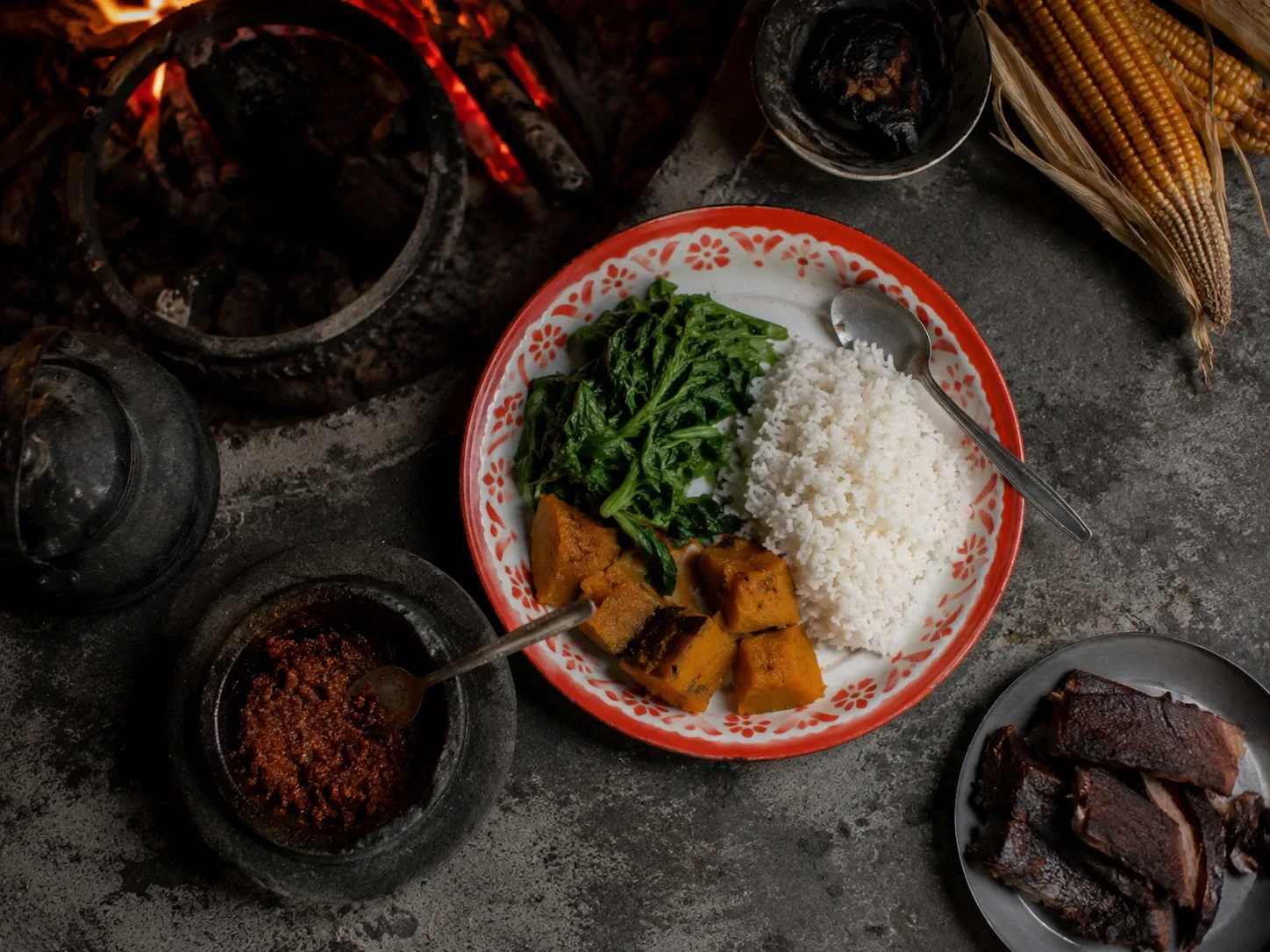
Hmarcha Rawt, the Chin Chili-Herb Pound
A fire-roasted chili and garlic relish pounded in the mortar, served the Chin way — beside a platter of plain boiled greens, pumpkin, and hot rice.
 ၄
၄Salads & Thoke · 25 min · Beginner
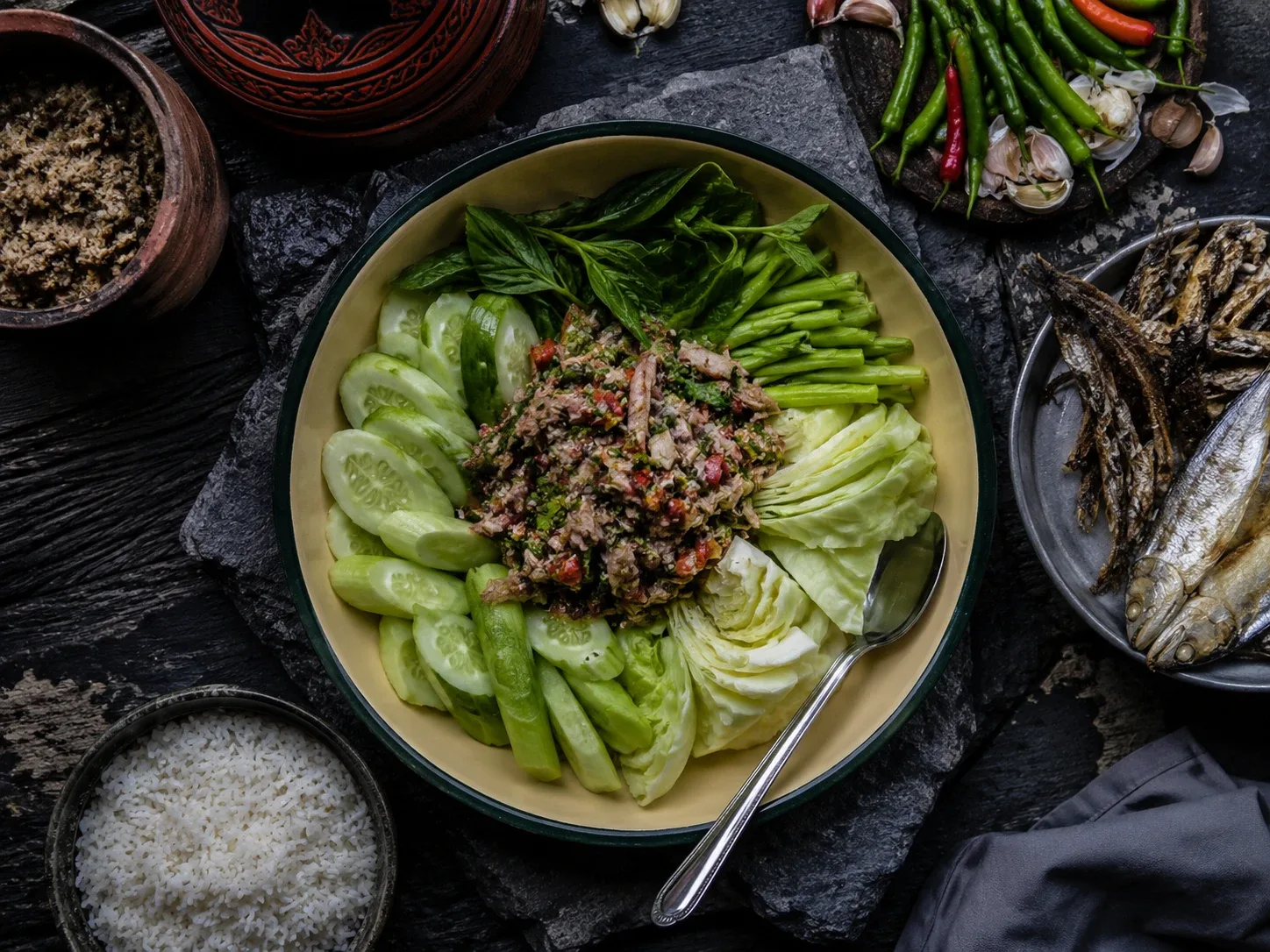
Rakhine Ngapi Thoke, the Pounded Fireငါးပိသုပ်
Rakhine's roasted fish-paste salad — marine ngapi pounded with green chili, garlic, and lime, served the western-coast way with crisp vegetables and rice.