Hmarcha Rawt, the Chin Chili-Herb Pound
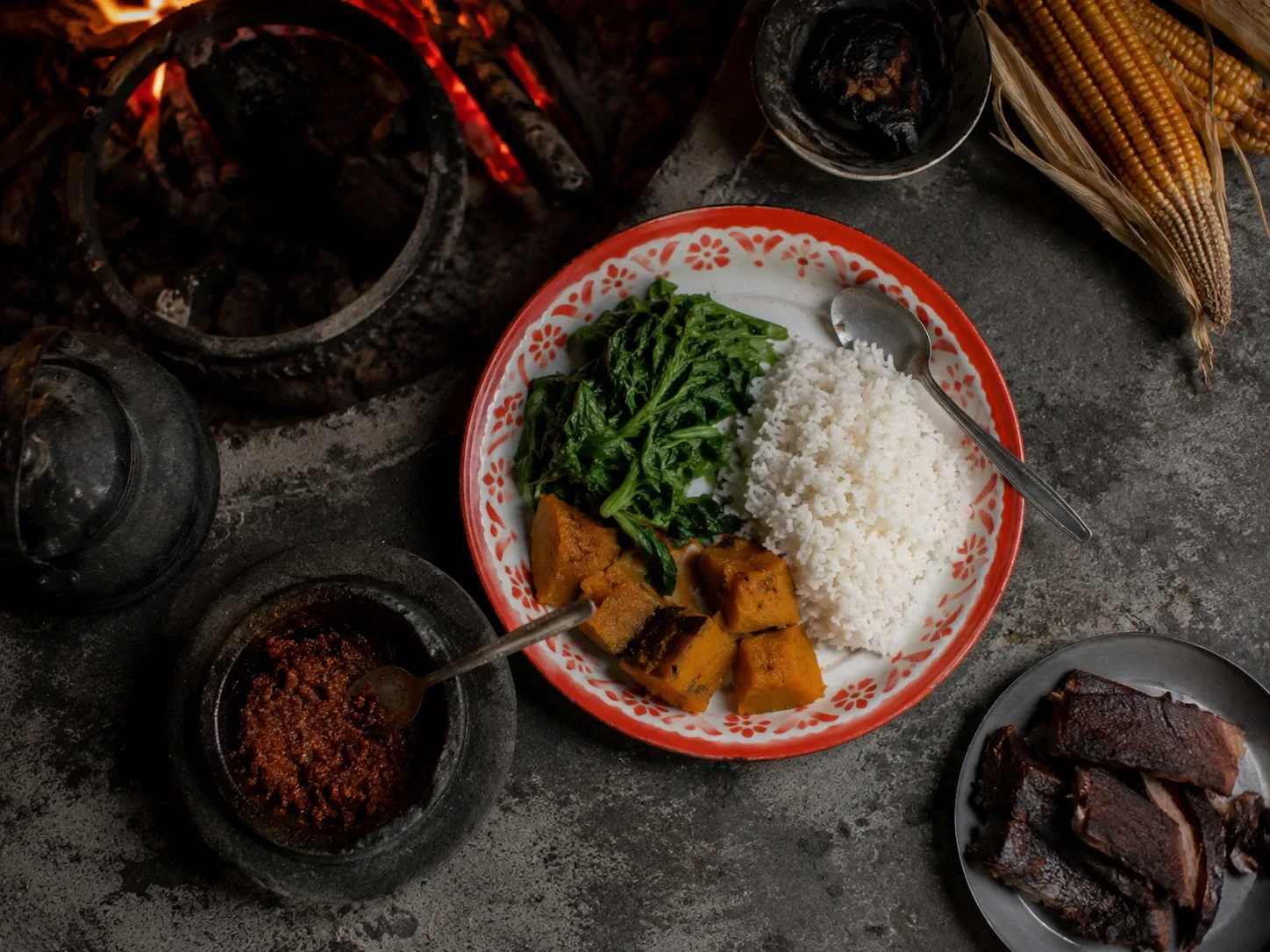
A fire-roasted chili and garlic relish pounded in the mortar, served the Chin way — beside a platter of plain boiled greens, pumpkin, and hot rice.
By Burmese Cookbook Kitchen · July 9, 2026
ချင်း Chin HillsOpening & Diaspora, 1988–present
 ၄
၄- Prep
- 15 min
- Cook
- 20 min
- Serves
- 4
- Level
- Beginner
Every cuisine has a dish that shows you its accent, and in the Chin hills it is the rawt: things roasted in the embers, pounded in the mortar, and eaten with boiled vegetables and rice. Hmarcha rawt — the word hmarcha means chili in Mizo, the language of the Chin peoples' cousins across the Indian border — is the fiercest and most beloved of the family, a relish of fire-blistered chilies and garlic pounded with salt into something between a chutney and a dare.
Honesty requires saying that the written record here is thin and recent. This is hearth cooking from one of Myanmar's most remote states, carried in kitchens rather than cookbooks, and the names shift from valley to valley — what Hakha calls one thing, Falam and Tedim call another, and the Mizo name is simply the one that reached print first. The technique, though, is everywhere and old: colonial gazetteers describe Chin meals of boiled maize, greens, and chili long before anyone wrote down a recipe.
What makes it work is contrast. The vegetables are cooked plain — no oil, no aromatics, just water and a pinch of salt — precisely so the rawt can land on them at full volume. Resist the urge to season the platter; a Chin table keeps its heat concentrated in one small bowl, and the meal is in the back-and-forth. Roast the chilies to the edge of burnt but not over it, pound rather than blend, and serve everything hot enough to steam.
Roast the chilies until the skins blister and smell of toast, never of burning — one shade too far and the whole pound turns bitter.
မီးဖိုချောင်စကား · A word from the kitchen
Ingredientsပါဝင်ပစ္စည်း
Serves 4
Tap to check off as you gather
For the pound
- dried red chilies
- green chilies — fresh; they bring brightness the dried ones lack
- garlic — unpeeled, roasted in the pan alongside the chilies
- salt
- cilantro — roughly chopped, stems and all
- hot water — just enough to loosen the pound into a spoonable relish
For the boiled platter
- mustard greens — the Chin daily green; chard or kale are fair stand-ins
- pumpkin — peeled, in thick wedges — kabocha holds its shape best
- green beans — or any bean in season, topped and tailed
- salt — for the pot — the vegetables stay deliberately plain
Methodချက်နည်း
Tap a numeral as you finish each step
Step 1: Roast the chilies and garlic
Set a dry pan over medium heat and roast the dried chilies, green chilies, and unpeeled garlic cloves, turning often, until the dried chilies darken and crisp, the green ones blister, and the garlic softens in its skin — 6 to 8 minutes, chilies out first. In the Chin hills this happens in the embers of the hearth; the char is not a garnish flavor, it is the dish.
Step 2: Pound in stages
Peel the garlic. Pound the dried chilies with the salt first until they break to coarse flakes, then add the garlic and green chilies and pound to a rough, sticky rubble — texture, not purée. A mortar bruises and blends in a way a blade cannot; if you must chop, chop very fine and mash with the flat of the knife.
Step 3: Loosen and finish the rawt
Work in the hot water a spoonful at a time until the pound is a thick, spoonable relish, then stir through the cilantro. Taste — it should be fiercely hot, smoky, and just salty enough to make plain vegetables interesting, because that is precisely its job.
Step 4: Boil the platter
Bring a large pot of water to the boil with a pinch of salt. Cook the pumpkin 8 to 10 minutes until a knife slips in, adding the beans for the final 5 and the mustard greens for the final 2. Drain well. The restraint is deliberate — no oil, no seasoning — the vegetables are the calm and the rawt is the storm.
Step 5: Serve as one dish
Arrange the vegetables on a platter with the rawt in a small bowl at the center and plenty of hot rice alongside. Everyone daubs to their own threshold. The pot liquor from the vegetables, sipped warm, is the traditional drink of the meal.
ခွက်ယောက် · The tools
Equipment
Stone mortar & pestle
ဆုံFor garlic-ginger paste, pounded dried shrimp fluff, and crushed peanuts — the blender lies about texture; the stone doesn’t.
Shop on Amazon →
Equipment links are Amazon affiliate links. As an Amazon Associate we earn from qualifying purchases, at no cost to you. Disclosure.
ဟင်းစုံ · Set the table
A Burmese meal is a spread
A thoke is part of a spread as often as it is a light meal on its own:
- Steamed riceထမင်းThe centre of the table — everything else is built around it.
- A curryဟင်းSlow-cooked until the oil returns — the richness the sides cut against.
- Balachaungဘလချောင်းThe crispy shrimp relish that lives on every Burmese table.
- Crispy fried shallotsကြက်သွန်ကြော်A spoonful of crunch and sweet shallot oil over anything.
- Toh sa yar & ngapi dipတို့စရာRaw and blanched vegetables with a pungent fish-paste dip — the fresh, bitter counterpoint.
Questions from the kitchen
This is basically chilies and salt. Is that really a recipe?
It is, and the details carry it — the char on the chilies, the pounding order, the ratio of relish to plain vegetables. Chin cooking runs on exactly this economy; done carelessly it is hot mud, done well it makes a boiled pumpkin taste like an occasion.
How hot is this supposed to be?
Genuinely hot — this is a highland cuisine that seasons with chili the way lowland Burma seasons with ngapi. Tame it by seeding the dried chilies or shifting the ratio toward roasted garlic, and the relish stays honest.
How long does the rawt keep?
Two or three days covered in the fridge, though the cilantro fades first — add it fresh each day if you are making ahead. The roasted chili-garlic base without herbs or water keeps a week.
နောက်တစ်ခု · Cook next
Keep the wok hot
 ၄
၄Salads & Thoke · 30 min · Beginner
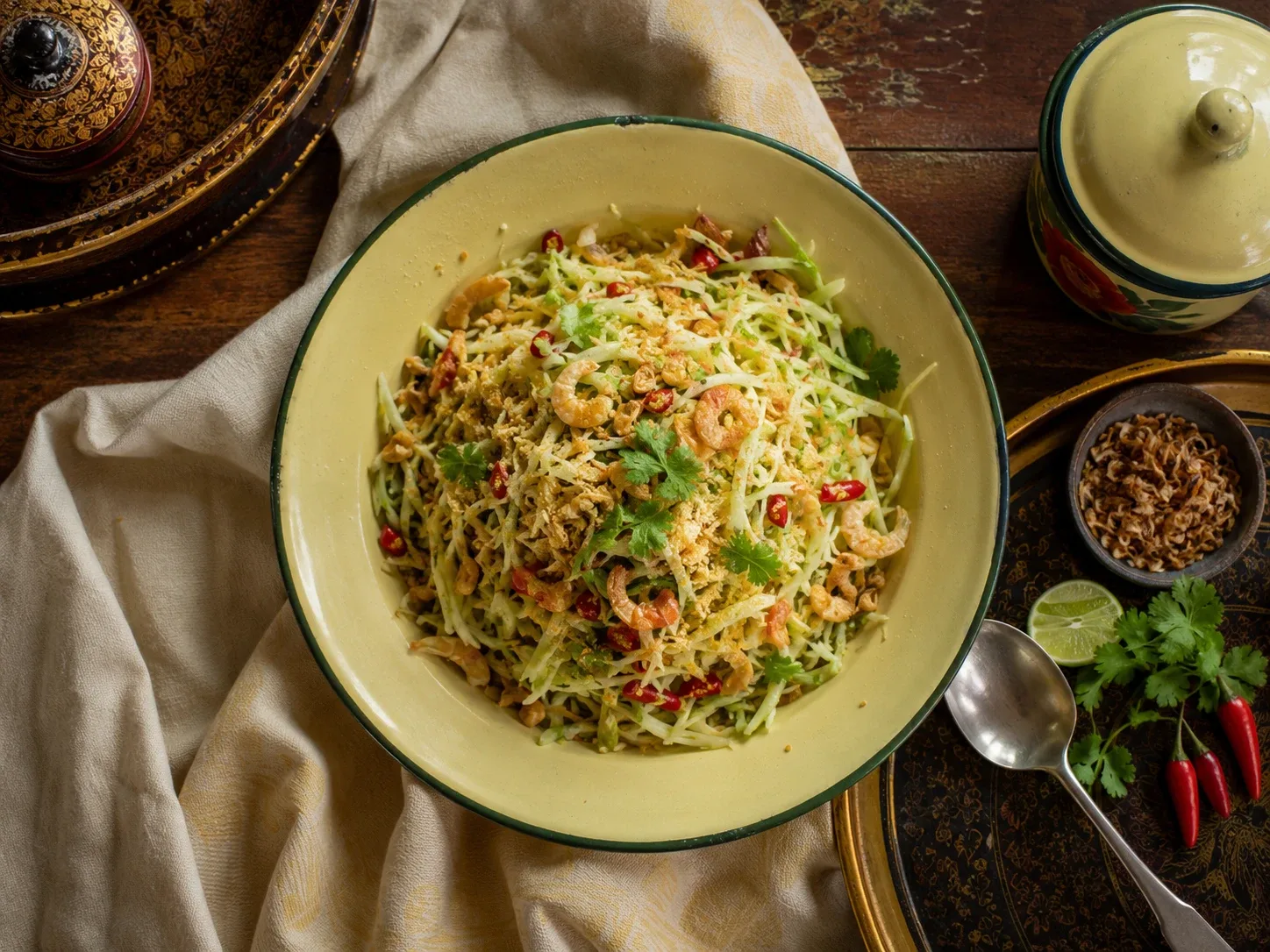
Thayet Thi Thanat, Green Mango Pickle-Saladသရက်သီးသနပ်
Tart, crunchy green-mango shreds dressed with fried garlic oil, chili, dried shrimp, and toasted chickpea flour — the sour thanat that cuts a heavy Burmese meal.
 ၄
၄Salads & Thoke · 20 min · Beginner
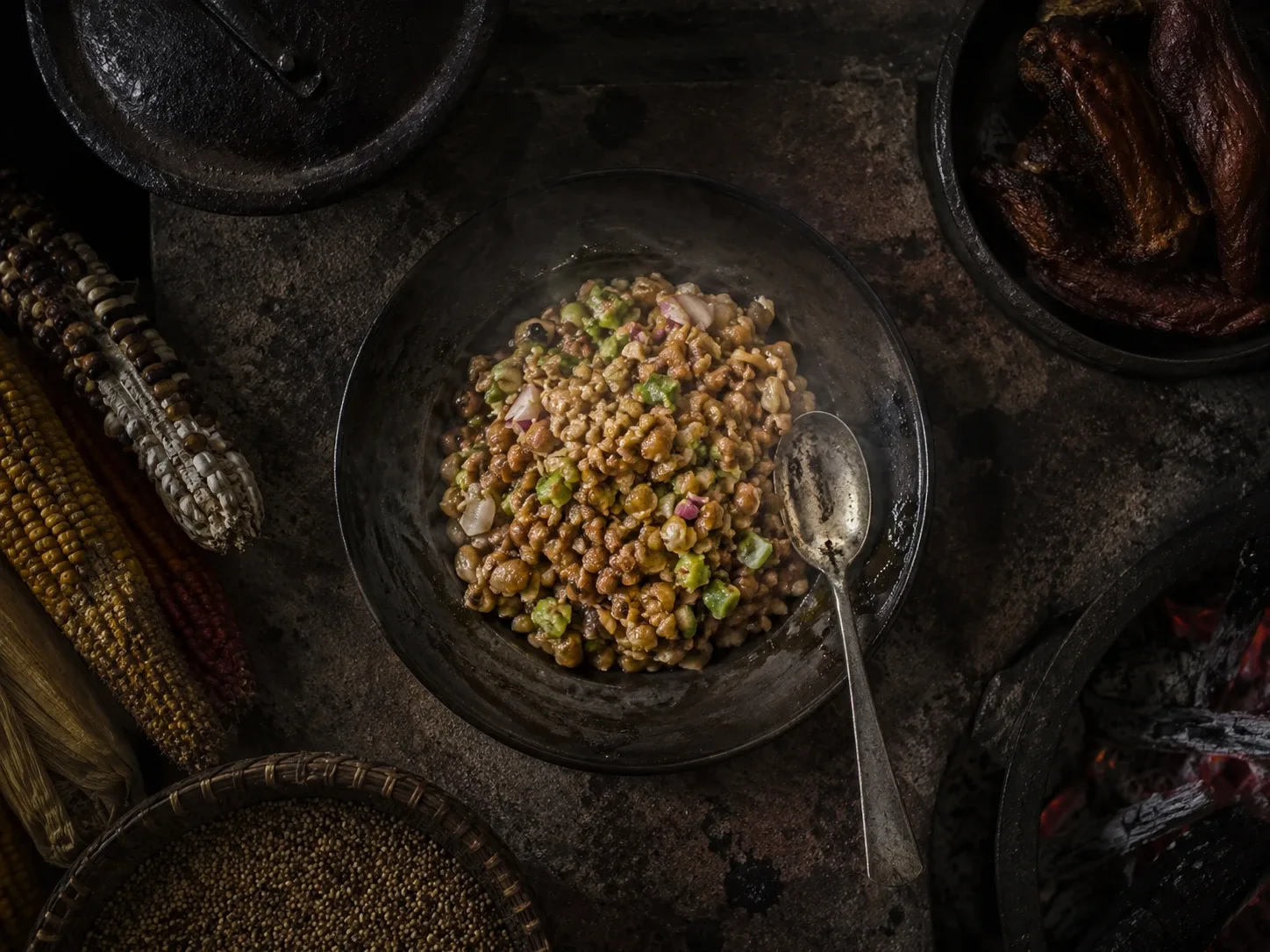
Bekang Rawt, Fermented Soybean Salad
Fermented soybeans pounded with shallots, green chili, and salt — the Chin hills' pungent everyday salad, a mountain cousin of natto, eaten with hot rice.
 ၅
၅Soups & Broths · 165 min · Beginner
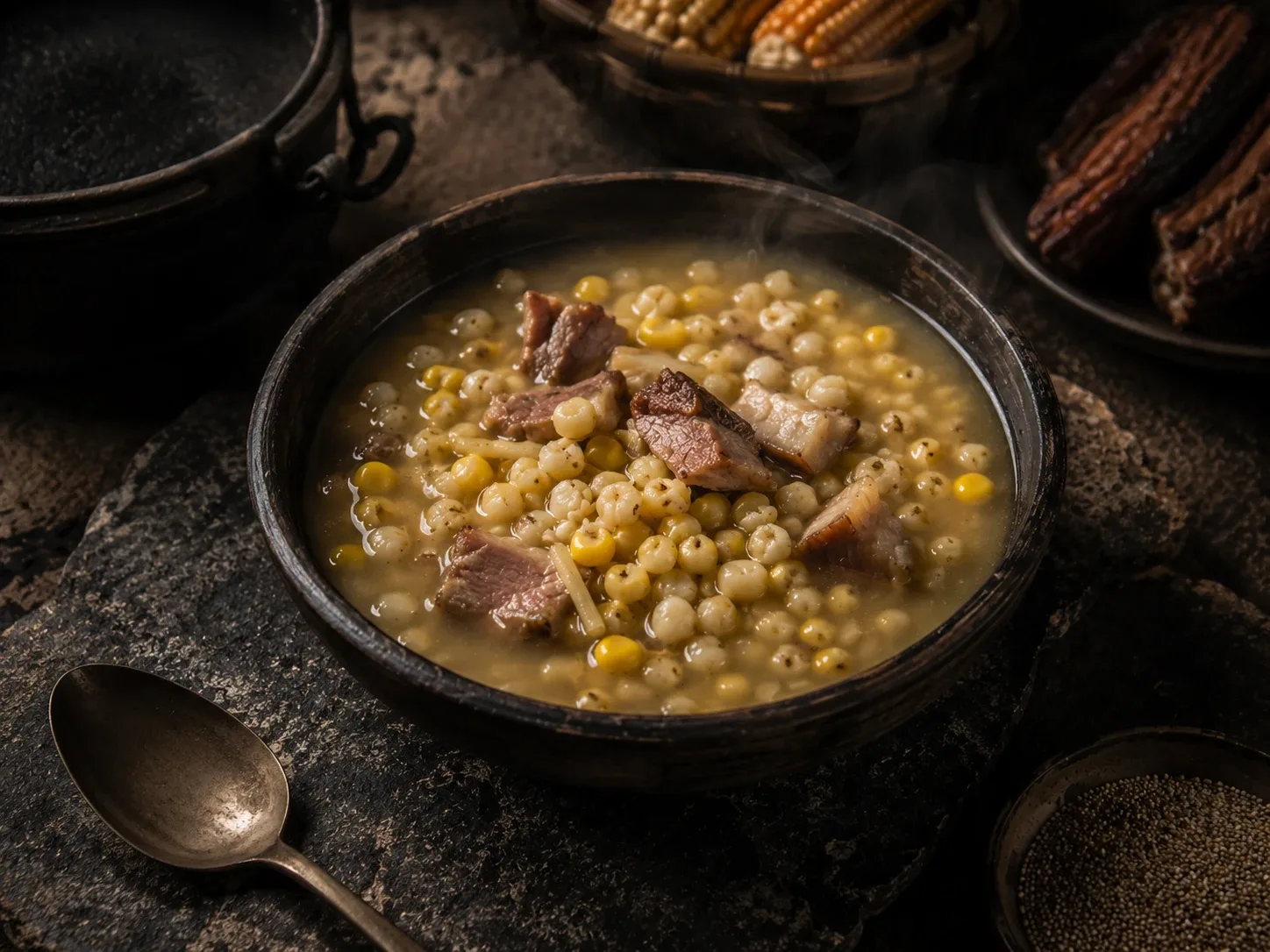
Sabuti, the Chin Corn Soup
The Chin hills' great corn soup — hominy maize simmered slowly with smoked pork and ginger, frugal mountain cooking that somehow eats like plenty.