Sabuti, the Chin Corn Soup
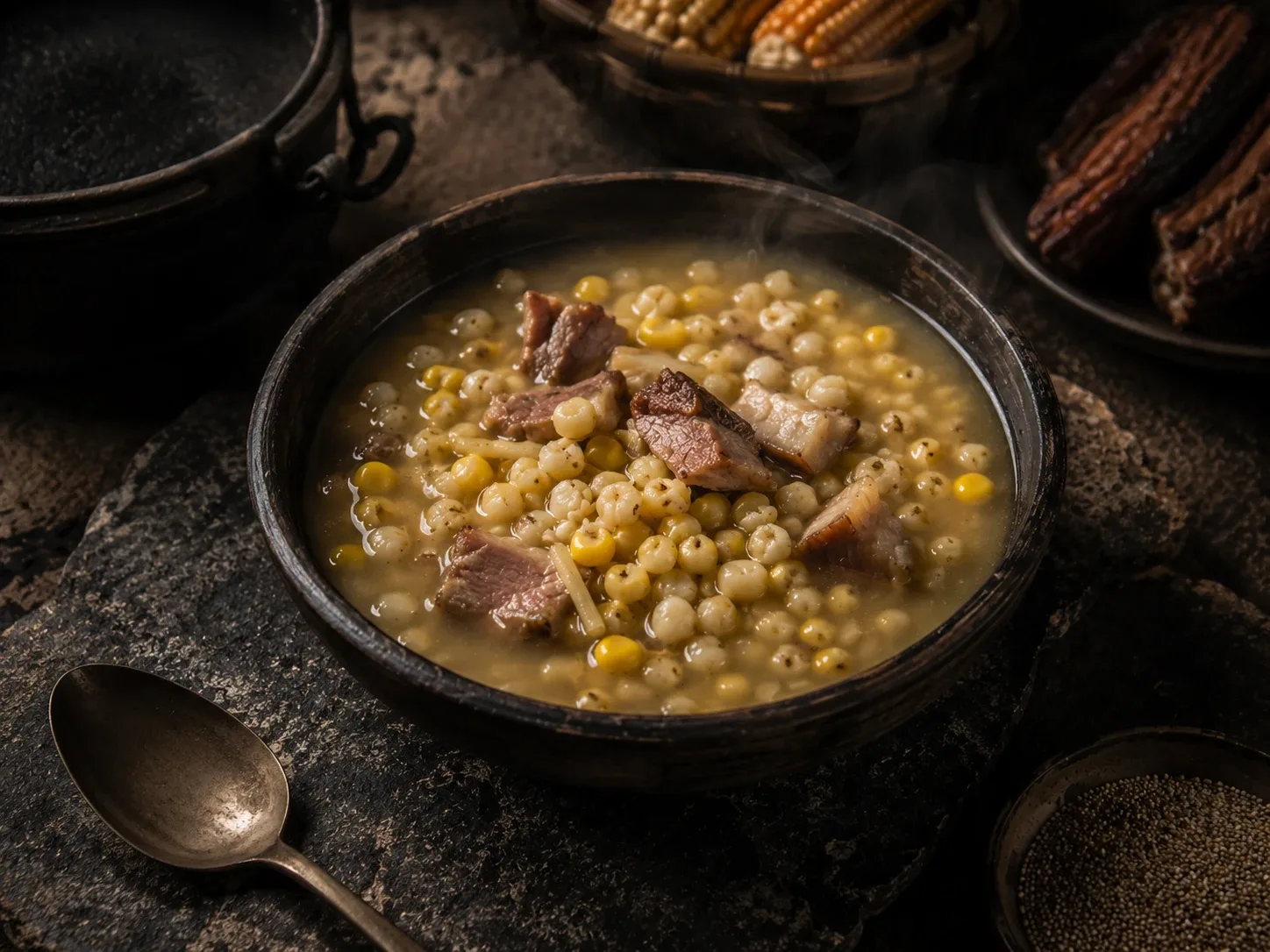
The Chin hills' great corn soup — hominy maize simmered slowly with smoked pork and ginger, frugal mountain cooking that somehow eats like plenty.
By Burmese Cookbook Kitchen · June 24, 2026
ချင်း Chin HillsTaungoo, 1510–1752
 ၅
၅- Prep
- 15 min
- Cook
- 150 min
- Serves
- 6
- Level
- Beginner
Sabuti is what the Chin hills sound like at dinnertime — a pot of hominy corn knocking against smoked pork, somewhere above the cloud line in Myanmar's rugged west. It is frugal cooking of the most honest kind. The corn was pounded and dried at harvest; the pork was smoked black over the kitchen hearth because there was no other way to keep it; and the soup that brings them together needs nothing else but ginger, salt, and hours.
The honest history: corn is not ancient here. It is an American crop that crossed the oceans after Columbus and worked its way up-country along the trade routes of the Taungoo era, when Burmese ports were busier than they had ever been. The hills adopted it because it grows where rice will not, and the Chin folded it into their kitchens so thoroughly that sabuti now sits at the center of the table at festivals and funerals alike. Tradition has a start date more often than we admit.
Two things make the pot. The corn must cook until each kernel bursts open like a small flower — taste it, because dried corn keeps its own schedule. And some of those kernels must be crushed against the pot near the end, so their starch clouds the broth into something with real body. Season with salt alone and resist improving it; the smoke is doing more work than any sauce could.
Sabuti is done when a kernel crushes against the roof of your mouth with no chalk left in the middle — taste the corn, not the clock.
မီးဖိုချောင်စကား · A word from the kitchen
Ingredientsပါဝင်ပစ္စည်း
Serves 6
Tap to check off as you gather
For the pot
- dried hominy corn — soaked overnight; or 800 g canned hominy, drained — see step one
- smoked pork — hock, belly, or ribs, cut into large chunks — the smokier the better
- water
- fresh ginger — sliced into coins
- garlic — smashed
- small onion — halved through the root
- salt
To finish
- spring onions — sliced
- cilantro
- dried chili flakes — at the table, for those who want it
Methodချက်နည်း
Tap a numeral as you finish each step
Step 1: Soak the corn
Cover the dried hominy with plenty of cold water and leave it overnight — the kernels will swell and wrinkle. This is not optional; unsoaked corn can simmer all day and stay bulletproof. If you are using canned hominy, skip the soak entirely and jump in at step three.
Step 2: Simmer the corn alone
Drain the soaked corn, cover it with the fresh water, and simmer, partly lidded, for 60 to 90 minutes, skimming any foam. The corn goes in alone so you can judge it honestly — it is ready to move on when the kernels have burst open like small flowers but still hold a gentle chew.
Step 3: Add the pork and aromatics
Add the smoked pork, ginger coins, garlic, and onion, and keep the pot at a lazy simmer for another 45 to 60 minutes. The smoke leaches out of the meat and into the corn, which is the entire architecture of the dish. Canned-hominy cooks start here, with about 40 minutes to go.
Step 4: Let it thicken
Press a ladleful of kernels against the side of the pot and stir the mash back in. The broth turns cloudy and faintly starchy — that body is what separates sabuti from pork-and-corn water. If it tightens past a loose porridge, loosen it with a cup of hot water.
Step 5: Season with salt only
Stir in the salt, taste, and stop. There is no fish sauce here, no ngapi, no turmeric — Chin cooking this old seasons with smoke, fat, and salt, and the restraint is the flavor. If it tastes flat, it needs more salt or more time, never more ingredients.
Step 6: Serve it steaming
Ladle into deep bowls, making sure everyone gets pork, and top with spring onions and cilantro, chili flakes on the side. In the hills it is a meal on its own; in the lowlands it happily plays the soup beside rice. It is even better reheated tomorrow.
ခွက်ယောက် · The tools
Equipment
Heavy pot / Dutch oven
အိုးကြီးDeep and heat-retentive — for mohinga broth, long-simmered hin, and deep-frying without temperature crashes.
Shop on Amazon →
Equipment links are Amazon affiliate links. As an Amazon Associate we earn from qualifying purchases, at no cost to you. Disclosure.
ဟင်းစုံ · Set the table
A Burmese meal is a spread
A Burmese soup sits beside the rice, not on its own. Set the table with:
- Steamed riceထမင်းThe centre of the table — everything else is built around it.
- A curryဟင်းSlow-cooked until the oil returns — the richness the sides cut against.
- Toh sa yar & ngapi dipတို့စရာRaw and blanched vegetables with a pungent fish-paste dip — the fresh, bitter counterpoint.
- Balachaungဘလချောင်းThe crispy shrimp relish that lives on every Burmese table.
- Crispy fried shallotsကြက်သွန်ကြော်A spoonful of crunch and sweet shallot oil over anything.
Questions from the kitchen
Can I really use canned hominy?
Yes, and the pot is still very good — add it with the pork and simmer about 40 minutes so it drinks in the smoke. What you lose is the corn-steeped broth that dried kernels build over their long simmer, so crush a few extra kernels at the end to compensate.
What if I can't find smoked pork?
A smoked ham hock is the easiest substitute and arguably the best. Thick-cut bacon works in a leaner, saltier direction — cut back the added salt. Fresh pork plus a spoon of smoked paprika is the distant stand-in; it makes a pleasant soup that is not quite sabuti.
Is a corn soup really traditional Burmese food?
Honestly told, corn is an American crop — it reached Asia after Columbus and spread upcountry along the trade routes of the Taungoo era. The Chin hills adopted it because it thrives where rice struggles, and within a few generations sabuti was as Chin as the hills themselves. Tradition has a start date; it still counts.
နောက်တစ်ခု · Cook next
Keep the wok hot
 ၅
၅Soups & Broths · 135 min · Beginner
An Buti, the Meatless Corn Soup
Sabuti's meatless sibling from the Chin hills — hominy corn simmered with red beans, pumpkin, and greens until the pot thickens into gentle, vegetable plenty.
 ၅
၅Soups & Broths · 55 min · Intermediate
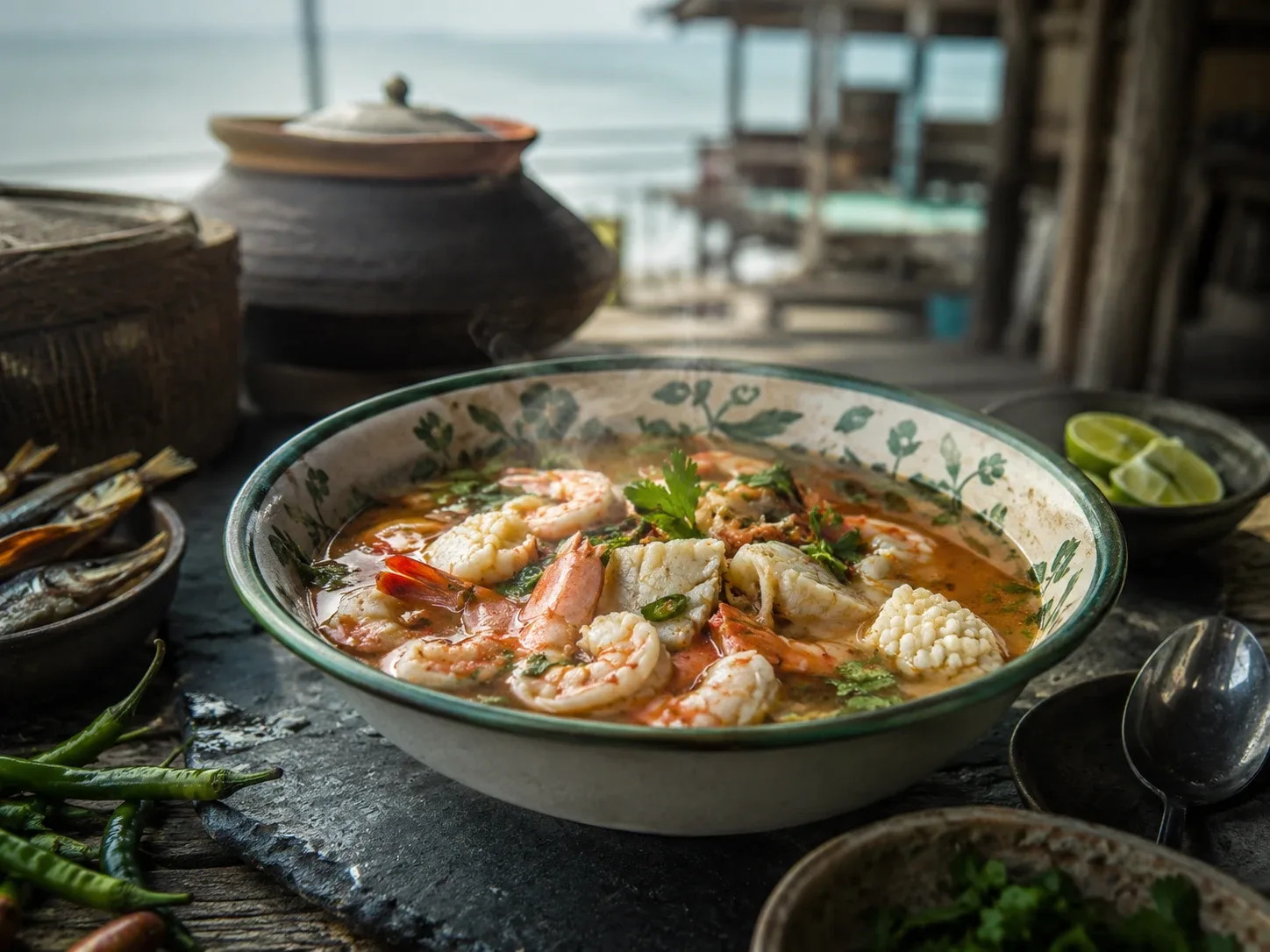
Ar Pu Shar Pu, the Burning-Mouth Bowl
Sittwe's famous hot-and-sour seafood soup — fish, prawns, and squid in a tamarind broth pounded through with green chilies, finished with lime and herbs.
 ၇
၇Sweets & Mont · 105 min · Intermediate
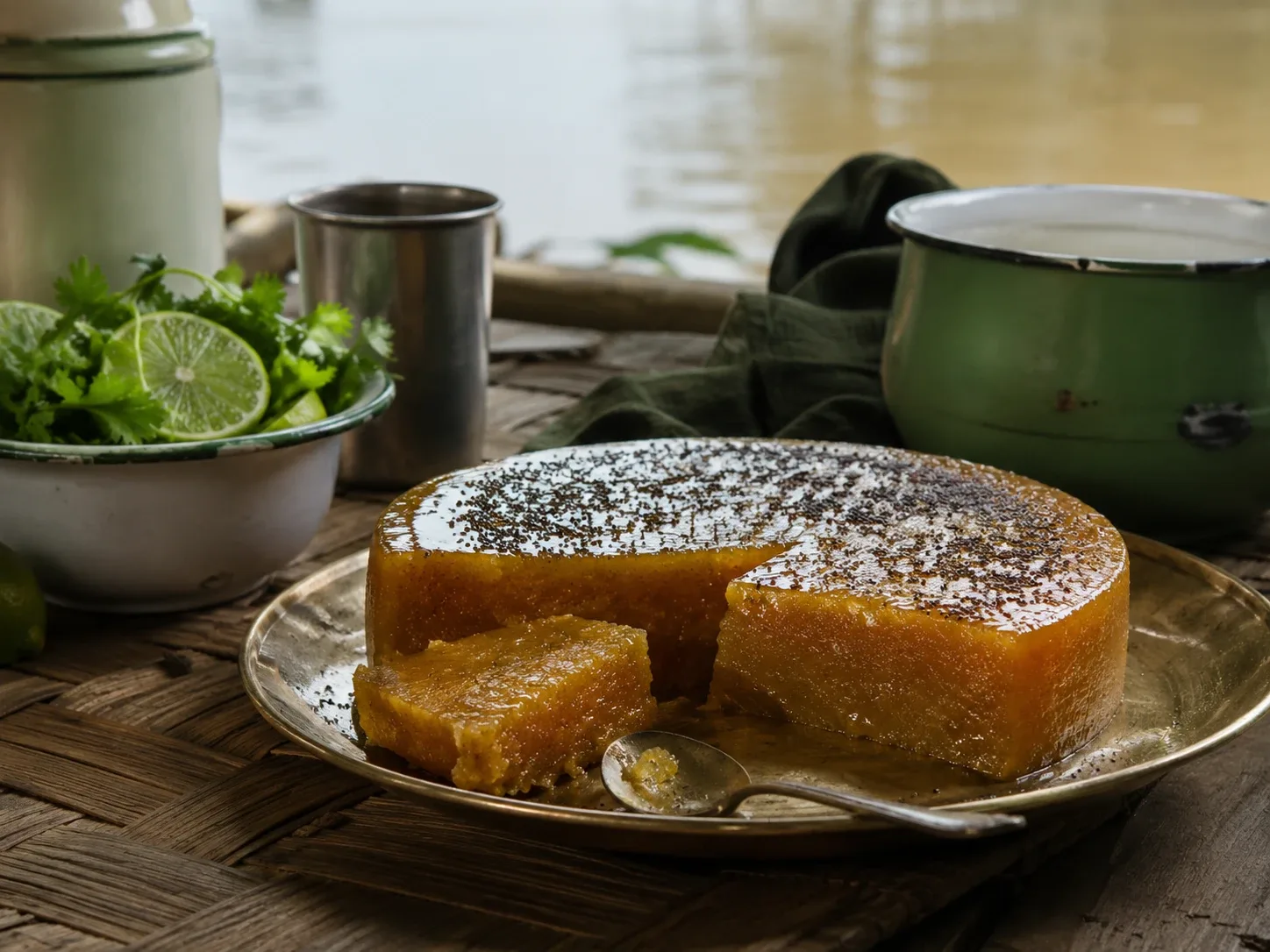
Pathein Halawa, the Delta's Gilded Sweetပုသိမ်ဟလဝါ
Pathein's famous glutinous-rice halawa — coconut milk, sugar, and ghee stirred patiently down to a dense, gleaming amber slab crowned with toasted poppy seeds.