Chin Yay Hin, the Rakhine Sour Soup
ချဉ်ရည်ဟင်း
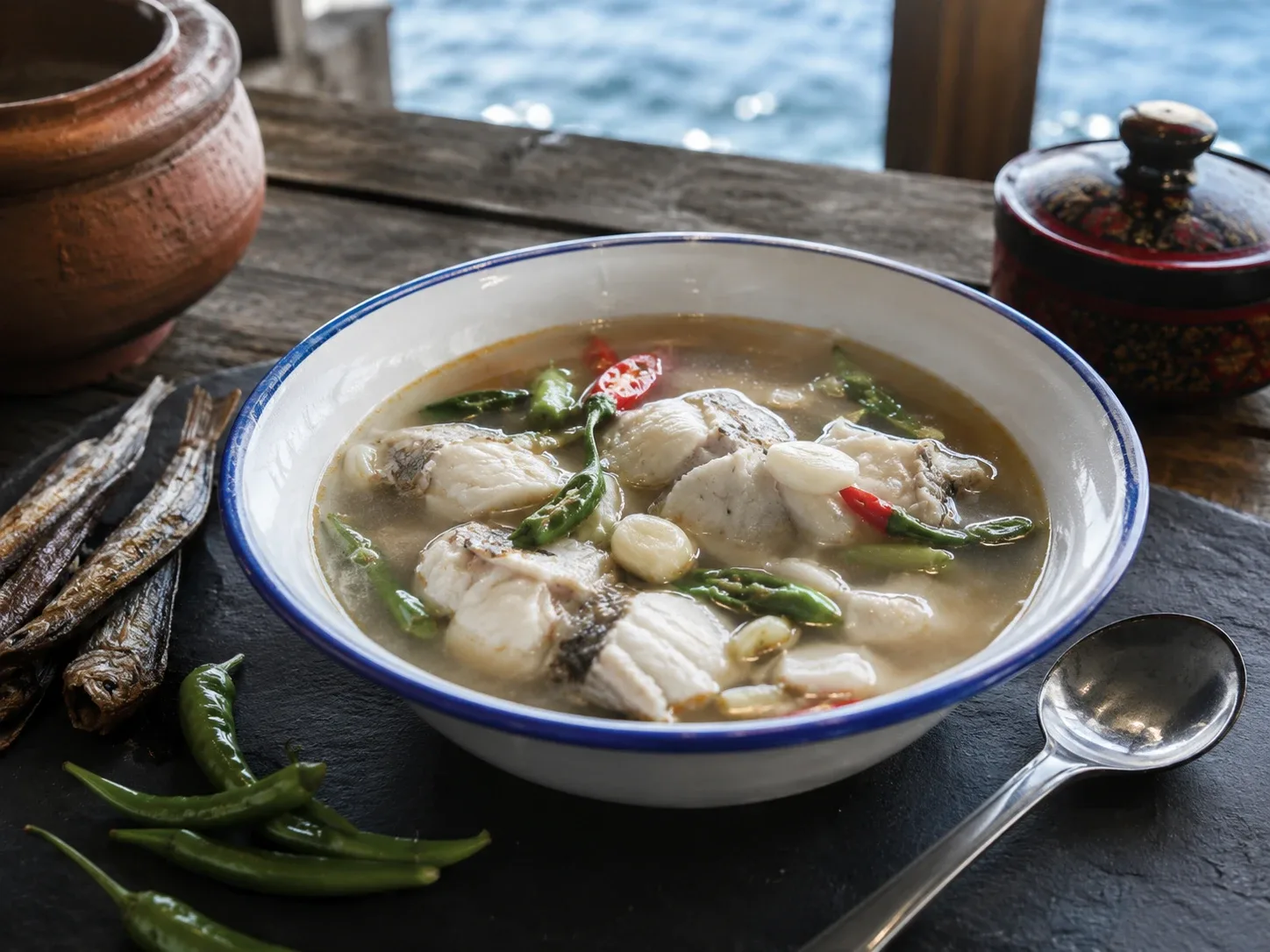
Rakhine's fierce, oil-free sour soup — flaky white fish in a tamarind broth with green chili and garlic, sharp enough to wake up a whole plate of rice.
By Burmese Cookbook Kitchen · June 22, 2026
ရခိုင် Rakhine CoastMrauk-U, 1429–1785
 ၅
၅- Prep
- 15 min
- Cook
- 25 min
- Serves
- 4
- Level
- Beginner
In a Burmese meal the soup is never a course. It sits in the middle of the table from the first handful of rice to the last — a shared bowl everyone dips a spoon into between bites of curry, the quiet counterweight to all that richness. Chin yay hin is what happens when Rakhine State takes that gentle idea and sharpens it to a point. The name means simply "sour-liquid soup," and the Rakhine version earns it: tamarind first, green chili close behind, sweet flakes of fish holding the middle, and — this startles cooks from everywhere else in Myanmar — no oil at all.
Rakhine cooking has been its own tradition since the Mrauk-U kingdom looked west across the Bay of Bengal, trading with Bengal and Arakan's coastal world while the rest of Burma looked inland. Its signatures are heat, sourness, fish, and an almost austere restraint with fat. Whether the courtiers of Mrauk-U ate this exact soup is not documented; that every Rakhine household eats it now is not in question, and the pride attached to it is fierce.
Two small things decide the pot. Strain the tamarind properly, because a gritty sour soup is a sad one. And poach the fish at a murmur, adding it last and never stirring — the chunks should arrive at the table whole and give way only to the spoon. Everything else is a ten-minute simmer and the nerve to keep the oil bottle shut.
There is no oil in this pot and none missing — clarity is chin yay hin's whole personality. If you catch yourself reaching for the oil bottle, you are making a different soup.
မီးဖိုချောင်စကား · A word from the kitchen
Ingredientsပါဝင်ပစ္စည်း
Serves 4
Tap to check off as you gather
For the sour broth
- tamarind — pulp from a block, soaked in 250 ml hot water
- firm white fish fillets — catfish, tilapia, or basa, cut into large chunks
- water
- garlic — lightly smashed, left whole
- green chilies — bruised — a Rakhine cook would double this without blinking
- small onion — quartered
- turmeric
- fish sauce
To finish
- roselle leaves — chin baung; sorrel is the honest stand-in, or young spinach with a squeeze of lime
- cilantro — roughly torn
- salt — or to taste
Methodချက်နည်း
Tap a numeral as you finish each step
Step 1: Make the tamarind water
Soak the tamarind pulp in the hot water for ten minutes, then mash it with a fork and strain, pressing hard to get every drop. Straining matters — seeds and fiber in the pot mean gritty spoonfuls later, and the whole point of this soup is a clean, sharp broth.
Step 2: Start the broth
Bring the water to a simmer with the garlic, onion, bruised chilies, turmeric, and fish sauce, and let it bubble gently for ten minutes. Notice what you are not doing — there is no frying, no oil, no paste. Rakhine soups are built by infusion, and the restraint is deliberate.
Step 3: Sour it
Pour in the tamarind water and simmer five minutes more, then taste. The sourness should land first and the chili should arrive just behind it. Too flat, add tamarind; too puckering, a splash of water — you are tuning an instrument, not following a dial.
Step 4: Poach the fish
Slide in the fish chunks and lower the heat to the barest simmer. Give them five to six minutes and resist stirring — the chunks should stay whole in the ladle and flake only on the spoon. A boil here turns good fish to ragged threads.
Step 5: Finish with the greens
Drop in the roselle leaves and let them wilt for a minute — they melt into the broth and add their own sour note on top of the tamarind. Taste for salt, scatter the cilantro off the heat, and bring the pot to the table to be ladled over rice all through the meal.
ခွက်ယောက် · The tools
Equipment
Heavy pot / Dutch oven
အိုးကြီးDeep and heat-retentive — for mohinga broth, long-simmered hin, and deep-frying without temperature crashes.
Shop on Amazon →Fine sieve / muslin
စစ်ခွက်For straining tamarind, pressing broth clear, and sifting flours — line it with muslin for the cleanest pour.
Shop on Amazon →
Equipment links are Amazon affiliate links. As an Amazon Associate we earn from qualifying purchases, at no cost to you. Disclosure.
ဟင်းစုံ · Set the table
A Burmese meal is a spread
A Burmese soup sits beside the rice, not on its own. Set the table with:
- Steamed riceထမင်းThe centre of the table — everything else is built around it.
- A curryဟင်းSlow-cooked until the oil returns — the richness the sides cut against.
- Toh sa yar & ngapi dipတို့စရာRaw and blanched vegetables with a pungent fish-paste dip — the fresh, bitter counterpoint.
- Balachaungဘလချောင်းThe crispy shrimp relish that lives on every Burmese table.
- Crispy fried shallotsကြက်သွန်ကြော်A spoonful of crunch and sweet shallot oil over anything.
Questions from the kitchen
What can I use instead of roselle leaves?
Sorrel is the closest match — it carries the same green sourness and melts the same way. Young spinach works for body if you add an extra squeeze of lime at the end. Or leave the greens out entirely and let the tamarind carry the soup alone; plenty of Rakhine kitchens do.
How sour is it supposed to be?
Assertively — this is not a subtle soup. Taste it against a spoonful of plain rice, which is how it will actually be eaten. If the soup tastes right on its own, it is probably too gentle; if it makes the rice sing, it is right.
Can I use tamarind concentrate instead of block pulp?
Yes — start with a tablespoon stirred straight into the broth. Concentrate is darker and flatter than fresh-soaked pulp, so add it gradually and brighten the finished pot with a squeeze of lime if it tastes muddy.
နောက်တစ်ခု · Cook next
Keep the wok hot
 ၅
၅Soups & Broths · 135 min · Beginner
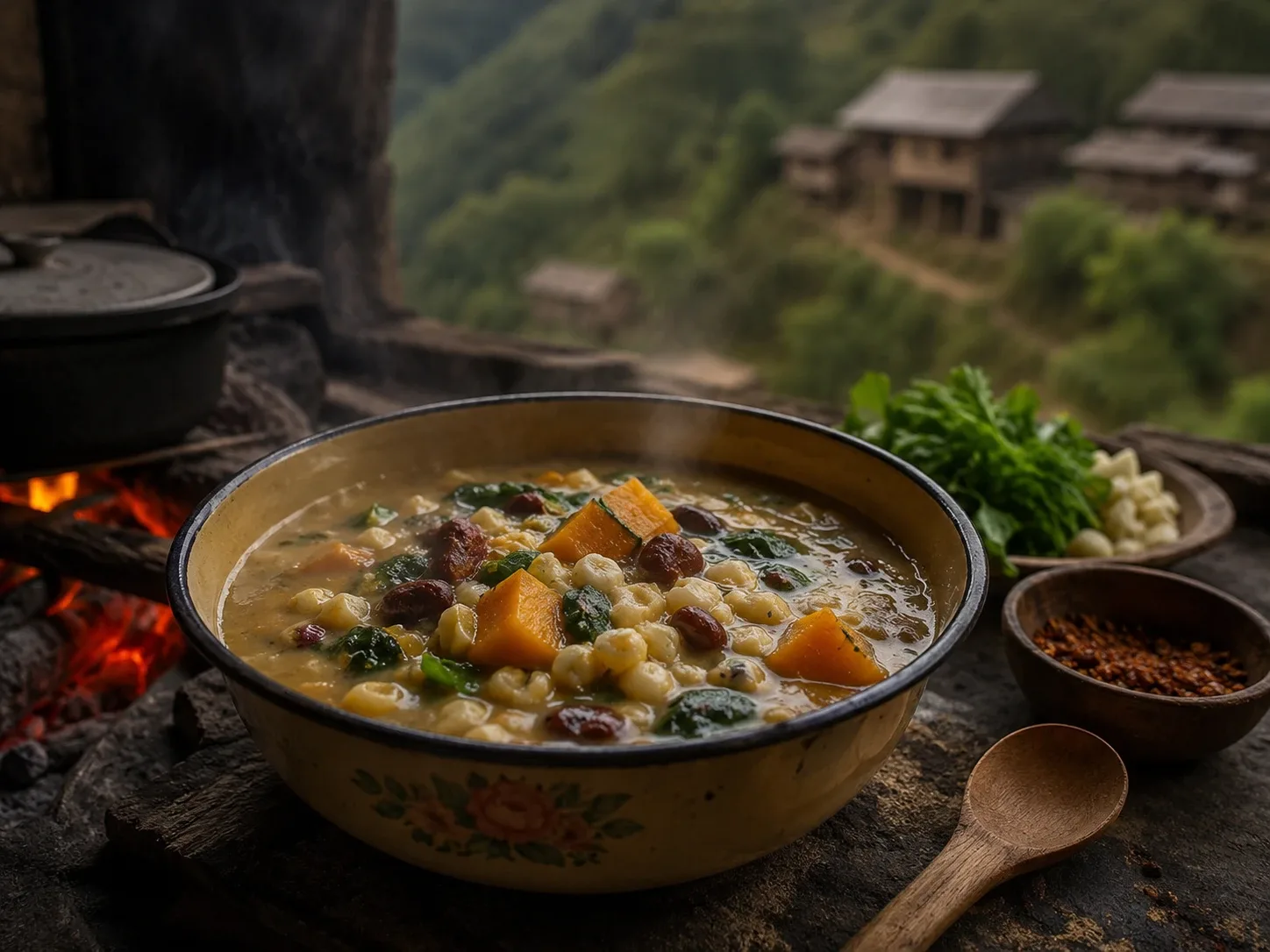
An Buti, the Meatless Corn Soup
Sabuti's meatless sibling from the Chin hills — hominy corn simmered with red beans, pumpkin, and greens until the pot thickens into gentle, vegetable plenty.
 ၅
၅Soups & Broths · 55 min · Intermediate
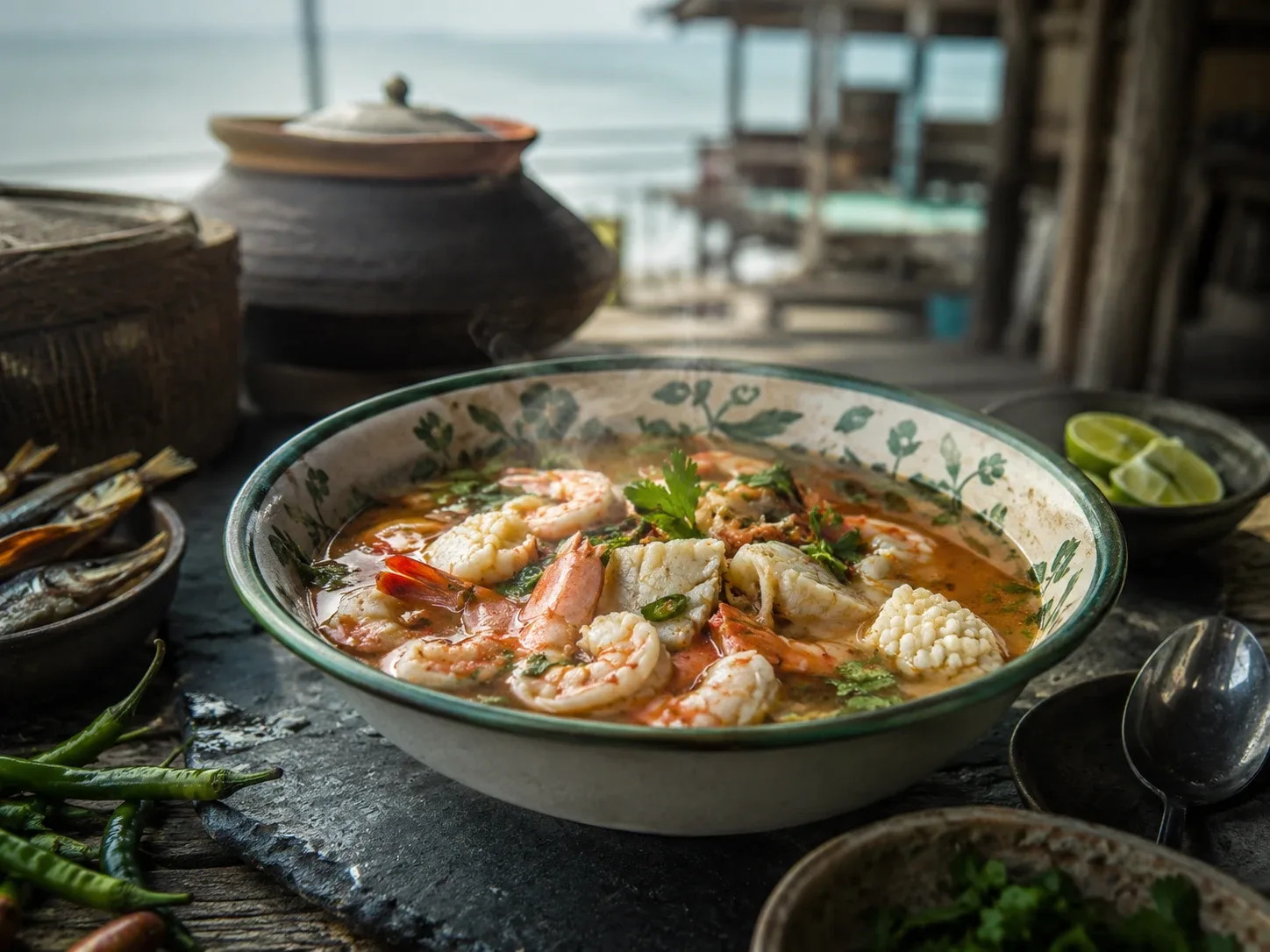
Ar Pu Shar Pu, the Burning-Mouth Bowl
Sittwe's famous hot-and-sour seafood soup — fish, prawns, and squid in a tamarind broth pounded through with green chilies, finished with lime and herbs.
 ၃
၃Curries · 100 min · Intermediate
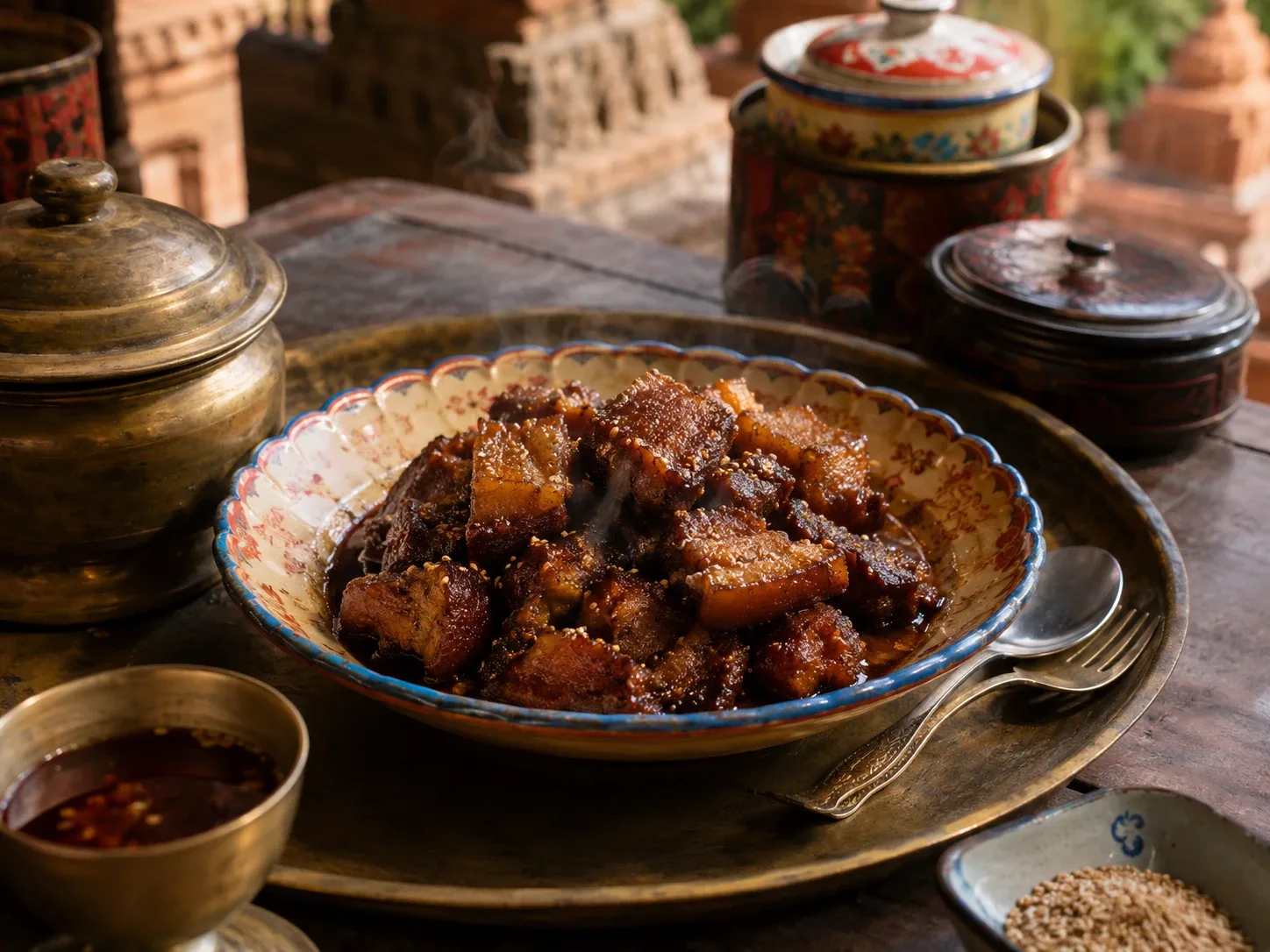
Wet Thar Pone Yay Gyi, Bagan Pork Curryပုန်းရည်ကြီးဝက်သား
Bagan's signature pork curry — pone yay gyi braised si pyan style until the oil returns, the sauce dark and sour with fermented horse-gram bean paste.