Balachaung, the Crispy Shrimp Relish
ဘာလချောင်
The crackling dried-shrimp and shallot relish of Rangoon tables — fried until it shatters, balanced with tamarind and ngapi, rescuer of plain rice.
By Burmese Cookbook Kitchen · June 3, 2026
ရန်ကုန် Yangon & Lower BurmaBritish Burma, 1826–1948
 ၁
၁- Prep
- 15 min
- Cook
- 25 min
- Serves
- 12
- Level
- Beginner
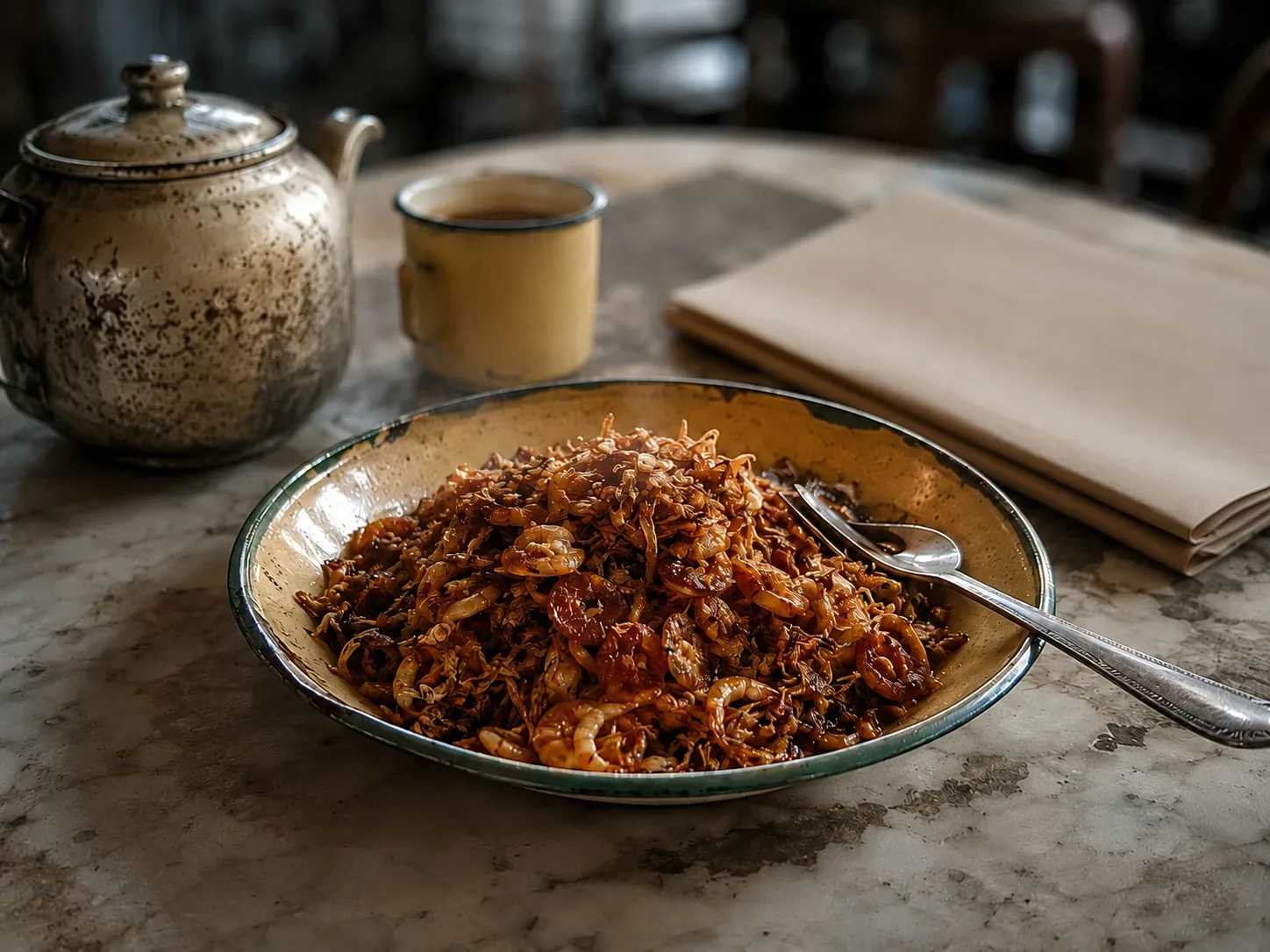
Balachaung is the jar that explains Burmese eating to outsiders faster than any essay: dried shrimp, shallots, and garlic fried to a crisp russet tangle, seasoned with ngapi — fermented shrimp paste — and pulled back from the edge by tamarind. It is salty, sour, hot, faintly sweet, and above all crunchy, and a single spoonful can turn a bowl of plain rice into dinner.
The name is a borrowing — from the Bengali-Muslim balachao that arrived in Rangoon's crowded port during the colonial era — and the dish as Burma knows it grew up in that mixed city, in Anglo-Burmese and Indian-Burmese kitchens that prized condiments sturdy enough to travel in a tiffin carrier or a steamer trunk. Expatriate memoirs of old Rangoon mention balachaung the way they mention the heat: constantly. Today it is simply Burmese, the standard answer to what should I bring back from Yangon.
Success is a matter of dryness. The shrimp must be pounded to a floss and fried until the sizzle — the sound of water leaving — goes quiet, and the ngapi must be fried in the oil until it smells toasty rather than raw. Cool it completely before it touches a jar. Do that and balachaung keeps for a month at room temperature, getting no worse and somehow, like most things in this chapter, making everything around it better.
Balachaung should rustle when you spoon it. If yours is damp the day after frying, the shrimp floss went into the oil too coarse or came out too soon — fry it until the sizzle goes quiet.
မီးဖိုချောင်စကား · A word from the kitchen
Ingredientsပါဝင်ပစ္စည်း
Serves 12
Tap to check off as you gather
For the crisp fry
- dried shrimp — the small orange kind — pounded or pulsed to a rough floss
- shallots — sliced into thin, even rings
- garlic — sliced thin as coins
- peanut oil
- turmeric
For the seasoning
- ngapi (shrimp paste) — or 2 tsp extra fish sauce for a milder jar
- tamarind — pulp, soaked in 3 tbsp hot water and pressed through a sieve
- dried chili flakes — adjust freely — Rangoon jars run from polite to punishing
- palm sugar (jaggery) — optional; it rounds the tamarind's edge
Methodချက်နည်း
Tap a numeral as you finish each step
Step 1: Make the shrimp floss
Pound the dried shrimp in a mortar, or pulse in a food processor, until they break into a light, fluffy floss — airy shreds, not powder. Coarse chunks stay chewy no matter how long they fry; powder burns. The floss is what gives balachaung its signature shatter.
Step 2: Fry the shallots, then the garlic
Heat the oil with the turmeric in a wok over medium heat. Fry the shallot rings until pale gold, lift them out onto paper, then fry the garlic coins until barely golden and lift them out too. They fry separately because they finish at different speeds, and both keep darkening out of the oil.
Step 3: Fry the shrimp floss
Add the shrimp floss to the same oil with the chili flakes and fry, stirring constantly, until the loud sizzle fades to a whisper and the floss turns a deep russet — 6 to 8 minutes. That quieting means the moisture is gone, and dryness is what keeps the jar crisp for weeks.
Step 4: Season the pan
Push the floss to one side, drop the ngapi into the oil, and mash it for thirty seconds until it smells toasty rather than raw. Add the tamarind water and palm sugar and stir everything together — the pan will hiss and tighten as the liquid cooks off. Fry until the mixture is dry again and the oil re-emerges at the edges.
Step 5: Recombine and cool completely
Off the heat, crumble the fried shallots and garlic back in and toss well. Spread the balachaung on a tray to cool completely — jarring it warm traps steam and ruins the crunch. It keeps in an airtight jar at room temperature for a month, and it never lasts that long.
ခွက်ယောက် · The tools
Equipment
Carbon-steel wok
ဒယ်အိုးThe dai-oh — for si pyan curries, fritters, and every fried-noodle dish here. Carbon steel, seasoned dark, nothing fancy.
Shop on Amazon →Rice cooker
ထမင်းအိုးConsistent long-grain rice with zero attention — and in a Burmese kitchen the rice is never optional.
Shop on Amazon →Stone mortar & pestle
ဆုံFor garlic-ginger paste, pounded dried shrimp fluff, and crushed peanuts — the blender lies about texture; the stone doesn’t.
Shop on Amazon →Fine sieve / muslin
စစ်ခွက်For straining tamarind, pressing broth clear, and sifting flours — line it with muslin for the cleanest pour.
Shop on Amazon →
Equipment links are Amazon affiliate links. As an Amazon Associate we earn from qualifying purchases, at no cost to you. Disclosure.
ဟင်းစုံ · Set the table
A Burmese meal is a spread
The quiet base of the meal — build the rest of the spread around it:
- A curryဟင်းSlow-cooked until the oil returns — the richness the sides cut against.
- A light soupဟင်းချိုThe clear, sour broth sipped between mouthfuls of rice.
- Toh sa yar & ngapi dipတို့စရာRaw and blanched vegetables with a pungent fish-paste dip — the fresh, bitter counterpoint.
- A hand-tossed thokeအသုပ်A bright, sour salad to lift the whole spread.
- Si chet, chili oilဆီချက်The fragrant red oil every household keeps by the stove.
Questions from the kitchen
What do I actually eat this with?
Plain hot rice, first and forever — a spoonful of balachaung and a wedge of cucumber is a legitimate Burmese meal. Beyond that, it goes over fried rice, into sandwiches, alongside coconut noodles, and onto sliced tomatoes. It is the jar that rescues every underwhelming plate.
My balachaung tastes harsh and fishy. What went wrong?
Raw ngapi. The paste must hit the hot oil directly and fry until its smell turns from sharp to toasty — stirred in at the end, it stays aggressive. The tamarind matters too; without its sourness the shrimp and ngapi have nothing pulling against them.
Can I make it without ngapi?
You can, and some Anglo-Burmese versions always did — use an extra couple of teaspoons of fish sauce, added with the tamarind. The jar loses some low-end depth but keeps its crunch and its sour-hot balance. Vegetarian versions swap fried soybean flakes for the shrimp entirely, which is a different, likeable thing.
နောက်တစ်ခု · Cook next
Keep the wok hot
 ၁
၁Rice & Foundations · 30 min · Beginner
Si Chet, Burmese Chili Oilဆီချက်
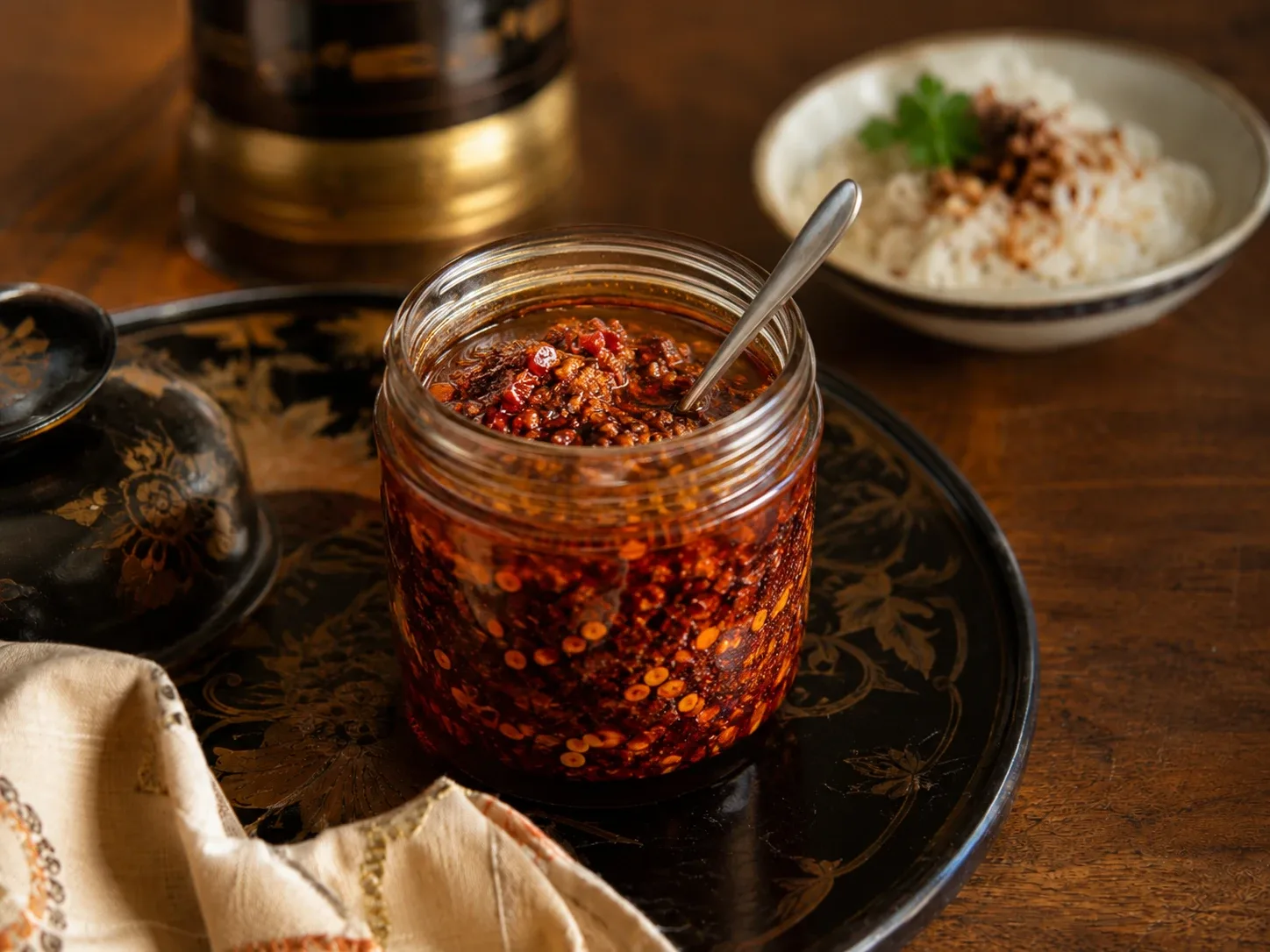
The essential Burmese table oil — peanut oil gently fried with chili flakes, garlic, shallot, and a little ngapi, then spooned red over rice, noodles, and salads.
 ၁
၁Rice & Foundations · 40 min · Beginner
Toh Sa Yar, the Vegetable & Ngapi Platterတို့စရာ
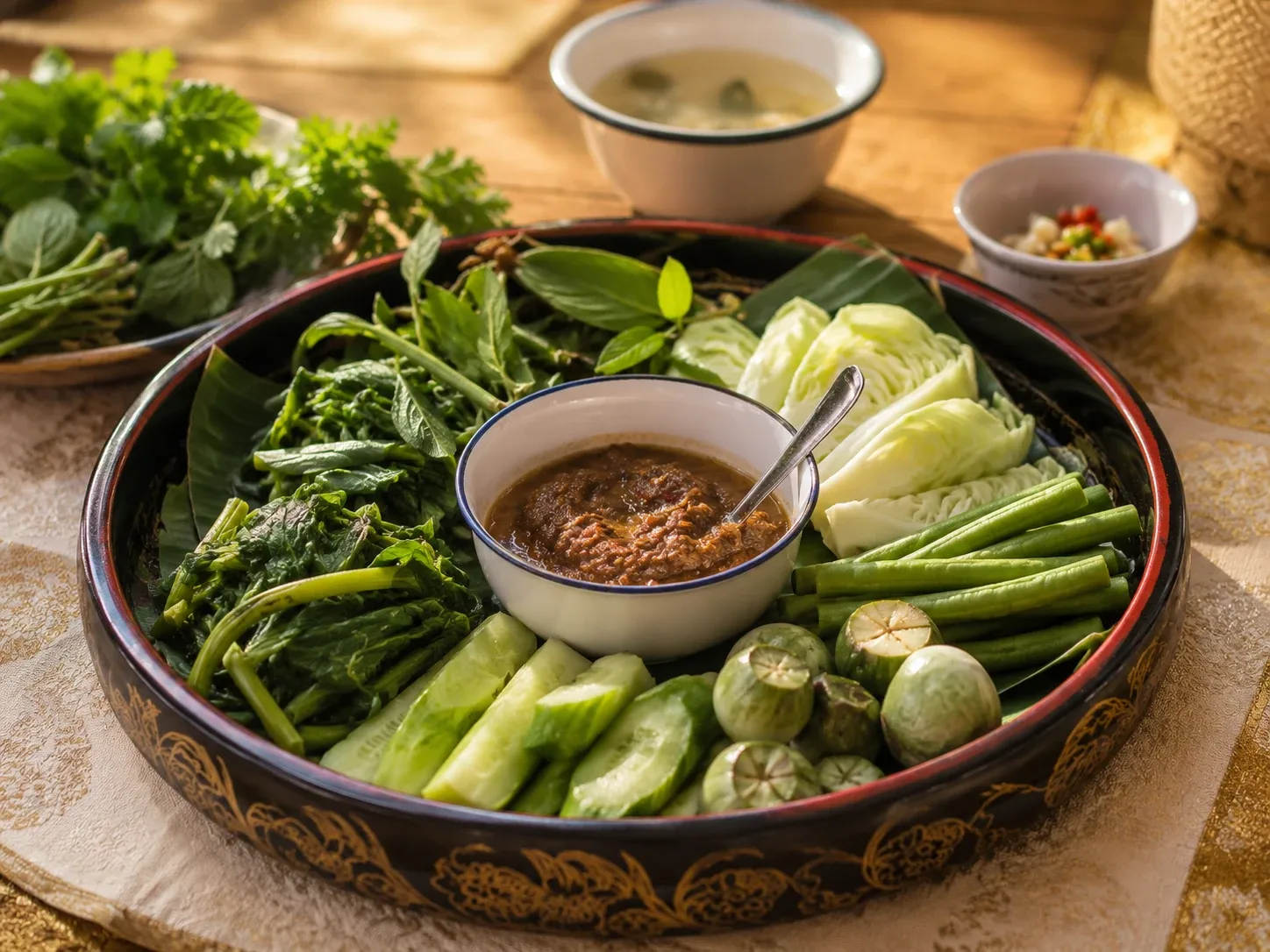
The platter of raw and blanched vegetables around a pungent ngapi dip that no Burmese meal is complete without — the fresh, bitter counterpoint to curry.
 ၇
၇Sweets & Mont · 105 min · Intermediate
Pathein Halawa, the Delta's Gilded Sweetပုသိမ်ဟလဝါ
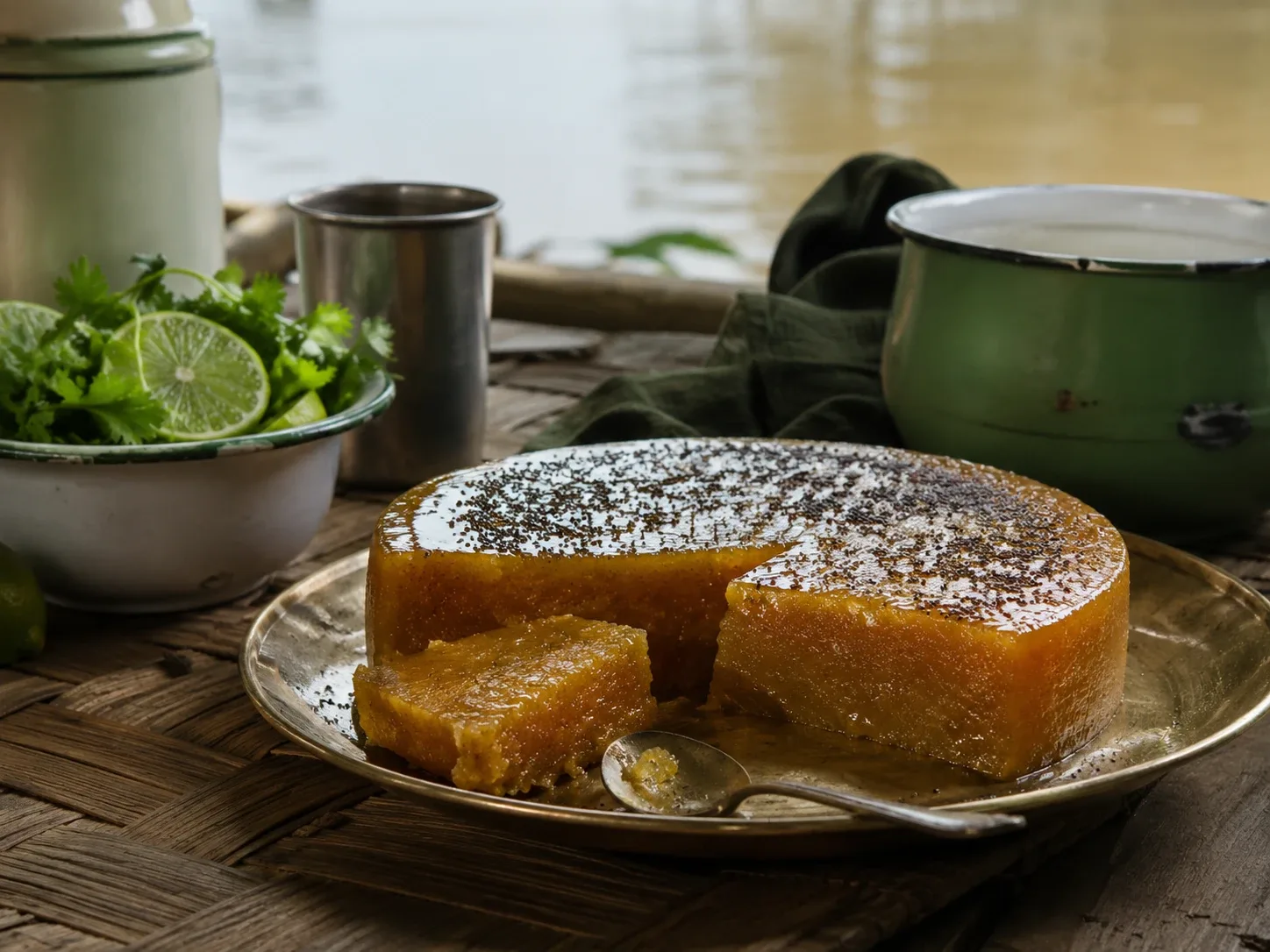
Pathein's famous glutinous-rice halawa — coconut milk, sugar, and ghee stirred patiently down to a dense, gleaming amber slab crowned with toasted poppy seeds.