Rakhine Ngapi Thoke, the Pounded Fire
ငါးပိသုပ်
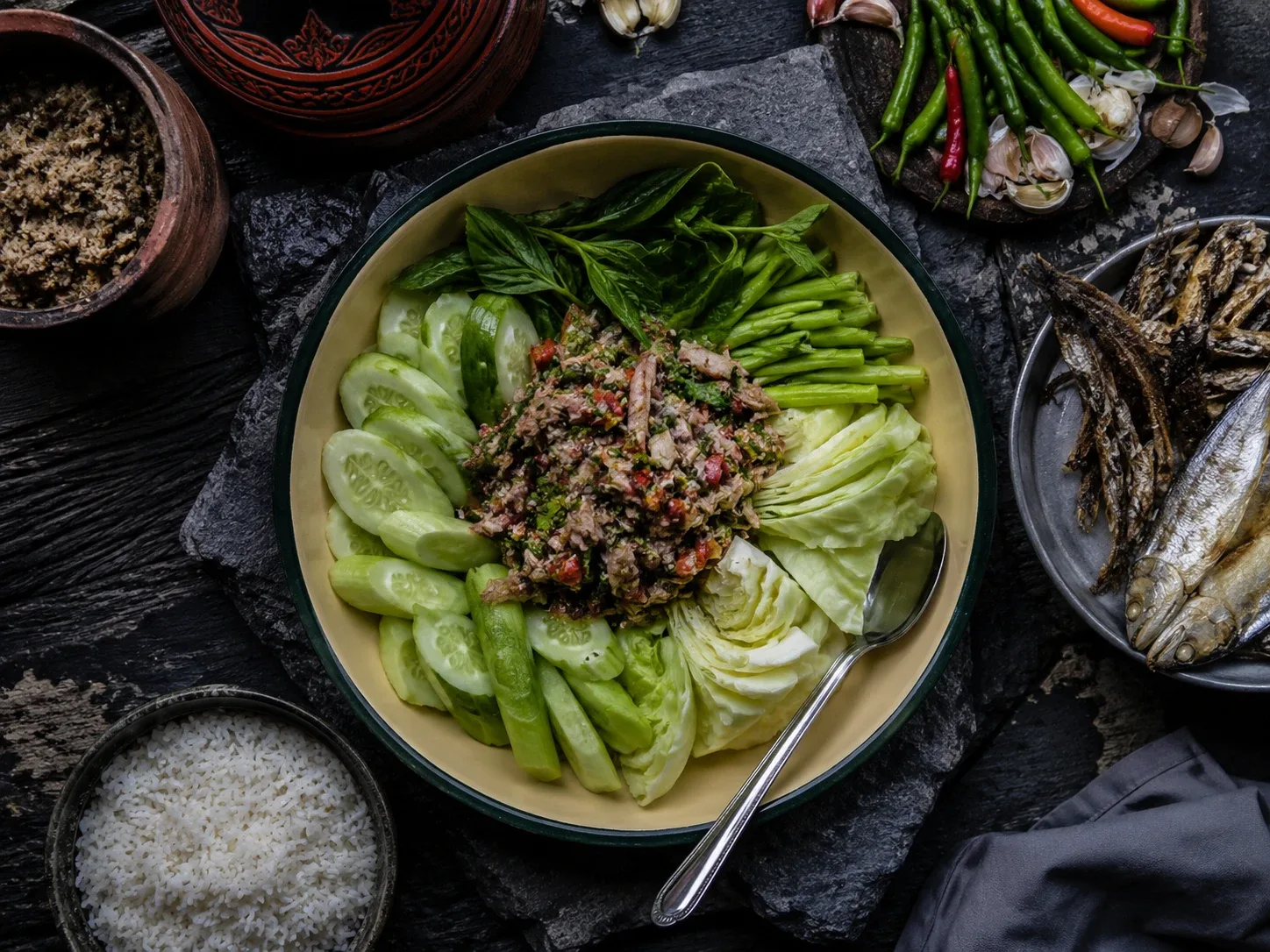
Rakhine's roasted fish-paste salad — marine ngapi pounded with green chili, garlic, and lime, served the western-coast way with crisp vegetables and rice.
By Burmese Cookbook Kitchen · July 9, 2026
ရခိုင် Rakhine CoastMrauk-U, 1429–1785
 ၄
၄- Prep
- 15 min
- Cook
- 10 min
- Serves
- 4
- Level
- Beginner
Every Burmese region has its ngapi, but Rakhine State treats fish paste less like a seasoning and more like a birthright. The Arakanese were a seafaring people, and their ngapi shows it — made from marine fish rather than the freshwater catch of the delta, and famously with little or no salt, because the fish itself was never in short supply. When European visitors reached the island capital of Mrauk-U in its seventeenth-century heyday, they described a kingdom fed on rice and fish in all its preserved forms; the paste at the center of this salad belongs to that old economy, even if the tidy recipe before you was only written down in living memory.
Ngapi thoke — thoke meaning a hand-mixed salad — is the paste's most direct appearance at the table. The ngapi is roasted until its edges catch, pounded with charred garlic and a frankly intimidating number of green chilies, sharpened with lime, and served surrounded by cool vegetables and a mountain of rice. Notice what is missing: oil. Where a Yangon table might soften the blow with peanut oil, Rakhine cooking keeps things lean and lets sourness and heat carry the dish — locals will tell you, a little wryly, that their food is the hottest in Myanmar and the healthiest, in that order.
Two techniques matter. Roast the ngapi properly, until it smells toasty rather than swampy. And keep the pounding coarse — this is a salad with a paste's soul, not a purée.
Roast the ngapi until its edges darken and the whole kitchen knows about it — under-roasted paste tastes muddy, roasted paste tastes like the sea concentrated.
မီးဖိုချောင်စကား · A word from the kitchen
Ingredientsပါဝင်ပစ္စည်း
Serves 4
Tap to check off as you gather
For the thoke
- ngapi (shrimp paste) — Rakhine marine-fish ngapi if you can find it — it is barely salted, so taste before seasoning
- green bird's eye chilies — this is the Rakhine dose; halve it and no one will tell
- large green chilies — charred in a dry pan until blistered
- garlic
- shallots — sliced into fine rings
- limes — juiced — Rakhine cooks reach for lime where others reach for oil
- dried shrimp — optional, pounded to floss for body
- palm sugar (jaggery) — optional — a corrective, not a flavor
To serve
- cucumber — cut into thick batons
- okra — blanched whole for 2 minutes
- long beans — or green beans, blanched and cut into finger lengths
- cabbage — cut into raw wedges
- jasmine rice — cooked — this salad exists to move rice
Methodချက်နည်း
Tap a numeral as you finish each step
Step 1: Roast the ngapi
Flatten the ngapi into a 1 cm disc, wrap it in foil or a banana leaf, and set it in a dry pan over medium heat for 4 to 5 minutes a side, until the edges darken and it smells toasty rather than raw. Roasting is not optional — raw ngapi is a pantry ingredient, roasted ngapi is food.
Step 2: Char the chilies and garlic
In the same dry pan, blister the large green chilies and the unpeeled garlic cloves, turning, until softened and scorched in patches — about 5 minutes. Charring mellows the garlic and gives the chilies a smoky sweetness that stands up to the paste. Peel the garlic once cool.
Step 3: Pound the base
In a mortar, pound the bird's eye chilies with the charred garlic to a rough paste. Add the roasted ngapi and the dried shrimp if using, and pound until everything is one dark, fragrant mass. Keep it coarse — Rakhine thoke has texture; a smooth purée is a different, lesser thing.
Step 4: Season with lime, not oil
Tear the charred large chilies into strips and fold them in with the shallot rings, lime juice, and the palm sugar if the paste tastes harsh. Taste on a piece of cucumber. It should hit salty, hot, and sour in that order, with no oil to soften the landing — that leanness is the Rakhine signature.
Step 5: Serve as the table's engine
Mound the thoke in a small bowl at the center of the table with the vegetables around it and rice alongside. Everyone drags, dips, and mixes into their own rice. A little goes a very long way — that is the whole economy of ngapi.
ခွက်ယောက် · The tools
Equipment
Stone mortar & pestle
ဆုံFor garlic-ginger paste, pounded dried shrimp fluff, and crushed peanuts — the blender lies about texture; the stone doesn’t.
Shop on Amazon →
Equipment links are Amazon affiliate links. As an Amazon Associate we earn from qualifying purchases, at no cost to you. Disclosure.
ဟင်းစုံ · Set the table
A Burmese meal is a spread
A thoke is part of a spread as often as it is a light meal on its own:
- Steamed riceထမင်းThe centre of the table — everything else is built around it.
- A curryဟင်းSlow-cooked until the oil returns — the richness the sides cut against.
- Balachaungဘလချောင်းThe crispy shrimp relish that lives on every Burmese table.
- Crispy fried shallotsကြက်သွန်ကြော်A spoonful of crunch and sweet shallot oil over anything.
- Toh sa yar & ngapi dipတို့စရာRaw and blanched vegetables with a pungent fish-paste dip — the fresh, bitter counterpoint.
Questions from the kitchen
What makes Rakhine ngapi different from the ngapi I already have?
Rakhine ngapi is made from marine fish and carries very little salt — sometimes none — so its flavor is more fish than brine. Standard shrimp ngapi works well here; just add any salt at the end, cautiously, because most jarred pastes bring plenty of their own.
This sounds ferociously hot. Can I tame it?
Yes, honestly and without shame. Use two bird's eye chilies instead of four, or lean on the charred large chilies alone — they give flavor and smoke with a fraction of the fire. The dish survives; only the bragging rights suffer.
How long does it keep?
The pounded paste keeps three or four days covered in the fridge and some say it improves by the second. Add the shallots and lime only on the day you serve — shallots go sulfurous and lime goes flat overnight.
နောက်တစ်ခု · Cook next
Keep the wok hot
 ၄
၄Salads & Thoke · 30 min · Beginner
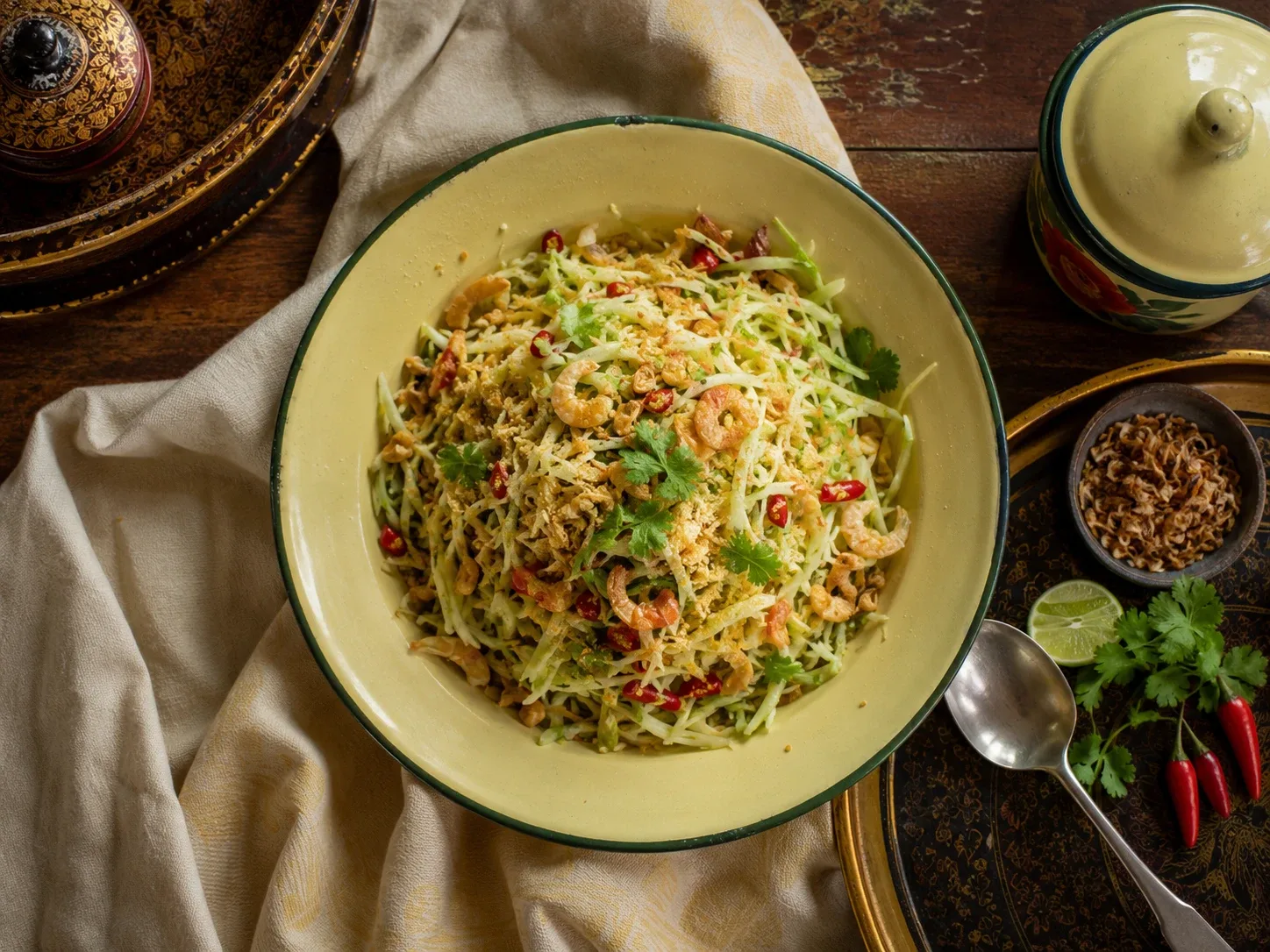
Thayet Thi Thanat, Green Mango Pickle-Saladသရက်သီးသနပ်
Tart, crunchy green-mango shreds dressed with fried garlic oil, chili, dried shrimp, and toasted chickpea flour — the sour thanat that cuts a heavy Burmese meal.
 ၄
၄Salads & Thoke · 20 min · Beginner
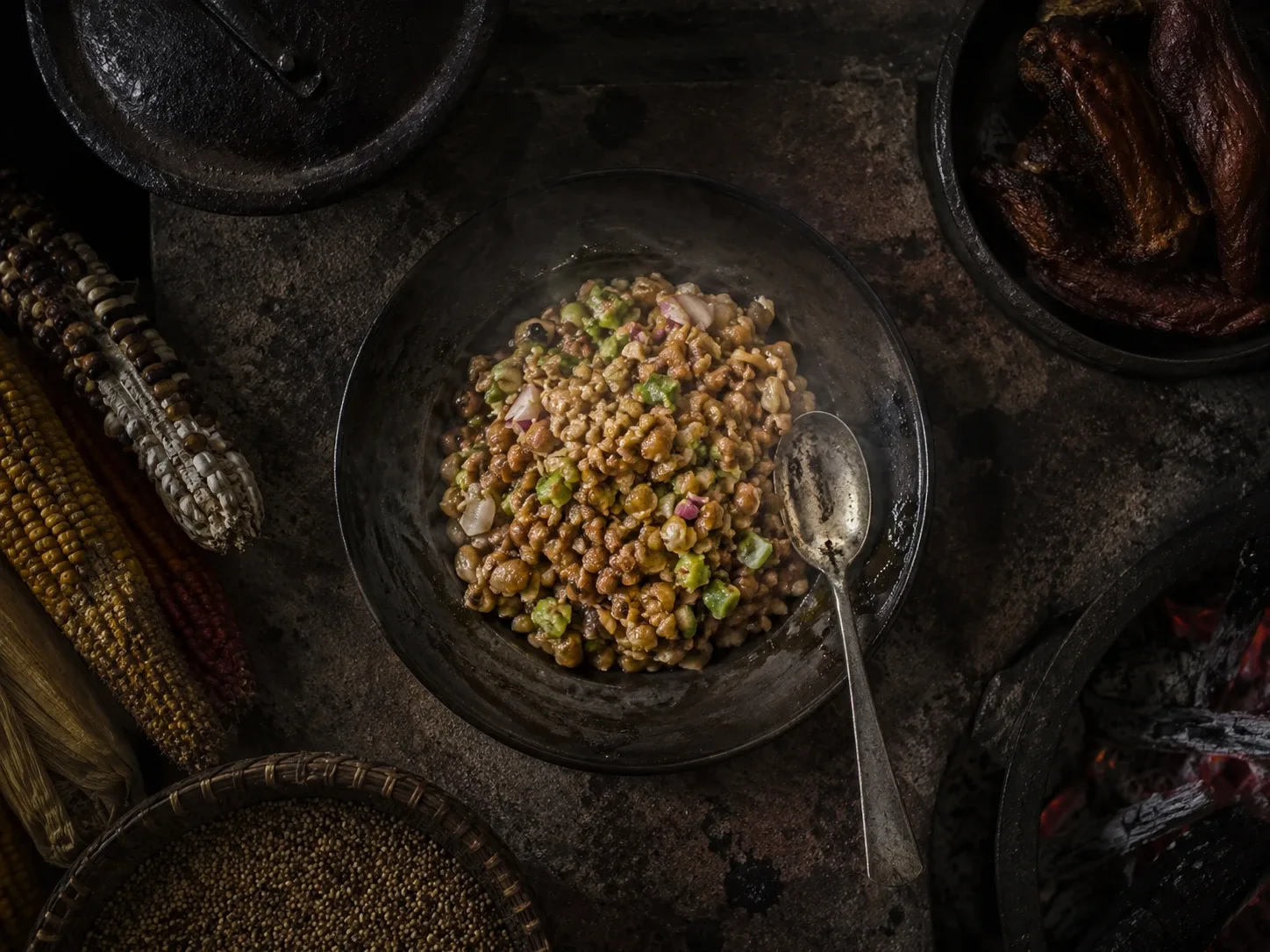
Bekang Rawt, Fermented Soybean Salad
Fermented soybeans pounded with shallots, green chili, and salt — the Chin hills' pungent everyday salad, a mountain cousin of natto, eaten with hot rice.
 ၇
၇Sweets & Mont · 25 min · Beginner
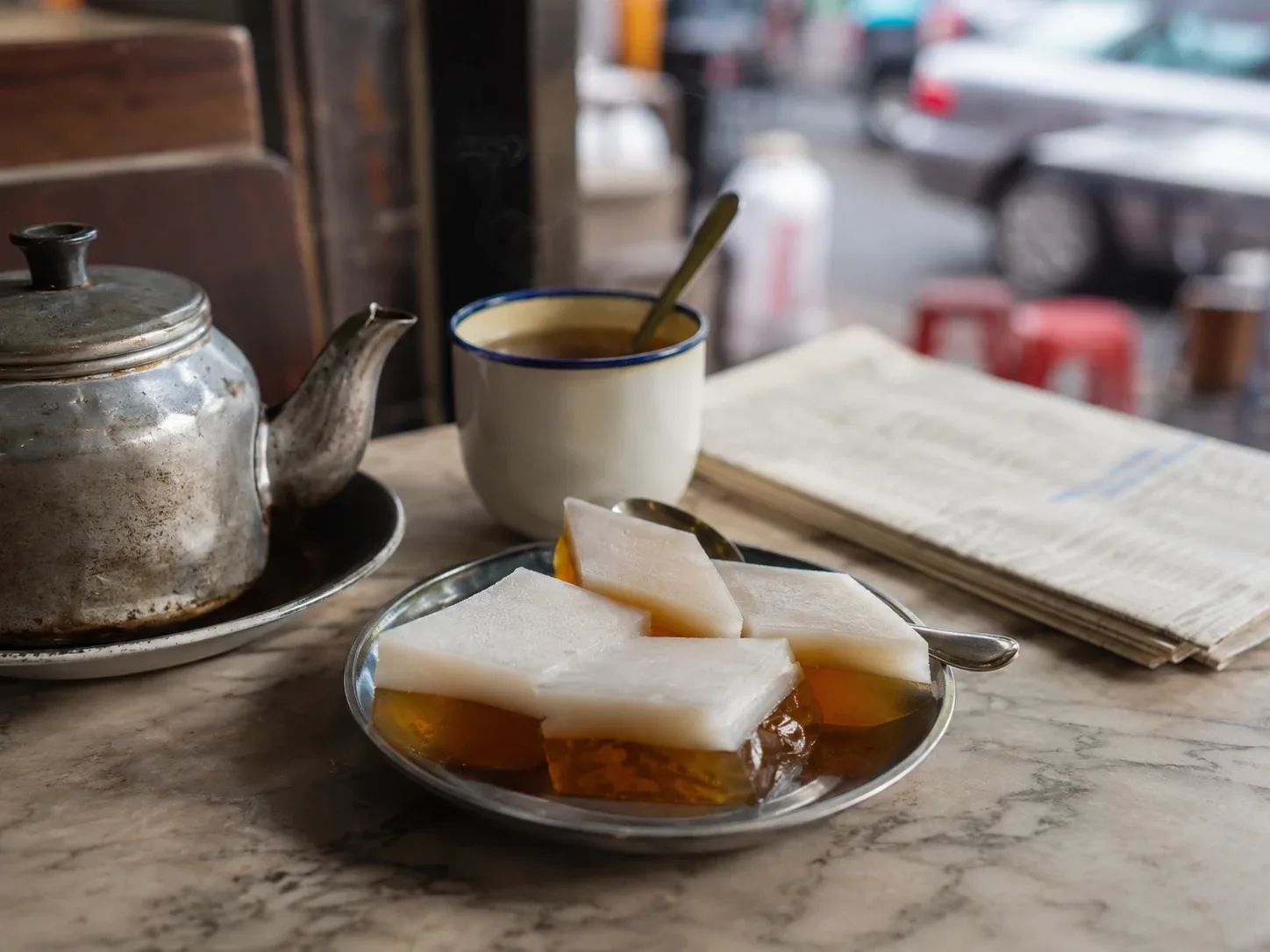
Kyauk Kyaw, Two-Layer Coconut Jellyကျောက်ကျော
Myanmar's two-layer agar jelly, done the Yangon way — coconut cream rises as it sets over a clear amber base, then the slab is cut into cool diamonds.