Si Chet, Burmese Chili Oil
ဆီချက်
The essential Burmese table oil — peanut oil gently fried with chili flakes, garlic, shallot, and a little ngapi, then spooned red over rice, noodles, and salads.
By Burmese Cookbook Kitchen · July 10, 2026
 ၁
၁- Prep
- 10 min
- Cook
- 20 min
- Serves
- 24
- Level
- Beginner
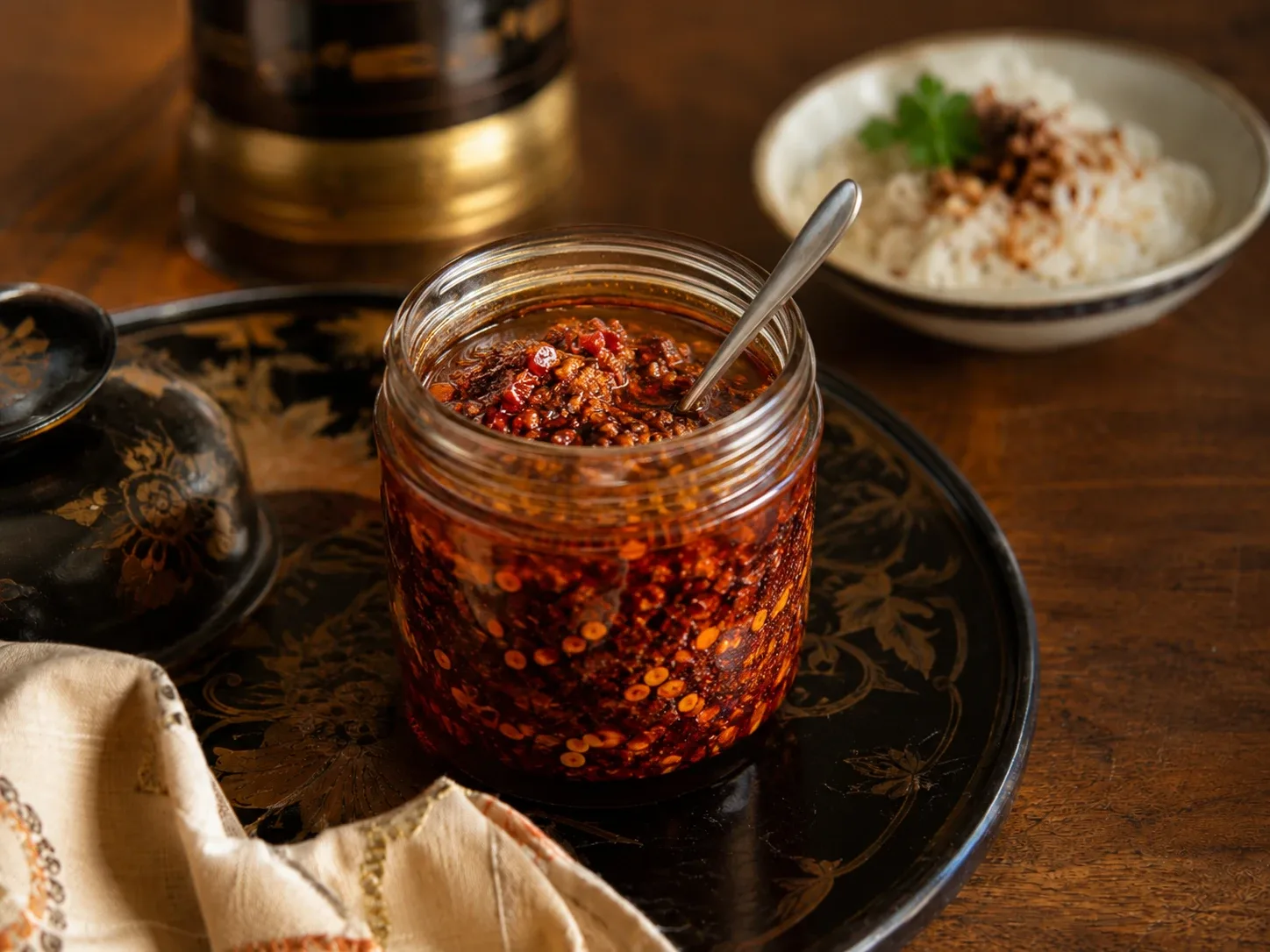
Open any Burmese kitchen cupboard and somewhere near the rice pot sits a jar of si chet: peanut oil gently fried with pounded garlic and shallot, a little ngapi or dried shrimp, and a bloom of chili flakes and paprika that stains it a deep, glowing red. It is the table condiment, the thing you reach for when a bowl of rice or a plate of noodles needs one more note — a spoonful of it, oil and crisp sediment together, and the meal is whole.
The name simply means "cooked oil," and the whole craft is in the cooking. This is not a hot-oil-poured-over-chili shortcut; it is a slow fry that starts with the aromatics in cold oil and brings them up gently, coaxing the garlic and shallot to gold without a hint of scorch. Burnt aromatics turn the entire jar bitter, and there is no rescuing it — which is why every experienced cook keeps the heat low and their patience high. Only the chili and paprika go in off the heat, where they give color and fragrance instead of acridity.
There is no grand origin story here, and it would be dishonest to invent one: si chet is simply the everyday chili oil of Burmese home cooking, as ordinary and as essential as salt. Make a jar, keep it by the stove, and you will understand within a week why no one here would be without it.
Low and slow is the whole secret. If the garlic browns before the shallot softens, the oil is too hot — pull the pot off the heat, let it settle, and go again. Burnt aromatics turn the whole jar bitter.
မီးဖိုချောင်စကား · A word from the kitchen
Ingredientsပါဝင်ပစ္စည်း
Serves 24
Tap to check off as you gather
For the aromatic oil
- peanut oil — or any neutral oil; peanut carries the flavor best
- garlic — pounded to a rough paste, not minced
- shallots — pounded with the garlic
- ngapi (shrimp paste) — or 2 tbsp dried shrimp, pounded, for a cleaner jar
- turmeric
For color and heat
- dried chili flakes — Burmese or Kashmiri; adjust to your heat tolerance
- paprika — for color without extra heat — this is what makes the oil glow red
- salt
Methodချက်နည်း
Tap a numeral as you finish each step
Step 1: Pound the aromatics
Pound the garlic and shallots together to a rough, wet paste. Pounding rather than mincing releases more of their oils and gives fried bits with real texture, which is half the pleasure of a good si chet.
Step 2: Measure the chili and paprika
Put the chili flakes, paprika, and salt in a heatproof bowl and set it by the stove. You want them ready to receive the hot oil the moment it comes off the heat — this is where the color blooms, and it happens fast.
Step 3: Warm the oil low and slow
Pour the oil into a small pot and add the aromatic paste and turmeric while the oil is still cool. Bring it up slowly over low heat, stirring often. Starting cold and rising gently is what lets the garlic and shallot cook through and crisp without scorching — the whole jar lives or dies on this restraint.
Step 4: Fry to gold, then add the ngapi
Keep frying gently until the garlic and shallot turn an even pale gold and the bubbling slows — 12 to 15 minutes. Stir in the ngapi and let it fry in the oil for two minutes, mashing it smooth, until it smells toasty rather than raw. Pull the pot off the heat the moment the aromatics reach deep gold; they carry on cooking in the hot oil.
Step 5: Bloom the chili off the heat
Let the oil cool for one minute, then pour it — aromatics and all — over the waiting chili flakes and paprika. It will sizzle and bloom into a deep red. Adding chili off the direct heat coaxes out color and fragrance without the acrid burn of chili hitting a screaming-hot pan.
Step 6: Cool and jar
Stir, taste for salt, and let it cool completely before spooning into a clean dry jar. It keeps a month at room temperature and longer in the fridge, where the oil firms and the sediment settles — stir before each use and spoon it over everything.
ခွက်ယောက် · The tools
Equipment
Small saucepan
အိုးငယ်For toasting besan, blooming chili oil, palm-sugar syrups, and the teahouse’s twice-pulled tea.
Shop on Amazon →Rice cooker
ထမင်းအိုးConsistent long-grain rice with zero attention — and in a Burmese kitchen the rice is never optional.
Shop on Amazon →Stone mortar & pestle
ဆုံFor garlic-ginger paste, pounded dried shrimp fluff, and crushed peanuts — the blender lies about texture; the stone doesn’t.
Shop on Amazon →
Equipment links are Amazon affiliate links. As an Amazon Associate we earn from qualifying purchases, at no cost to you. Disclosure.
ဟင်းစုံ · Set the table
A Burmese meal is a spread
The quiet base of the meal — build the rest of the spread around it:
- A curryဟင်းSlow-cooked until the oil returns — the richness the sides cut against.
- A light soupဟင်းချိုThe clear, sour broth sipped between mouthfuls of rice.
- Toh sa yar & ngapi dipတို့စရာRaw and blanched vegetables with a pungent fish-paste dip — the fresh, bitter counterpoint.
- A hand-tossed thokeအသုပ်A bright, sour salad to lift the whole spread.
Questions from the kitchen
What do I put si chet on?
Nearly everything. A spoonful stirred into a bowl of rice, over mohinga and other noodle soups, into laphet thoke and other salads, alongside fried fish. Every Burmese household keeps a jar within arm's reach of the rice pot; it is the quiet fix for anything that tastes a little flat.
Can I leave out the ngapi?
Yes — use the pounded dried shrimp instead, or omit both for a fully vegetarian jar. Without any seafood the oil loses its savory low end and becomes simply a fragrant chili-garlic oil, still excellent, just less distinctly Burmese.
Why did my oil turn bitter?
The aromatics browned too far, or the chili scorched. Garlic and shallot should stop at pale-to-deep gold, never brown, and the chili should meet oil that has cooled off the flame for a minute. Bitterness cannot be fixed after the fact — next time, lower and slower.
နောက်တစ်ခု · Cook next
Keep the wok hot
 ၁
၁Rice & Foundations · 40 min · Beginner
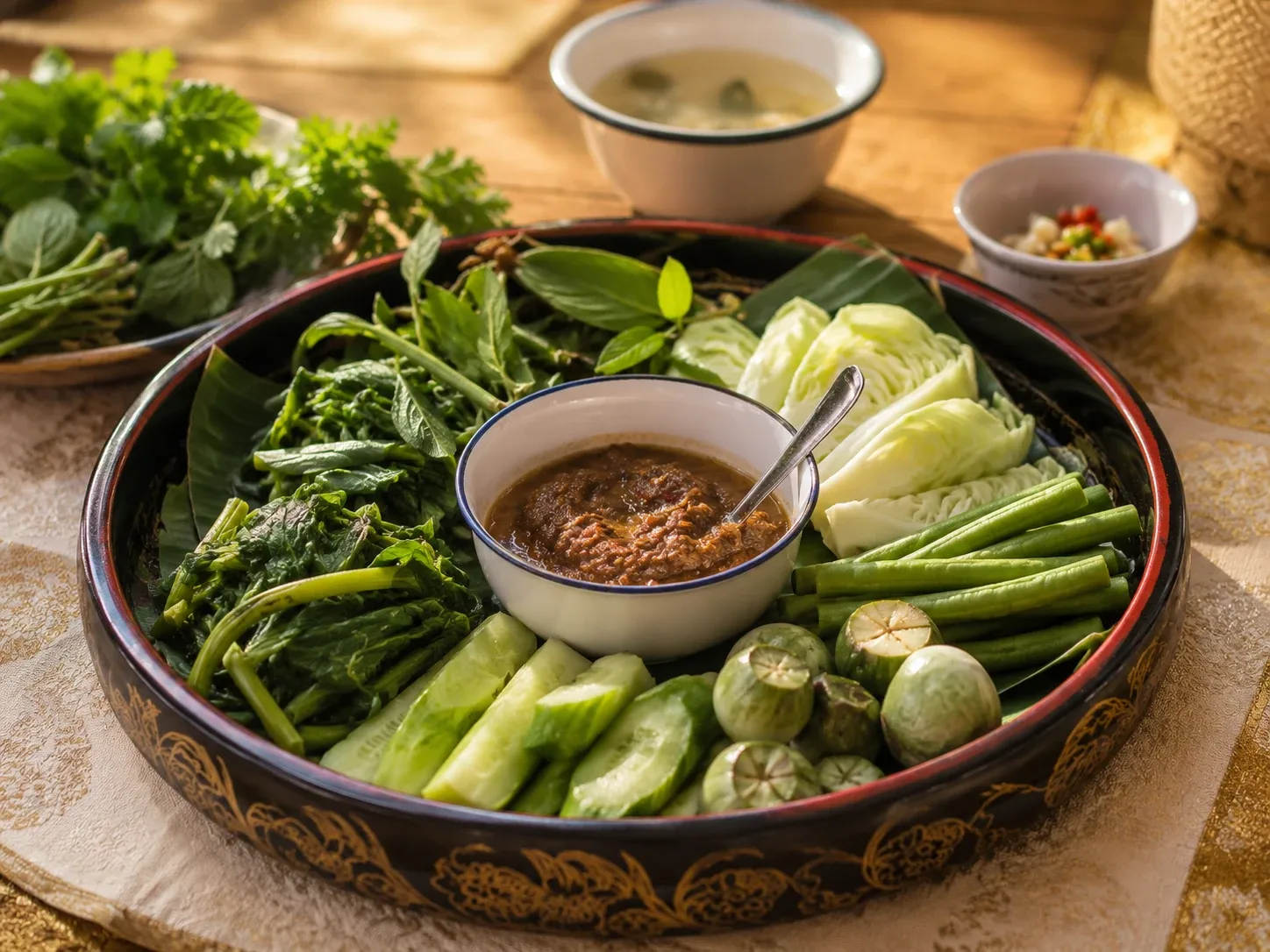
Toh Sa Yar, the Vegetable & Ngapi Platterတို့စရာ
The platter of raw and blanched vegetables around a pungent ngapi dip that no Burmese meal is complete without — the fresh, bitter counterpoint to curry.
 ၁
၁Rice & Foundations · 60 min · Beginner
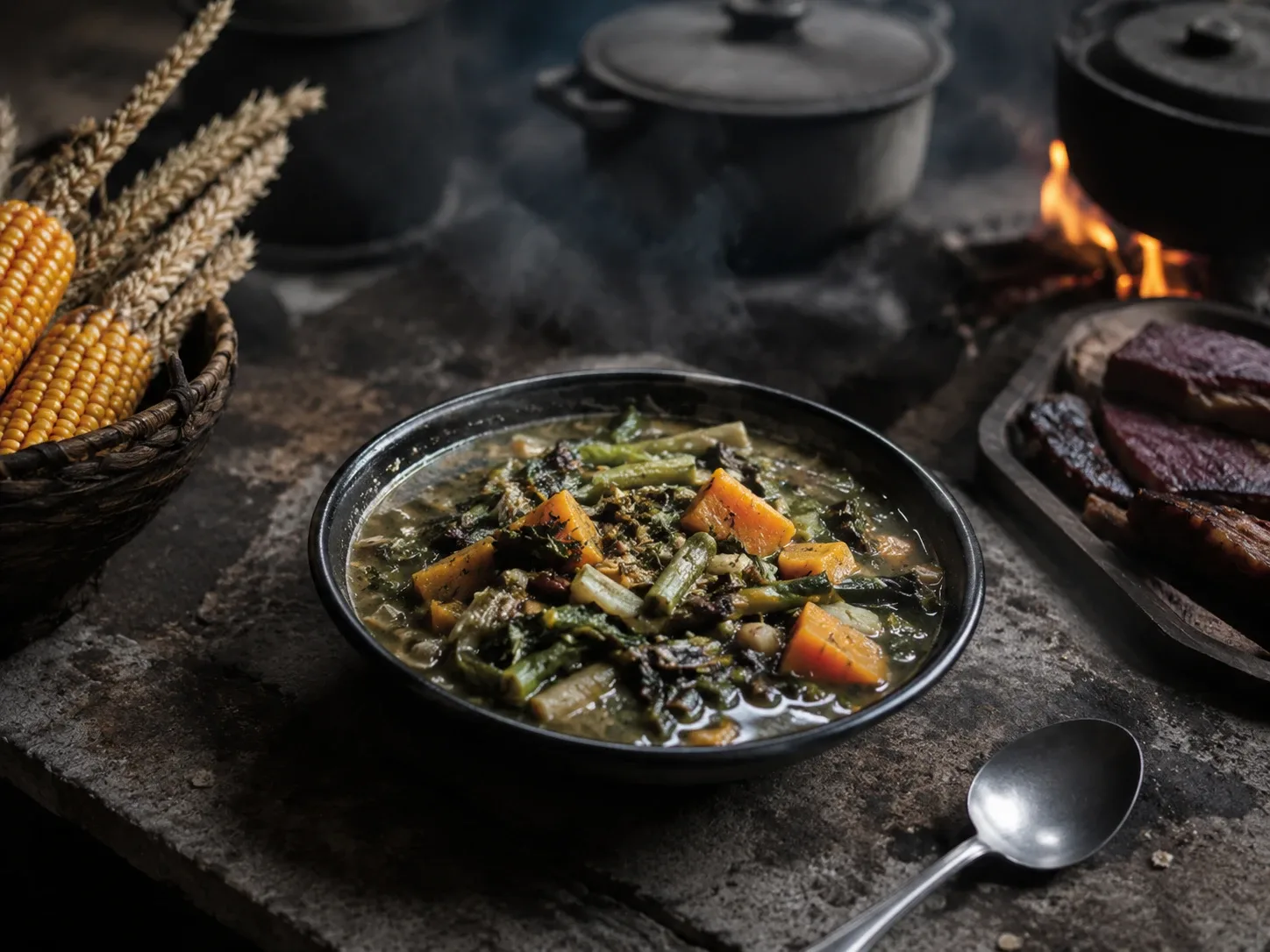
Bai, the Everyday Vegetable Pot
The Chin-Mizo daily vegetable stew — greens, pumpkin, and beans simmered with a whisper of alkali and a spoonful of fermented soybean, eaten at every meal.
 ၂
၂Noodles & Mohinga · 50 min · Beginner
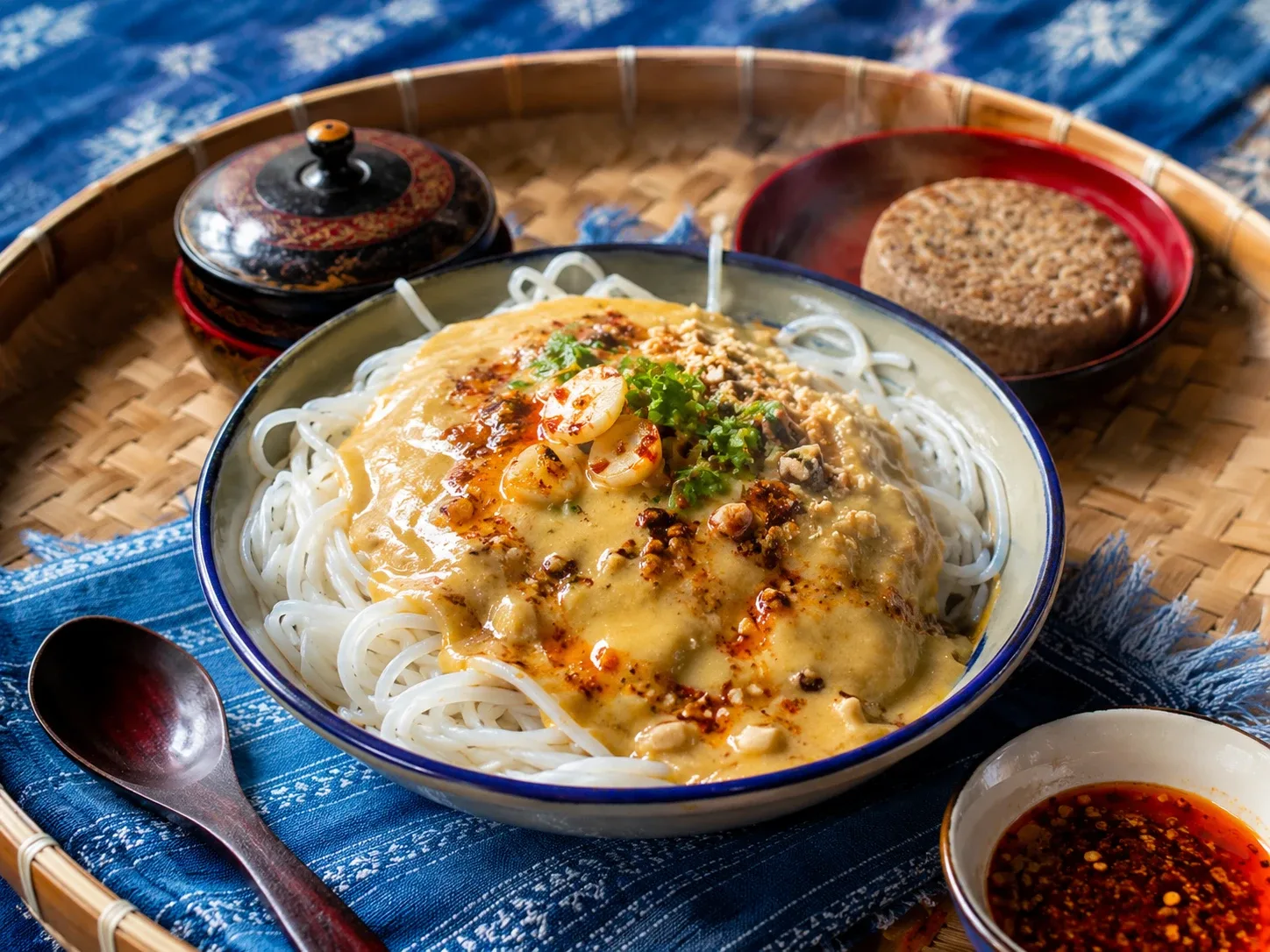
Tofu Nway, Warm Shan Tofu Noodlesတိုဟူးနွေး
Warm chickpea tofu that never sets, ladled like golden custard over rice noodles with garlic oil, chili, and peanuts — Shan State's great breakfast.