Tofu Nway, Warm Shan Tofu Noodles
တိုဟူးနွေး
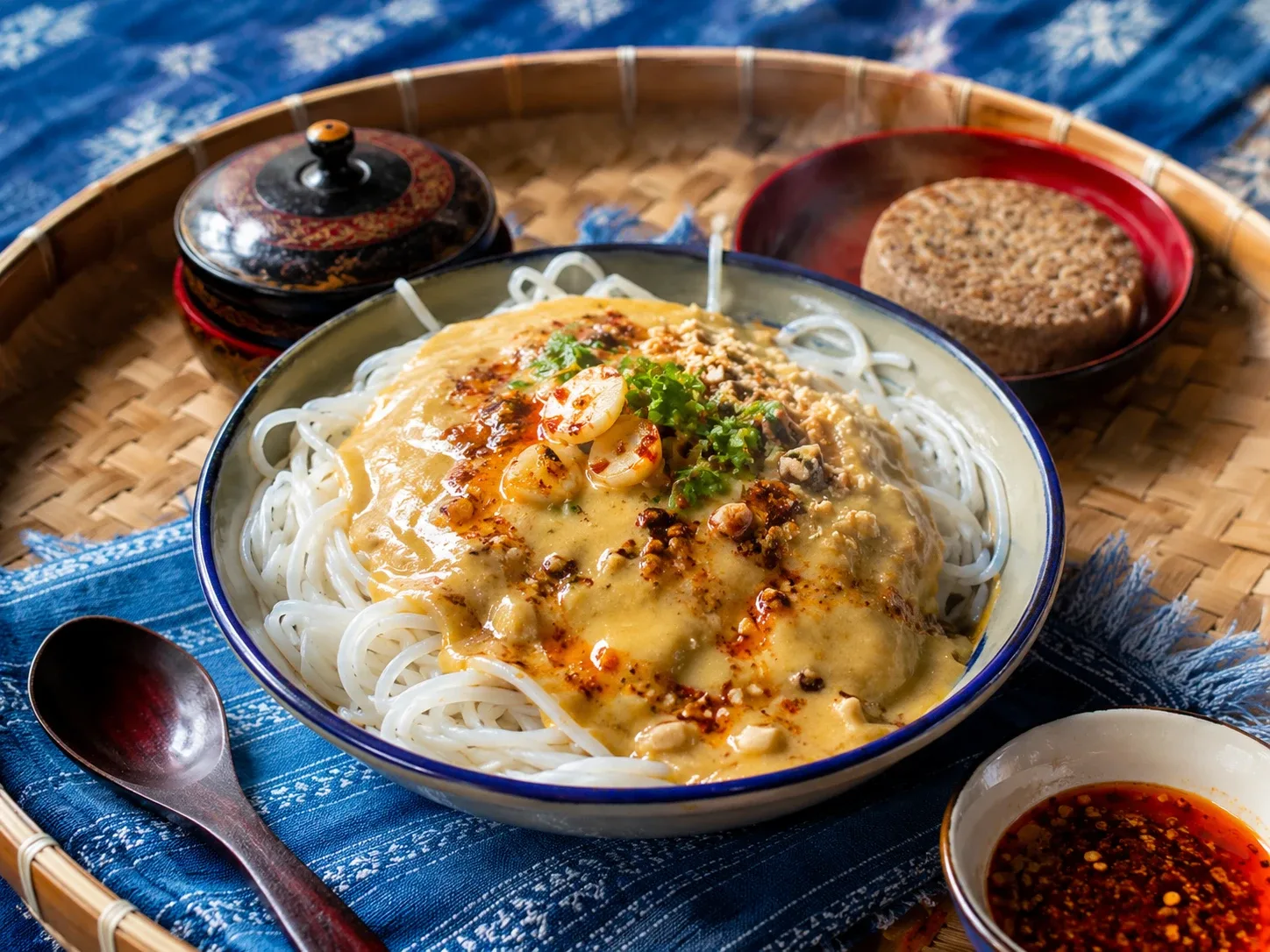
Warm chickpea tofu that never sets, ladled like golden custard over rice noodles with garlic oil, chili, and peanuts — Shan State's great breakfast.
Also spelled: To Hpu Nway · Tohu Nway · Hto Hpu Nway
By Burmese Cookbook Kitchen · July 9, 2026
ရှမ်း Shan StateKonbaung, 1752–1885
 ၂
၂- Prep
- 20 min
- Cook
- 30 min
- Serves
- 4
- Level
- Beginner
Every food culture has a dish that outsiders describe with a small stumble — "warm tofu, except it never set, poured over noodles" — and every Shan person simply calls breakfast. Hto hpu nway, literally "warm tofu," is the chickpea batter of the famous Shan tofu cooked to a thick golden porridge and ladled, still flowing, over rice noodles, then dressed with garlic oil, chili, peanuts, soy, and a sharp little heap of pickled mustard greens. It eats like savory custard with a crunch problem, in the best way.
The dish belongs to the same story as Shan tofu itself: tofu-making ideas arrived over the mountains with the Yunnan caravan trade, and the hills — rich in chickpeas and yellow split peas, poor in soybean curd tradition — rebuilt the idea from chickpea flour. The written record is thin before the late Konbaung era, and we date it there honestly, noting that Taunggyi's market grandmothers would find the question of "when" faintly ridiculous.
Success is mostly patience at the pot. Rest the batter so it loses its raw grain, then stir without stopping — the flour thickens all at once and scorches the second you wander off. And have everything else ready before you start, because the finished porridge gives you a five-minute window of perfection. Inside that window, this may be the most comforting bowl in the entire Burmese repertoire.
Hto hpu nway waits for no one. The moment the porridge ribbons off the spoon, the bowls must already be lined up — it stiffens as it cools, and stiff is a different dish.
မီးဖိုချောင်စကား · A word from the kitchen
Ingredientsပါဝင်ပစ္စည်း
Serves 4
Tap to check off as you gather
For the warm tofu
- chickpea flour (besan)
- water
- turmeric
- salt
For the bowls
- rice vermicelli — or thin fresh rice noodles, blanched and drained
- peanut oil
- garlic — sliced into thin coins
- dried chili flakes
- soy sauce — light
- roasted peanuts — roughly crushed
- pickled mustard greens — chopped — the sour cut the richness begs for
- cilantro
- spring onions — sliced fine
Methodချက်နည်း
Tap a numeral as you finish each step
Step 1: Whisk and rest the batter
Whisk the chickpea flour into the water with the turmeric and salt until no lumps remain, and let it stand for 30 minutes. The rest lets the flour hydrate fully, which is the difference between a silky porridge and a grainy one. Whisk again just before cooking — the flour settles.
Step 2: Make the garlic and chili oils
Fry the garlic coins in the peanut oil over medium-low heat until pale gold, 3 to 4 minutes, then lift them out onto paper. Spoon a third of the hot oil over the chili flakes in a small bowl and let it fizz brick-red. Do all of this first; once the porridge starts, you cannot leave the pot.
Step 3: Ready the noodles
Blanch the rice vermicelli until just tender, drain well, and divide among four deep bowls with a few drops of the garlic oil tossed through so they do not clump. They should be waiting, not cooking, when the tofu is ready.
Step 4: Cook the porridge
Pour the batter into a heavy pot over medium heat and stir constantly — bottom, corners, everywhere — with a wooden spoon or whisk. Around ten minutes in it will thicken suddenly; drop the heat to low and keep stirring 8 to 10 minutes more, until it is glossy, thick enough to ribbon off the spoon, and no longer tastes of raw flour. This is Shan tofu stopped halfway — cooked exactly like the set version, but served before it firms.
Step 5: Ladle and dress
Ladle the hot porridge generously over the noodles so it flows into every gap. Working quickly, top each bowl with soy sauce, chili oil, garlic oil and chips, peanuts, pickled mustard greens, cilantro, and spring onion.
Step 6: Serve immediately
Carry the bowls out at once and tell everyone to stir before eating — the point is dragging cool, springy noodles through the warm golden custard. In Taunggyi this is breakfast; no one talks much while it is hot.
ခွက်ယောက် · The tools
Equipment
Heavy pot / Dutch oven
အိုးကြီးDeep and heat-retentive — for mohinga broth, long-simmered hin, and deep-frying without temperature crashes.
Shop on Amazon →Noodle basket / colander
ဆန်ခါBlanch and lift rice noodles in seconds — mohinga service moves fast, and soggy noodles wait for no one.
Shop on Amazon →
Equipment links are Amazon affiliate links. As an Amazon Associate we earn from qualifying purchases, at no cost to you. Disclosure.
ဟင်းစုံ · Set the table
A Burmese meal is a spread
A bowl is complete, but the table is not without its condiments:
- Si chet, chili oilဆီချက်The fragrant red oil every household keeps by the stove.
- Crispy fried shallotsကြက်သွန်ကြော်A spoonful of crunch and sweet shallot oil over anything.
- Balachaungဘလချောင်းThe crispy shrimp relish that lives on every Burmese table.
- Teahouse milk teaလက်ဖက်ရည်How a Burmese meal ends — sweet, strong, and slow.
Questions from the kitchen
Is this the same batter as set Shan tofu?
Exactly the same — flour, water, turmeric, salt. The only difference is the stopping point: poured into a tray and chilled it becomes the sliceable hto hpu; ladled straight from the pot it is hto hpu nway. Master one and you own both.
Can I make it ahead or reheat it?
Not really — it sets as it cools, and reheating gives you loosened tofu rather than porridge. What you can do is prepare every topping and the noodles ahead, then cook the batter in the last twenty minutes. Leftovers do set into perfectly good sliceable tofu, so nothing is wasted.
Does it have to be vegetarian?
No — market stalls often offer marinated chicken or braised pork on top, and a spoonful of that braise's liquid is glorious in the bowl. But the all-vegetable version is the default, one reason the dish is beloved during Buddhist fasting periods.
နောက်တစ်ခု · Cook next
Keep the wok hot
 ၂
၂Noodles & Mohinga · 40 min · Intermediate
Kat Kyi Kaik, Dawei's Scissor-Cut Noodlesကတ်ကြေးကိုက်
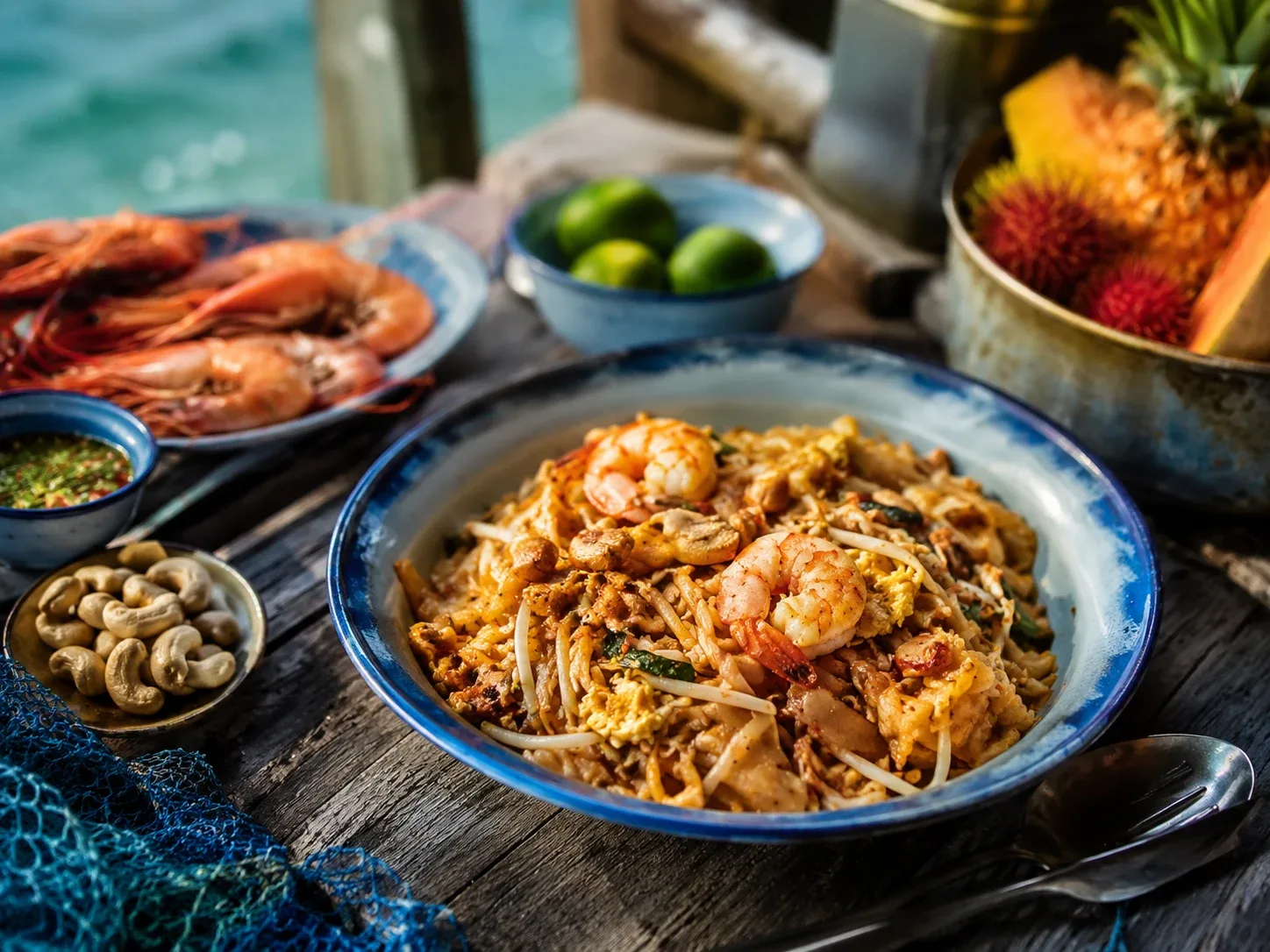
Dawei's famous stir-fried rice noodles, snipped with scissors at the table — sweet-savory, smoky from the wok, piled with prawns, egg, and peanuts.
 ၂
၂Noodles & Mohinga · 50 min · Intermediate
Myitkyina Mala Noodlesမာလာခေါက်ဆွဲ
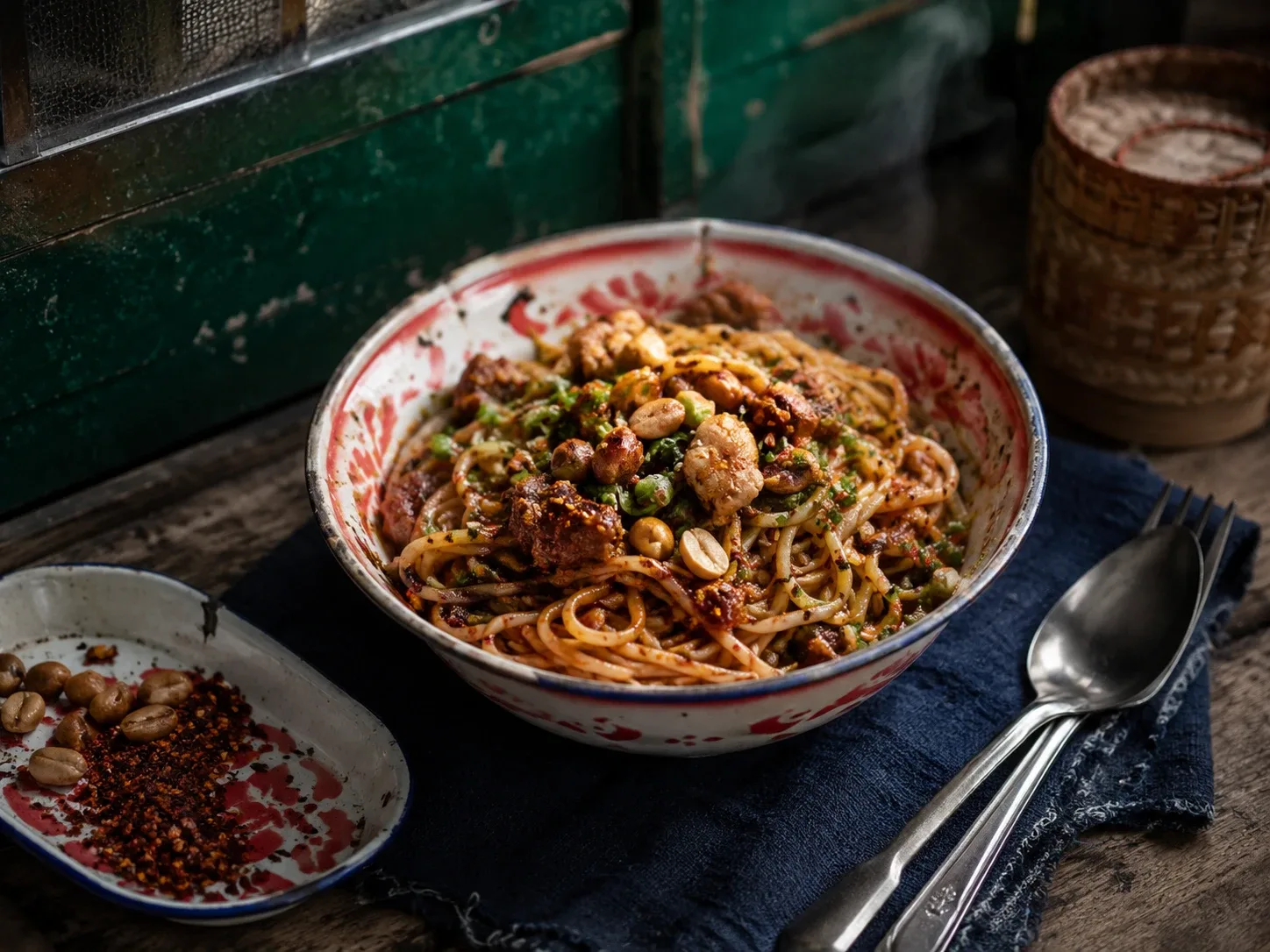
Wheat noodles tossed in numbing-hot Sichuan pepper chili oil with crisp pork and peanuts — the Yunnanese border bowl that became everyday Myitkyina food.
 ၇
၇Sweets & Mont · 25 min · Beginner
Kyauk Kyaw, Two-Layer Coconut Jellyကျောက်ကျော
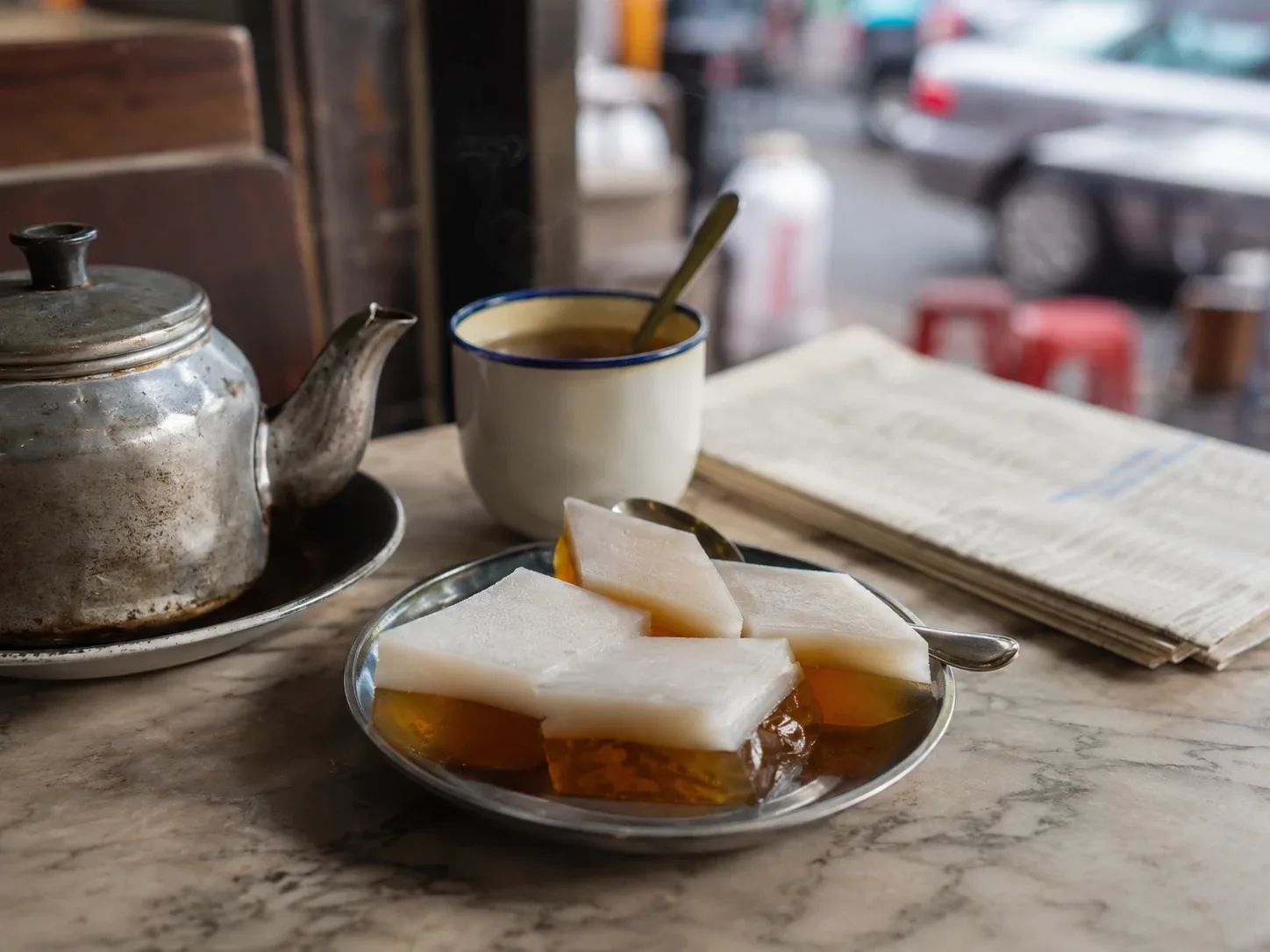
Myanmar's two-layer agar jelly, done the Yangon way — coconut cream rises as it sets over a clear amber base, then the slab is cut into cool diamonds.