Myitkyina Mala Noodles
မာလာခေါက်ဆွဲ
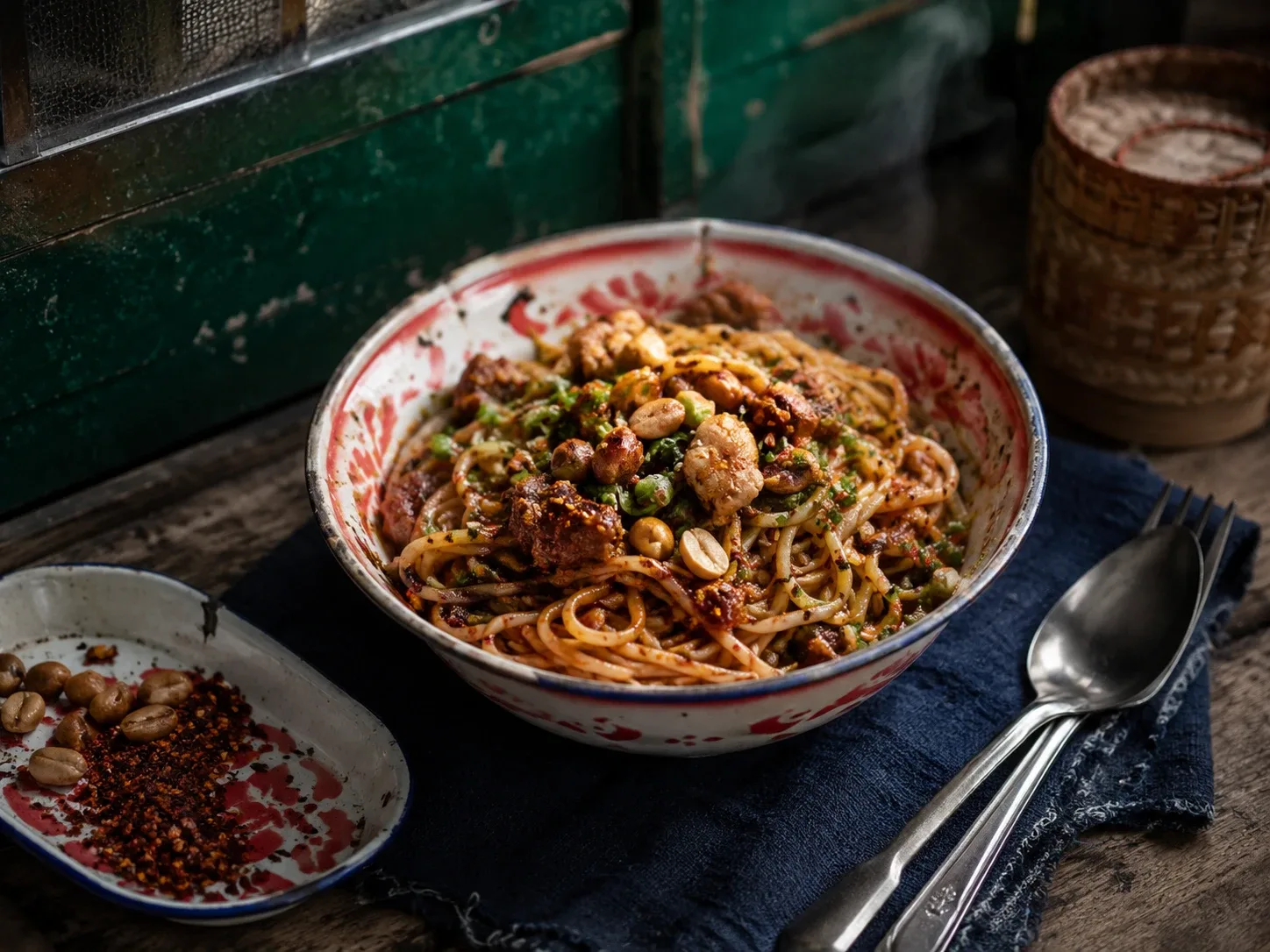
Wheat noodles tossed in numbing-hot Sichuan pepper chili oil with crisp pork and peanuts — the Yunnanese border bowl that became everyday Myitkyina food.
By Burmese Cookbook Kitchen · July 9, 2026
ကချင် Kachin StateOpening & Diaspora, 1988–present
 ၂
၂- Prep
- 25 min
- Cook
- 25 min
- Serves
- 4
- Level
- Intermediate
Myitkyina sits closer to the Chinese border than to Mandalay, and its food says so. The jade and river trade filled the town with Yunnanese kitchens generations ago, and from the 2000s the mala wave — Sichuan pepper and chili, numbing-then-hot, in that famous order — rolled across the border and settled in as everyday town food. Mala khauk swe is its noodle-shop form: chewy wheat noodles slicked in rust-red chili oil, a citrusy hum of Sichuan pepper, crisp soy-glazed pork, peanuts, and a sharpening thread of black vinegar. We date it modern and call it what it is — naturalized immigrant food, as Burmese in that sense as the samusa.
It is also, wryly, the exception in this chapter of the map. Kachin hill cooking is famously light on oil; Kachin town cooking, at the noodle-shop counter, pours the stuff by the ladle. Both are true at once — the hills and the border have always been different kitchens in the same state, and Myitkyina eats from each according to the hour.
The dish is won or lost at the oil. Pour it over the flakes when it shimmers, never when it smokes; ten minutes of steeping turns heat into fragrance. Toast the Sichuan pepper first so it buzzes instead of tasting dusty, and sauce each bowl individually, noodle-shop style, so every eater gets the full rust-colored hit. Then eat fast. Mala is a live performance, not a leftover.
Pour the oil the moment it shimmers, not the moment it smokes — scorched chili flakes taste of regret, and no amount of vinegar brings them back.
မီးဖိုချောင်စကား · A word from the kitchen
Ingredientsပါဝင်ပစ္စည်း
Serves 4
Tap to check off as you gather
For the mala oil
- peanut oil
- dried chili flakes — the coarse Sichuan or Korean kind, not fine cayenne
- dried red chilies — snipped into pieces, seeds shaken out
- Sichuan peppercorns — toasted and coarsely ground, husks sifted out
- garlic — smashed
- sesame seeds
For the pork
- ground pork
- soy sauce
- sugar
- garlic — minced
For the bowls
- fresh wheat noodles — or 300 g dried — a medium round noodle with some chew
- choy sum — or bok choy, cut into lengths
- soy sauce
- black vinegar — Chinkiang style — rice vinegar with a pinch of sugar stands in
- roasted peanuts — roughly crushed
- spring onions — sliced
Methodချက်နည်း
Tap a numeral as you finish each step
Step 1: Make the mala oil
Put the chili flakes, ground Sichuan pepper, and sesame seeds in a heatproof bowl. Warm the peanut oil with the snipped chilies and smashed garlic over medium-low heat until the garlic is pale gold and the chilies are brick red, then pour everything over the bowl — it should sizzle enthusiastically but not smoke. Let it steep while you cook; ten minutes turns it from hot oil into mala.
Step 2: Fry the pork
In the same pan, fry the ground pork over high heat, breaking it up, until the moisture cooks off and the edges crisp — 6 to 8 minutes. Add the minced garlic, soy sauce, and sugar in the last minute and toss until the pork is glossy and sticky. Crisp edges matter: soft pork disappears into the noodles, crisp pork punctuates them.
Step 3: Blanch the greens, then the noodles
Bring a large pot of water to a boil, blanch the choy sum for a minute, and lift it out. Cook the noodles in the same water until just chewy, then drain, reserving a cup of the cooking water. One pot, right order — the greens would not survive noodle-length cooking.
Step 4: Sauce each bowl
Into each of four bowls: a quarter of the soy sauce, a teaspoon of black vinegar, two generous tablespoons of mala oil with its sludge of flakes, and a tablespoon of hot noodle water to loosen. Saucing the bowl rather than the pot is the noodle-shop way — every eater gets the full hit, and the seconds round can be milder on request.
Step 5: Toss and top
Drop the hot noodles into the bowls and toss until every strand is slicked and rust-colored. Top with the crisp pork, blanched greens, crushed peanuts, and spring onions. Eat immediately, while the numbing buzz is still climbing — mala waits for no one.
ခွက်ယောက် · The tools
Equipment
Noodle basket / colander
ဆန်ခါBlanch and lift rice noodles in seconds — mohinga service moves fast, and soggy noodles wait for no one.
Shop on Amazon →
Equipment links are Amazon affiliate links. As an Amazon Associate we earn from qualifying purchases, at no cost to you. Disclosure.
ဟင်းစုံ · Set the table
A Burmese meal is a spread
A bowl is complete, but the table is not without its condiments:
- Si chet, chili oilဆီချက်The fragrant red oil every household keeps by the stove.
- Crispy fried shallotsကြက်သွန်ကြော်A spoonful of crunch and sweet shallot oil over anything.
- Balachaungဘလချောင်းThe crispy shrimp relish that lives on every Burmese table.
- Teahouse milk teaလက်ဖက်ရည်How a Burmese meal ends — sweet, strong, and slow.
Questions from the kitchen
How numbing is this supposed to be?
Ma la means numbing-hot, in that order, and the first spoonful should make your lips hum within a minute. Two teaspoons of toasted Sichuan pepper across four bowls is honest Myitkyina strength; halve it for a first attempt and you will still be well inside the dish.
Can I use rice noodles?
You can, and border shops sometimes do — a thick round rice noodle holds the oil well. What you want is chew; the sauce is intense and a delicate noodle goes limp under it. Avoid thin vermicelli entirely.
Is there a vegetarian version?
A good one: swap the pork for 300 g of finely chopped shiitake or king oyster mushrooms, fried hard with the same soy and sugar until chewy and browned. The mala oil is doing most of the talking anyway — check your soy sauce and you are fully vegetarian.
Is this a Burmese dish or a Chinese one?
It is a border dish, which is its own honest category. The flavor logic is Yunnanese; the noodles, the shop, and the customers are Myitkyina. Kachin State has eaten across that line for generations, and mala khauk swe is what the crossing tastes like now.
နောက်တစ်ခု · Cook next
Keep the wok hot
 ၂
၂Noodles & Mohinga · 50 min · Beginner
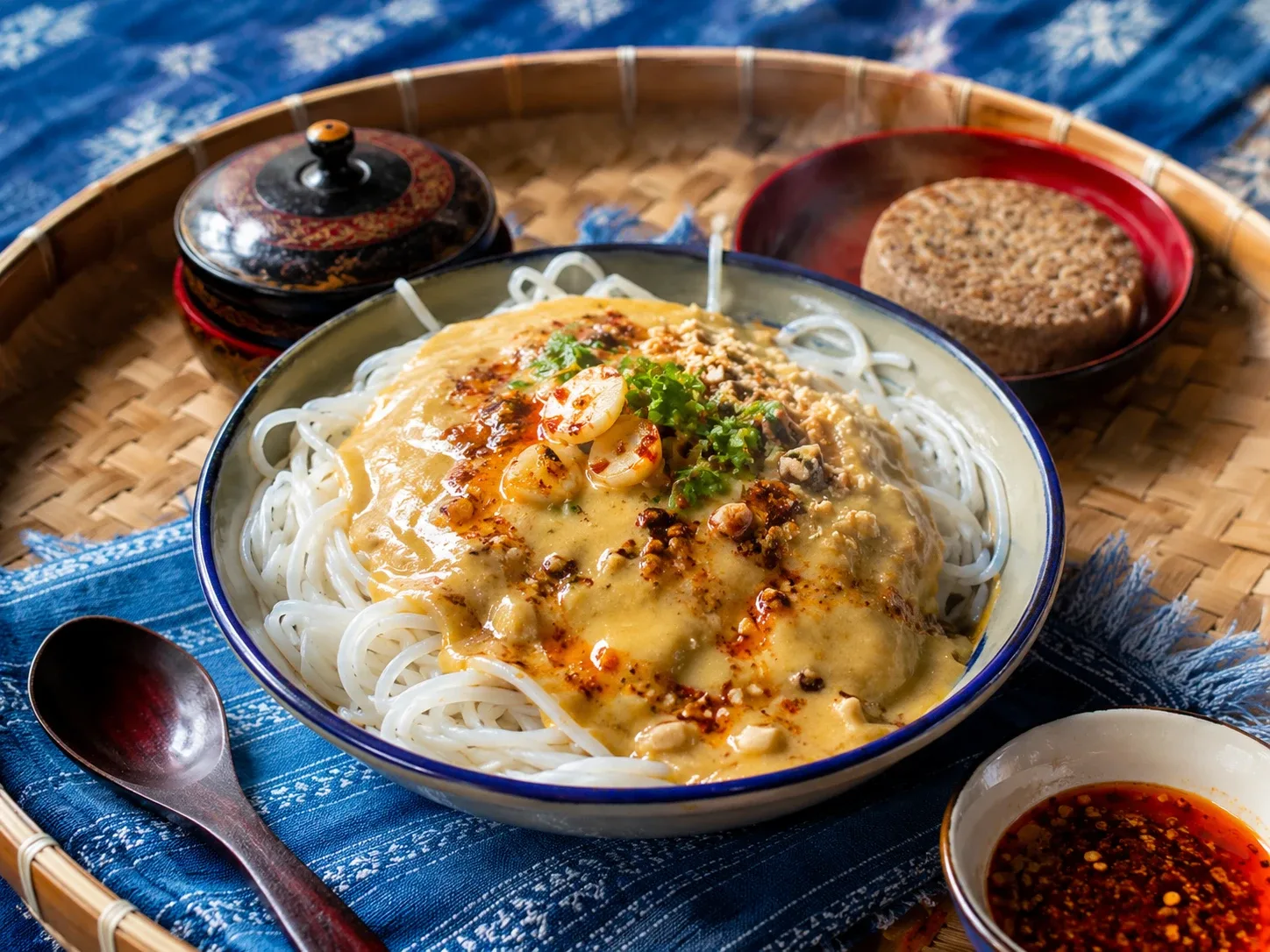
Tofu Nway, Warm Shan Tofu Noodlesတိုဟူးနွေး
Warm chickpea tofu that never sets, ladled like golden custard over rice noodles with garlic oil, chili, and peanuts — Shan State's great breakfast.
 ၂
၂Noodles & Mohinga · 40 min · Intermediate
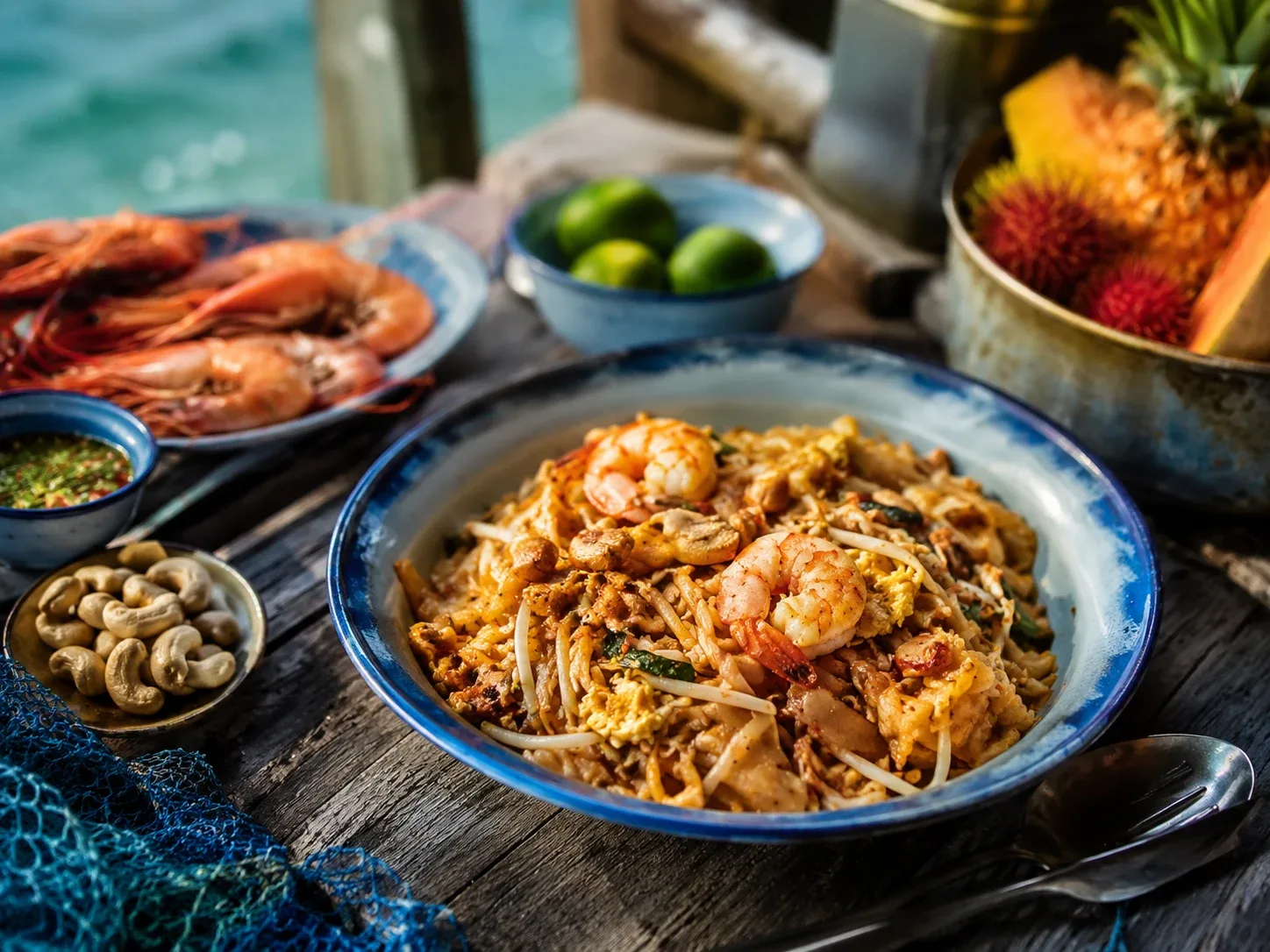
Kat Kyi Kaik, Dawei's Scissor-Cut Noodlesကတ်ကြေးကိုက်
Dawei's famous stir-fried rice noodles, snipped with scissors at the table — sweet-savory, smoky from the wok, piled with prawns, egg, and peanuts.
 ၁
၁Rice & Foundations · 210 min · Intermediate
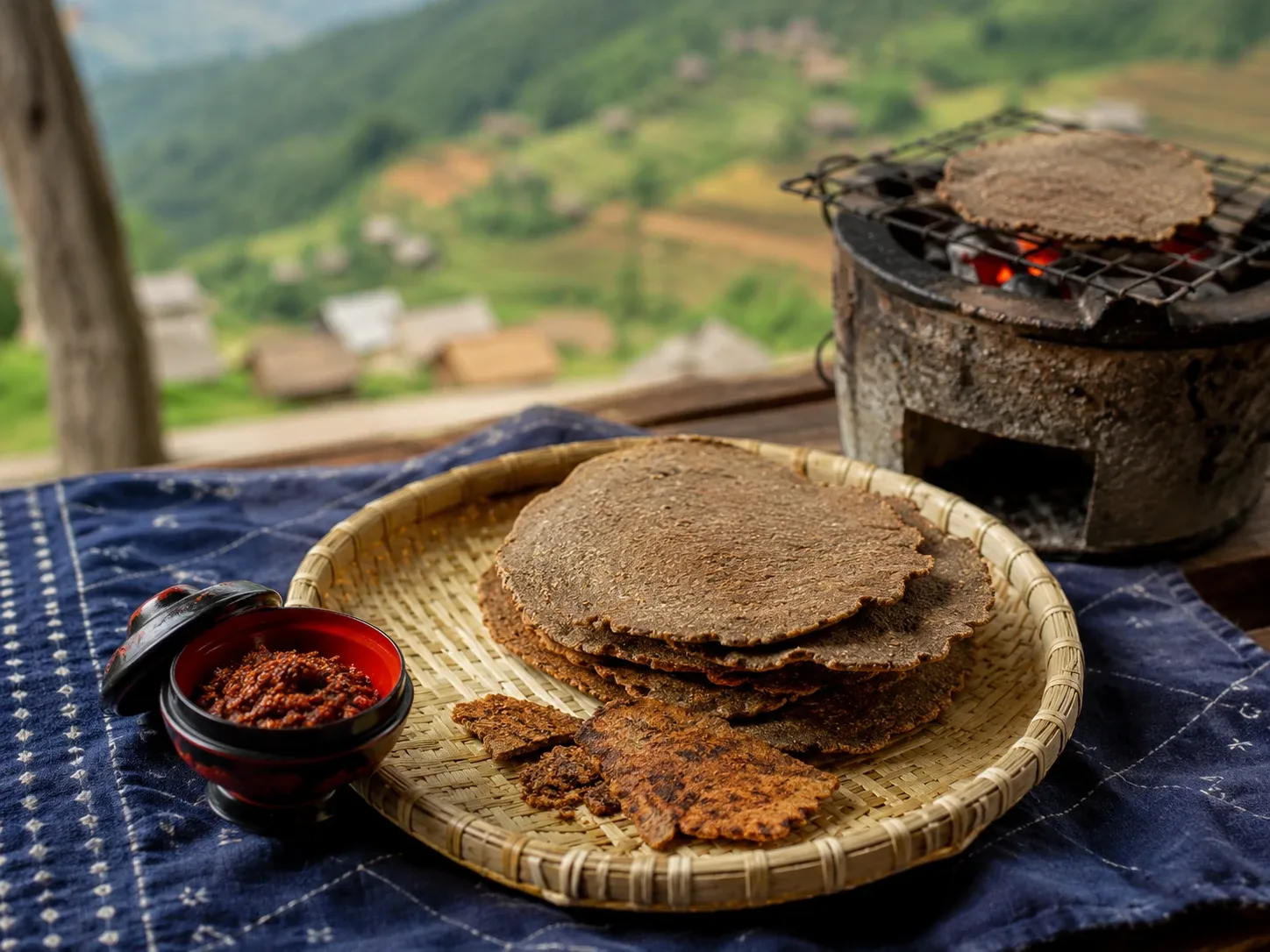
Tua Nao, Shan Fermented Soybean Discsပဲပုပ်
Shan State's seasoning backbone — soybeans boiled, fermented, pounded, and sun-dried into discs you toast over flame and crumble into everything.