Tua Nao, Shan Fermented Soybean Discs
ပဲပုပ်
Shan State's seasoning backbone — soybeans boiled, fermented, pounded, and sun-dried into discs you toast over flame and crumble into everything.
Also spelled: Thua Nao · Pè Bok
By Burmese Cookbook Kitchen · July 9, 2026
ရှမ်း Shan StateKonbaung, 1752–1885
 ၁
၁- Prep
- 30 min
- Cook
- 180 min
- Serves
- 12
- Level
- Intermediate
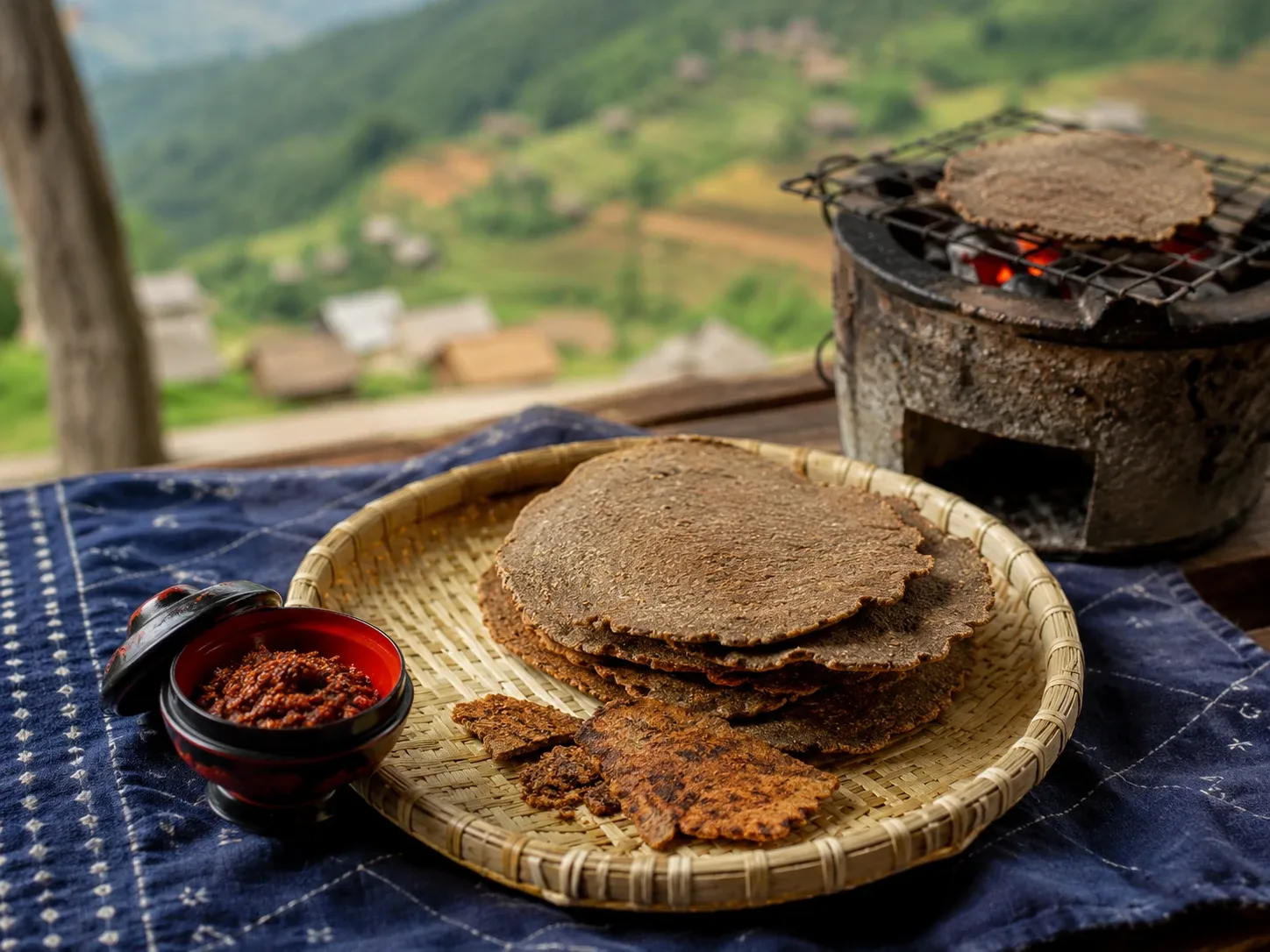
Ask what makes Shan food taste Shan and the honest answer is a humble brown disc that smells like cheese and hangs from kitchen rafters by the dozen. Tua nao — pè bok in Burmese, literally "rotten beans" — is boiled soybeans fermented warm for a few days, pounded with salt, pressed thin, and dried in the sun until it snaps. Toasted over flame and crumbled, it is the seasoning backbone of the hills: the deep savory note in a Shan noodle broth, the underpinning of a tomato dip, the thing that makes hto hpu nway taste like Taunggyi and not merely like chickpeas.
The logic is geographic. The lowlands season with fermented fish and shrimp because rivers and coastline provide; the plateau has soybean fields instead, so the hills built their umami from beans — the same family of fermentations as Japan's natto and Yunnan's douchi, arrived, most likely, along the old caravan roads from China. We file it under the Konbaung era, when those trade routes and the Shan principalities they stitched together are well documented, while admitting the discs themselves are surely older than any record of them.
Two disciplines decide success. The beans must cook until they crush with no resistance, and the discs must dry until rigid — everything soft in the middle eventually molds. And remember the last step is not optional: an untoasted disc is mute. Fire is what turns it into seasoning.
A tua nao disc is not ready until it snaps like a cracker. A bendy disc is a damp disc, and damp discs mold — give them one more day of sun.
မီးဖိုချောင်စကား · A word from the kitchen
Ingredientsပါဝင်ပစ္စည်း
Serves 12
Tap to check off as you gather
For the ferment (start five to six days ahead)
- dried soybeans
- water — plus more for the overnight soak
- banana leaves — or a clean cloth-lined basket with a lid — the beans need warmth and a little air
For pounding and shaping
- salt
- dried chili flakes — optional — for the seasoned red-flecked style
- fresh ginger — optional, finely grated
- garlic — optional, pounded in with the salt
Methodချက်နည်း
Tap a numeral as you finish each step
Step 1: Soak and boil the beans
Soak the soybeans overnight in plenty of water, then drain and simmer them in the 3 L of fresh water until a bean crushes to paste between two fingers with no resistance — 2.5 to 3 hours. Undercooked beans ferment unevenly and pound into grit instead of paste, so err on the side of too soft. Drain well.
Step 2: Ferment
While the beans are still warm, pile them onto banana leaves or into a cloth-lined basket, wrap loosely, and leave them somewhere warm — near the stove, on top of the fridge — for two to three days. They are ready when they are sticky, faintly slippery, and smell deep and frankly cheesy, like a natto with opinions. Warmth and a little airflow are the whole technique; sealed containers suffocate the ferment.
Step 3: Pound to a paste
Pound the fermented beans in a mortar (or pulse in a processor) with the salt, and the chili, ginger, and garlic if using, until you have a thick, mostly smooth paste. A few flecks of bean are traditional; soup is not — add nothing wet.
Step 4: Shape the discs
Roll the paste into golf balls, then press each between two sheets of banana leaf or parchment into a disc no thicker than a coin — 2 to 3 mm. Thin is the point: thick discs stay damp at the center and spoil before they dry.
Step 5: Dry until they snap
Dry the discs in full sun for two to three days, bringing them in at night, or in a 60°C oven with the door cracked for 6 to 8 hours, flipping once. They are done when rigid enough to snap cleanly. Stored airtight, they keep for months — Shan kitchens hang strings of them from the rafters.
Step 6: Toast before every use
A raw disc is only a promise. Toast it over a low flame or in a dry pan, a few seconds a side, until it darkens and smokes faintly and smells nutty-savory, then crumble or pound it into dressings, soups, and curries. Toasting is what wakes the umami up — never skip it.
ခွက်ယောက် · The tools
Equipment
Rice cooker
ထမင်းအိုးConsistent long-grain rice with zero attention — and in a Burmese kitchen the rice is never optional.
Shop on Amazon →Stone mortar & pestle
ဆုံFor garlic-ginger paste, pounded dried shrimp fluff, and crushed peanuts — the blender lies about texture; the stone doesn’t.
Shop on Amazon →Box grater / microplane
ခြစ်စက်Fine ginger, green papaya shreds, and toddy-palm jaggery shavings.
Shop on Amazon →
Equipment links are Amazon affiliate links. As an Amazon Associate we earn from qualifying purchases, at no cost to you. Disclosure.
ဟင်းစုံ · Set the table
A Burmese meal is a spread
The quiet base of the meal — build the rest of the spread around it:
- A curryဟင်းSlow-cooked until the oil returns — the richness the sides cut against.
- A light soupဟင်းချိုThe clear, sour broth sipped between mouthfuls of rice.
- Toh sa yar & ngapi dipတို့စရာRaw and blanched vegetables with a pungent fish-paste dip — the fresh, bitter counterpoint.
- A hand-tossed thokeအသုပ်A bright, sour salad to lift the whole spread.
- Si chet, chili oilဆီချက်The fragrant red oil every household keeps by the stove.
Questions from the kitchen
What does tua nao actually taste like?
Toasted, it lands somewhere between miso, roasted nuts, and a very polite blue cheese — deep savory with a smoky edge. It does for Shan cooking exactly what ngapi does for the lowlands, which is why it is sometimes called Shan ngapi.
Can I substitute something store-bought?
Japanese natto is the same fermentation and works pounded with salt and dried out, and Thai groceries sometimes carry tua nao khap discs from Mae Hong Son. Yellow miso is the pantry stand-in — use about a tablespoon per disc, and accept that you lose the smoke.
How do I know the ferment is safe?
A good ferment is sticky, stringy when pulled apart, and smells strong but clean — ammonia-edged cheese, not rot. Pink, black, or fuzzy growth means start over. Clean hands, clean cloth, and genuinely soft beans prevent nearly every failure.
နောက်တစ်ခု · Cook next
Keep the wok hot
 ၁
၁Rice & Foundations · 30 min · Beginner
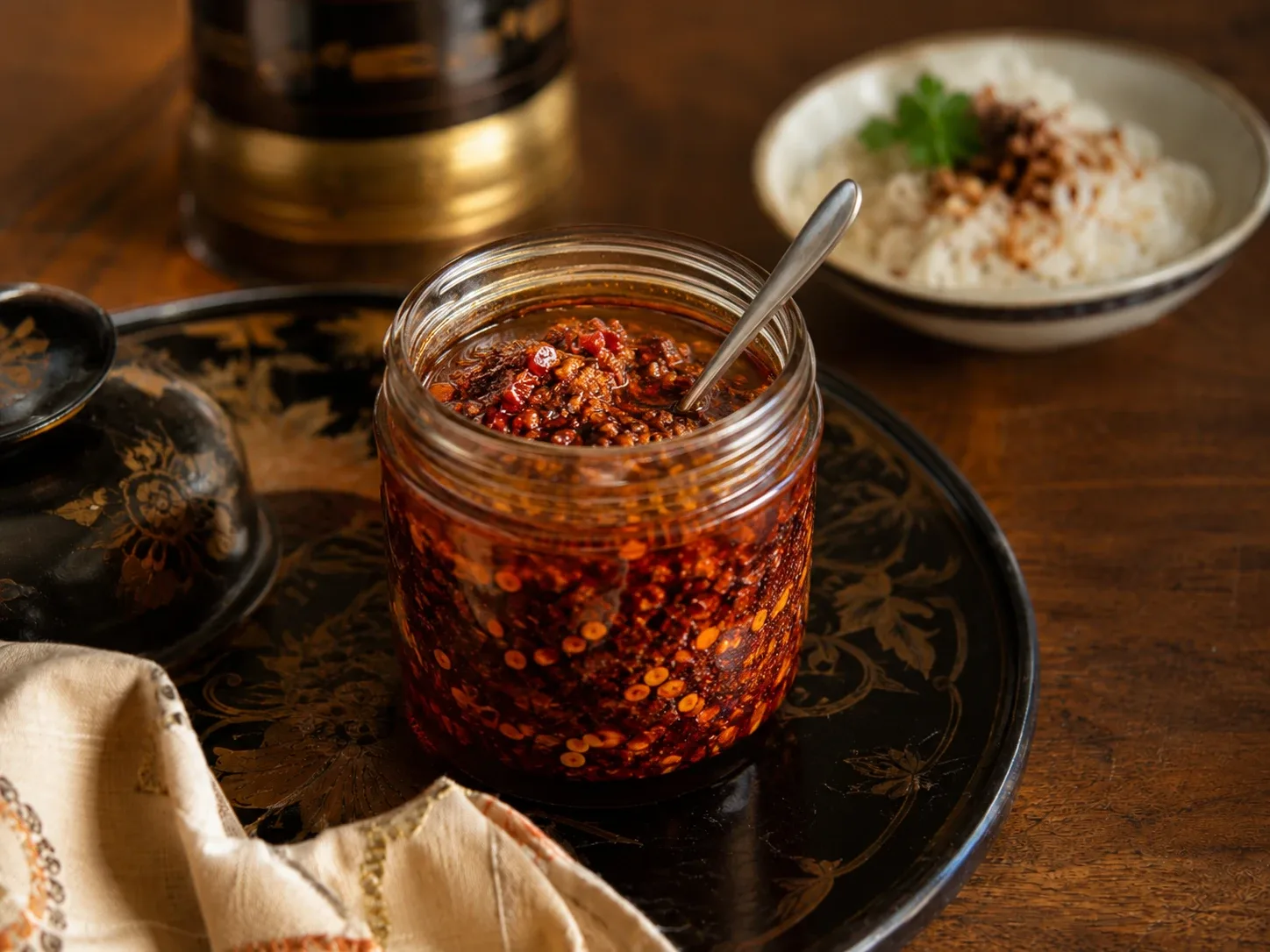
Si Chet, Burmese Chili Oilဆီချက်
The essential Burmese table oil — peanut oil gently fried with chili flakes, garlic, shallot, and a little ngapi, then spooned red over rice, noodles, and salads.
 ၁
၁Rice & Foundations · 40 min · Beginner
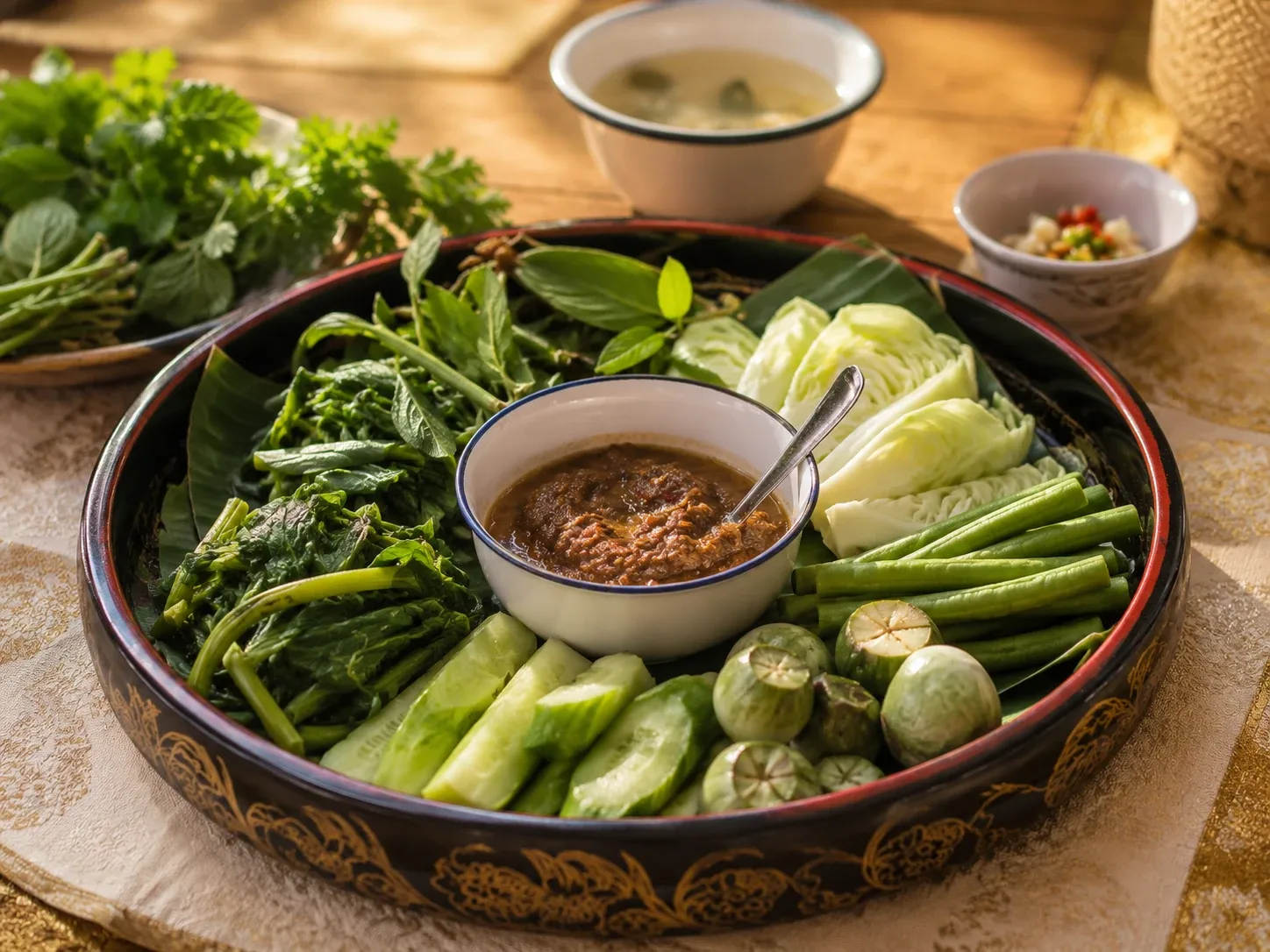
Toh Sa Yar, the Vegetable & Ngapi Platterတို့စရာ
The platter of raw and blanched vegetables around a pungent ngapi dip that no Burmese meal is complete without — the fresh, bitter counterpoint to curry.
 ၄
၄Salads & Thoke · 25 min · Beginner
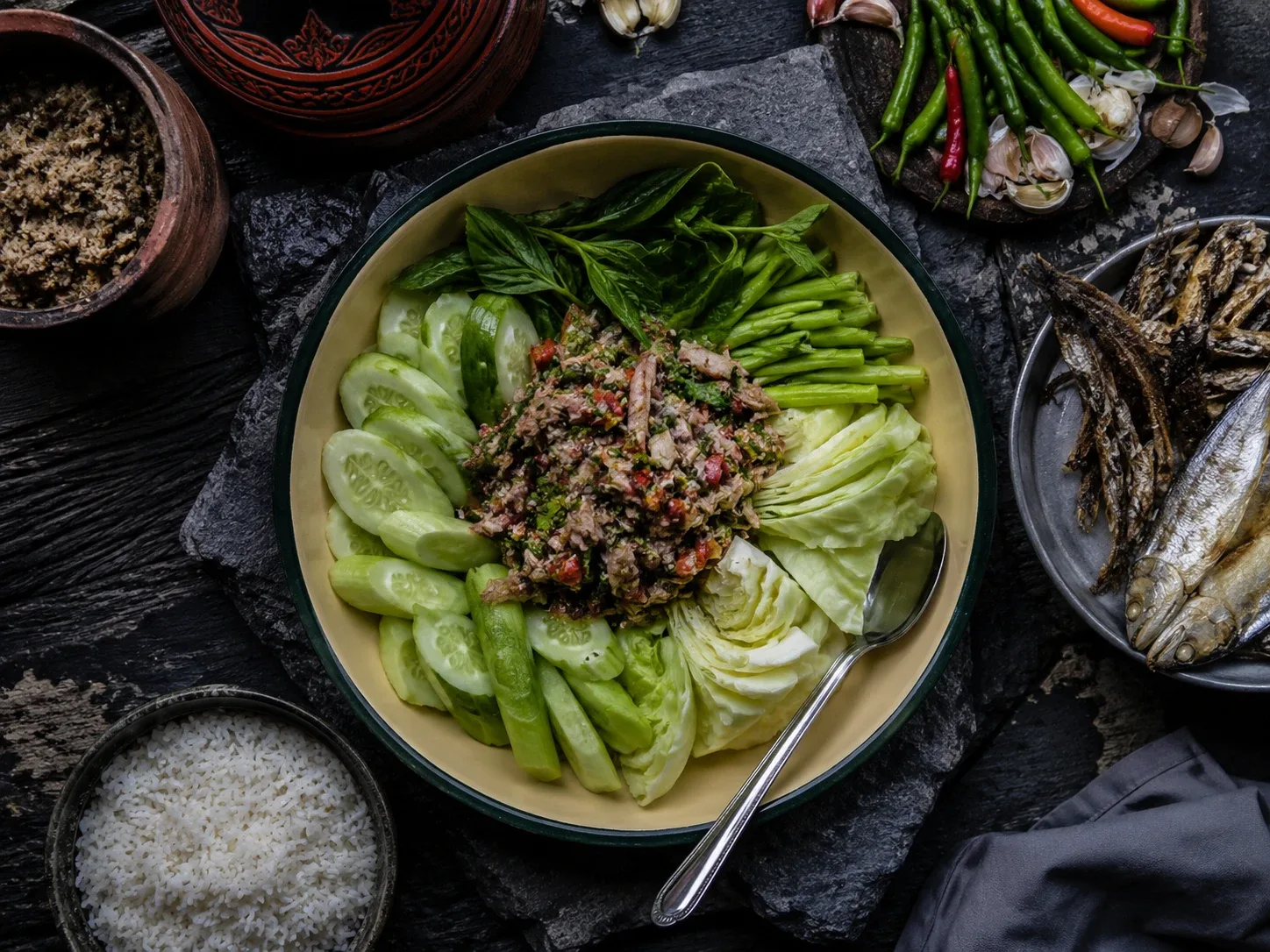
Rakhine Ngapi Thoke, the Pounded Fireငါးပိသုပ်
Rakhine's roasted fish-paste salad — marine ngapi pounded with green chili, garlic, and lime, served the western-coast way with crisp vegetables and rice.