Kat Kyi Kaik, Dawei's Scissor-Cut Noodles
ကတ်ကြေးကိုက်
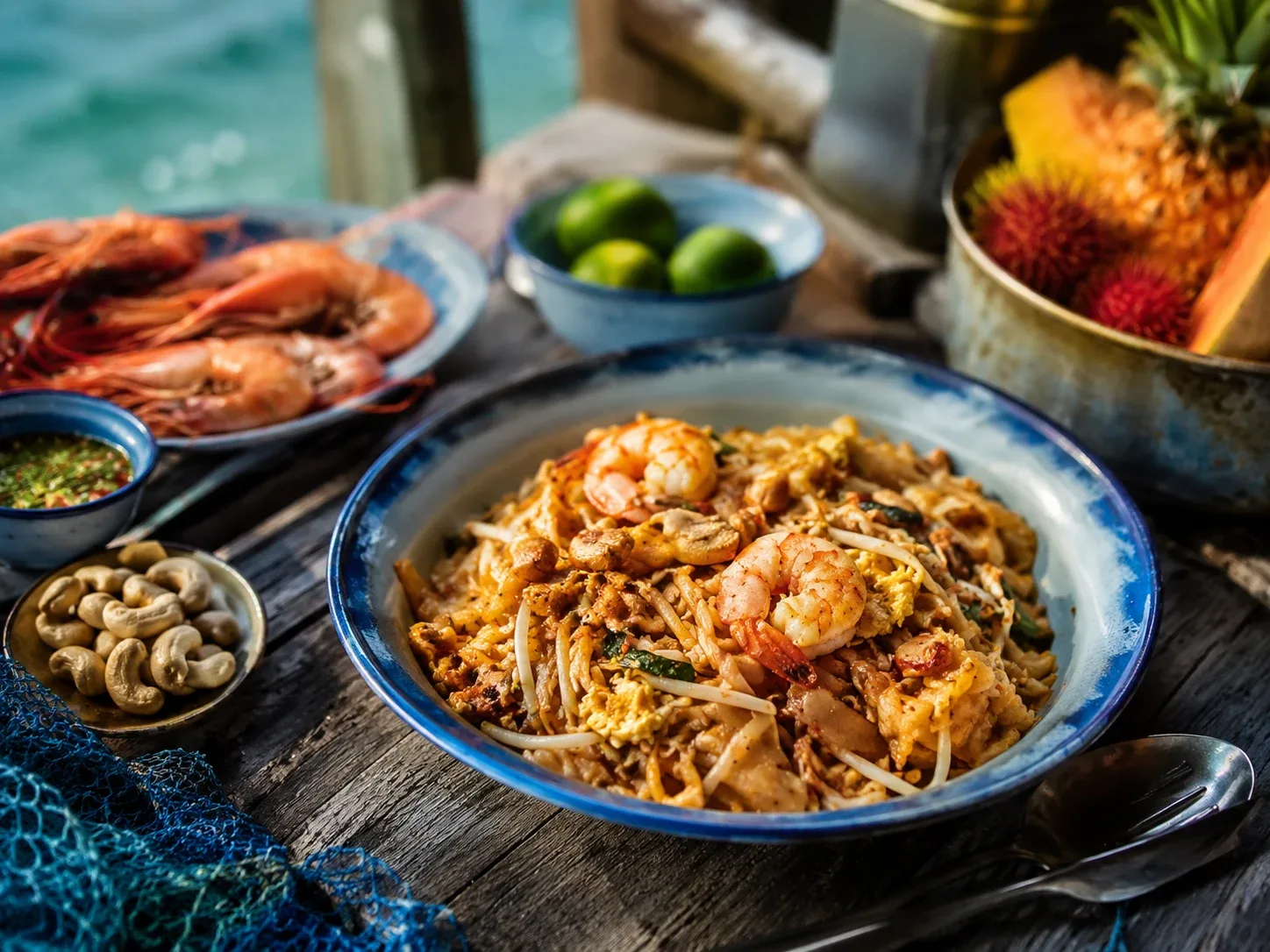
Dawei's famous stir-fried rice noodles, snipped with scissors at the table — sweet-savory, smoky from the wok, piled with prawns, egg, and peanuts.
By Burmese Cookbook Kitchen · July 9, 2026
တနင်္သာရီ TanintharyiBritish Burma, 1826–1948
 ၂
၂- Prep
- 25 min
- Cook
- 15 min
- Serves
- 4
- Level
- Intermediate
Every town in Myanmar has a noodle dish it would defend with its life, and Dawei's is kat kyi kaik — literally "bitten by the scissors." Wide rice ribbons are stir-fried hard with prawns, squid, egg, and chives in a sweet-savory gloss, and then, at the table, cut short with kitchen scissors so they can be eaten with a spoon. The scissors are not kitchen shorthand; they are the name, the ritual, and the reason a plate of fried noodles feels like an event.
Its history is thinner on paper than in memory. Dawei was a working port long before the British formalized Tenasserim in 1826, and the dish reads like port-town cooking — a Chinese wok technique, a palate sweetened by proximity to Siam, local prawns because the sea is right there. Nobody wrote down a birthday; the shops that made it famous are twentieth-century, and we say so plainly. What is certain is that Dawei migrants carried it to Yangon, where kat kyi kaik signs now promise southern credentials the way "Mandalay" promises mee shay.
Two things make or break it. The noodles must hit a genuinely violent flame — the faint char on the ribbon's edge is the flavor of the dish. And the squid obeys the coastal rule: two minutes in the wok, out, and back at the end. Everything else is generosity — peanuts, fried shallots, lime — and a good pair of scissors passed around like a talking stick.
The wok must be smoking before the noodles go in. A timid flame gives you steamed noodles in sauce; a fierce one gives you kat kyi kaik.
မီးဖိုချောင်စကား · A word from the kitchen
Ingredientsပါဝင်ပစ္စည်း
Serves 4
Tap to check off as you gather
For the noodles & seafood
- fresh wide rice noodles — or 300 g dried wide rice sticks, soaked in warm water until pliable
- prawns — peeled and deveined, tails off
- squid — bodies scored and cut into bite-size pieces, tentacles halved
- fish cake — sliced into thin coins — Myeik nga hpe if you have it
- eggs — lightly beaten
- bean sprouts
- garlic chives — about 100 g, cut into 5 cm lengths
- garlic — finely chopped
- peanut oil
For the sauce
- fish sauce
- dark soy sauce
- palm sugar (jaggery) — shaved, then dissolved in 2 tbsp hot water
- dried chili flakes
To serve
- roasted peanuts — coarsely crushed
- crispy fried shallots
- lime — in wedges
- kitchen scissors — clean, for the table — this is not a garnish, it is the dish's name
Methodချက်နည်း
Tap a numeral as you finish each step
Step 1: Ready the noodles
If using fresh wide rice noodles, separate the ribbons gently with oiled fingers so they do not tear in the wok. If using dried, soak in warm water until pliable but still firm at the center — they finish cooking in the pan, and noodles that go in soft come out as paste.
Step 2: Stir the sauce
Combine the fish sauce, dark soy, dissolved palm sugar, and chili flakes in a small bowl. Everything at the stove happens in under ten minutes, so the sauce must be ready before the first thing hits the oil.
Step 3: Sear the seafood
Heat 2 tablespoons of oil in a wok over the highest flame until it shimmers hard. Sear the prawns, squid, and fish cake for barely two minutes, until the prawns blush and the squid curls, then tip everything onto a plate. Squid left in the wok while the noodles fry will turn to rubber bands.
Step 4: Scramble the eggs
Add another tablespoon of oil and pour in the eggs. Let them puff at the edges before scrambling into large, soft folds — big pieces survive the tossing; fine curds vanish. Push them up the side of the wok.
Step 5: Fry the noodles
Add the last of the oil and the garlic, and the instant it turns fragrant, the noodles. Pour the sauce around the rim of the wok — down the hot metal, not onto the noodles — so it sizzles and caramelizes on the way in. Toss boldly for two to three minutes until every ribbon is glossed and the edges catch a little char. That faint scorch is the whole point of the high flame.
Step 6: Bring it together
Return the seafood, then add the bean sprouts and garlic chives. Toss for one minute more, no longer — the sprouts should still snap and the chives should barely wilt. Their rawness against the sweet noodles is part of the architecture.
Step 7: Serve with the scissors
Pile onto plates and top with crushed peanuts, fried shallots, and lime wedges. Set the scissors on the table and let everyone snip the long ribbons short in their own plate — the bite of the scissors that gives the dish its name.
ခွက်ယောက် · The tools
Equipment
Carbon-steel wok
ဒယ်အိုးThe dai-oh — for si pyan curries, fritters, and every fried-noodle dish here. Carbon steel, seasoned dark, nothing fancy.
Shop on Amazon →Noodle basket / colander
ဆန်ခါBlanch and lift rice noodles in seconds — mohinga service moves fast, and soggy noodles wait for no one.
Shop on Amazon →
Equipment links are Amazon affiliate links. As an Amazon Associate we earn from qualifying purchases, at no cost to you. Disclosure.
ဟင်းစုံ · Set the table
A Burmese meal is a spread
A bowl is complete, but the table is not without its condiments:
- Si chet, chili oilဆီချက်The fragrant red oil every household keeps by the stove.
- Crispy fried shallotsကြက်သွန်ကြော်A spoonful of crunch and sweet shallot oil over anything.
- Balachaungဘလချောင်းThe crispy shrimp relish that lives on every Burmese table.
- Teahouse milk teaလက်ဖက်ရည်How a Burmese meal ends — sweet, strong, and slow.
Questions from the kitchen
Is this just Burmese pad thai?
The comparison is inevitable and partly fair — Dawei sits closer to Bangkok than to Mandalay, and the sweet-savory register is shared. But kat kyi kaik uses wide ribbons, no tamarind in the sauce, and leans on fish sauce and palm sugar rather than sourness. Cook both and the family resemblance ends at the first bite.
I can't find fresh wide rice noodles. What works?
Dried wide rice sticks, the kind sold for pad see ew, are the honest substitute — soak them short of soft. Fresh ho fun from a Chinese grocer is even better. Thin vermicelli does not work; the dish needs a ribbon wide enough to be worth cutting.
Can I skip the squid?
Yes — all-prawn versions are common in Dawei itself, and a chicken version exists for the seafood-averse. Keep the fish cake if you possibly can; its bouncy chew against the soft noodle is half the texture story.
နောက်တစ်ခု · Cook next
Keep the wok hot
 ၂
၂Noodles & Mohinga · 50 min · Intermediate
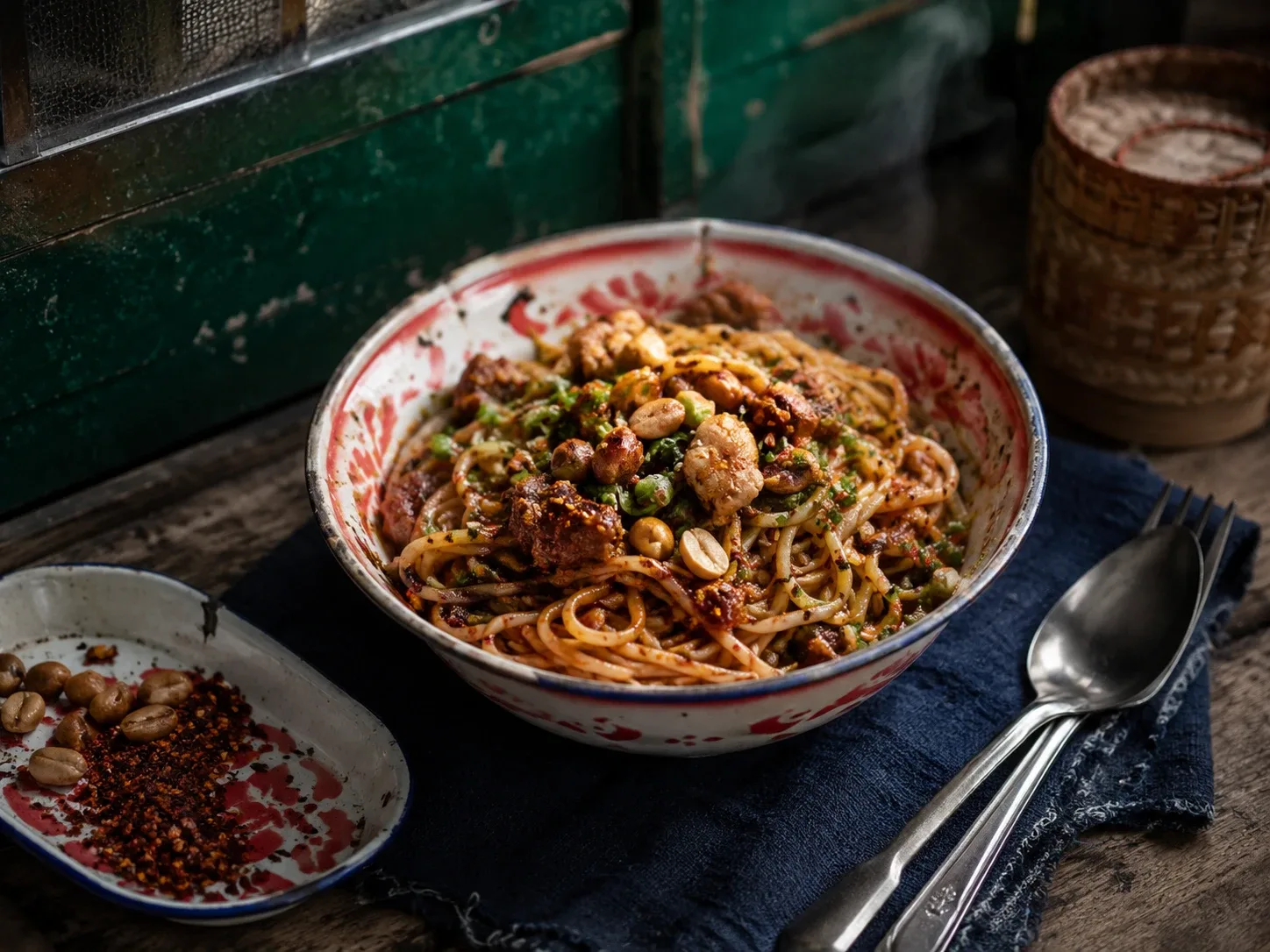
Myitkyina Mala Noodlesမာလာခေါက်ဆွဲ
Wheat noodles tossed in numbing-hot Sichuan pepper chili oil with crisp pork and peanuts — the Yunnanese border bowl that became everyday Myitkyina food.
 ၂
၂Noodles & Mohinga · 115 min · Intermediate
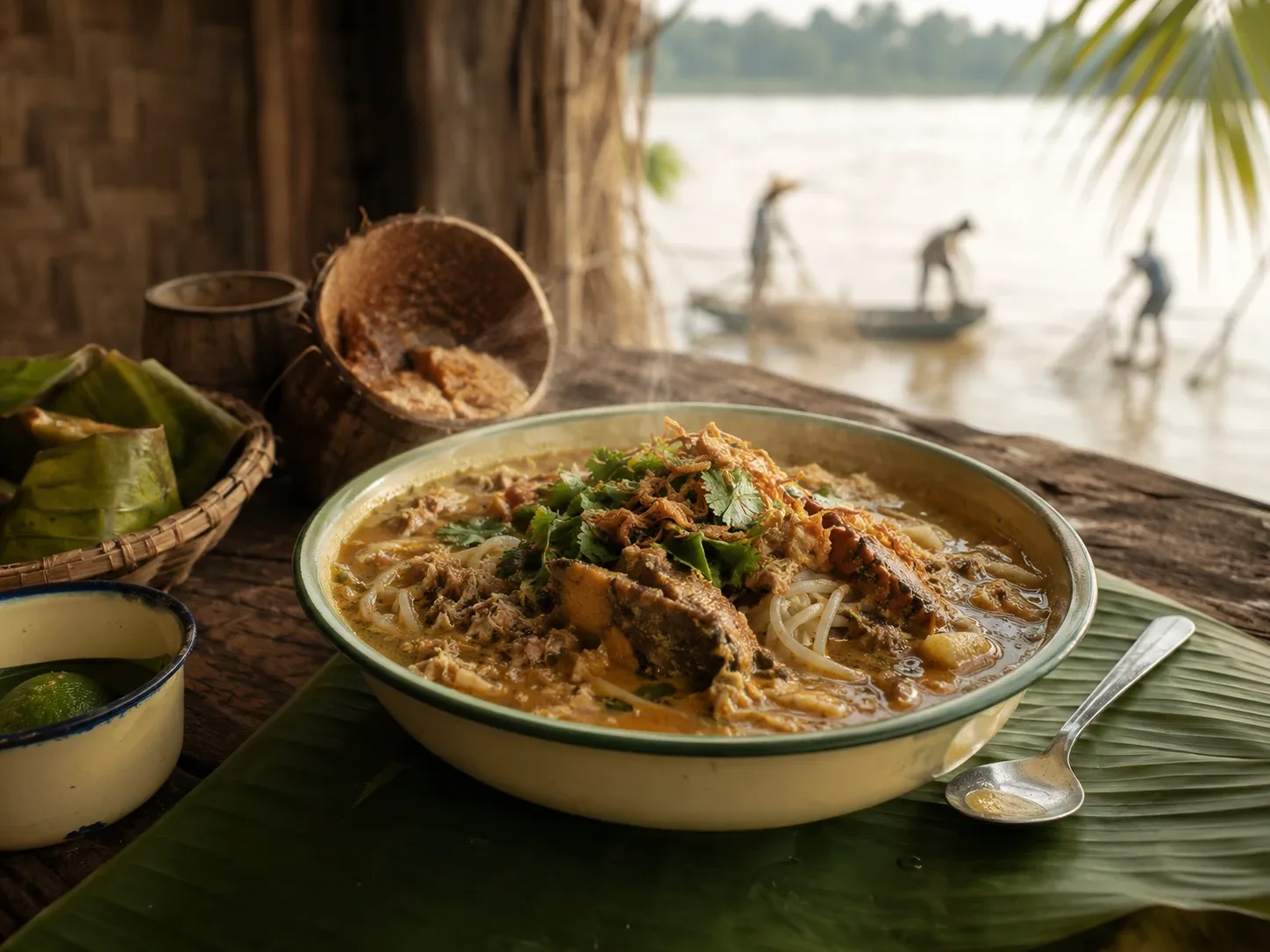
Mawlamyine Mohingaမော်လမြိုင် မုန့်ဟင်းခါး
Mon State's fish-dense, pepper-bright take on the national noodle soup — more catfish, more ngapi, a looser broth, and rice noodles the Mon claim as their own invention.
 ၂
၂Noodles & Mohinga · 50 min · Beginner
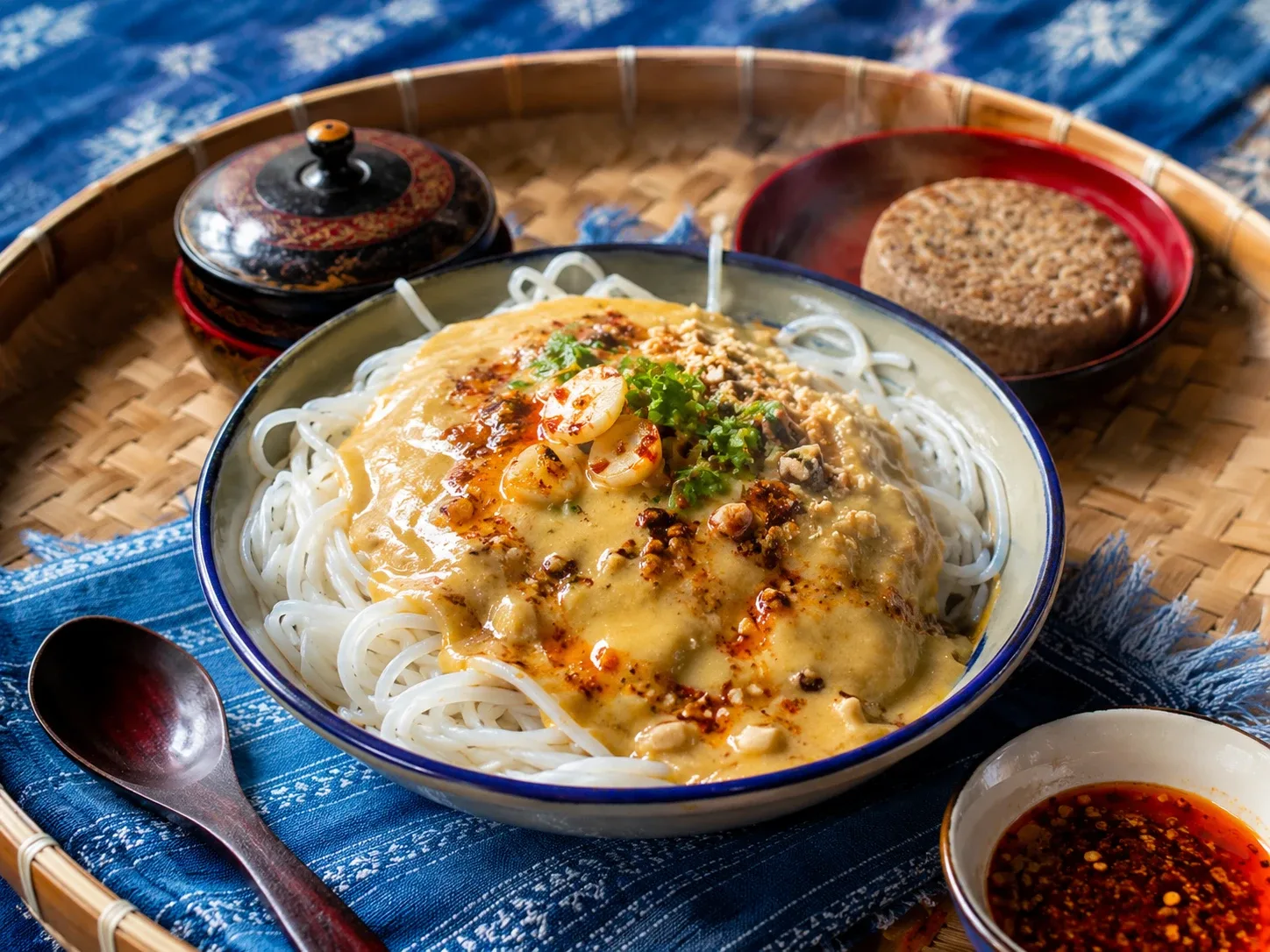
Tofu Nway, Warm Shan Tofu Noodlesတိုဟူးနွေး
Warm chickpea tofu that never sets, ladled like golden custard over rice noodles with garlic oil, chili, and peanuts — Shan State's great breakfast.