Mawlamyine Mohinga
မော်လမြိုင် မုန့်ဟင်းခါး
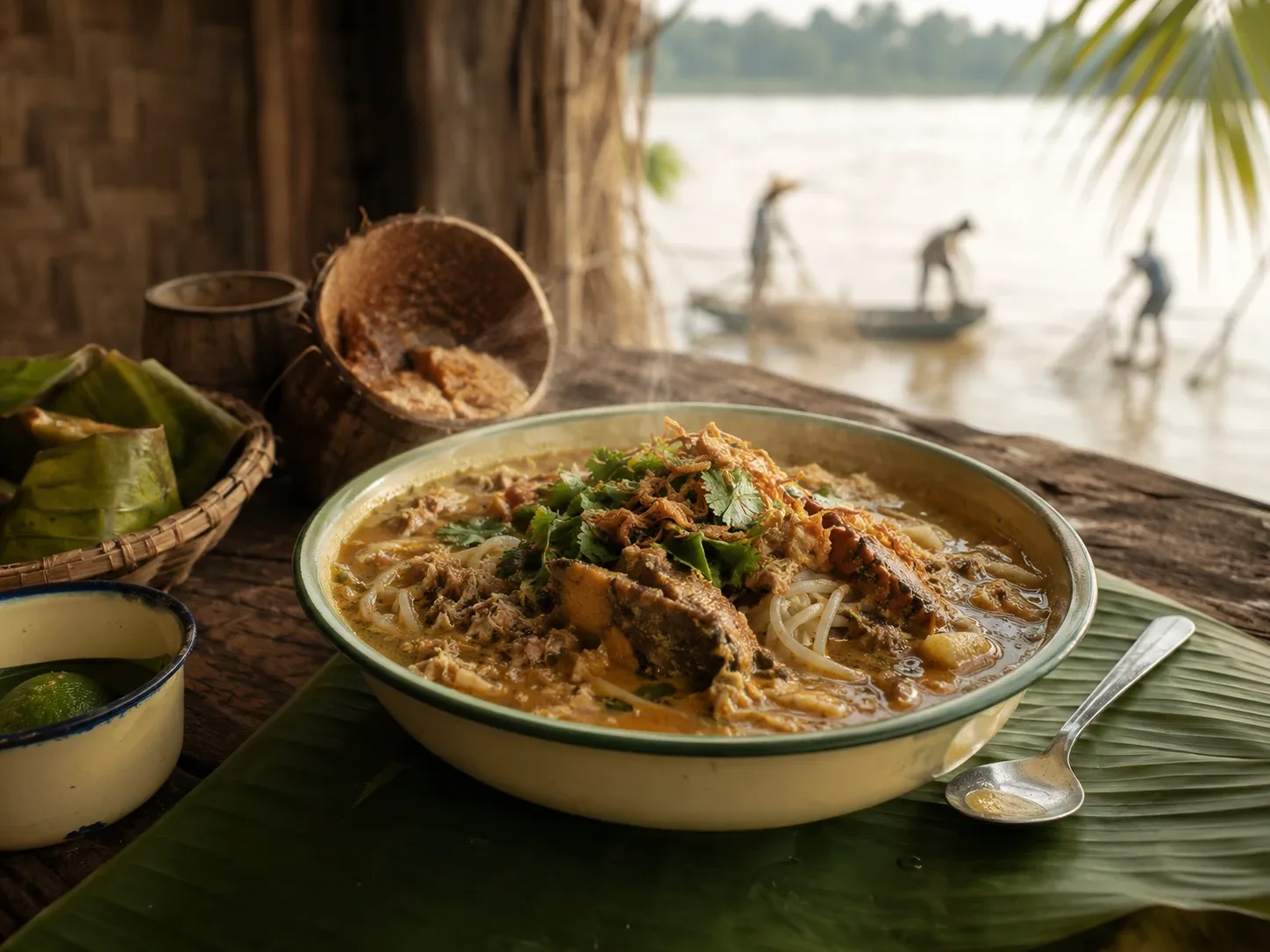
Mon State's fish-dense, pepper-bright take on the national noodle soup — more catfish, more ngapi, a looser broth, and rice noodles the Mon claim as their own invention.
By Burmese Cookbook Kitchen · July 9, 2026
မွန် Mon & Kayin CountryKonbaung, 1752–1885
 ၂
၂- Prep
- 40 min
- Cook
- 75 min
- Serves
- 6
- Level
- Intermediate
There is a Burmese saying every schoolchild knows: Mandalay for the speaking, Yangon for the boasting, Mawlamyine for the eating. When a whole country concedes that one city eats best, its mohinga deserves a hearing — and the Mawlamyine bowl makes its case with quantity of fish rather than thickness of broth. Where a Yangon teahouse ladle is judged by how it coats the spoon, a Mon State bowl is judged by how much catfish comes up in it, seasoned with a frank spoon of ngapi and finished — this is the signature — with black pepper instead of chili.
The Mon claim on mohinga runs deeper than one variant. The fermented rice-noodle craft of lower Burma is credibly a Mon inheritance; the Thai noodle khanom chin, cousin to these very vermicelli, carries a name borrowed from Mon. Some argue the dish's own name has Mon roots. None of this is provable — the documented record of mohinga begins in Konbaung times, and we say so plainly — but eating it in Mawlamyine, where the Thanlwin river meets the Gulf of Mottama and the fish market never really closes, the claim feels less like legend than like circumstantial evidence.
Technique-wise the rules of mohinga hold: toast the besan properly, fry the paste until the oil returns amber, let the fish eat the paste before the broth goes in. Just use less flour, more fish, and finish every bowl the southern way — with the pepper grinder on the table.
A Mawlamyine bowl is judged by the fish, not the flour — if your spoon comes up broth with no flakes in it, you were stingy where the Mon are generous.
မီးဖိုချောင်စကား · A word from the kitchen
Ingredientsပါဝင်ပစ္စည်း
Serves 6
Tap to check off as you gather
For the fish & broth
- catfish fillets — more than the Yangon standard — this bowl is about the fish
- lemongrass — bruised — two for the poach, one minced for the paste
- fresh ginger — half sliced for the poach, half for the paste
- fish sauce
- turmeric
- water
For the paste & body
- shallots — plus 2 more, sliced and fried, for the topping
- garlic
- ngapi (shrimp paste) — a full spoon more than upcountry cooks would dare
- black peppercorns — coarsely cracked — the signature of the southern bowl
- paprika
- peanut oil
- chickpea flour (besan) — toasted, for body — but less than a delta mohinga
- banana stem — tender heart, thinly sliced; celery hearts stand in honestly
To serve
- rice vermicelli — thin and round — the noodle the Mon say they gave the region
- eggs — hard-boiled, halved
- cilantro
- limes — in wedges
- crispy split-pea fritters (pè kyaw)
- black pepper — freshly ground, for the table — used here the way others use chili
Methodချက်နည်း
Tap a numeral as you finish each step
Step 1: Toast the besan
Toast the chickpea flour in a dry pan over medium-low heat, stirring, until it smells like warm peanuts — 4 to 5 minutes. Cool it completely. Mawlamyine broth carries less flour than the delta version, so what little you use must be properly nutty, not raw.
Step 2: Poach a generous amount of fish
Simmer the water with two bruised lemongrass stalks, sliced ginger, turmeric, and fish sauce. Poach the catfish gently until just cooked, 8 to 10 minutes, then lift it out and flake it, saving every drop of liquid. The kilo of fish is not a typo — the southern bowl is fish first, broth second.
Step 3: Fry the paste dark and fragrant
Pound the shallots, garlic, minced lemongrass, remaining ginger, cracked pepper, and ngapi to a rough paste. Fry it in the peanut oil with the paprika over medium heat until the oil separates and turns amber, 6 to 8 minutes. The extra ngapi means the paste smells fierce at minute two and wonderful at minute seven — hold your nerve.
Step 4: Let the fish eat the paste
Add the flaked fish and turn it gently through the amber oil for two minutes. This coats each flake so it stays savory and distinct instead of dissolving into the broth — the difference between a fish soup and a soup with fish in it.
Step 5: Build a lighter-bodied broth
Whisk the cooled besan into a cup of cool poaching liquid, then return everything to the pot with the rest of the liquid and the banana stem. Simmer, stirring along the bottom, 25 to 30 minutes. Stop while the broth still pours freely off the spoon — Mawlamyine mohinga is looser than the Yangon teahouse ladle, because the fish is doing the work.
Step 6: Assemble with a heavy hand
Blanch the vermicelli, drain, and divide among bowls. Ladle the broth over so every bowl gets a thick settlement of fish. Top with egg, fried shallots, cilantro, pè kyaw, lime — and pass the black pepper. In Mon State the last word on a bowl of mohinga is pepper, not chili.
ခွက်ယောက် · The tools
Equipment
Noodle basket / colander
ဆန်ခါBlanch and lift rice noodles in seconds — mohinga service moves fast, and soggy noodles wait for no one.
Shop on Amazon →Stone mortar & pestle
ဆုံFor garlic-ginger paste, pounded dried shrimp fluff, and crushed peanuts — the blender lies about texture; the stone doesn’t.
Shop on Amazon →Mandoline slicer
အလွှာစက်Paper-thin shallots for even frying and cabbage fine enough for thoke — seconds, not knife-years.
Shop on Amazon →
Equipment links are Amazon affiliate links. As an Amazon Associate we earn from qualifying purchases, at no cost to you. Disclosure.
ဟင်းစုံ · Set the table
A Burmese meal is a spread
A bowl is complete, but the table is not without its condiments:
- Si chet, chili oilဆီချက်The fragrant red oil every household keeps by the stove.
- Crispy fried shallotsကြက်သွန်ကြော်A spoonful of crunch and sweet shallot oil over anything.
- Balachaungဘလချောင်းThe crispy shrimp relish that lives on every Burmese table.
- Teahouse milk teaလက်ဖက်ရည်How a Burmese meal ends — sweet, strong, and slow.
Questions from the kitchen
How is this actually different from regular mohinga?
Three honest ways — nearly half again as much fish, a bolder spoon of ngapi, and black pepper where upcountry bowls reach for chili. The broth is also thinner, since a fish-crowded bowl doesn't need the flour to feel substantial. It's a cousin, not a costume change.
Did the Mon really invent mohinga?
Nobody can prove it, and the written record only starts in the Konbaung era. But the Mon case is serious — the fermented rice-noodle craft is credibly theirs, and Thailand's khanom chin noodles even carry a Mon name. Treat the origin as a strong claim, not a settled fact.
Can I use sea fish here?
Mawlamyine sits where river meets gulf, so cooks there use whatever the morning landed — freshwater catfish is standard, but a firm, mild marine catfish works. Avoid oily fish like mackerel; the lemongrass loses the argument.
နောက်တစ်ခု · Cook next
Keep the wok hot
 ၂
၂Noodles & Mohinga · 50 min · Beginner
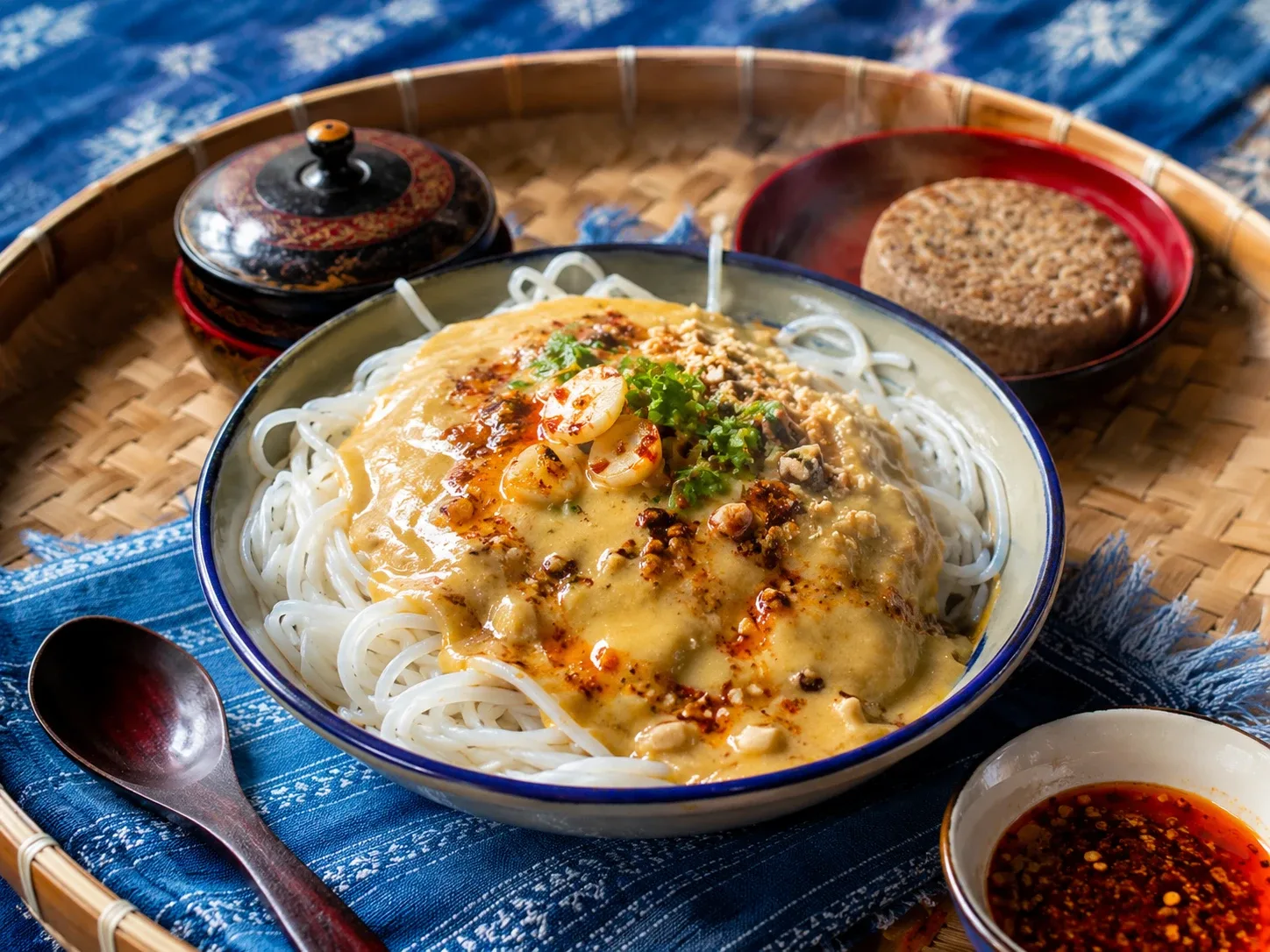
Tofu Nway, Warm Shan Tofu Noodlesတိုဟူးနွေး
Warm chickpea tofu that never sets, ladled like golden custard over rice noodles with garlic oil, chili, and peanuts — Shan State's great breakfast.
 ၂
၂Noodles & Mohinga · 40 min · Intermediate
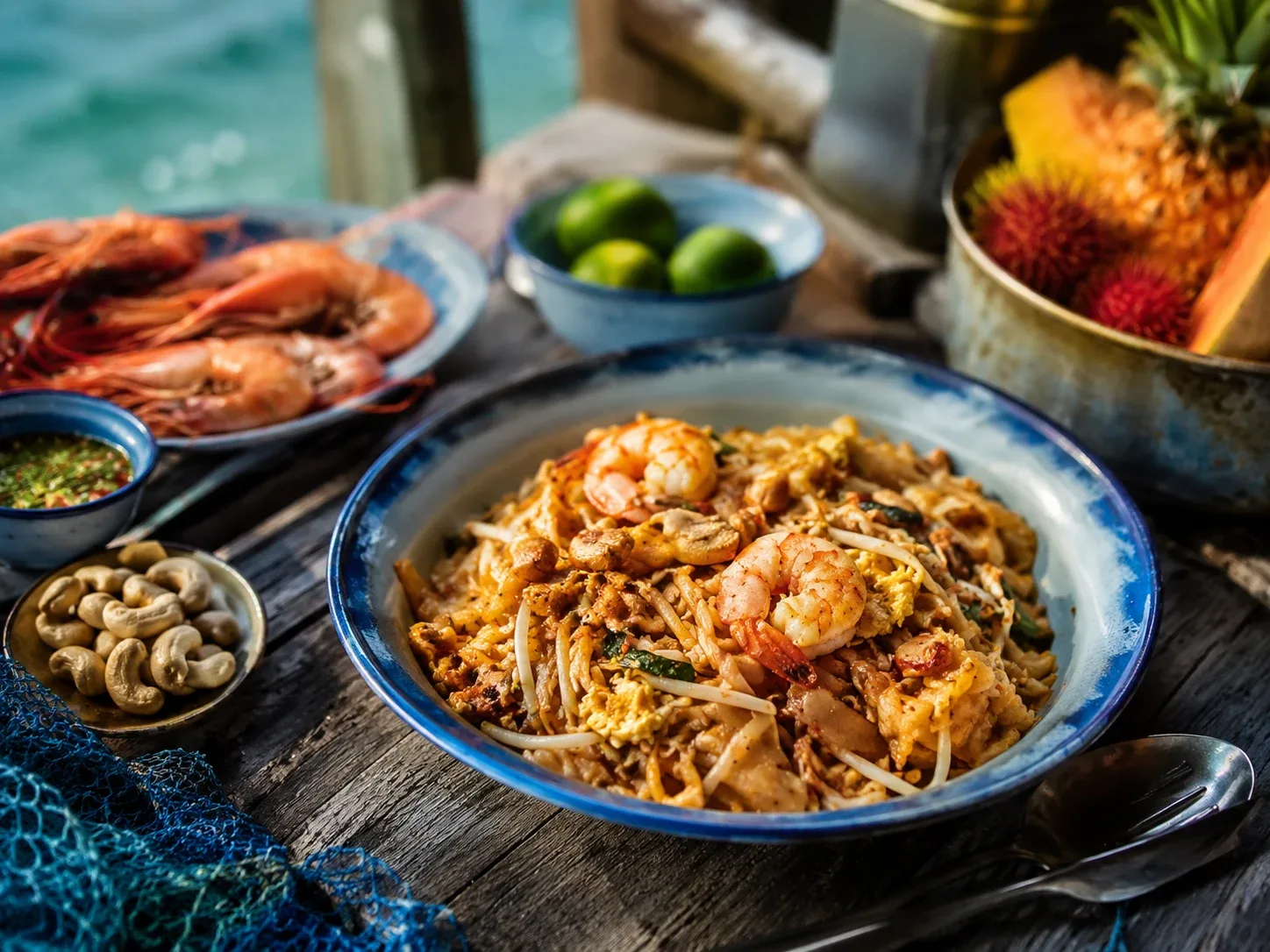
Kat Kyi Kaik, Dawei's Scissor-Cut Noodlesကတ်ကြေးကိုက်
Dawei's famous stir-fried rice noodles, snipped with scissors at the table — sweet-savory, smoky from the wok, piled with prawns, egg, and peanuts.
 ၁
၁Rice & Foundations · 210 min · Intermediate
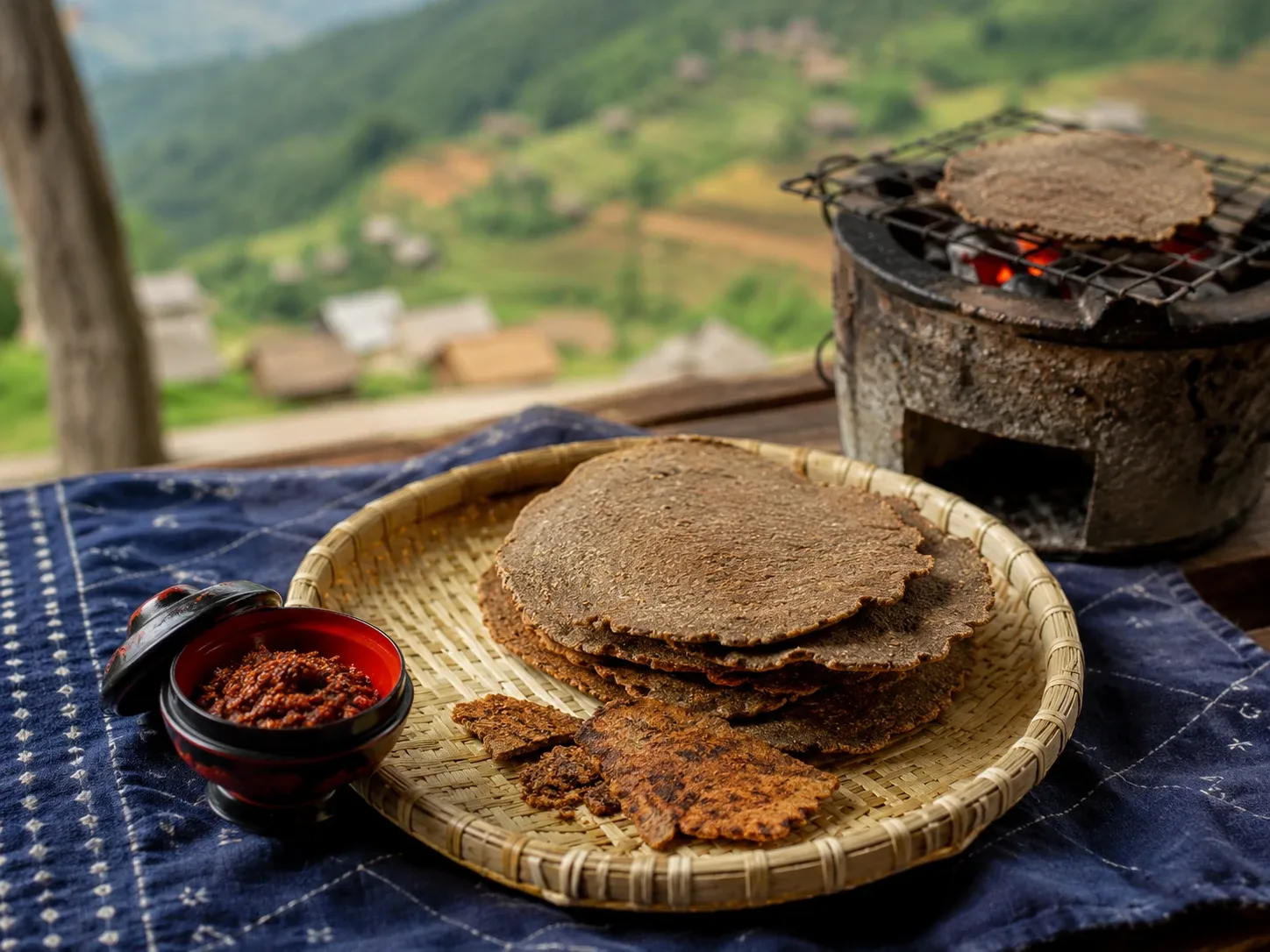
Tua Nao, Shan Fermented Soybean Discsပဲပုပ်
Shan State's seasoning backbone — soybeans boiled, fermented, pounded, and sun-dried into discs you toast over flame and crumble into everything.