Lemongrass
စပါးလင်
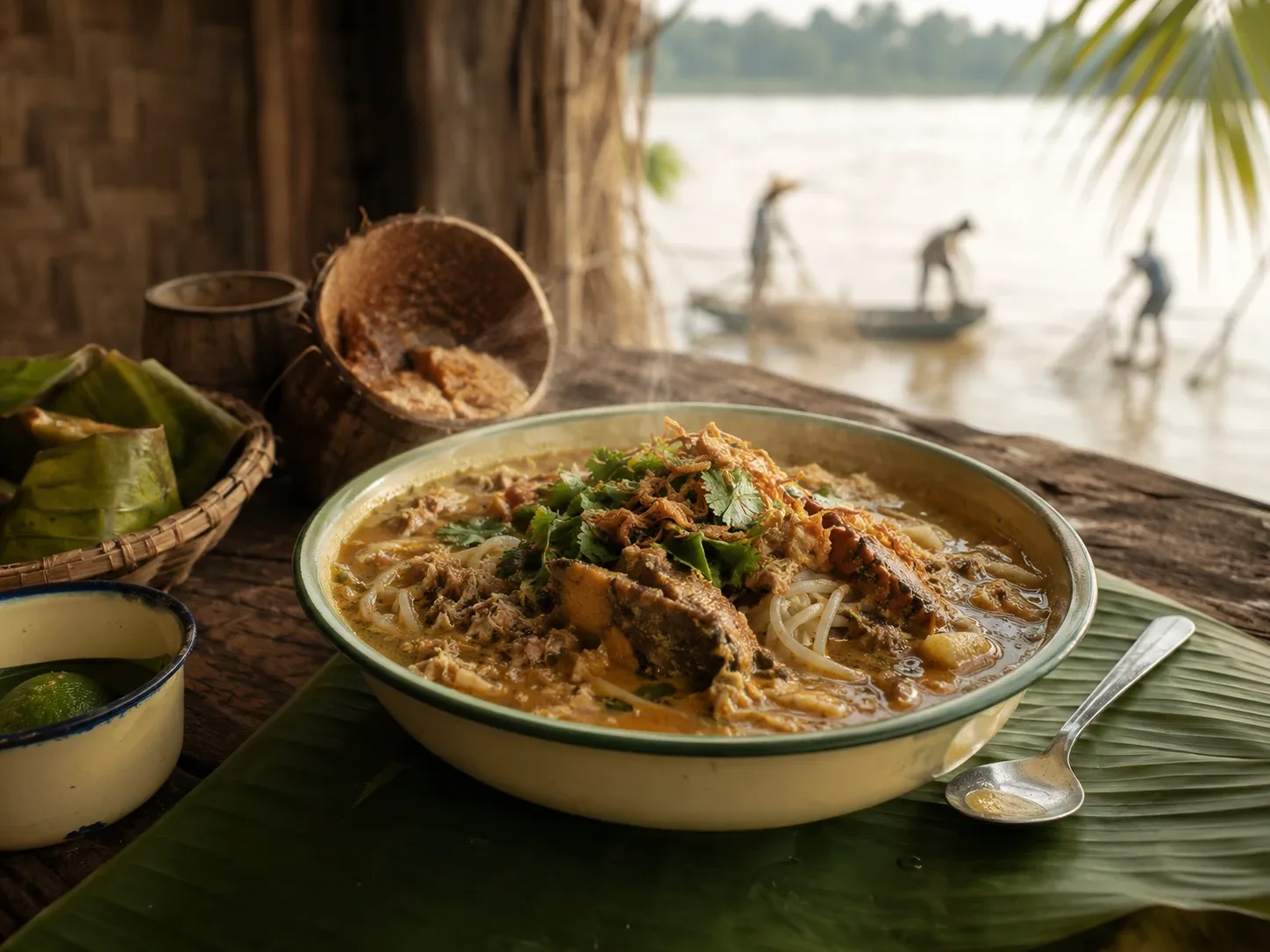
Bruised stalks in the mohinga pot — citrus perfume without the acid, fragrance without the bite.
Also answers to: zabalin · lemon grass
Lemongrass is a tough, fibrous tropical grass whose lower stalk carries citral — the same aromatic compound as lemon peel — without any of lemon’s acidity. That distinction is the whole key to using it: lemongrass perfumes a broth the way zest would, but it cannot sour one, which is why Burmese recipes that use it usually still reach for tamarind or lime as well. The fragrance lives in the pale bottom third of the stalk; the green top is fiber and diminishing returns.
In Burmese cooking its defining post is the mohinga pot, where whole bruised stalks simmer in the fish broth, taming the catfish alongside turmeric and ginger and lending the soup its clean top note. It appears too in fish soups and stews generally, in some regional grilled dishes, and pounded into pastes here and there — but Burma uses lemongrass with a lighter hand than Thailand next door. It is a supporting fragrance in the Burmese kitchen, not a lead flavor, and recipes on this site follow that restraint.
The grass grows readily across Southeast Asia and has been in regional use for a very long time — precisely how long is the kind of question oral tradition answers with confidence and documentation doesn’t answer at all.
Choosing itရွေးချယ်ခြင်း
Look for firm, heavy stalks with fat, pale bulbous bottoms and no dryness or browning at the base — a stalk that feels light and papery has already given up its oils. The fragrance test is legitimate: scratch the base with a fingernail and it should smell loudly of lemon. Southeast Asian grocers sell it fresh in bundles cheaply; supermarkets sell it in twos at a markup. Frozen stalks and frozen pre-ground lemongrass are honest options that keep most of the aroma. Dried lemongrass and lemongrass paste in tubes are the weakest forms — usable in a simmered broth, pointless anywhere subtle.
Keeping itသိမ်းဆည်းခြင်း
Fresh stalks keep about two weeks loosely wrapped in the fridge, and they freeze superbly — this is one of the rare aromatics that loses almost nothing in the freezer. The practical move is to buy a bundle, trim the tops, and freeze the stalks whole in a bag; they bruise and slice fine straight from frozen. Trimmed tops aren’t garbage either — simmer them in stock or tea. A stalk stood in a glass of water at room temperature will keep for days and often obligingly roots, at which point you own a lemongrass plant.
In the potမီးဖိုချောင်တွင်
For broths — mohinga above all — trim the root end, peel the toughest outer layer, and bruise the bottom third hard with the spine of a knife or a pestle; the crushing ruptures the oil cells, and an unbruised stalk contributes nearly nothing. Drop it in whole and fish it out before serving; nobody eats the stalk. For pastes, use only the tender pale core, sliced thin against the grain before pounding, or the fibers will haunt the dish. It gives up its perfume within twenty or thirty minutes of simmering — longer does no harm but adds no more.
ဟင်းလျာများ · Cooked with it