Kachin Banana-Leaf Fish
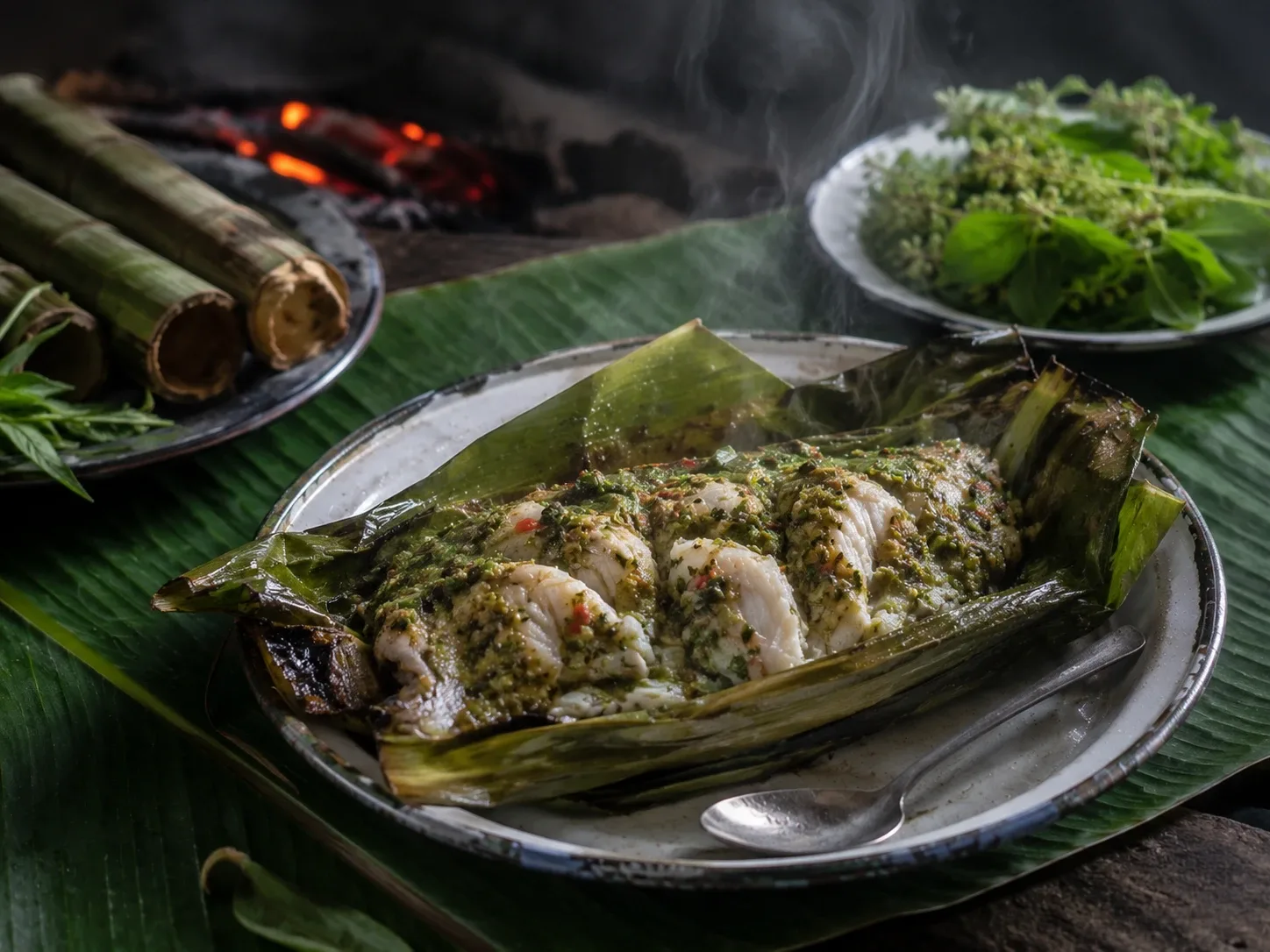
River fish massaged with a pounded green paste of herbs, chilies, and Sichuan pepper, wrapped in banana leaf and steamed — Kachin hearth cooking, no oil at all.
By Burmese Cookbook Kitchen · July 9, 2026
ကချင် Kachin StateBritish Burma, 1826–1948
 ၃
၃- Prep
- 30 min
- Cook
- 20 min
- Serves
- 4
- Level
- Intermediate
The Kachin hills cook inside leaves the way the lowlands cook inside oil. Wrap a paste-massaged piece of river fish in wilted banana leaf, set the parcel over steam or embers, and the leaf does everything a pot cannot: it seals in the juices, perfumes them with its tea-and-hay sweetness, and serves as the plate when it is opened at the table. There is no si pyan here because there is no oil at all — the entire dish is fish, pounded green herbs, chilies, Sichuan pepper, and salt, which is as close as cooking gets to a statement of regional principle.
Leaf-packet cookery exists across Myanmar — the Mon coast's golden nga baung doke is the famous one — but the Kachin parcel is its own animal, green and bracing where the coastal version is rich and turmeric-stained. Colonial-era accounts of the northern hills describe exactly this hearth habit, meat and fish pounded with wild herbs and cooked in leaf or bamboo, so we date its entry into the written record there, while saying plainly that the practice itself is older than anyone's notebook.
Success is mostly in the wrapping. Wilt the leaf over a flame until glossy, or it will crack and leak; fold the parcel snug, so the fish steams in its own seasoned juices; and toast the Sichuan pepper before grinding, because steam amplifies whatever you seal inside — the good and the dusty alike. Open the parcels at the table. The first breath of escaping steam is the argument for the whole method.
Wilt the banana leaf over a flame until it turns glossy and smells of warm hay — an unwilted leaf cracks when you fold it and gives the fish nothing.
မီးဖိုချောင်စကား · A word from the kitchen
Ingredientsပါဝင်ပစ္စည်း
Serves 4
Tap to check off as you gather
For the herb paste
- garlic
- fresh ginger
- lemongrass — tender inner core only, sliced thin
- green bird's eye chilies
- Sichuan peppercorns — toasted, ground, husks sifted out
- cilantro — stems and all
- basil leaves — or perilla, which is closer to the hills
- salt
For the parcels
- firm white fish fillets — tilapia, trout, or catfish — a river fish, cut into 4 portions
- banana leaf — about 30 cm — frozen leaves work well; keep foil beneath as insurance against splits
- toothpicks — or kitchen twine, for sealing
Methodချက်နည်း
Tap a numeral as you finish each step
Step 1: Toast and grind the Sichuan pepper
Toast the peppercorns in a dry pan over low heat until fragrant, a minute or two, then grind and sift out the husks. The steam inside the parcel amplifies everything — dusty untoasted pepper has nowhere to hide in there.
Step 2: Pound the green paste
In a mortar, pound the garlic, ginger, lemongrass, chilies, and salt to a rough paste, then work in the cilantro and basil by handfuls until you have a coarse green slurry. Add the ground pepper last. Pounding bruises the herbs open so they perfume the fish from within; a blender makes a smoother, weaker sauce and waters it down doing so.
Step 3: Massage the fish
Coat the fish portions in the paste, working it gently over every surface with your hands, and rest them for 15 minutes. This is the only seasoning the dish gets — there is no sauce to correct later, so let the paste sit long enough to begin its work.
Step 4: Wilt the leaves
Pass each banana-leaf square briskly over a gas flame or a hot burner until it deepens in color and turns glossy and pliable. Wilting melts the leaf's waxy surface, which is what releases its tea-and-hay fragrance into the fish — this step is flavor, not just origami.
Step 5: Wrap the parcels
Lay each portion with its share of paste in the center of a leaf, shiny side in. Fold the near edge over, then the far edge, then the ends, into a snug flat packet, and pin with toothpicks. A tight parcel steams the fish in its own juices; a loose one leaks them into the pot.
Step 6: Steam and open at the table
Steam the parcels over rolling water for 15 to 18 minutes, until a skewer slides through the thickest part without resistance. Or set them on a grill over medium charcoal for the same time, turning once, for a scorched-leaf edge that is even closer to the hearth. Serve the parcels sealed and let everyone open their own — the escaping steam is the dish introducing itself.
ခွက်ယောက် · The tools
Equipment
Carbon-steel wok
ဒယ်အိုးThe dai-oh — for si pyan curries, fritters, and every fried-noodle dish here. Carbon steel, seasoned dark, nothing fancy.
Shop on Amazon →Tiered steamer
ပေါင်းအိုးFor sticky rice, steamed mont, and reheating without drying out. Bamboo or stainless both work.
Shop on Amazon →Stone mortar & pestle
ဆုံFor garlic-ginger paste, pounded dried shrimp fluff, and crushed peanuts — the blender lies about texture; the stone doesn’t.
Shop on Amazon →Fine sieve / muslin
စစ်ခွက်For straining tamarind, pressing broth clear, and sifting flours — line it with muslin for the cleanest pour.
Shop on Amazon →
Equipment links are Amazon affiliate links. As an Amazon Associate we earn from qualifying purchases, at no cost to you. Disclosure.
ဟင်းစုံ · Set the table
A Burmese meal is a spread
A curry is the anchor, not the whole meal. Round out the table:
- Steamed riceထမင်းThe centre of the table — everything else is built around it.
- A light soupဟင်းချိုThe clear, sour broth sipped between mouthfuls of rice.
- Toh sa yar & ngapi dipတို့စရာRaw and blanched vegetables with a pungent fish-paste dip — the fresh, bitter counterpoint.
- Balachaungဘလချောင်းThe crispy shrimp relish that lives on every Burmese table.
- Crispy fried shallotsကြက်သွန်ကြော်A spoonful of crunch and sweet shallot oil over anything.
- A hand-tossed thokeအသုပ်A bright, sour salad to lift the whole spread.
Questions from the kitchen
How is this different from Mon nga baung doke?
Same wrapper, different country of ideas. The Mon coastal classic is golden — turmeric, often coconut and a richer masala logic. The Kachin parcel is green and austere: pounded raw herbs, chilies, Sichuan pepper, salt, and nothing else, with not a drop of added oil. Taste them side by side and you taste the coast versus the hills.
Can I use foil instead of banana leaf?
Foil will cook the fish perfectly and season it not at all. The wilted leaf gives a real fragrance the dish is built around. Frozen banana leaves are cheap and widely available — use foil under a cracked leaf as a liner, not as the wrapper itself.
Which fish should I buy?
A firm freshwater fish is the spirit of the thing — tilapia is the easy call, trout is excellent, catfish is closest to home. Delicate flatfish collapse in the parcel, and oily sea fish like mackerel shout over the herbs.
Can I do this with chicken?
Yes — the same paste massaged into small pieces of boneless thigh, wrapped and steamed for 30 minutes, is the celebrated sibling parcel of the Kachin hills. The fish version cooks faster and takes the Sichuan pepper more gracefully, which is why it gets the full recipe.
နောက်တစ်ခု · Cook next
Keep the wok hot
 ၃
၃Curries · 125 min · Intermediate
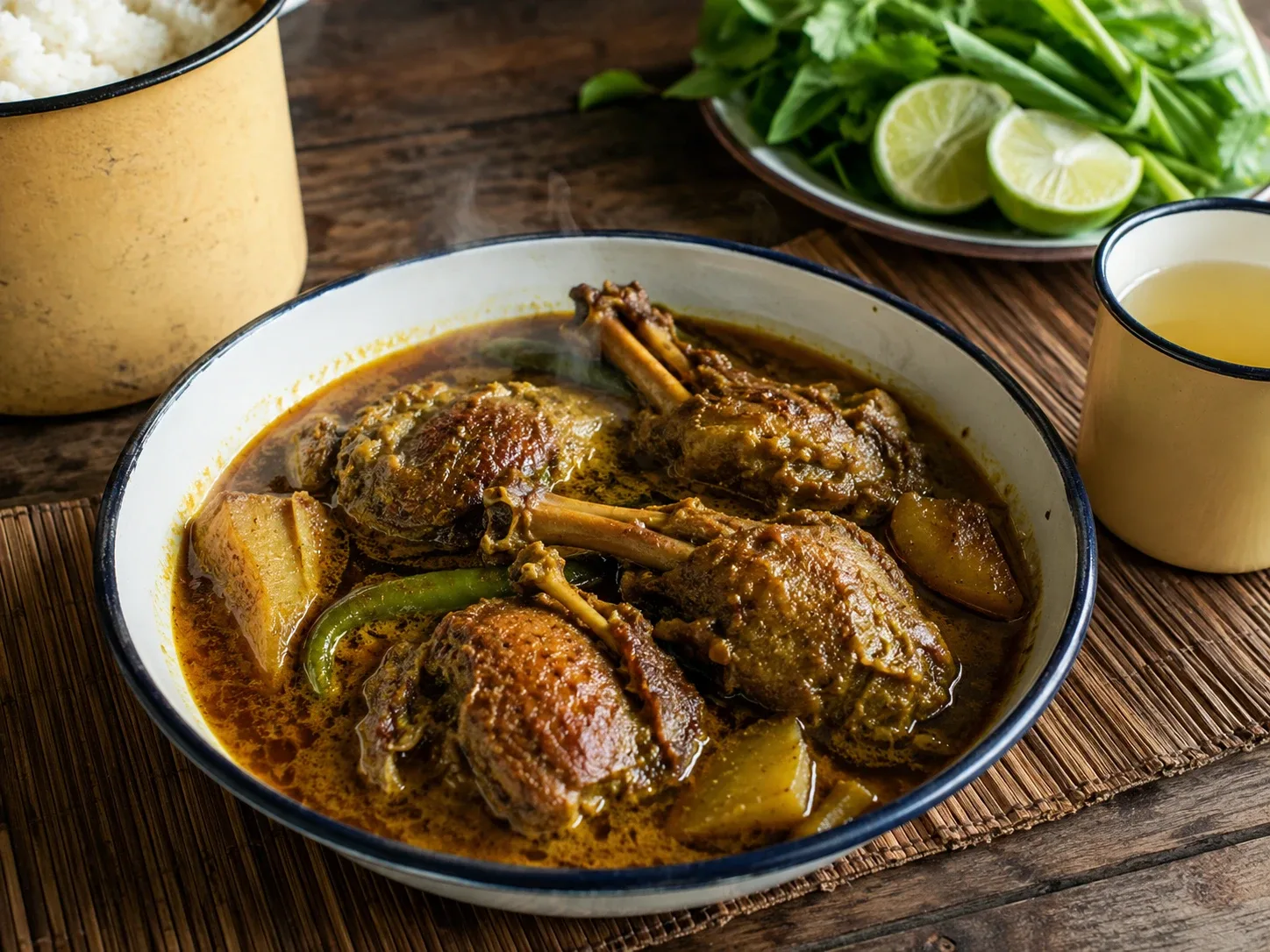
Be Thar Hin, Delta Duck Curryဘဲသားဟင်း
Duck curry from the Ayeyarwady, where ducks glean the rice paddies — browned in its own fat, then braised si pyan style until the amber oil returns.
 ၃
၃Curries · 45 min · Beginner
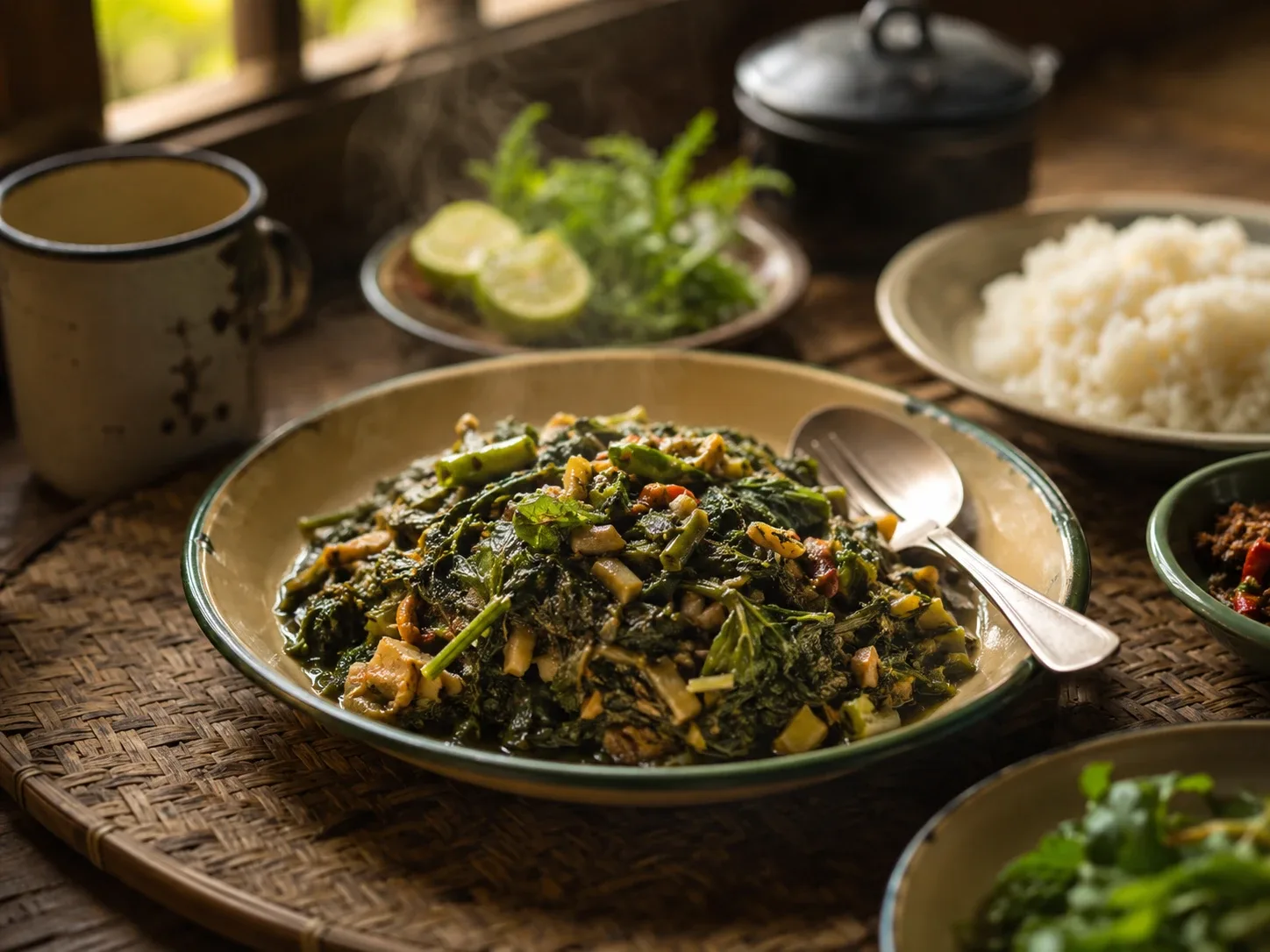
Chin Baung Kyaw, Sour Roselle Leavesချဉ်ပေါင်ကြော်
Lower Burma's beloved sour greens — roselle leaves fried down with bamboo shoots, dried shrimp, and green chili until they collapse into a dark tangy relish.
 ၁
၁Rice & Foundations · 210 min · Intermediate
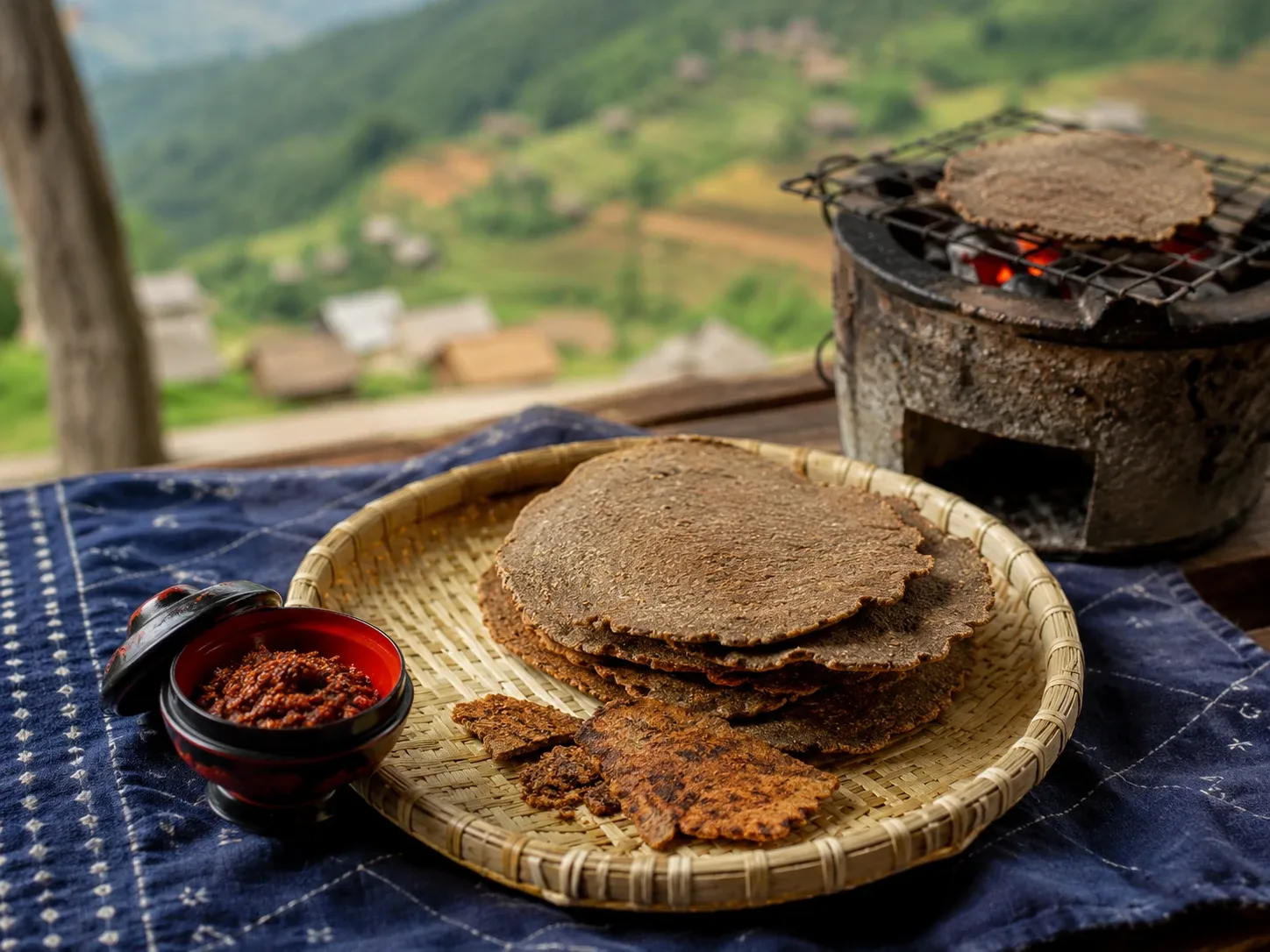
Tua Nao, Shan Fermented Soybean Discsပဲပုပ်
Shan State's seasoning backbone — soybeans boiled, fermented, pounded, and sun-dried into discs you toast over flame and crumble into everything.