Ar Pu Shar Pu, the Burning-Mouth Bowl
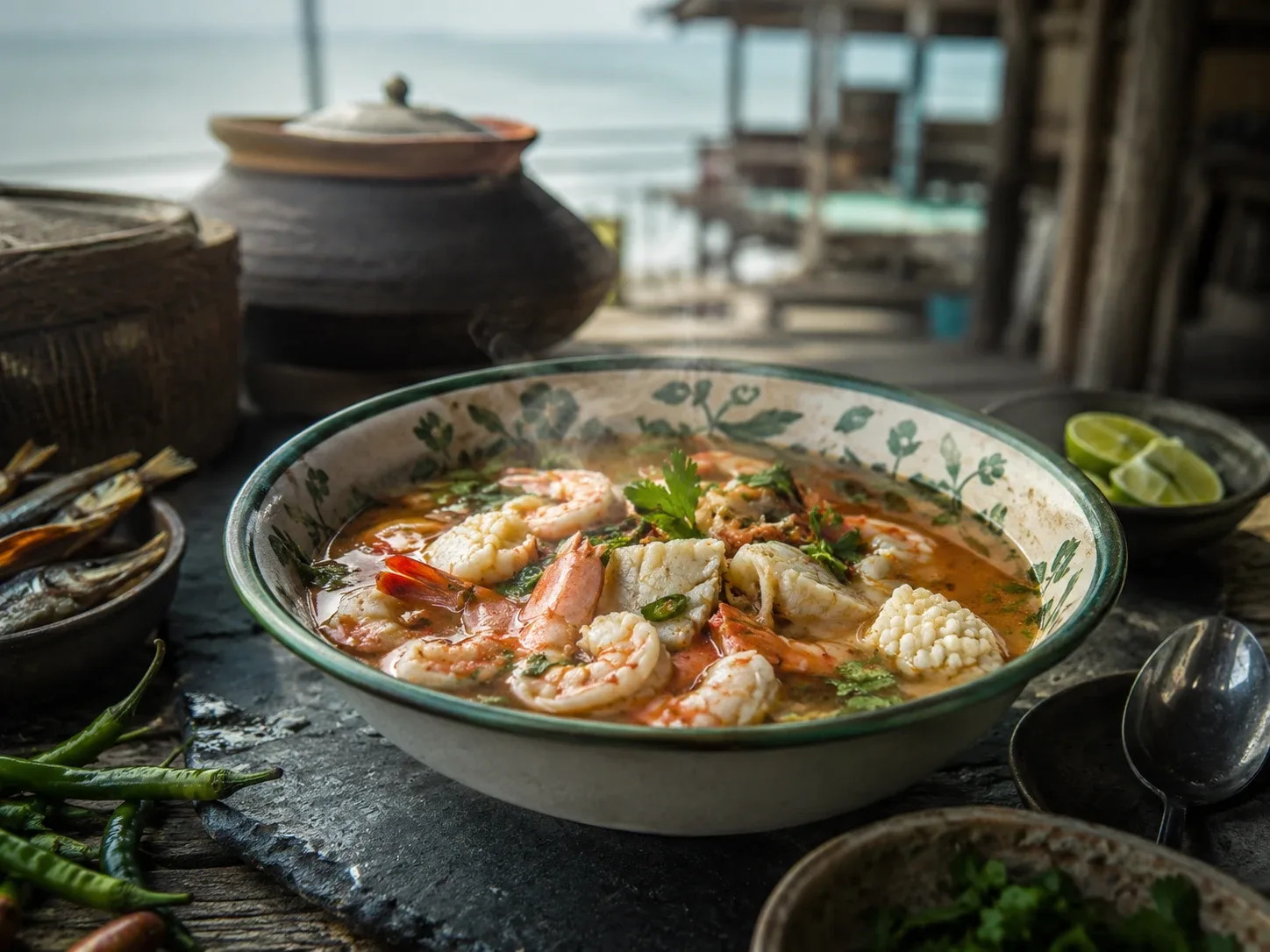
Sittwe's famous hot-and-sour seafood soup — fish, prawns, and squid in a tamarind broth pounded through with green chilies, finished with lime and herbs.
By Burmese Cookbook Kitchen · July 9, 2026
ရခိုင် Rakhine CoastOpening & Diaspora, 1988–present
 ၅
၅- Prep
- 30 min
- Cook
- 25 min
- Serves
- 4
- Level
- Intermediate
Ask anyone from Sittwe to name their city's dishes and two answers come back: mont di, and this — ar pu shar pu, a name that translates, approximately, as "mouth on fire, tongue on fire". Let the record be stated plainly: this is modern street cooking, born in the evening food stalls and beer stations of the Rakhine capital, and it appears in no chronicle older than living memory. That is not a weakness. A dish whose name is a customer's yelp is a dish that earned its place honestly.
The bowl is a compendium of the region's whole doctrine. There is no oil anywhere in it — the depth that other soups buy with a fried base is paid for here with charred green chilies and roasted ngapi, pounded together into a smoky, furious paste. Tamarind pulls the broth taut, the way it does across all Rakhine cooking. And the seafood is a mixed catch — fish, prawns, squid, whatever the boats brought in — because Sittwe sits at the mouth of the Kaladan river with the Bay of Bengal for a pantry.
One technique separates a good bowl from a chewy one: the stagger. Fish, prawns, and squid do not cook at the same speed, and the street cooks add them in strict order — fish at three minutes, prawns at ninety seconds, squid at sixty, pot off the fire. Get the clocks right and every spoonful is silk wrapped around a lit match, which is precisely what the name promised you.
Stagger the seafood by toughness — fish first, prawns next, squid for the final minute. One pot, three clocks, and the difference between silk and rubber.
မီးဖိုချောင်စကား · A word from the kitchen
Ingredientsပါဝင်ပစ္စည်း
Serves 4
Tap to check off as you gather
For the seafood
- firm white fish fillets — snapper or sea bass, cut into 3 cm chunks
- prawns — peeled, tails on
- squid — cleaned, bodies in 1 cm rings
- turmeric
- salt
For the broth
- green bird's eye chilies — three pounded, two whole — the name of the dish is a promise
- large green chilies — charred in a dry pan until blistered
- garlic
- fresh ginger
- lemongrass — bruised
- ngapi (shrimp paste) — roasted briefly in foil; or 2 tsp extra fish sauce
- tomatoes — cut into wedges
- tamarind — pulp, soaked in 150 ml hot water and strained
- fish sauce
- water
To finish
- limes — one juiced, one in wedges at the table
- cilantro
- sawtooth coriander leaves — sliced into ribbons; very Rakhine, worth hunting for
- scallions — sliced
Methodချက်နည်း
Tap a numeral as you finish each step
Step 1: Season the seafood
Toss the fish, prawns, and squid with the turmeric and salt and let them sit while the broth builds. Keep the three piles separate — they will enter the pot on different clocks, and mixing them now means overcooking two of them later.
Step 2: Char and pound the base
Blister the large green chilies in a dry pan until soft and scorched in patches, roasting the foil-wrapped ngapi alongside for the last three minutes. Pound the bird's eye chilies and garlic to a rough paste, then add the torn charred chilies and ngapi and pound a few strokes more. This charred, pounded base is where the broth's depth comes from — no oil is going to be fried, so the fire does the frying's job.
Step 3: Build the broth
Bring the water to a simmer with the pounded base, ginger, lemongrass, and fish sauce. Add the tomato wedges and simmer for ten minutes, until the broth is stained and the tomatoes slump. It should taste aggressive at this stage — hot, saline, a little smoky. The seafood and lime will civilize it, slightly.
Step 4: Sour it with tamarind
Stir in the tamarind water and the whole chilies and simmer three minutes more. Taste and adjust now, before the seafood enters: sour should lead, salt should follow, and the heat should sit in the back of the throat like a struck match. Once the seafood is in, there is no time for corrections.
Step 5: Stagger in the seafood
With the broth at a steady simmer, add the fish and cook three minutes. Add the prawns and cook ninety seconds, until just pink. Add the squid, count one minute, and pull the pot off the heat — the squid finishes in the broth's carryover warmth. Three clocks, one pot, nothing rubbery.
Step 6: Finish sharp and serve hot
Stir in the lime juice off the heat — boiled lime turns bitter — and scatter over the cilantro, sawtooth coriander, and scallions. Serve steaming, with rice or without, and lime wedges within reach. The first spoonful should make you inhale sharply; that is the dish keeping its name.
ခွက်ယောက် · The tools
Equipment
Heavy pot / Dutch oven
အိုးကြီးDeep and heat-retentive — for mohinga broth, long-simmered hin, and deep-frying without temperature crashes.
Shop on Amazon →Stone mortar & pestle
ဆုံFor garlic-ginger paste, pounded dried shrimp fluff, and crushed peanuts — the blender lies about texture; the stone doesn’t.
Shop on Amazon →
Equipment links are Amazon affiliate links. As an Amazon Associate we earn from qualifying purchases, at no cost to you. Disclosure.
ဟင်းစုံ · Set the table
A Burmese meal is a spread
A Burmese soup sits beside the rice, not on its own. Set the table with:
- Steamed riceထမင်းThe centre of the table — everything else is built around it.
- A curryဟင်းSlow-cooked until the oil returns — the richness the sides cut against.
- Toh sa yar & ngapi dipတို့စရာRaw and blanched vegetables with a pungent fish-paste dip — the fresh, bitter counterpoint.
- Balachaungဘလချောင်းThe crispy shrimp relish that lives on every Burmese table.
- Crispy fried shallotsကြက်သွန်ကြော်A spoonful of crunch and sweet shallot oil over anything.
Questions from the kitchen
What does the name mean?
Roughly "mouth on fire, tongue on fire" — Sittwe menu poetry, and a fair warning label. It is the sort of name a dish earns from its customers rather than gets from a cookbook, which tells you exactly what kind of dish it is.
Can I use just one kind of seafood?
Absolutely — an all-fish or all-prawn version is common and honest. Keep the total around 700 g and respect each ingredient's clock. The mixed pot is the street version, priced to move whatever the boats brought in that morning.
Is this the same as the Kawthaung sour prawn soup?
Cousins, not twins — Myanmar's coasts all sour their seafood broths. The far-southern pot leans on lemongrass perfume and prawn sweetness; the Sittwe bowl is hotter, smokier from its charred chili base, and built on whatever mixed catch came in. Both are worth your stove.
နောက်တစ်ခု · Cook next
Keep the wok hot
 ၅
၅Soups & Broths · 135 min · Beginner
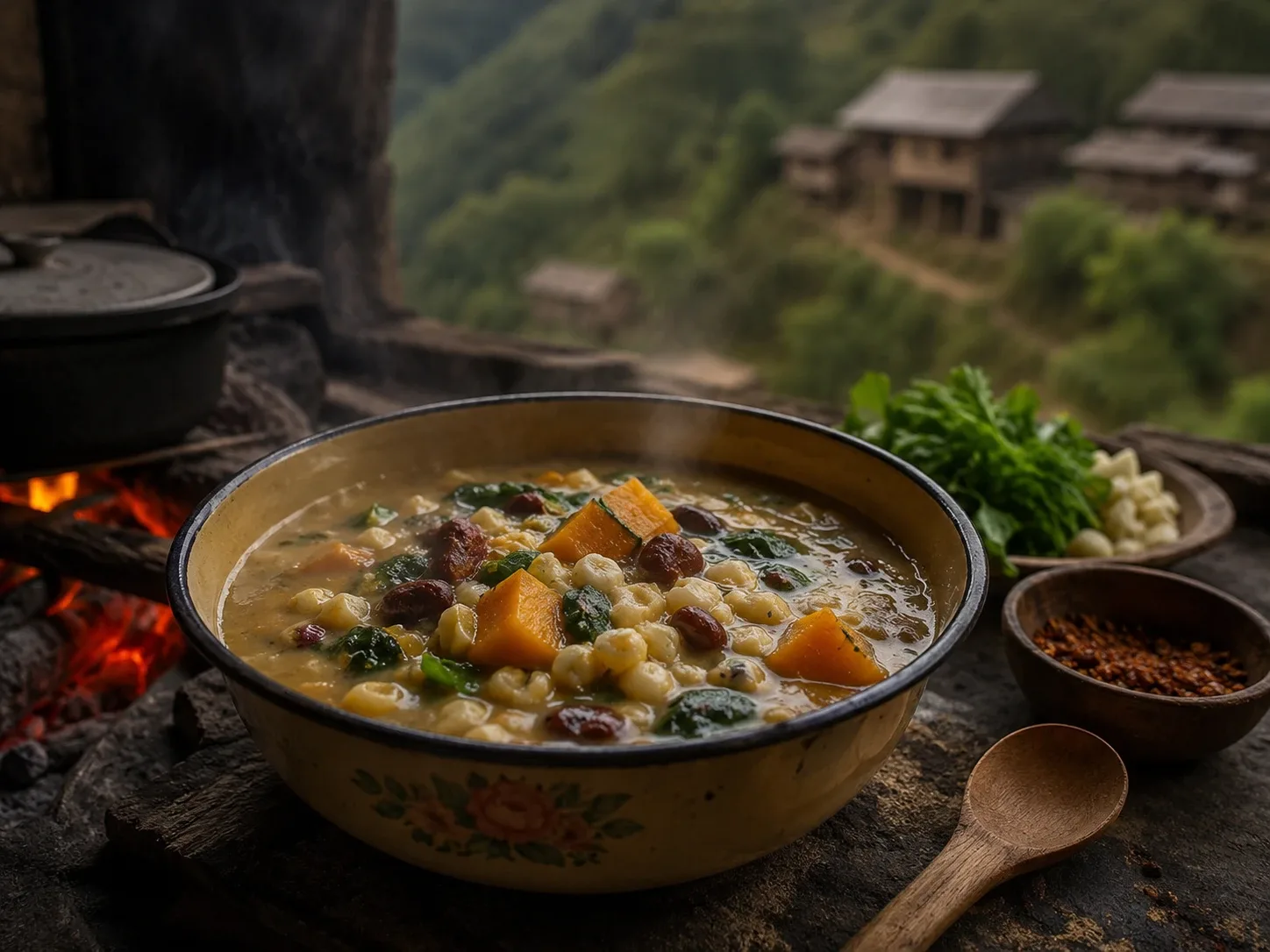
An Buti, the Meatless Corn Soup
Sabuti's meatless sibling from the Chin hills — hominy corn simmered with red beans, pumpkin, and greens until the pot thickens into gentle, vegetable plenty.
 ၅
၅Soups & Broths · 100 min · Beginner
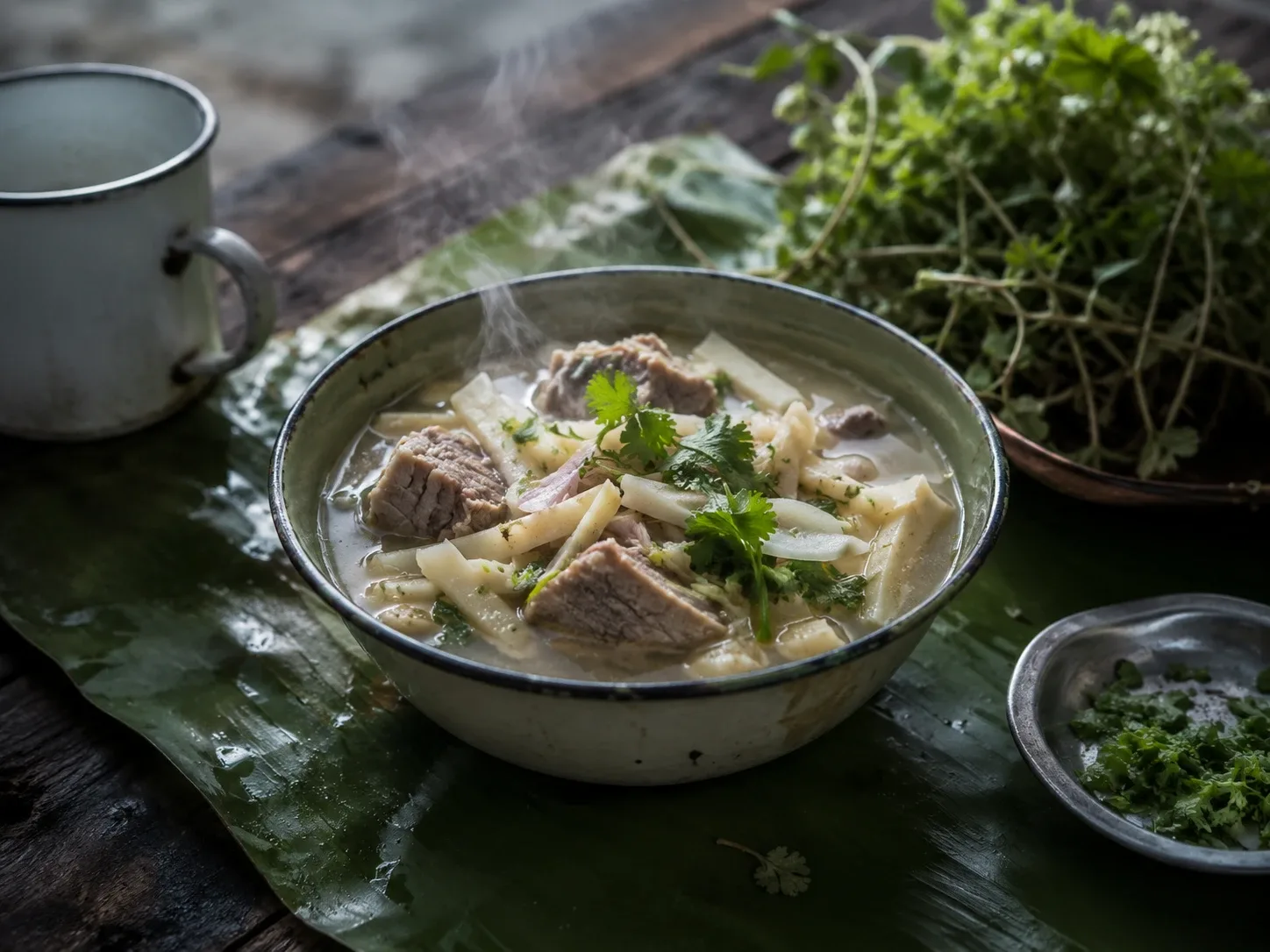
Sour Bamboo Shoot Soup with Porkမျှစ်ချဉ်ဟင်း
Pork ribs simmered with fermented sour bamboo shoots until the broth turns bright and tangy — the monsoon-season soup of the Kachin hills, light on oil.
 ၂
၂Noodles & Mohinga · 50 min · Beginner
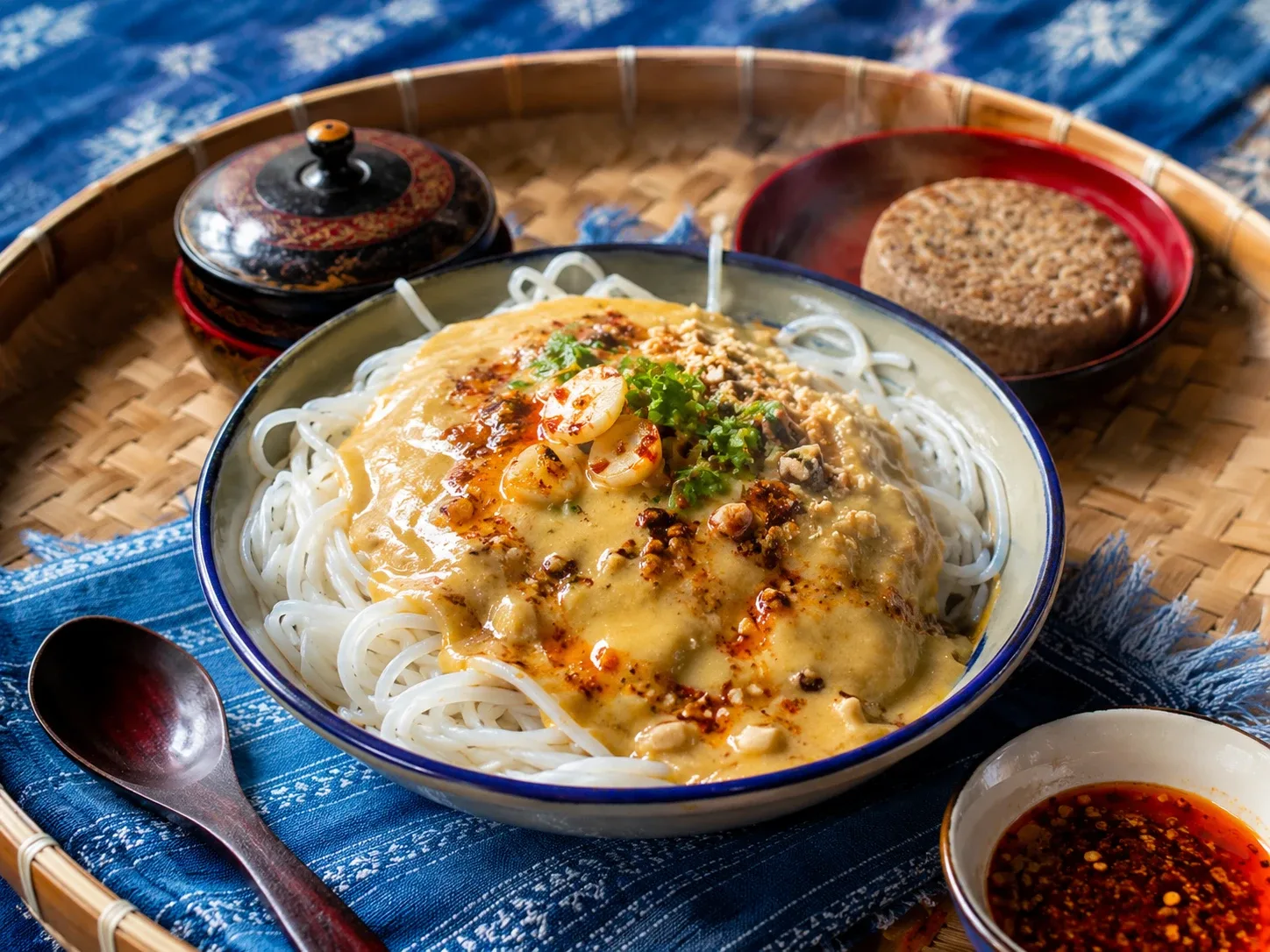
Tofu Nway, Warm Shan Tofu Noodlesတိုဟူးနွေး
Warm chickpea tofu that never sets, ladled like golden custard over rice noodles with garlic oil, chili, and peanuts — Shan State's great breakfast.