An Buti, the Meatless Corn Soup
Sabuti's meatless sibling from the Chin hills — hominy corn simmered with red beans, pumpkin, and greens until the pot thickens into gentle, vegetable plenty.
By Burmese Cookbook Kitchen · July 9, 2026
ချင်း Chin HillsTaungoo, 1510–1752
 ၅
၅- Prep
- 15 min
- Cook
- 120 min
- Serves
- 6
- Level
- Beginner
An buti is what the Chin hills eat when the smokehouse has nothing to offer — and it is nobody's consolation prize. The buti pot of hominy corn stays the same as in sabuti, the region's great soup; what changes is the backbone. An — the word Chin languages use for the vegetable side of the meal — announces that beans, pumpkin, and greens will do the work meat usually does. Red ricebeans bring starch, pumpkin brings sweetness and body, and the crush of soft kernels against the pot brings the cloudy, faintly porridge-like broth that separates a buti from vegetables in water.
The dish is documented the way most Chin food is documented — thinly, and recently. Tourism writing on Chin State lists an buti and its white-bean sibling rabuti by name beside sabuti; everything else about it lives in kitchens, not books, and we say so plainly. What can be dated is the produce: corn, beans of this family, and pumpkin are American crops that reached Burma's ports in the busy trading centuries of the Taungoo era and climbed into the hills together, where they grow happily in fields rice refuses. The Chin planted the three sisters without ever hearing the name.
Cook it with restraint. Salt is the only seasoning added; ginger and onion are background; the thickness comes from crushing, not from flour. Then put something fierce beside it — shan-nan-nan, the pounded herb-and-chili relish, is the traditional escort — and let the gentle pot and the sharp spoonful argue pleasantly all dinner long.
The pot is seasoned by crushing, not by adding — when it tastes thin, mash another ladleful of corn and pumpkin against the side before you reach for anything else.
မီးဖိုချောင်စကား · A word from the kitchen
Ingredientsပါဝင်ပစ္စည်း
Serves 6
Tap to check off as you gather
For the pot
- dried hominy corn — soaked overnight; or 700 g canned hominy, drained — see step one
- red beans — ricebeans are traditional; adzuki beans are the honest stand-in — soaked overnight alongside the corn
- water
- pumpkin — or kabocha squash, peeled and cut into large chunks
- fresh ginger — sliced into coins
- small onion — halved through the root
- salt
To finish
- pumpkin leaves — or spinach or chard, roughly torn
- spring onions — sliced
Methodချက်နည်း
Tap a numeral as you finish each step
Step 1: Soak the corn and beans
Cover the dried hominy and the beans with plenty of cold water in separate bowls and leave them overnight. Dried corn without its soak can simmer all day and stay bulletproof, and the beans want the head start too. Canned-hominy cooks skip the corn soak and join at step three with about 50 minutes to go.
Step 2: Start the corn alone
Drain the corn, cover it with the fresh water, and simmer, partly lidded, for about 60 minutes, skimming any foam. It goes in alone so you can judge it honestly — you are waiting for the kernels to begin bursting open like small flowers.
Step 3: Add the beans
Drain the soaked beans and add them to the pot for 30 to 40 minutes more, until both corn and beans are fully tender. They finish together by design; the beans' starch is half of what will thicken the broth later, so undercooked beans mean a thin soup no amount of simmering will fix.
Step 4: Add pumpkin and aromatics
Add the pumpkin chunks, ginger, and onion and simmer 20 minutes, until the pumpkin is fully soft at the edges. The pumpkin plays the role meat plays in sabuti — body and sweetness — so let some of it begin to fray into the broth.
Step 5: Crush for body
Press a ladleful of corn, beans, and pumpkin against the side of the pot and stir the mash back in. The broth should turn cloudy and faintly starchy, somewhere between soup and porridge. This crush is the entire thickening strategy — repeat it until the spoon feels the body.
Step 6: Greens, salt, and the table
Stir in the pumpkin leaves for the last five minutes, then the salt — taste and stop. Ladle into deep bowls with spring onions on top, and put something sharp on the table beside it: a spoonful of shan-nan-nan relish or plain crushed chilies. The soup is gentle on purpose; the heat is each eater's own decision.
ခွက်ယောက် · The tools
Equipment
Heavy pot / Dutch oven
အိုးကြီးDeep and heat-retentive — for mohinga broth, long-simmered hin, and deep-frying without temperature crashes.
Shop on Amazon →
Equipment links are Amazon affiliate links. As an Amazon Associate we earn from qualifying purchases, at no cost to you. Disclosure.
ဟင်းစုံ · Set the table
A Burmese meal is a spread
A Burmese soup sits beside the rice, not on its own. Set the table with:
- Steamed riceထမင်းThe centre of the table — everything else is built around it.
- A curryဟင်းSlow-cooked until the oil returns — the richness the sides cut against.
- Toh sa yar & ngapi dipတို့စရာRaw and blanched vegetables with a pungent fish-paste dip — the fresh, bitter counterpoint.
- Balachaungဘလချောင်းThe crispy shrimp relish that lives on every Burmese table.
- Crispy fried shallotsကြက်သွန်ကြော်A spoonful of crunch and sweet shallot oil over anything.
Questions from the kitchen
How is this different from sabuti?
By one word and one ingredient. Sa means meat, and sabuti is the corn soup built on smoked pork or beef; an buti is the version built on vegetables — beans, pumpkin, and greens — for days, households, and seasons when meat was not on offer. Same pot, same patience, different backbone. There is also rabuti, a third sibling made with big white beans.
What are ricebeans, and what substitutes honestly?
Ricebeans are small red beans grown across the hills of northern Southeast Asia, often interplanted with the corn itself. Adzuki beans are the closest match in size and sweetness at ordinary groceries; small red kidney beans work in a starchier direction. Lentils do not — they dissolve where this soup wants distinct beans.
Is this soup really filling enough to be a meal?
In the hills it is the meal — corn, beans, and squash are a complete field's worth of eating, the same trinity the Americas called the three sisters. Crush the solids well so the broth carries real body, and let each bowl land with rice or boiled corn beside it if the day has been long.
နောက်တစ်ခု · Cook next
Keep the wok hot
 ၅
၅Soups & Broths · 55 min · Intermediate
Ar Pu Shar Pu, the Burning-Mouth Bowl
Sittwe's famous hot-and-sour seafood soup — fish, prawns, and squid in a tamarind broth pounded through with green chilies, finished with lime and herbs.
 ၅
၅Soups & Broths · 100 min · Beginner
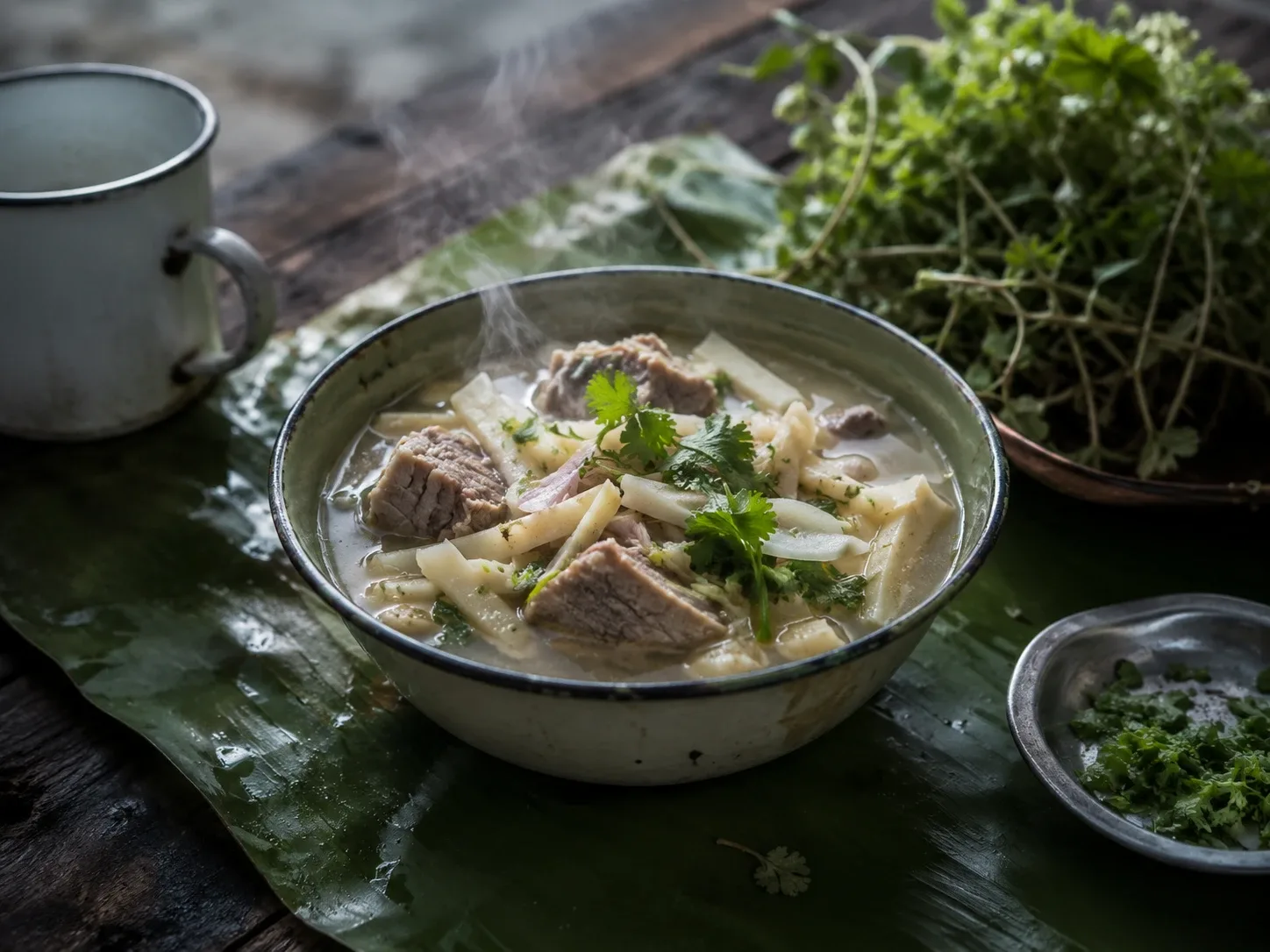
Sour Bamboo Shoot Soup with Porkမျှစ်ချဉ်ဟင်း
Pork ribs simmered with fermented sour bamboo shoots until the broth turns bright and tangy — the monsoon-season soup of the Kachin hills, light on oil.
 ၂
၂Noodles & Mohinga · 50 min · Beginner
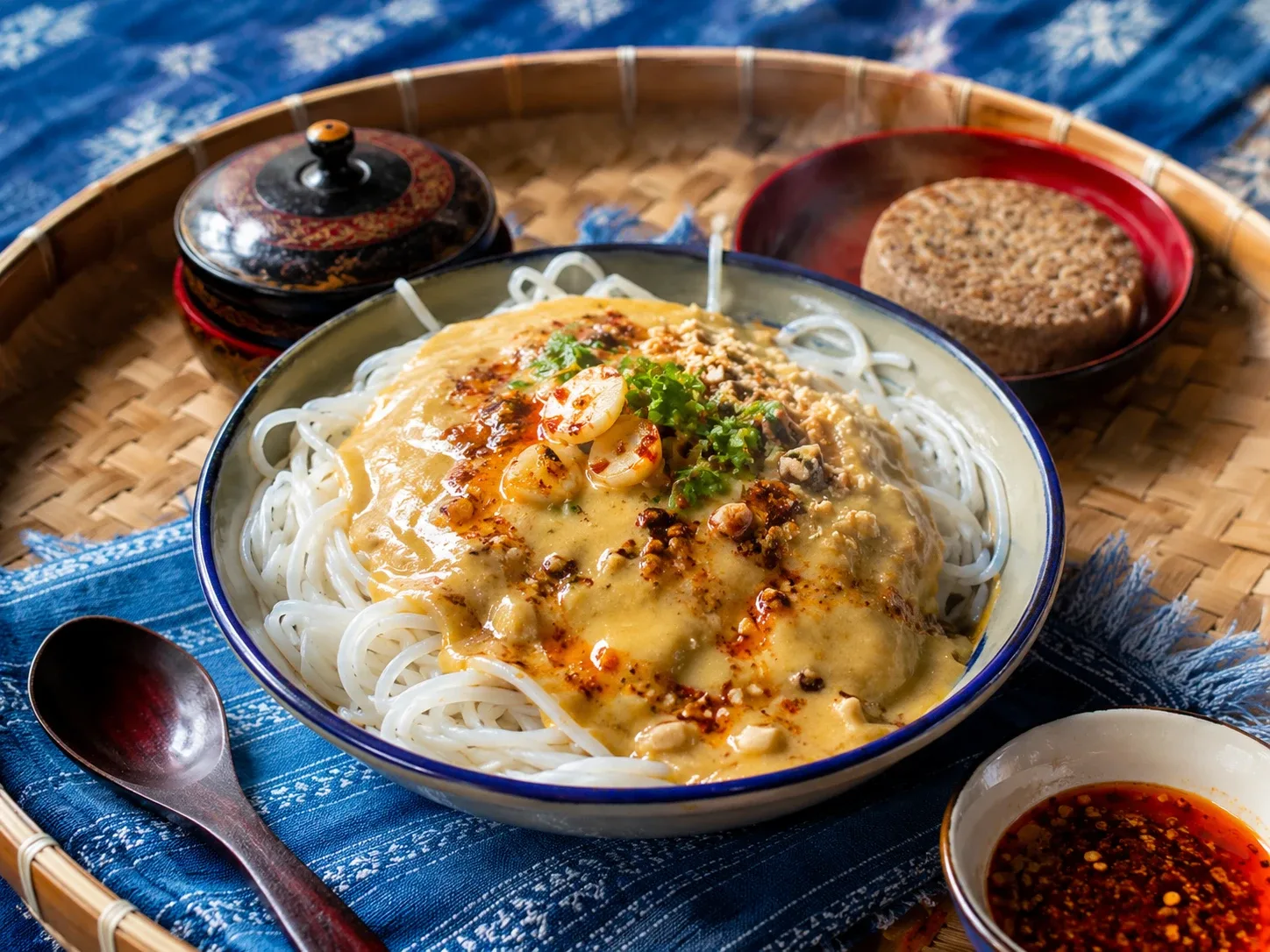
Tofu Nway, Warm Shan Tofu Noodlesတိုဟူးနွေး
Warm chickpea tofu that never sets, ladled like golden custard over rice noodles with garlic oil, chili, and peanuts — Shan State's great breakfast.