Sour Bamboo Shoot Soup with Pork
မျှစ်ချဉ်ဟင်း
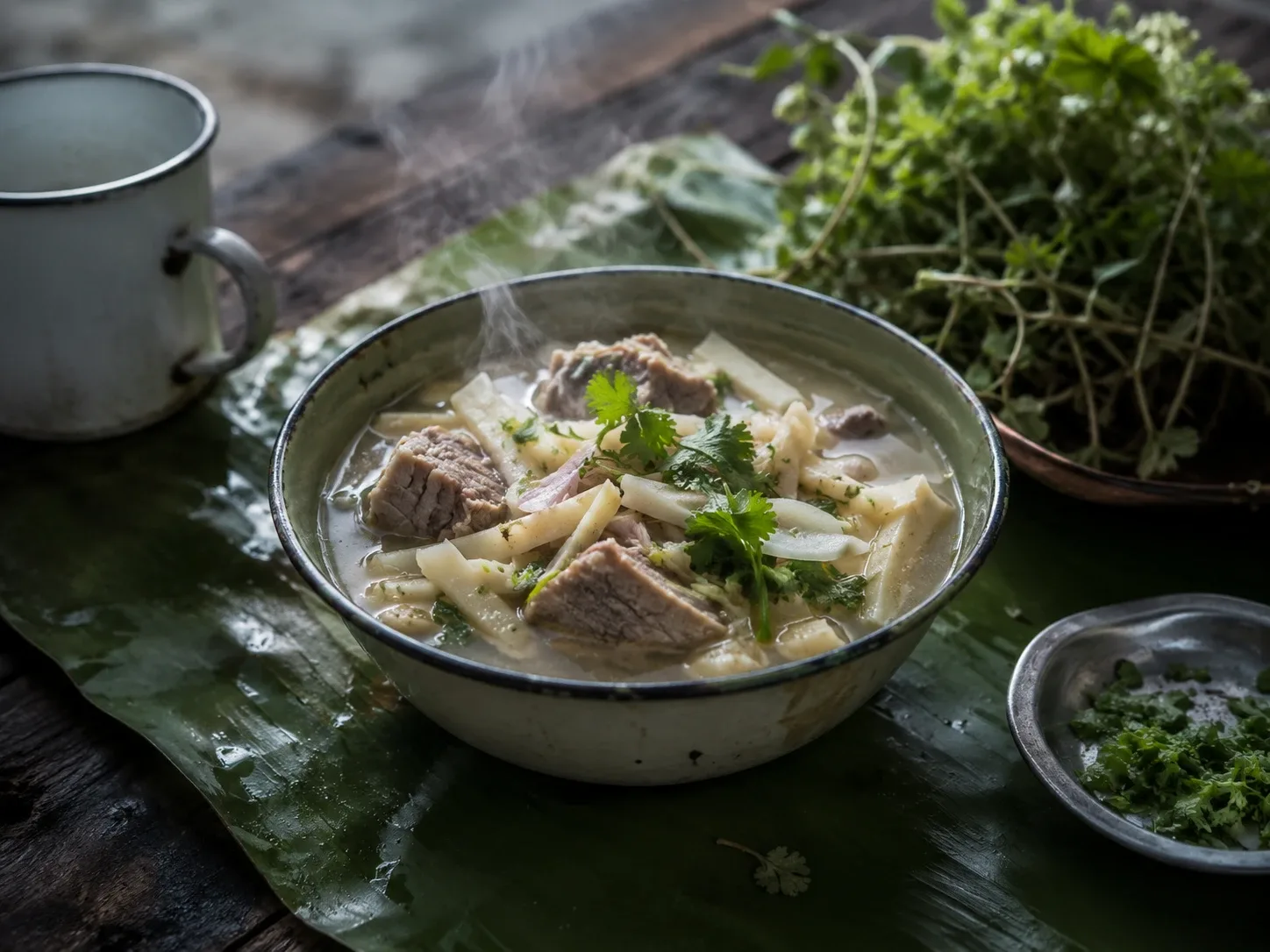
Pork ribs simmered with fermented sour bamboo shoots until the broth turns bright and tangy — the monsoon-season soup of the Kachin hills, light on oil.
By Burmese Cookbook Kitchen · July 9, 2026
ကချင် Kachin StateBritish Burma, 1826–1948
 ၅
၅- Prep
- 15 min
- Cook
- 85 min
- Serves
- 6
- Level
- Beginner
When the monsoon hits the Kachin hills, bamboo shoots come up faster than anyone can eat them — so nobody tries. The surplus is shredded, salted, and packed into jars and pits to sour, and that ferment, hmyit chin, becomes the pantry's loudest voice for the rest of the year. This soup is its signature setting: pork ribs simmered clear, the sour bamboo added late enough to keep its bite, whole dried chilies for warmth, and effectively no oil — a bowl that is bracing, tangy, and, in the Kachin way, lighter than it has any right to taste.
Sour bamboo is eaten all over Myanmar, and the lowlands cook their own hmyit chin dishes, usually fried richer. What marks the northern pot is austerity and confidence: the ferment is the only souring agent — no tamarind, no tomato — and the broth is kept clear with a blanch instead of being built on fried onions. Fermenting the rainy season's excess is a practice colonial-era observers recorded across the hills; the habit is plainly older, but we date the record rather than the legend.
Two small decisions carry the whole pot. Taste the pickled bamboo before it goes in — jars vary wildly, and a quick rinse is the difference between singing and shouting. And give the shoots their full 25-minute simmer with the pork, so the sourness rounds into the broth instead of sitting on top of it. Serve with plain rice and something rich; this is the bowl that keeps the rest of the meal honest.
Taste your sour bamboo before it goes in the pot — every jar ferments to its own opinion, and the rinse decides whether the soup sings or shouts.
မီးဖိုချောင်စကား · A word from the kitchen
Ingredientsပါဝင်ပစ္စည်း
Serves 6
Tap to check off as you gather
For the broth
- pork ribs — cut into 4 cm pieces — ask the butcher, or use pork shoulder in chunks
- fresh ginger — sliced
- garlic — bruised
- water
- salt
For the sour
- pickled bamboo shoots — the sour fermented kind, vacuum-packed or jarred at Asian markets — not fresh, not brined-plain
- dried red chilies — left whole
To finish
- green bird's eye chilies — bruised
- cilantro — roughly chopped
- fish sauce — optional — hill kitchens season with salt alone
Methodချက်နည်း
Tap a numeral as you finish each step
Step 1: Blanch the ribs
Cover the ribs with cold water, bring just to a boil, simmer 2 minutes, then drain and rinse them. Kachin soups are judged on clarity — this one throw-away blanch removes the scum that would otherwise cloud an hour of honest simmering.
Step 2: Build the broth
Return the ribs to the rinsed pot with the ginger, garlic, salt, and the 1.5 litres of fresh water. Bring to a bare simmer, skim once, and cook gently, partly covered, for 50 minutes, until the meat is yielding but not yet falling from the bone. No oil, no frying — the ribs give the broth all the body this soup wants.
Step 3: Ready the sour bamboo
Meanwhile, taste a shred of the pickled bamboo. If it is pleasantly tangy, just drain it; if it is aggressively sharp or smells like a dare, rinse it once in cold water and squeeze. The bamboo is the only souring agent in the pot, so this taste is you seasoning the finished soup in advance.
Step 4: Marry them
Add the bamboo shoots and whole dried chilies to the pot and simmer 25 minutes more. The sourness needs this time to move from the shoots into the broth and mellow from vinegar-sharp to rounded — added any later, the bamboo eats like a garnish instead of a reason.
Step 5: Season and rest
Taste. Correct with salt, or the fish sauce if you lean lowland. Drop in the bruised green chilies, turn off the heat, and let the pot stand 15 minutes — like most sour soups it composes itself as it rests, the pork sweetness rising to meet the ferment.
Step 6: Serve
Reheat gently if needed, shower with cilantro, and ladle over or beside plain rice. The broth should be clear, bracing, and honestly sour — the kind of bowl that makes the rest of the table taste richer.
ခွက်ယောက် · The tools
Equipment
Heavy pot / Dutch oven
အိုးကြီးDeep and heat-retentive — for mohinga broth, long-simmered hin, and deep-frying without temperature crashes.
Shop on Amazon →Box grater / microplane
ခြစ်စက်Fine ginger, green papaya shreds, and toddy-palm jaggery shavings.
Shop on Amazon →
Equipment links are Amazon affiliate links. As an Amazon Associate we earn from qualifying purchases, at no cost to you. Disclosure.
ဟင်းစုံ · Set the table
A Burmese meal is a spread
A Burmese soup sits beside the rice, not on its own. Set the table with:
- Steamed riceထမင်းThe centre of the table — everything else is built around it.
- A curryဟင်းSlow-cooked until the oil returns — the richness the sides cut against.
- Toh sa yar & ngapi dipတို့စရာRaw and blanched vegetables with a pungent fish-paste dip — the fresh, bitter counterpoint.
- Balachaungဘလချောင်းThe crispy shrimp relish that lives on every Burmese table.
- Crispy fried shallotsကြက်သွန်ကြော်A spoonful of crunch and sweet shallot oil over anything.
Questions from the kitchen
Can I use fresh bamboo shoots?
Fresh shoots make a lovely but different soup — sweet, mild, and in need of tamarind to fake the acidity. The soul of this one is lacto-fermented sourness, the flavor of the monsoon harvest put up in jars. Buy the sour pickled kind, or ferment your own shredded shoots in brine for a week.
My kitchen smells fermented. Is that right?
Yes — sour bamboo announces itself while it simmers, the way good ngapi does, and mellows dramatically in the bowl. Rinse the shoots once if the jar is fierce, crack a window, and trust the finished broth rather than the mid-simmer air.
How sour should it end up?
Bright enough to make you sit up, not so sharp that the pork disappears. You steer it three ways: the pre-taste and rinse, the quantity of shoots, and the 25-minute marriage simmer. When in doubt start with 250 g of shoots and add the rest near the end.
Can I make it without pork?
Chicken legs work in the same times, and a vegetarian pot of the shoots with dried shiitake broth and a knob of extra ginger is genuinely good — thinner, but the ferment carries it. What you should not do is skip the blanch-or-soak logic that keeps the broth clear.
နောက်တစ်ခု · Cook next
Keep the wok hot
 ၅
၅Soups & Broths · 135 min · Beginner
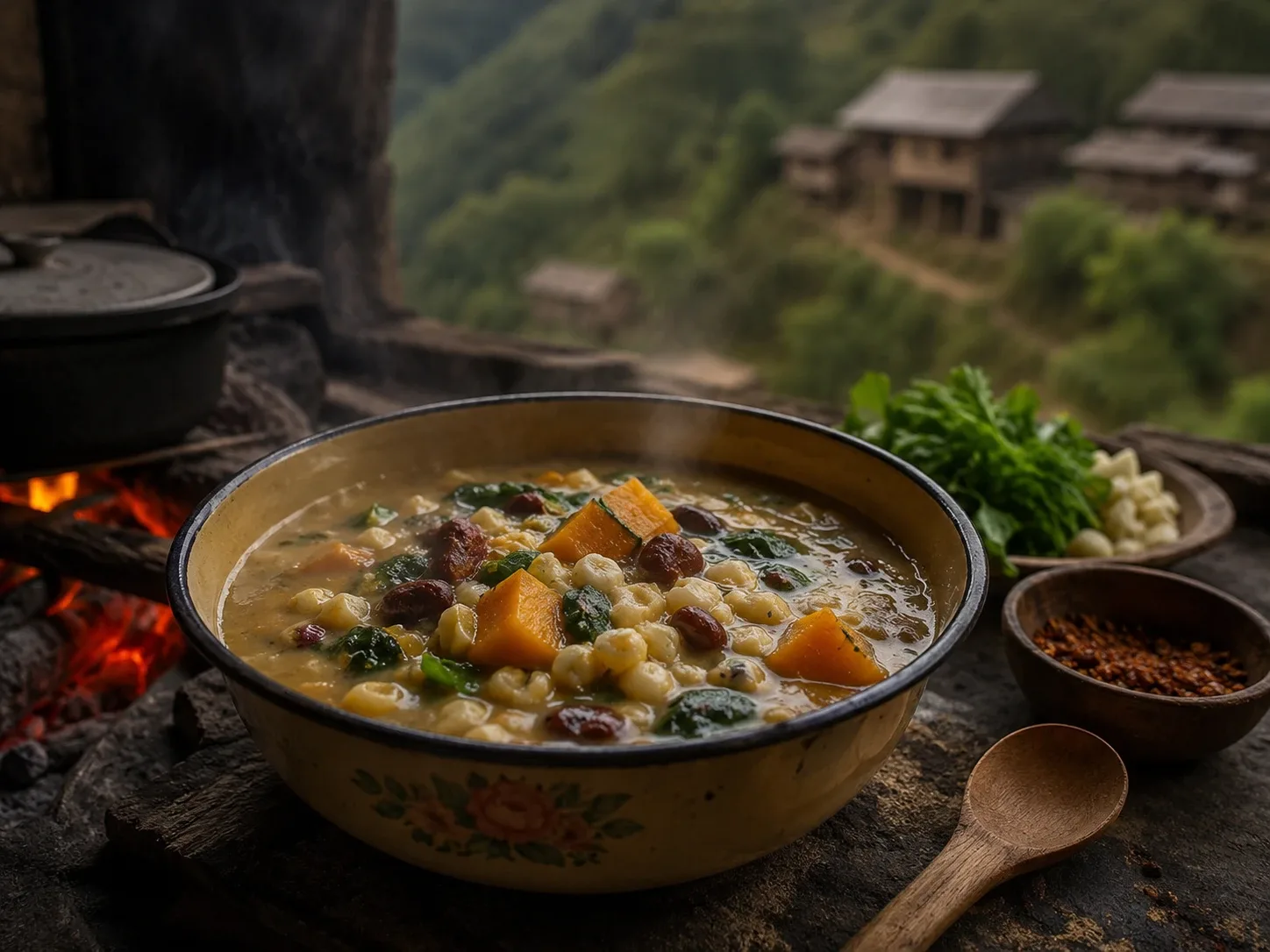
An Buti, the Meatless Corn Soup
Sabuti's meatless sibling from the Chin hills — hominy corn simmered with red beans, pumpkin, and greens until the pot thickens into gentle, vegetable plenty.
 ၅
၅Soups & Broths · 55 min · Intermediate
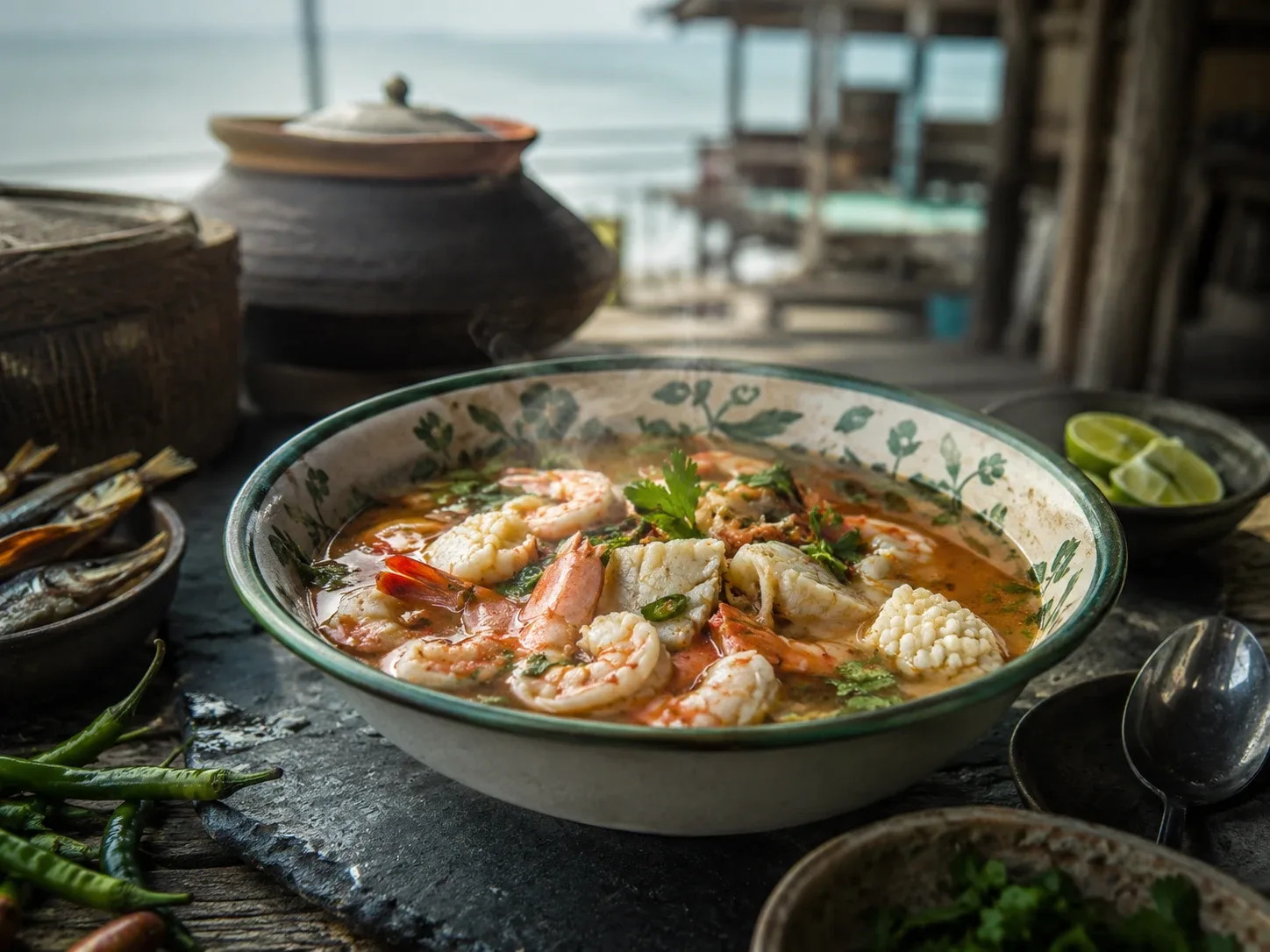
Ar Pu Shar Pu, the Burning-Mouth Bowl
Sittwe's famous hot-and-sour seafood soup — fish, prawns, and squid in a tamarind broth pounded through with green chilies, finished with lime and herbs.
 ၇
၇Sweets & Mont · 105 min · Intermediate
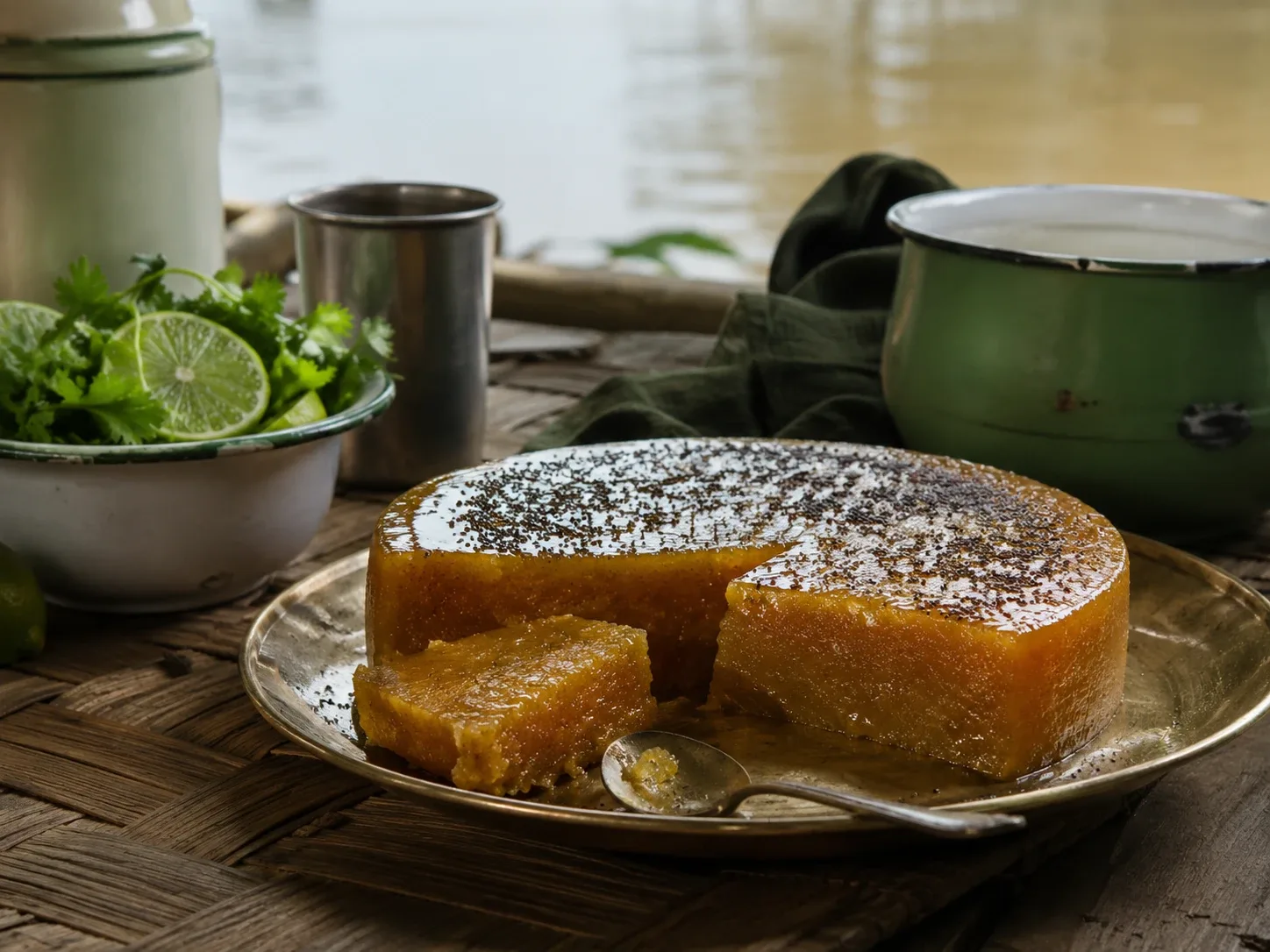
Pathein Halawa, the Delta's Gilded Sweetပုသိမ်ဟလဝါ
Pathein's famous glutinous-rice halawa — coconut milk, sugar, and ghee stirred patiently down to a dense, gleaming amber slab crowned with toasted poppy seeds.