Fish sauce (ngan pya yay)
ငံပြာရည်
The everyday salt of the Burmese kitchen — anchovy, salt, and a year in the barrel.
Also answers to: ngan pya yay · nam pla · nuoc mam
Ngan pya yay is the liquid cousin of ngapi: small fish, usually anchovies, layered with salt and left to break down for a year or more, then drained of their amber liquor. Where ngapi is a paste you cook with, fish sauce is a seasoning you reach for constantly — it does the daily work that soy sauce does in China and salt does in Europe, which is to say nearly all of it.
Burma sits between the two great fish-sauce cultures — Thailand and Vietnam — and shares the habit without much anxiety about origin. How long the Burmese have made it is a question oral memory answers with "always," which is not a date but is probably close to the truth; salted-fish liquors this simple tend to be invented wherever fish, salt, and patience coexist. The commercial bottles in Burmese kitchens today are as often Thai or Vietnamese as local, and no one much minds.
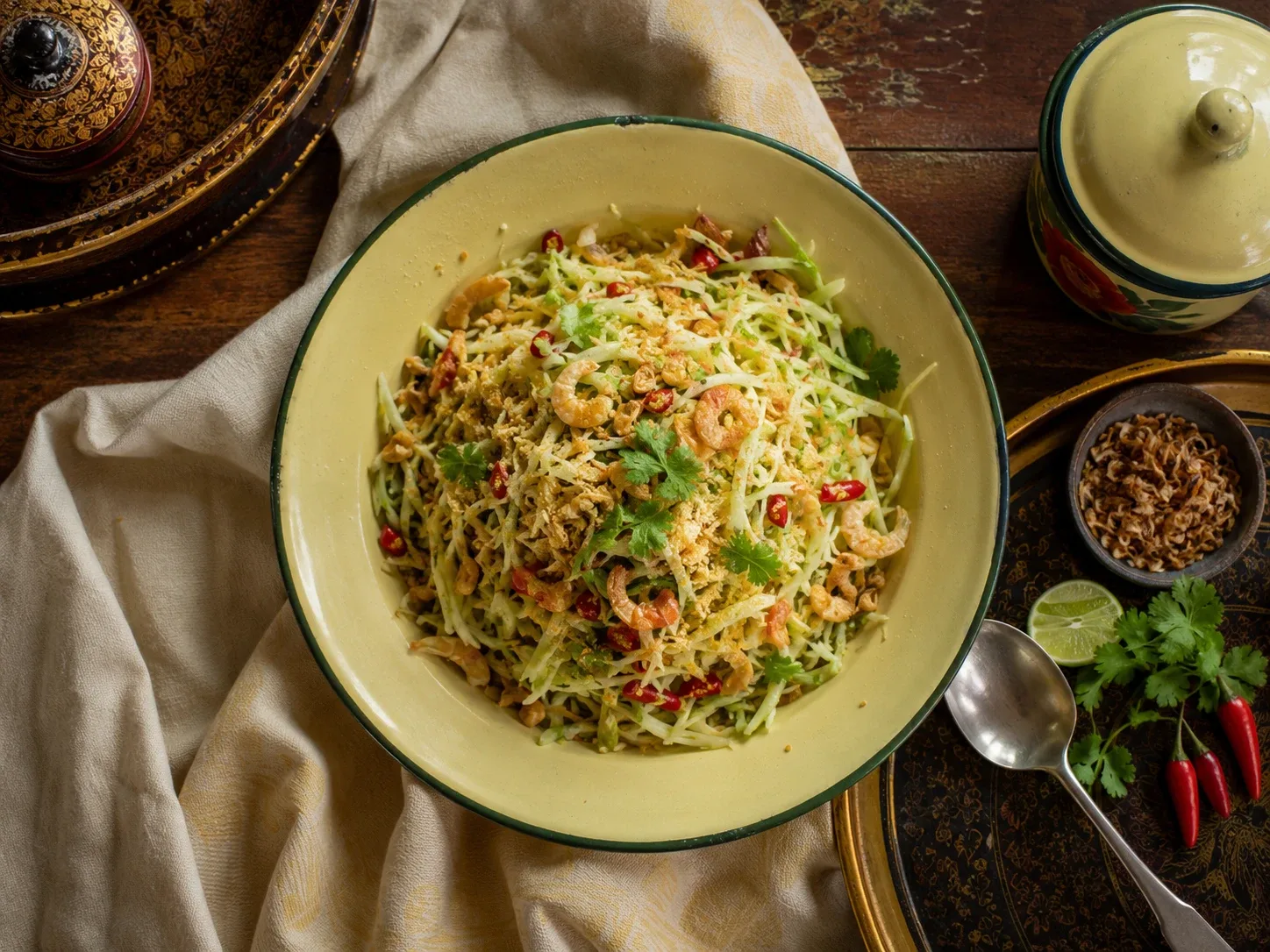
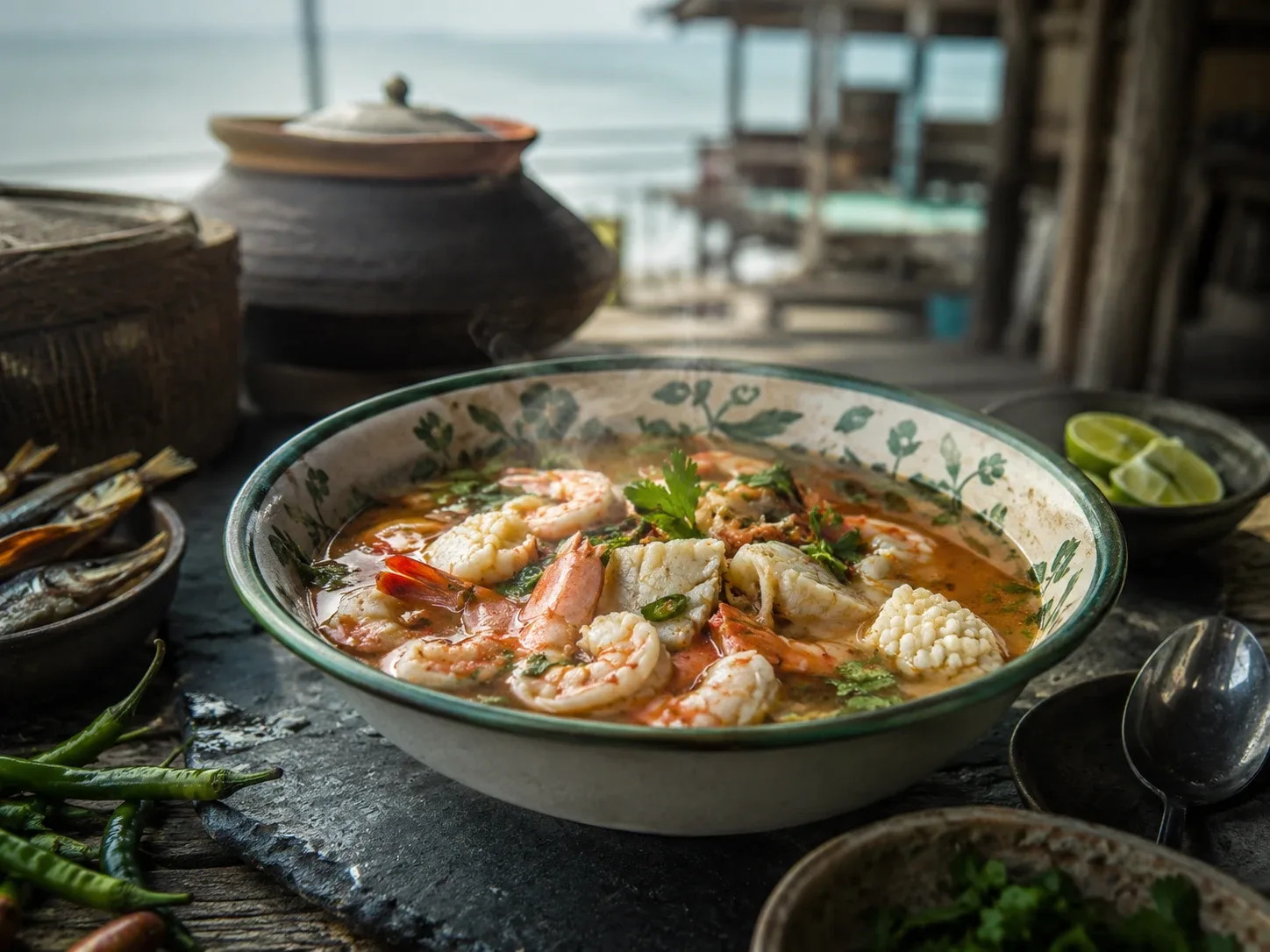
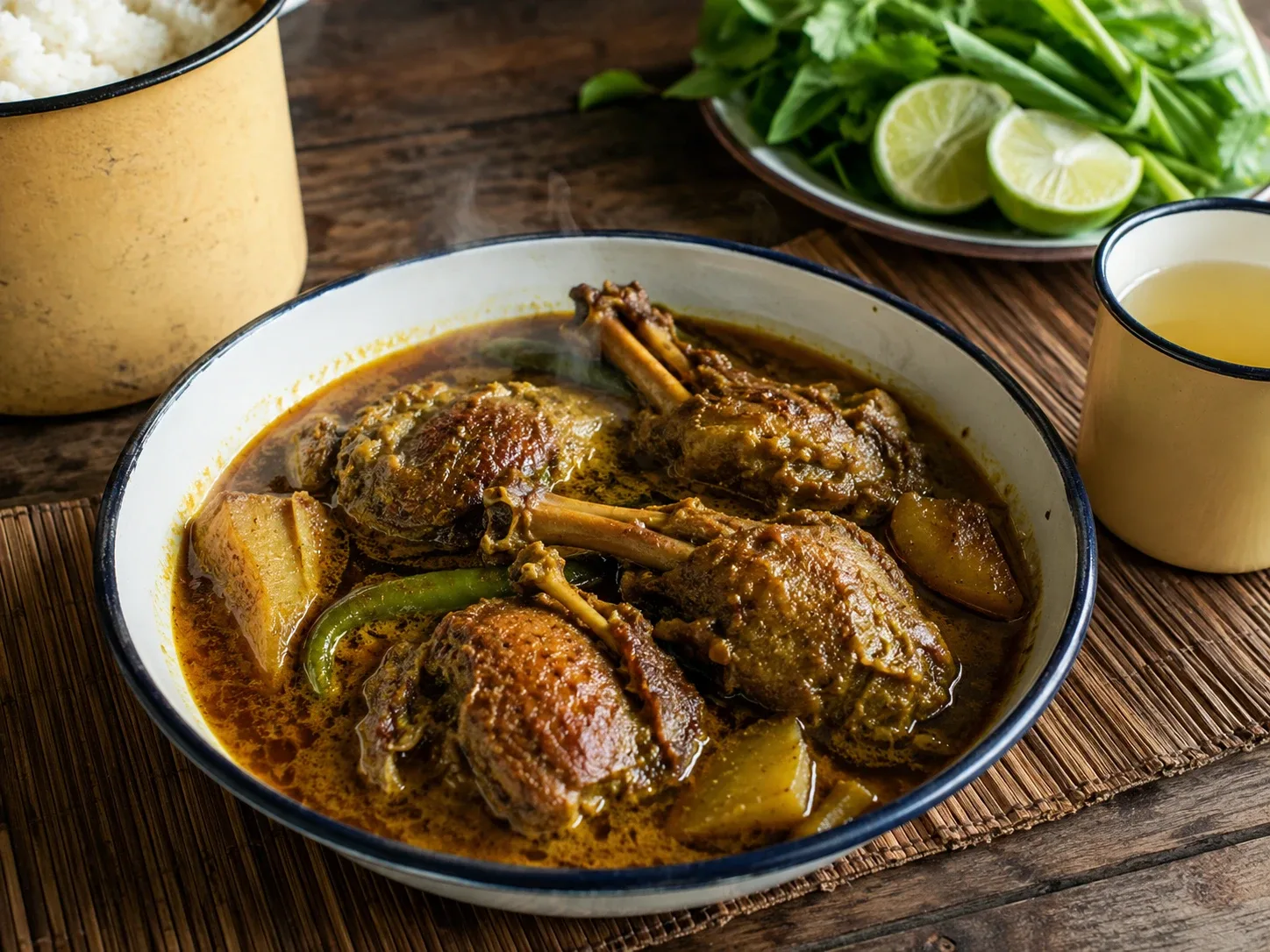
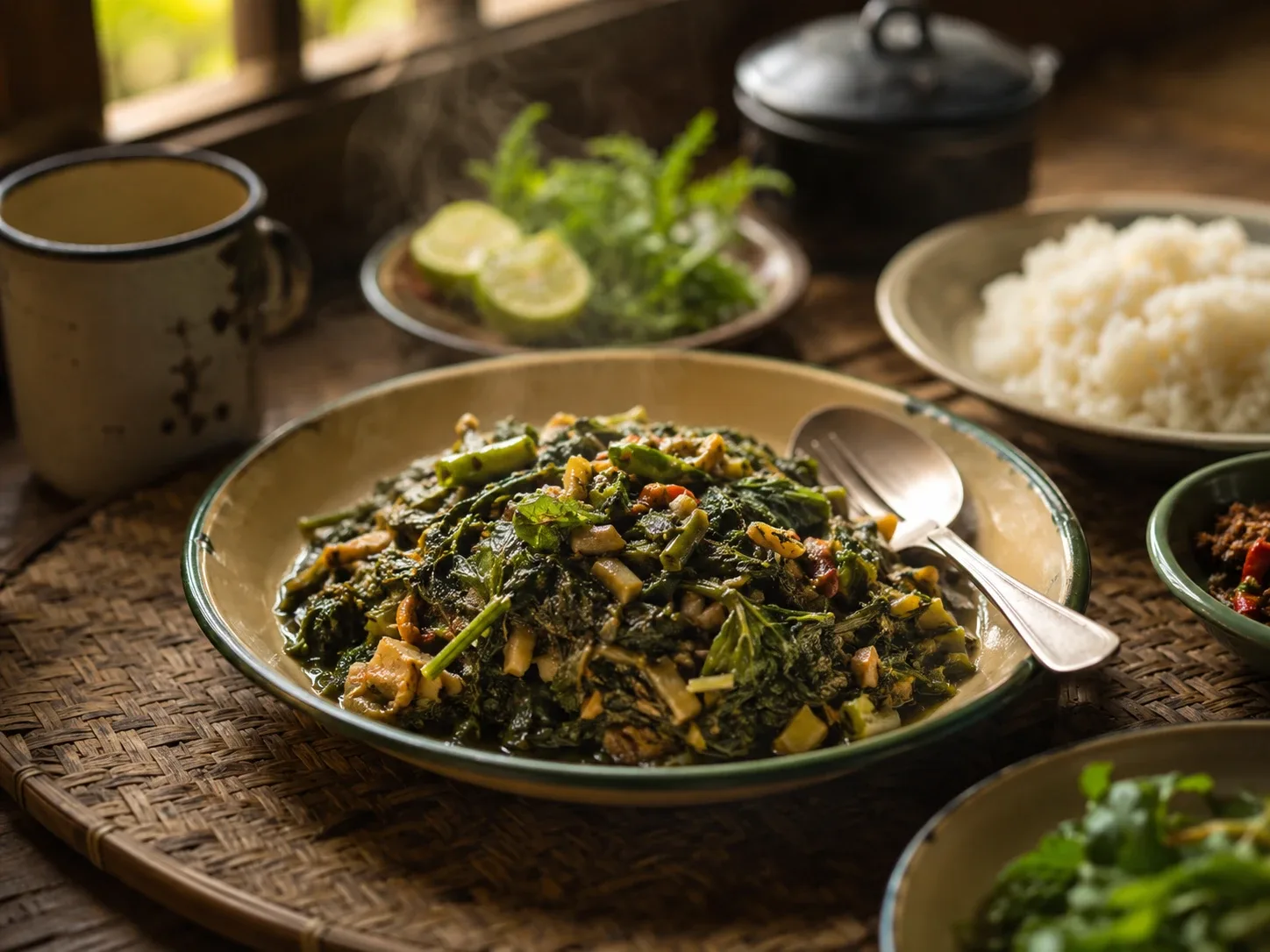
In the Burmese kitchen it is the default salting agent for soups, salads, and marinades — a spoonful in the mohinga pot, a splash worked into laphet thoke, a base note in nearly every thoke dressing. It rarely announces itself. Good fish sauce used correctly tastes not fishy but seasoned, a roundness under the dish that plain salt cannot manage.
Choosing itရွေးချယ်ခြင်း
Read the label and count the ingredients: anchovy and salt is the whole recipe, and anything longer — sugar, hydrolyzed protein, water — is padding. The color should be clear amber, like strong tea, not opaque brown. Vietnamese and Thai brands differ less than their marketing suggests; a mid-shelf bottle of either serves every recipe on this site. Glass bottles are worth the small premium — the sauce keeps its aroma better.
Keeping itသိမ်းဆည်းခြင်း
A cool, dark cupboard is fine; refrigeration slows the darkening but is not required. The sauce will deepen in color and mellow slightly over a year or two — that is age, not spoilage, and it is still good. Salt crystals on the bottle neck are harmless. If a bottle turns genuinely murky or smells sharply of ammonia rather than sea, retire it, but with a real anchovy-and-salt sauce this almost never happens.
In the potမီးဖိုချောင်တွင်
Season with it the way you would salt, in stages and by taste. It goes into dressings raw, into soups and curries during cooking, and into marinades where its glutamates do quiet work on meat. The one warning: fish sauce added at a hard boil for a long time turns harsh, so in long-simmered dishes add most of it near the end. For a vegetarian pot, light soy with a pinch of salt covers the job honestly.
ဝယ်ယူရန် · Getting it
Buy the real thing
Fish sauce (ngan pya yay) — shelf-stable and shippable, unlike most of the fresh aisle.
Find it on AmazonCan’t get it? Honest swaps
- Any good Vietnamese or Thai fish sauceExcellent
- Soy sauce + a pinch of saltGood
ဟင်းလျာများ · Cooked with it