Tamarind, the workhorse sour
မန်ကျည်း
Rounded, fruity, brown-sugar-adjacent sour — the acid that Burmese cooking is balanced against.
Also answers to: magyi · tamarind pulp · tamarind water
Tamarind is the pulp of a pod-bearing tree, and the pulp is a paradox: intensely sour and unmistakably fruity at once, with a dark, date-like sweetness underneath. Burmese balance leans on sour the way Japanese food leans on umami, and tamarind is the workhorse of that lean — rounder than lime, deeper than vinegar, and happy to simmer where fresh citrus would go flat. Like roselle, it is not a ferment; it sits in this group because it is one of the pillars the sour-and-fermented backbone stands on.
The tree is African in origin but has grown in Burma for many centuries — long enough that the dry zone around Bagan and Mandalay is studded with huge old tamarind trees whose shade organizes village life, and long enough that dating its arrival is guesswork; it was simply always there by the time anyone was writing things down. Central Burma is serious tamarind country, and the pods are eaten every way a pod can be: souring soups, sweetened into candy, the young leaves themselves cooked as a sour green.
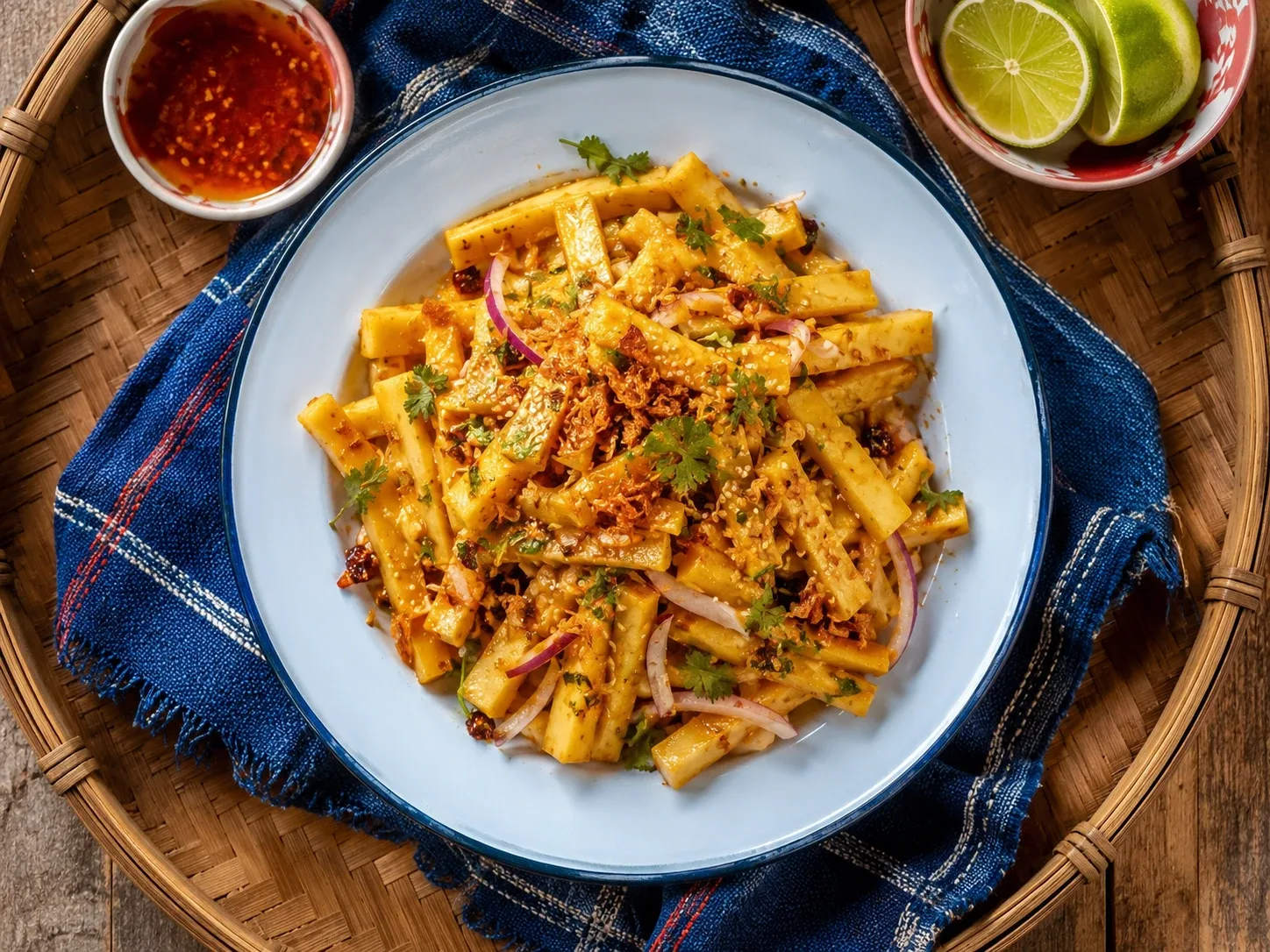
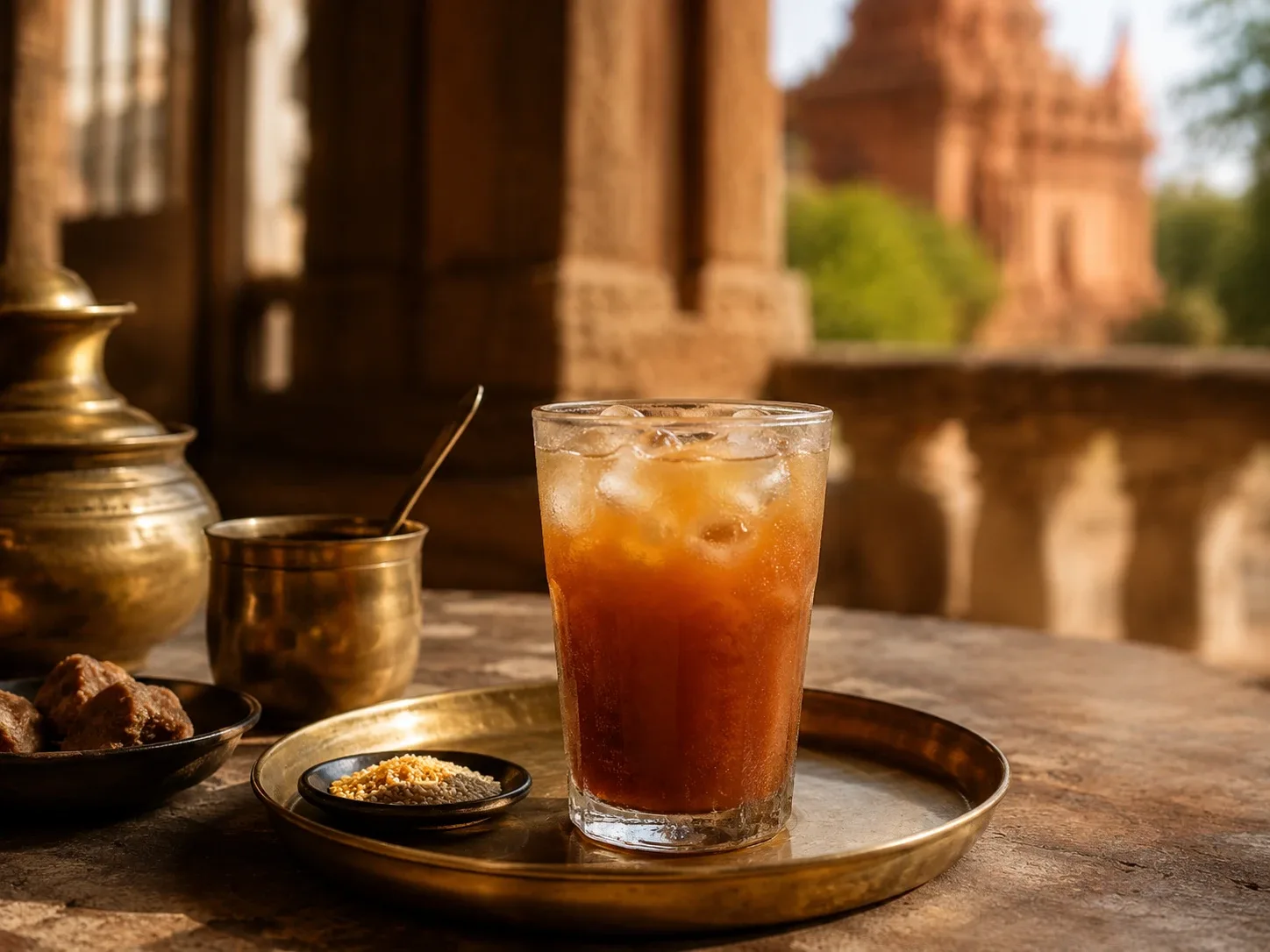
In the kitchen its territory is the chin yay — the sour soups and broths of the everyday table — plus dressings, dipping sauces, and the sweet-sour registers of dishes like pickled-mango pork. The form that matters is tamarind water: pulp soaked in hot water, mashed, and strained into a brown, tangy liquor that goes into the pot by the spoonful.
Choosing itရွေးချယ်ခြင်း
Buy block tamarind — the dense, seedless (or nearly so) brick of pressed pulp sold in every Asian grocery — over jarred concentrate; the flavor is rounder and the price is honest. Blocks from Thailand or Vietnam are consistent and everywhere; Indian blocks run darker and sharper, which some dishes like. Good blocks are pliable, sticky, and deep brown, not dried out or blackened. Jarred concentrate is workable but roughly twice as strong and noticeably harsher — halve it and adjust.
Keeping itသိမ်းဆည်းခြင်း
A tamarind block is nearly immortal: wrapped well against drying, it keeps a year in the cupboard and longer in the fridge, darkening slowly without losing much. Cut off what you need and rewrap. Prepared tamarind water is the perishable form — it holds a week refrigerated, or freeze it in ice-cube trays for spoonable sour on demand, which is the house habit. Jarred concentrate keeps for ages in the fridge; its problem was never spoilage, only flavor.
In the potမီးဖိုချောင်တွင်
Make tamarind water: soak about 30 g of block pulp in 120 ml hot water for 10 minutes, mash it apart, and strain out the fibers and stray seeds — that is the "tamarind water" our recipes call for. Add it to soups and braises during cooking, where it mellows and rounds, and to dressings raw, where it stays bright. It plays naturally against palm sugar and fish sauce; most Burmese sour dishes are a negotiation among the three. When the block runs out, lime juice with a pinch of brown sugar sketches the same shape, thinner.
ဝယ်ယူရန် · Getting it
Buy the real thing
Tamarind (block or paste) — shelf-stable and shippable, unlike most of the fresh aisle.
Find it on AmazonCan’t get it? Honest swaps
- Block pulp ↔ jarred concentrateGood
- Lime juice + a pinch of brown sugarGood
ဟင်းလျာများ · Cooked with it