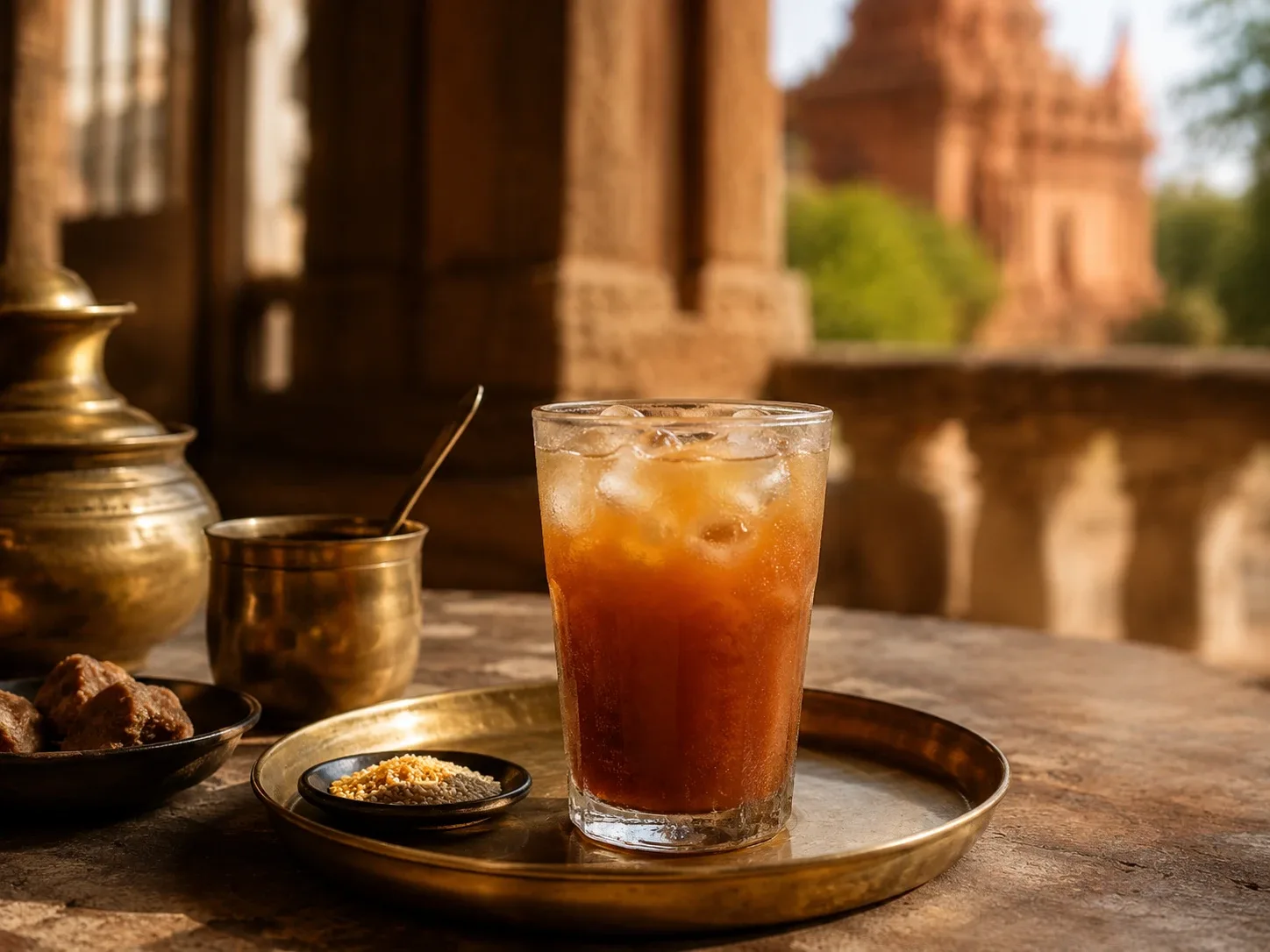
Magyi Phyaw Yay, Tamarind and Jaggery Cooler
မန်ကျည်းဖျော်ရည်
The dry zone's hot-season cooler — tamarind pulp and toddy palm jaggery shaken into a sweet-sour drink over ice, with a pinch of salt to make it sing.
By Burmese Cookbook Kitchen · July 9, 2026
အညာ Upper Burma & MandalayOpening & Diaspora, 1988–present
 ၈
၈- Prep
- 15 min
- Cook
- 10 min
- Serves
- 6
- Level
- Beginner
The dry zone is tamarind country. The tree shrugs at drought, so it stands where little else will — shading village wells from Shwebo to Pakokku, lining the roads to Bagan, dropping its brittle brown pods every hot season just as the temperature becomes a moral test. Upper Burma has always eaten that harvest: sour soups, chutneys, and the famous jaggery- sweetened tamarind flakes sold as souvenirs across the region. Pressing the same pairing into a cold glass is a more recent habit — the roadside cooler as Myanmar knows it belongs to the modern era of ice boxes and highway rest stops, and we label it accordingly.
The logic, though, is pure dry zone: the region's two great trees in one drink. Tamarind brings the sour, the toddy palm brings its dark, smoky jaggery, and a pinch of salt — the oldest hot-climate trick there is — pulls the two into focus and puts back a little of what the afternoon took.
The technique is short and honest. Soak block tamarind in hot water, then massage it with your fingers until the water thickens to a dark cream — lazy soaking makes thin drinks. Strain hard, melt the jaggery separately so its grit stays out of the glass, and balance the base while it is still concentrated, tasting for sour first, sweet second, salt just barely there. Over ice it turns pale amber and disappears fast; make the base double, because the first pitcher always does.
Taste your tamarind before you measure the jaggery — no two blocks carry the same sourness, and the drink is balanced by tongue, not by scale.
မီးဖိုချောင်စကား · A word from the kitchen
Ingredientsပါဝင်ပစ္စည်း
Serves 6
Tap to check off as you gather
For the tamarind base
- tamarind — seedless block pulp; the sticky, dark, semi-dried kind from Asian grocers
- water — hot, for soaking the pulp
For the syrup and the glass
- palm sugar (jaggery) — toddy palm jaggery for the true dry-zone taste; adjust to your tamarind
- water — for melting the jaggery
- salt
- water — cold, for topping up
- ice
- lime — optional, for the rim — some stalls add it, purists shrug
Methodချက်နည်း
Tap a numeral as you finish each step
Step 1: Soak the tamarind
Break the tamarind block into pieces, cover with the hot water, and let it soak for 15 minutes until it slumps. Then work it hard with your fingers, squeezing and rubbing until the water turns to a thick, dark slurry and the fibers give up their pulp. The massage matters — poured-off soaking water alone makes a thin, pale drink.
Step 2: Strain without mercy
Push the slurry through a sieve into a bowl, pressing with the back of a spoon and scraping the underside, until only seeds and fiber remain. You want every gram of that dark cream — it carries the body that separates a proper magyi phyaw yay from sour water.
Step 3: Melt and strain the jaggery
Warm the jaggery with the 150 ml of water over low heat, stirring, until it dissolves into a dark syrup, then pour it through the sieve too. Village jaggery often carries a little honest grit from the drying yard, and nobody wants to meet it at the bottom of a glass.
Step 4: Balance the base
Stir the tamarind cream, jaggery syrup, and salt together and taste. It should be assertively sour, clearly sweet, and finish with the faint mineral edge the salt gives — concentrated at this stage, since ice and water are still coming. Adjust now; you cannot fix a diluted drink without making more base.
Step 5: Chill, dilute, and serve
Stir in the cold water, then refrigerate until properly cold — or shake portions hard with ice if the afternoon cannot wait. Serve over plenty of ice, with a lime slice if you like. The drink settles on standing; give each glass a stir and drink it the dry-zone way, in long swallows, in the shade.
ခွက်ယောက် · The tools
Equipment
Fine sieve / muslin
စစ်ခွက်For straining tamarind, pressing broth clear, and sifting flours — line it with muslin for the cleanest pour.
Shop on Amazon →
Equipment links are Amazon affiliate links. As an Amazon Associate we earn from qualifying purchases, at no cost to you. Disclosure.
ဟင်းစုံ · Set the table
A Burmese meal is a spread
A cooler or a tea earns a bite alongside:
How a Burmese meal is built →Questions from the kitchen
Can I use ready-made tamarind concentrate?
In a pinch — use 3 to 4 tablespoons and taste as you go. But concentrates are cooked dark and lose the fresh, fruity sharpness that block pulp keeps. For a drink where tamarind is the only star, the ten minutes of soaking and squeezing are the recipe.
Why the salt?
For the same reason Burmese fruit sellers hand you a chili-salt dip with sour fruit: salt rounds sourness and makes sweetness taste earned, and in the hot season it is quietly replacing what you have been sweating out all day. Without it the drink tastes like candy; with it, like something a farmer would finish.
How long does the base keep?
The undiluted tamarind-jaggery base keeps a week in the fridge in a clean jar, and it is worth making double for exactly that reason. It also moonlights well beyond the glass — spoon it over ice with soda water, or use it as the sour-sweet element in a dipping sauce.
နောက်တစ်ခု · Cook next
Keep the wok hot
 ၈
၈Drinks & Teahouse · 15 min · Beginner
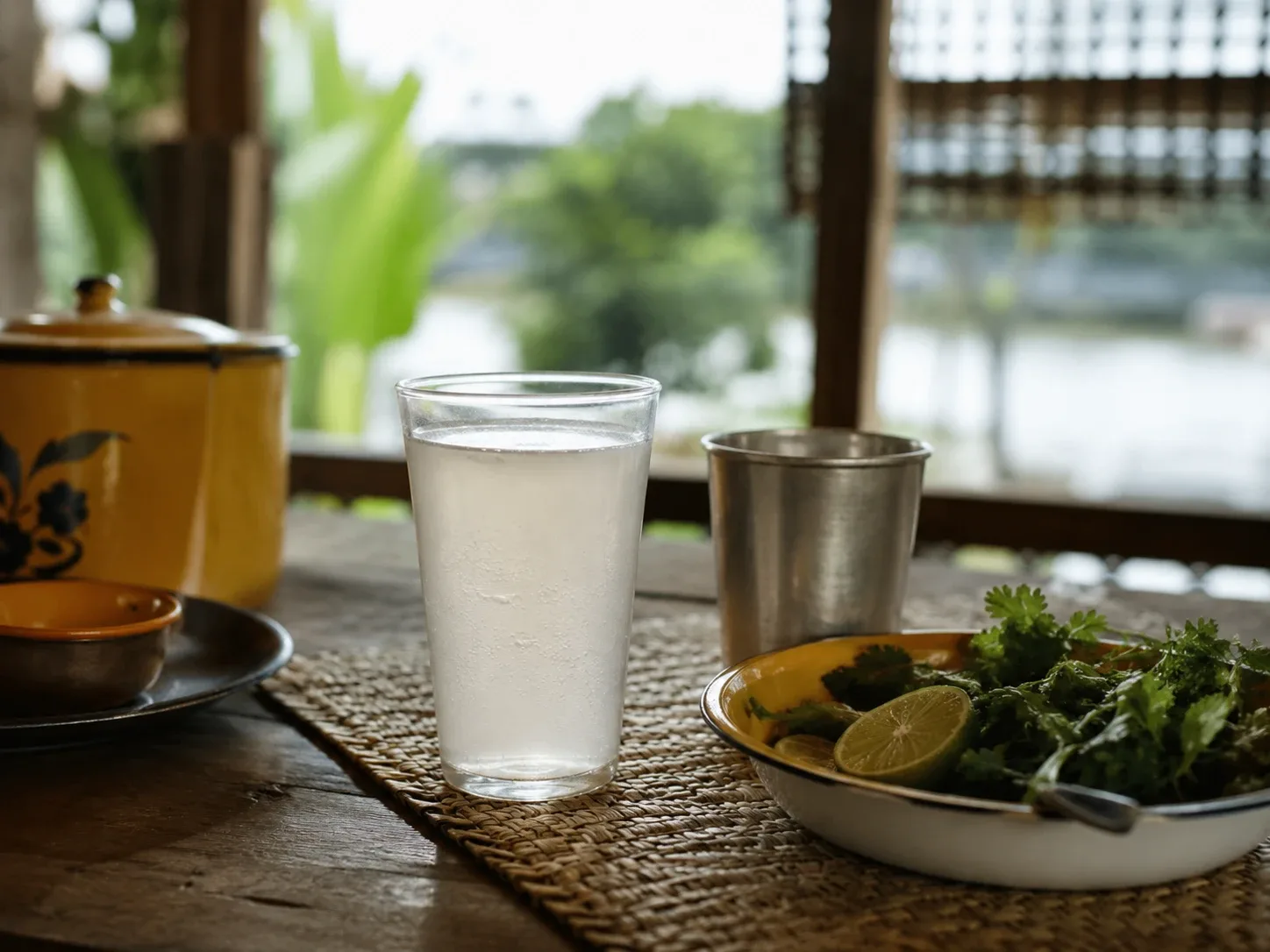
Htan Yay, Toddy of the Lowlandsထန်းရည်
Palm toddy the delta way — fresh-tapped sap drunk sweet at dawn or left to ferment itself milky and gently fizzy by afternoon, plus an honest home method.
 ၈
၈Drinks & Teahouse · 70 min · Beginner
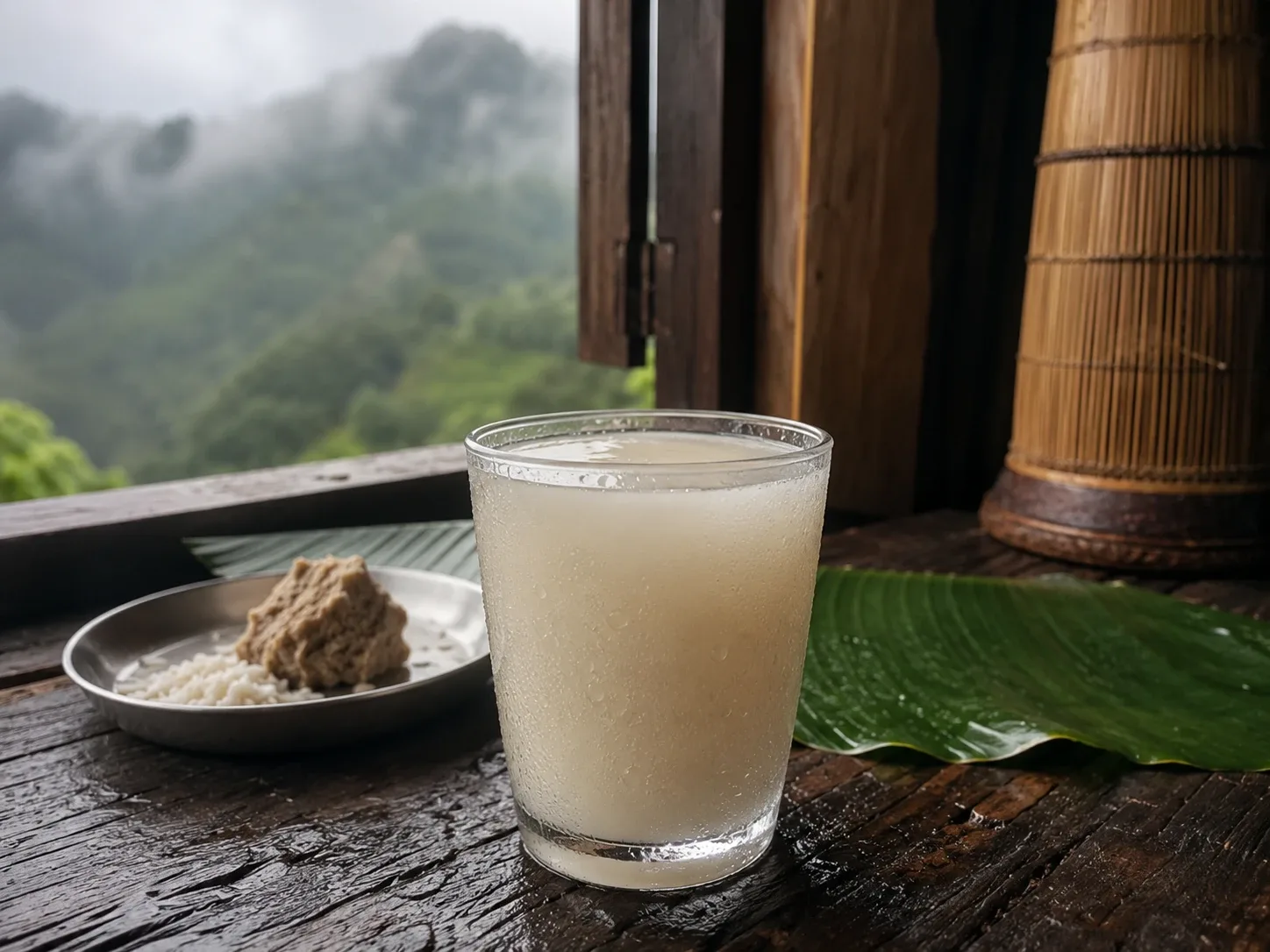
Khaung Yay, the Kachin Rice Beerခေါင်ရည်
The cloudy, gently sweet rice beer of the Kachin hills, brewed at home from steamed sticky rice and a yeast cake — a week of patience, no equipment.
 ၂
၂Noodles & Mohinga · 50 min · Beginner
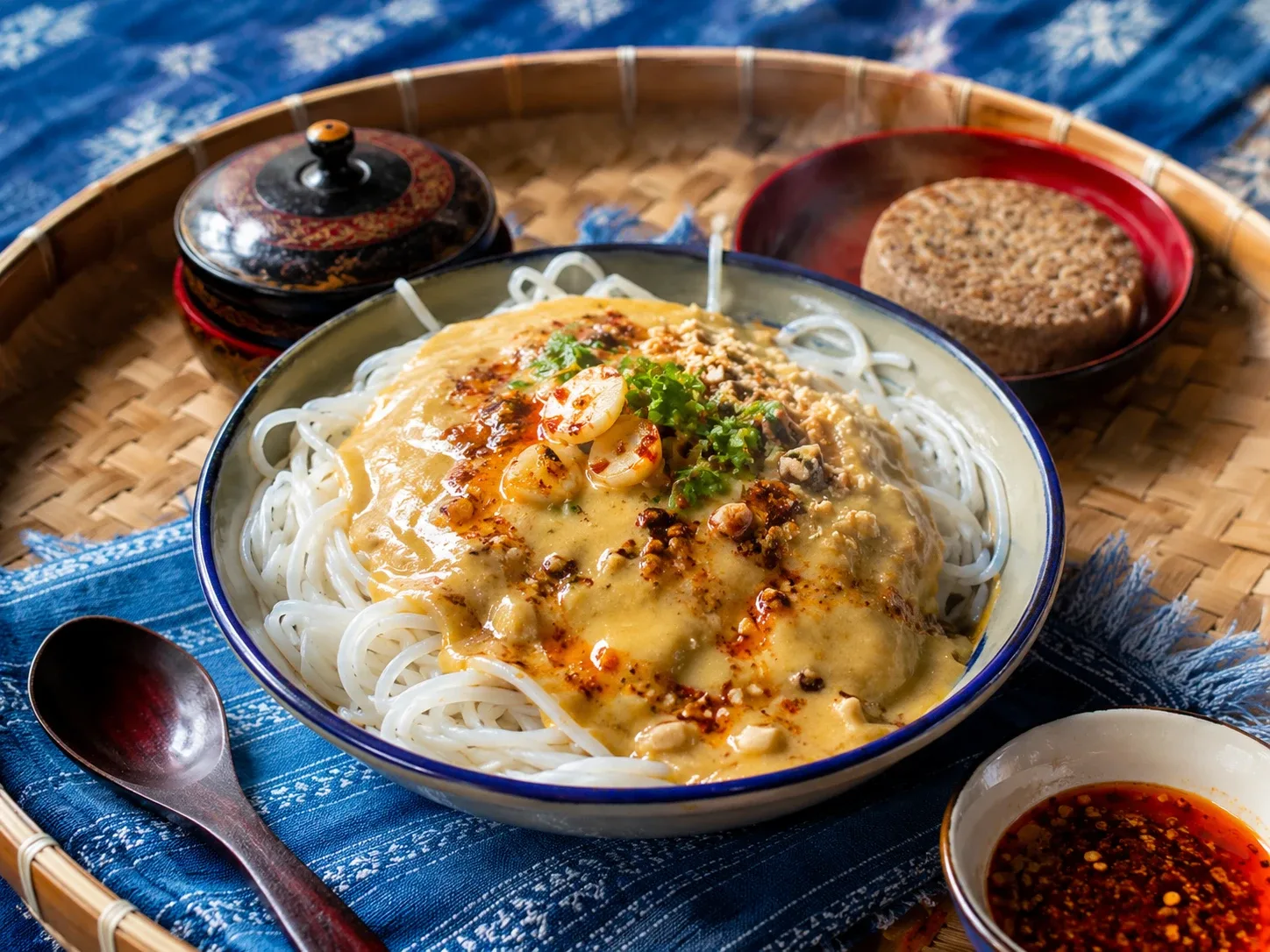
Tofu Nway, Warm Shan Tofu Noodlesတိုဟူးနွေး
Warm chickpea tofu that never sets, ladled like golden custard over rice noodles with garlic oil, chili, and peanuts — Shan State's great breakfast.