Htan Yay, Toddy of the Lowlands
ထန်းရည်
Palm toddy the delta way — fresh-tapped sap drunk sweet at dawn or left to ferment itself milky and gently fizzy by afternoon, plus an honest home method.
By Burmese Cookbook Kitchen · July 9, 2026
ဧရာဝတီ Ayeyarwady DeltaKonbaung, 1752–1885
 ၈
၈- Prep
- 15 min
- Cook
- 0 min
- Serves
- 4
- Level
- Beginner
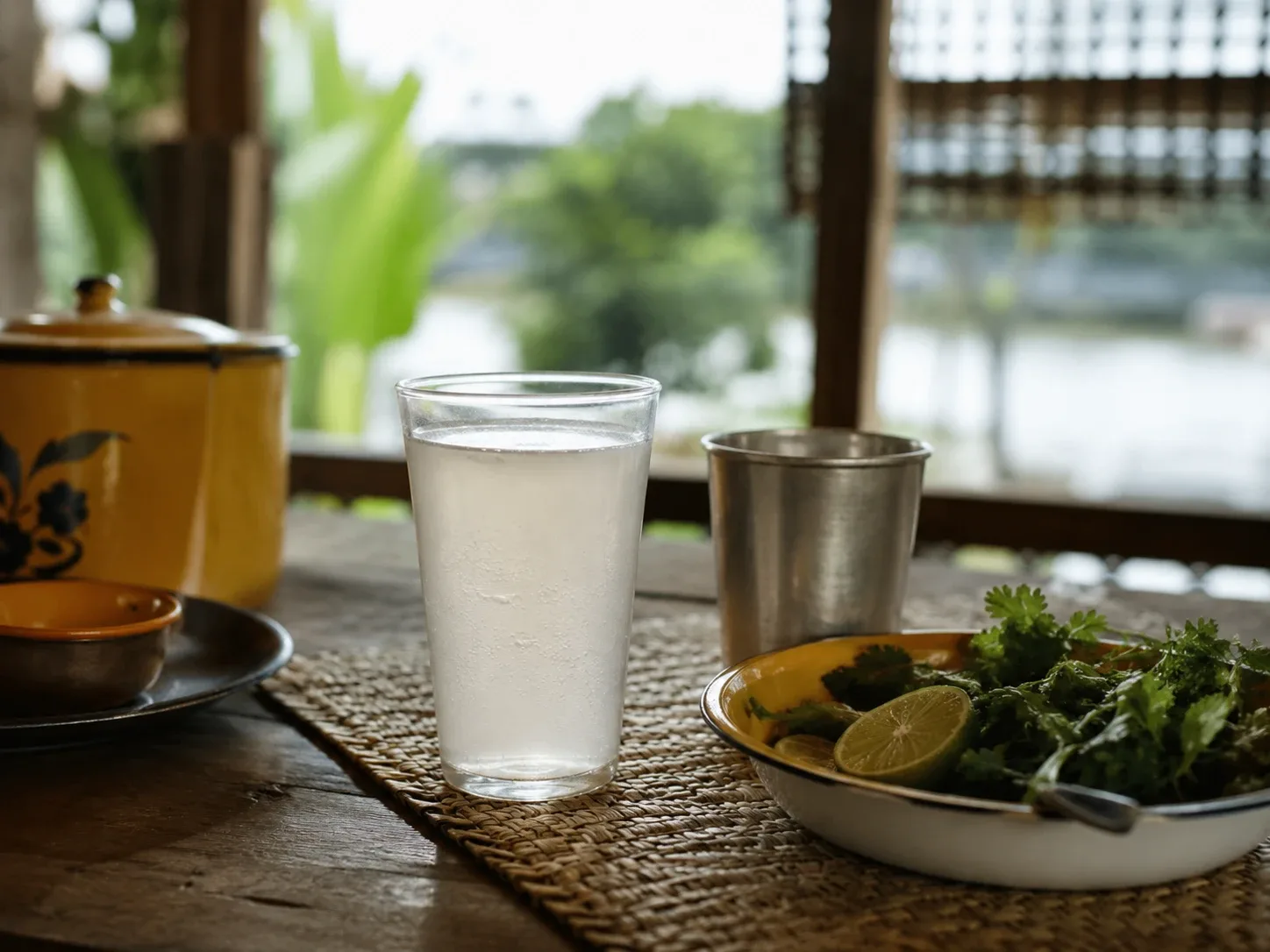
Every toddy palm in Burma is a tavern with one table. The tapper climbs at first light, shaves the flower stalk, and hangs a clay pot to catch the sap — sweet as cane juice at dawn, and already fermenting by the time it is carried down, because the wild yeasts living in the pot never wait for permission. Drunk fresh it is htan yay cho, sweet toddy, a children's treat; left until afternoon it becomes the milky, fizzy, gently alcoholic drink that has watered the Burmese lowlands since long before anyone kept records — Konbaung-era accounts already treat the toddy climber as a fixture of village life, and the trade is plainly far older than its paperwork.
The dry zone around Bagan is toddy's famous heartland, but the delta pours its own honest glass: toddy palms stand along the paddy bunds, and the tidal creeks add the dani — nipa palm — whose sap ferments into a softer, faintly briny cousin the rice country drinks with fried beans and dried fish at the day's end. There is no cooking here, only stewardship. Toddy is a living clock that runs sweet to sparkling to sour in a single day, and the recipe is mostly knowing when to stop it — plus, for kitchens far from any palm, an honest stand-in built from coconut water and jaggery that borrows the spirit if not the tree. Serve it cold, in clay if you have it, and drink it the day it is born. Toddy does not believe in tomorrow.
Toddy keeps village hours. Sweet at dawn, lively by noon, wine by dusk, vinegar by tomorrow — decide what you want and be there when it happens.
မီးဖိုချောင်စကား · A word from the kitchen
Ingredientsပါဝင်ပစ္စည်း
Serves 4
Tap to check off as you gather
For true toddy
- palm sap — fresh or frozen toddy-palm or coconut-blossom sap — sold as fresh palm nectar in some Asian and Latin markets, where it may be labeled tuba or tuak; it must be raw, not pasteurized, or it will never wake up
For the honest stand-in
- coconut water — fresh or the unpasteurized chilled kind — shelf-stable cartons ferment poorly
- palm sugar (jaggery) — grated — sap is sweeter than coconut water, and the jaggery closes the gap with the right smoky note
- dried yeast — an eighth of a teaspoon, no more — it stands in for the wild yeasts that live in a tapper's collecting pot
Methodချက်နည်း
Tap a numeral as you finish each step
Step 1: Strain whichever liquid you have
Pour the sap — or the coconut water whisked with the jaggery until dissolved — through a fine cloth into a very clean glass jar or clay pot. Village toddy arrives with bees, bark, and the odd ant; straining is tradition, not fussiness. Leave a quarter of the jar empty, because a live ferment needs headroom.
Step 2: Taste it sweet, if you like
Fresh sap, chilled, is a drink in its own right — htan yay cho, sweet toddy, the delta's dawn refreshment, sold to children and teetotalers without a second thought. Pour a glass now if you want to know where the journey starts.
Step 3: Set the ferment going
If using raw sap, do nothing — the wild yeasts came with it. For the stand-in, stir in the pinch of yeast. Cover the mouth with cloth, not a sealed lid; toddy ferments fast and a closed jar becomes a modest bomb. Leave it somewhere warm, out of the sun.
Step 4: Watch the hours, not the calendar
In a warm room the surface hazes and beads within 3 or 4 hours; by 6 to 12 it is proper toddy — milky, gently fizzy, sweet-sour like a lively lambic, and modestly alcoholic. Taste every few hours. The window you like will pass, so meet it with a glass in hand.
Step 5: Chill and serve
When it tastes right, refrigerate to slow the yeast and drink it the same day, poured over ice if the afternoon demands it. In the delta it comes in clay cups, with something salty-crisp alongside — fried beans, pè kyaw, dried fish. Anything left tomorrow will be halfway to vinegar; use it to sour a broth and call it thrift.
ခွက်ယောက် · The tools
Equipment
Clay pot
မြေအိုးThe gentle simmer of the village kitchen — rice, broths, and braises taste rounder from earthenware. A Dutch oven stands in.
Shop on Amazon →Fine sieve / muslin
စစ်ခွက်For straining tamarind, pressing broth clear, and sifting flours — line it with muslin for the cleanest pour.
Shop on Amazon →Box grater / microplane
ခြစ်စက်Fine ginger, green papaya shreds, and toddy-palm jaggery shavings.
Shop on Amazon →
Equipment links are Amazon affiliate links. As an Amazon Associate we earn from qualifying purchases, at no cost to you. Disclosure.
ဟင်းစုံ · Set the table
A Burmese meal is a spread
A cooler or a tea earns a bite alongside:
How a Burmese meal is built →Questions from the kitchen
Is toddy alcoholic?
Fresh from the tree at dawn, barely at all — which is why sweet toddy is an everyday refreshment. From there it climbs steadily, reaching roughly the strength of a light beer by evening. You control the dial by deciding when to chill it; the yeast never negotiates, it only slows down in the cold.
Where do I realistically find raw palm sap?
Filipino, Indian, and some Southeast Asian groceries occasionally carry fresh or frozen sap — look for tuba, neera, or palm nectar in the freezer case, and check that it is unpasteurized. Most home cooks abroad will use the coconut-water stand-in, which is honestly a cousin rather than a twin: lighter-bodied, but the same living, sweet-sour character.
How do I know it has gone too far?
Your nose files the report — past its window, toddy trades its bready, faintly floral smell for a sharp vinegar bite, and the fizz dies down. It is not dangerous, just sour. Delta households tip it into the sour-broth pot or let it finish becoming vinegar on purpose; nothing a palm gives is wasted.
Is toddy really a delta thing, or a dry-zone thing?
Both, honestly. The great toddy-palm groves and the deepest tapping culture belong to the dry zone around Bagan and Meiktila. But the lowlands drink their own: delta tappers work the toddy palms of the paddy margins and the dani — nipa palms — of the tidal creeks, whose sap makes a softer, faintly briny toddy the rice country considers its own.
နောက်တစ်ခု · Cook next
Keep the wok hot
 ၈
၈Drinks & Teahouse · 70 min · Beginner
Khaung Yay, the Kachin Rice Beerခေါင်ရည်
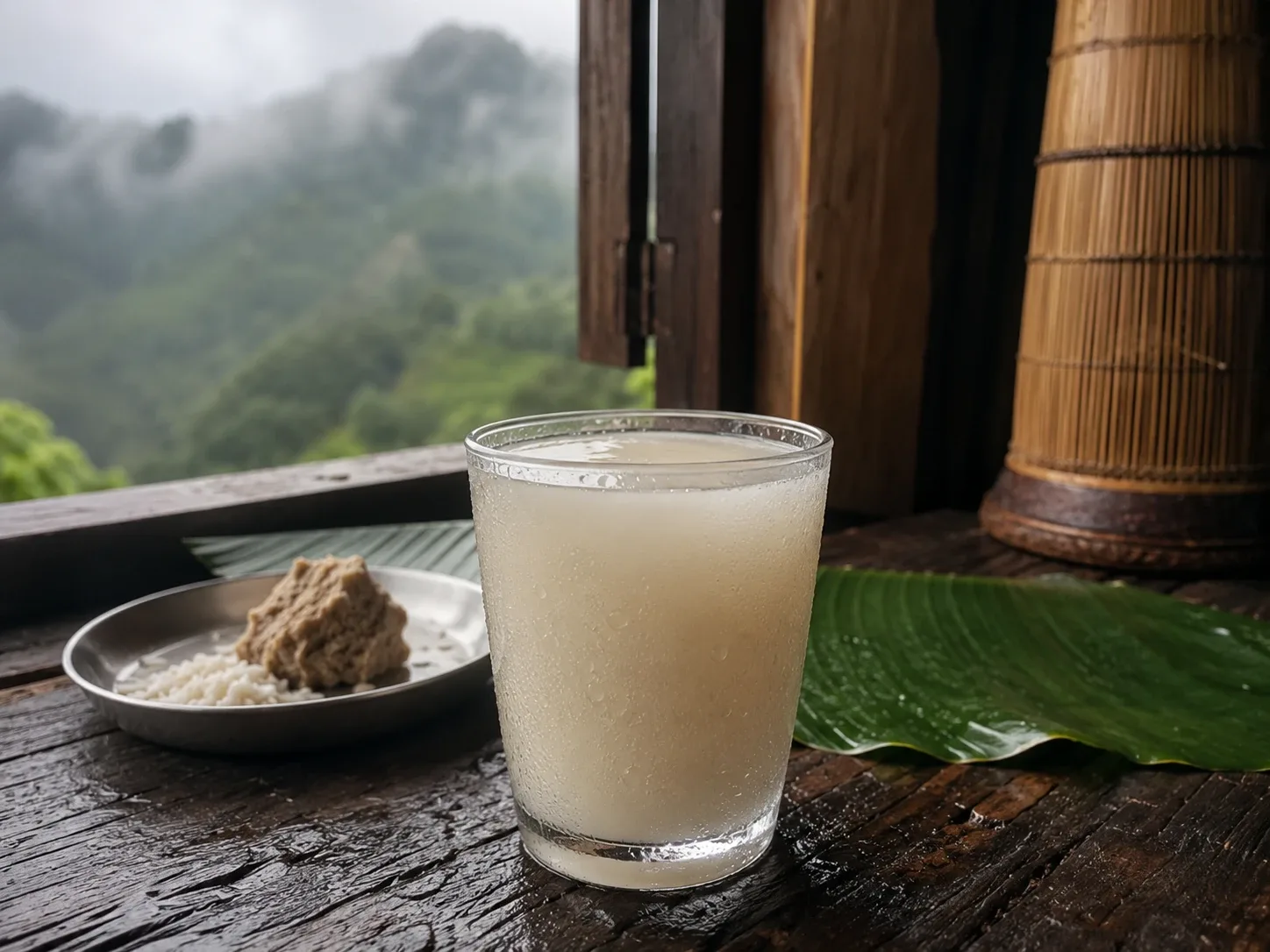
The cloudy, gently sweet rice beer of the Kachin hills, brewed at home from steamed sticky rice and a yeast cake — a week of patience, no equipment.
 ၈
၈Drinks & Teahouse · 20 min · Beginner
Kyan Yay, Street-Corner Sugarcane Juiceကြံရည်
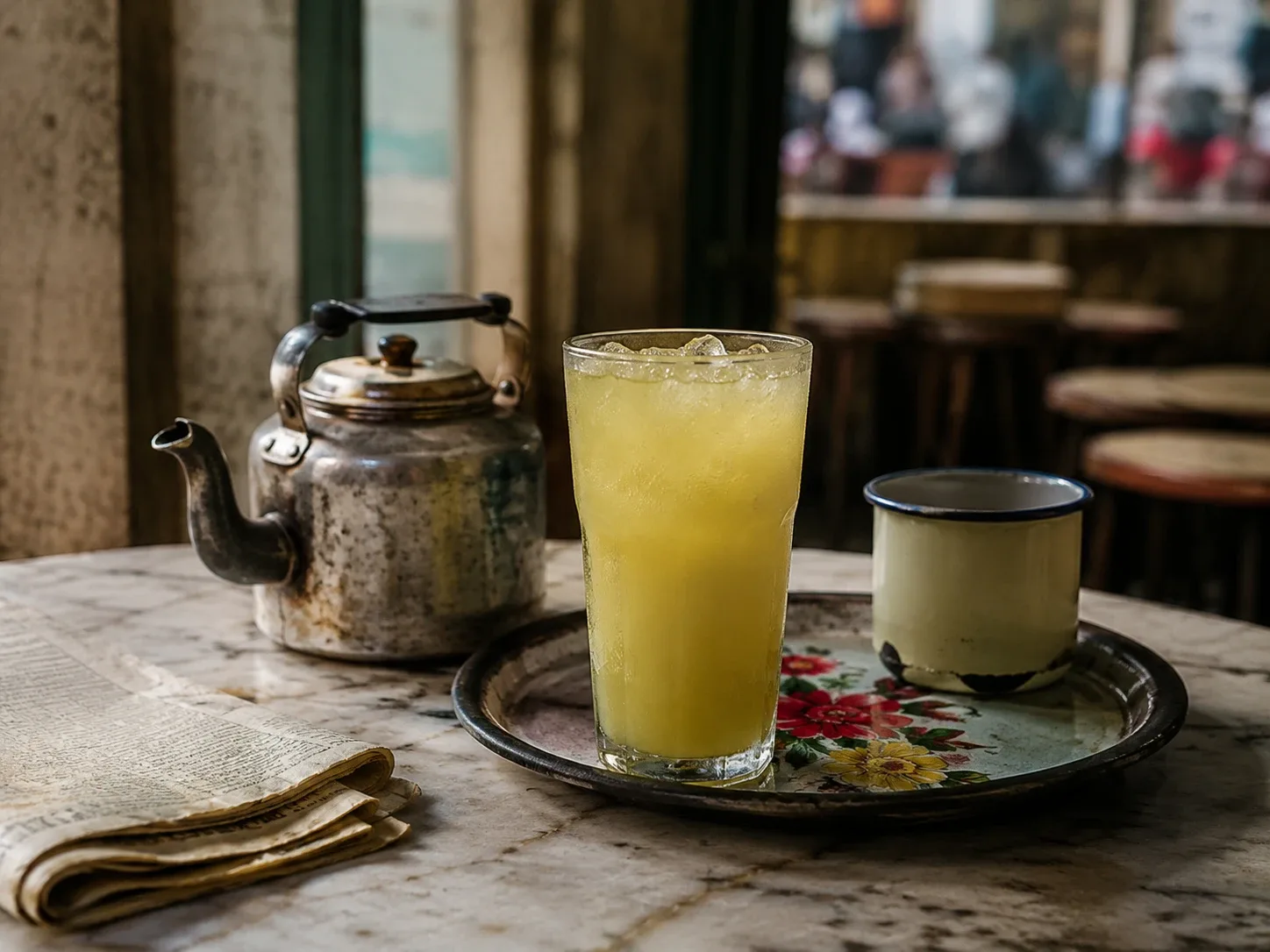
Fresh sugarcane juice the Yangon street-corner way — pressed cane brightened with lime and a pinch of salt over ice, with an honest blender method for home.
 ၇
၇Sweets & Mont · 105 min · Intermediate
Pathein Halawa, the Delta's Gilded Sweetပုသိမ်ဟလဝါ
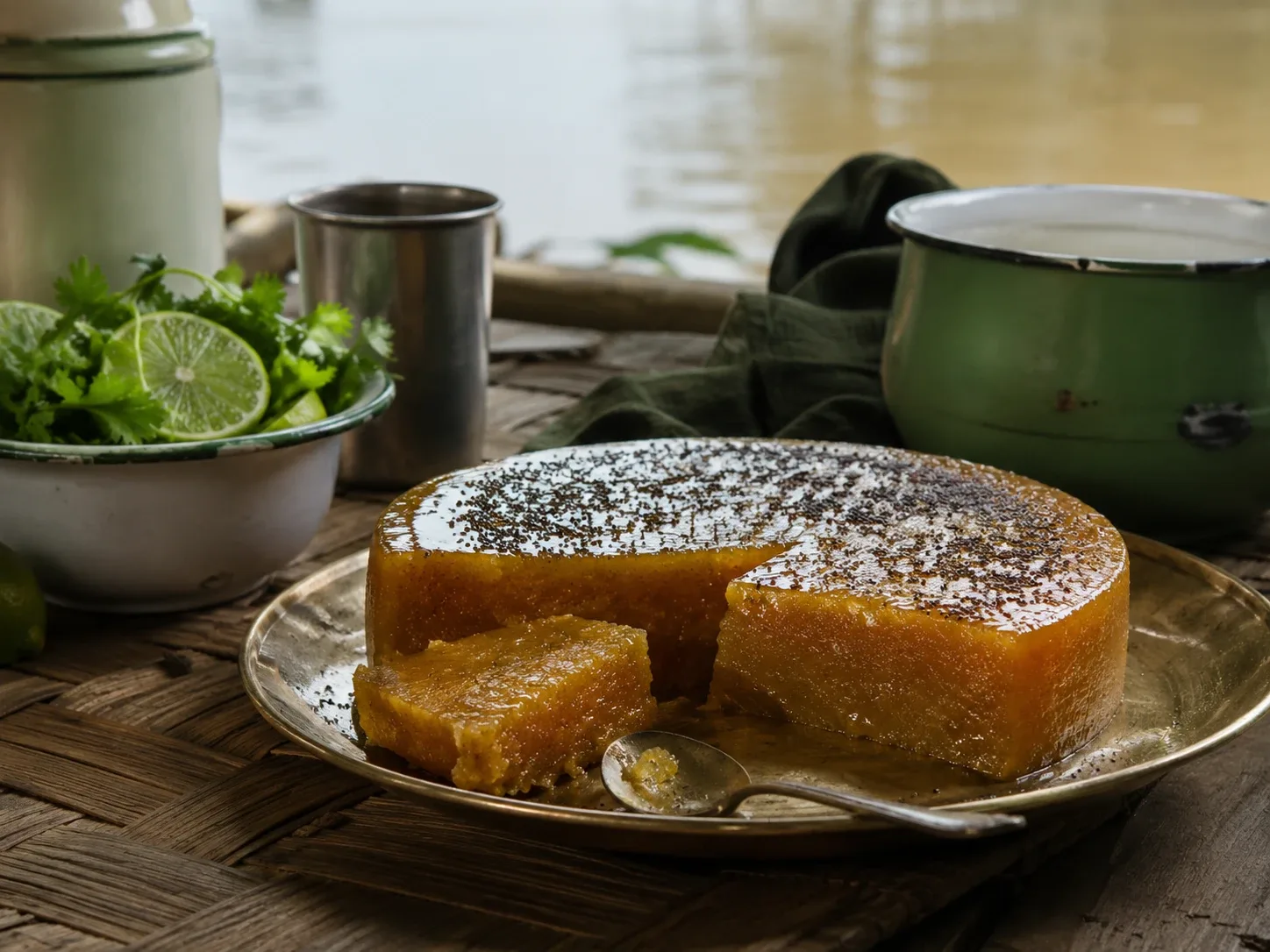
Pathein's famous glutinous-rice halawa — coconut milk, sugar, and ghee stirred patiently down to a dense, gleaming amber slab crowned with toasted poppy seeds.