Kyan Yay, Street-Corner Sugarcane Juice
ကြံရည်
Fresh sugarcane juice the Yangon street-corner way — pressed cane brightened with lime and a pinch of salt over ice, with an honest blender method for home.
Also spelled: Kyan Ye
By Burmese Cookbook Kitchen · July 9, 2026
ရန်ကုန် Yangon & Lower BurmaBritish Burma, 1826–1948
 ၈
၈- Prep
- 20 min
- Cook
- 0 min
- Serves
- 2
- Level
- Beginner
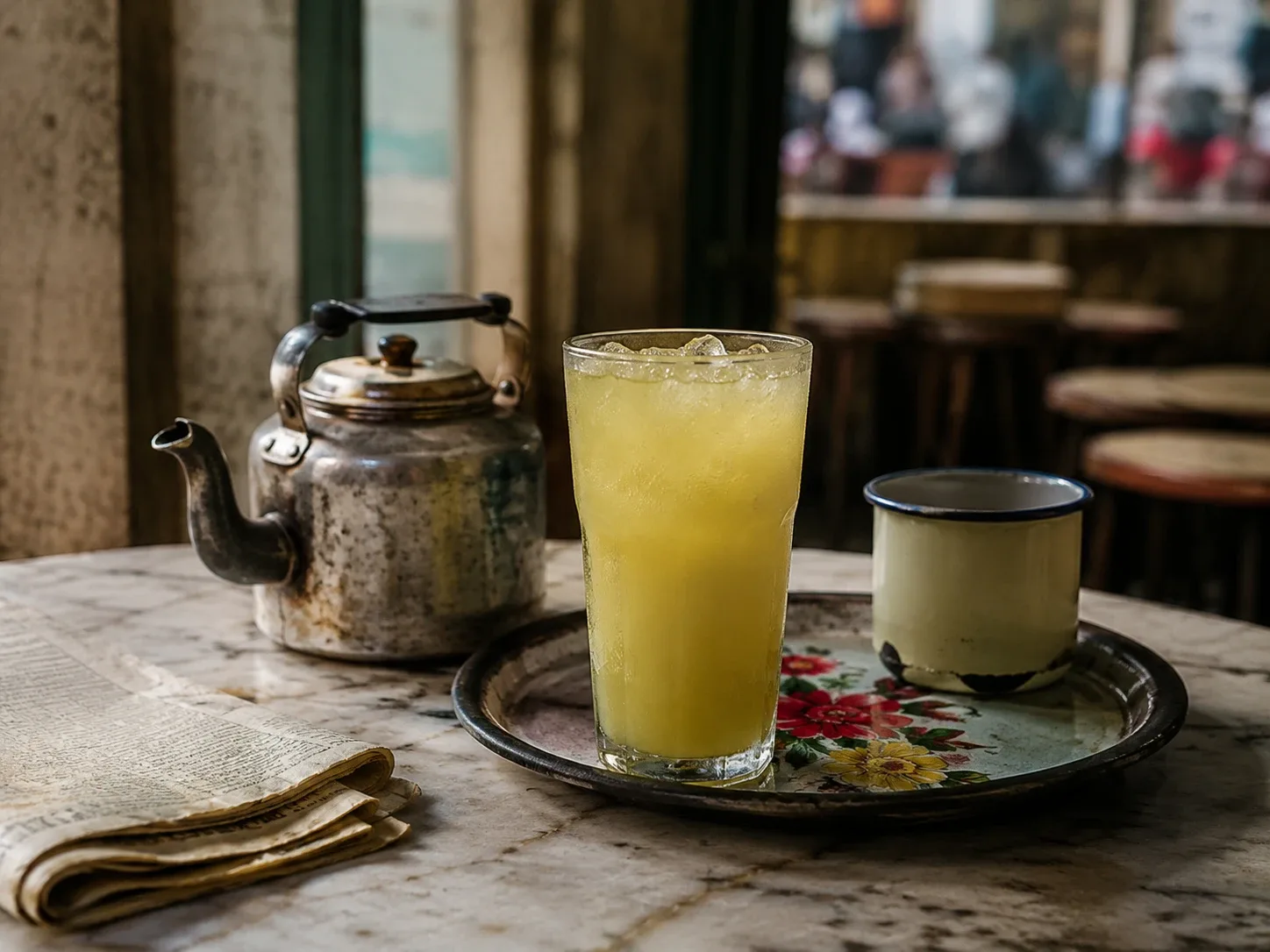
Every hot-season afternoon in downtown Yangon is scored by the same sound: the groan of steel rollers as a cane press flattens sugarcane, one length at a time, into a cloudy gold stream over ice. Kyan yay — cane juice — is the city's great democratic refreshment, sold from carts and shophouse fronts for small change, and drunk standing in whatever shade the awning allows. The smart vendors feed a coin of ginger or a whole lime wedge, peel and all, through the rollers with the cane, so the juice comes out already brightened.
Sugarcane is ancient in Burma — the plant needs no origin story — but the drink as Yangon knows it is street commerce of the colonial city: the hand-cranked iron press arrived with the same waves of trade and migration that built downtown's shophouses, and the carts have simply never left. We date it honestly to that era, not to antiquity.
The home cook's problem is the press, and the blender is the honest answer: peel the cane, split it thin, shred it wet, and wring the juice out through muslin with your fists. What you must respect is time — cane juice oxidizes almost while you watch, going from pale gold to dishwater brown within the hour. So this is a recipe with no do-ahead step and no storage advice. Press, brighten with lime and a pinch of salt, pour over ice, and drink it where you stand. That, too, is authentic.
Cane juice waits for no one — it dulls and browns within the hour. Press, pour over ice, drink. There is no make-ahead version and there never will be.
မီးဖိုချောင်စကား · A word from the kitchen
Ingredientsပါဝင်ပစ္စည်း
Serves 2
Tap to check off as you gather
For the juice
- fresh sugarcane — about 2 stout lengths; look for heavy, unwrinkled cane at Asian markets — or substitute 500 ml frozen pure cane juice, thawed
- water — cold; just enough to let the blender work
- lime — half juiced, half in wedges
- fresh ginger — optional, cut into two thin coins
- salt
- ice
Methodချက်နည်း
Tap a numeral as you finish each step
Step 1: Break down the cane
With a heavy knife on a stable board, peel away the hard outer bark of the cane, then split each length into thin batons no thicker than a finger and chop them into 3 cm pieces. This is the real work of the recipe: a home blender cannot crush whole cane, but it can shred small pieces well enough to give up their juice.
Step 2: Blend in pulses
Blend the cane pieces with the cold water — and the ginger coins, if using — in short, hard pulses until the cane is reduced to a wet, fibrous mulch, about a minute. Do not run the blender continuously; the friction warms the juice, and warmth is the enemy of everything this drink is about.
Step 3: Strain and press
Set a muslin cloth or a fine sieve lined with cheesecloth over a jug and pour in the mulch. Gather and twist the cloth, pressing hard with your fists — the last squeeze holds the sweetest juice. You should have about 400 ml of pale, grassy-gold liquid. Discard the fiber.
Step 4: Brighten and serve at once
Squeeze in the juice of half the lime and add the pinch of salt, then pour over full glasses of ice and hang a lime wedge on each rim. The salt is not seasoning so much as focus — it stops the sweetness from going flat and makes the cane taste green and alive. Drink immediately, while it is still the palest gold.
ခွက်ယောက် · The tools
Equipment
Fine sieve / muslin
စစ်ခွက်For straining tamarind, pressing broth clear, and sifting flours — line it with muslin for the cleanest pour.
Shop on Amazon →Box grater / microplane
ခြစ်စက်Fine ginger, green papaya shreds, and toddy-palm jaggery shavings.
Shop on Amazon →
Equipment links are Amazon affiliate links. As an Amazon Associate we earn from qualifying purchases, at no cost to you. Disclosure.
ဟင်းစုံ · Set the table
A Burmese meal is a spread
A cooler or a tea earns a bite alongside:
How a Burmese meal is built →Questions from the kitchen
Why did my juice turn brown?
Oxidation — cane juice starts discoloring within the hour, faster in heat. The lime slows it slightly, but the real answer is the street vendor's answer: press to order. Make it when the glasses are already full of ice.
I cannot find fresh sugarcane. Any honest substitute?
Frozen pure cane juice from Vietnamese and Latin American groceries is genuinely good — thaw it, then treat it from the lime step onward. Dissolved jaggery or sugar water is not a substitute; without the grassy freshness of raw cane it is just sweet water.
Is the ginger traditional?
Common but optional. Yangon carts vary — some press a coin of ginger or a wedge of lime, peel and all, through the rollers with the cane; some sell it plain. Start plain, then decide which stall you would have been loyal to.
နောက်တစ်ခု · Cook next
Keep the wok hot
 ၈
၈Drinks & Teahouse · 15 min · Beginner
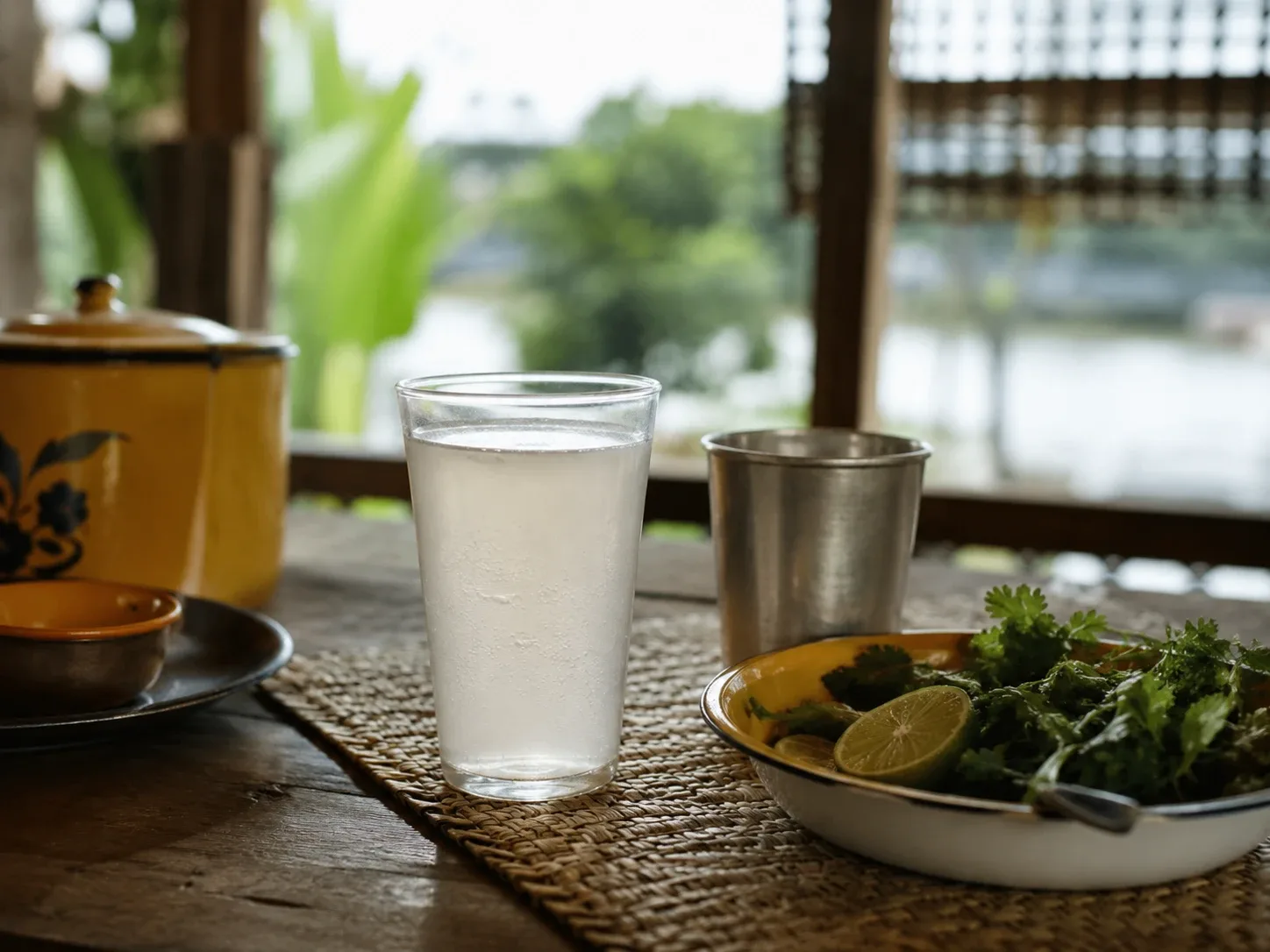
Htan Yay, Toddy of the Lowlandsထန်းရည်
Palm toddy the delta way — fresh-tapped sap drunk sweet at dawn or left to ferment itself milky and gently fizzy by afternoon, plus an honest home method.
 ၈
၈Drinks & Teahouse · 70 min · Beginner
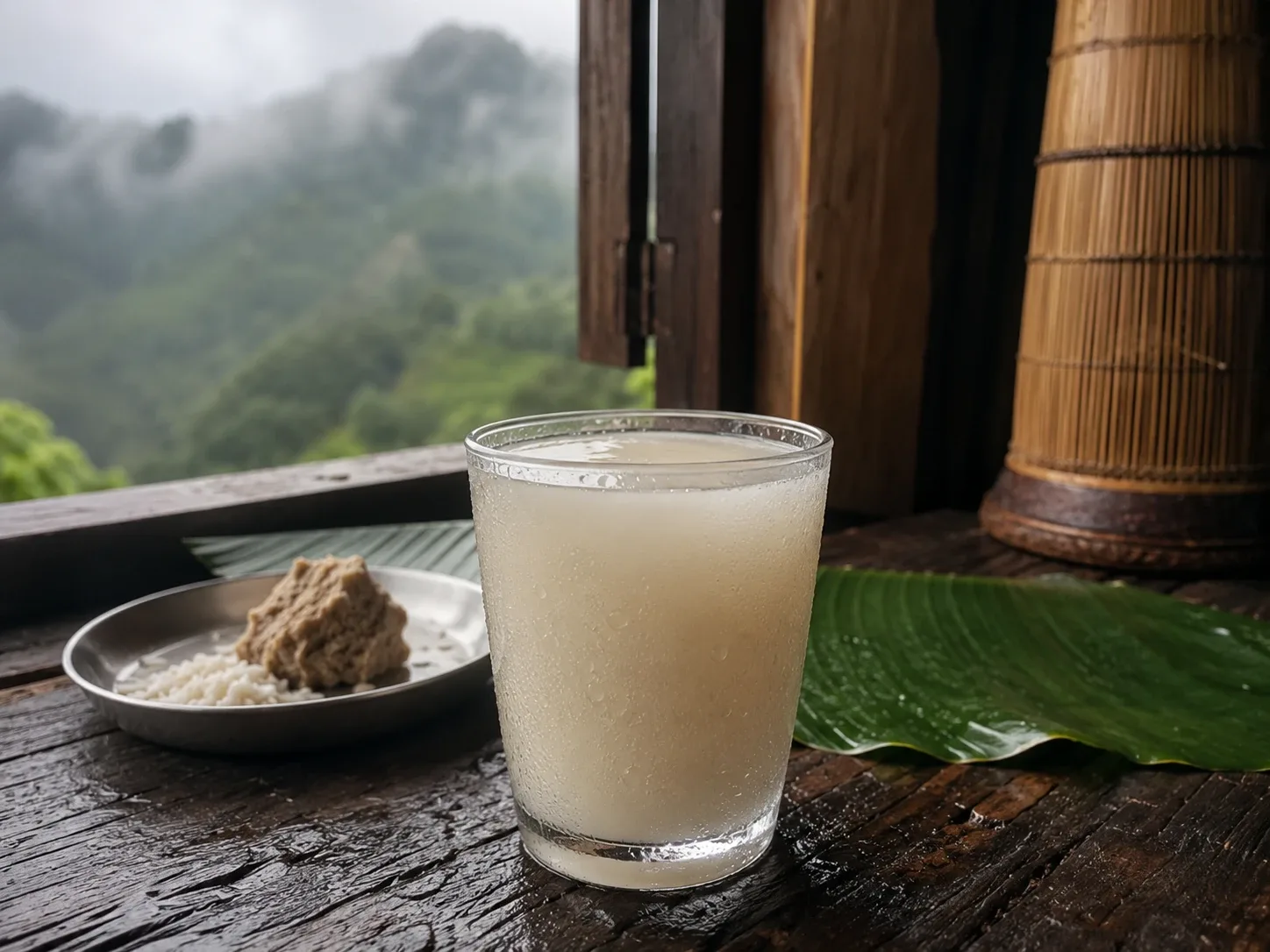
Khaung Yay, the Kachin Rice Beerခေါင်ရည်
The cloudy, gently sweet rice beer of the Kachin hills, brewed at home from steamed sticky rice and a yeast cake — a week of patience, no equipment.
 ၇
၇Sweets & Mont · 105 min · Intermediate
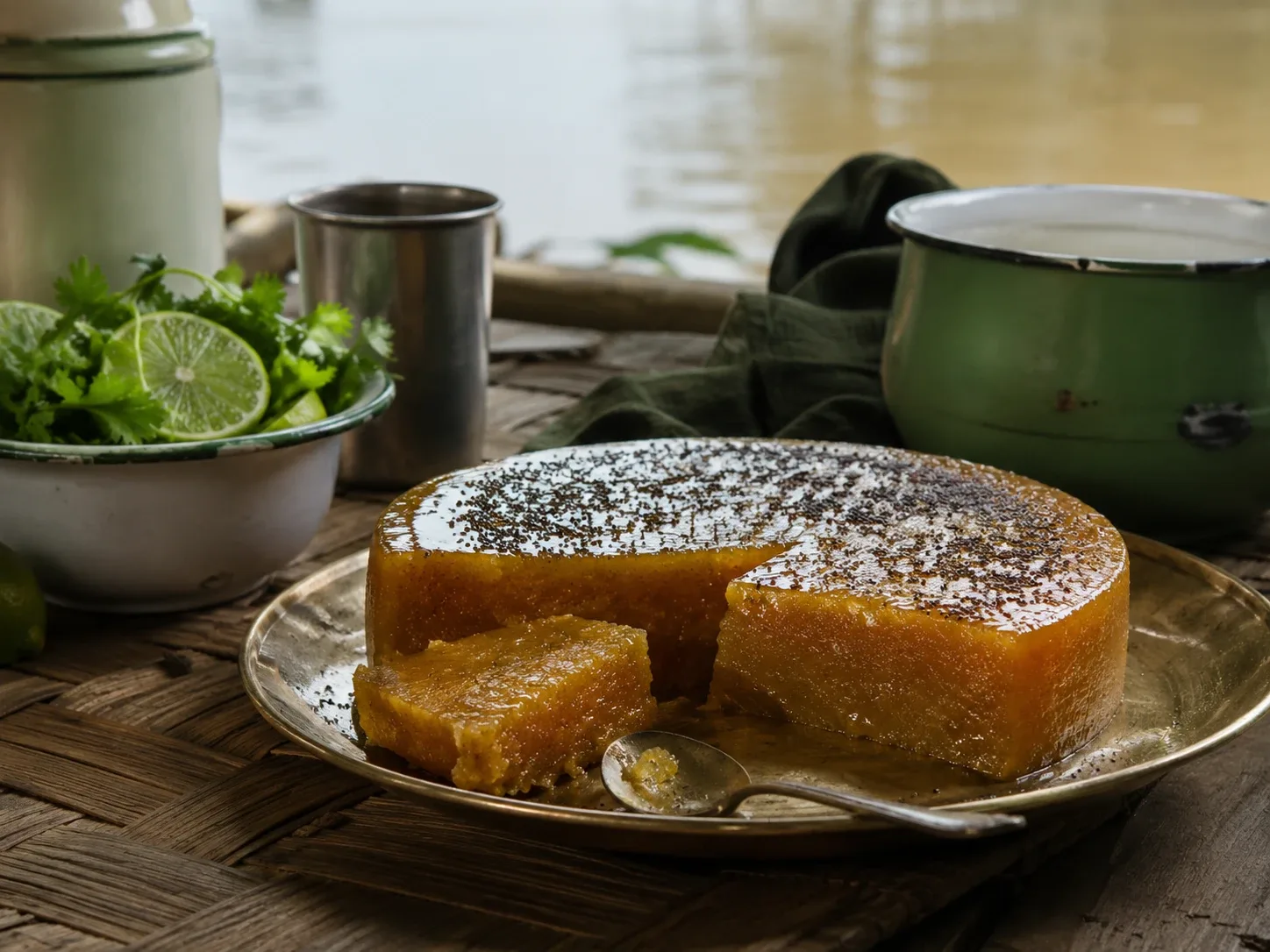
Pathein Halawa, the Delta's Gilded Sweetပုသိမ်ဟလဝါ
Pathein's famous glutinous-rice halawa — coconut milk, sugar, and ghee stirred patiently down to a dense, gleaming amber slab crowned with toasted poppy seeds.