Khaung Yay, the Kachin Rice Beer
ခေါင်ရည်
The cloudy, gently sweet rice beer of the Kachin hills, brewed at home from steamed sticky rice and a yeast cake — a week of patience, no equipment.
By Burmese Cookbook Kitchen · July 9, 2026
ကချင် Kachin StateBritish Burma, 1826–1948
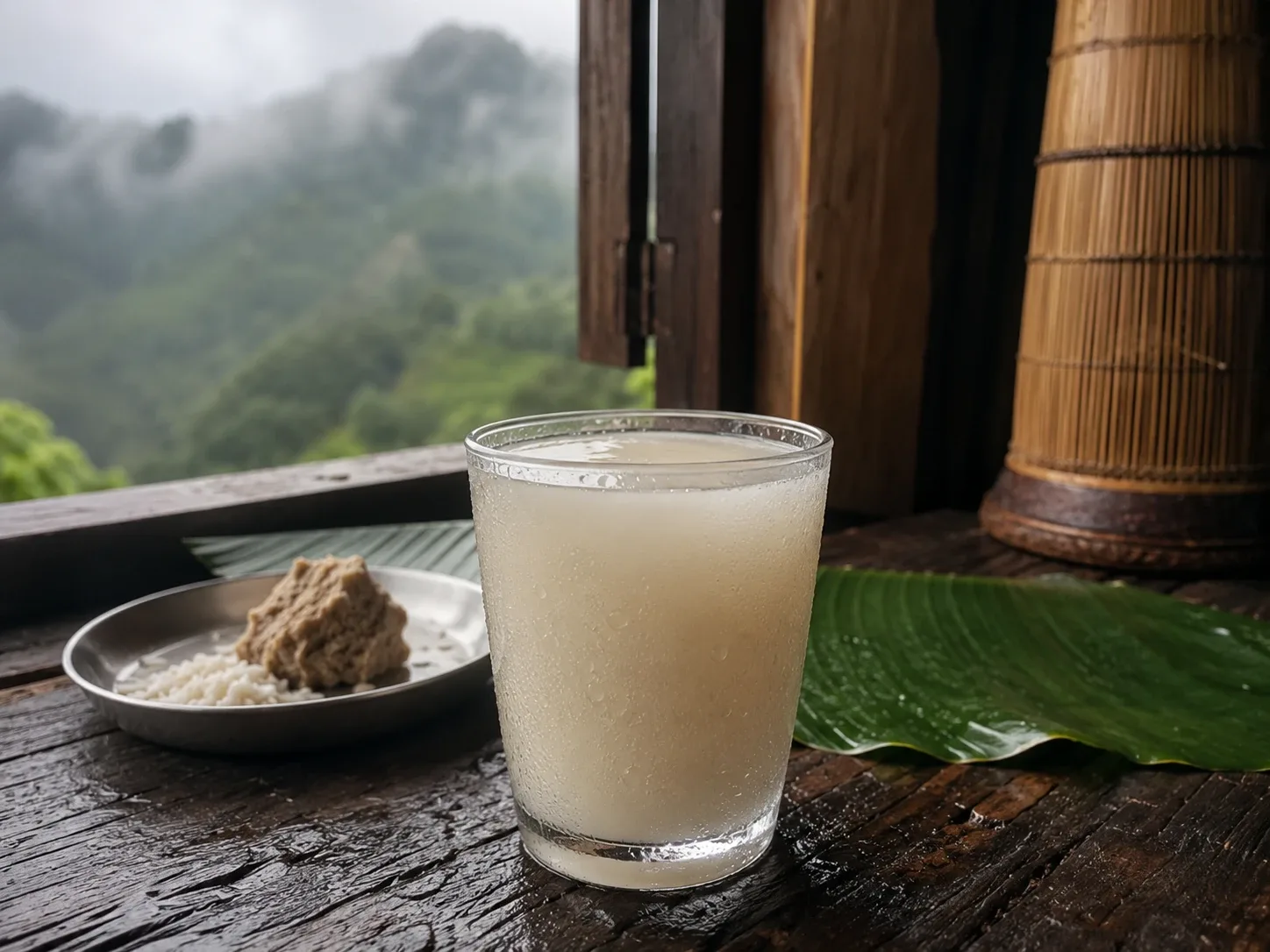 ၈
၈- Prep
- 30 min
- Cook
- 40 min
- Serves
- 8
- Level
- Beginner
No Kachin celebration is dry. At manau festivals — the great communal dances of the Kachin peoples — rice beer is poured from bamboo cups as a matter of hospitality and honor, and colonial-era accounts of the northern hills describe exactly this: households brewing cloudy rice liquor for feasts, funerals, and the sealing of agreements. We date the dish to that written record, as the house rule goes, while saying plainly that the brewing is far older than the notebooks that noticed it.
The method is domestic fermentation at its most forgiving. Sticky rice is steamed, cooled to blood-warm, and seeded with a crushed yeast ball — the same chalky starter used across Asia's rice-wine belt, carrying molds that turn starch to sugar and yeasts that turn sugar to drink. Two days later a well pressed into the rice fills with sweet clear liquid; water goes in, patience continues, and within a week you strain off something cloudy, gently winey, and quietly alive. Nothing here needs equipment beyond a clean jar and a cloth.
Two moments carry the whole batch. The rice must be steamed, not boiled, or the ferment runs thin and sour. And the cooling is non-negotiable: blood-warm rice welcomes the yeast, hot rice murders it, cold rice invites strangers. After that, the brew mostly wants to be left alone in a dim corner — which, brewers of every tradition agree, is the hardest instruction in the recipe.
Blood-warm is the whole game — rice too hot kills the yeast, rice too cold lets the wrong microbes move in first. Trust your wrist, not the clock.
မီးဖိုချောင်စကား · A word from the kitchen
Ingredientsပါဝင်ပစ္စည်း
Serves 8
Tap to check off as you gather
For the ferment
- glutinous rice — soaked 4 hours or overnight
- rice wine yeast ball — the small chalky balls sold at Chinese groceries as shanghai yeast or jiuqu — about 10 g; use 2 if yours are the tiny kind
- water — boiled and fully cooled, added on day three
Equipment that matters
- glass or ceramic jar — about 2 litres, washed in hot water and air-dried — no soap residue, no metal lids touching the ferment
- clean cotton cloth — to cover the mouth, with string or a rubber band
Methodချက်နည်း
Tap a numeral as you finish each step
Step 1: Steam the rice
Drain the soaked rice and steam it over rolling water for 30 to 40 minutes, until fully tender but distinct — steamed, not boiled, because boiled rice carries too much free water and the ferment turns sour and thin. Spread it on a tray to cool.
Step 2: Cool to blood-warm
Let the rice cool until a clean finger held in the middle of the pile feels neither hot nor cool — body temperature, roughly 35°C. This is the step that decides the batch: hotter kills the yeast outright, colder gives wild bacteria a head start you cannot take back.
Step 3: Seed with the yeast
Crush the yeast ball to a fine powder between two spoons and scatter it over the rice in three passes, turning gently with washed hands between each, so every grain gets its share. The ball carries both yeast and the molds that first turn rice starch to sugar — uneven seeding means pockets that ferment and pockets that spoil.
Step 4: Pack the jar and wait
Pack the seeded rice loosely into the jar and press a fist-width well down the center to the bottom. Cover the mouth with cloth and leave it somewhere dim at warm room temperature. Within two to three days the well fills with clear, sweet liquid and the rice smells of pears and bread — that pooled sweetness is the sign to continue.
Step 5: Add the water and ferment on
Pour in the cooled boiled water, stir once with a clean wooden spoon, re-cover, and ferment 3 to 5 days more, tasting daily from day three. It moves from sweet toward gently winey and faintly sour; stop where you like it. Cooler rooms move slower — winter batches in the hills take the better part of two weeks and are said to be the better for it.
Step 6: Strain and serve
Strain through cloth, pressing the solids well, into clean bottles. Drink it cloudy and lightly chilled, within a week — it is a live thing and keeps fermenting quietly in the fridge, so loosen the caps daily. The strained rice lees season a soup pot honorably.
ခွက်ယောက် · The tools
Equipment
Tiered steamer
ပေါင်းအိုးFor sticky rice, steamed mont, and reheating without drying out. Bamboo or stainless both work.
Shop on Amazon →Stone mortar & pestle
ဆုံFor garlic-ginger paste, pounded dried shrimp fluff, and crushed peanuts — the blender lies about texture; the stone doesn’t.
Shop on Amazon →Fine sieve / muslin
စစ်ခွက်For straining tamarind, pressing broth clear, and sifting flours — line it with muslin for the cleanest pour.
Shop on Amazon →
Equipment links are Amazon affiliate links. As an Amazon Associate we earn from qualifying purchases, at no cost to you. Disclosure.
ဟင်းစုံ · Set the table
A Burmese meal is a spread
A cooler or a tea earns a bite alongside:
How a Burmese meal is built →Questions from the kitchen
How strong is it?
Modest — a home batch this size lands somewhere in beer territory, a few percent, stronger the longer you ferment. It is unmistakably alcoholic, so treat it as such; the sweet day-three liquid alone, before the water goes in, is the gentle version children were historically teased with and you should not rely on.
My batch smells sharp or shows colored mold. Drinkable?
White or pale bloom on the surface is normal ferment behavior; pink, black, or green growth means a competitor won and the batch goes to the compost without argument. Sharp vinegar smell means it fermented too warm or too long — safe, but you have brewed seasoning, not beer.
Do I need the well in the center?
It is the brewer's window. The molds work from the outside of each grain inward, and the well collects the first sweet liquid where you can see and smell it — no well, no early warning, and you are guessing at day three instead of knowing.
Is this the same drink poured at manau festivals?
Same family, humbler scale. Festival khaung yay is brewed in bulk, often stronger, and served from bamboo cups with real ceremony — offered to guests as a matter of honor. This is the household version, which is where every festival batch learned its manners.
နောက်တစ်ခု · Cook next
Keep the wok hot
 ၈
၈Drinks & Teahouse · 15 min · Beginner
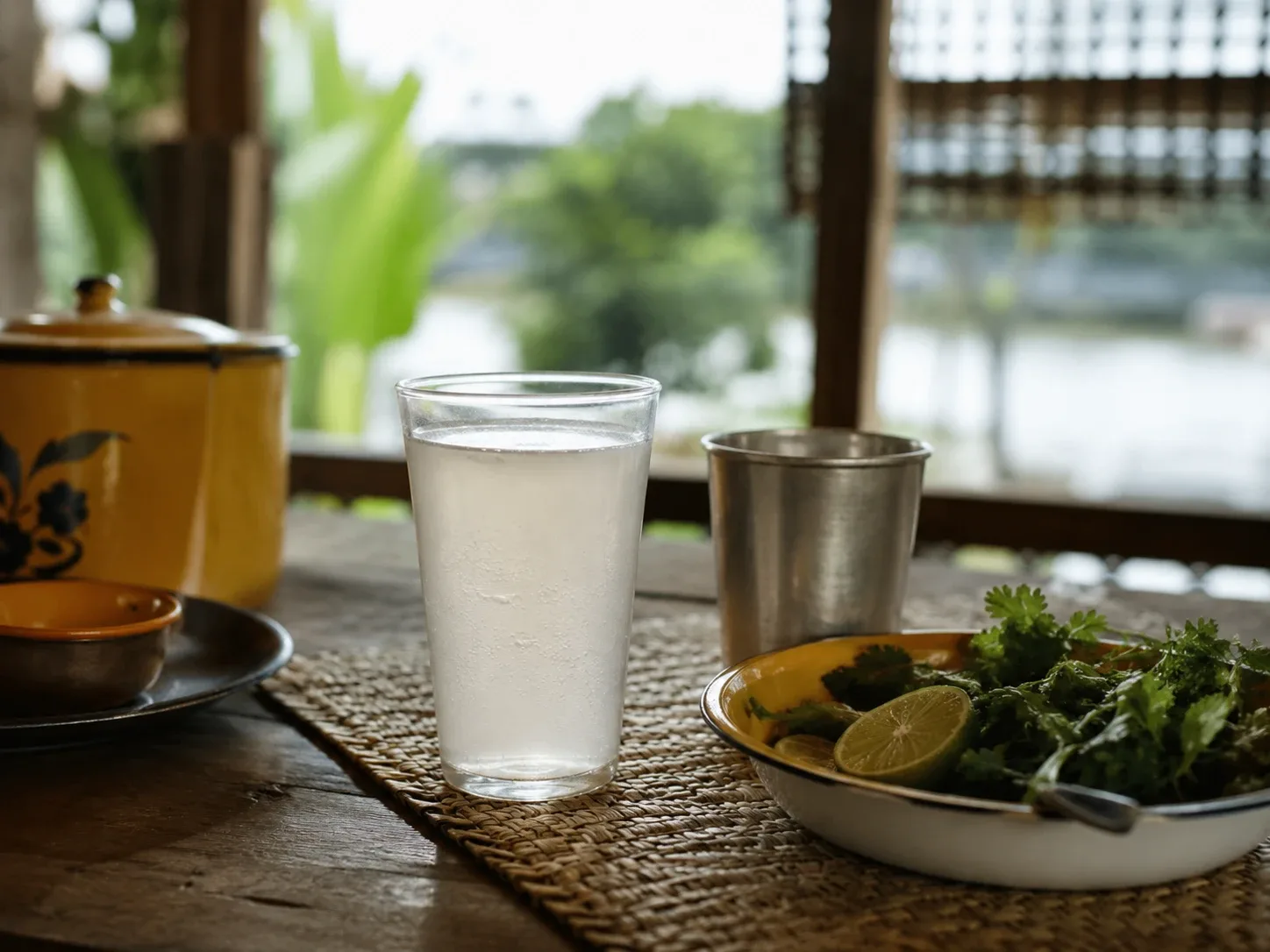
Htan Yay, Toddy of the Lowlandsထန်းရည်
Palm toddy the delta way — fresh-tapped sap drunk sweet at dawn or left to ferment itself milky and gently fizzy by afternoon, plus an honest home method.
 ၈
၈Drinks & Teahouse · 20 min · Beginner
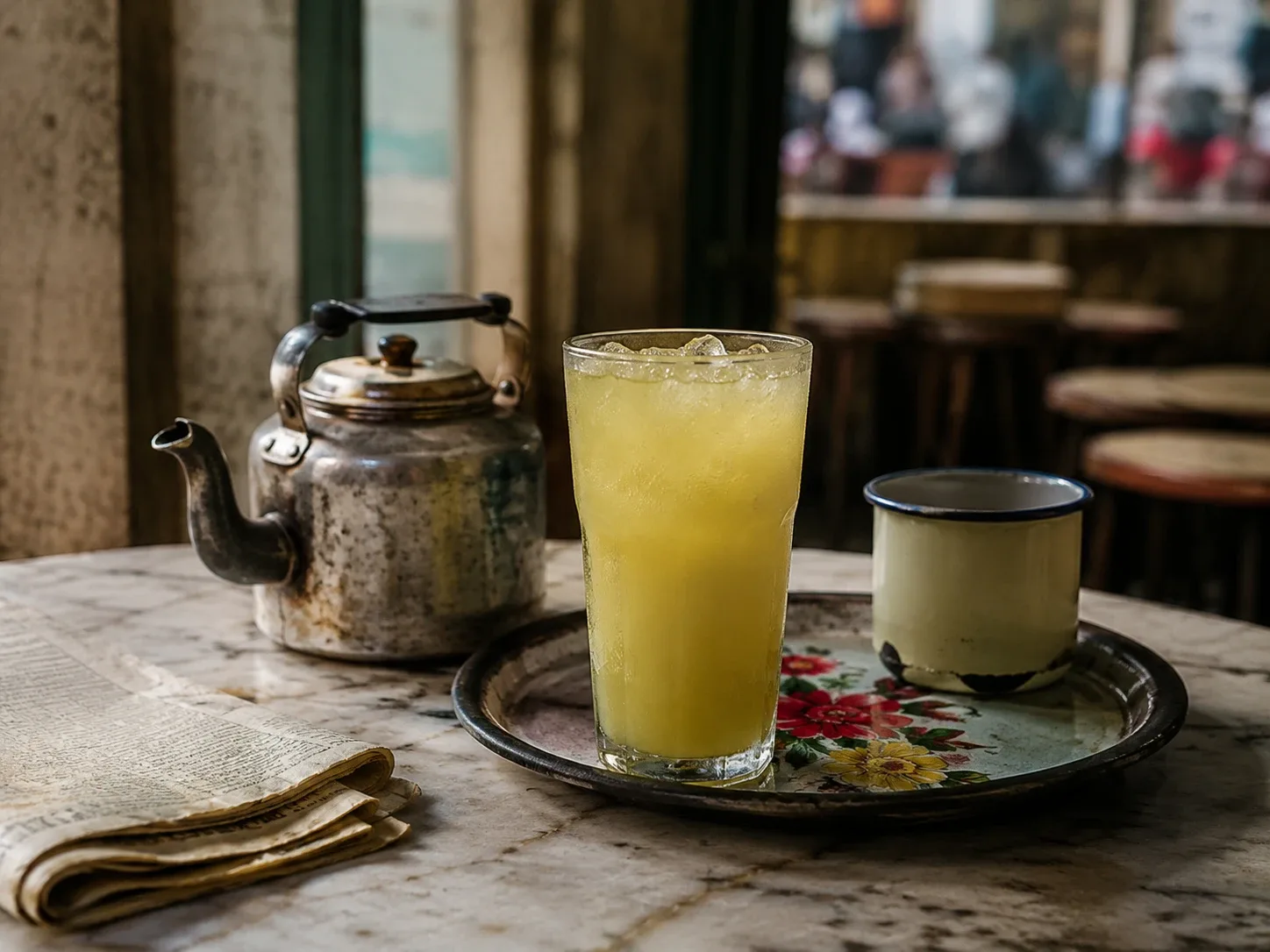
Kyan Yay, Street-Corner Sugarcane Juiceကြံရည်
Fresh sugarcane juice the Yangon street-corner way — pressed cane brightened with lime and a pinch of salt over ice, with an honest blender method for home.
 ၅
၅Soups & Broths · 165 min · Beginner
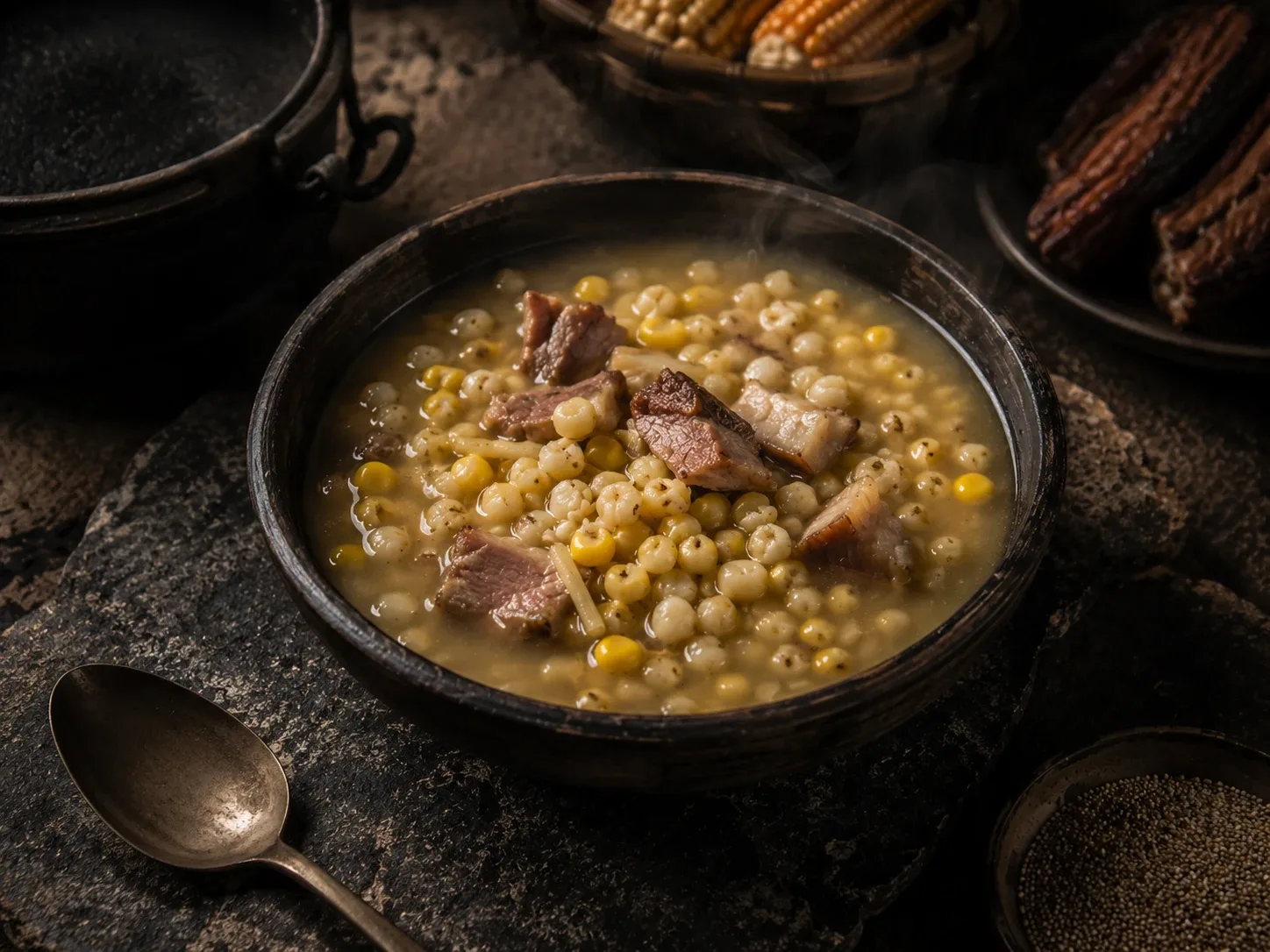
Sabuti, the Chin Corn Soup
The Chin hills' great corn soup — hominy maize simmered slowly with smoked pork and ginger, frugal mountain cooking that somehow eats like plenty.