Chin Smoked Pork with Mustard Greens
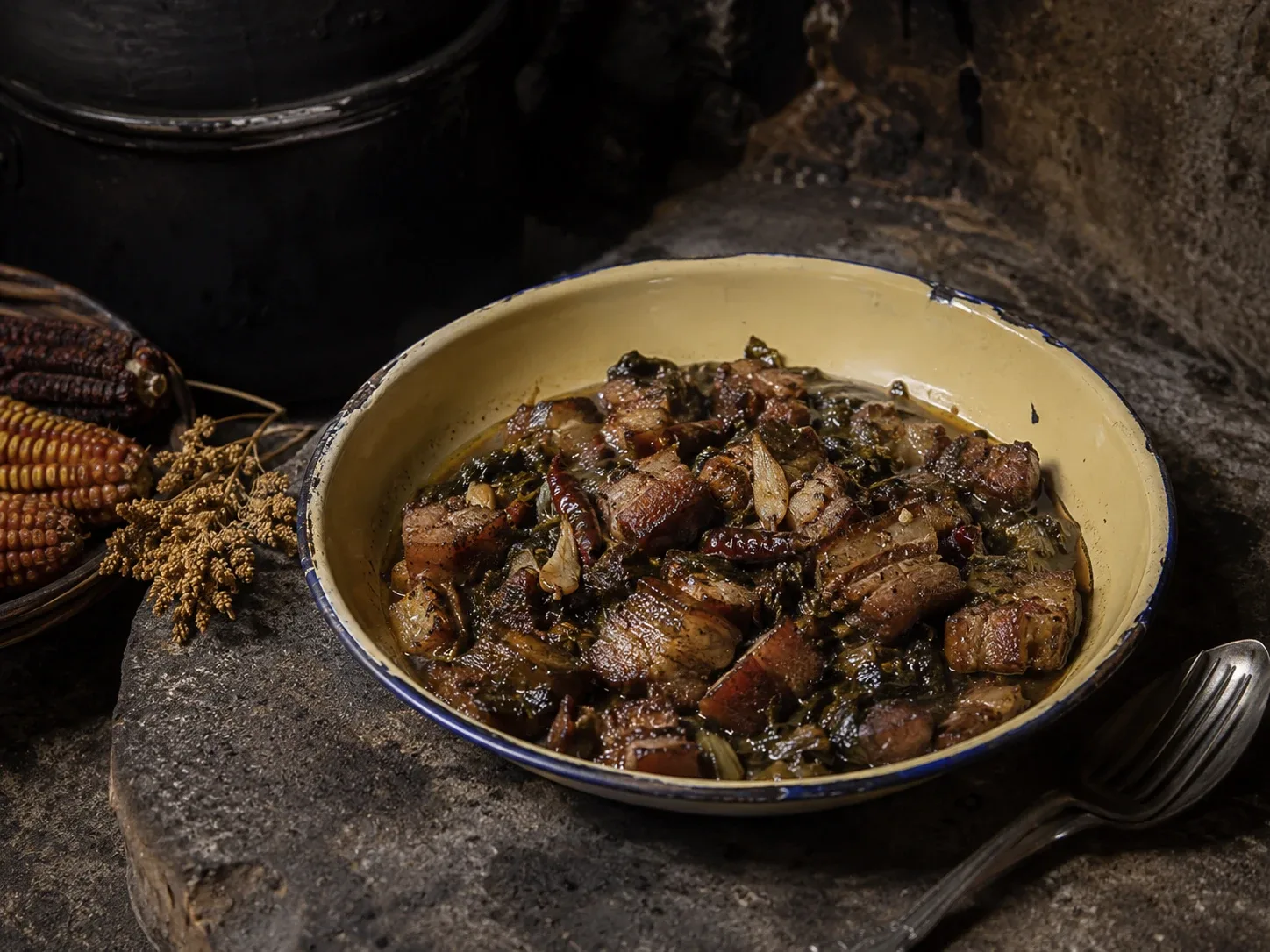
Hearth-smoked pork simmered down with mustard greens, ginger, and dried chilies — the Chin hills' frugal, smoke-seasoned answer to a curry, salt its only spice.
By Burmese Cookbook Kitchen · July 9, 2026
ချင်း Chin HillsOpening & Diaspora, 1988–present
 ၃
၃- Prep
- 15 min
- Cook
- 85 min
- Serves
- 4
- Level
- Beginner
Walk into a Chin kitchen in the cool season and look up: the rafters over the hearth are the pantry. Pork fattened through the year is cut, salted, and hung in the smoke of the cooking fire until it is dark, dense, and keeps without ice — the hills' answer to a country with no cold chain. Every serious Chin dish begins with this meat, and the simplest of them is also one of the best: smoked pork simmered down with mustard greens until the bitterness of the leaves and the salt-smoke of the meat agree with each other.
The record, honestly given: this is oral-tradition cooking, written down almost nowhere. Its documentation is the menu of every Chin eatery from Hakha to the Chin quarters of Yangon — where a pork-and-mustard-greens pot is as standard as sabuti — and the same dish thrives across the Indian border in Mizoram, where the smoked pork is called vawksa rep and the greens pot is a bai. The border is newer than the cuisine; the Chin and Mizo hills are one kitchen with two passports.
Technique-wise this is restraint on a plate. No oil is added and nothing is fried; ginger and garlic arrive late and stay in the background; salt waits until the final five minutes because the pork negotiates its own terms slowly. Your only real job is time — a lazy simmer until the meat gives up, the greens collapse, and the broth reduces to a gravy that means it.
Do not salt this pot until the last five minutes. Smoked pork gives up its salt slowly, and the cook who seasons early eats a briny supper.
မီးဖိုချောင်စကား · A word from the kitchen
Ingredientsပါဝင်ပစ္စည်း
Serves 4
Tap to check off as you gather
For the pot
- smoked pork — hock, belly, or ribs, cut into large chunks — a smoked ham hock is the easiest find
- water
- fresh ginger — smashed with the flat of a knife
- garlic — smashed
- dried red chilies — left whole for warmth, torn open for heat
For the greens
- mustard greens — roughly torn, thick stems sliced; kale is the sturdier stand-in
- baking soda — optional — the lowland shortcut for the traditional splash of ash water; it melts the greens silky
- salt — added at the end, to taste — the pork carries salt of its own
Methodချက်နည်း
Tap a numeral as you finish each step
Step 1: Simmer the pork tender
Put the smoked pork and water in a heavy pot, bring to a boil, skim, then drop to a lazy simmer, partly lidded, for 45 to 60 minutes. The meat is ready when a chopstick slides in without argument. Everything the smoke has to say passes into the broth here, so do not rush it and do not pour any of it away.
Step 2: Add the aromatics
Add the ginger, garlic, and chilies and give the pot ten more minutes. They go in late on purpose — Chin cooking wants them as a background hum under the smoke, not a fried, oily foreground the way a lowland si pyan curry would build them.
Step 3: Collapse the greens
Pile in the mustard greens with the pinch of baking soda if you are using it, pushing them under as they wilt. Simmer, uncovered now, for 15 to 20 minutes. The soda stands in for the traditional splash of ash water and turns the greens silky and dark — bitterness mellowing into the pork fat is the whole point of the marriage.
Step 4: Reduce to a thick stew
Keep the pot at a steady simmer until the liquid has reduced to just below the level of the solids — more curry than soup, thick enough that a ladleful mounds on rice instead of flooding it. Crush a few pieces of pork against the side as you stir; the frayed edges thicken the gravy.
Step 5: Salt last, taste twice
Now, and only now, season with salt — start with half the teaspoon, taste, and go carefully, because smoked meat is generous with salt and stingy with warnings. Serve steaming over rice, or in the hill manner beside plain boiled corn, with the chilies for whoever earned them.
ခွက်ယောက် · The tools
Equipment
Carbon-steel wok
ဒယ်အိုးThe dai-oh — for si pyan curries, fritters, and every fried-noodle dish here. Carbon steel, seasoned dark, nothing fancy.
Shop on Amazon →Heavy pot / Dutch oven
အိုးကြီးDeep and heat-retentive — for mohinga broth, long-simmered hin, and deep-frying without temperature crashes.
Shop on Amazon →
Equipment links are Amazon affiliate links. As an Amazon Associate we earn from qualifying purchases, at no cost to you. Disclosure.
ဟင်းစုံ · Set the table
A Burmese meal is a spread
A curry is the anchor, not the whole meal. Round out the table:
- Steamed riceထမင်းThe centre of the table — everything else is built around it.
- A light soupဟင်းချိုThe clear, sour broth sipped between mouthfuls of rice.
- Toh sa yar & ngapi dipတို့စရာRaw and blanched vegetables with a pungent fish-paste dip — the fresh, bitter counterpoint.
- Balachaungဘလချောင်းThe crispy shrimp relish that lives on every Burmese table.
- Crispy fried shallotsကြက်သွန်ကြော်A spoonful of crunch and sweet shallot oil over anything.
- A hand-tossed thokeအသုပ်A bright, sour salad to lift the whole spread.
Questions from the kitchen
What kind of smoked pork should I buy?
A smoked ham hock is the closest honest match to hearth-smoked hill pork — bone, skin, connective richness, and real smoke. Smoked pork belly or thick slab bacon works in a fattier, saltier direction; cut the added salt to nearly nothing. Liquid-smoke shortcuts taste like the bottle, not the hearth, and are better skipped.
Do I really need the baking soda?
No — it is a stand-in, not a requirement. Hill kitchens add a splash of filtered ash water, the same mild alkali behind pyar hin, to soften greens and deepen their color. A pinch of soda does the same job. Skip both and simply simmer the greens ten minutes longer; the dish is merely a shade less silky.
Can I use fresh pork instead?
You can make a good pork-and-greens pot with fresh shoulder, but it is a different dish — the smoke is not a garnish here, it is the entire seasoning strategy. If fresh pork is what you have, brown it well first and lean on the chilies, and accept that you are cooking a cousin, not the thing itself.
နောက်တစ်ခု · Cook next
Keep the wok hot
 ၃
၃Curries · 125 min · Intermediate
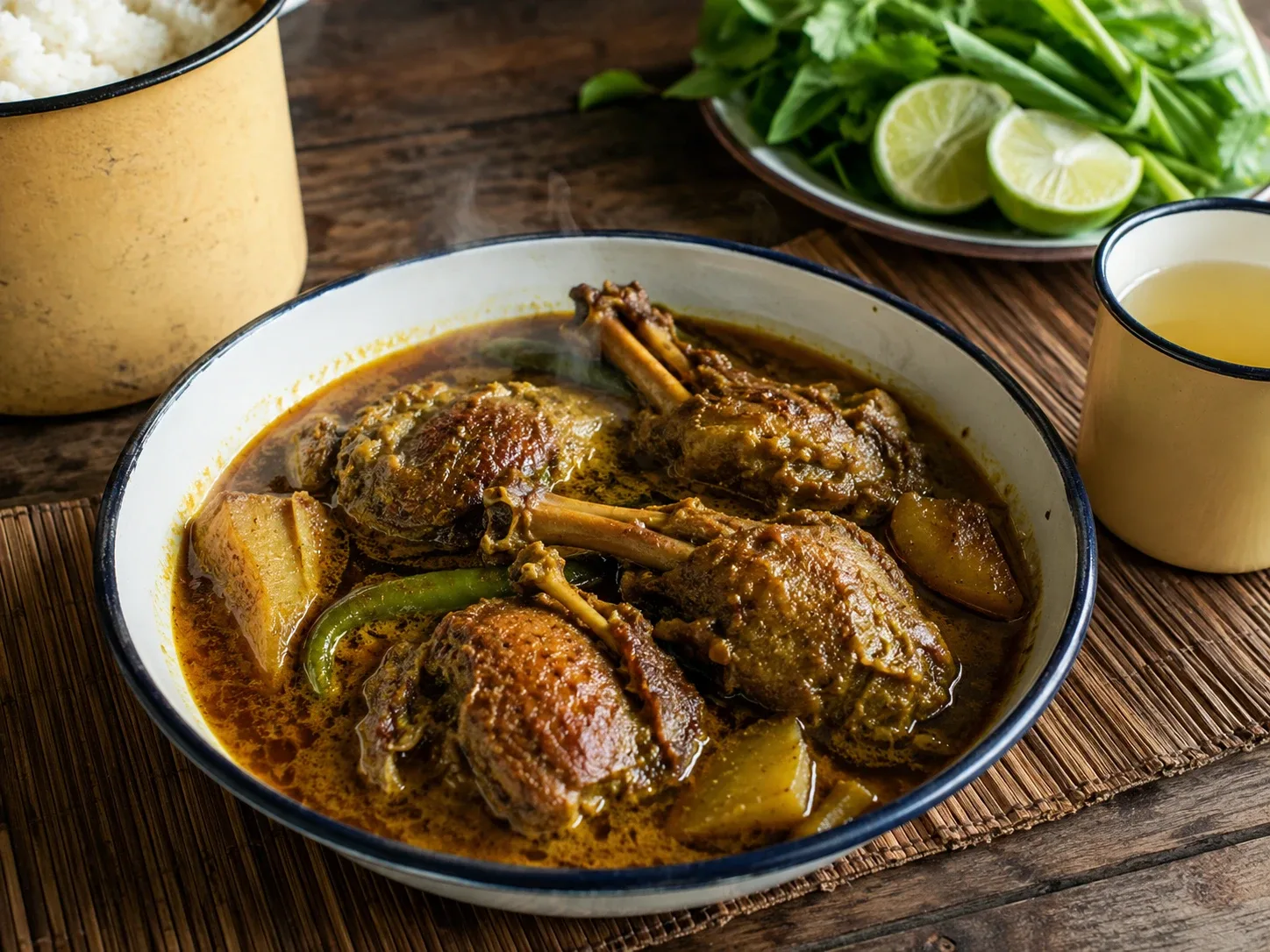
Be Thar Hin, Delta Duck Curryဘဲသားဟင်း
Duck curry from the Ayeyarwady, where ducks glean the rice paddies — browned in its own fat, then braised si pyan style until the amber oil returns.
 ၃
၃Curries · 45 min · Beginner
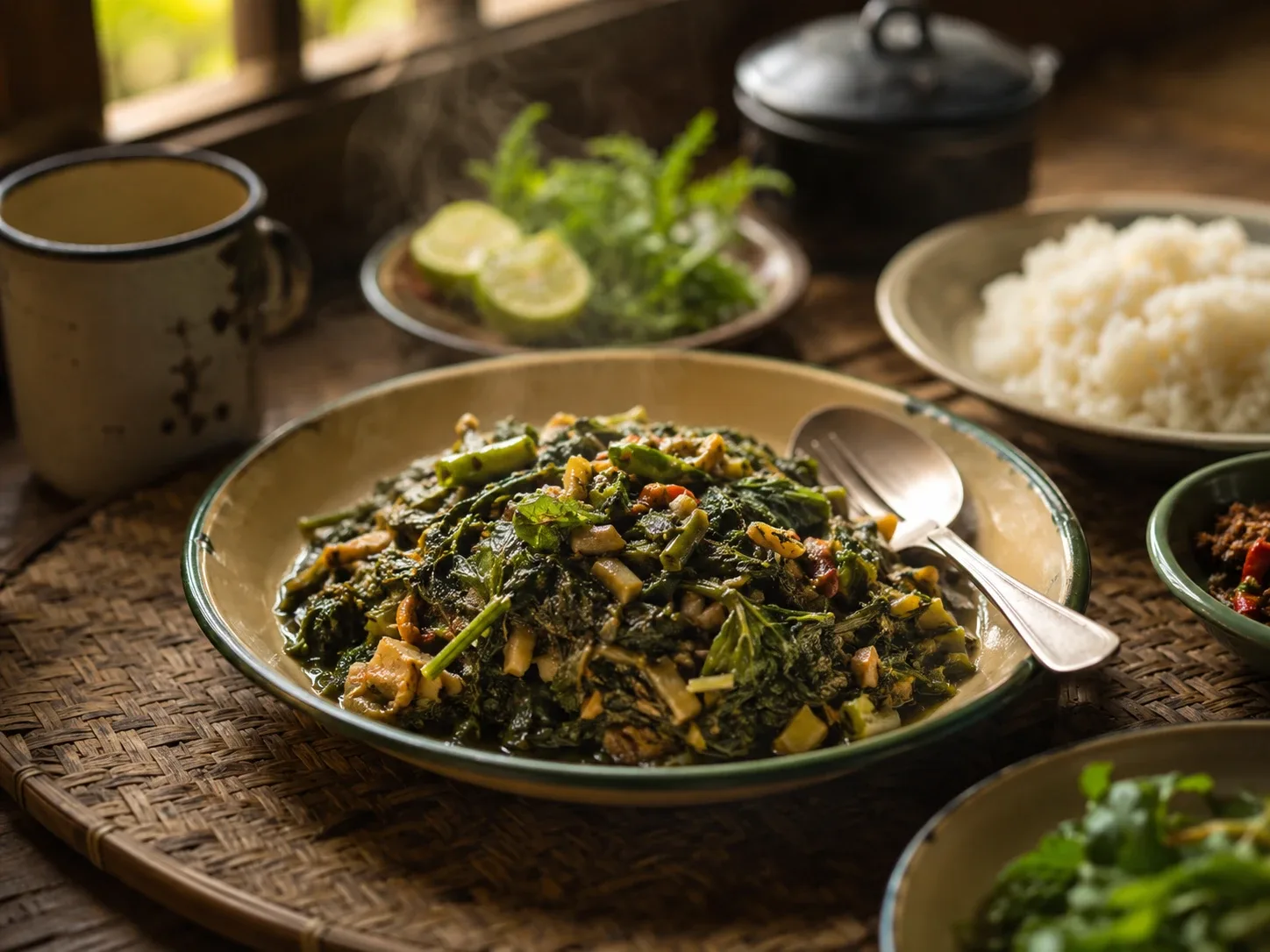
Chin Baung Kyaw, Sour Roselle Leavesချဉ်ပေါင်ကြော်
Lower Burma's beloved sour greens — roselle leaves fried down with bamboo shoots, dried shrimp, and green chili until they collapse into a dark tangy relish.
 ၅
၅Soups & Broths · 165 min · Beginner
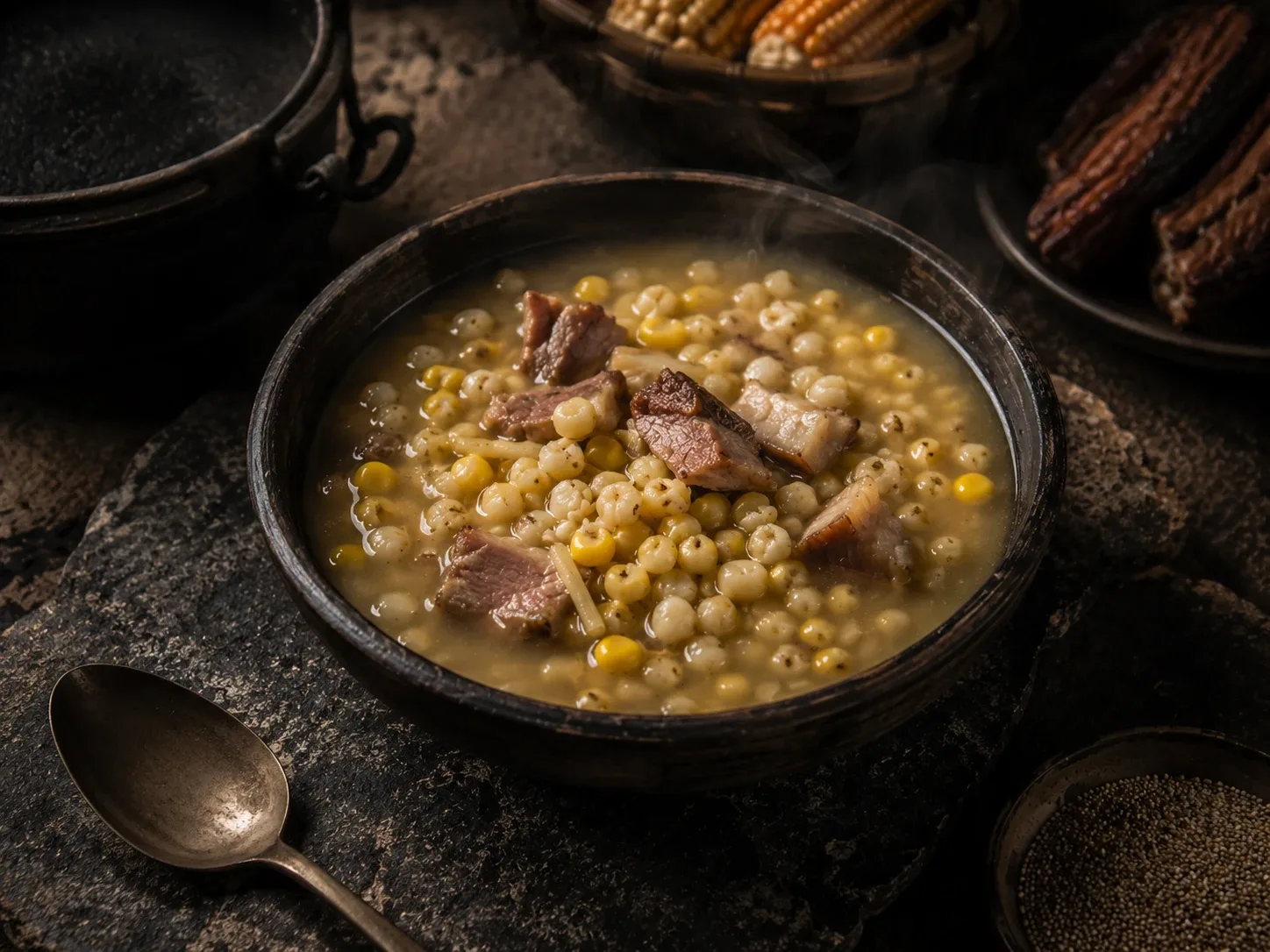
Sabuti, the Chin Corn Soup
The Chin hills' great corn soup — hominy maize simmered slowly with smoked pork and ginger, frugal mountain cooking that somehow eats like plenty.