Chicken Curry, the Burmese Way
ကြက်သားဟင်း
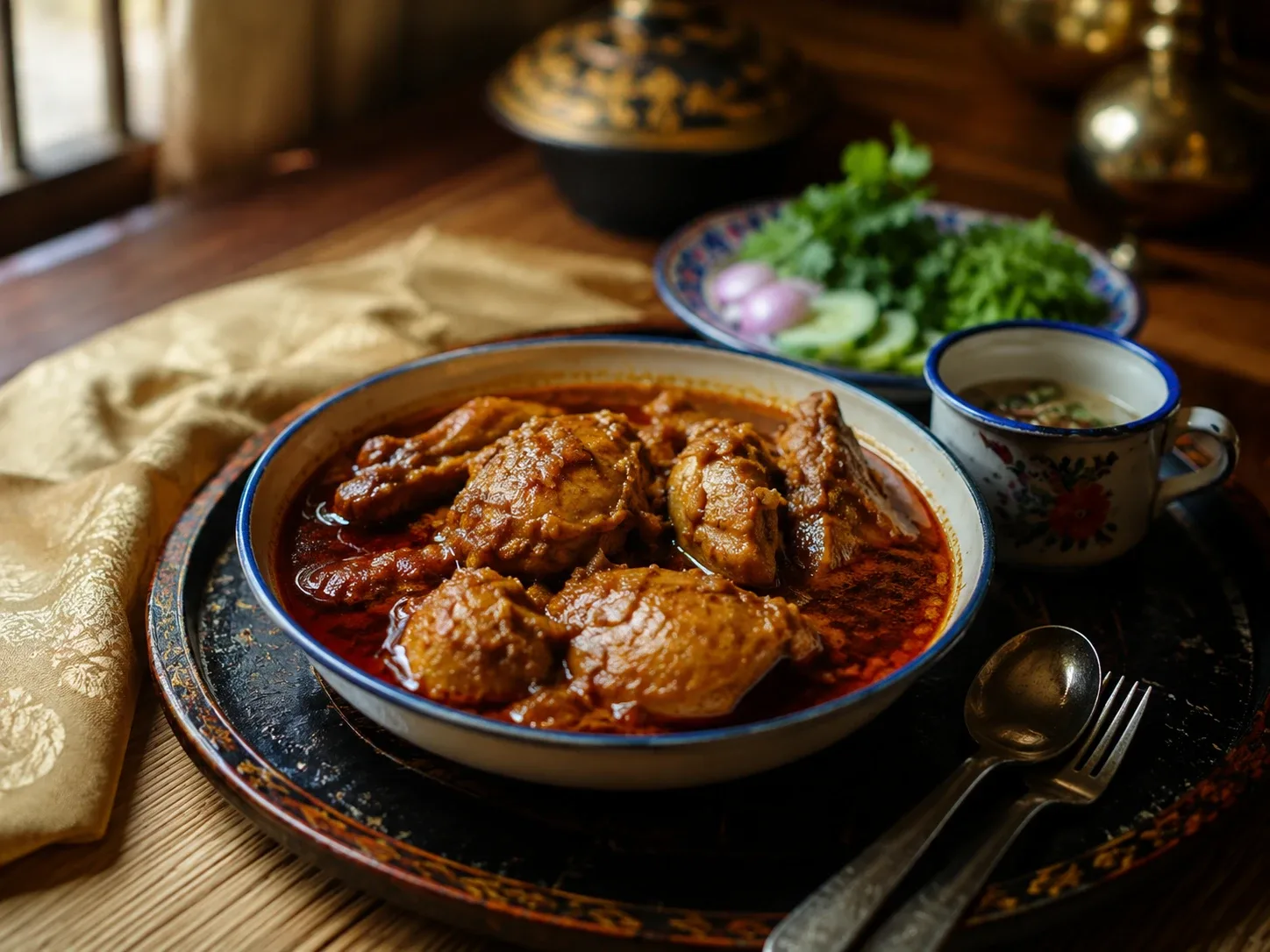
The foundational Burmese chicken curry — onions, garlic, ginger, and paprika simmered until clear amber oil returns to the surface. No coconut, no shortcuts.
By Burmese Cookbook Kitchen · June 12, 2026
 ၃
၃- Prep
- 20 min
- Cook
- 70 min
- Serves
- 4
- Level
- Beginner
If you learn one recipe from this chapter, learn this one. Kyet thar hin is the plainest statement of the idea that governs every Burmese curry: si pyan, "the oil returns." You fry a wet paste of onions, garlic, and ginger in what looks like too much peanut oil, color it with turmeric and paprika, add chicken, and then — the important part — you leave it mostly alone until the water has cooked away and the oil, having gone into hiding, rises back through the gravy and pools on the surface, clear and amber. That pool is not grease to be blotted. It is the signature on the finished work, and Burmese cooks read it the way bakers read a crumb.
It is worth saying warmly what this curry is not. It is not Indian curry with the labels changed. There is no coconut milk here, no garam masala dump, no twelve-jar spice shelf — the depth comes from onions cooked past sweetness into something almost jammy, and from patience. Chilies and paprika reached these kitchens on Taungoo-era trade winds, the same century Portuguese ships were nosing along the coast; the onion-and-oil logic underneath is surely older, though the written record, as usual, kept no notes.
Serve it over jasmine rice with the amber oil spooned on top, not skimmed off. Once your pot can do this, the rest of the chapter is variations.
Si pyan is not a step you perform; it is a state the pot reaches. When clear oil rises and pools at the edges, the curry is telling you it is done — believe it.
မီးဖိုချောင်စကား · A word from the kitchen
Ingredientsပါဝင်ပစ္စည်း
Serves 4
Tap to check off as you gather
For the chicken
- bone-in chicken thighs and drumsticks — skin off or on as you like; the bones matter more than the skin
- fish sauce
- turmeric
- salt
For the curry base
- onions — medium, roughly chopped — they will disappear into the gravy
- garlic
- fresh ginger
- turmeric
- paprika — for color and gentle warmth — this is not a hot curry
- dried chili flakes — optional; many households leave the heat to the table
- peanut oil — more than feels polite — it must be enough to return
To finish
- water — hot from the kettle
- fish sauce — to taste at the end
- green chilies — slit lengthwise, optional
- cilantro
Methodချက်နည်း
Tap a numeral as you finish each step
Step 1: Marinate the chicken
Toss the chicken with the fish sauce, turmeric, and salt and let it sit while you build the base — twenty minutes is plenty. The salt starts seasoning down to the bone, and the turmeric does for chicken what it does for fish in mohinga, rounding off any raw edge.
Step 2: Make the wet paste
Pound the onions, garlic, and ginger in a mortar, or pulse them in a food processor, to a coarse wet paste. It should look sloppy, not minced — the onions carry a lot of water, and that water is your friend, because the paste must cook long before it can fry.
Step 3: Fry the base until the oil peeks back
Heat the peanut oil in a heavy pot over medium heat and add the paste with the turmeric, paprika, and chili flakes. Cook, stirring often, for 15 to 20 minutes. It will steam, then slump, then darken to a soft amber jam — and the oil that vanished into it will start seeping back out at the edges. That first small return is your signal to move on; stop earlier and the finished curry tastes of raw onion.
Step 4: Let the chicken eat the paste
Add the chicken and turn it through the base over medium heat for about five minutes, until every piece is stained gold and the paste clings. Burmese cooks say the meat should eat the paste before it drinks the water — seared this way, the chicken keeps its own flavor through the simmer.
Step 5: Simmer low and mostly alone
Pour in the hot water, bring to a gentle simmer, and set the lid on askew. Cook for 35 to 40 minutes, stirring once or twice along the bottom. The gravy should reduce until it barely covers the chicken; if it still looks like soup at the half-hour mark, remove the lid entirely.
Step 6: Wait for the oil to return
Uncover for the last ten minutes and watch the surface. As the water cooks away, clear amber oil rises back through the gravy and pools at the edges — si pyan, the oil returns, the whole doctrine of this chapter in one glance. Season with fish sauce, drop in the green chilies, rest the pot for ten minutes, and serve over jasmine rice with cilantro and the oil spooned proudly on top.
ခွက်ယောက် · The tools
Equipment
Carbon-steel wok
ဒယ်အိုးThe dai-oh — for si pyan curries, fritters, and every fried-noodle dish here. Carbon steel, seasoned dark, nothing fancy.
Shop on Amazon →Heavy pot / Dutch oven
အိုးကြီးDeep and heat-retentive — for mohinga broth, long-simmered hin, and deep-frying without temperature crashes.
Shop on Amazon →Stone mortar & pestle
ဆုံFor garlic-ginger paste, pounded dried shrimp fluff, and crushed peanuts — the blender lies about texture; the stone doesn’t.
Shop on Amazon →Heavy kettle
ရေနွေးအိုးTeahouse tea starts with water at a hard rolling boil — and lots of it, all morning.
Shop on Amazon →
Equipment links are Amazon affiliate links. As an Amazon Associate we earn from qualifying purchases, at no cost to you. Disclosure.
ဟင်းစုံ · Set the table
A Burmese meal is a spread
A curry is the anchor, not the whole meal. Round out the table:
- Steamed riceထမင်းThe centre of the table — everything else is built around it.
- A light soupဟင်းချိုThe clear, sour broth sipped between mouthfuls of rice.
- Toh sa yar & ngapi dipတို့စရာRaw and blanched vegetables with a pungent fish-paste dip — the fresh, bitter counterpoint.
- Balachaungဘလချောင်းThe crispy shrimp relish that lives on every Burmese table.
- Crispy fried shallotsကြက်သွန်ကြော်A spoonful of crunch and sweet shallot oil over anything.
- A hand-tossed thokeအသုပ်A bright, sour salad to lift the whole spread.
Questions from the kitchen
Can I use boneless chicken breast?
You can, and you will get a decent stew rather than this curry. Bones and dark meat give the gravy its body and survive the long simmer; breast dries out and contributes nothing back. If boneless is what you have, use thighs, cut the simmer to 25 minutes, and accept a lighter gravy.
That is a lot of oil. Can I cut it down?
Halve it and you will still eat well, but you will not see si pyan — there simply is not enough oil left to return, and the returned oil is the finished sauce, carrying the paprika and the onion sweetness onto the rice. Burmese portions are modest and the rice does the diluting. Cook it once as written before you negotiate.
My oil never returned. What went wrong?
Almost always too much water or too little time — the oil cannot rise until the water is nearly gone. Take the lid off, raise the heat a notch, and keep simmering; it will come. The other culprit is a rushed base: if the paste never had its first small oil-return in step three, the pot starts the race a lap behind.
Where are all the spices?
This is the point of the recipe. Burmese curry is not Indian curry — no garam masala, no coconut milk, no long spice register. The depth comes from onions cooked past sweetness, turmeric, paprika, and patience. It is a quieter idiom, and once you trust it, a deeply satisfying one.
နောက်တစ်ခု · Cook next
Keep the wok hot
 ၃
၃Curries · 125 min · Intermediate
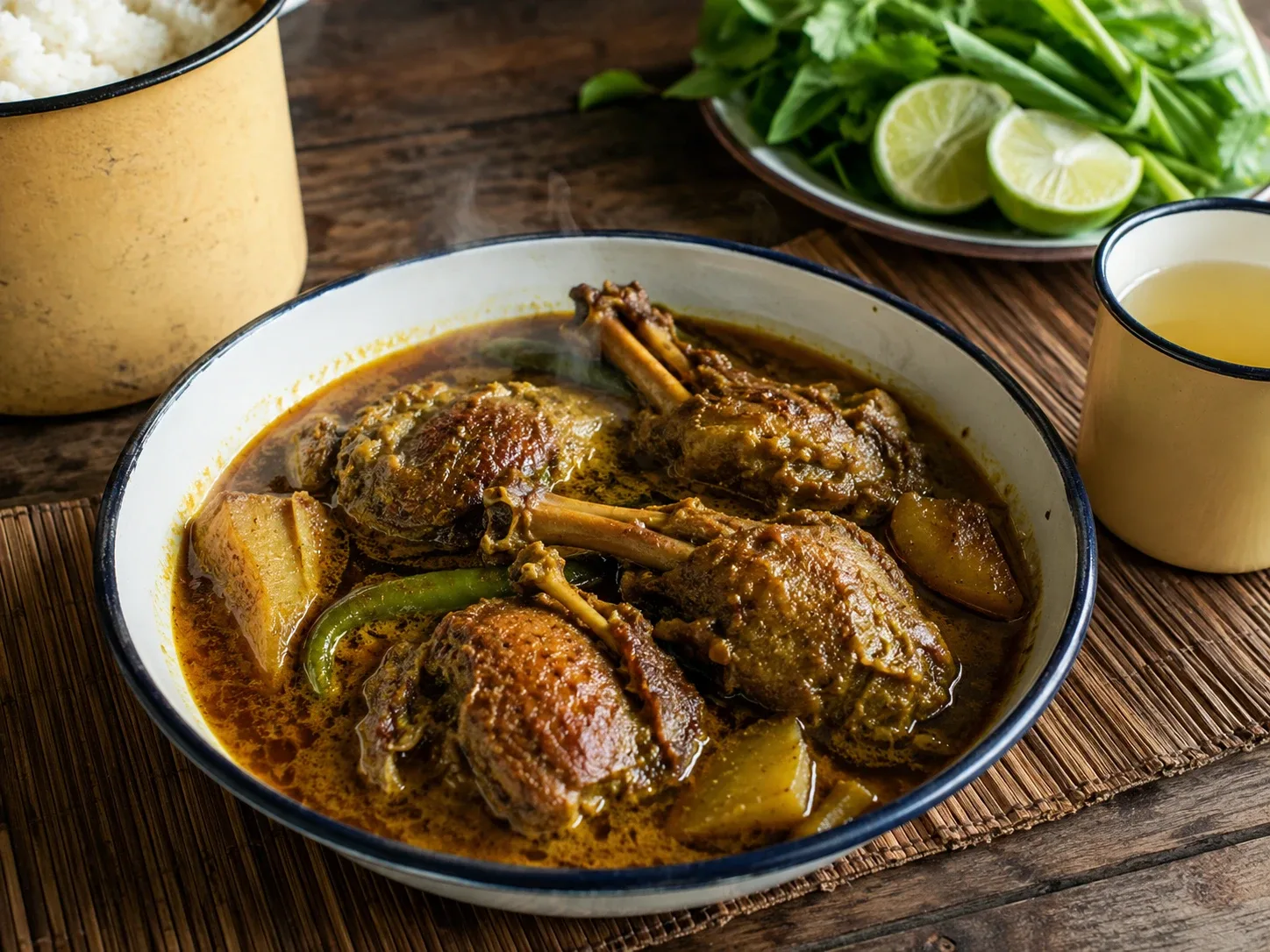
Be Thar Hin, Delta Duck Curryဘဲသားဟင်း
Duck curry from the Ayeyarwady, where ducks glean the rice paddies — browned in its own fat, then braised si pyan style until the amber oil returns.
 ၃
၃Curries · 45 min · Beginner
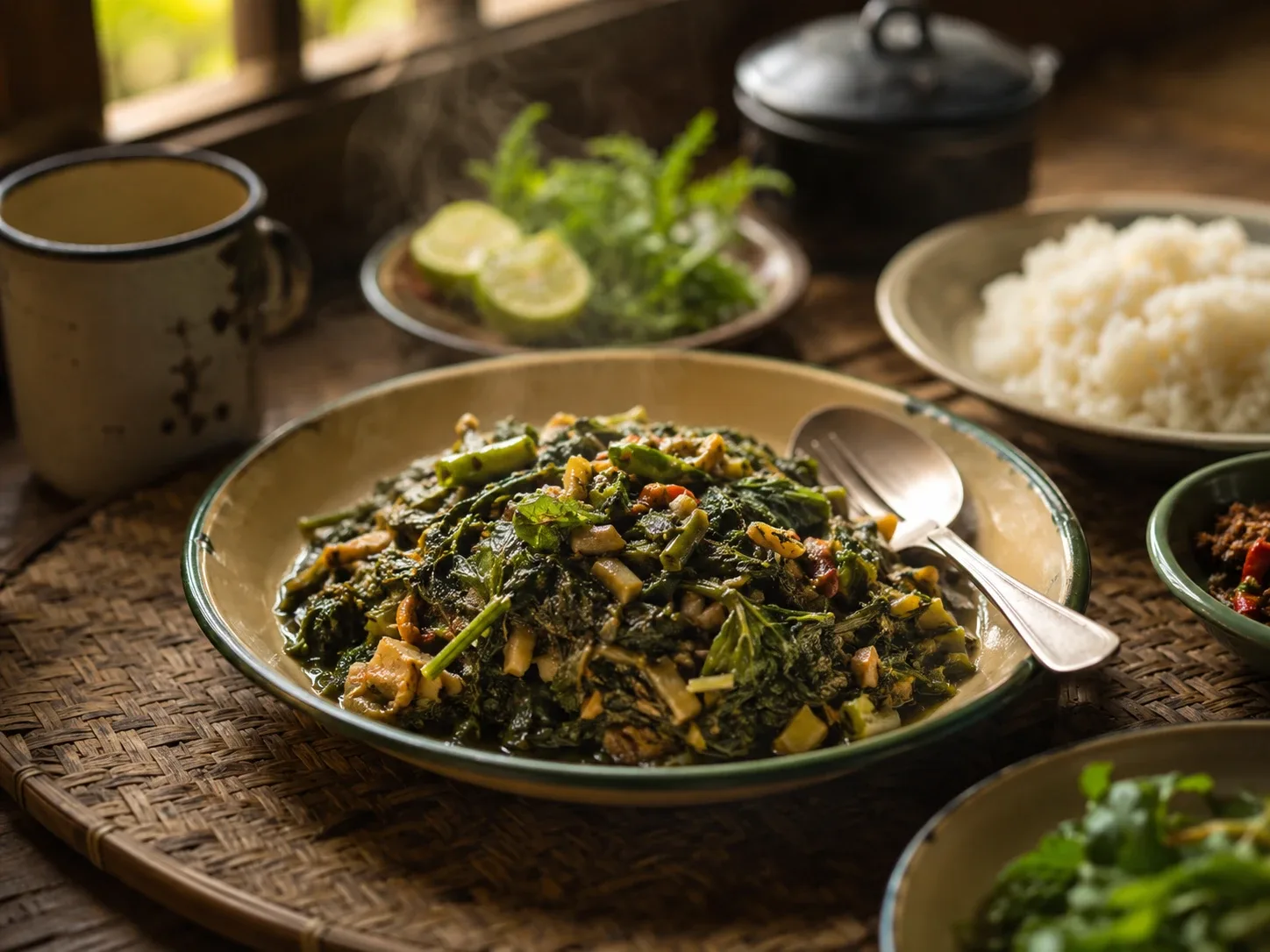
Chin Baung Kyaw, Sour Roselle Leavesချဉ်ပေါင်ကြော်
Lower Burma's beloved sour greens — roselle leaves fried down with bamboo shoots, dried shrimp, and green chili until they collapse into a dark tangy relish.
 ၃
၃Curries · 100 min · Intermediate
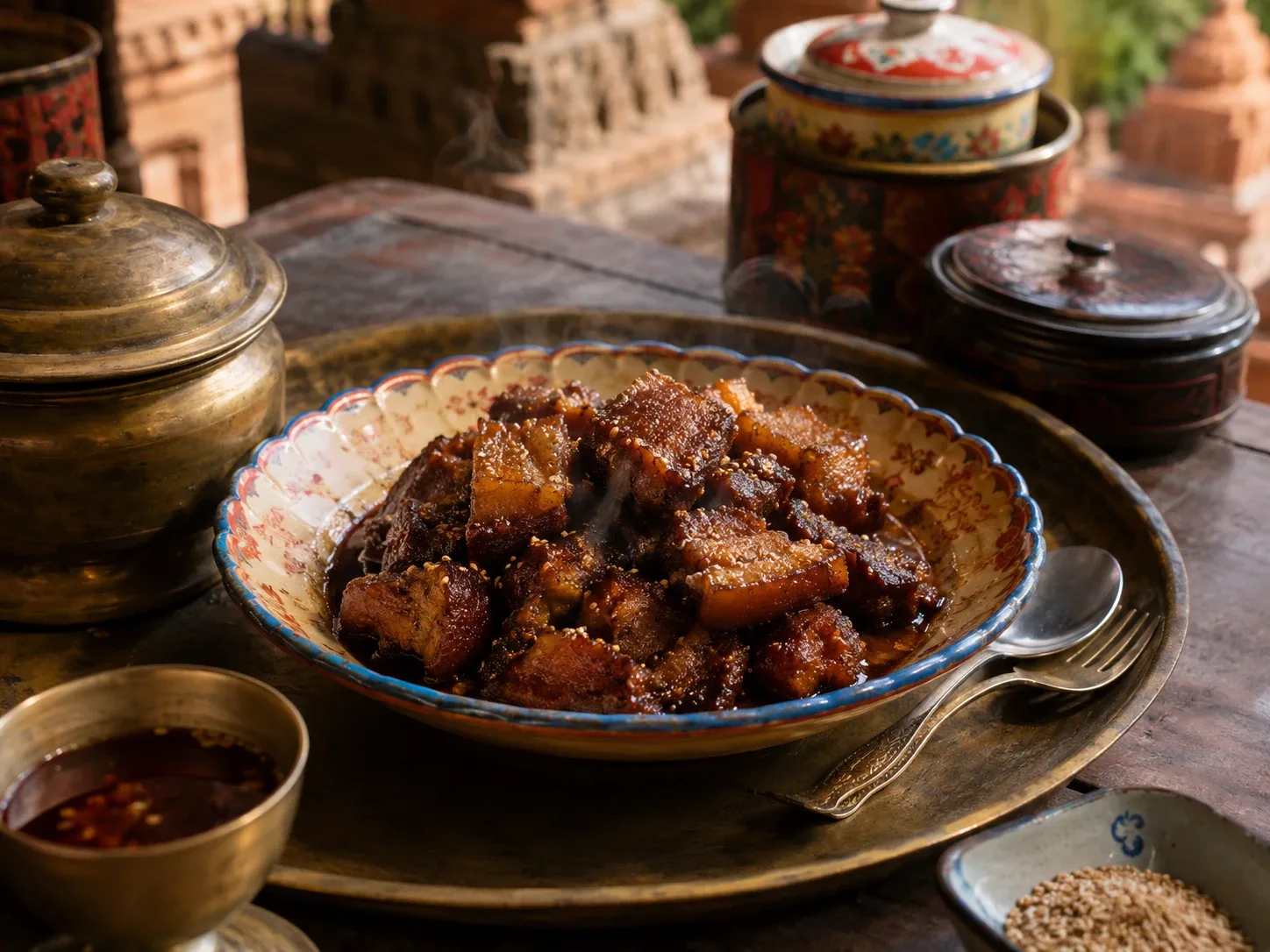
Wet Thar Pone Yay Gyi, Bagan Pork Curryပုန်းရည်ကြီးဝက်သား
Bagan's signature pork curry — pone yay gyi braised si pyan style until the oil returns, the sauce dark and sour with fermented horse-gram bean paste.