Sanwin Makin, the Golden Semolina Cake
ဆနွင်းမကင်း
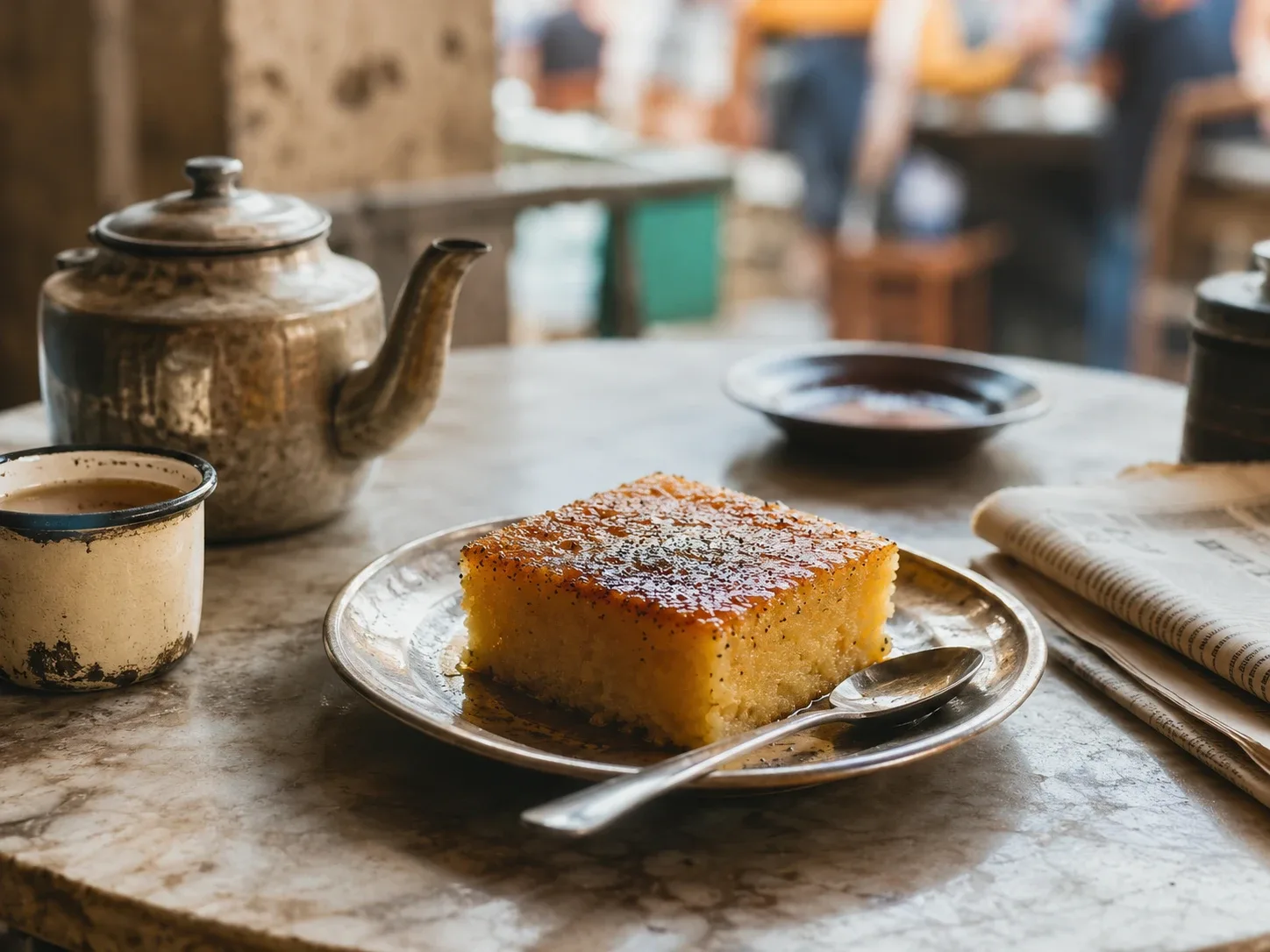
Burma's golden semolina cake — dense, buttery, barely sweet, baked with coconut milk and scattered with poppy seeds. A teahouse classic with Indian roots.
By Burmese Cookbook Kitchen · June 30, 2026
ရန်ကုန် Yangon & Lower BurmaBritish Burma, 1826–1948
 ၇
၇- Prep
- 15 min
- Cook
- 75 min
- Serves
- 10
- Level
- Beginner
Every Burmese teahouse counter carries a tray of amber diamonds, and that tray is sanwin makin — semolina cake, also called shwe kyi, "golden." It is the standard-issue sweet of the tea shop: dense enough to eat with your fingers, rich enough to justify a second pot of tea, and — like nearly all Burmese sweets — far less sugary than its glossy top suggests. Nothing in the Burmese sweet canon is frosted, and sanwin makin least of all; its top is burnished by butter and heat, not icing.
Its ancestry is written in its ingredients. Semolina, ghee, and the technique of cooking a sweetened grain porridge before baking all point straight to India — this is sooji halwa that emigrated, settled in colonial Rangoon with the great wave of Indian arrivals, and married local coconut milk and palm sugar. The poppy seeds on top are the signature that tells you you're in Burma. By independence it had stopped being anyone's foreign food; it is simply what teahouses serve.
The cake is cooked twice, and the first cooking is the one that matters. The semolina porridge must be stirred on the stovetop until it is outrageously thick — thick enough to stand a spoon in — before the eggs and butter go in and the oven takes over. Rush that stage and you bake a gummy brick. Respect it, let the finished cake cool completely, and you get clean amber diamonds with a deep brown top: the quiet pride of every tea shop counter from Mogul Street to Mandalay.
Sanwin makin is cooked twice — once in the pot, once in the oven. Cooks who skimp on the stovetop stage get a cake that bakes up gummy; the porridge should be thick enough to hold a spoon upright before it ever sees a pan.
မီးဖိုချောင်စကား · A word from the kitchen
Ingredientsပါဝင်ပစ္စည်း
Serves 10
Tap to check off as you gather
For the cake
- semolina — coarse if you can get it — it keeps a faint, pleasing grain
- coconut milk
- water
- palm sugar (jaggery) — chopped; or 140 g plain sugar for a paler, more colonial-era cake
- eggs — lightly beaten
- butter — or ghee, which is more traditional and more fragrant
- salt
- raisins — optional — many Yangon teahouses include them, many purists object
For the top
- poppy seeds
- butter — melted, for brushing
Methodချက်နည်း
Tap a numeral as you finish each step
Step 1: Toast the semolina
In a dry, heavy pot over medium-low heat, toast the semolina, stirring, until it turns a shade darker and smells like warm biscuits — 5 to 6 minutes. This is the same logic as toasting besan for mohinga: raw grain tastes raw, and no amount of baking later will fix it.
Step 2: Cook the porridge
Add the coconut milk, water, palm sugar, and salt to the toasted semolina and cook over medium heat, stirring constantly, until the mixture becomes a very thick porridge that pulls away from the sides of the pot — 12 to 15 minutes. Your arm should complain. This stovetop stage is where the cake's dense, sliceable body is made.
Step 3: Enrich it off the heat
Take the pot off the heat and let it cool for five minutes, then beat in the butter until it disappears, followed by the eggs, a third at a time, stirring hard so they enrich rather than scramble. Fold in the raisins if using.
Step 4: Bake until burnished
Scrape the mixture into a buttered 23 cm square tin, smooth the top, brush with melted butter, and scatter the poppy seeds evenly. Bake at 180°C for 40 to 50 minutes, until the top is a deep amber brown and the edges have pulled from the tin. A dark top is not a mistake — it is the point.
Step 5: Rest, then cut diamonds
Cool completely in the tin — warm sanwin makin cuts like wet sand, cool sanwin makin cuts like fudge. Slice into diamonds, the traditional teahouse shape, and serve with black tea. It is better the next day and better still the day after.
ခွက်ယောက် · The tools
Equipment
Heavy pot / Dutch oven
အိုးကြီးDeep and heat-retentive — for mohinga broth, long-simmered hin, and deep-frying without temperature crashes.
Shop on Amazon →
Equipment links are Amazon affiliate links. As an Amazon Associate we earn from qualifying purchases, at no cost to you. Disclosure.
ဟင်းစုံ · Set the table
A Burmese meal is a spread
A mont wants a cup of something beside it:
How a Burmese meal is built →Questions from the kitchen
Fine or coarse semolina?
Coarse, if the choice exists — it gives the cake its faint, satisfying granularity. Fine semolina works and produces a smoother, more custard-like slice; some households prefer it. What you cannot use is flour, which turns the whole thing into a heavy sponge.
Why did mine come out gummy?
Almost always an undercooked porridge stage. The semolina must fully hydrate and thicken on the stovetop before baking — the oven only sets and browns. Cutting it warm makes things look worse than they are; a gummy-seeming cake often firms into the right texture overnight.
Butter or ghee?
Ghee is the older and more Indian answer, and its nutty aroma suits the toasted semolina beautifully. Butter is what most Yangon teahouses actually use now. Either works; margarine, which crept in during leaner decades, is survivable but sad.
How long does it keep?
Four or five days, covered, at cool room temperature — and it genuinely improves for the first two as the coconut milk settles into the crumb. Refrigeration makes it dense and dull; if you must chill it, bring the slices fully back to room temperature before serving.
နောက်တစ်ခု · Cook next
Keep the wok hot
 ၇
၇Sweets & Mont · 50 min · Beginner
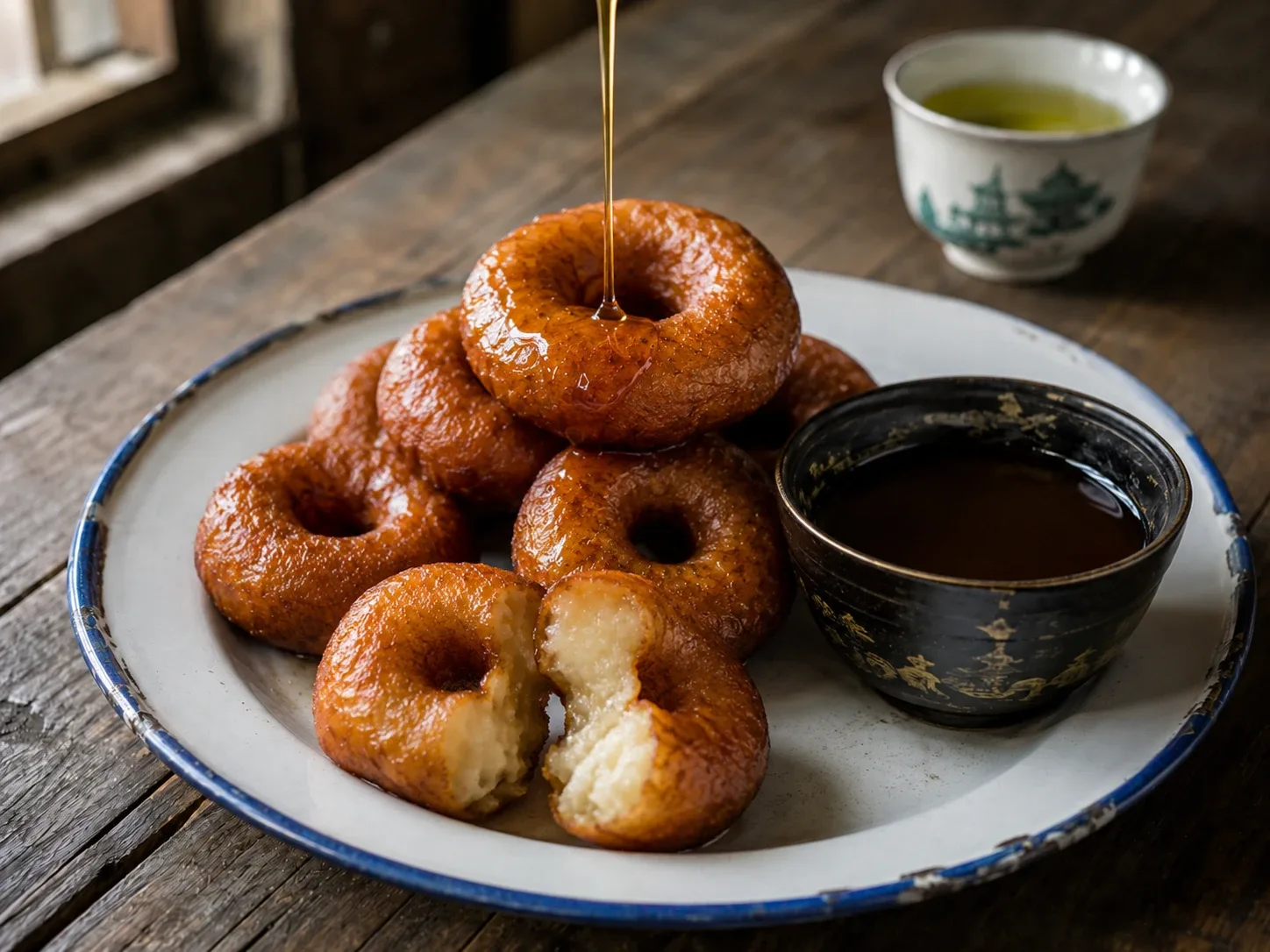
Mont Let Kauk, the Burmese Bracelet Doughnutမုန့်လက်ကောက်
Chewy glutinous rice rings fried until blistered and gold, then drowned in warm toddy-palm jaggery syrup — the teahouse doughnut Burma names after a bracelet.
 ၇
၇Sweets & Mont · 40 min · Beginner
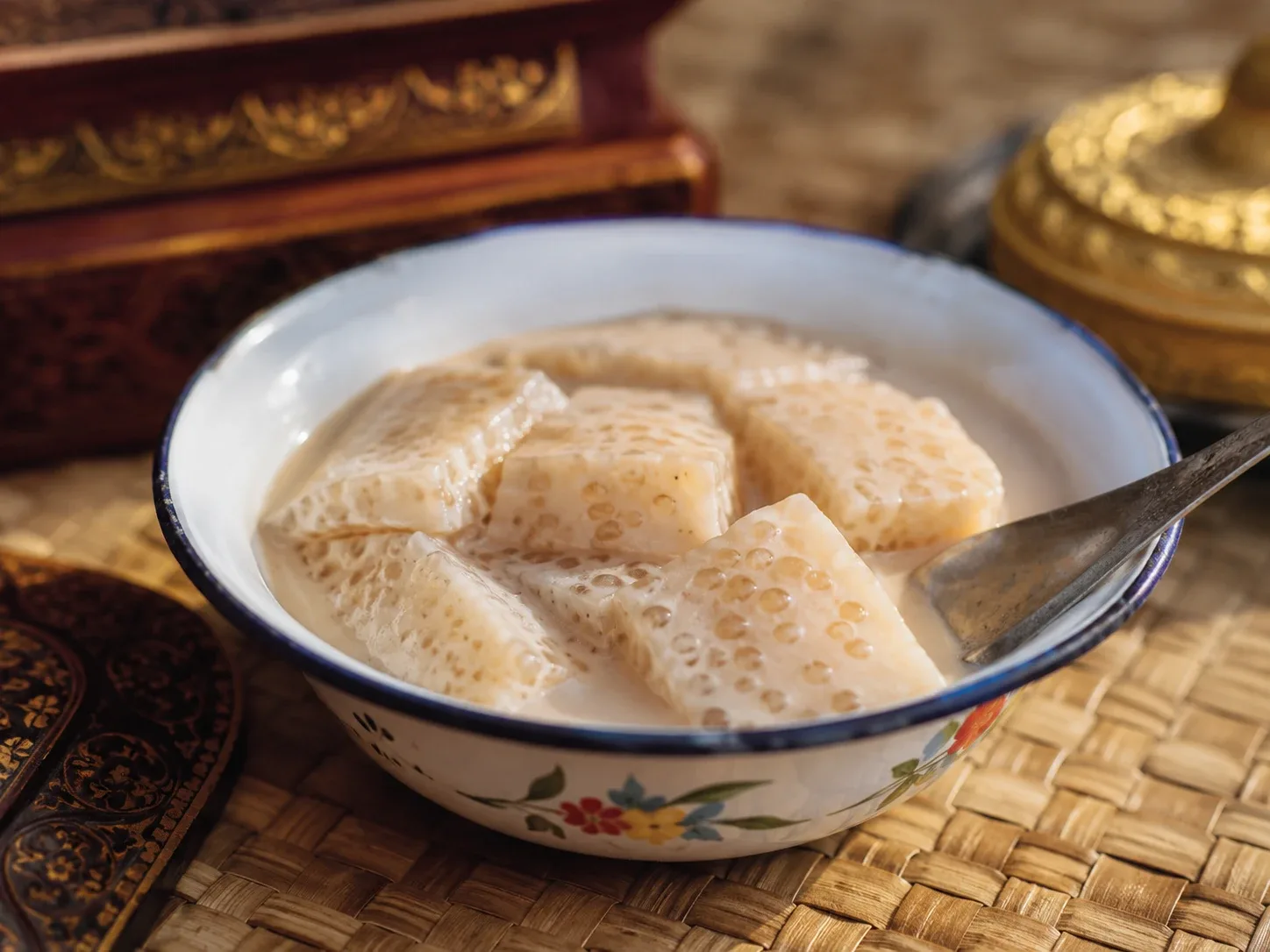
Thagu Byin, Sago & Coconut Milk Puddingသကူမုန့်
A cooling hot-season pudding of translucent sago pearls set in coconut milk and palm sugar, sliced into wobbling squares — sold from glass cabinets on the hottest afternoons.
 ၇
၇Sweets & Mont · 105 min · Intermediate
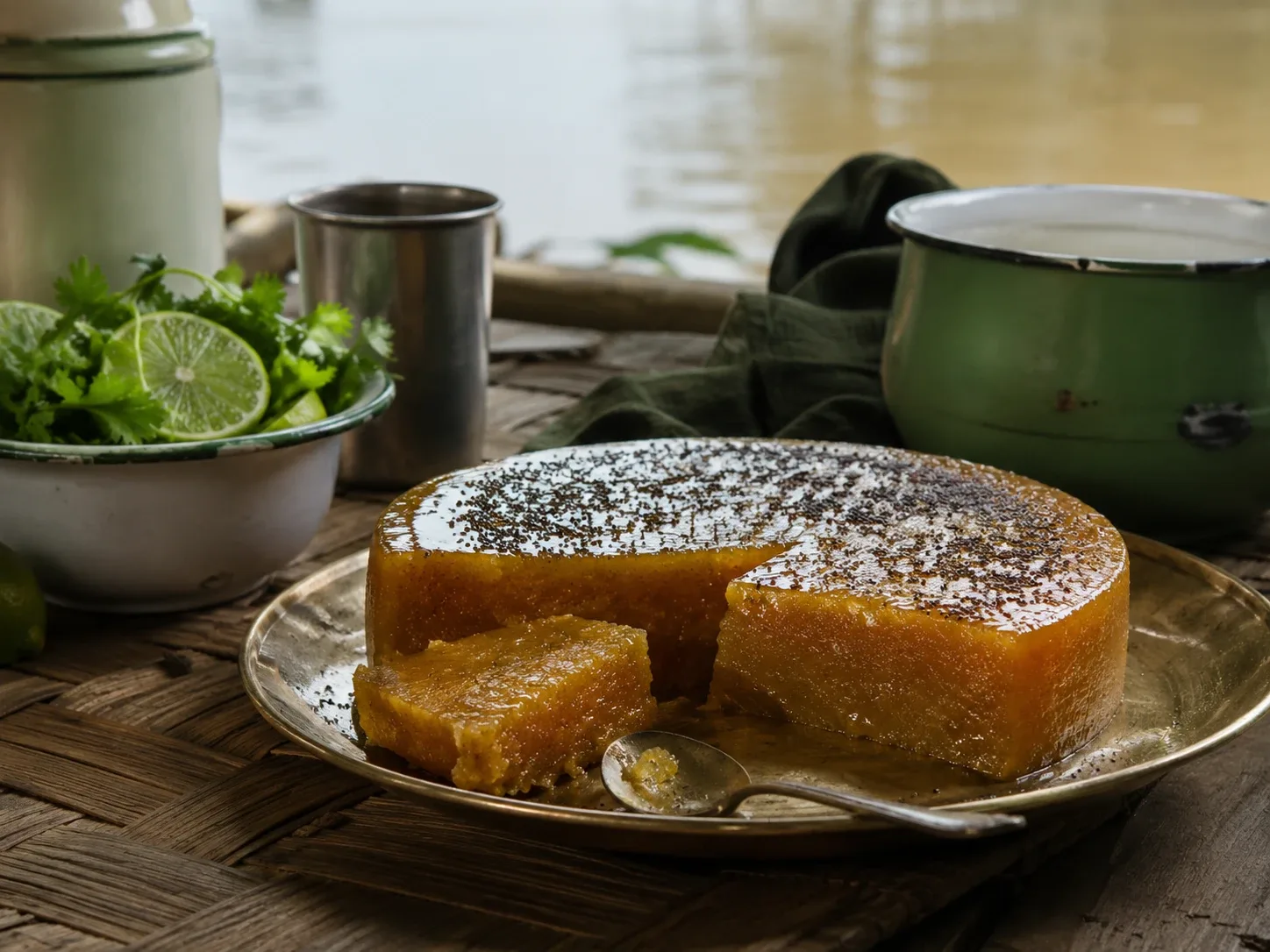
Pathein Halawa, the Delta's Gilded Sweetပုသိမ်ဟလဝါ
Pathein's famous glutinous-rice halawa — coconut milk, sugar, and ghee stirred patiently down to a dense, gleaming amber slab crowned with toasted poppy seeds.