Htoe Mont, Mandalay's Celebration Cake
ထိုးမုန့်
Mandalay's celebration cake — glutinous rice stirred slowly with palm sugar, coconut, and peanut oil until it slices clean. A Konbaung-era gift food.
By Burmese Cookbook Kitchen · July 2, 2026
အညာ Upper Burma & MandalayKonbaung, 1752–1885
 ၇
၇- Prep
- 30 min
- Cook
- 90 min
- Serves
- 12
- Level
- Intermediate
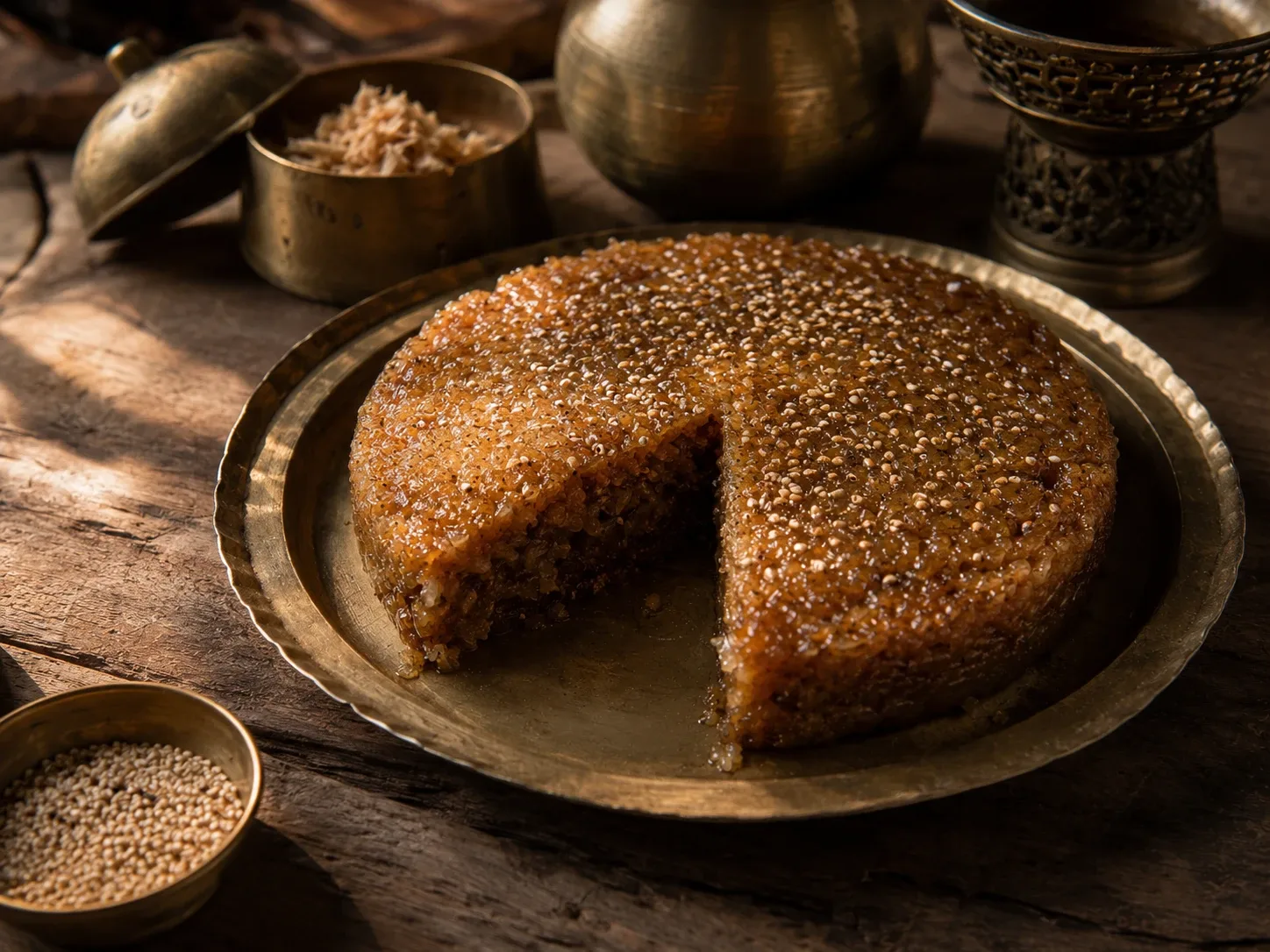
Htoe mont is what Mandalay brings when the occasion matters — weddings, novitiation ceremonies, the great donation feasts of the cool season. A dense, glossy slab of glutinous rice worked with palm sugar, coconut, and peanut oil until it slices like fudge, studded with cashews and raisins, wrapped in banana leaf and given away by the trayful. Like every Burmese mont, it is far less sweet than it looks: the jaggery and coconut do the talking, the oil gives it its lacquered shine, and nothing — ever — is frosted.
The story Mandalay tells is that htoe mont was a royal food, carried as tribute and gift among the Konbaung court, and that its name comes from the pounding and poking — htoe — of the paddles that work it. The court connection is legend more than ledger; what the record does support is that the dish belongs to Upper Burma's last royal capital and its celebration economy, where sweets that keep for a week and travel well were worth their weight. It remains Mandalay's edible souvenir — the box you are handed at the train station and expected to deliver intact.
The recipe has one technique, and it is non-negotiable: the long stir. Oil is added spoonful by spoonful over low heat, each addition absorbed before the next, while the softened rice slowly collapses into a single toffee-colored mass. Forty minutes, maybe fifty. The cake tells you when it is finished — it stops taking oil and releases from the pan in one clean, glossy sheet. Until then, keep stirring. Everyone in Mandalay has, for two hundred years.
Htoe mont is done when it stops taking oil — when a fresh spoonful sits on the surface instead of vanishing, and the whole mass pulls from the pan in one glossy sheet. Trust the pan, not the clock.
မီးဖိုချောင်စကား · A word from the kitchen
Ingredientsပါဝင်ပစ္စည်း
Serves 12
Tap to check off as you gather
For the cake
- glutinous rice — soaked overnight in cold water, then drained
- coconut milk
- palm sugar (jaggery) — chopped
- peanut oil — added gradually — see the stirring step
- fresh coconut shavings — or unsweetened flakes
- salt
For studding and topping
- cashews — or raw peanuts, halved
- raisins
- toasted sesame seeds
Methodချက်နည်း
Tap a numeral as you finish each step
Step 1: Cook the rice soft
Simmer the soaked, drained glutinous rice in the coconut milk plus 250 ml of water with the salt, covered, over low heat until completely tender and thick — about 25 minutes, stirring now and then so the bottom does not catch. It should be softer than you would ever serve rice; it is about to become cake, not dinner.
Step 2: Melt in the palm sugar
Add the chopped jaggery and stir until it dissolves into the rice. The mass will loosen as the sugar melts — do not worry, the long stir ahead will tighten it again. Stir in the coconut shavings.
Step 3: The long stir
Now the work that gives the cake its name. Over low heat, stir continuously with a sturdy flat spatula, adding the peanut oil a spoonful at a time and letting each addition disappear before the next. The rice grains gradually break down into a thick, glossy, toffee-brown mass. This takes 40 to 50 minutes of honest stirring — traditionally a two-man job with wooden paddles. It is done when it stops absorbing oil and pulls cleanly off the pan in a single sheet.
Step 4: Fold in the fruit and nuts
Stir in the cashews and raisins in the last five minutes, keeping a few of each back for the top. They should be suspended through the cake like stones in a terrazzo floor, not sunk at the bottom.
Step 5: Press, top, and cool
Scrape the mass into an oiled 23 cm square tin, press it flat with an oiled spatula to about 3 cm thick, and stud the surface with the reserved nuts and raisins. Scatter the sesame seeds over. Cool completely — several hours — before cutting into squares or diamonds. Warm htoe mont will not slice; cold htoe mont cuts like fudge and peels cleanly off a banana leaf.
ဟင်းစုံ · Set the table
A Burmese meal is a spread
A mont wants a cup of something beside it:
How a Burmese meal is built →Questions from the kitchen
Is there any way around the 40-minute stir?
Not honestly. The stir is the recipe — it breaks the grains, emulsifies the oil, and develops the toffee sheen that separates htoe mont from sweet rice porridge. A heavy nonstick pot and low heat make it easier, and a second pair of arms makes it social, which is how Mandalay has always done it.
My cake is leaking oil. What went wrong?
The oil went in too fast, or the stirring stopped too soon. Each addition must be fully absorbed before the next — the cake takes oil the way a risotto takes stock. A slightly oily finished cake is traditional (banana leaf wrapping exists for a reason), but pooling means the emulsion never formed.
Can I use glutinous rice flour instead of whole rice?
No — you would get a different (and lesser) sweet. Htoe mont's character comes from whole grains breaking down unevenly during the stir, leaving a faint, satisfying texture inside the gloss. Flour gives you a uniform paste with none of that landscape.
How long does it keep?
A week at cool room temperature, wrapped — it is a travel food by design, and it was gifted across long distances precisely because it keeps. The peanut oil is the preservative. Do not refrigerate; cold turns cooked glutinous rice to chalk.
နောက်တစ်ခု · Cook next
Keep the wok hot
 ၇
၇Sweets & Mont · 50 min · Beginner
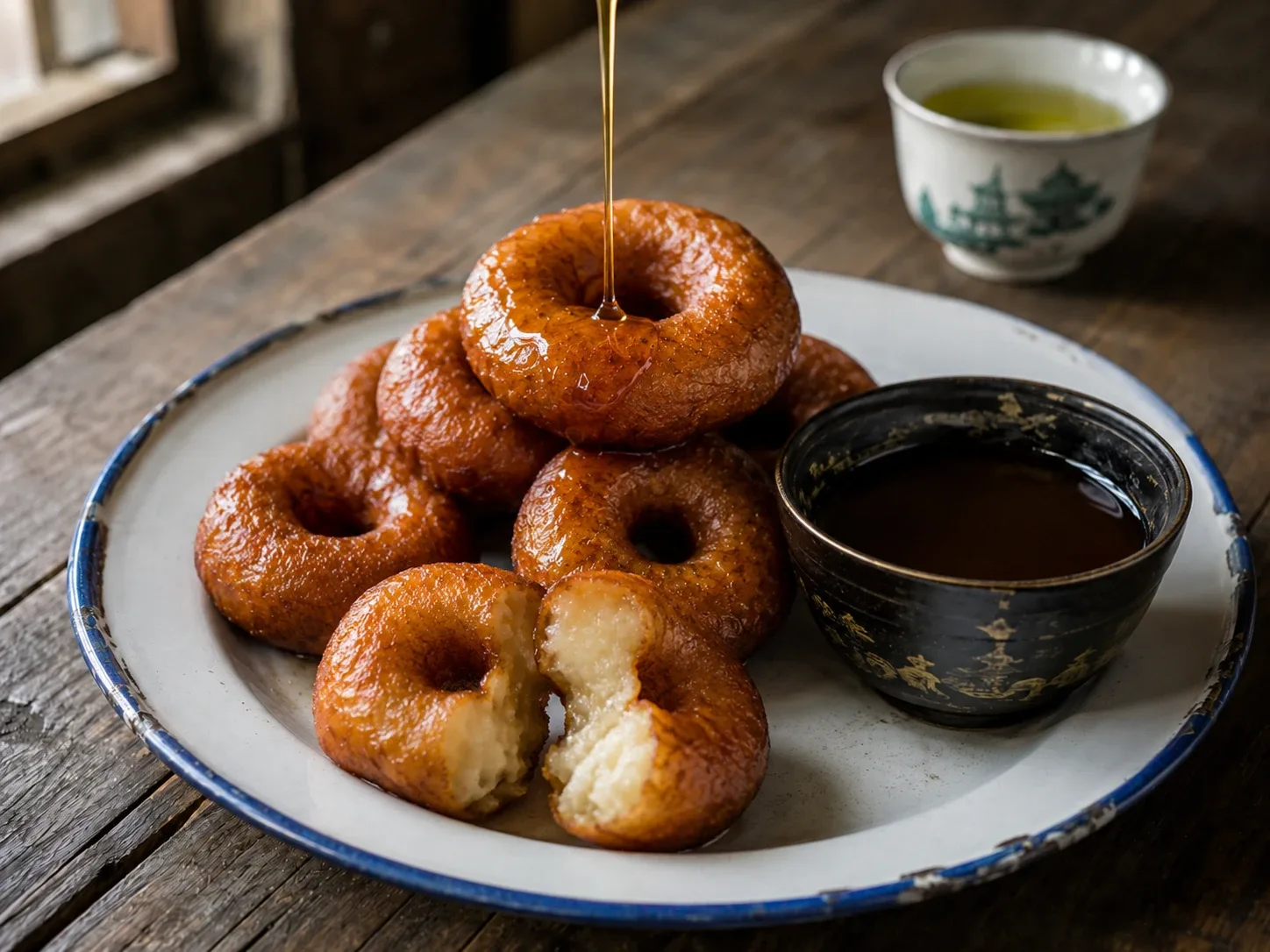
Mont Let Kauk, the Burmese Bracelet Doughnutမုန့်လက်ကောက်
Chewy glutinous rice rings fried until blistered and gold, then drowned in warm toddy-palm jaggery syrup — the teahouse doughnut Burma names after a bracelet.
 ၇
၇Sweets & Mont · 40 min · Beginner
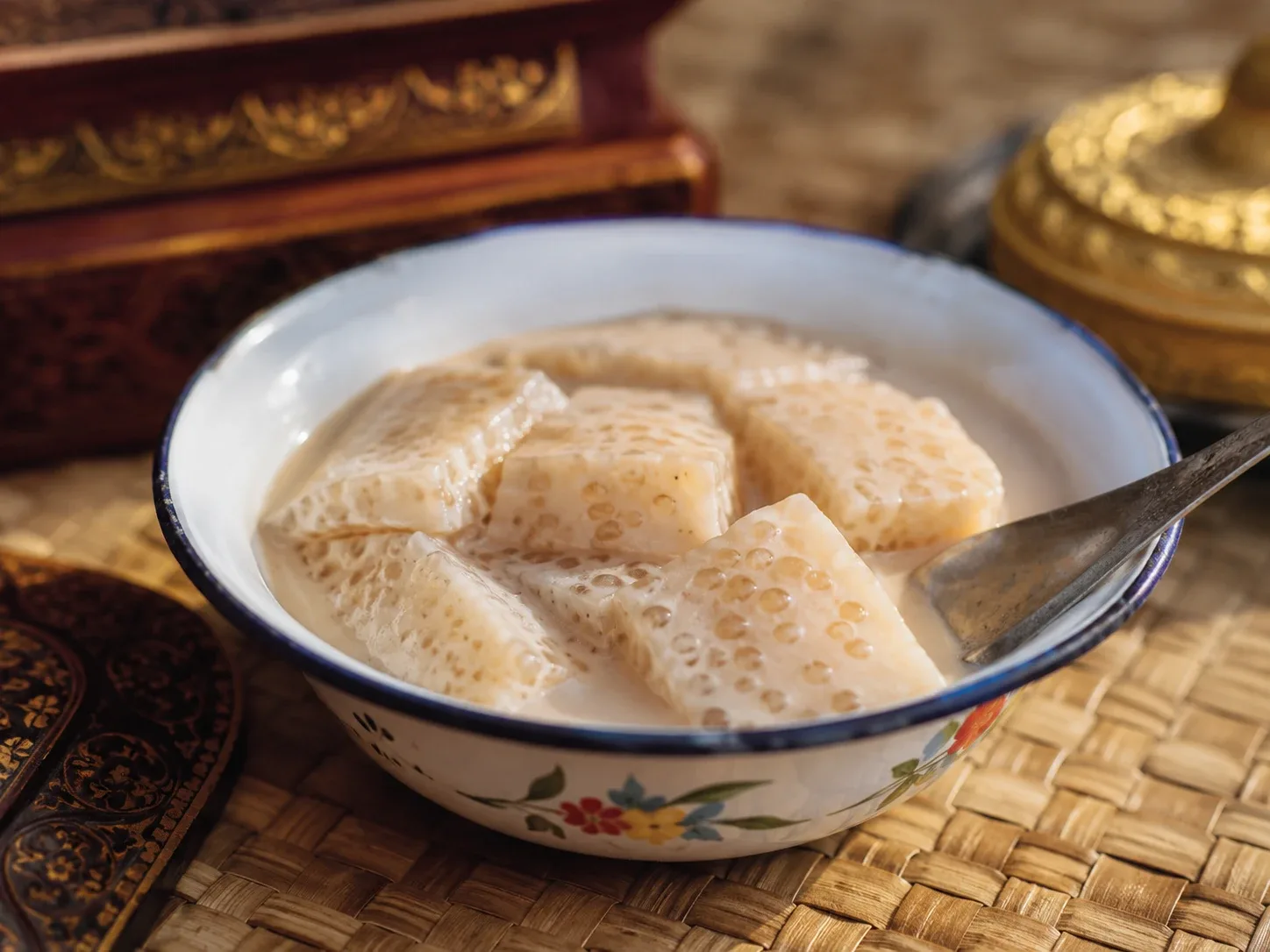
Thagu Byin, Sago & Coconut Milk Puddingသကူမုန့်
A cooling hot-season pudding of translucent sago pearls set in coconut milk and palm sugar, sliced into wobbling squares — sold from glass cabinets on the hottest afternoons.
 ၁
၁Rice & Foundations · 210 min · Intermediate
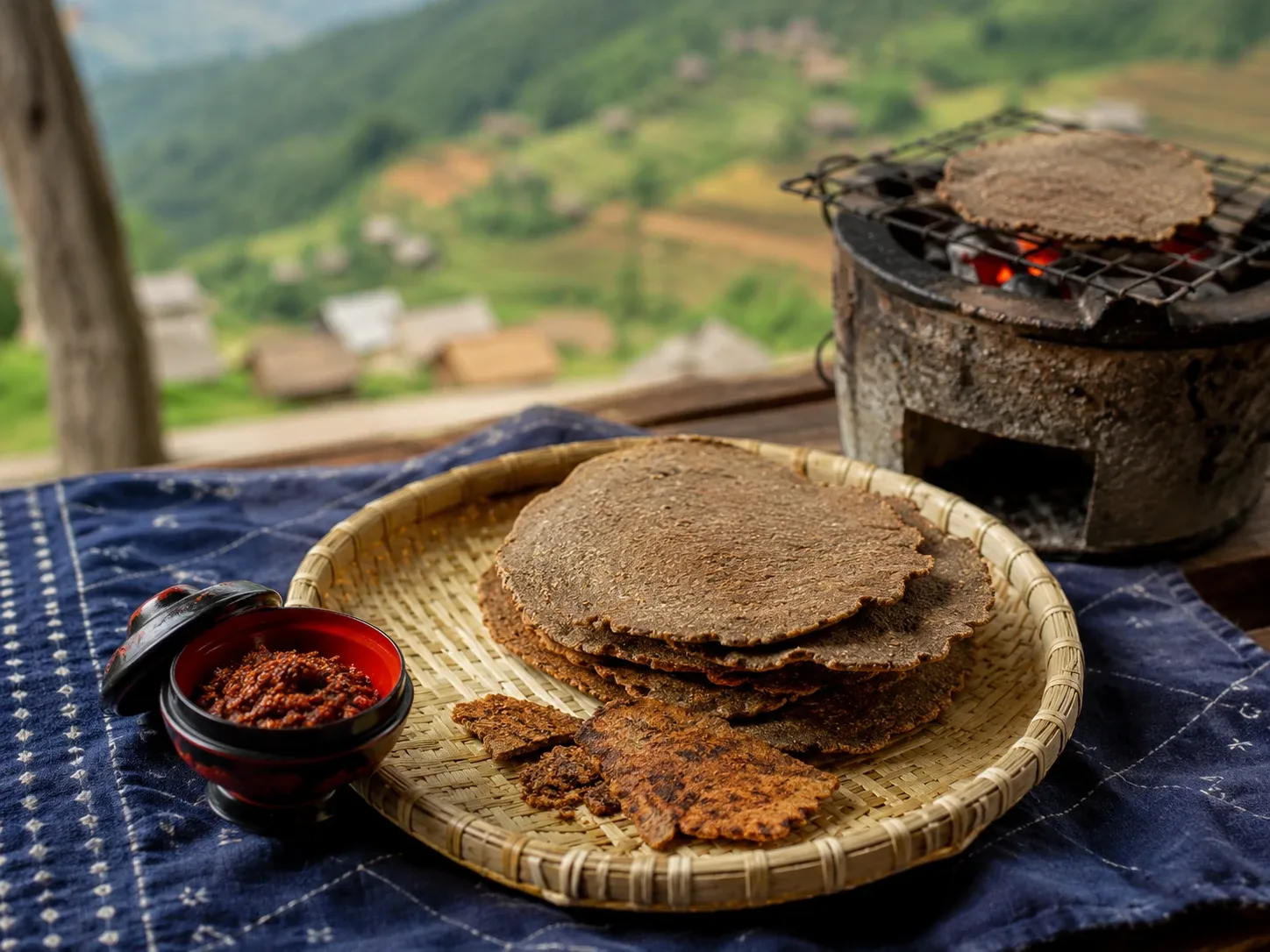
Tua Nao, Shan Fermented Soybean Discsပဲပုပ်
Shan State's seasoning backbone — soybeans boiled, fermented, pounded, and sun-dried into discs you toast over flame and crumble into everything.