Mont Lone Yay Baw, the Thingyan Floating Balls
မုန့်လုံးရေပေါ်
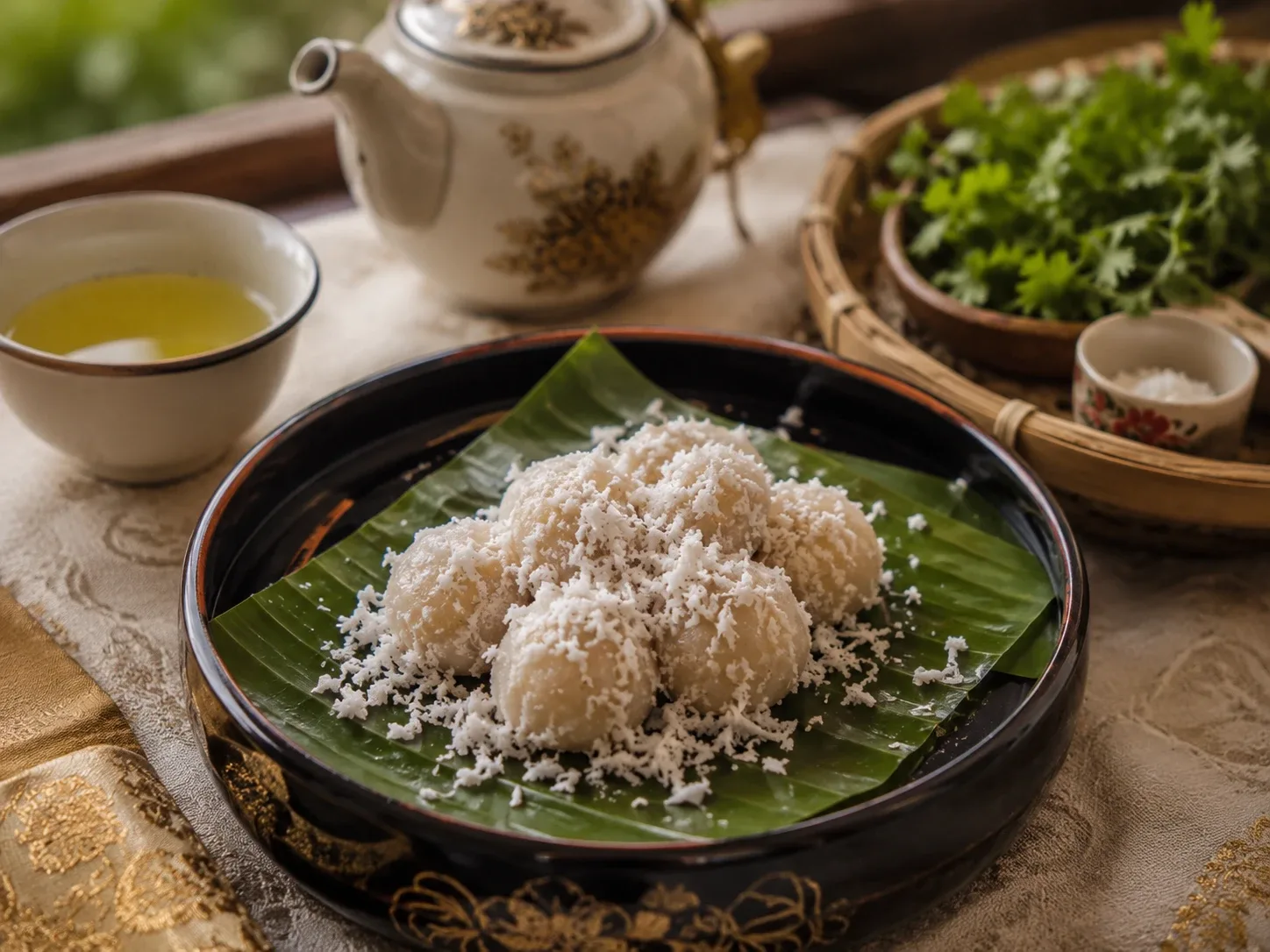
Thingyan's floating rice balls — glutinous dough hiding hearts of palm sugar, boiled until they bob, showered with coconut. One in every batch hides a chili.
By Burmese Cookbook Kitchen · July 3, 2026
Ava & the Fragment Kingdoms, 1364–1555
 ၇
၇- Prep
- 30 min
- Cook
- 15 min
- Serves
- 6
- Level
- Beginner
For three days every April, Myanmar throws water at itself. Thingyan, the new year festival, is a nationwide soaking — and its official sweet is mont lone yay baw, "round snack floating on water," made in vast communal batches at roadside stalls and handed free to anyone passing, drenched or not. Everyone makes it, everywhere: this is one of the few dishes that belongs to no region at all, only to the calendar.
The mechanics are a small piece of kitchen theater. Glutinous rice dough is wrapped around a nugget of palm jaggery and dropped into boiling water; the ball sinks, cooks, and announces itself by floating — the doneness test is the name. Fished out and rolled in fresh coconut, it is eaten hot, when the center is still molten syrup. Like all Burmese mont, it is gently sweet at most; the dough itself is plain, and everything depends on that one dark burst of jaggery. Tradition traces the sweet back through centuries of new year observance to the Ava era — a claim carried by folk memory rather than any document, and worth exactly that much and no less.
And then there is the prank, which is not optional at any self-respecting stall: one ball in every batch is filled with a bird's eye chili instead of sugar. Whoever bites it performs for the crowd — eyes streaming, everyone delighted — and is declared lucky for the year. A dessert with a built-in lottery, served during a water fight. It is hard to think of a happier food.
Seal each ball twice — pinch the dough closed over the jaggery, then roll it between your palms until the seam disappears. Any crease you can still see is where the sugar will escape in the pot.
မီးဖိုချောင်စကား · A word from the kitchen
Ingredientsပါဝင်ပစ္စည်း
Serves 6
Tap to check off as you gather
For the dough
- glutinous rice flour
- rice flour — the plain kind — it keeps the balls from going slack
- water — approximately; add the last of it by feel
- salt
For the hearts
- palm sugar (jaggery) — cut into small nuggets about the size of a chickpea
- bird's eye chili — optional, for the traditional Thingyan prank — one per batch, no more
To finish
- fresh coconut shavings — or unsweetened flakes; a pinch of salt through them lifts everything
Methodချက်နည်း
Tap a numeral as you finish each step
Step 1: Make the dough
Mix both flours with the salt, then work in the water gradually until you have a smooth, soft dough that holds together without sticking to your hands. Knead briefly. If it cracks when you press it, add water a teaspoon at a time; if it clings, dust in more glutinous rice flour.
Step 2: Fill the balls
Roll the dough into walnut-sized balls, then flatten each into a disc in your palm. Set a nugget of jaggery in the center, gather the edges over it, pinch firmly closed, and roll smooth between your palms so no seam remains. If you are playing the Thingyan game, fill one — exactly one — with the chili instead, and tell no one which.
Step 3: Boil until they float
Drop the balls into a wide pot of boiling water in batches that fit without crowding. They sink to the bottom, then rise as they cook — the float is the doneness signal built into the dish, and its name. Once a ball surfaces, give it one more minute so the jaggery inside melts fully, then lift it out with a slotted spoon.
Step 4: Shower with coconut and serve
Roll the hot balls in the coconut shavings, or heap them on a plate and scatter the coconut generously over. Serve immediately, while the centers are still molten — the whole point is the moment the chew of the rice gives way to a rush of warm, dark syrup. Watch your guests' faces. One of them is about to find the chili.
ဟင်းစုံ · Set the table
A Burmese meal is a spread
A mont wants a cup of something beside it:
How a Burmese meal is built →Questions from the kitchen
Why did my balls burst in the pot?
A seam that was not fully sealed, or dough rolled too thin around the sugar. Pinch closed, then roll smooth — both steps. And keep the water at a lively simmer rather than a furious boil; violent bubbling knocks the balls against the pot before their skins have set.
Is the chili prank actually traditional?
Completely — it may be the most beloved part of the dish. During Thingyan, the April new year festival, one ball in the batch is filled with a chili instead of jaggery, and the victim is expected to grin, sweat, and be congratulated. It is considered good luck to be the one. Omit it for a quiet dessert; never omit it at a street stall.
Can I make them ahead?
No — this is the most immediate sweet in the Burmese canon. The balls go leathery within hours and the molten center sets. You can make the dough and cut the jaggery a day ahead; fill and boil only when people are standing there waiting, which is how Thingyan does it anyway.
Brown sugar instead of jaggery?
It will melt and it will be sweet, but the heart of the dish is palm sugar's smoky caramel against the plain chew of the rice. Dark muscovado, pressed firmly into nuggets, is an acceptable understudy. White sugar leaks straight through the dough and is not.
နောက်တစ်ခု · Cook next
Keep the wok hot
 ၇
၇Sweets & Mont · 50 min · Beginner
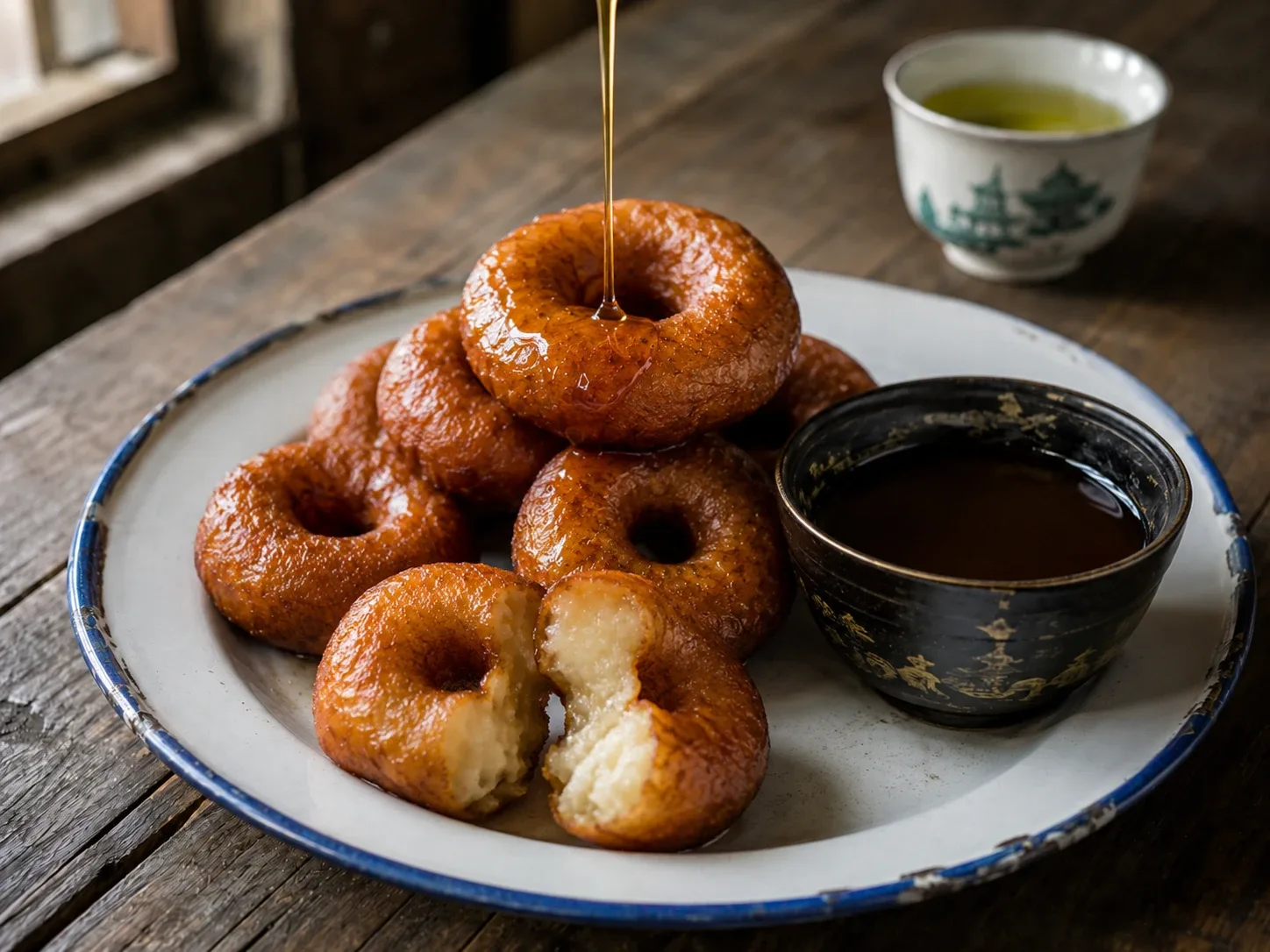
Mont Let Kauk, the Burmese Bracelet Doughnutမုန့်လက်ကောက်
Chewy glutinous rice rings fried until blistered and gold, then drowned in warm toddy-palm jaggery syrup — the teahouse doughnut Burma names after a bracelet.
 ၇
၇Sweets & Mont · 40 min · Beginner
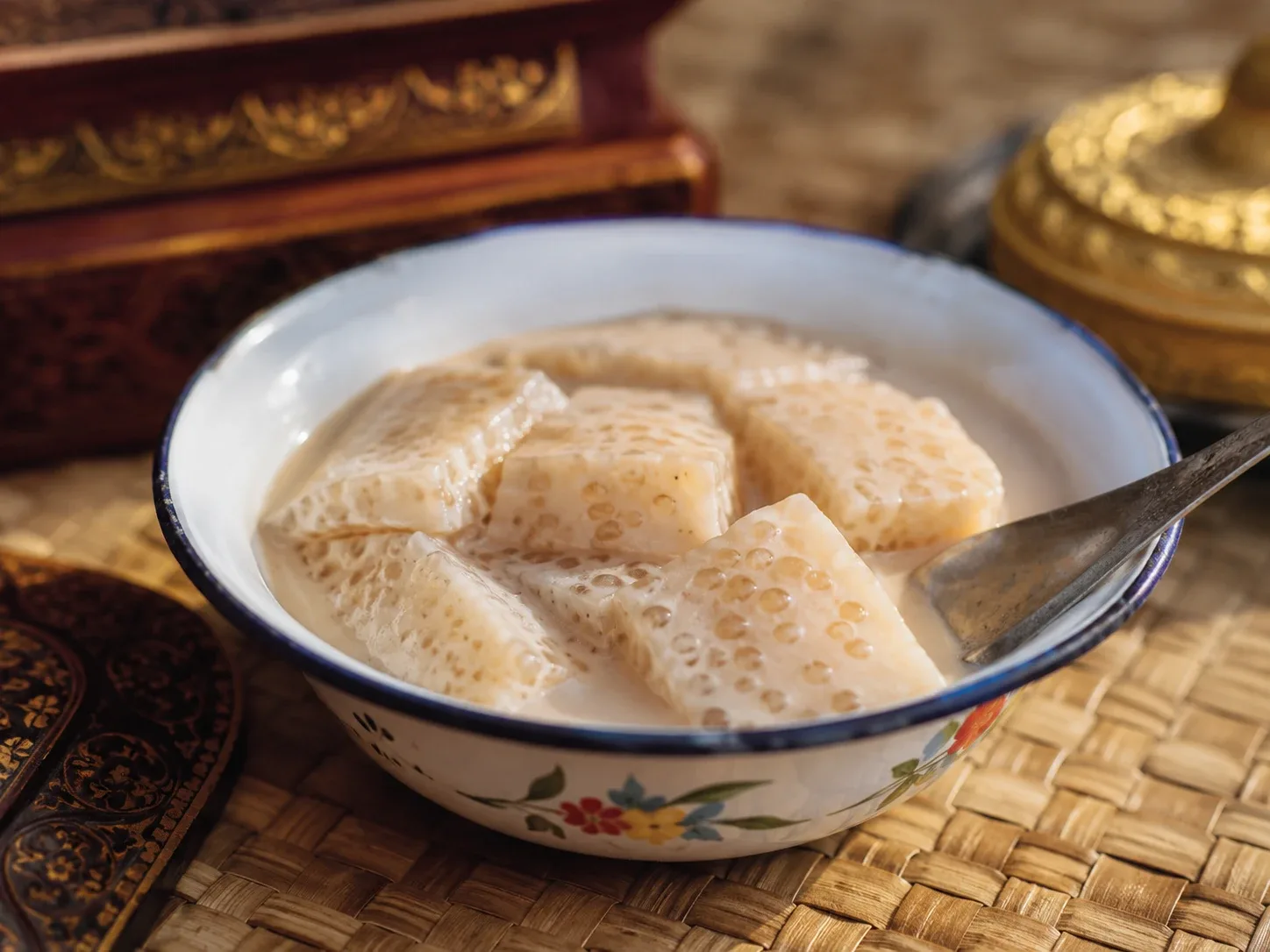
Thagu Byin, Sago & Coconut Milk Puddingသကူမုန့်
A cooling hot-season pudding of translucent sago pearls set in coconut milk and palm sugar, sliced into wobbling squares — sold from glass cabinets on the hottest afternoons.
 ၄
၄Salads & Thoke · 25 min · Beginner
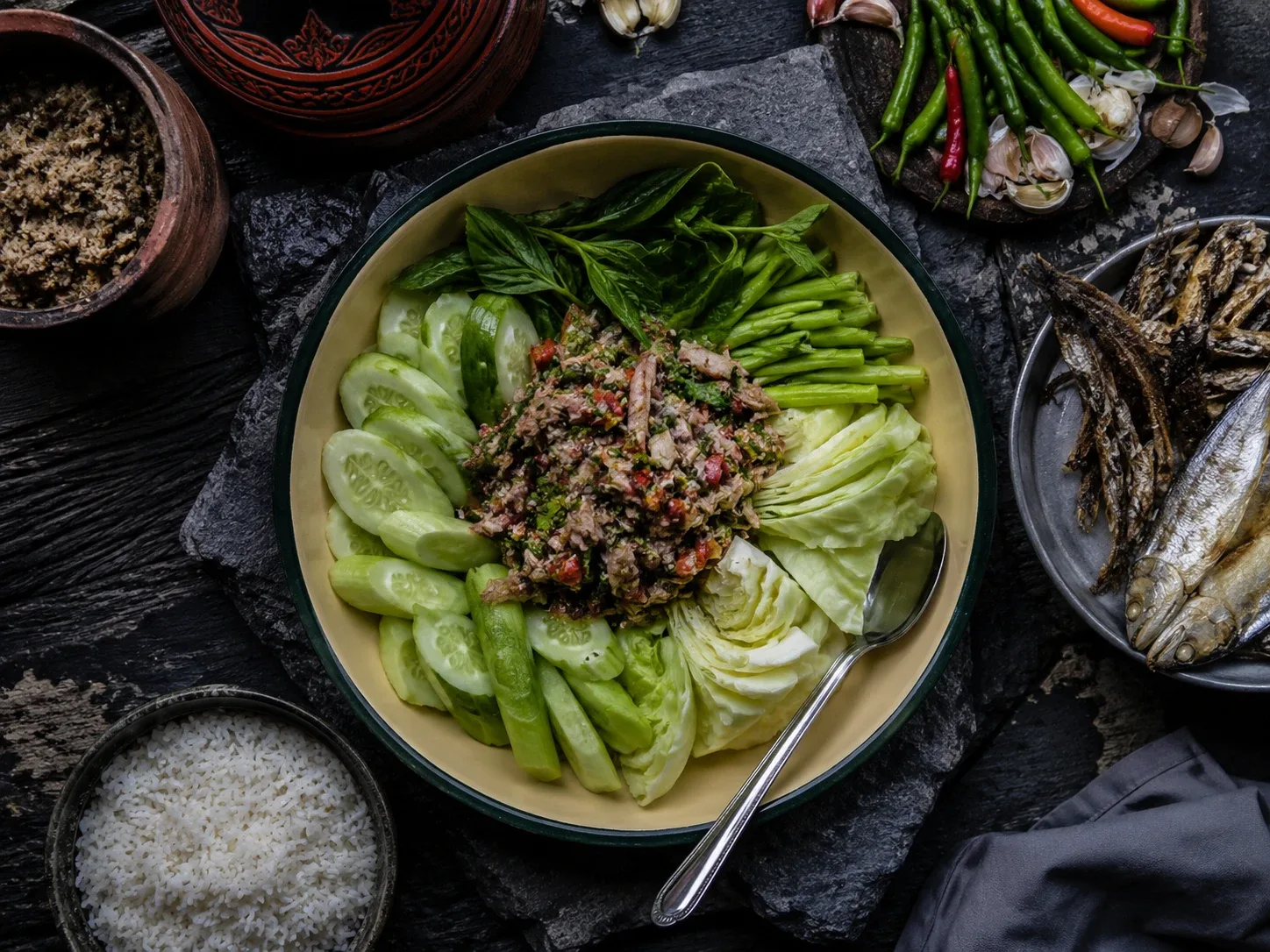
Rakhine Ngapi Thoke, the Pounded Fireငါးပိသုပ်
Rakhine's roasted fish-paste salad — marine ngapi pounded with green chili, garlic, and lime, served the western-coast way with crisp vegetables and rice.